The Kazakhstan-U.S. Investment Forum
            7 December 2011
              New York, NY

What Investors Want To Know About
      Taxation in Kazakhstan

              By Mr. Daniel A. Witt
                    President
    International Tax and Investment Center
Kazakhstan has achieved remarkable results
from the economic reforms enacted during its
  20
years of independence:
• Open investment policies

• Transformed Kazakhstan Economy

• Prosperity for the Kazakh people
The open economic pro-growth policies
  enacted
in the 1990s have made for a better
  Kazakhstan
in this decade.

However, the job of reform is not complete. It
  is
an ongoing process.
Kazakhstan needs to make bold and dramatic
steps—to launch a new generation of
   reforms—if
it is to succeed in attracting this next
   generation
of investment.
TASK 1
A new Tax Code has entered into force that has
significantly reduced major tax rates. Despite this
fact, small and medium-sized business has yet to
become a stable base for budget revenue.
TASK 2
Work continues in the country on reducing
administrative barriers.

In the opinion of entrepreneurs, administrative
barriers remain barriers on the road to the
development of their business. For example, the
Tax Code contains 27 bases for duplicative off
schedule tax checks.
TASK 3
The RK Code on Administrative Violations
contains standards providing for a significant
number of administrative penalties and fines, a
portion of which lack any economic
substantiation, are in conflict with the standards
of the Tax Code, or are in unreasonably high
amounts negatively affecting the status of the
business.
TASK 4
The tax authorities widely apply the practice of
blocking company bank accounts.

In Russia, for example, the practice involves
suspending operations on the taxpayer's accounts
only within the amount owed.

What is needed to optimize the practice of
suspending debit transactions on bank account?
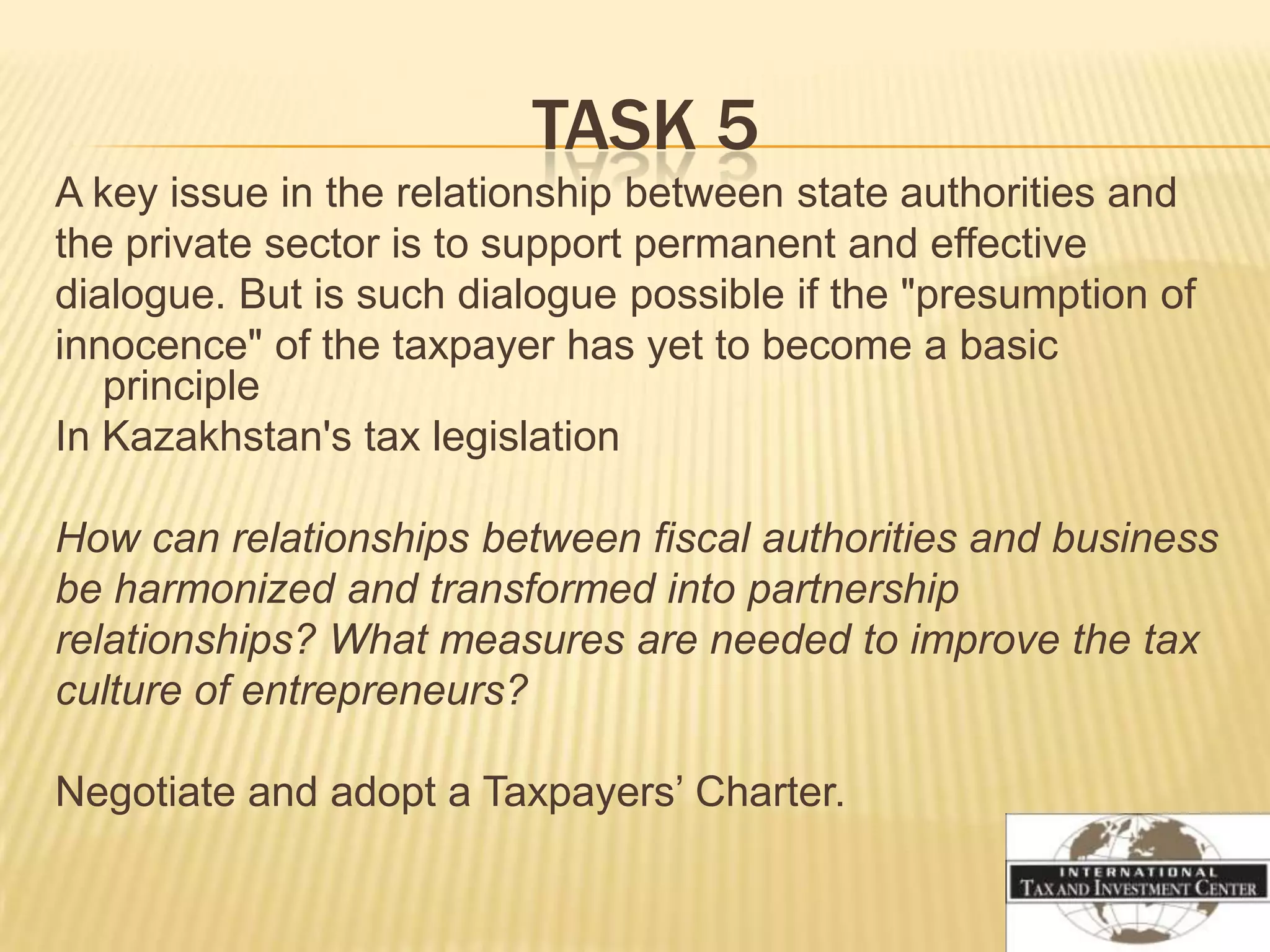
TASK 5
A key issue in the relationship between state authorities and
the private sector is to support permanent and effective
dialogue. But is such dialogue possible if the "presumption of
innocence" of the taxpayer has yet to become a basic
   principle
In Kazakhstan's tax legislation

How can relationships between fiscal authorities and business
be harmonized and transformed into partnership
relationships? What measures are needed to improve the tax
culture of entrepreneurs?

Negotiate and adopt a Taxpayers’ Charter.
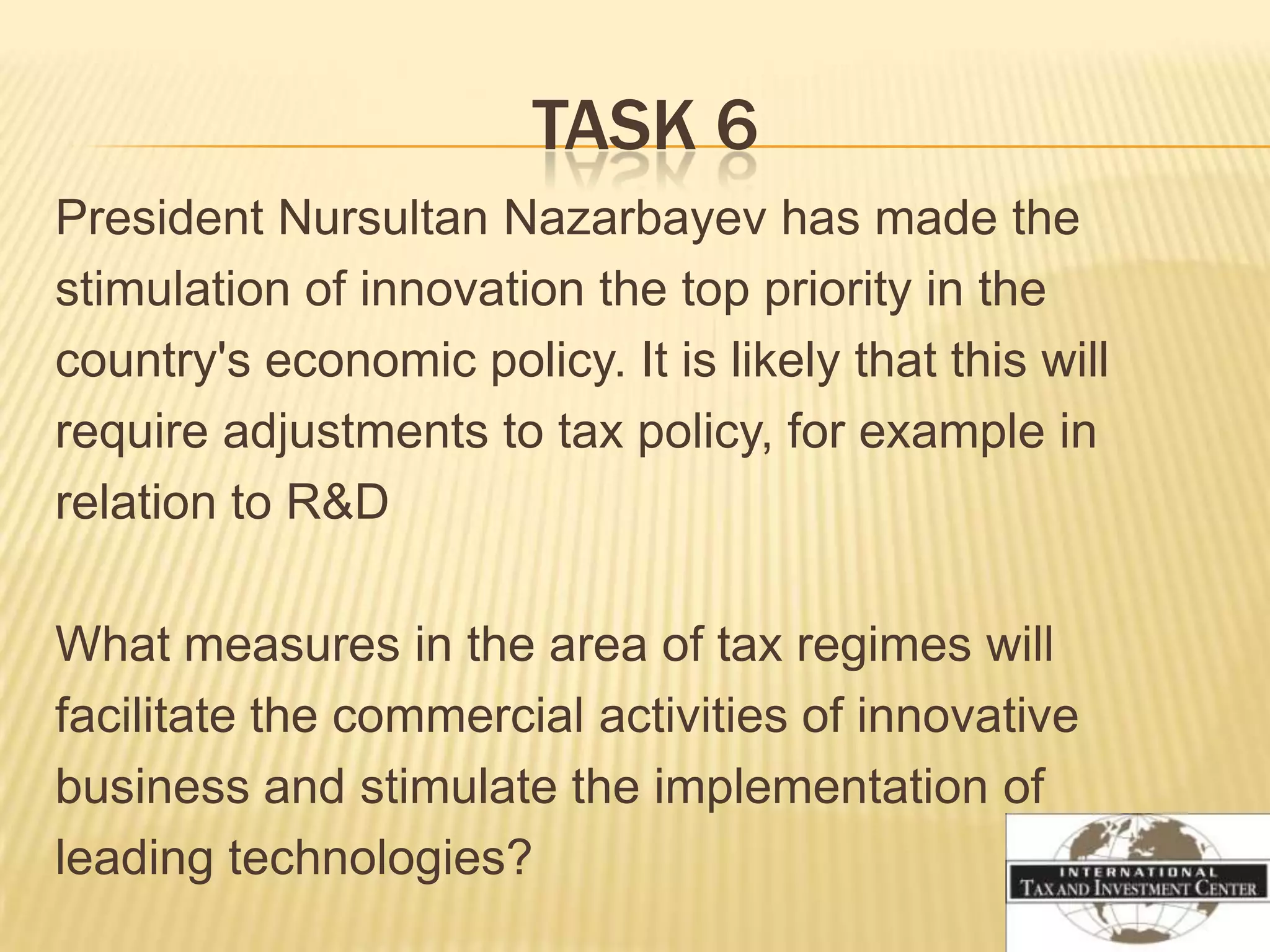
TASK 6
President Nursultan Nazarbayev has made the
stimulation of innovation the top priority in the
country's economic policy. It is likely that this will
require adjustments to tax policy, for example in
relation to R&D

What measures in the area of tax regimes will
facilitate the commercial activities of innovative
business and stimulate the implementation of
leading technologies?
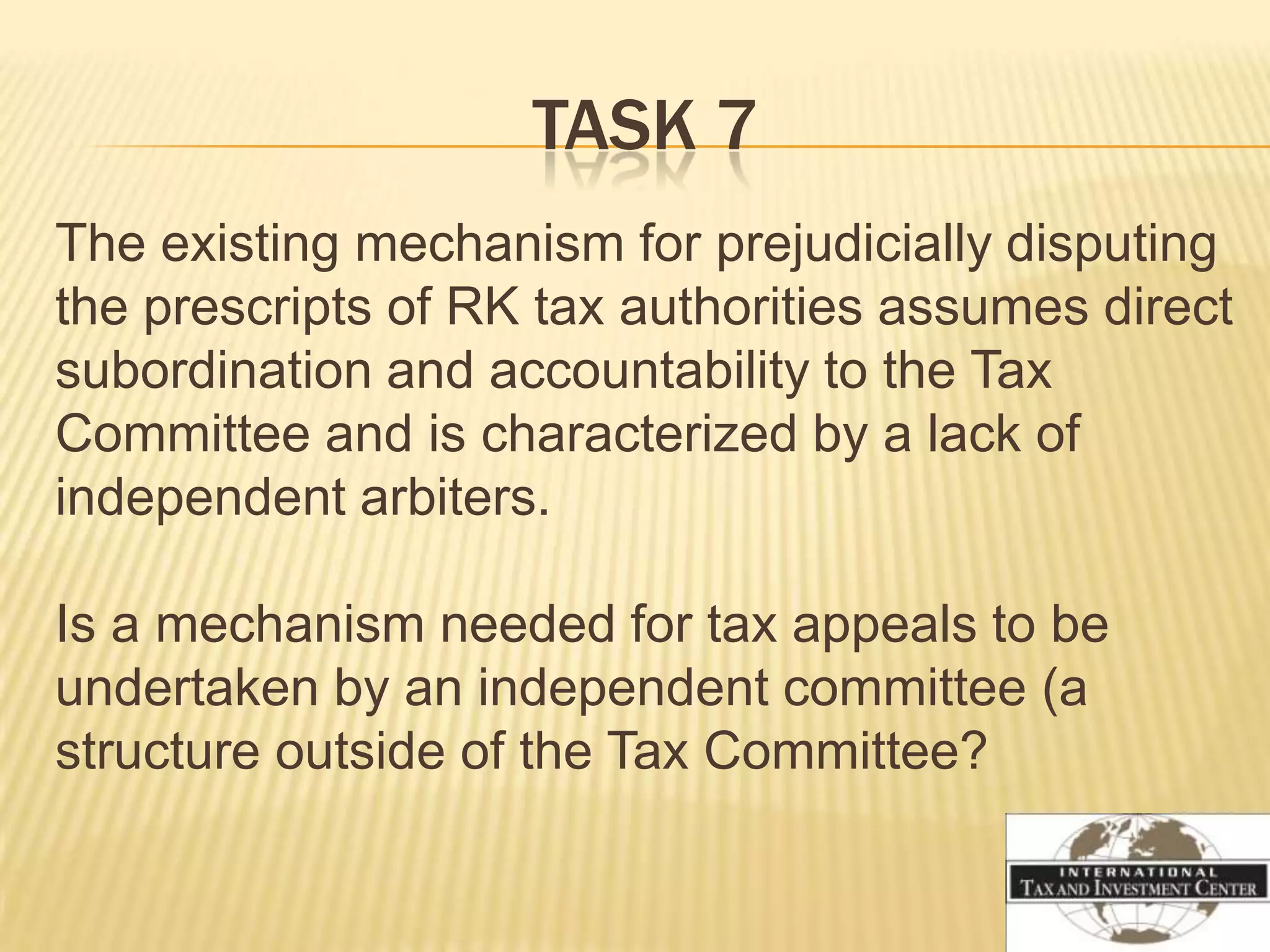
TASK 7
The existing mechanism for prejudicially disputing
the prescripts of RK tax authorities assumes direct
subordination and accountability to the Tax
Committee and is characterized by a lack of
independent arbiters.

Is a mechanism needed for tax appeals to be
undertaken by an independent committee (a
structure outside of the Tax Committee?
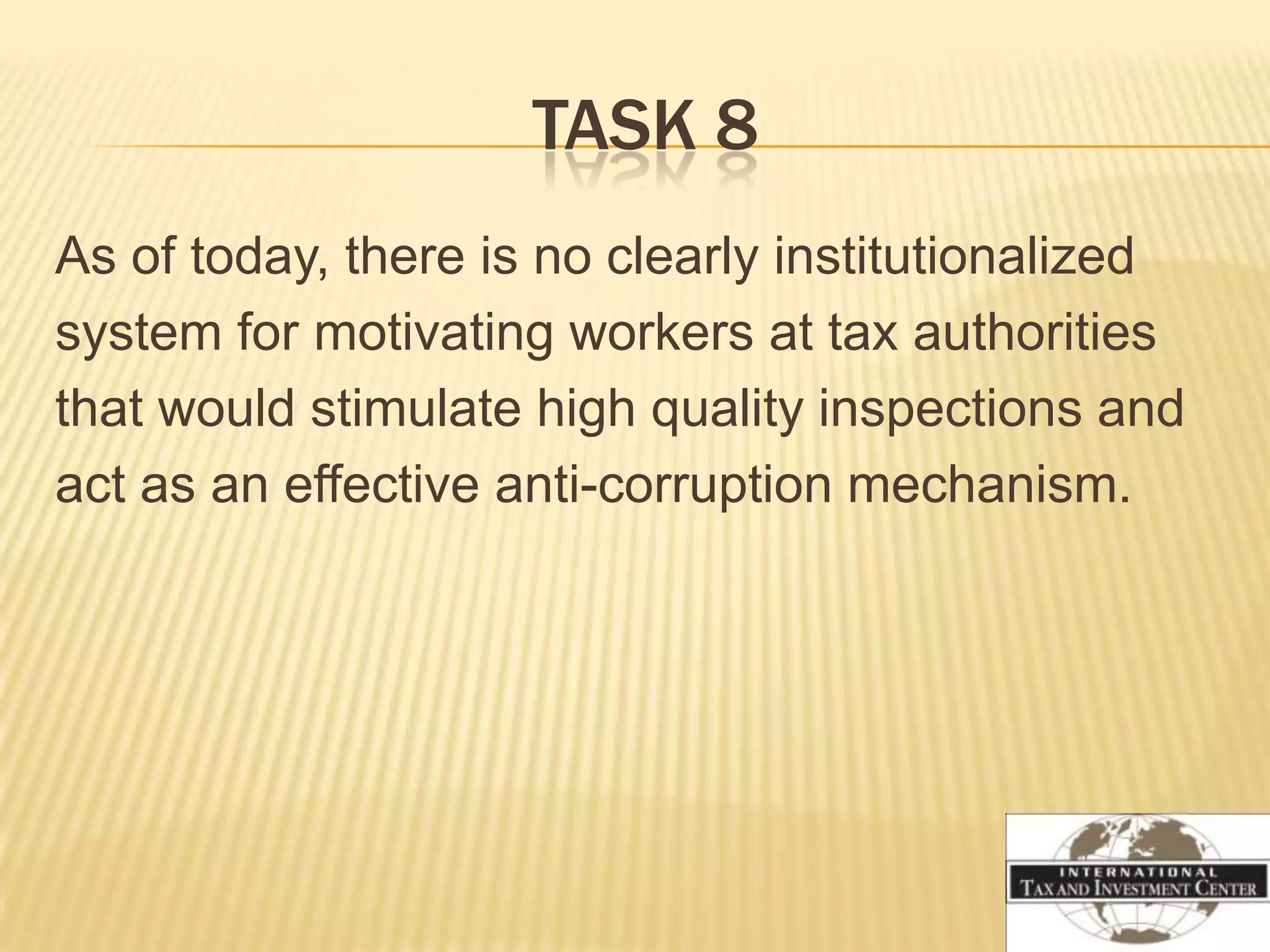
TASK 8
As of today, there is no clearly institutionalized
system for motivating workers at tax authorities
that would stimulate high quality inspections and
act as an effective anti-corruption mechanism.
Quantum leap forward with new, investment
welcoming reforms:
• Lower tax burdens

• Simple and clear regulatory regimes

• Strong protection of property rights
Thank you

Инвесторы и налоговая политика Казахстана

  • 1.
    The Kazakhstan-U.S. InvestmentForum 7 December 2011 New York, NY What Investors Want To Know About Taxation in Kazakhstan By Mr. Daniel A. Witt President International Tax and Investment Center
  • 2.
    Kazakhstan has achievedremarkable results from the economic reforms enacted during its 20 years of independence: • Open investment policies • Transformed Kazakhstan Economy • Prosperity for the Kazakh people
  • 3.
    The open economicpro-growth policies enacted in the 1990s have made for a better Kazakhstan in this decade. However, the job of reform is not complete. It is an ongoing process.
  • 4.
    Kazakhstan needs tomake bold and dramatic steps—to launch a new generation of reforms—if it is to succeed in attracting this next generation of investment.
  • 5.
    TASK 1 A newTax Code has entered into force that has significantly reduced major tax rates. Despite this fact, small and medium-sized business has yet to become a stable base for budget revenue.
  • 6.
    TASK 2 Work continuesin the country on reducing administrative barriers. In the opinion of entrepreneurs, administrative barriers remain barriers on the road to the development of their business. For example, the Tax Code contains 27 bases for duplicative off schedule tax checks.
  • 7.
    TASK 3 The RKCode on Administrative Violations contains standards providing for a significant number of administrative penalties and fines, a portion of which lack any economic substantiation, are in conflict with the standards of the Tax Code, or are in unreasonably high amounts negatively affecting the status of the business.
  • 8.
    TASK 4 The taxauthorities widely apply the practice of blocking company bank accounts. In Russia, for example, the practice involves suspending operations on the taxpayer's accounts only within the amount owed. What is needed to optimize the practice of suspending debit transactions on bank account?
  • 9.
    TASK 5 A keyissue in the relationship between state authorities and the private sector is to support permanent and effective dialogue. But is such dialogue possible if the "presumption of innocence" of the taxpayer has yet to become a basic principle In Kazakhstan's tax legislation How can relationships between fiscal authorities and business be harmonized and transformed into partnership relationships? What measures are needed to improve the tax culture of entrepreneurs? Negotiate and adopt a Taxpayers’ Charter.
  • 10.
    TASK 6 President NursultanNazarbayev has made the stimulation of innovation the top priority in the country's economic policy. It is likely that this will require adjustments to tax policy, for example in relation to R&D What measures in the area of tax regimes will facilitate the commercial activities of innovative business and stimulate the implementation of leading technologies?
  • 11.
    TASK 7 The existingmechanism for prejudicially disputing the prescripts of RK tax authorities assumes direct subordination and accountability to the Tax Committee and is characterized by a lack of independent arbiters. Is a mechanism needed for tax appeals to be undertaken by an independent committee (a structure outside of the Tax Committee?
  • 12.
    TASK 8 As oftoday, there is no clearly institutionalized system for motivating workers at tax authorities that would stimulate high quality inspections and act as an effective anti-corruption mechanism.
  • 13.
    Quantum leap forwardwith new, investment welcoming reforms: • Lower tax burdens • Simple and clear regulatory regimes • Strong protection of property rights
  • 14.