Dairy & Milk Products
What are DAIRY PRODUCTS ?
Dairy products are commodities which have been produced by primary
processing or secondary processing of milk.
All mammals produce milk which contains the correct balance of
nutrients with which to feed their young.
This milk can also be produced and used commercially; for example
sheep, goat and cows milk.
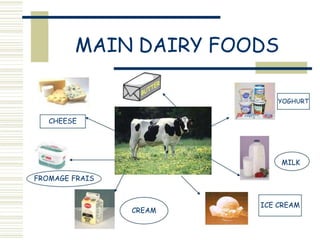
MAIN DAIRY FOODS
YOGHURT
CHEESE
MILK
FROMAGE FRAIS
ICE CREAM
CREAM
Milk
Most milk in the UK comes from Friesian cows and has been heat treated –
pasteurised, sterilised or ultra heat-treated. This has a negligible effect on its
nutritional value but increases its shelf life and destroys undesirable bacteria.
There is now a wider range of fresh milks available from your milkman. Milks can be
classed according to their fat content and heat treatment they receive at the
dairy.
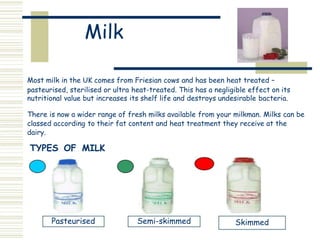
TYPES OF MILK
Pasteurised Semi-skimmed Skimmed
Milk
Other types of milk
UHT Milk – this milk owes its long life to ultra high temperature
132*c for one second followed by packaging.
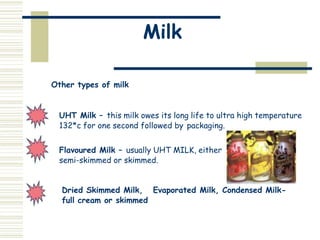
Flavoured Milk – usually UHT MILK, either
semi-skimmed or skimmed.
Dried Skimmed Milk, Evaporated Milk, Condensed Milk-
full cream or skimmed
Specialist Dairy Products
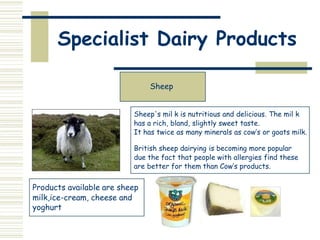
Sheep
Sheep's mil k is nutritious and delicious. The mil k
has a rich, bland, slightly sweet taste.
It has twice as many minerals as cow’s or goats milk.
British sheep dairying is becoming more popular
due the fact that people with allergies find these
are better for them than Cow’s products.
Products available are sheep
milk,ice-cream, cheese and
yoghurt
Specialist Products
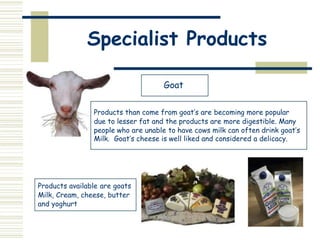
Goat
Products than come from goat’s are becoming more popular
due to lesser fat and the products are more digestible. Many
people who are unable to have cows milk can often drink goat’s
Milk. Goat’s cheese is well liked and considered a delicacy.
Products available are goats
Milk, Cream, cheese, butter
and yoghurt
Nutritional Value of milk
Milk is a valuable source of calcium, riboflavin and protein to our diet. For
vegetarians it can be a valuable source of vitamin A & B12. However they should
not rely on sterilized of UHTmilks for vitamin B12 as they don’t contain as much as
pasteurised milk.
Why do we need
calcium?
A calcium rich diet is required to help build strong bones in babies, growing
children and pregnant women.
For the rest of us it keeps our bones strong and helps delay symptoms of a
disease, known as Osteoporosis, which is becoming more common.
Cheese
Cheese is made from cows, ewes or goats milk and it takes approximately 5 litres
of milk to produce ½ kg of cheese.
Types of cheeses
There are four main types of cheese with numerous varieties of each.
1. Hard cheese
2. Semi-hard cheese
3. Soft or Cream cheese
4. Blue-vein cheese
Food value
Cheese is a highly concentrated form of food. Fat, protein, mineral salts and vitamins
are all present. Therefore it is an excellent bodybuilding, energy-producing, protective
food.
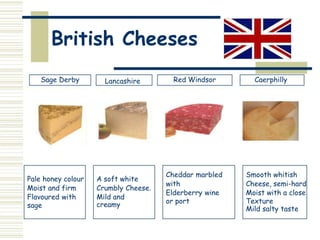
British Cheeses
Sage Derby Red Windsor Caerphilly
Lancashire
Cheddar marbled
with
Elderberry wine
or port
Smooth whitish
Cheese, semi-hard
Moist with a close
Texture
Pale honey colour
Moist and firm
Flavoured with
sage
A soft white
Crumbly Cheese.
Mild and
creamy
Mild salty taste
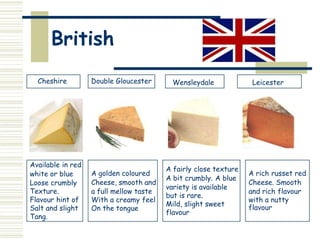
British
Cheshire Double Gloucester Wensleydale Leicester
Available in red
white or blue
Loose crumbly
Texture.
Flavour hint of
Salt and slight
Tang.
A fairly close texture
A bit crumbly. A blue
variety is available
but is rare.
Mild, slight sweet
flavour
A golden coloured
Cheese, smooth and
a full mellow taste
With a creamy feel
On the tongue
A rich russet red
Cheese. Smooth
and rich flavour
with a nutty
flavour
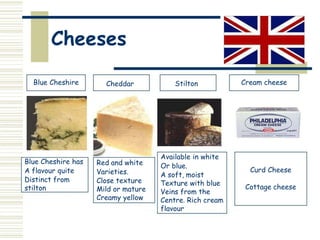
Cheeses
Blue Cheshire Cream cheese
Cheddar Stilton
Available in white
Or blue.
A soft, moist
Texture with blue
Veins from the
Centre. Rich cream
flavour
Blue Cheshire has
A flavour quite
Distinct from
stilton
Red and white
Varieties.
Close texture
Mild or mature
Creamy yellow
Curd Cheese
Cottage cheese
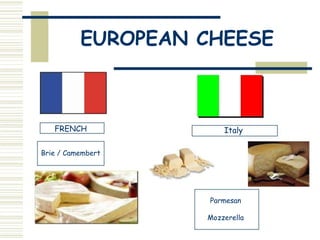
EUROPEAN CHEESE
FRENCH Italy
Brie / Camembert
Parmesan
Mozzerella
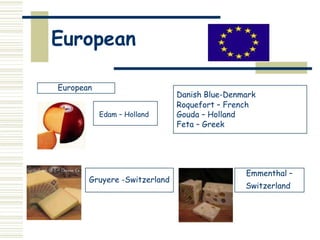
European
European
Danish Blue-Denmark
Roquefort – French
Gouda – Holland
Feta – Greek
Edam – Holland
Emmenthal –
Switzerland
Gruyere -Switzerland
Other Dairy Foods
BUTTER
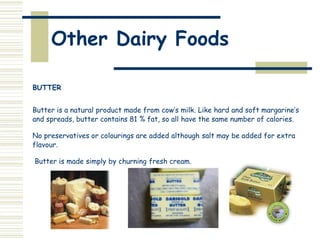
Butter is a natural product made from cow’s milk. Like hard and soft margarine’s
and spreads, butter contains 81 % fat, so all have the same number of calories.
No preservatives or colourings are added although salt may be added for extra
flavour.
Butter is made simply by churning fresh cream.
Yogurt
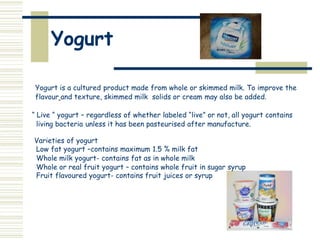
Yogurt is a cultured product made from whole or skimmed milk. To improve the
flavour and texture, skimmed milk solids or cream may also be added.
“ Live “ yogurt – regardless of whether labeled “live” or not, all yogurt contains
living bacteria unless it has been pasteurised after manufacture.
Varieties of yogurt
Low fat yogurt –contains maximum 1.5 % milk fat
Whole milk yogurt- contains fat as in whole milk
Whole or real fruit yogurt – contains whole fruit in sugar syrup
Fruit flavoured yogurt- contains fruit juices or syrup
Cream
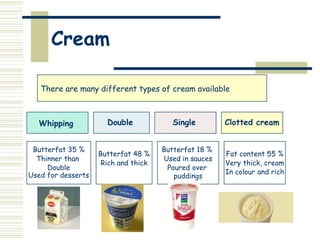
There are many different types of cream available
Double Single Clotted cream
Whipping
Butterfat 35 %
Thinner than
Double
Butterfat 18 %
Used in sauces
Poured over
puddings
Butterfat 48 %
Rich and thick
Fat content 55 %
Very thick, cream
In colour and rich
Used for desserts
ICE CREAM
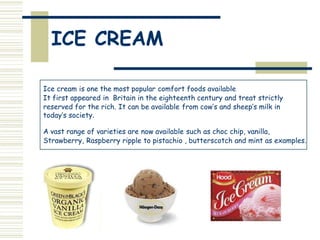
Ice cream is one the most popular comfort foods available
It first appeared in Britain in the eighteenth century and treat strictly
reserved for the rich. It can be available from cow’s and sheep’s milk in
today’s society.
A vast range of varieties are now available such as choc chip, vanilla,
Strawberry, Raspberry ripple to pistachio , butterscotch and mint as examples.

dairyproducts-140116083703-phpapp02.pptx

  • 1.
    Dairy & MilkProducts What are DAIRY PRODUCTS ? Dairy products are commodities which have been produced by primary processing or secondary processing of milk. All mammals produce milk which contains the correct balance of nutrients with which to feed their young. This milk can also be produced and used commercially; for example sheep, goat and cows milk.
  • 2.
  • 3.
    Milk Most milk inthe UK comes from Friesian cows and has been heat treated – pasteurised, sterilised or ultra heat-treated. This has a negligible effect on its nutritional value but increases its shelf life and destroys undesirable bacteria. There is now a wider range of fresh milks available from your milkman. Milks can be classed according to their fat content and heat treatment they receive at the dairy. TYPES OF MILK Pasteurised Semi-skimmed Skimmed
  • 4.
    Milk Other types ofmilk UHT Milk – this milk owes its long life to ultra high temperature 132*c for one second followed by packaging. Flavoured Milk – usually UHT MILK, either semi-skimmed or skimmed. Dried Skimmed Milk, Evaporated Milk, Condensed Milk- full cream or skimmed
  • 5.
    Specialist Dairy Products Sheep Sheep'smil k is nutritious and delicious. The mil k has a rich, bland, slightly sweet taste. It has twice as many minerals as cow’s or goats milk. British sheep dairying is becoming more popular due the fact that people with allergies find these are better for them than Cow’s products. Products available are sheep milk,ice-cream, cheese and yoghurt
  • 6.
    Specialist Products Goat Products thancome from goat’s are becoming more popular due to lesser fat and the products are more digestible. Many people who are unable to have cows milk can often drink goat’s Milk. Goat’s cheese is well liked and considered a delicacy. Products available are goats Milk, Cream, cheese, butter and yoghurt
  • 7.
    Nutritional Value ofmilk Milk is a valuable source of calcium, riboflavin and protein to our diet. For vegetarians it can be a valuable source of vitamin A & B12. However they should not rely on sterilized of UHTmilks for vitamin B12 as they don’t contain as much as pasteurised milk. Why do we need calcium? A calcium rich diet is required to help build strong bones in babies, growing children and pregnant women. For the rest of us it keeps our bones strong and helps delay symptoms of a disease, known as Osteoporosis, which is becoming more common.
  • 8.
    Cheese Cheese is madefrom cows, ewes or goats milk and it takes approximately 5 litres of milk to produce ½ kg of cheese. Types of cheeses There are four main types of cheese with numerous varieties of each. 1. Hard cheese 2. Semi-hard cheese 3. Soft or Cream cheese 4. Blue-vein cheese Food value Cheese is a highly concentrated form of food. Fat, protein, mineral salts and vitamins are all present. Therefore it is an excellent bodybuilding, energy-producing, protective food.
  • 9.
    British Cheeses Sage DerbyRed Windsor Caerphilly Lancashire Cheddar marbled with Elderberry wine or port Smooth whitish Cheese, semi-hard Moist with a close Texture Pale honey colour Moist and firm Flavoured with sage A soft white Crumbly Cheese. Mild and creamy Mild salty taste
  • 10.
    British Cheshire Double GloucesterWensleydale Leicester Available in red white or blue Loose crumbly Texture. Flavour hint of Salt and slight Tang. A fairly close texture A bit crumbly. A blue variety is available but is rare. Mild, slight sweet flavour A golden coloured Cheese, smooth and a full mellow taste With a creamy feel On the tongue A rich russet red Cheese. Smooth and rich flavour with a nutty flavour
  • 11.
    Cheeses Blue Cheshire Creamcheese Cheddar Stilton Available in white Or blue. A soft, moist Texture with blue Veins from the Centre. Rich cream flavour Blue Cheshire has A flavour quite Distinct from stilton Red and white Varieties. Close texture Mild or mature Creamy yellow Curd Cheese Cottage cheese
  • 12.
    EUROPEAN CHEESE FRENCH Italy Brie/ Camembert Parmesan Mozzerella
  • 13.
    European European Danish Blue-Denmark Roquefort –French Gouda – Holland Feta – Greek Edam – Holland Emmenthal – Switzerland Gruyere -Switzerland
  • 14.
    Other Dairy Foods BUTTER Butteris a natural product made from cow’s milk. Like hard and soft margarine’s and spreads, butter contains 81 % fat, so all have the same number of calories. No preservatives or colourings are added although salt may be added for extra flavour. Butter is made simply by churning fresh cream.
  • 15.
    Yogurt Yogurt is acultured product made from whole or skimmed milk. To improve the flavour and texture, skimmed milk solids or cream may also be added. “ Live “ yogurt – regardless of whether labeled “live” or not, all yogurt contains living bacteria unless it has been pasteurised after manufacture. Varieties of yogurt Low fat yogurt –contains maximum 1.5 % milk fat Whole milk yogurt- contains fat as in whole milk Whole or real fruit yogurt – contains whole fruit in sugar syrup Fruit flavoured yogurt- contains fruit juices or syrup
  • 16.
    Cream There are manydifferent types of cream available Double Single Clotted cream Whipping Butterfat 35 % Thinner than Double Butterfat 18 % Used in sauces Poured over puddings Butterfat 48 % Rich and thick Fat content 55 % Very thick, cream In colour and rich Used for desserts
  • 17.
    ICE CREAM Ice creamis one the most popular comfort foods available It first appeared in Britain in the eighteenth century and treat strictly reserved for the rich. It can be available from cow’s and sheep’s milk in today’s society. A vast range of varieties are now available such as choc chip, vanilla, Strawberry, Raspberry ripple to pistachio , butterscotch and mint as examples.