Good
Morning
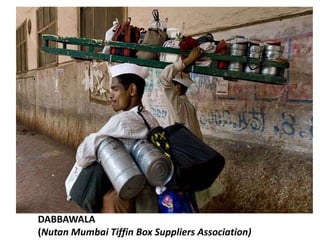
DABBAWALA
(Nutan Mumbai Tiffin Box Suppliers Association)
•Product Element
• A Dabbawala (one who carries the Box), is a
person in the Indian city of Mumbai whose job
is to carry and deliver freshly made food from
home in lunch boxes to office workers. Tiffin is
an old-fashioned English word for a light
lunch, and sometimes for the box it is carried
in. The product Element here is basically a
service they provide to the office going people
by delivering their Tiffin box or more
commonly called as ‘Dabba’ in the city of
Mumbai.
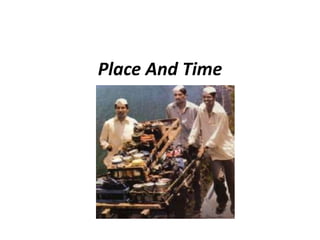
Place And Time
• Place (Example)
• The Mumbai dabbawallas journey start from Andheri station. At this
place they put all the dabbas collected from different places of houses.
They load the wooden crates filled with tiffins onto the luggage or
goods compartment in the train.
• Generally they choose to occupy the last compartment of the train.
After that they unloading all the dabbas on the Church Gate Station
which is there destination place. They re-arrange the tiffins as per the
destination area and destination building. In particular areas with high
density of customers such as Nariman point, Fort, Cst a special crate is
dedicated to the area. This crate carries 150 tiffins and is driven by 3-4
dabbawallas. After that return journey start at all destination stations.
Here begins the collection process where they have to collect tiffins
from different offices where they have delivered an hour ago. Then
they segregate the dabbas at destination stations. Finally they again
reach to there origin place (Andheri station) where the final sorting
and dispatching takes places according to their origin area.
• Time
• The journey of Mumbai dabbawallas start in morning at 9:00am-
10:00am. They collect the dabbas from different places between
10:05am to 11:00am. They travel in the local train and choose the last
compartment. After that between 11:10 to 12:30 they unload all the
dabbas and re- arrange according to their destination area and
destination building and delivering.
• Then the collection process starts between 2:00pm to 3:00pm. They
pick up all the dabbas where they had delivered 2 hour ago. Now the
group members start segregating the dabbas according to destination
between 3:05 to 3:30. Between 3:30pm to 4.00pm the return journey
by train takes place after routine of dispatching and collecting. Since it
is more of pleasant journey compared to earlier part of the day, they
ligheten up their moment with merry making, joking around and
singing. Finally the stage between this time where the final sorting and
dispatch of dabbas takes place as per their origin area.
• Promotion and Education
• · Dabbawala’s are in Tiffin distribution field since last 125 years hence
they don’t need any promotional tool for their business. Though they
are used by other business units as promotional tool for their
business units · Orders through SMS and online is accepted by the
organisation and they have come up with a site named
mydabbawala.com·
• As reliance power is making best use of them. If you receive dabba it
is very possible that you will get IPO application along with it.·
• Maharashtra government has roped them in to spread of AIDS
awareness.
• · Film industry is using them to promote their films. Example at time
of movie tashan release they were used and the response to it was
very good.
• · World record in best time management with Six Sigma rating.
• · Name in “GUINESS BOOK of World Records”.
• · Registered with Ripley's “believe it or not”.
• · World record in best time management.
• · Participated in “Deal Ya No Deal Contest” by Sony Entertainment
• Television
Price and Other User Outlays
•Price
• The Cost of Service per person is Rs250/month it is
Standard price for all (Weight, Distance and Space).
• The Dabbawalas Turnover is Approx Rs 50cr. Earning
per person varies from Rs5000 to 6000/month.
• Other physical products
• · Dabba ( Tiffin box) is Rs.200/-
• · Gandhi cap is Rs 50/-
• · Video CD is Rs.200/-
• · Dabbawala Mug is Rs.300/-
• · Dabbawala T-shirt Rs 400/-
• PHYSICAL ENVIRONMENT
• Mumbai is the financial hub of the country. It is the most popular city in
India, with approximately 20 million inhabitants. It generates a big part of
income generated in India.
• The climate of Mumbai is humid between March and October, and rains
lash the Mumbai from June to September. Mumbai is facing high problem
during the rainy season.
• They are mainly facing the problem of floods from last three to four years.
But still Dabbawala are working their work continuously. So we can say
that they have to do hard work to survive in the Physical Environment:
· Providing service in highly populated city.
· Have to travel 60-70 kms in a route.
· Have to travel by walking, cycle, carts and even by Local trains.
· Have to travel from one place to another in hot summers.
· Have to face the lot of crowd for the fulfilment of service.
· Even they have to provide service in high rains.
The person who serves Tiffin to the customer is well known about the
physical environment of that area and because of that Dabbawalas are able to
serve in every season so this helps a lot to Dabbawalas in achieving Six Sigma.
PROCESS
• Process
• This is the process that is being followed by the dabbawalas to
carry on their job efficiently and with precision 9 am to 10 am
• This time period is actually the journey time. The dabbawalas
load the wooden crates filled with tiffins onto the luggage or
goods compartment in the train. Generally, they choose to
occupy the last compartment of the train.
• In particular areas with high density of customers, a special
dabbawalas are dedicated to the area. This dabbawalas carries
150 tiffins.
• 3pm – 4:00 pm Here on begins the collection process where the
dabbawalas have to pick up the tiffins from the offices where
they had delivered almost an 2-3 hour ago.
Unknown Facts
• Dabbawala’s are serving people from last 125 years and the
individuals who are associated with dabbawala’s in serving
people are 8th grade pass, so we can say that dabbawala’s are
helping Rich class by serving them and also the needy class by
making them serve.
• The very interesting facts which I would like to mention over
here is there are 5000 dabbawala’s and each and every
dabbawala is shareholder of the system. 635 of them are
senior employees, but there is no hierarchy and president of
the company also works as dabbawala, travels with them, and
share with them. It shows that the people associated with this
company are down to earth and this is the reason why there is
not even a single strike during 125 years of their work..
• About 175,000 or 200,000 lunches get moved every day by an
estimated 5,000 dabbawalas.
• According to a recent survey, their error rate is an amazing 1
in 16 million transactions for which they have been
recognized with Six Sigma performance (99.999999% error-
free).
Thank you..
-Arpit Shah

Dabbawala

  • 1.
  • 2.
    DABBAWALA (Nutan Mumbai TiffinBox Suppliers Association)
  • 3.
    •Product Element • ADabbawala (one who carries the Box), is a person in the Indian city of Mumbai whose job is to carry and deliver freshly made food from home in lunch boxes to office workers. Tiffin is an old-fashioned English word for a light lunch, and sometimes for the box it is carried in. The product Element here is basically a service they provide to the office going people by delivering their Tiffin box or more commonly called as ‘Dabba’ in the city of Mumbai.
  • 4.
  • 5.
    • Place (Example) •The Mumbai dabbawallas journey start from Andheri station. At this place they put all the dabbas collected from different places of houses. They load the wooden crates filled with tiffins onto the luggage or goods compartment in the train. • Generally they choose to occupy the last compartment of the train. After that they unloading all the dabbas on the Church Gate Station which is there destination place. They re-arrange the tiffins as per the destination area and destination building. In particular areas with high density of customers such as Nariman point, Fort, Cst a special crate is dedicated to the area. This crate carries 150 tiffins and is driven by 3-4 dabbawallas. After that return journey start at all destination stations. Here begins the collection process where they have to collect tiffins from different offices where they have delivered an hour ago. Then they segregate the dabbas at destination stations. Finally they again reach to there origin place (Andheri station) where the final sorting and dispatching takes places according to their origin area.
  • 7.
    • Time • Thejourney of Mumbai dabbawallas start in morning at 9:00am- 10:00am. They collect the dabbas from different places between 10:05am to 11:00am. They travel in the local train and choose the last compartment. After that between 11:10 to 12:30 they unload all the dabbas and re- arrange according to their destination area and destination building and delivering. • Then the collection process starts between 2:00pm to 3:00pm. They pick up all the dabbas where they had delivered 2 hour ago. Now the group members start segregating the dabbas according to destination between 3:05 to 3:30. Between 3:30pm to 4.00pm the return journey by train takes place after routine of dispatching and collecting. Since it is more of pleasant journey compared to earlier part of the day, they ligheten up their moment with merry making, joking around and singing. Finally the stage between this time where the final sorting and dispatch of dabbas takes place as per their origin area.
  • 8.
    • Promotion andEducation • · Dabbawala’s are in Tiffin distribution field since last 125 years hence they don’t need any promotional tool for their business. Though they are used by other business units as promotional tool for their business units · Orders through SMS and online is accepted by the organisation and they have come up with a site named mydabbawala.com· • As reliance power is making best use of them. If you receive dabba it is very possible that you will get IPO application along with it.· • Maharashtra government has roped them in to spread of AIDS awareness. • · Film industry is using them to promote their films. Example at time of movie tashan release they were used and the response to it was very good. • · World record in best time management with Six Sigma rating. • · Name in “GUINESS BOOK of World Records”. • · Registered with Ripley's “believe it or not”. • · World record in best time management. • · Participated in “Deal Ya No Deal Contest” by Sony Entertainment • Television
  • 9.
    Price and OtherUser Outlays
  • 10.
    •Price • The Costof Service per person is Rs250/month it is Standard price for all (Weight, Distance and Space). • The Dabbawalas Turnover is Approx Rs 50cr. Earning per person varies from Rs5000 to 6000/month.
  • 11.
    • Other physicalproducts • · Dabba ( Tiffin box) is Rs.200/- • · Gandhi cap is Rs 50/- • · Video CD is Rs.200/- • · Dabbawala Mug is Rs.300/- • · Dabbawala T-shirt Rs 400/-
  • 12.
    • PHYSICAL ENVIRONMENT •Mumbai is the financial hub of the country. It is the most popular city in India, with approximately 20 million inhabitants. It generates a big part of income generated in India. • The climate of Mumbai is humid between March and October, and rains lash the Mumbai from June to September. Mumbai is facing high problem during the rainy season. • They are mainly facing the problem of floods from last three to four years. But still Dabbawala are working their work continuously. So we can say that they have to do hard work to survive in the Physical Environment: · Providing service in highly populated city. · Have to travel 60-70 kms in a route. · Have to travel by walking, cycle, carts and even by Local trains. · Have to travel from one place to another in hot summers. · Have to face the lot of crowd for the fulfilment of service. · Even they have to provide service in high rains. The person who serves Tiffin to the customer is well known about the physical environment of that area and because of that Dabbawalas are able to serve in every season so this helps a lot to Dabbawalas in achieving Six Sigma.
  • 14.
  • 15.
    • Process • Thisis the process that is being followed by the dabbawalas to carry on their job efficiently and with precision 9 am to 10 am • This time period is actually the journey time. The dabbawalas load the wooden crates filled with tiffins onto the luggage or goods compartment in the train. Generally, they choose to occupy the last compartment of the train. • In particular areas with high density of customers, a special dabbawalas are dedicated to the area. This dabbawalas carries 150 tiffins. • 3pm – 4:00 pm Here on begins the collection process where the dabbawalas have to pick up the tiffins from the offices where they had delivered almost an 2-3 hour ago.
  • 16.
  • 17.
    • Dabbawala’s areserving people from last 125 years and the individuals who are associated with dabbawala’s in serving people are 8th grade pass, so we can say that dabbawala’s are helping Rich class by serving them and also the needy class by making them serve. • The very interesting facts which I would like to mention over here is there are 5000 dabbawala’s and each and every dabbawala is shareholder of the system. 635 of them are senior employees, but there is no hierarchy and president of the company also works as dabbawala, travels with them, and share with them. It shows that the people associated with this company are down to earth and this is the reason why there is not even a single strike during 125 years of their work..
  • 18.
    • About 175,000or 200,000 lunches get moved every day by an estimated 5,000 dabbawalas. • According to a recent survey, their error rate is an amazing 1 in 16 million transactions for which they have been recognized with Six Sigma performance (99.999999% error- free).
  • 19.