© Fieke Sluijs
Design Thinking
Workshop 3
Fieke Sluijs | Sept 29, 2022
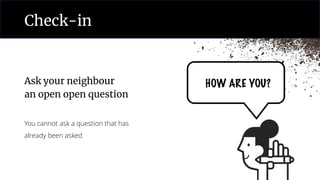
Check-in
Ask your neighbour
an open open question
You cannot ask a question that has
already been asked
HOW ARE YOU?
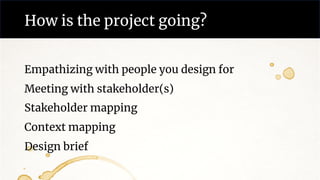
How is the project going?
Empathizing with people you design for
Meeting with stakeholder(s)
Stakeholder mapping
Context mapping
Design brief
Today
•Recap week 1 & 2
•Exercise interview
•Exercise Emotional Journey
What is Design Thinking?
1. a process to (dis)solve complex problems
2. a methodology and toolset to innovate
3. but most of all: a mindset
Characteristics Design Thinking Process
1. Continuous succession of diverging & converging
2. Iteratief process
3. Human centered / User centered
4. Prototypen to learn
5. Co-creatie / Co-design
6. Holistisch perspectief
The Design Thinking Mindset
DO YOU HAVE
THE MINDSET?
1. Creative thinking
2. Curious
3. Empathic
4. Thinking in possibilities
5. Not afraid of taking risks
Dosi, C., F. Rosati & M. Vignoli (2018). Measuring the design thinking mindset. International Design Conference
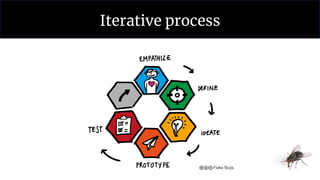
Iterative process
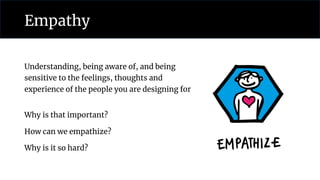
Empathy
Understanding, being aware of, and being
sensitive to the feelings, thoughts and
experience of the people you are designing for
Why is that important?
How can we empathize?
Why is it so hard?
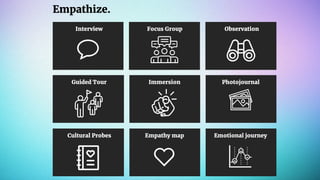
Empathize tools
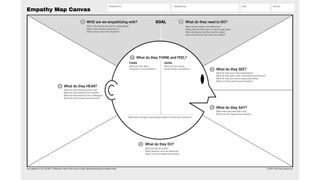
Empathy Map Canvas
Designed for: Designed by: Date: Version:
WHO are we empathizing with? What do they need to DO?
What do they need to do differently?
What job(s) do they want or need to get done?
What decision(s) do they need to make?
How will we know they were successful?
Who is the person we want to understand?
What is the situation they are in?
What is their role in the situation?
GOAL
What do they SEE?
What do they SAY?
What do they DO?
What do they HEAR?
What do they THINK and FEEL?
What do they see in the marketplace?
What do they see in their immediate environment?
What do they see others saying and doing?
What are they watching and reading?
What have we heard them say?
What can we imagine them saying?
What do they do today?
What behavior have we observed?
What can we imagine them doing?
What are they hearing others say?
What are they hearing from friends?
What are they hearing from colleagues?
What are they hearing second-hand?
© 2017 Dave Gray, xplane.com
Last updated on 16 July 2017. Download a copy of this canvas at http://gamestorming.com/empathy-map/
1 2
3
4
5
6
7
PAINS GAINS
What are their fears,
frustrations, and anxieties?
What are their wants,
needs, hopes and dreams?
What other thoughts and feelings might motivate their behavior?
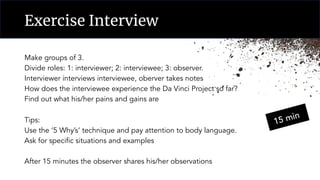
Exercise Interview
Make groups of 3.
Divide roles: 1: interviewer; 2: interviewee; 3: observer.
Interviewer interviews interviewee, oberver takes notes
How does the interviewee experience the Da Vinci Project so far?
Find out what his/her pains and gains are
Tips:
Use the ‘5 Why’s’ technique and pay attention to body language.
Ask for specific situations and examples
After 15 minutes the observer shares his/her observations
15 min
Make a List of Do’s & Dont’s
Do’s Dont’s
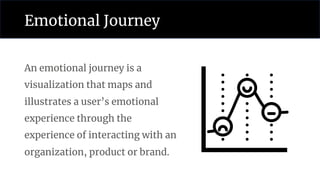
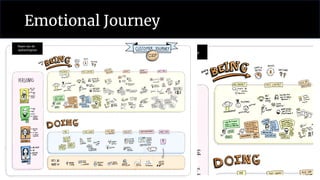
Emotional Journey
An emotional journey is a
visualization that maps and
illustrates a user’s emotional
experience through the
experience of interacting with an
organization, product or brand.
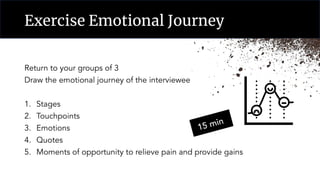
Exercise Emotional Journey
Return to your groups of 3
Draw the emotional journey of the interviewee
1. Stages
2. Touchpoints
3. Emotions
4. Quotes
5. Moments of opportunity to relieve pain and provide gains
15 min
Emotional Journey
Naam van de
opdrachtgever
Naam van de
opdrachtgever
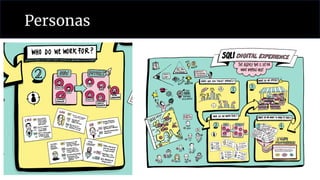
Personas
are fictional characters, which
you create based upon your
research to represent the
different user types that might
use your service, product, site,
or brand in a similar way.
Personas
Work in team
Discuss how you could apply
what you have learned today:
1. Interview techniques
2. Emotional Journey
3. Personas
HOW CAN YOU
APPLY THIS?
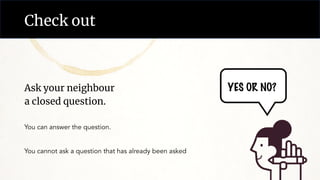
Check out
YES OR NO?
Ask your neighbour
a closed question.
You can answer the question.
You cannot ask a question that has already been asked

Da Vinci Project Design Thinking Workshop 3: Empathy.pdf

  • 1.
  • 2.
    Design Thinking Workshop 3 FiekeSluijs | Sept 29, 2022
  • 3.
    Check-in Ask your neighbour anopen open question You cannot ask a question that has already been asked HOW ARE YOU?
  • 4.
    How is theproject going? Empathizing with people you design for Meeting with stakeholder(s) Stakeholder mapping Context mapping Design brief
  • 5.
    Today •Recap week 1& 2 •Exercise interview •Exercise Emotional Journey
  • 6.
    What is DesignThinking? 1. a process to (dis)solve complex problems 2. a methodology and toolset to innovate 3. but most of all: a mindset
  • 7.
    Characteristics Design ThinkingProcess 1. Continuous succession of diverging & converging 2. Iteratief process 3. Human centered / User centered 4. Prototypen to learn 5. Co-creatie / Co-design 6. Holistisch perspectief
  • 8.
    The Design ThinkingMindset DO YOU HAVE THE MINDSET? 1. Creative thinking 2. Curious 3. Empathic 4. Thinking in possibilities 5. Not afraid of taking risks Dosi, C., F. Rosati & M. Vignoli (2018). Measuring the design thinking mindset. International Design Conference
  • 9.
  • 10.
    Empathy Understanding, being awareof, and being sensitive to the feelings, thoughts and experience of the people you are designing for Why is that important? How can we empathize? Why is it so hard?
  • 11.
  • 12.
    Empathy Map Canvas Designedfor: Designed by: Date: Version: WHO are we empathizing with? What do they need to DO? What do they need to do differently? What job(s) do they want or need to get done? What decision(s) do they need to make? How will we know they were successful? Who is the person we want to understand? What is the situation they are in? What is their role in the situation? GOAL What do they SEE? What do they SAY? What do they DO? What do they HEAR? What do they THINK and FEEL? What do they see in the marketplace? What do they see in their immediate environment? What do they see others saying and doing? What are they watching and reading? What have we heard them say? What can we imagine them saying? What do they do today? What behavior have we observed? What can we imagine them doing? What are they hearing others say? What are they hearing from friends? What are they hearing from colleagues? What are they hearing second-hand? © 2017 Dave Gray, xplane.com Last updated on 16 July 2017. Download a copy of this canvas at http://gamestorming.com/empathy-map/ 1 2 3 4 5 6 7 PAINS GAINS What are their fears, frustrations, and anxieties? What are their wants, needs, hopes and dreams? What other thoughts and feelings might motivate their behavior?
  • 13.
    Exercise Interview Make groupsof 3. Divide roles: 1: interviewer; 2: interviewee; 3: observer. Interviewer interviews interviewee, oberver takes notes How does the interviewee experience the Da Vinci Project so far? Find out what his/her pains and gains are Tips: Use the ‘5 Why’s’ technique and pay attention to body language. Ask for specific situations and examples After 15 minutes the observer shares his/her observations 15 min
  • 14.
    Make a Listof Do’s & Dont’s Do’s Dont’s
  • 15.
    Emotional Journey An emotionaljourney is a visualization that maps and illustrates a user’s emotional experience through the experience of interacting with an organization, product or brand.
  • 16.
    Exercise Emotional Journey Returnto your groups of 3 Draw the emotional journey of the interviewee 1. Stages 2. Touchpoints 3. Emotions 4. Quotes 5. Moments of opportunity to relieve pain and provide gains 15 min
  • 17.
    Emotional Journey Naam vande opdrachtgever Naam van de opdrachtgever
  • 18.
    Personas are fictional characters,which you create based upon your research to represent the different user types that might use your service, product, site, or brand in a similar way.
  • 19.
  • 20.
    Work in team Discusshow you could apply what you have learned today: 1. Interview techniques 2. Emotional Journey 3. Personas HOW CAN YOU APPLY THIS?
  • 21.
    Check out YES ORNO? Ask your neighbour a closed question. You can answer the question. You cannot ask a question that has already been asked