
Cystic fibrosis
by Alexandra Bejaniyan
Cystic fibrosis
Cystic fibrosis is a disease that changes
the body construction and makes it
mucus and sweat. It mainly affects:
• Lungs
• Digestive system
and other body parts.
Cystic fibrosis is genetic and caused by a
flawed gene.
Source: http://discovermagazine.com/~/media/Images/Issues/2013/September/a-look-inside-cystic-fibrosis.jpg
How do you get Cystic Fibrosis?
Cystic fibrosis is a recessive disorder. This means
that:
 Both parents should have the recessive gene
for a child to get the disease.
 If a child inherits only one copy of the
recessive gene, he or she will be a carrier.
*Carriers does not actually have the disease . But they can pass it to
their children.
Source: https://upload.wikimedia.org/wikipedia/commons/thumb/3/3e/Autorecessive.svg/1350px-Autorecessive.svg.png
Symptoms: Cystic Fibrosis
Respiratory (such as breathlessness)
i. Breathlessness.
ii. A cough that causes mucus
iii. Wheezing
iv. Repeated Lung infections
v. Inflamed nasal passages or a stuffy nose
Source: http://www.hindustanlink.com/health-care-blog/wp-content/uploads/2013/09/Best-Remedies-For-Lung-Infection.jpg
Symptoms: Cystic Fibrosis
Digestive symptoms
1. Foul-smelling, greasy stools
2. Poor weight gain and growth
3. Intestinal blockage, particularly in
newborns
4. Severe constipation
Source: http://blogs.longwood.edu/pmorris/files/2012/10/Cystic-Fibrosis-World.jpeg
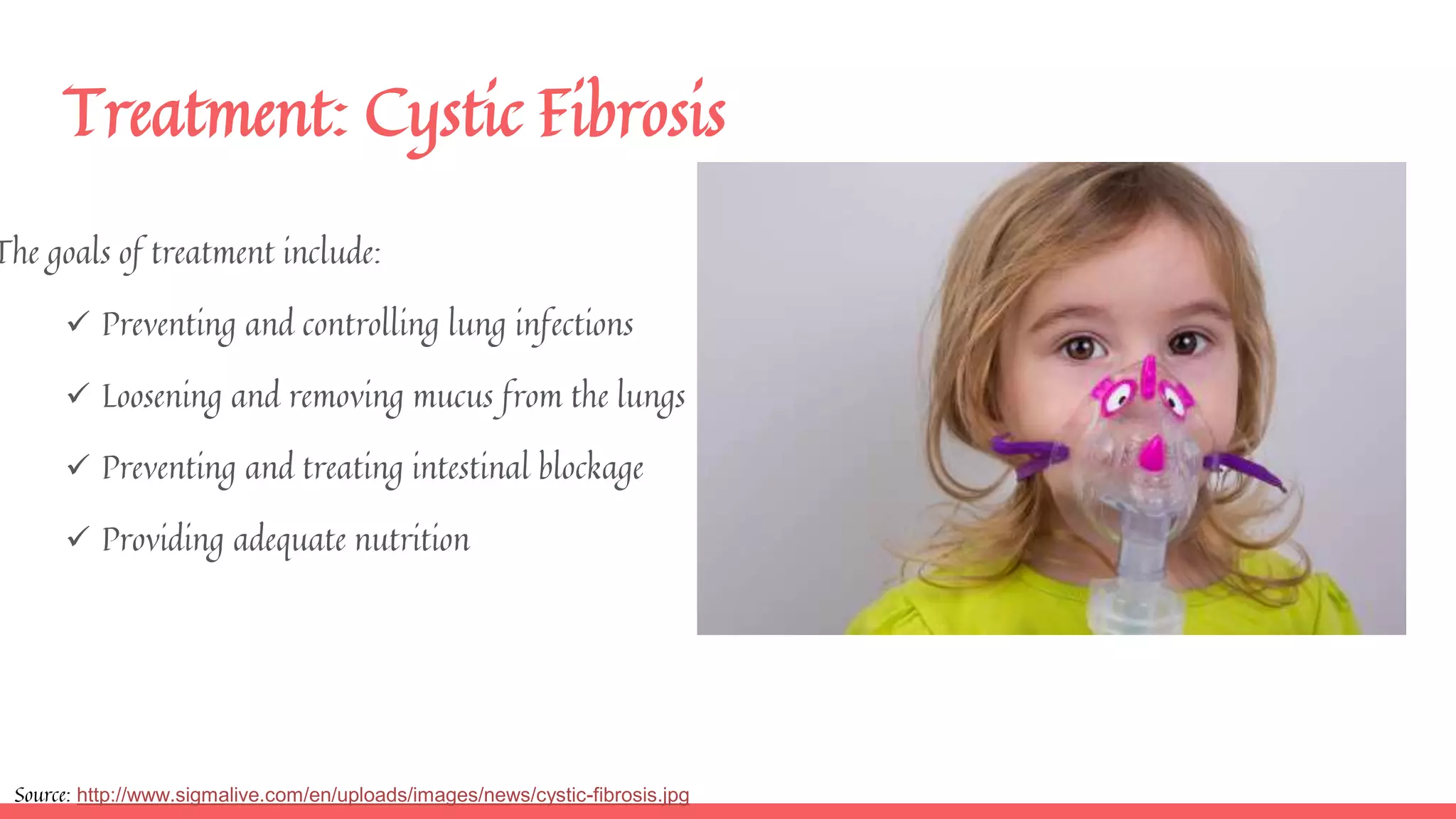
Treatment: Cystic Fibrosis
The goals of treatment include:
 Preventing and controlling lung infections
 Loosening and removing mucus from the lungs
 Preventing and treating intestinal blockage
 Providing adequate nutrition
Source: http://www.sigmalive.com/en/uploads/images/news/cystic-fibrosis.jpg
Medications: Cystic Fibrosis
The options of medications include:
I. Antibiotics to treat and prevent lung infections
II. Mucus-thinning drugs to help patient to cough up
the mucus, which improves lung function
III. Bronchodilators to help keep patient’s airways open
by relaxing the muscles around your bronchial
tubes
IV. Oral pancreatic enzymes to help patient’s digestive
tract absorb nutrients
Source: http://www.cysticfibrosis.org.uk/media/329290/CF%20Medication%20(468x257).jpg
Therapies used: Cystic Fibrosis
a. Chest physical therapy
b. Pulmonary rehabilitation
c. Surgical and other procedures
i. Nasal polyp removal.
ii. Oxygen therapy.
iii. Endoscopy and lavage.
iv. Feeding tube.
v. Bowel surgery.
vi. Lung transplant.Source: http://www.bio.miami.edu/dana/pix/gene_therapy.jpg
When to see a doctor?
Immediately!

Cystic Fibrosis. Brief explanation

  • 1.
  • 2.
    Cystic fibrosis Cystic fibrosisis a disease that changes the body construction and makes it mucus and sweat. It mainly affects: • Lungs • Digestive system and other body parts. Cystic fibrosis is genetic and caused by a flawed gene. Source: http://discovermagazine.com/~/media/Images/Issues/2013/September/a-look-inside-cystic-fibrosis.jpg
  • 3.
    How do youget Cystic Fibrosis? Cystic fibrosis is a recessive disorder. This means that:  Both parents should have the recessive gene for a child to get the disease.  If a child inherits only one copy of the recessive gene, he or she will be a carrier. *Carriers does not actually have the disease . But they can pass it to their children. Source: https://upload.wikimedia.org/wikipedia/commons/thumb/3/3e/Autorecessive.svg/1350px-Autorecessive.svg.png
  • 4.
    Symptoms: Cystic Fibrosis Respiratory(such as breathlessness) i. Breathlessness. ii. A cough that causes mucus iii. Wheezing iv. Repeated Lung infections v. Inflamed nasal passages or a stuffy nose Source: http://www.hindustanlink.com/health-care-blog/wp-content/uploads/2013/09/Best-Remedies-For-Lung-Infection.jpg
  • 5.
    Symptoms: Cystic Fibrosis Digestivesymptoms 1. Foul-smelling, greasy stools 2. Poor weight gain and growth 3. Intestinal blockage, particularly in newborns 4. Severe constipation Source: http://blogs.longwood.edu/pmorris/files/2012/10/Cystic-Fibrosis-World.jpeg
  • 6.
    Treatment: Cystic Fibrosis Thegoals of treatment include:  Preventing and controlling lung infections  Loosening and removing mucus from the lungs  Preventing and treating intestinal blockage  Providing adequate nutrition Source: http://www.sigmalive.com/en/uploads/images/news/cystic-fibrosis.jpg
  • 7.
    Medications: Cystic Fibrosis Theoptions of medications include: I. Antibiotics to treat and prevent lung infections II. Mucus-thinning drugs to help patient to cough up the mucus, which improves lung function III. Bronchodilators to help keep patient’s airways open by relaxing the muscles around your bronchial tubes IV. Oral pancreatic enzymes to help patient’s digestive tract absorb nutrients Source: http://www.cysticfibrosis.org.uk/media/329290/CF%20Medication%20(468x257).jpg
  • 8.
    Therapies used: CysticFibrosis a. Chest physical therapy b. Pulmonary rehabilitation c. Surgical and other procedures i. Nasal polyp removal. ii. Oxygen therapy. iii. Endoscopy and lavage. iv. Feeding tube. v. Bowel surgery. vi. Lung transplant.Source: http://www.bio.miami.edu/dana/pix/gene_therapy.jpg
  • 9.
    When to seea doctor? Immediately!