CYSTIC FIBROSIS
Sir. Stymass Kasty
SOKOINE UNIVERSITY OF AGRICULTURE
MOROGORO-TANZANIA
INTRODUCTION
 Inherited Disorder -Common
in white population, 1: 3,000)
 Autosomal Recessive
 Gene located on
Chromosome 7 (7q31.2-q31.3)
 Typically present in
Childhood (7% Adult=CF+)
 Cystic fibrosis affects the
cells that produce mucus,
sweat and digestive juices
MECHANISM
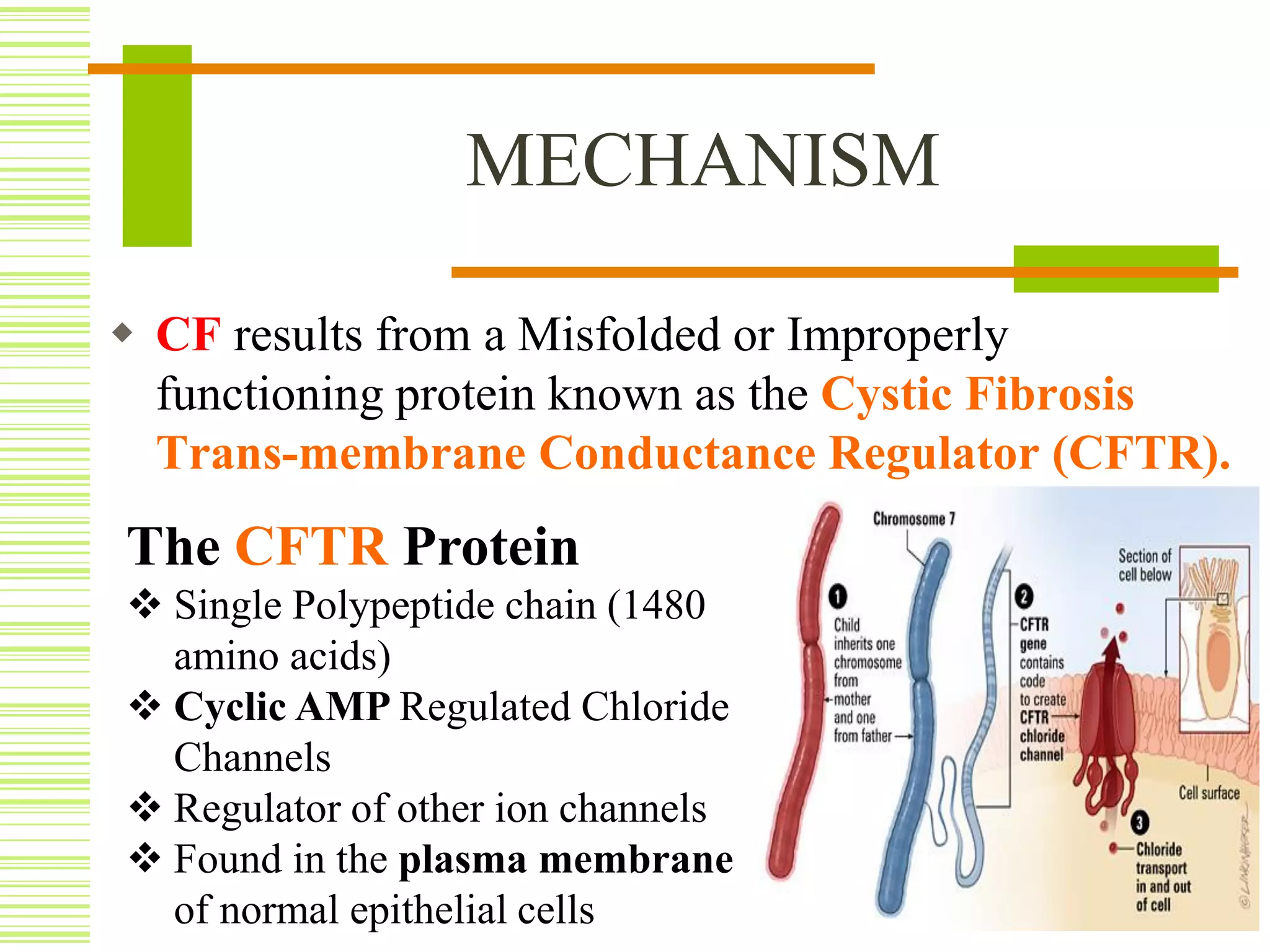
 CF results from a Misfolded or Improperly
functioning protein known as the Cystic Fibrosis
Trans-membrane Conductance Regulator (CFTR).
The CFTR Protein
 Single Polypeptide chain (1480
amino acids)
 Cyclic AMP Regulated Chloride
Channels
 Regulator of other ion channels
 Found in the plasma membrane
of normal epithelial cells
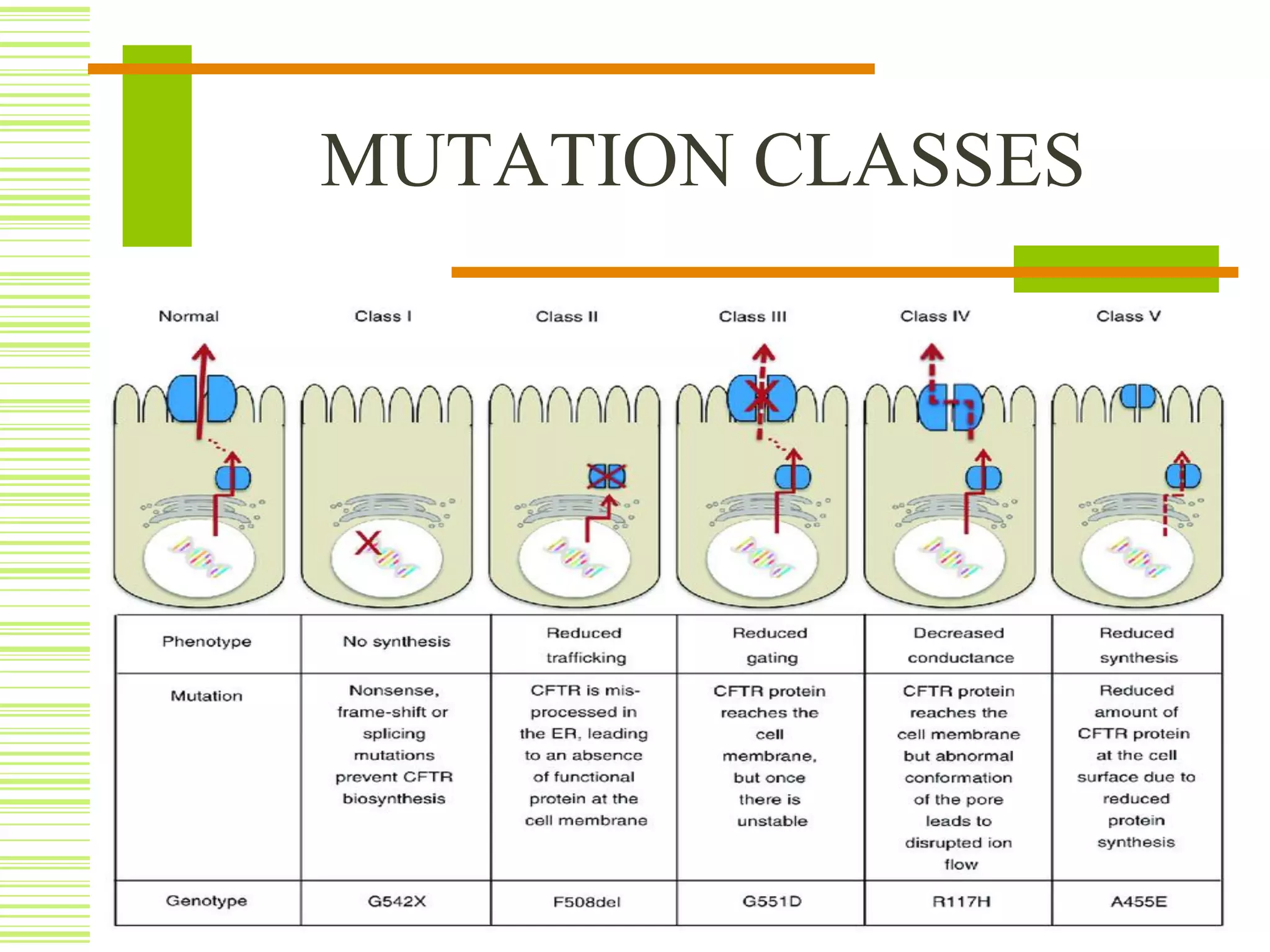
MUTATION CLASSES
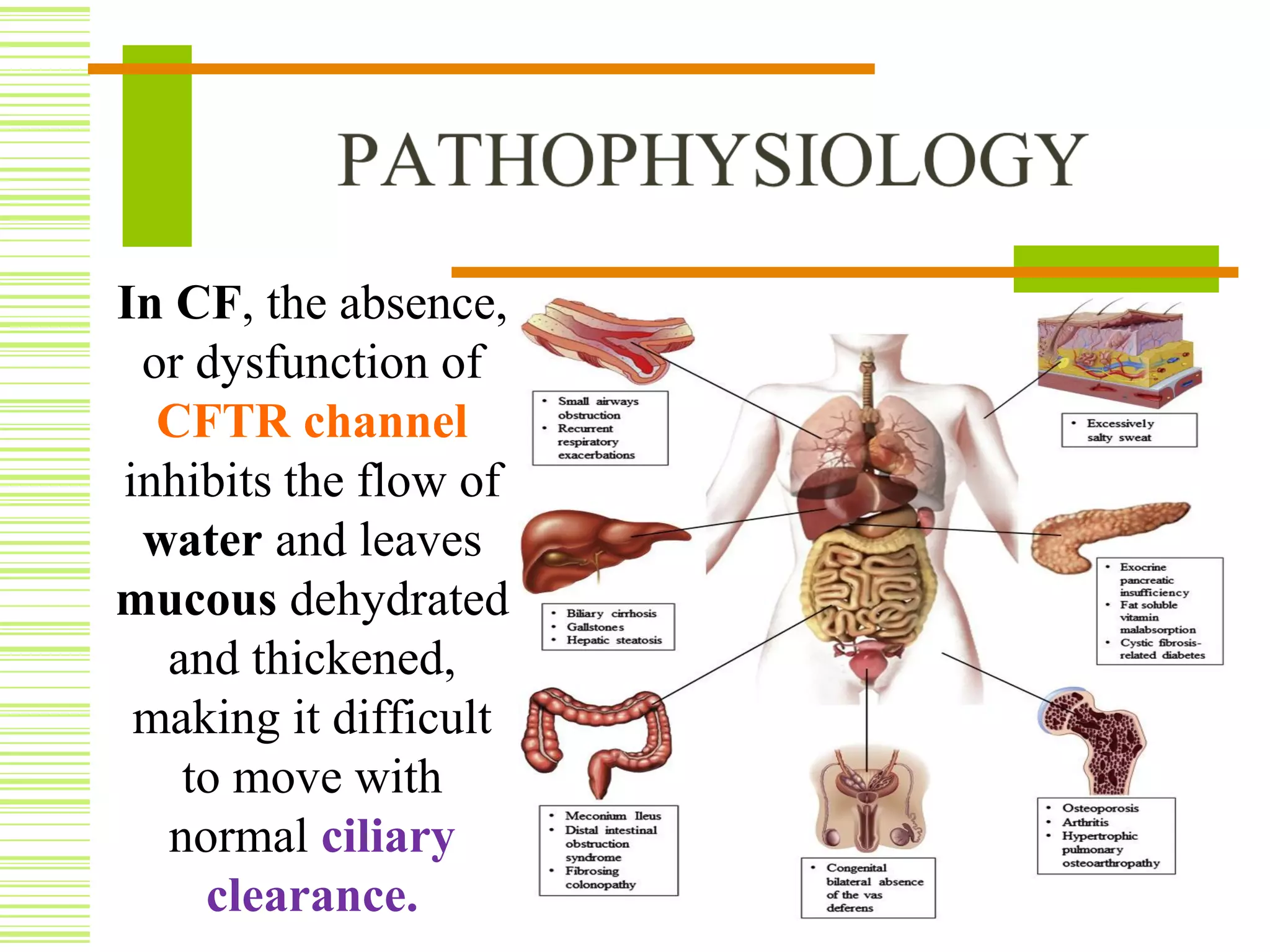
In CF, the absence,
or dysfunction of
CFTR channel
inhibits the flow of
water and leaves
mucous dehydrated
and thickened,
making it difficult
to move with
normal ciliary
clearance.
MUCUS CLEARANCE
AIRWAY
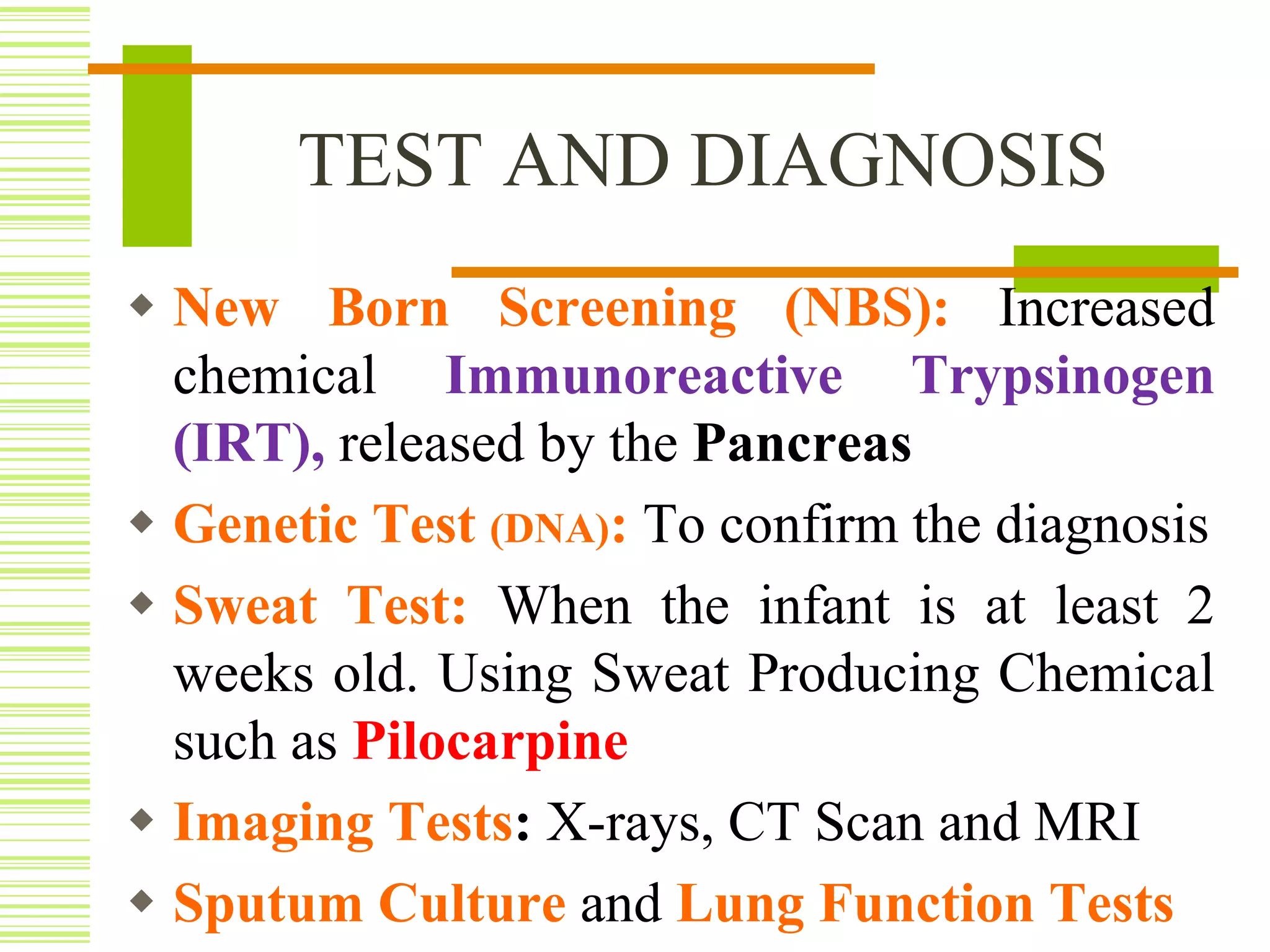
TEST AND DIAGNOSIS
 New Born Screening (NBS): Increased
chemical Immunoreactive Trypsinogen
(IRT), released by the Pancreas
 Genetic Test (DNA): To confirm the diagnosis
 Sweat Test: When the infant is at least 2
weeks old. Using Sweat Producing Chemical
such as Pilocarpine
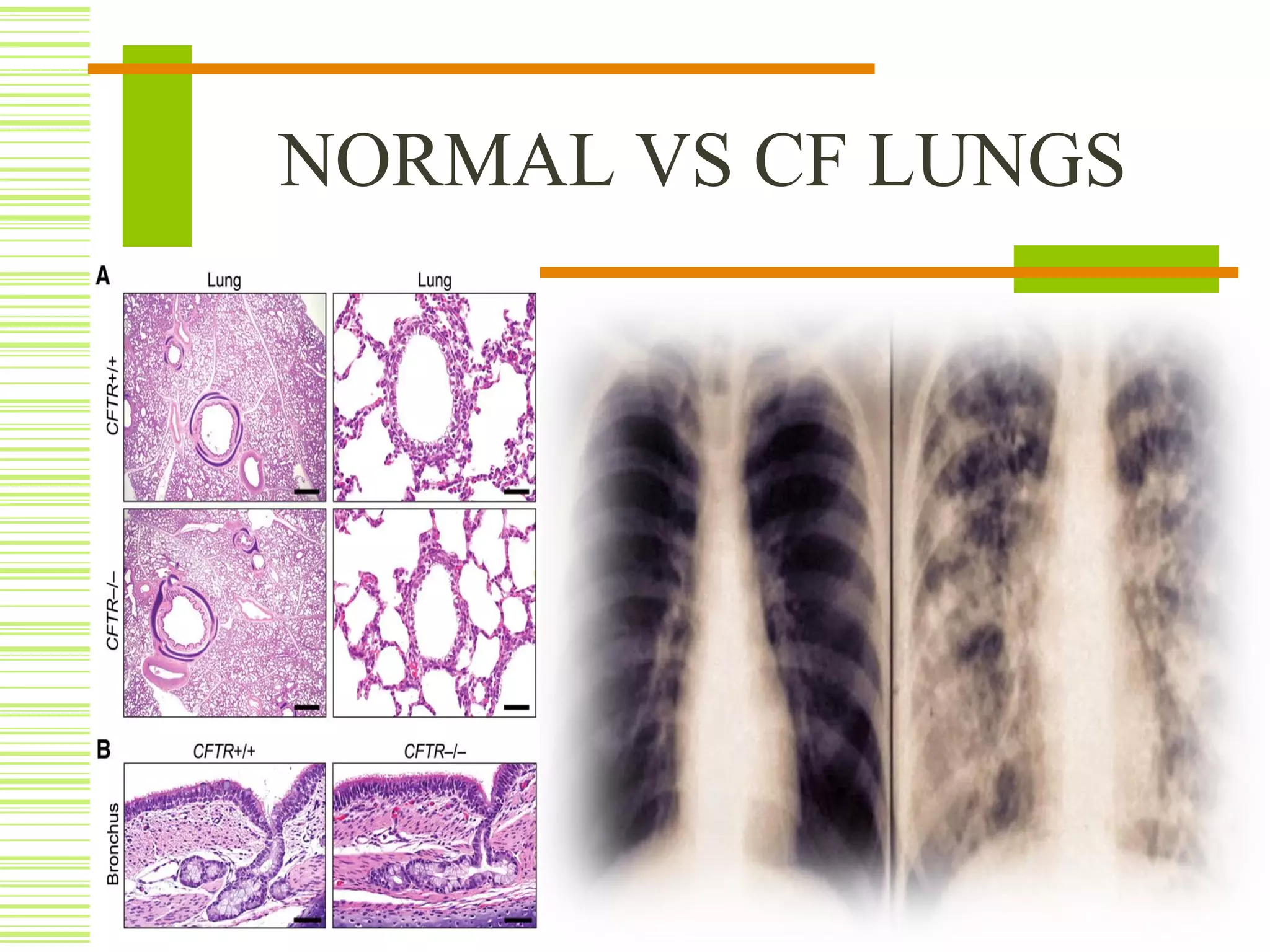
 Imaging Tests: X-rays, CT Scan and MRI
 Sputum Culture and Lung Function Tests
TEST AND DIAGNOSIS
NORMAL VS CF LUNGS
TREATMENT
MAJOR OBJECTIVES
 Prevent and control lung
Infections
 Removing and Loosening
mucus from the lungs
 Treating and Preventing
intestinal blockage
 Providing adequate nutrition
 Promote Clearance of
Secretions
MEDICATION
 There is NO Cure for CF
 Some OPTIONS are:
o Antibiotics
o Anti-Inflammatory Drugs
o Mucus-thinning Drugs
o Bronchodilators
o Oral Pancreatic Enzyme
o Ivacaftor (Kalydeco)-NEW
CONCLUSION
Potential Future Treatments:
Gene Therapy Research may
also be a viable approach for
treating lung diseases caused by
Cystic Fibrosis (CF)
CYSTIC FIBROSIS

CYSTIC FIBROSIS

  • 1.
    CYSTIC FIBROSIS Sir. StymassKasty SOKOINE UNIVERSITY OF AGRICULTURE MOROGORO-TANZANIA
  • 2.
    INTRODUCTION  Inherited Disorder-Common in white population, 1: 3,000)  Autosomal Recessive  Gene located on Chromosome 7 (7q31.2-q31.3)  Typically present in Childhood (7% Adult=CF+)  Cystic fibrosis affects the cells that produce mucus, sweat and digestive juices
  • 3.
    MECHANISM  CF resultsfrom a Misfolded or Improperly functioning protein known as the Cystic Fibrosis Trans-membrane Conductance Regulator (CFTR). The CFTR Protein  Single Polypeptide chain (1480 amino acids)  Cyclic AMP Regulated Chloride Channels  Regulator of other ion channels  Found in the plasma membrane of normal epithelial cells
  • 4.
  • 5.
    In CF, theabsence, or dysfunction of CFTR channel inhibits the flow of water and leaves mucous dehydrated and thickened, making it difficult to move with normal ciliary clearance.
  • 6.
  • 7.
  • 8.
    TEST AND DIAGNOSIS New Born Screening (NBS): Increased chemical Immunoreactive Trypsinogen (IRT), released by the Pancreas  Genetic Test (DNA): To confirm the diagnosis  Sweat Test: When the infant is at least 2 weeks old. Using Sweat Producing Chemical such as Pilocarpine  Imaging Tests: X-rays, CT Scan and MRI  Sputum Culture and Lung Function Tests
  • 9.
  • 10.
  • 11.
    TREATMENT MAJOR OBJECTIVES  Preventand control lung Infections  Removing and Loosening mucus from the lungs  Treating and Preventing intestinal blockage  Providing adequate nutrition  Promote Clearance of Secretions MEDICATION  There is NO Cure for CF  Some OPTIONS are: o Antibiotics o Anti-Inflammatory Drugs o Mucus-thinning Drugs o Bronchodilators o Oral Pancreatic Enzyme o Ivacaftor (Kalydeco)-NEW
  • 12.
    CONCLUSION Potential Future Treatments: GeneTherapy Research may also be a viable approach for treating lung diseases caused by Cystic Fibrosis (CF)