Open Access policies and
benefits
Alma Swan
SPARC Europe
Key Perspectives Ltd
Enabling Open Scholarship
University of Cyprus Open Access event, 24 October 2014
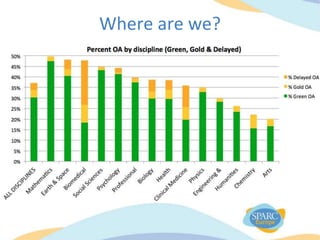
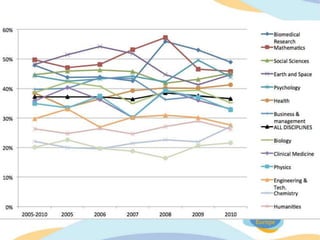
Where are we?
Policy formulation
• Even mandates can fail to deliver!
• Essential elements:
• Mandatory
• Deposit in repository
• Deposit immediately
• Connect deposit with research assessment
Obligation
• Voluntary (Request/Encourage)
• Mandatory (Requirement)
• The most effective policy is a mandatory
policy for peer-reviewed research
Action
• Require immediate self-archiving (deposit
in repository)
• The most effective policy requires
researchers to deposit all peer-reviewed
research immediately upon acceptance for
publication into the institutional repository
of the organisation
Deposit
• Deposit must be required, but access may
be delayed
• Publications may be deposited in
embargoed or restricted access, if there are
publisher restrictions to Open Access.
Metadata must be always immediately
accessible and repositories should
implement the “Request a copy button”
Key clause
• Connect repository deposit with research
assessment and performance review
• The most effective policy requires that
authoritative publication information/lists
should be directly drawn from the
institutional repository for evaluation and
reporting purposes
What’s in it for authors?
Author advantages from Open Access
• Visibility
• Usage
• Impact
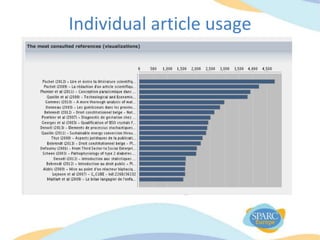
Individual article usage
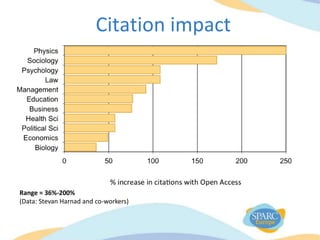
Citation impact
Range = 36%-200%
(Data: Stevan Harnad and co-workers)
For institutions and
funders?
Institutional and funder advantages
from Open Access
• Visibility, usage
• Impact
• Profiling and marketing
• Institutional management information tool
• Outreach to the public: demonstrating social return
• Economic benefits
Outreach: the public
• Independent researchers
• Education sector
• Professional community
• Practitioner community
• Interested ‘lay’ public
• Business sector, including innovative SMEs
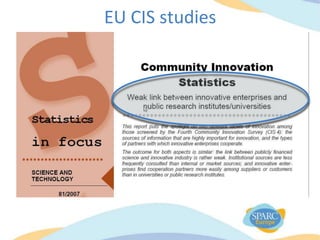
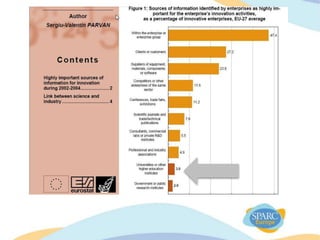
EU CIS studies
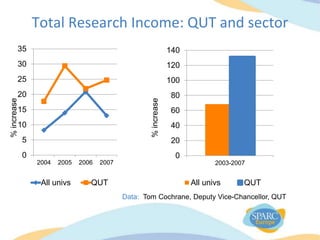
Total Research Income: QUT and sector
Data: Tom Cochrane, Deputy Vice-Chancellor, QUT
0
5
10
15
20
25
30
35
2004 2005 2006 2007
All univs QUT
%increase
0
20
40
60
80
100
120
140
2003-2007
All univs QUT
%increase
Open Data
• H2020 Open Data pilot
• Areas participating in 2014-15:
– Future and Emerging Technologies
– Research infrastructures – part of e-Infrastructures
– Information & Communication Technologies
– Societal challenge: Secure, Clean & Efficient Energy
– Societal Challenge: Climate action, Environment, Resource Efficiency and Raw
Materials (except Raw Materials)
– Societal Challenge: Europe in a Changing World – inclusive, innovative and
reflective societies
– Science with and for Society
• Other areas can participate voluntarily
It is one of the noblest duties of a
university to advance knowledge and
to diffuse it, not merely among those
who can attend the daily lectures, but
far and wide.
Daniel Coit Gilman
First President, Johns Hopkins University
Thank you for listening
almaswan3@gmail.com
www.sparceurope.org
www.openscholarship.org
Creative Commons License
This work is licensed under
Attribution 4.0 International License
http://creativecommons.org/licenses/by/4.0/

Open Access Policies and Benefits, Oct 2014

  • 1.
    Open Access policiesand benefits Alma Swan SPARC Europe Key Perspectives Ltd Enabling Open Scholarship University of Cyprus Open Access event, 24 October 2014
  • 2.
  • 4.
    Policy formulation • Evenmandates can fail to deliver! • Essential elements: • Mandatory • Deposit in repository • Deposit immediately • Connect deposit with research assessment
  • 5.
    Obligation • Voluntary (Request/Encourage) •Mandatory (Requirement) • The most effective policy is a mandatory policy for peer-reviewed research
  • 6.
    Action • Require immediateself-archiving (deposit in repository) • The most effective policy requires researchers to deposit all peer-reviewed research immediately upon acceptance for publication into the institutional repository of the organisation
  • 7.
    Deposit • Deposit mustbe required, but access may be delayed • Publications may be deposited in embargoed or restricted access, if there are publisher restrictions to Open Access. Metadata must be always immediately accessible and repositories should implement the “Request a copy button”
  • 8.
    Key clause • Connectrepository deposit with research assessment and performance review • The most effective policy requires that authoritative publication information/lists should be directly drawn from the institutional repository for evaluation and reporting purposes
  • 9.
    What’s in itfor authors?
  • 10.
    Author advantages fromOpen Access • Visibility • Usage • Impact
  • 11.
  • 12.
    Citation impact Range =36%-200% (Data: Stevan Harnad and co-workers)
  • 13.
  • 14.
    Institutional and funderadvantages from Open Access • Visibility, usage • Impact • Profiling and marketing • Institutional management information tool • Outreach to the public: demonstrating social return • Economic benefits
  • 15.
    Outreach: the public •Independent researchers • Education sector • Professional community • Practitioner community • Interested ‘lay’ public • Business sector, including innovative SMEs
  • 16.
  • 18.
    Total Research Income:QUT and sector Data: Tom Cochrane, Deputy Vice-Chancellor, QUT 0 5 10 15 20 25 30 35 2004 2005 2006 2007 All univs QUT %increase 0 20 40 60 80 100 120 140 2003-2007 All univs QUT %increase
  • 19.
    Open Data • H2020Open Data pilot • Areas participating in 2014-15: – Future and Emerging Technologies – Research infrastructures – part of e-Infrastructures – Information & Communication Technologies – Societal challenge: Secure, Clean & Efficient Energy – Societal Challenge: Climate action, Environment, Resource Efficiency and Raw Materials (except Raw Materials) – Societal Challenge: Europe in a Changing World – inclusive, innovative and reflective societies – Science with and for Society • Other areas can participate voluntarily
  • 20.
    It is oneof the noblest duties of a university to advance knowledge and to diffuse it, not merely among those who can attend the daily lectures, but far and wide. Daniel Coit Gilman First President, Johns Hopkins University
  • 21.
    Thank you forlistening almaswan3@gmail.com www.sparceurope.org www.openscholarship.org
  • 22.
    Creative Commons License Thiswork is licensed under Attribution 4.0 International License http://creativecommons.org/licenses/by/4.0/