Download to read offline
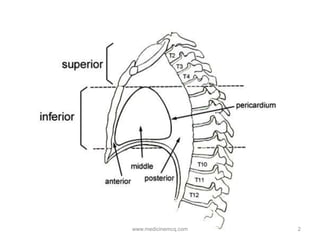
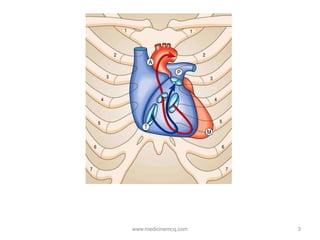
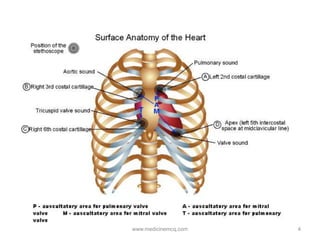
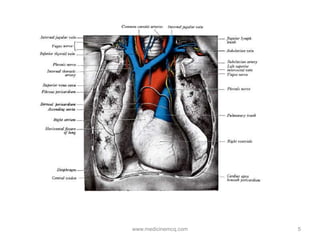
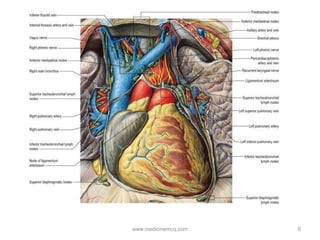
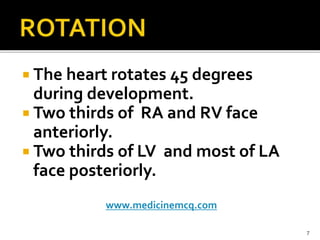
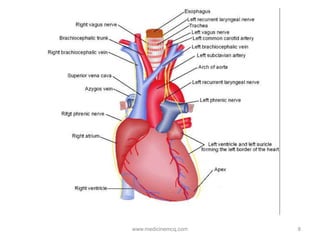
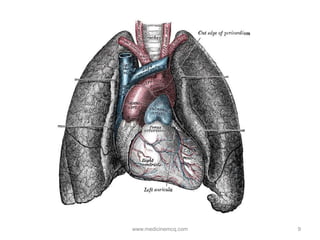
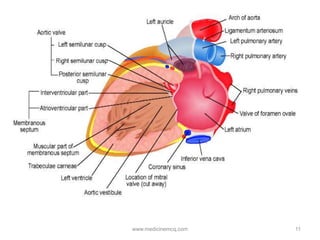
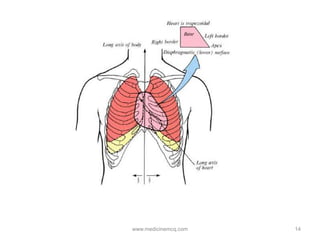

The document discusses the anatomy and positioning of the heart. It notes that the heart rotates 45 degrees during development, with two thirds of the right atrium and right ventricle facing anteriorly and two thirds of the left ventricle and most of the left atrium facing posteriorly. The left atrium forms most of the posterior aspect of the heart and most of the base. The right ventricle forms most of the anterior aspect, covering most of the left heart in front.


![Hypothalamus short ppt by Dr. Neha [PT].pptx](https://cdn.slidesharecdn.com/ss_thumbnails/hypothalamusbydr-260124145759-b9f94a93-thumbnail.jpg?width=640&height=640&fit=bounds)


