PRESENTED BY; SUPERVISED BY;
Ms.M Jyothi Mr. George. D.Honalli MSC nursing
2nd
year bsc nursing HOD. Dept of Medical surgical nursing
BBC college of nursing BBC college of nursing
INTRODUCTION
• Cerebrovascular accident is also called as stroke or
brain attack
• Cerebro means related to brain or cerebrum,
vascular means blood vessels, and accident means
unexpected event.
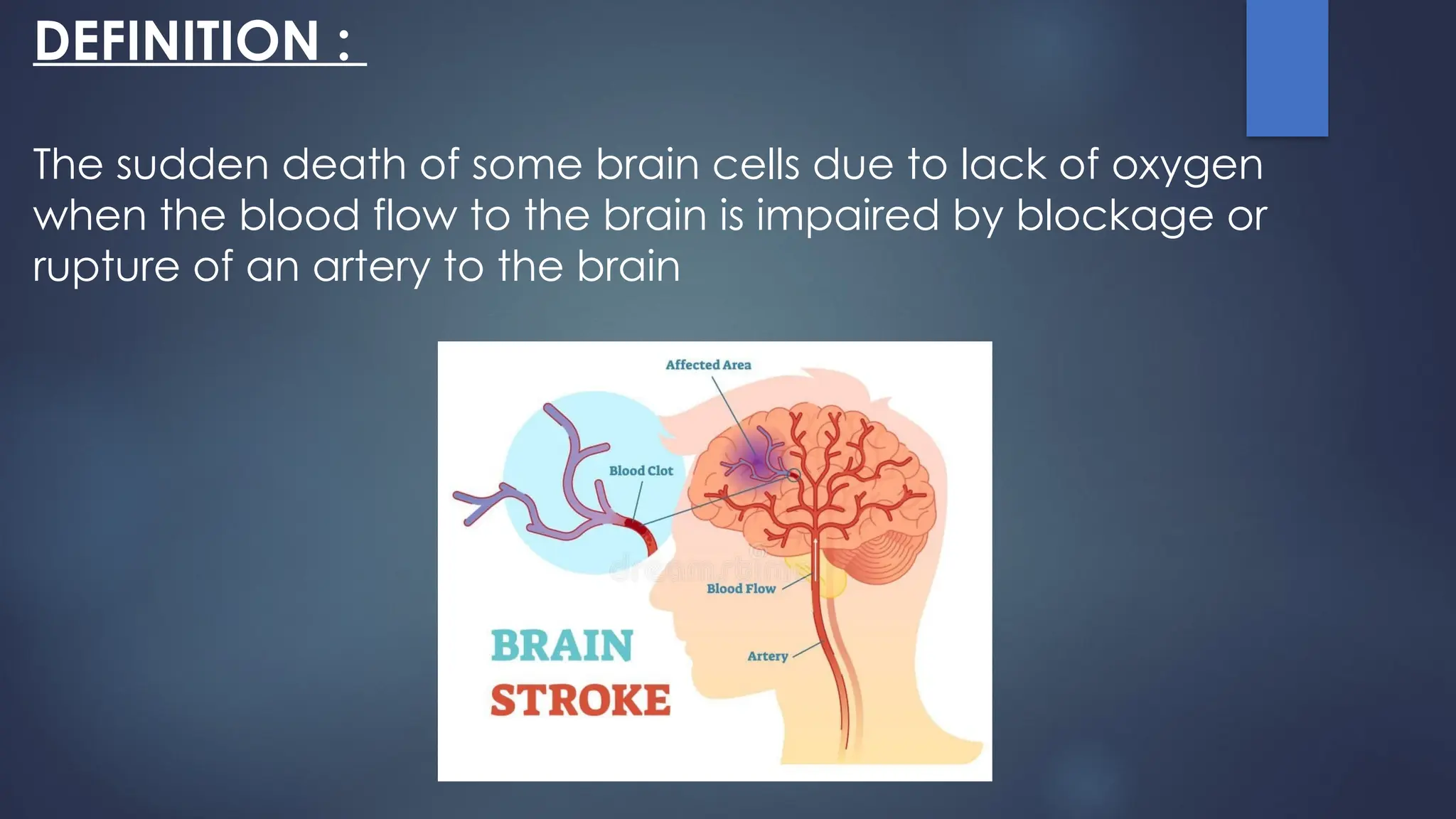
DEFINITION :
The sudden death of some brain cells due to lack of oxygen
when the blood flow to the brain is impaired by blockage or
rupture of an artery to the brain
CAUSES :
• Transient ischemic attack,
• Cerebral thrombus,
• Cerebral embolism,
• Cerebral hemorrhage.
RISK FACTORS:
MODIFIBALE RISK FACTORS
• Hypertension
• Smoking
• Diabetes
• High cholesterol
• Obesity
• Physical inactivity
• Unhealthy diet
• Previous TIA
• Heart disease
NON-MODIFIBALE RISK FACTORS
• Age
• Gender[men have higher
risk]
• Family history
• Race
TYPES:
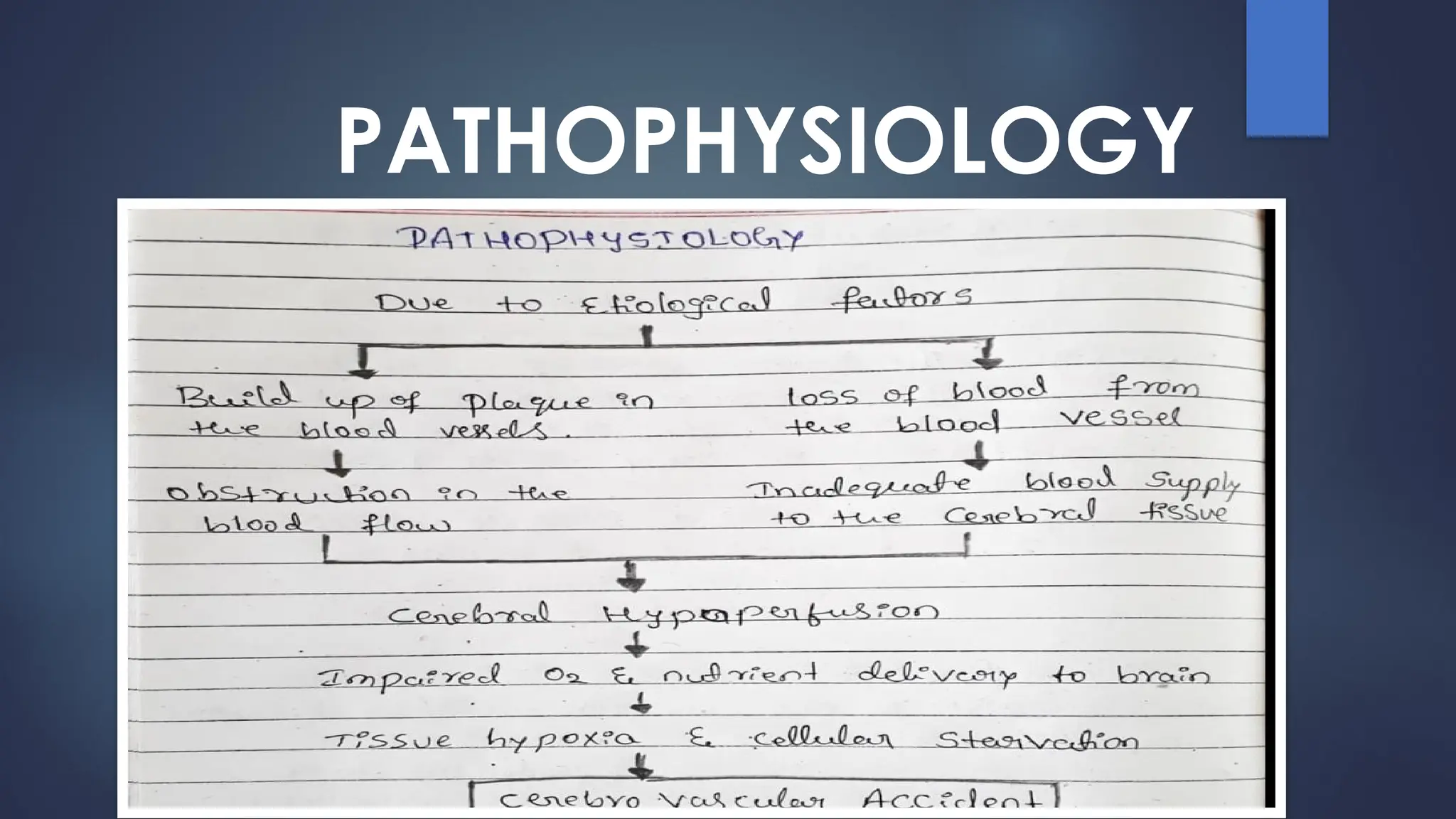
PATHOPHYSIOLOGY
FRONTAL LOBE
• Weakness or paralysis on
the opposite side of the
body
• Difficulty with speech
• Problem with decision
making & planning
TEMPORAL LOBE
• Difficulty understanding
spoken/written words
• Loss of memory
• Hearing changes
• Trouble recognizing objects /
faces
PARIETAL LOBE
• Loss of sensation
• Loss of co- ordination
• Balance problems
OCCIPETAL LOBE
• Loss of vision
• Blurred vision
• Diplopia
• Problem with visual
perception
BRAIN STEM
• Problem with vital
functions [HR, breathing,
BP]
• Dysphagia
• Dysarthria
CEREBELLUM
• Poor co-ordination
• Unsteady gait
• Tremors
• Fine motor issues
DIAGNOSTIC EVALUATION
• History collection
• Physical examination
• CT scan
• CT with Angiography
• Conventional
angiograph
• Carotid doppler ultra
sound
• ECG
LABORATORY TESTS
• CBC
• Electrolyte levels
• Lipid levels
• Blood glucose level
• Coagulation studies
MANAGEMENT
GOAL – restore the blood flow to the brain
MEDICAL MANAGEMENT
• THROMBOLYTICS - Recombinant Tissue plasminogen activator
ANTICOAGULANT- Heparin
warfarin
• ANTIPLATELETS - Aspirin
Clopidogrel
SURGICAL MANAGEMENT
• Carotid endarterectomy : it involves making an incision
in the neck to remove plaque from the carotid artery.
• Carotid artery stenting: procedure that open clogged
artery to restore blood flow to the brain.
• Craniotomy: Removing part of the skull to relieve
pressure or remove blood clots.
NURSING DIAGNOSIS
 Ineffective tissue perfusion related to Hemorrhage as evidenced by
changes in vital signs
 Impaired physical mobility related neuromuscular involvement as
evidenced by limited range of motion
 Impaired verbal communication related impaired cerebral
circulation as evidenced by dysartia.
THANK YOU

CVA OR STROKE .

  • 1.
    PRESENTED BY; SUPERVISEDBY; Ms.M Jyothi Mr. George. D.Honalli MSC nursing 2nd year bsc nursing HOD. Dept of Medical surgical nursing BBC college of nursing BBC college of nursing
  • 2.
    INTRODUCTION • Cerebrovascular accidentis also called as stroke or brain attack • Cerebro means related to brain or cerebrum, vascular means blood vessels, and accident means unexpected event.
  • 3.
    DEFINITION : The suddendeath of some brain cells due to lack of oxygen when the blood flow to the brain is impaired by blockage or rupture of an artery to the brain
  • 4.
    CAUSES : • Transientischemic attack, • Cerebral thrombus, • Cerebral embolism, • Cerebral hemorrhage.
  • 5.
    RISK FACTORS: MODIFIBALE RISKFACTORS • Hypertension • Smoking • Diabetes • High cholesterol • Obesity • Physical inactivity • Unhealthy diet • Previous TIA • Heart disease NON-MODIFIBALE RISK FACTORS • Age • Gender[men have higher risk] • Family history • Race
  • 7.
  • 8.
  • 9.
    FRONTAL LOBE • Weaknessor paralysis on the opposite side of the body • Difficulty with speech • Problem with decision making & planning TEMPORAL LOBE • Difficulty understanding spoken/written words • Loss of memory • Hearing changes • Trouble recognizing objects / faces PARIETAL LOBE • Loss of sensation • Loss of co- ordination • Balance problems OCCIPETAL LOBE • Loss of vision • Blurred vision • Diplopia • Problem with visual perception BRAIN STEM • Problem with vital functions [HR, breathing, BP] • Dysphagia • Dysarthria CEREBELLUM • Poor co-ordination • Unsteady gait • Tremors • Fine motor issues
  • 10.
    DIAGNOSTIC EVALUATION • Historycollection • Physical examination • CT scan • CT with Angiography • Conventional angiograph • Carotid doppler ultra sound • ECG LABORATORY TESTS • CBC • Electrolyte levels • Lipid levels • Blood glucose level • Coagulation studies
  • 11.
    MANAGEMENT GOAL – restorethe blood flow to the brain MEDICAL MANAGEMENT • THROMBOLYTICS - Recombinant Tissue plasminogen activator ANTICOAGULANT- Heparin warfarin • ANTIPLATELETS - Aspirin Clopidogrel
  • 12.
    SURGICAL MANAGEMENT • Carotidendarterectomy : it involves making an incision in the neck to remove plaque from the carotid artery. • Carotid artery stenting: procedure that open clogged artery to restore blood flow to the brain. • Craniotomy: Removing part of the skull to relieve pressure or remove blood clots.
  • 13.
    NURSING DIAGNOSIS  Ineffectivetissue perfusion related to Hemorrhage as evidenced by changes in vital signs  Impaired physical mobility related neuromuscular involvement as evidenced by limited range of motion  Impaired verbal communication related impaired cerebral circulation as evidenced by dysartia.
  • 14.