Chapter 12
CURRICULUM PLANNING
DEVELOPING A CURRICULUM RATIONALLY
INVOLVES 2 FACTORS
1. Identifying relevant substantive decisions at increasing levels of
specificity and precisions and;
2. Checking for consistency between and among the ends in means
decisions by a two way process of derivation and evaluation at
each stage by referring to data sources for basic information.
Curriculum Planning
Two major issues as to who plans
the curriculum
The educational profession itself is a force which affects
curriculum planning since the tendencies of the professionals
to develop sets of beliefs and practices constitute possible
limitations on curriculum development
 Testing programs and standardized test data have to be
considered by curriculum planners along with many other
types.
Curriculum planners certainly need data about pupil
achievement in making their decisions as to curriculum needs
and achievements.
The learners’ needs ,the culture ,the society and the teachers are
other factors to be considered in curriculum planning.
Curriculum planning should be made by those most directly
involved in the carrying out of learning activities for pupils :
teachers, school administrators, boards od education, and
parents.
Lastly , it must be stressed here that any curriculum study must
not be done on a trial and error basis and the leadership must be
protected against such waste by a deep respect for and
knowledge of educational research in the field in question and
by proper organizational procedures provided at the central
source.
Chapter 13
Implementing
Curriculum Change
“There is nothing
permanent except
change”
Change in the Curriculum
Development
A curriculum developer must have some knowledge of the change
process itself.
He must plan for the consequences that arise from the different
change strategies employed.
His effective curriculum change program must maintain the
relevance of the schools to the current needs of society.
Knowledge acquired through behavioral sciences provides some
guidelines for programs of change.
Specialist personnel must be employed if full benefit is to be
obtained either from the planning process or from the
implementation of plans.
Management of Change
 Change
Is defined as any alteration in the properties of one or more
system elements;
Client systems
Are defined as any recipient of a change element;
System elements
Are defined as discrete phenomena wether material that are
interrelated and can be considered parts of client systems
Change element
Is defined as a material or immaterial phenomenon that is foreign or
new to the client system.
Change agent
Is defined as the carrier of a change element .
Resistance to change
Is defined as efforts by client system or of individual system to slow
or frustrate the introduction of a change element to alter its
properties.
A. The change element appears in the
environment of a client system.
B. The change element is “carried into by the
client system by a change agent (consciously or
unconsciously).
C. The client system reacts
The Change Process
Another Model of Change
Process
A. The change element appears in the environment altering its
properties.
B. Client systems adjust their structures to adapt to the new
environmental requirements.
C. Individual human beings with the client system adjust their
behavior to the requirements of the new structure.
D. The new behavior patterns are institutionalize as “fixed” by a
corresponding adjustment in attitude, sentiment and values.
Curriculum Leaders Follow The
Analysis Sequence;
A. Identification of factors
B. Analysis of client system
C. Analysis of change element
D.Analysis of change agent
E. Prediction of change process outcomes
F. Rational Intervention (Management of Change)
Strategy for Curriculum
Change
•Curriculum Change must be goal directed
•Involves Creating conditions of productive work
•Involves a large amount of training
•Involves human and emotional factors
•Requires may kinds of competencies
•Managing curriculum change requires skilled
leadership
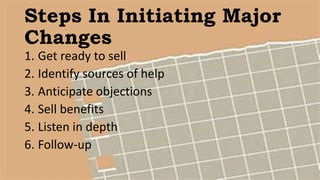
Steps In Initiating Major
Changes
1. Get ready to sell
2. Identify sources of help
3. Anticipate objections
4. Sell benefits
5. Listen in depth
6. Follow-up
Sequence Of Curriculum
Change
1. Production of pilot units
2. Testing experimental units
3. Revising and consolidating
4. Developing framework
5. Installing and disseminating new units
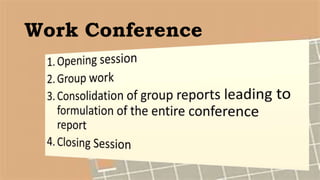
Work Conference
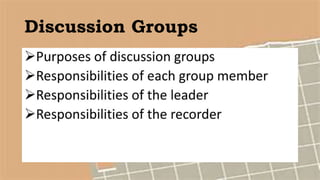
Discussion Groups
Curriculum Change In the
Philippines
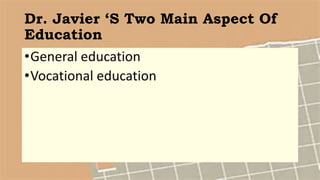
Dr. Javier ‘S Two Main Aspect Of
Education
Whatever should be the direction ,the Philippine
school curriculum must change to adapt to the
changes occurring today and in the future.
This change must be directed by the needs of the
Filipinos
Curriculum developers must be intelligent enough to
recognize how their period differed from the previous
one.
Chapter 14
Approaches to Curriculum
1.The Subject Centered Curriculum
2.The Child Centered Curriculum
3.The Problem Centered Curriculum

Curriculum planning.pptx

  • 1.
  • 2.
    DEVELOPING A CURRICULUMRATIONALLY INVOLVES 2 FACTORS 1. Identifying relevant substantive decisions at increasing levels of specificity and precisions and; 2. Checking for consistency between and among the ends in means decisions by a two way process of derivation and evaluation at each stage by referring to data sources for basic information.
  • 3.
  • 4.
    Two major issuesas to who plans the curriculum
  • 7.
    The educational professionitself is a force which affects curriculum planning since the tendencies of the professionals to develop sets of beliefs and practices constitute possible limitations on curriculum development  Testing programs and standardized test data have to be considered by curriculum planners along with many other types. Curriculum planners certainly need data about pupil achievement in making their decisions as to curriculum needs and achievements.
  • 8.
    The learners’ needs,the culture ,the society and the teachers are other factors to be considered in curriculum planning. Curriculum planning should be made by those most directly involved in the carrying out of learning activities for pupils : teachers, school administrators, boards od education, and parents. Lastly , it must be stressed here that any curriculum study must not be done on a trial and error basis and the leadership must be protected against such waste by a deep respect for and knowledge of educational research in the field in question and by proper organizational procedures provided at the central source.
  • 9.
  • 10.
  • 11.
    Change in theCurriculum Development A curriculum developer must have some knowledge of the change process itself. He must plan for the consequences that arise from the different change strategies employed. His effective curriculum change program must maintain the relevance of the schools to the current needs of society.
  • 12.
    Knowledge acquired throughbehavioral sciences provides some guidelines for programs of change. Specialist personnel must be employed if full benefit is to be obtained either from the planning process or from the implementation of plans.
  • 13.
    Management of Change Change Is defined as any alteration in the properties of one or more system elements; Client systems Are defined as any recipient of a change element; System elements Are defined as discrete phenomena wether material that are interrelated and can be considered parts of client systems
  • 14.
    Change element Is definedas a material or immaterial phenomenon that is foreign or new to the client system. Change agent Is defined as the carrier of a change element . Resistance to change Is defined as efforts by client system or of individual system to slow or frustrate the introduction of a change element to alter its properties.
  • 15.
    A. The changeelement appears in the environment of a client system. B. The change element is “carried into by the client system by a change agent (consciously or unconsciously). C. The client system reacts The Change Process
  • 16.
    Another Model ofChange Process A. The change element appears in the environment altering its properties. B. Client systems adjust their structures to adapt to the new environmental requirements. C. Individual human beings with the client system adjust their behavior to the requirements of the new structure. D. The new behavior patterns are institutionalize as “fixed” by a corresponding adjustment in attitude, sentiment and values.
  • 17.
    Curriculum Leaders FollowThe Analysis Sequence; A. Identification of factors B. Analysis of client system C. Analysis of change element D.Analysis of change agent E. Prediction of change process outcomes F. Rational Intervention (Management of Change)
  • 18.
    Strategy for Curriculum Change •CurriculumChange must be goal directed •Involves Creating conditions of productive work •Involves a large amount of training •Involves human and emotional factors •Requires may kinds of competencies •Managing curriculum change requires skilled leadership
  • 19.
    Steps In InitiatingMajor Changes 1. Get ready to sell 2. Identify sources of help 3. Anticipate objections 4. Sell benefits 5. Listen in depth 6. Follow-up
  • 20.
    Sequence Of Curriculum Change 1.Production of pilot units 2. Testing experimental units 3. Revising and consolidating 4. Developing framework 5. Installing and disseminating new units
  • 21.
  • 22.
  • 23.
    Curriculum Change Inthe Philippines
  • 24.
    Dr. Javier ‘STwo Main Aspect Of Education
  • 25.
    Whatever should bethe direction ,the Philippine school curriculum must change to adapt to the changes occurring today and in the future. This change must be directed by the needs of the Filipinos Curriculum developers must be intelligent enough to recognize how their period differed from the previous one.
  • 26.
    Chapter 14 Approaches toCurriculum 1.The Subject Centered Curriculum 2.The Child Centered Curriculum 3.The Problem Centered Curriculum