Curriculum by Design
Maggie Chen
and Brandon Zaslow
January 30, 2016
What is Backward Design?
Backward Design is beginning
with the end in mind; starting with
a clear understanding of your destination.
◦Know where you are going;
◦Know where you are now;
◦So the steps you take are always in the
right direction.
Backward Design
• Backward Design is a process created by Grant Wiggins and Jay
McTighe and introduced in Understanding by Design (1998).
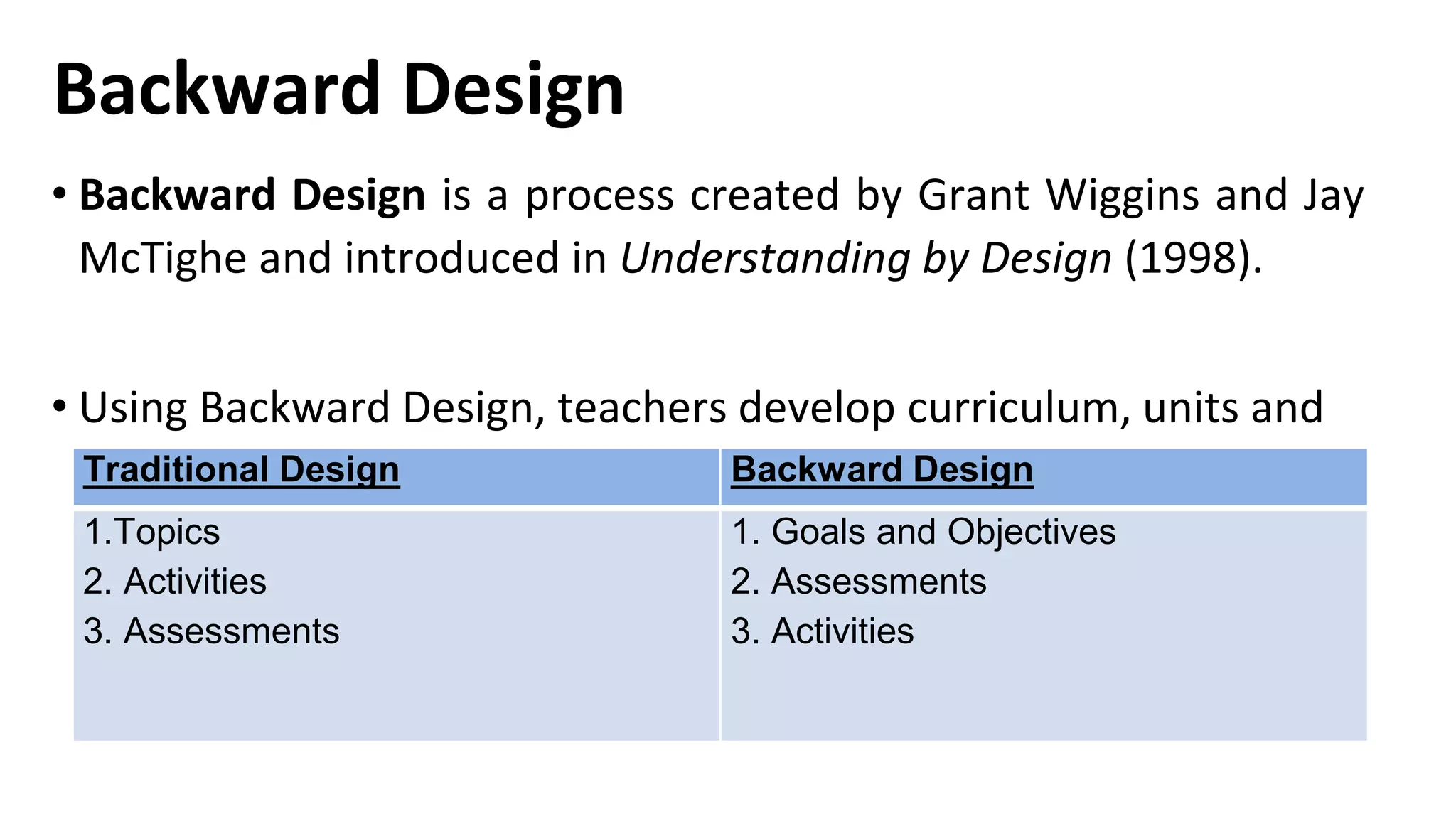
• Using Backward Design, teachers develop curriculum, units and
lessons) in a different order than in traditional planning.Traditional Design Backward Design
1.Topics
2. Activities
3. Assessments
1. Goals and Objectives
2. Assessments
3. Activities
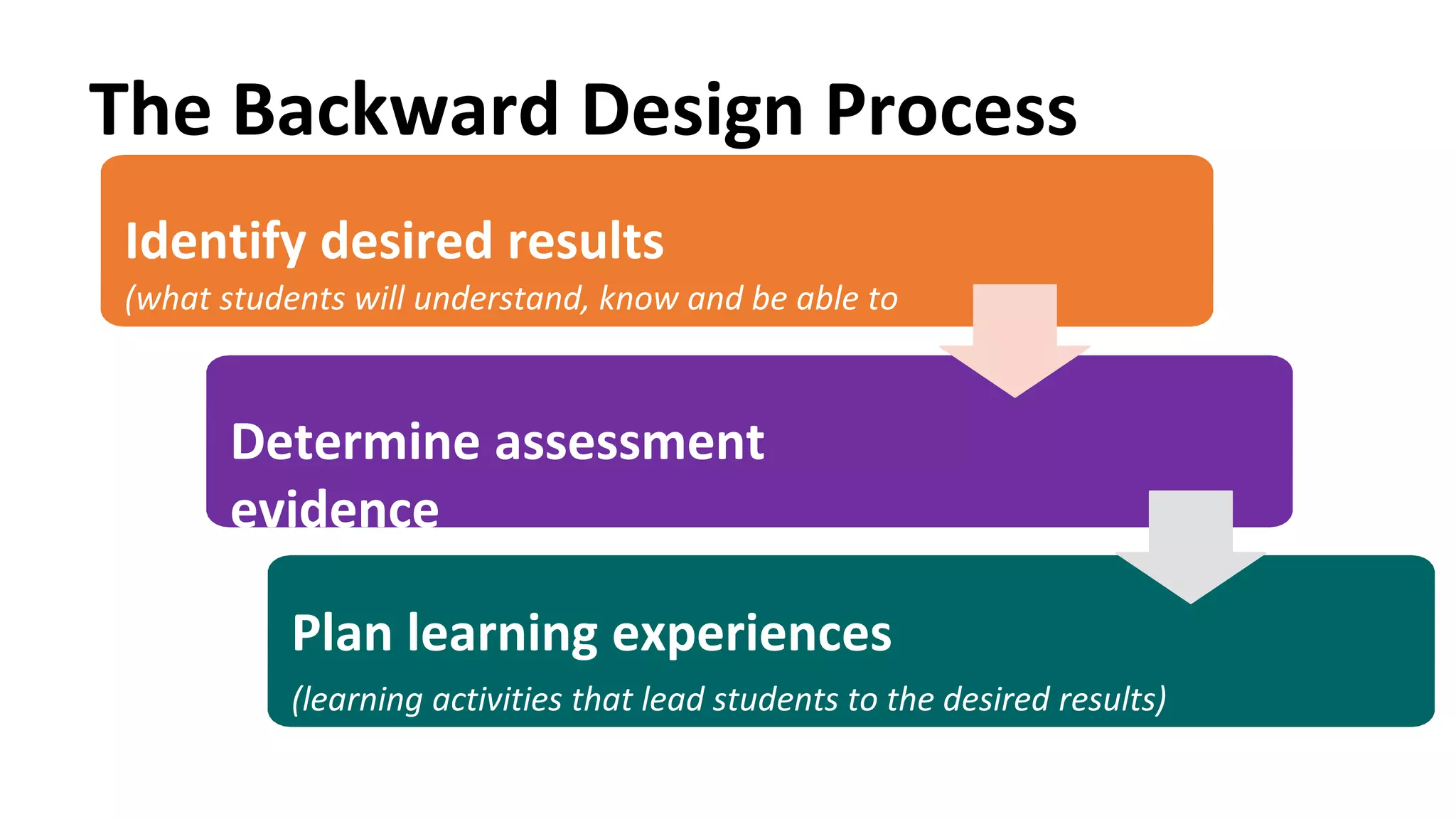
The Backward Design Process
Identify desired results
(what students will understand, know and be able to
do)
Determine assessment
evidence
(evidence that demonstrates student learning)
Plan learning experiences
(learning activities that lead students to the desired results)
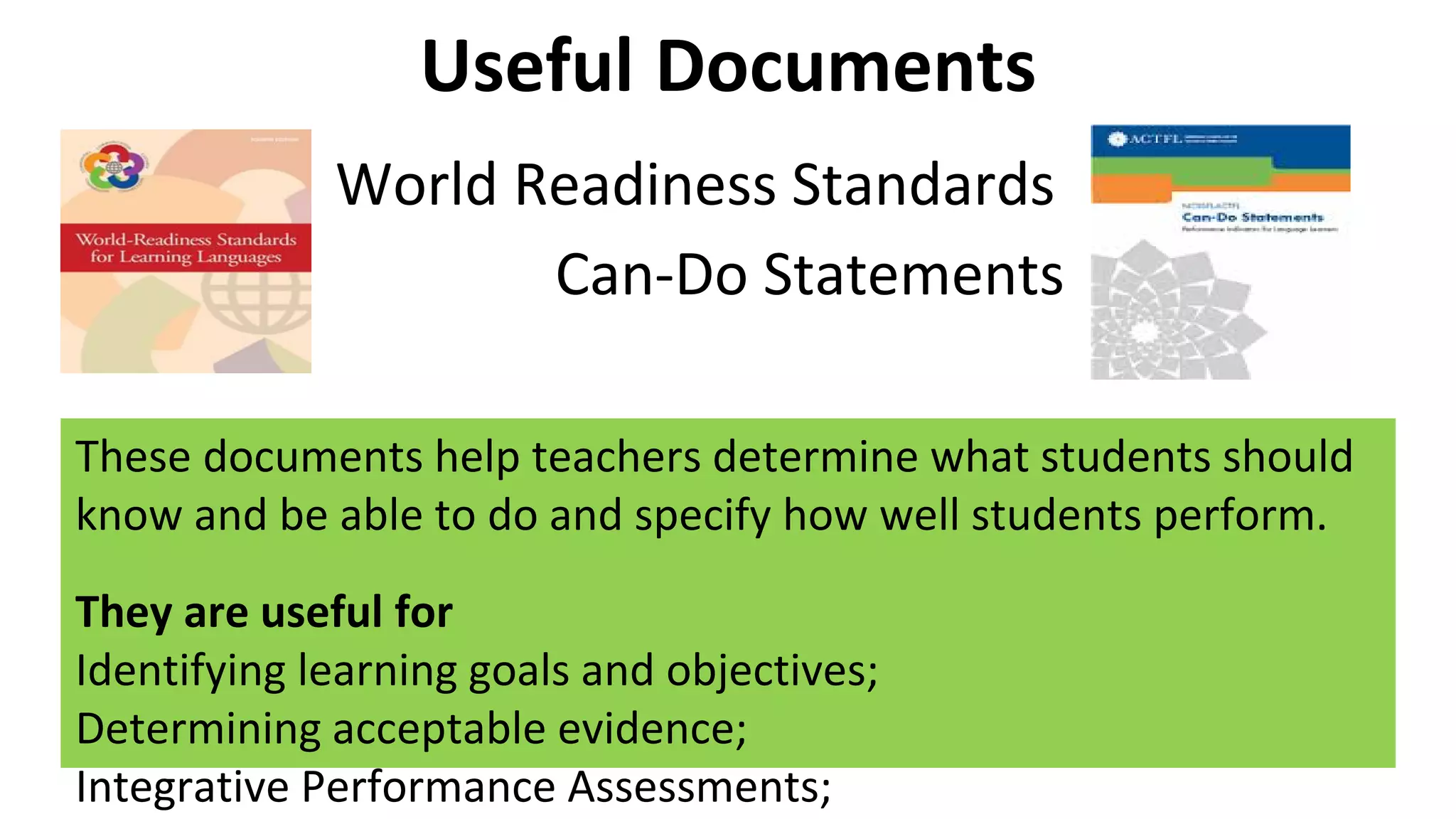
Useful Documents
• World Readiness Standards
• Can-Do Statements
These documents help teachers determine what students should
know and be able to do and specify how well students perform.
They are useful for
Identifying learning goals and objectives;
Determining acceptable evidence;
Integrative Performance Assessments;
Test Your Knowledge
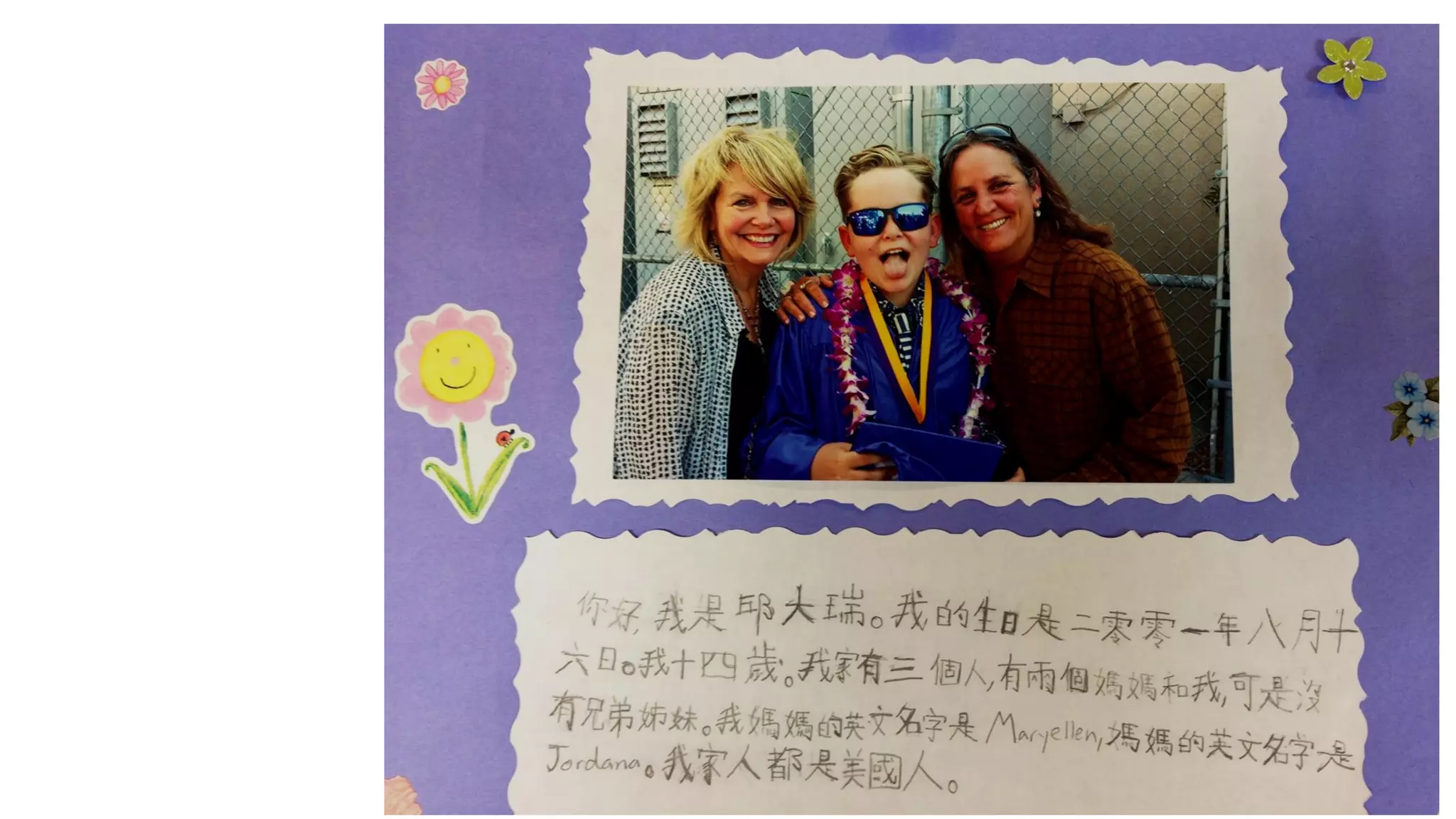
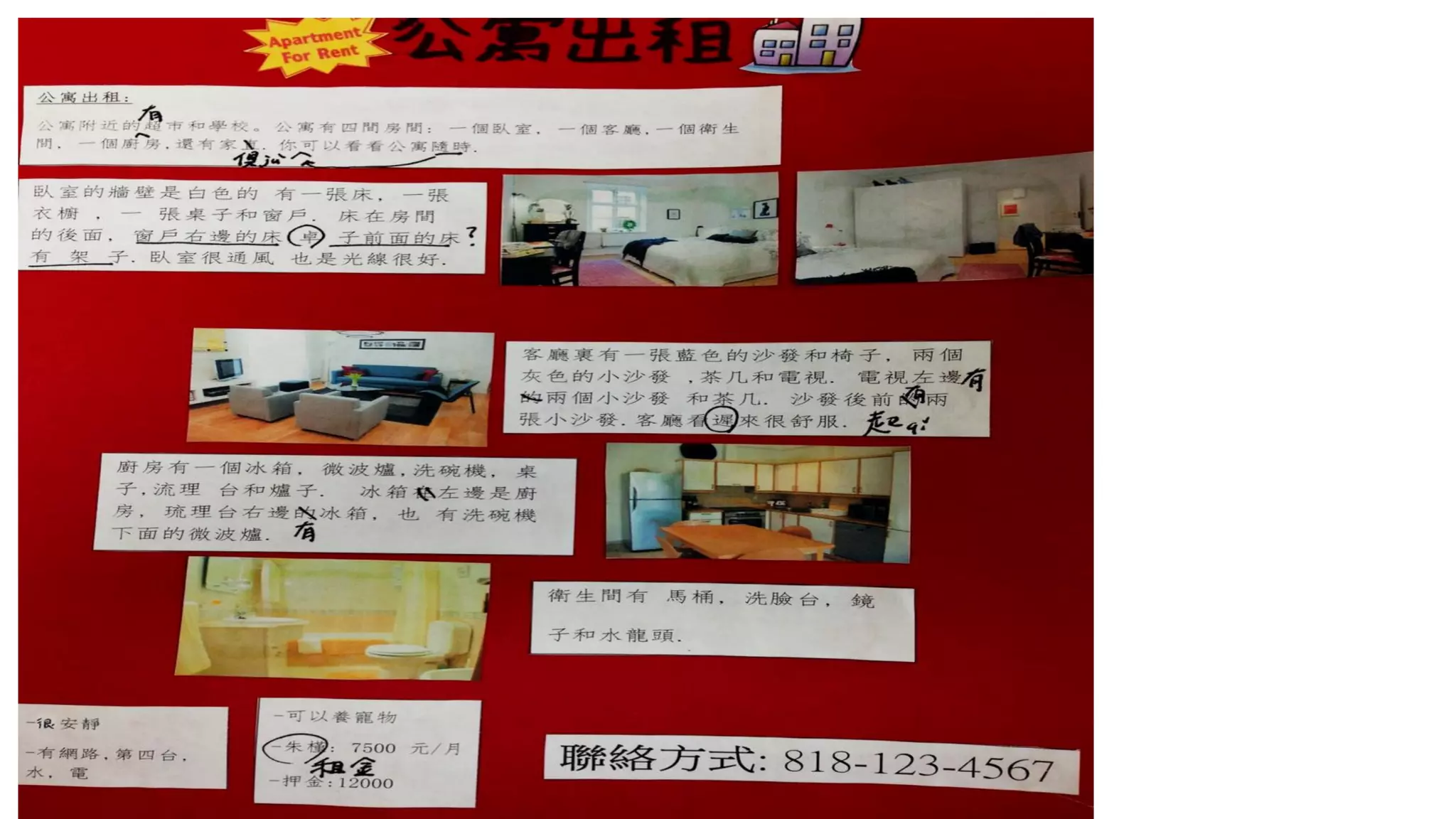
1.What do you know about presentational tasks?
2.How are they similar or different from projects?
3.What role does a “real-world” audience play in
the success of presentational tasks?
4.How are the assessment of language, culture
and content connected to presentational
communication?
Presentational Communication
Learners present information,
concepts, and ideas to inform,
explain, persuade, and narrate
on a variety of topics using
appropriate media and adapting
to various audiences of
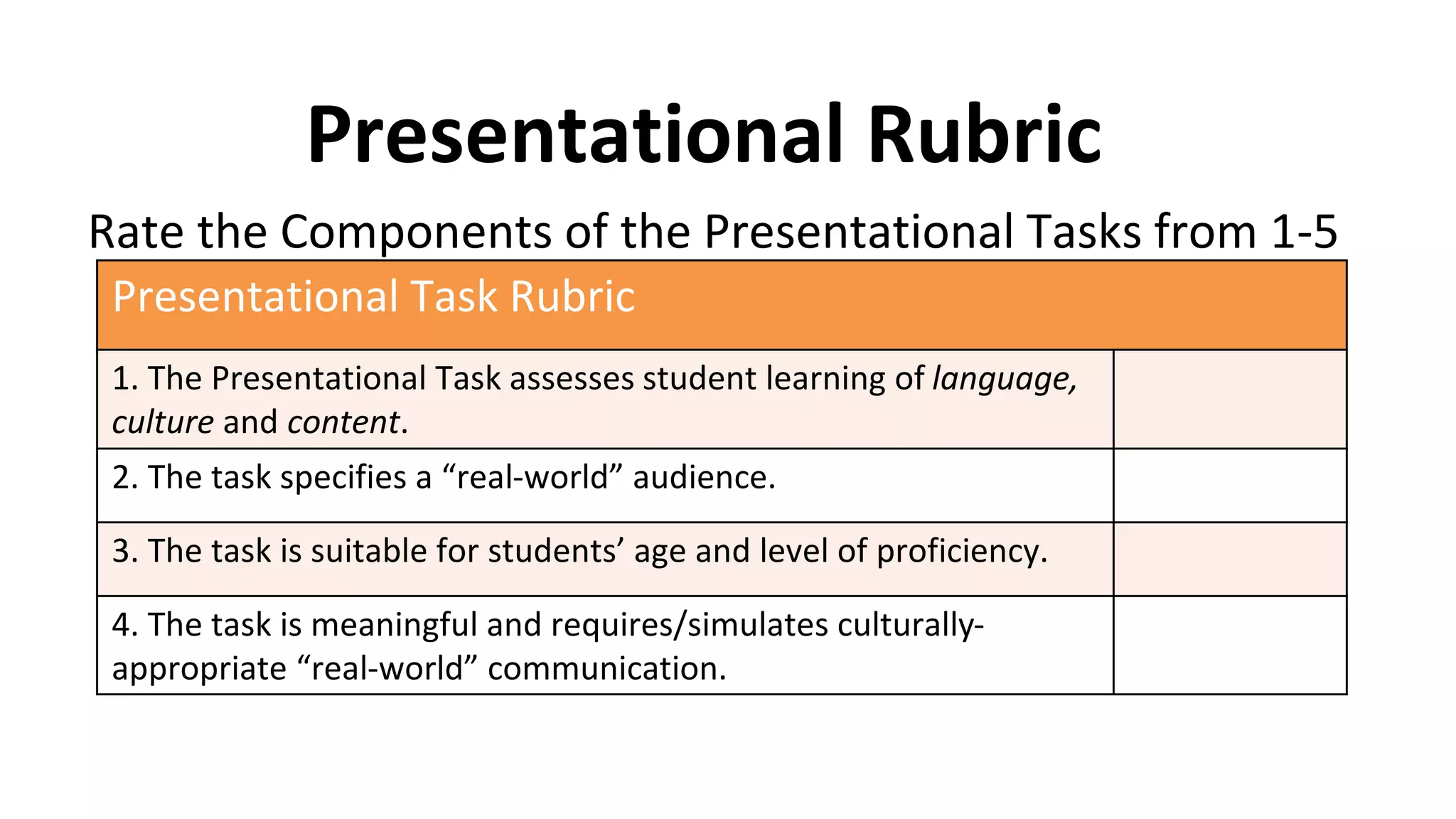
Presentational Rubric
Rate the Components of the Presentational Tasks from 1-5
Presentational Task Rubric
1. The Presentational Task assesses student learning of language,
culture and content.
2. The task specifies a “real-world” audience.
3. The task is suitable for students’ age and level of proficiency.
4. The task is meaningful and requires/simulates culturally-
appropriate “real-world” communication.
Curriculum by design ppt

Curriculum by design ppt

  • 1.
    Curriculum by Design MaggieChen and Brandon Zaslow January 30, 2016
  • 2.
    What is BackwardDesign? Backward Design is beginning with the end in mind; starting with a clear understanding of your destination. ◦Know where you are going; ◦Know where you are now; ◦So the steps you take are always in the right direction.
  • 3.
    Backward Design • BackwardDesign is a process created by Grant Wiggins and Jay McTighe and introduced in Understanding by Design (1998). • Using Backward Design, teachers develop curriculum, units and lessons) in a different order than in traditional planning.Traditional Design Backward Design 1.Topics 2. Activities 3. Assessments 1. Goals and Objectives 2. Assessments 3. Activities
  • 4.
    The Backward DesignProcess Identify desired results (what students will understand, know and be able to do) Determine assessment evidence (evidence that demonstrates student learning) Plan learning experiences (learning activities that lead students to the desired results)
  • 5.
    Useful Documents • WorldReadiness Standards • Can-Do Statements These documents help teachers determine what students should know and be able to do and specify how well students perform. They are useful for Identifying learning goals and objectives; Determining acceptable evidence; Integrative Performance Assessments;
  • 6.
    Test Your Knowledge 1.Whatdo you know about presentational tasks? 2.How are they similar or different from projects? 3.What role does a “real-world” audience play in the success of presentational tasks? 4.How are the assessment of language, culture and content connected to presentational communication?
  • 7.
    Presentational Communication Learners presentinformation, concepts, and ideas to inform, explain, persuade, and narrate on a variety of topics using appropriate media and adapting to various audiences of
  • 8.
    Presentational Rubric Rate theComponents of the Presentational Tasks from 1-5 Presentational Task Rubric 1. The Presentational Task assesses student learning of language, culture and content. 2. The task specifies a “real-world” audience. 3. The task is suitable for students’ age and level of proficiency. 4. The task is meaningful and requires/simulates culturally- appropriate “real-world” communication.