
CURA FUNCIONAL DO HIV
CELSO FERREIRA RAMOS FILHO
ACADEMIA NACIONAL DE MEDICINA
13.06.2013
CONFLITO DE INTERESSES
Nenhum conflito de interesses a relatar
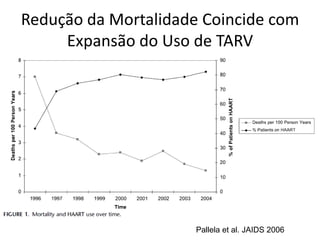
Pallela et al. JAIDS 2006
Redução da Mortalidade Coincide com
Expansão do Uso de TARV
Estimativas mundiais para crianças e adultos 2011
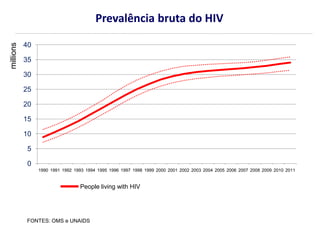
Pessoas com vivendo com HIV 34,0 milhões [31,4 –35.9]
Novas infecções pelo HIV em 2011 2,5 milhões [2,2 –2,8 ]
Óbitos devidos ao HIV em 2011 1,7 milhões [1,5 million–1,9 ]
FONTES: OMS e UNAIDS
Total: 34,0 milhões [31,4 milhões – 35,9 milhões]
Western &
Central Europe
900 000
[830 000 – 1.0 million]
Middle East & North Africa
300 000
[250 000 – 360 000]
Sub-Saharan Africa
23.5 million
[22.1 million – 24.8 million]
Eastern Europe
& Central Asia
1.4 million
[1.1 million – 1.8 million]
South & South-East Asia
4.0 million
[3.1 million – 5.2 million]
Oceania
53 000
[47 000 – 60 000]
North America
1.4 million
[1.1 million – 2.0 million]
Latin America
1.4 million
[1.1 million – 1.7 million]
East Asia
830 000
[590 000 – 1.2 million]
Caribbean
230 000
[200 000 – 250 000]
Prevalência bruta estimada do HIV (adultos e crianças)  2011
FONTE: OMS e UNAIDS
Incidência bruta estimada do HIV (adultos e crianças)  2011
Western &
Central Europe
30 000
[21 000 – 40 000]
Middle East & North Africa
37 000
[29 000 – 46 000]
Sub-Saharan Africa
1.8 million
[1.6 million – 2.0 million]
Eastern Europe
& Central Asia
140 000
[91 000 – 210 000]
South & South-East Asia
280 000
[170 000 – 460 000]
Oceania
2900
[2200 – 3800]
North America
51 000
[19 000 – 120 000]
Latin America
83 000
[51 000 – 140 000]
East Asia
89 000
[44 000 – 170 000]
Caribbean
13 000
[9600 – 16 000]
Total: 2.5 million [2.2 million – 2.8 million]
FONTE: OMS e UNAIDS
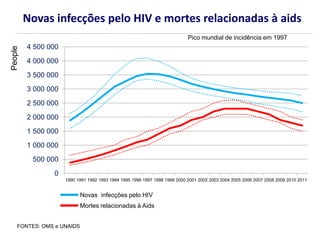
Novas infecções pelo HIV e mortes relacionadas à aidsPeople
Novas infecções pelo HIV
Mortes relacionadas à Aids
0
500 000
1 000 000
1 500 000
2 000 000
2 500 000
3 000 000
3 500 000
4 000 000
4 500 000
1990 1991 1992 1993 1994 1995 1996 1997 1998 1999 2000 2001 2002 2003 2004 2005 2006 2007 2008 2009 2010 2011
Pico mundial de incidência em 1997
FONTES: OMS e UNAIDS
Prevalência bruta do HIVmillions
People living with HIV
0
5
10
15
20
25
30
35
40
1990 1991 1992 1993 1994 1995 1996 1997 1998 1999 2000 2001 2002 2003 2004 2005 2006 2007 2008 2009 2010 2011
FONTES: OMS e UNAIDS
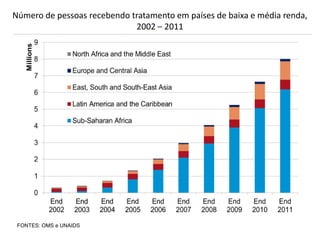
Número de pessoas recebendo tratamento em países de baixa e média renda,
2002 – 2011
FONTES: OMS e UNAIDS
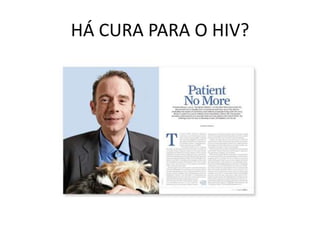
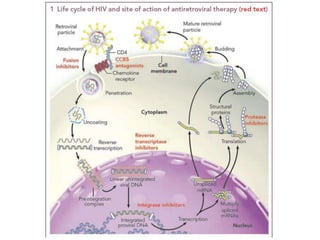
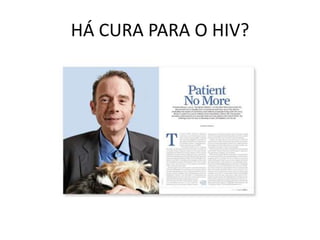
HÁ CURA PARA O HIV?
Adaptado de clinicaloptions.com/hiv
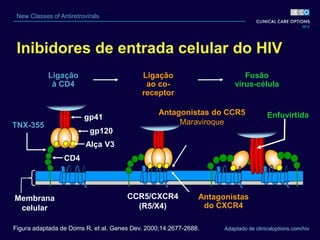
New Classes of Antiretrovirals
Inibidores de entrada celular do HIV
Fusão
vírus-célula
gp41
gp120
Alça V3
Ligação
à CD4
CD4
Membrana
celular
Ligação
ao co-
receptor
CCR5/CXCR4
(R5/X4)
Antagonistas do CCR5
Maraviroque
Enfuvirtida
TNX-355
Antagonistas
do CXCR4
Figura adaptada de Doms R, et al. Genes Dev. 2000;14:2677-2688.
clinicaloptions.com/hiv
HIV Entry and Tropism
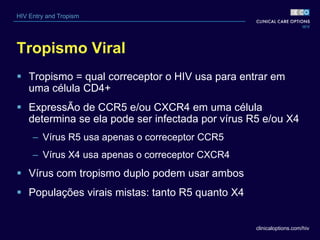
Tropismo Viral
 Tropismo = qual correceptor o HIV usa para entrar em
uma célula CD4+
 ExpressÃo de CCR5 e/ou CXCR4 em uma célula
determina se ela pode ser infectada por vírus R5 e/ou X4
– Vírus R5 usa apenas o correceptor CCR5
– Vírus X4 usa apenas o correceptor CXCR4
 Vírus com tropismo duplo podem usar ambos
 Populações virais mistas: tanto R5 quanto X4
clinicaloptions.com/hiv
HIV Entry and Tropism
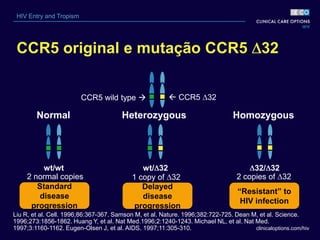
CCR5 wild type   CCR5 32
2 normal copies 1 copy of 32 2 copies of 32
wt/wt wt/ 32 32/ 32
Standard
disease
progression
Delayed
disease
progression
“Resistant” to
HIV infection
Normal Heterozygous Homozygous
CCR5 original e mutação CCR5 32
Liu R, et al. Cell. 1996;86:367-367. Samson M, et al. Nature. 1996;382:722-725. Dean M, et al. Science.
1996;273:1856-1862. Huang Y, et al. Nat Med.1996;2:1240-1243. Michael NL, et al. Nat Med.
1997;3:1160-1162. Eugen-Olsen J, et al. AIDS. 1997;11:305-310.
clinicaloptions.com/hiv
HIV Entry and Tropism
Pacientes homozigotos ou
heterozigotos para CCR5 32
 Homozigotos
– ~ 1% da etnia branca[1]
– Sem moléculas CCR5 na superfície de células CD4+ [2,3]
– Resistentes a vírus R5
– Suscetíveis aos vírus X4
– Função imune relativamente normal
 Heterozigotos
– 10% a 15% da etnia branca [1]
– Menos moléculas CCR5 na superfície celular[4]
– Função imune normal[2]
1. McNicholl JM, et al. Emerg Infect Dis. 1997;3:261-271. 2. Liu R, et al. Cell. 1996;86:367-367. 3. Samson
M, et al. Nature. 1996;382:722-725. 4. Wu L, et al. J Exp Med. 1997;185:1681-1691.
clinicaloptions.com/hiv
HIV Entry and Tropism
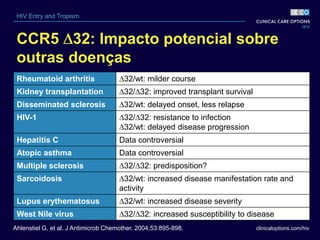
Rheumatoid arthritis 32/wt: milder course
Kidney transplantation 32/ 32: improved transplant survival
Disseminated sclerosis 32/wt: delayed onset, less relapse
HIV-1 32/ 32: resistance to infection
32/wt: delayed disease progression
Hepatitis C Data controversial
Atopic asthma Data controversial
Multiple sclerosis 32/ 32: predisposition?
Sarcoidosis 32/wt: increased disease manifestation rate and
activity
Lupus erythematosus 32/wt: increased disease severity
West Nile virus 32/ 32: increased susceptibility to disease
Ahlenstiel G, et al. J Antimicrob Chemother. 2004;53:895-898.
CCR5 32: Impacto potencial sobre
outras doenças
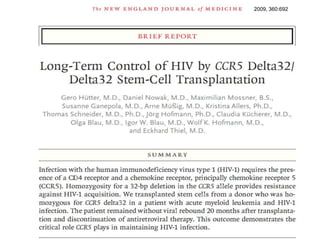
2009, 360:692
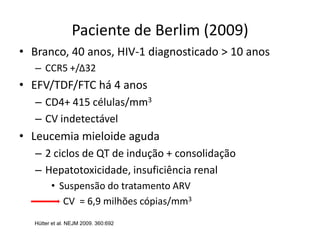
Paciente de Berlim (2009)
• Branco, 40 anos, HIV-1 diagnosticado > 10 anos
– CCR5 +/Δ32
• EFV/TDF/FTC há 4 anos
– CD4+ 415 células/mm3
– CV indetectável
• Leucemia mieloide aguda
– 2 ciclos de QT de indução + consolidação
– Hepatotoxicidade, insuficiência renal
• Suspensão do tratamento ARV
CV = 6,9 milhões cópias/mm3
Hütter et al. NEJM 2009. 360:692
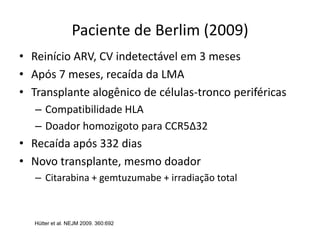
Paciente de Berlim (2009)
• Reinício ARV, CV indetectável em 3 meses
• Após 7 meses, recaída da LMA
• Transplante alogênico de células-tronco periféricas
– Compatibilidade HLA
– Doador homozigoto para CCR5Δ32
• Recaída após 332 dias
• Novo transplante, mesmo doador
– Citarabina + gemtuzumabe + irradiação total
Hütter et al. NEJM 2009. 360:692
Paciente de Berlim (2009)
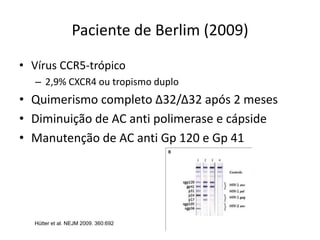
• Vírus CCR5-trópico
– 2,9% CXCR4 ou tropismo duplo
• Quimerismo completo Δ32/Δ32 após 2 meses
• Diminuição de AC anti polimerase e cápside
• Manutenção de AC anti Gp 120 e Gp 41
Hütter et al. NEJM 2009. 360:692
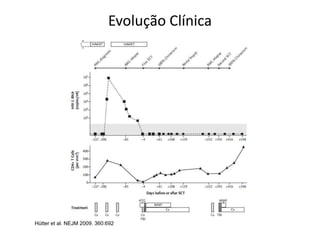
Evolução Clínica
Hütter et al. NEJM 2009. 360:692
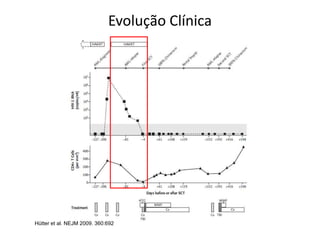
Evolução Clínica
Hütter et al. NEJM 2009. 360:692
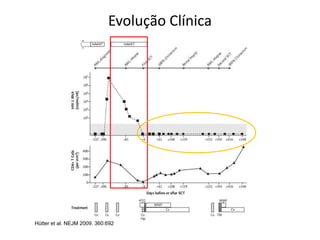
Evolução Clínica
Hütter et al. NEJM 2009. 360:692
Conclusões (2009)
• “Enquanto a carga viral estiver indetectável, o
paciente não necessitará de terapia
antirretroviral”
• “O resultado demonstra a importância do
receptor CCR5 na persistência da infecção
pelo HIV-1”
Hütter et al. NEJM 2009. 360:692
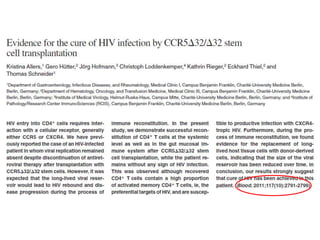
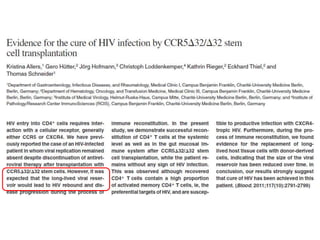
Paciente de Berlim (2011)
• Houve recuperação da população T CD4+,
inclusive células de memória ativadas
• Houve repopulação do tecido linfoide
intestinal
• Não houve redução na disponibilidade de
CXCR4 na membrana celular
• Células CD4+ permanecem suscetíveis a vírus
CCR5-trópicos
Allers et al. Blood 2011. 117:2791
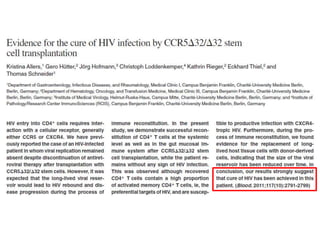
Paciente de Berlim (2011)
• HIV não foi detectado em diversos tecidos e
populações celulares
– Plasma e LCR
– Cérebro e mucosa intestinal
– Células mononucleares periféricas e medulares
• Houve redução continuada dos níveis de
anticorpos específicos
– Permanecem apenas AC contra ENV
Allers et al. Blood 2011. 117:2791
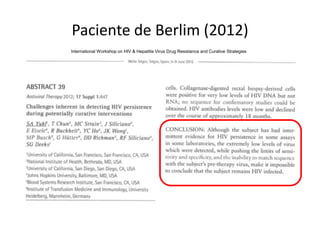
Paciente de Berlim (2012)
International Workshop on HIV & Hepatitis Virus Drug Resistance and Curative Strategies
Long-Term Reduction in Peripheral Blood
HIV-1 Reservoirs Following Reduced-
Intensity Allogeneic Stem Cell
Transplantation in Two HIV-Infected
Individuals
Timothy J. Henrich1,2, Gaia Sciaranghella3, Jonathan Z. Li1,2, Sebastien
Gallien4, Vincent Ho5,2, Ann S. LaCasce5,2, and Daniel R. Kuritzkes1,2
1Brigham and Women's Hospital, Boston, MA; 2Harvard Medical School, Boston, MA; 3Ragon Institute of
MGH, MIT, and Harvard, Boston, MA; 4 Hopital Saint-Louis, Paris, France;
5Dana-Farber Cancer Institute, Boston, MA.
Your logo
19th International AIDS Conference 2012 (Washington)
abstract no. THAA0101
Background
• One reported “functional cure” of HIV-1 infection: myeloablative
allogeneic HSCT from a homozygous ccr5Δ32 donor1,2
• Several factors may have contributed to functional cure
including pre-transplant myeloablative chemotherapy, GVHD,
full engraftment of CCR5- donor cells
• Cytotoxic chemotherapy alone insufficient to eliminate
reservoirs as HIV-1 DNA persists after autologous HSCT3,4
• The long-term effects of allogeneic HSCT using CCR5+ stem
cells have not been studied in detail
1Hutter et al. 2009; 2Allers et al. 2010;
3Simonelli et al. 2010; 4Cillo et al. 2011;
Study Aims
Study Aims:
Examine long-term changes in the peripheral HIV-1 reservoir
following allogeneic HSCT in the setting of cART
Explore HIV-1 coreceptor usage, PBMC coreceptor
expression and HIV-specific antibody responses pre- and
post-HSCT
Patients:
2 HIV-1 infected patients on combination ART who underwent
reduced-intensity conditioning (RIC) allogeneic HSCT
RIC = non-myeloablative chemotherapy, no total body
irradiation or anti-thymocyte globulin
Methods
Studied stored blood samples collected pre- and post-HSCT and
prospectively collected samples (5 time points)
1) Quantified proviral HIV-1 DNA from peripheral blood mononuclear
cells (PBMCs) and purified CD4+ T cells by real-time PCR
2) Quantified 2-LTR circles from PBMC episomal DNA
3) Quantified plasma viremia by a single-copy assay
4) Viral outgrowth assays using ~107 patient-derived CD4+ T cells and
CD8 T cell-depleted lymphoblasts from an HIV-negative donor
5) CCR5 genotyping/flow cytometric quantification of CCR5
expression on CD3+ T lymphocytes
6) Genotypic and phenotypic determination of HIV-1 coreceptor usage
7) Quantified HIV-1-specific Ab levels & avidity
Study Patients
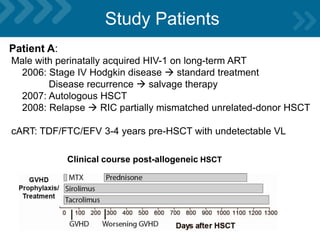
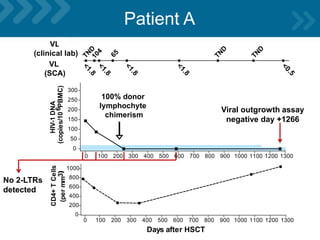
Patient A:
Male with perinatally acquired HIV-1 on long-term ART
2006: Stage IV Hodgkin disease  standard treatment
Disease recurrence  salvage therapy
2007: Autologous HSCT
2008: Relapse  RIC partially mismatched unrelated-donor HSCT
cART: TDF/FTC/EFV 3-4 years pre-HSCT with undetectable VL
Clinical course post-allogeneic HSCT
Study Patients
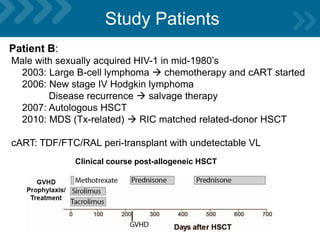
Patient B:
Male with sexually acquired HIV-1 in mid-1980’s
2003: Large B-cell lymphoma  chemotherapy and cART started
2006: New stage IV Hodgkin lymphoma
Disease recurrence  salvage therapy
2007: Autologous HSCT
2010: MDS (Tx-related)  RIC matched related-donor HSCT
cART: TDF/FTC/RAL peri-transplant with undetectable VL
Clinical course post-allogeneic HSCT
0 100 200 300 400 500 600 700 800 900 1000 1100 1200 1300
0
50
100
150
200
250
300
HIV-1DNA
(copies/106PBMC)
0 100 200 300 400 500 600 700 800 900 1000 1100 1200 1300
0
200
400
600
800
1000
Days after HSCT
CD4+TCells
(permm3))
100% donor
lymphochyte
chimerism
<1.8
TN
D
65
TN
D
TN
D
104
VL
(clinical lab)
VL
(SCA)
<0.5
<1.8
<1.8
<1.8
Patient A
Viral outgrowth assay
negative day +1266
No 2-LTRs
detected
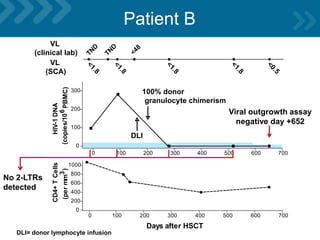
Patient B
DLI= donor lymphocyte infusion
0 100 200 300 400 500 600 700
0
100
200
300
HIV-1DNA
(copies/106PBMC)
0 100 200 300 400 500 600 700
0
200
400
600
800
1000
Days after HSCT
CD4+TCells
(permm3)
VL
(clinical lab)
VL
(SCA)
<1.8
TN
D
TN
D
<48
100% donor
granulocyte chimerism
DLI
<0.5
<1.8
<1.8
<1.8
Viral outgrowth assay
negative day +652
No 2-LTRs
detected
CCR5 / Coreceptor Usage
• Both patients heterozygous for ccr5Δ32 mutation
• PBMC homozygous wild-type for CCR5 after engraftment
• Percentage of CCR5-expressing lymphocytes nearly doubled
after full donor engraftment in Patient A (sufficient sample)
• Full-length HIV-1 env amplified from proviral DNA at pre- and
1st post-HSCT PBMC samples (later timepoints negative)
• V3-loop genotyping predicted CCR5 usage pre- and post-HSCT
• R5 phenotype confirmed by tropism assay of pseudotyped viruses
expressing PBMC-derived env
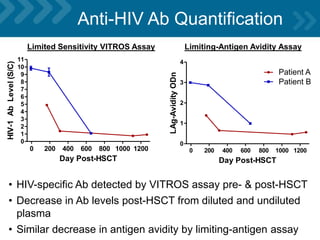
Anti-HIV Ab Quantification
0 200 400 600 800 1000 1200
0
1
2
3
4
5
6
7
8
9
10
11
Subject A
Subject B
Day Post-HSCT
HIV-1AbLevel(S/C)
0 200 400 600 800 1000 1200
0
1
2
3
4
Subject A
Subject B
Day Post-HSCT
LAg-AvidityODn
• HIV-specific Ab detected by VITROS assay pre- & post-HSCT
• Decrease in Ab levels post-HSCT from diluted and undiluted
plasma
• Similar decrease in antigen avidity by limiting-antigen assay
Limited Sensitivity VITROS Assay Limiting-Antigen Avidity Assay
Patient A
Patient B
Summary & Conclusions
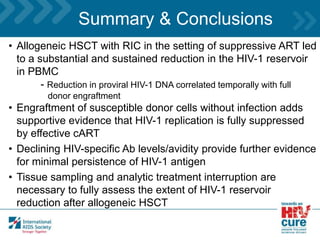
• Allogeneic HSCT with RIC in the setting of suppressive ART led
to a substantial and sustained reduction in the HIV-1 reservoir
in PBMC
- Reduction in proviral HIV-1 DNA correlated temporally with full
donor engraftment
• Engraftment of susceptible donor cells without infection adds
supportive evidence that HIV-1 replication is fully suppressed
by effective cART
• Declining HIV-specific Ab levels/avidity provide further evidence
for minimal persistence of HIV-1 antigen
• Tissue sampling and analytic treatment interruption are
necessary to fully assess the extent of HIV-1 reservoir
reduction after allogeneic HSCT
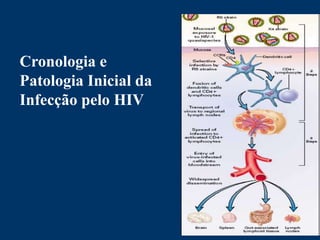
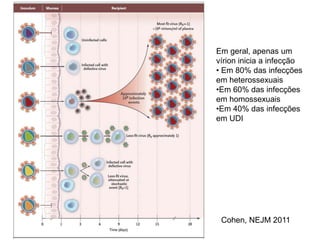
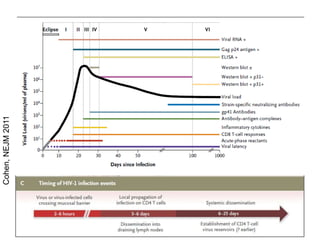
Cronologia e
Patologia Inicial da
Infecção pelo HIV
Em geral, apenas um
vírion inicia a infecção
• Em 80% das infecções
em heterossexuais
•Em 60% das infecções
em homossexuais
•Em 40% das infecções
em UDI
Cohen, NEJM 2011
Cohen,NEJM2011
Cura Funcional do HIV em Criança Após
Início Muito Precoce de Tratamento
• Criança nascida de mãe HIV+ (subtipo B) sem tratamento
• Parto vaginal, 35 semanas
• Infecção materna detectada no trabalho de parto (EIA & WB)
• Infecção do RN confirmada por PCR (DNA e RNA), 2 amostras
2º dia de vida
• CV plasmática detectável aos 7, 12 e 20 dias de vida
• CV plasmática indetectável (< 20 cópias/ml) no 29 dia de vida
• CV plasmática indetectável em 16 mensurações até 26 meses
de vida
Persaud D, et al. CROI 2013.(Atlanta) Abstract 48LB
• Tratamento:
– ZDV/3TC + NVP (doses plenas) a partir da 31ª
hora, por 7 dias
– ZDV/3TC + LPV/RTV de 7 dias a 18 meses
• CV plasmática (HIV-1 RNA) indetectável no 30º dia (30
e 31 horas pós-nascimento)
• Mãe interrompeu tratamento da criança aos 18 meses
Persaud D, et al. CROI 2013.(Atlanta) Abstract 48LB
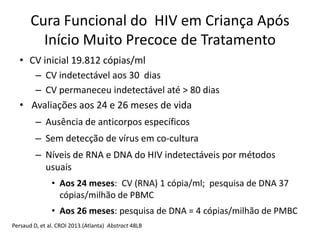
Cura Funcional do HIV em Criança Após
Início Muito Precoce de Tratamento
• CV inicial 19.812 cópias/ml
– CV indetectável aos 30 dias
– CV permaneceu indetectável até > 80 dias
• Avaliações aos 24 e 26 meses de vida
– Ausência de anticorpos específicos
– Sem detecção de vírus em co-cultura
– Níveis de RNA e DNA do HIV indetectáveis por métodos
usuais
• Aos 24 meses: CV (RNA) 1 cópia/ml; pesquisa de DNA 37
cópias/milhão de PBMC
• Aos 26 meses: pesquisa de DNA = 4 cópias/milhão de PMBC
Persaud D, et al. CROI 2013.(Atlanta) Abstract 48LB
Cura Funcional do HIV em Criança Após
Início Muito Precoce de Tratamento
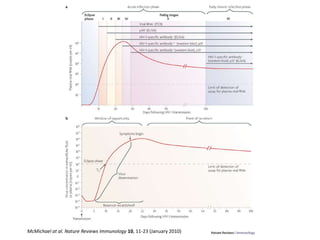
McMichael at al. Nature Reviews Immunology 10, 11-23 (January 2010)
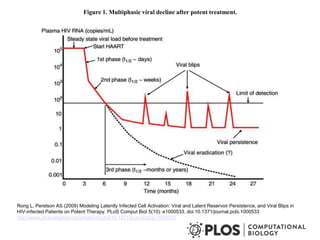
Figure 1. Multiphasic viral decline after potent treatment.
Rong L, Perelson AS (2009) Modeling Latently Infected Cell Activation: Viral and Latent Reservoir Persistence, and Viral Blips in
HIV-infected Patients on Potent Therapy. PLoS Comput Biol 5(10): e1000533. doi:10.1371/journal.pcbi.1000533
http://www.ploscompbiol.org/article/info:doi/10.1371/journal.pcbi.1000533
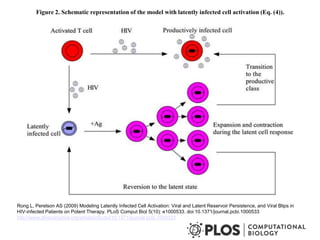
Figure 2. Schematic representation of the model with latently infected cell activation (Eq. (4)).
Rong L, Perelson AS (2009) Modeling Latently Infected Cell Activation: Viral and Latent Reservoir Persistence, and Viral Blips in
HIV-infected Patients on Potent Therapy. PLoS Comput Biol 5(10): e1000533. doi:10.1371/journal.pcbi.1000533
http://www.ploscompbiol.org/article/info:doi/10.1371/journal.pcbi.1000533
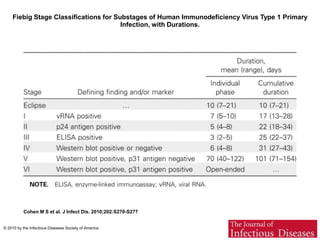
Fiebig Stage Classifications for Substages of Human Immunodeficiency Virus Type 1 Primary
Infection, with Durations.
Cohen M S et al. J Infect Dis. 2010;202:S270-S277
© 2010 by the Infectious Diseases Society of America
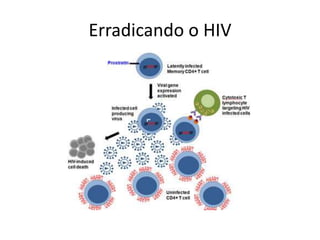
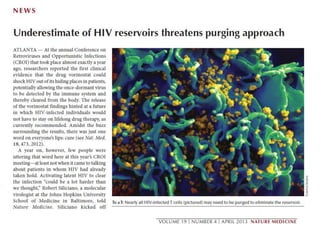
Erradicando o HIV
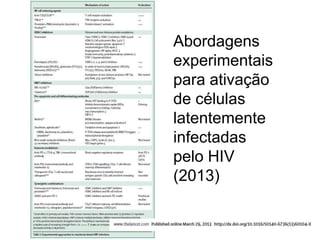
Abordagens
experimentais
para ativação
de células
latentemente
infectadas
pelo HIV
(2013)
HÁ CURA PARA O HIV?
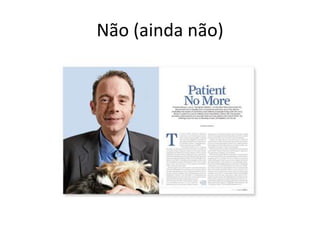
Não (ainda não)
Dr. Celso Ferreira Ramos Filho: "Cura funcional do HIV".

Dr. Celso Ferreira Ramos Filho: "Cura funcional do HIV".

  • 1.
    CURA FUNCIONAL DOHIV CELSO FERREIRA RAMOS FILHO ACADEMIA NACIONAL DE MEDICINA 13.06.2013
  • 2.
    CONFLITO DE INTERESSES Nenhumconflito de interesses a relatar
  • 3.
    Pallela et al.JAIDS 2006 Redução da Mortalidade Coincide com Expansão do Uso de TARV
  • 4.
    Estimativas mundiais paracrianças e adultos 2011 Pessoas com vivendo com HIV 34,0 milhões [31,4 –35.9] Novas infecções pelo HIV em 2011 2,5 milhões [2,2 –2,8 ] Óbitos devidos ao HIV em 2011 1,7 milhões [1,5 million–1,9 ] FONTES: OMS e UNAIDS
  • 5.
    Total: 34,0 milhões[31,4 milhões – 35,9 milhões] Western & Central Europe 900 000 [830 000 – 1.0 million] Middle East & North Africa 300 000 [250 000 – 360 000] Sub-Saharan Africa 23.5 million [22.1 million – 24.8 million] Eastern Europe & Central Asia 1.4 million [1.1 million – 1.8 million] South & South-East Asia 4.0 million [3.1 million – 5.2 million] Oceania 53 000 [47 000 – 60 000] North America 1.4 million [1.1 million – 2.0 million] Latin America 1.4 million [1.1 million – 1.7 million] East Asia 830 000 [590 000 – 1.2 million] Caribbean 230 000 [200 000 – 250 000] Prevalência bruta estimada do HIV (adultos e crianças)  2011 FONTE: OMS e UNAIDS
  • 6.
    Incidência bruta estimadado HIV (adultos e crianças)  2011 Western & Central Europe 30 000 [21 000 – 40 000] Middle East & North Africa 37 000 [29 000 – 46 000] Sub-Saharan Africa 1.8 million [1.6 million – 2.0 million] Eastern Europe & Central Asia 140 000 [91 000 – 210 000] South & South-East Asia 280 000 [170 000 – 460 000] Oceania 2900 [2200 – 3800] North America 51 000 [19 000 – 120 000] Latin America 83 000 [51 000 – 140 000] East Asia 89 000 [44 000 – 170 000] Caribbean 13 000 [9600 – 16 000] Total: 2.5 million [2.2 million – 2.8 million] FONTE: OMS e UNAIDS
  • 7.
    Novas infecções peloHIV e mortes relacionadas à aidsPeople Novas infecções pelo HIV Mortes relacionadas à Aids 0 500 000 1 000 000 1 500 000 2 000 000 2 500 000 3 000 000 3 500 000 4 000 000 4 500 000 1990 1991 1992 1993 1994 1995 1996 1997 1998 1999 2000 2001 2002 2003 2004 2005 2006 2007 2008 2009 2010 2011 Pico mundial de incidência em 1997 FONTES: OMS e UNAIDS
  • 8.
    Prevalência bruta doHIVmillions People living with HIV 0 5 10 15 20 25 30 35 40 1990 1991 1992 1993 1994 1995 1996 1997 1998 1999 2000 2001 2002 2003 2004 2005 2006 2007 2008 2009 2010 2011 FONTES: OMS e UNAIDS
  • 9.
    Número de pessoasrecebendo tratamento em países de baixa e média renda, 2002 – 2011 FONTES: OMS e UNAIDS
  • 10.
  • 12.
    Adaptado de clinicaloptions.com/hiv NewClasses of Antiretrovirals Inibidores de entrada celular do HIV Fusão vírus-célula gp41 gp120 Alça V3 Ligação à CD4 CD4 Membrana celular Ligação ao co- receptor CCR5/CXCR4 (R5/X4) Antagonistas do CCR5 Maraviroque Enfuvirtida TNX-355 Antagonistas do CXCR4 Figura adaptada de Doms R, et al. Genes Dev. 2000;14:2677-2688.
  • 13.
    clinicaloptions.com/hiv HIV Entry andTropism Tropismo Viral  Tropismo = qual correceptor o HIV usa para entrar em uma célula CD4+  ExpressÃo de CCR5 e/ou CXCR4 em uma célula determina se ela pode ser infectada por vírus R5 e/ou X4 – Vírus R5 usa apenas o correceptor CCR5 – Vírus X4 usa apenas o correceptor CXCR4  Vírus com tropismo duplo podem usar ambos  Populações virais mistas: tanto R5 quanto X4
  • 14.
    clinicaloptions.com/hiv HIV Entry andTropism CCR5 wild type   CCR5 32 2 normal copies 1 copy of 32 2 copies of 32 wt/wt wt/ 32 32/ 32 Standard disease progression Delayed disease progression “Resistant” to HIV infection Normal Heterozygous Homozygous CCR5 original e mutação CCR5 32 Liu R, et al. Cell. 1996;86:367-367. Samson M, et al. Nature. 1996;382:722-725. Dean M, et al. Science. 1996;273:1856-1862. Huang Y, et al. Nat Med.1996;2:1240-1243. Michael NL, et al. Nat Med. 1997;3:1160-1162. Eugen-Olsen J, et al. AIDS. 1997;11:305-310.
  • 15.
    clinicaloptions.com/hiv HIV Entry andTropism Pacientes homozigotos ou heterozigotos para CCR5 32  Homozigotos – ~ 1% da etnia branca[1] – Sem moléculas CCR5 na superfície de células CD4+ [2,3] – Resistentes a vírus R5 – Suscetíveis aos vírus X4 – Função imune relativamente normal  Heterozigotos – 10% a 15% da etnia branca [1] – Menos moléculas CCR5 na superfície celular[4] – Função imune normal[2] 1. McNicholl JM, et al. Emerg Infect Dis. 1997;3:261-271. 2. Liu R, et al. Cell. 1996;86:367-367. 3. Samson M, et al. Nature. 1996;382:722-725. 4. Wu L, et al. J Exp Med. 1997;185:1681-1691.
  • 16.
    clinicaloptions.com/hiv HIV Entry andTropism Rheumatoid arthritis 32/wt: milder course Kidney transplantation 32/ 32: improved transplant survival Disseminated sclerosis 32/wt: delayed onset, less relapse HIV-1 32/ 32: resistance to infection 32/wt: delayed disease progression Hepatitis C Data controversial Atopic asthma Data controversial Multiple sclerosis 32/ 32: predisposition? Sarcoidosis 32/wt: increased disease manifestation rate and activity Lupus erythematosus 32/wt: increased disease severity West Nile virus 32/ 32: increased susceptibility to disease Ahlenstiel G, et al. J Antimicrob Chemother. 2004;53:895-898. CCR5 32: Impacto potencial sobre outras doenças
  • 17.
  • 18.
    Paciente de Berlim(2009) • Branco, 40 anos, HIV-1 diagnosticado > 10 anos – CCR5 +/Δ32 • EFV/TDF/FTC há 4 anos – CD4+ 415 células/mm3 – CV indetectável • Leucemia mieloide aguda – 2 ciclos de QT de indução + consolidação – Hepatotoxicidade, insuficiência renal • Suspensão do tratamento ARV CV = 6,9 milhões cópias/mm3 Hütter et al. NEJM 2009. 360:692
  • 19.
    Paciente de Berlim(2009) • Reinício ARV, CV indetectável em 3 meses • Após 7 meses, recaída da LMA • Transplante alogênico de células-tronco periféricas – Compatibilidade HLA – Doador homozigoto para CCR5Δ32 • Recaída após 332 dias • Novo transplante, mesmo doador – Citarabina + gemtuzumabe + irradiação total Hütter et al. NEJM 2009. 360:692
  • 20.
    Paciente de Berlim(2009) • Vírus CCR5-trópico – 2,9% CXCR4 ou tropismo duplo • Quimerismo completo Δ32/Δ32 após 2 meses • Diminuição de AC anti polimerase e cápside • Manutenção de AC anti Gp 120 e Gp 41 Hütter et al. NEJM 2009. 360:692
  • 21.
    Evolução Clínica Hütter etal. NEJM 2009. 360:692
  • 22.
    Evolução Clínica Hütter etal. NEJM 2009. 360:692
  • 23.
    Evolução Clínica Hütter etal. NEJM 2009. 360:692
  • 24.
    Conclusões (2009) • “Enquantoa carga viral estiver indetectável, o paciente não necessitará de terapia antirretroviral” • “O resultado demonstra a importância do receptor CCR5 na persistência da infecção pelo HIV-1” Hütter et al. NEJM 2009. 360:692
  • 28.
    Paciente de Berlim(2011) • Houve recuperação da população T CD4+, inclusive células de memória ativadas • Houve repopulação do tecido linfoide intestinal • Não houve redução na disponibilidade de CXCR4 na membrana celular • Células CD4+ permanecem suscetíveis a vírus CCR5-trópicos Allers et al. Blood 2011. 117:2791
  • 29.
    Paciente de Berlim(2011) • HIV não foi detectado em diversos tecidos e populações celulares – Plasma e LCR – Cérebro e mucosa intestinal – Células mononucleares periféricas e medulares • Houve redução continuada dos níveis de anticorpos específicos – Permanecem apenas AC contra ENV Allers et al. Blood 2011. 117:2791
  • 30.
    Paciente de Berlim(2012) International Workshop on HIV & Hepatitis Virus Drug Resistance and Curative Strategies
  • 31.
    Long-Term Reduction inPeripheral Blood HIV-1 Reservoirs Following Reduced- Intensity Allogeneic Stem Cell Transplantation in Two HIV-Infected Individuals Timothy J. Henrich1,2, Gaia Sciaranghella3, Jonathan Z. Li1,2, Sebastien Gallien4, Vincent Ho5,2, Ann S. LaCasce5,2, and Daniel R. Kuritzkes1,2 1Brigham and Women's Hospital, Boston, MA; 2Harvard Medical School, Boston, MA; 3Ragon Institute of MGH, MIT, and Harvard, Boston, MA; 4 Hopital Saint-Louis, Paris, France; 5Dana-Farber Cancer Institute, Boston, MA. Your logo 19th International AIDS Conference 2012 (Washington) abstract no. THAA0101
  • 32.
    Background • One reported“functional cure” of HIV-1 infection: myeloablative allogeneic HSCT from a homozygous ccr5Δ32 donor1,2 • Several factors may have contributed to functional cure including pre-transplant myeloablative chemotherapy, GVHD, full engraftment of CCR5- donor cells • Cytotoxic chemotherapy alone insufficient to eliminate reservoirs as HIV-1 DNA persists after autologous HSCT3,4 • The long-term effects of allogeneic HSCT using CCR5+ stem cells have not been studied in detail 1Hutter et al. 2009; 2Allers et al. 2010; 3Simonelli et al. 2010; 4Cillo et al. 2011;
  • 33.
    Study Aims Study Aims: Examinelong-term changes in the peripheral HIV-1 reservoir following allogeneic HSCT in the setting of cART Explore HIV-1 coreceptor usage, PBMC coreceptor expression and HIV-specific antibody responses pre- and post-HSCT Patients: 2 HIV-1 infected patients on combination ART who underwent reduced-intensity conditioning (RIC) allogeneic HSCT RIC = non-myeloablative chemotherapy, no total body irradiation or anti-thymocyte globulin
  • 34.
    Methods Studied stored bloodsamples collected pre- and post-HSCT and prospectively collected samples (5 time points) 1) Quantified proviral HIV-1 DNA from peripheral blood mononuclear cells (PBMCs) and purified CD4+ T cells by real-time PCR 2) Quantified 2-LTR circles from PBMC episomal DNA 3) Quantified plasma viremia by a single-copy assay 4) Viral outgrowth assays using ~107 patient-derived CD4+ T cells and CD8 T cell-depleted lymphoblasts from an HIV-negative donor 5) CCR5 genotyping/flow cytometric quantification of CCR5 expression on CD3+ T lymphocytes 6) Genotypic and phenotypic determination of HIV-1 coreceptor usage 7) Quantified HIV-1-specific Ab levels & avidity
  • 35.
    Study Patients Patient A: Malewith perinatally acquired HIV-1 on long-term ART 2006: Stage IV Hodgkin disease  standard treatment Disease recurrence  salvage therapy 2007: Autologous HSCT 2008: Relapse  RIC partially mismatched unrelated-donor HSCT cART: TDF/FTC/EFV 3-4 years pre-HSCT with undetectable VL Clinical course post-allogeneic HSCT
  • 36.
    Study Patients Patient B: Malewith sexually acquired HIV-1 in mid-1980’s 2003: Large B-cell lymphoma  chemotherapy and cART started 2006: New stage IV Hodgkin lymphoma Disease recurrence  salvage therapy 2007: Autologous HSCT 2010: MDS (Tx-related)  RIC matched related-donor HSCT cART: TDF/FTC/RAL peri-transplant with undetectable VL Clinical course post-allogeneic HSCT
  • 37.
    0 100 200300 400 500 600 700 800 900 1000 1100 1200 1300 0 50 100 150 200 250 300 HIV-1DNA (copies/106PBMC) 0 100 200 300 400 500 600 700 800 900 1000 1100 1200 1300 0 200 400 600 800 1000 Days after HSCT CD4+TCells (permm3)) 100% donor lymphochyte chimerism <1.8 TN D 65 TN D TN D 104 VL (clinical lab) VL (SCA) <0.5 <1.8 <1.8 <1.8 Patient A Viral outgrowth assay negative day +1266 No 2-LTRs detected
  • 38.
    Patient B DLI= donorlymphocyte infusion 0 100 200 300 400 500 600 700 0 100 200 300 HIV-1DNA (copies/106PBMC) 0 100 200 300 400 500 600 700 0 200 400 600 800 1000 Days after HSCT CD4+TCells (permm3) VL (clinical lab) VL (SCA) <1.8 TN D TN D <48 100% donor granulocyte chimerism DLI <0.5 <1.8 <1.8 <1.8 Viral outgrowth assay negative day +652 No 2-LTRs detected
  • 39.
    CCR5 / CoreceptorUsage • Both patients heterozygous for ccr5Δ32 mutation • PBMC homozygous wild-type for CCR5 after engraftment • Percentage of CCR5-expressing lymphocytes nearly doubled after full donor engraftment in Patient A (sufficient sample) • Full-length HIV-1 env amplified from proviral DNA at pre- and 1st post-HSCT PBMC samples (later timepoints negative) • V3-loop genotyping predicted CCR5 usage pre- and post-HSCT • R5 phenotype confirmed by tropism assay of pseudotyped viruses expressing PBMC-derived env
  • 40.
    Anti-HIV Ab Quantification 0200 400 600 800 1000 1200 0 1 2 3 4 5 6 7 8 9 10 11 Subject A Subject B Day Post-HSCT HIV-1AbLevel(S/C) 0 200 400 600 800 1000 1200 0 1 2 3 4 Subject A Subject B Day Post-HSCT LAg-AvidityODn • HIV-specific Ab detected by VITROS assay pre- & post-HSCT • Decrease in Ab levels post-HSCT from diluted and undiluted plasma • Similar decrease in antigen avidity by limiting-antigen assay Limited Sensitivity VITROS Assay Limiting-Antigen Avidity Assay Patient A Patient B
  • 41.
    Summary & Conclusions •Allogeneic HSCT with RIC in the setting of suppressive ART led to a substantial and sustained reduction in the HIV-1 reservoir in PBMC - Reduction in proviral HIV-1 DNA correlated temporally with full donor engraftment • Engraftment of susceptible donor cells without infection adds supportive evidence that HIV-1 replication is fully suppressed by effective cART • Declining HIV-specific Ab levels/avidity provide further evidence for minimal persistence of HIV-1 antigen • Tissue sampling and analytic treatment interruption are necessary to fully assess the extent of HIV-1 reservoir reduction after allogeneic HSCT
  • 43.
    Cronologia e Patologia Inicialda Infecção pelo HIV
  • 44.
    Em geral, apenasum vírion inicia a infecção • Em 80% das infecções em heterossexuais •Em 60% das infecções em homossexuais •Em 40% das infecções em UDI Cohen, NEJM 2011
  • 45.
  • 46.
    Cura Funcional doHIV em Criança Após Início Muito Precoce de Tratamento • Criança nascida de mãe HIV+ (subtipo B) sem tratamento • Parto vaginal, 35 semanas • Infecção materna detectada no trabalho de parto (EIA & WB) • Infecção do RN confirmada por PCR (DNA e RNA), 2 amostras 2º dia de vida • CV plasmática detectável aos 7, 12 e 20 dias de vida • CV plasmática indetectável (< 20 cópias/ml) no 29 dia de vida • CV plasmática indetectável em 16 mensurações até 26 meses de vida Persaud D, et al. CROI 2013.(Atlanta) Abstract 48LB
  • 47.
    • Tratamento: – ZDV/3TC+ NVP (doses plenas) a partir da 31ª hora, por 7 dias – ZDV/3TC + LPV/RTV de 7 dias a 18 meses • CV plasmática (HIV-1 RNA) indetectável no 30º dia (30 e 31 horas pós-nascimento) • Mãe interrompeu tratamento da criança aos 18 meses Persaud D, et al. CROI 2013.(Atlanta) Abstract 48LB Cura Funcional do HIV em Criança Após Início Muito Precoce de Tratamento
  • 48.
    • CV inicial19.812 cópias/ml – CV indetectável aos 30 dias – CV permaneceu indetectável até > 80 dias • Avaliações aos 24 e 26 meses de vida – Ausência de anticorpos específicos – Sem detecção de vírus em co-cultura – Níveis de RNA e DNA do HIV indetectáveis por métodos usuais • Aos 24 meses: CV (RNA) 1 cópia/ml; pesquisa de DNA 37 cópias/milhão de PBMC • Aos 26 meses: pesquisa de DNA = 4 cópias/milhão de PMBC Persaud D, et al. CROI 2013.(Atlanta) Abstract 48LB Cura Funcional do HIV em Criança Após Início Muito Precoce de Tratamento
  • 49.
    McMichael at al.Nature Reviews Immunology 10, 11-23 (January 2010)
  • 50.
    Figure 1. Multiphasicviral decline after potent treatment. Rong L, Perelson AS (2009) Modeling Latently Infected Cell Activation: Viral and Latent Reservoir Persistence, and Viral Blips in HIV-infected Patients on Potent Therapy. PLoS Comput Biol 5(10): e1000533. doi:10.1371/journal.pcbi.1000533 http://www.ploscompbiol.org/article/info:doi/10.1371/journal.pcbi.1000533
  • 51.
    Figure 2. Schematicrepresentation of the model with latently infected cell activation (Eq. (4)). Rong L, Perelson AS (2009) Modeling Latently Infected Cell Activation: Viral and Latent Reservoir Persistence, and Viral Blips in HIV-infected Patients on Potent Therapy. PLoS Comput Biol 5(10): e1000533. doi:10.1371/journal.pcbi.1000533 http://www.ploscompbiol.org/article/info:doi/10.1371/journal.pcbi.1000533
  • 52.
    Fiebig Stage Classificationsfor Substages of Human Immunodeficiency Virus Type 1 Primary Infection, with Durations. Cohen M S et al. J Infect Dis. 2010;202:S270-S277 © 2010 by the Infectious Diseases Society of America
  • 57.
  • 60.
  • 62.
  • 63.

Editor's Notes