EDUCATION
Education may be described as a process of development from infancy and
maturity. All that influence human behavior and personality is included in
education. It becomes an unending recess a life long process. It is life itself. In the
words of prof. A. N. Whitehead, “there is only one subject-matter of education
and that is life in all its manifestation.”
DEFINITIONS OF EDUCATION
 Mahatma Gandhi says, “By education I mean an all-round drawing out of the best in child
and man-body, mind and spirit.
 Plato says, “Education is that training which is given by suitable habits to the first instinct of
virtue in children.”
 Pestalozzi says, “Education is natural, harmonious and progressive development of man’s
innate powers.”
 Aristotle speaks of education as, “creation of a sound mind in a sound body.” It leads to
‘goodness’, ‘beauty’ and ‘truth’.
TYPE OF EDUCATION
Formal Education
 It follows a particular structure of delivery.
 It is highly planned and deliberate
 It is chronological and systematic
 It is subject -oriented and time-bound
Informal Education
 It is an independent form of study with no
definite syllabus.
 It is not preplanned and does not have a
proper timetable.
 It is an experienced that is gained through
practice.
 It is a lifelong process in a natural way.
CULTURE AND EDUCATION
 Culture serves as an informal type of education whereas education serves as a formal
type of culture.
 Both culture and education facilitate an individual in making his proper adjustment in the
society.
 Education is a deliberate process through which the values, skills and knowledge of a
culture are accumulated from one generation to another.
 Education helps in cultural change and transmission. This process of transmitting cultural
heritage is fostered by schools, colleges, universites and other institutions. Thus, education
is considered as an instrument of cultural change.
 Culture gives high school, moral and spiritual values and education inculcates these high
school, moral, and spiritual values among the students.
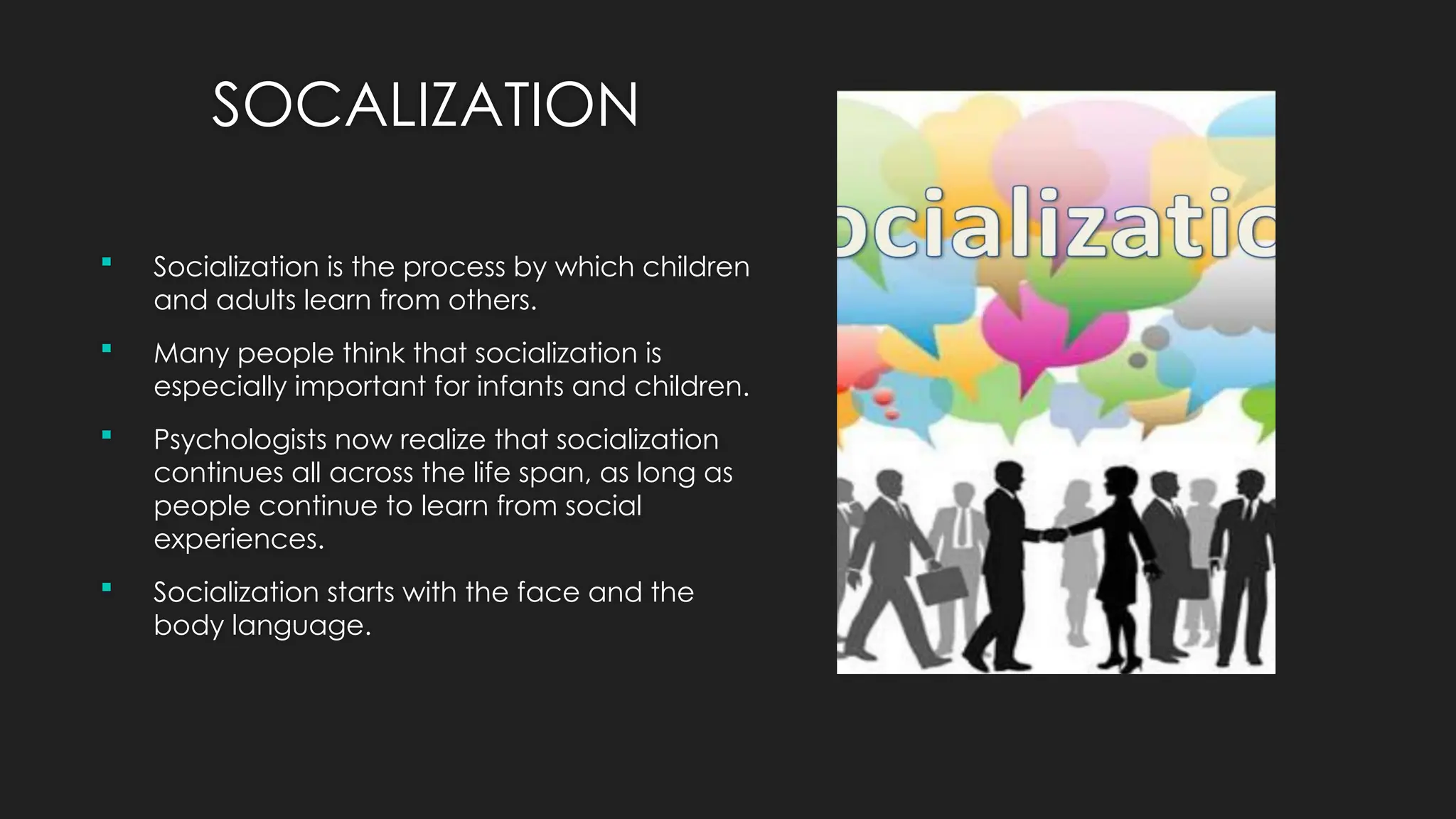
SOCALIZATION
 Socialization is the process by which children
and adults learn from others.
 Many people think that socialization is
especially important for infants and children.
 Psychologists now realize that socialization
continues all across the life span, as long as
people continue to learn from social
experiences.
 Socialization starts with the face and the
body language.
SANSKRITISATION
 Imitation to raise social status.
 Related to the Lower castes.
 Sanskritization is not restricted to
Brahminization.
 The process of Sanskritization takes time-
takes 2-3 generations before their claim
can be accepted.
 Change in ideals- adopting new ideas
norms and behavior patterns.
SOCIAL MOBILITY
 Individuals are normally recognized in society through statuses they occupied and roles
they enact.
 Not only society is dynamic but also the individuals are dynamic. Social mobility mean
move from lower position to the higher position, secure previous job from an inferior one.
 “Thus people in society continue to move up and down the status scale, this movement is
called social mobility”. The study of social mobility is an important aspect of social
stratification.
CULTURAL CHANGES
 All culture change through time. No culture is
static.
 However, most cultures are basically
conservative in that they tend to resist change.
Some resist more than others by enacting laws
for the preservation and protection of traditional
cultural patterns while putting up barriers to alien
ideas and things.
 Culture changes is continuous and change in
one area is usually associated with change in
others.

culture and education socialisation and sanskritation

  • 1.
    EDUCATION Education may bedescribed as a process of development from infancy and maturity. All that influence human behavior and personality is included in education. It becomes an unending recess a life long process. It is life itself. In the words of prof. A. N. Whitehead, “there is only one subject-matter of education and that is life in all its manifestation.”
  • 2.
    DEFINITIONS OF EDUCATION Mahatma Gandhi says, “By education I mean an all-round drawing out of the best in child and man-body, mind and spirit.  Plato says, “Education is that training which is given by suitable habits to the first instinct of virtue in children.”  Pestalozzi says, “Education is natural, harmonious and progressive development of man’s innate powers.”  Aristotle speaks of education as, “creation of a sound mind in a sound body.” It leads to ‘goodness’, ‘beauty’ and ‘truth’.
  • 3.
    TYPE OF EDUCATION FormalEducation  It follows a particular structure of delivery.  It is highly planned and deliberate  It is chronological and systematic  It is subject -oriented and time-bound Informal Education  It is an independent form of study with no definite syllabus.  It is not preplanned and does not have a proper timetable.  It is an experienced that is gained through practice.  It is a lifelong process in a natural way.
  • 4.
    CULTURE AND EDUCATION Culture serves as an informal type of education whereas education serves as a formal type of culture.  Both culture and education facilitate an individual in making his proper adjustment in the society.  Education is a deliberate process through which the values, skills and knowledge of a culture are accumulated from one generation to another.  Education helps in cultural change and transmission. This process of transmitting cultural heritage is fostered by schools, colleges, universites and other institutions. Thus, education is considered as an instrument of cultural change.  Culture gives high school, moral and spiritual values and education inculcates these high school, moral, and spiritual values among the students.
  • 5.
    SOCALIZATION  Socialization isthe process by which children and adults learn from others.  Many people think that socialization is especially important for infants and children.  Psychologists now realize that socialization continues all across the life span, as long as people continue to learn from social experiences.  Socialization starts with the face and the body language.
  • 6.
    SANSKRITISATION  Imitation toraise social status.  Related to the Lower castes.  Sanskritization is not restricted to Brahminization.  The process of Sanskritization takes time- takes 2-3 generations before their claim can be accepted.  Change in ideals- adopting new ideas norms and behavior patterns.
  • 7.
    SOCIAL MOBILITY  Individualsare normally recognized in society through statuses they occupied and roles they enact.  Not only society is dynamic but also the individuals are dynamic. Social mobility mean move from lower position to the higher position, secure previous job from an inferior one.  “Thus people in society continue to move up and down the status scale, this movement is called social mobility”. The study of social mobility is an important aspect of social stratification.
  • 8.
    CULTURAL CHANGES  Allculture change through time. No culture is static.  However, most cultures are basically conservative in that they tend to resist change. Some resist more than others by enacting laws for the preservation and protection of traditional cultural patterns while putting up barriers to alien ideas and things.  Culture changes is continuous and change in one area is usually associated with change in others.