Culturally Responsive Teaching


Being a culturally responsive classroom teacher means
being willing to reflect on the ways that classroom
management decisions help or hinder students' access to
learning. A culturally responsive teacher can be an
invaluable guide for students, helping them bridge the gap
between their own culture and the culture of schools.


 http://www.intime.uni.edu/multiculture/curriculum/culture/teaching.htm
Validating
It is important to validate the cultural knowledge and
experiences of the students in your classroom. Doing so
goes beyond the one time acknowledgement of a
student's culture to embedding his beliefs, customs,
traditions, and values into the learning environment.

For example, accepting alternative algorithms from the
student's country as a teaching tool in math,
incorporating the music from the varying backgrounds in
your classroom, or providing culturally diverse texts.

The goal in the classroom is to respect and be inclusive
of all cultures and not to expect students to conform
to your personal culture.
Comprehensive


When we say that culturally responsive teachers are
comprehensive, we are referring to the way the teachers
develop the students’ intellectual, social, and emotional skills.
The teachers incorporate the students’ own cultures into their
classroom. They create a classroom where the students are
valued and develop a sense of belonging to the community.

Teachers and students see the classroom as “our classroom.”
The teacher takes time to get to know her children and
develop them socially and emotionally in addition to
intellectually. In other words, teachers teach the WHOLE
child.
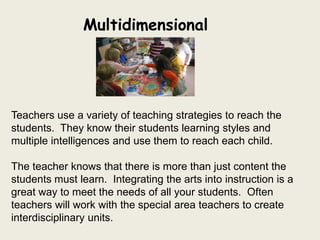
Multidimensional


Teachers use a variety of teaching strategies to reach the
students. They know their students learning styles and
multiple intelligences and use them to reach each child.

The teacher knows that there is more than just content the
students must learn. Integrating the arts into instruction is a
great way to meet the needs of all your students. Often
teachers will work with the special area teachers to create
interdisciplinary units.
Empowering


Teachers empower their students to succeed. Students must
believe they can succeed in learning tasks and have
motivation to persevere. Success and motivation are cyclical,
success leads to motivation and motivation leads to success.

Teachers must demonstrate high and appropriate
expectations and give their students support towards
academic achievement. Teachers celebrate individual and
collective accomplishments with their students.
Transformative


Teachers promote respect and acceptance of all students’
cultures. Teachers use the students’ culture, strengths and
accomplishments when teaching. They become a resource
for teaching and learning.

For example, a teacher may use the verbal creativity and
story-telling that is unique among some cultures and
acknowledge it as a gift and contribution and use it to teach
writing skills
Emancipatory


Culturally responsive teachers help students find their voice.
They engage them in multiple ways of knowing and thinking.
Teachers help students take an active role in shaping their
learning, they learn about themselves as learners.

For example, teachers have students learn about their
learning style and/or multiple intelligences and have students
reflect why that is important for them to know about
themselves. The students become liberated by their
education, not held captive by it.

Culturally responsive teaching

  • 1.
    Culturally Responsive Teaching Beinga culturally responsive classroom teacher means being willing to reflect on the ways that classroom management decisions help or hinder students' access to learning. A culturally responsive teacher can be an invaluable guide for students, helping them bridge the gap between their own culture and the culture of schools. http://www.intime.uni.edu/multiculture/curriculum/culture/teaching.htm
  • 2.
    Validating It is importantto validate the cultural knowledge and experiences of the students in your classroom. Doing so goes beyond the one time acknowledgement of a student's culture to embedding his beliefs, customs, traditions, and values into the learning environment. For example, accepting alternative algorithms from the student's country as a teaching tool in math, incorporating the music from the varying backgrounds in your classroom, or providing culturally diverse texts. The goal in the classroom is to respect and be inclusive of all cultures and not to expect students to conform to your personal culture.
  • 3.
    Comprehensive When we saythat culturally responsive teachers are comprehensive, we are referring to the way the teachers develop the students’ intellectual, social, and emotional skills. The teachers incorporate the students’ own cultures into their classroom. They create a classroom where the students are valued and develop a sense of belonging to the community. Teachers and students see the classroom as “our classroom.” The teacher takes time to get to know her children and develop them socially and emotionally in addition to intellectually. In other words, teachers teach the WHOLE child.
  • 4.
    Multidimensional Teachers use avariety of teaching strategies to reach the students. They know their students learning styles and multiple intelligences and use them to reach each child. The teacher knows that there is more than just content the students must learn. Integrating the arts into instruction is a great way to meet the needs of all your students. Often teachers will work with the special area teachers to create interdisciplinary units.
  • 5.
    Empowering Teachers empower theirstudents to succeed. Students must believe they can succeed in learning tasks and have motivation to persevere. Success and motivation are cyclical, success leads to motivation and motivation leads to success. Teachers must demonstrate high and appropriate expectations and give their students support towards academic achievement. Teachers celebrate individual and collective accomplishments with their students.
  • 6.
    Transformative Teachers promote respectand acceptance of all students’ cultures. Teachers use the students’ culture, strengths and accomplishments when teaching. They become a resource for teaching and learning. For example, a teacher may use the verbal creativity and story-telling that is unique among some cultures and acknowledge it as a gift and contribution and use it to teach writing skills
  • 7.
    Emancipatory Culturally responsive teachershelp students find their voice. They engage them in multiple ways of knowing and thinking. Teachers help students take an active role in shaping their learning, they learn about themselves as learners. For example, teachers have students learn about their learning style and/or multiple intelligences and have students reflect why that is important for them to know about themselves. The students become liberated by their education, not held captive by it.