
Name :- Gohil Devangiba Aniruddhsinh
Roll No. :- 14
Email Id :-
devangibagohil786@gmail.com
Paper No. :- 14 (The African Literature)
Topic :- Literary Analysis Of “The
Waiting For Barbarians”
Submitted To :- Department Of English
M.K.B.University
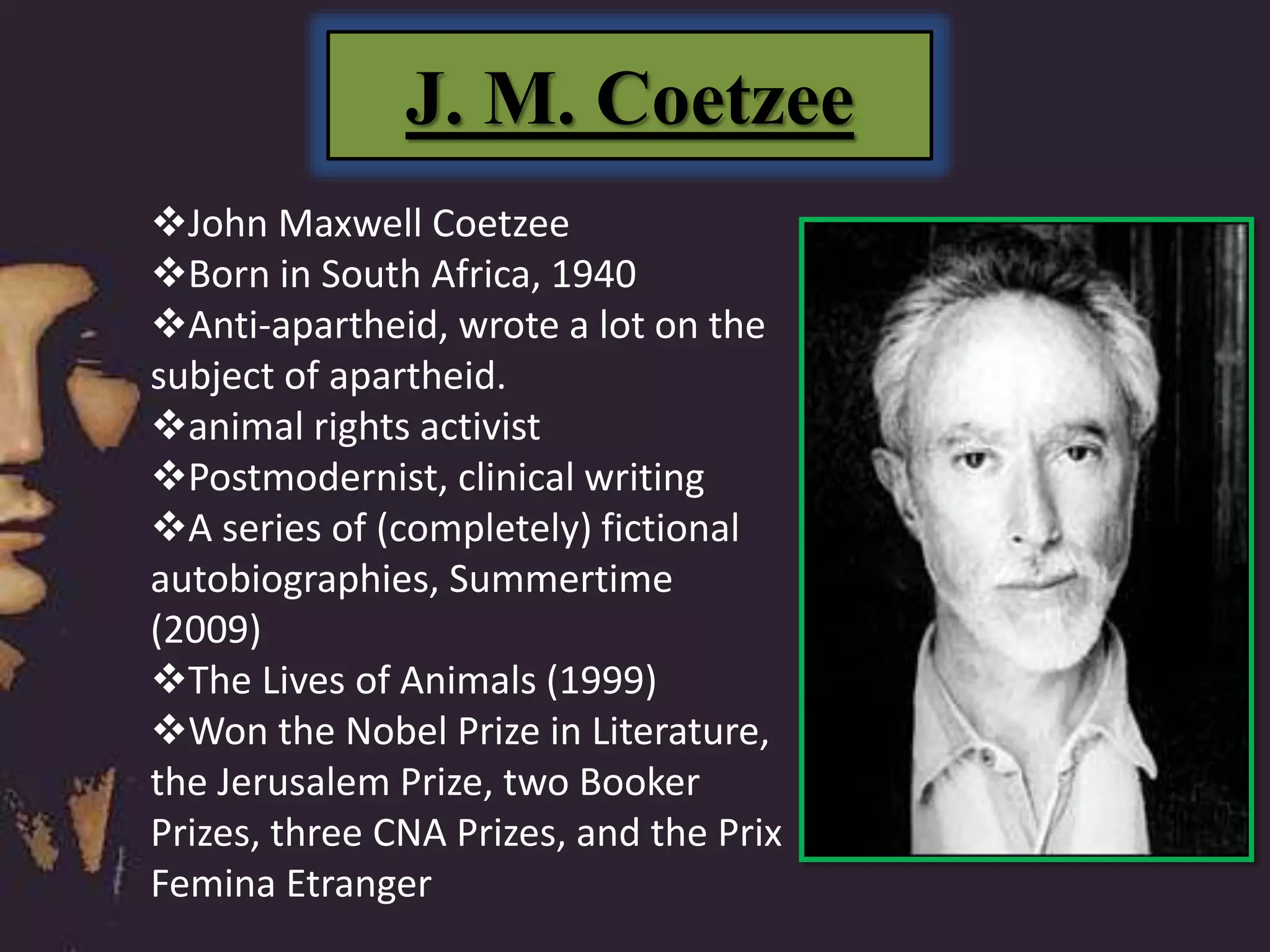
J. M. Coetzee
John Maxwell Coetzee
Born in South Africa, 1940
Anti-apartheid, wrote a lot on the
subject of apartheid.
animal rights activist
Postmodernist, clinical writing
A series of (completely) fictional
autobiographies, Summertime
(2009)
The Lives of Animals (1999)
Won the Nobel Prize in Literature,
the Jerusalem Prize, two Booker
Prizes, three CNA Prizes, and the Prix
Femina Etranger
Waiting for the Barbrians by C. P. Cavafy
A poem whose title Coetzee took for his novel.
An unnamed empire waits, ready to welcome, or,
rather, face the barbarians and "dazzle" them.
However, the barbarians don't come.
"Now what's going to happen to us without
barbarians? Those people were a kind of solution.“
the issue of the "other" as a vehicle to characterize
the "self“
described as "an apt description of any state that
needs enemies, real or imaginary, as a perpetual
excuse"
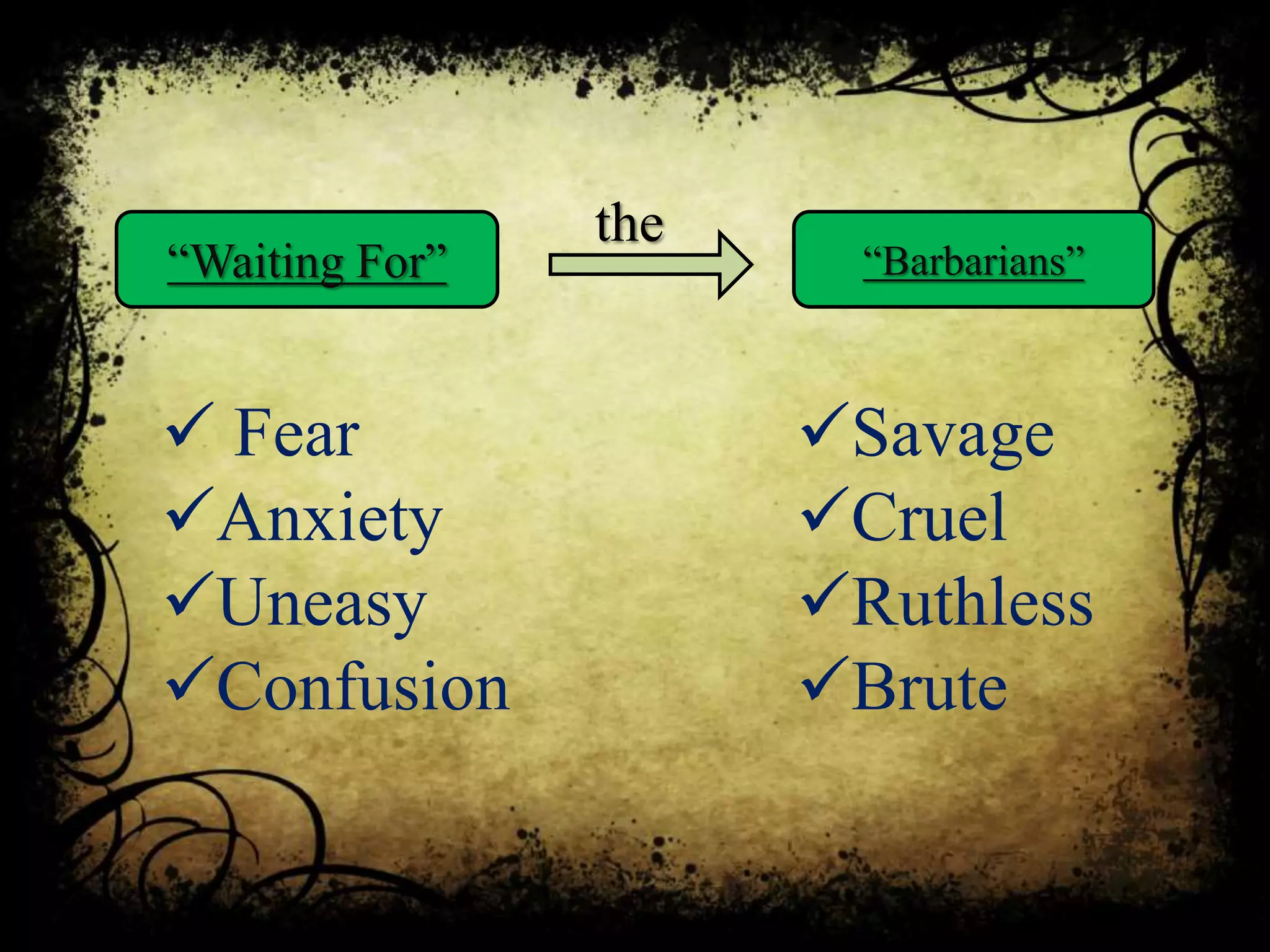
“Waiting For” “Barbarians”
the
 Fear
Anxiety
Uneasy
Confusion
Savage
Cruel
Ruthless
Brute
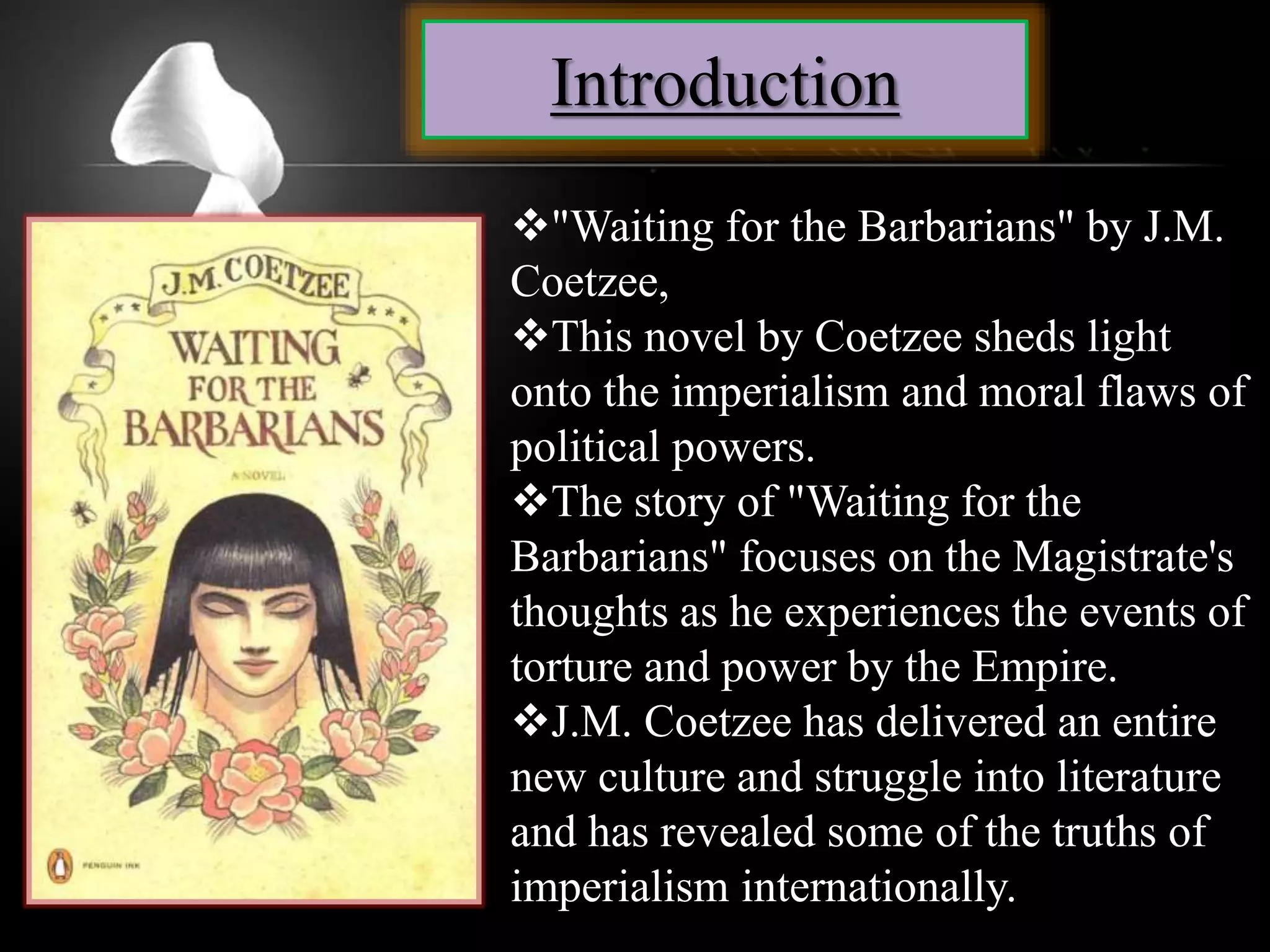
Introduction
"Waiting for the Barbarians" by J.M.
Coetzee,
This novel by Coetzee sheds light
onto the imperialism and moral flaws of
political powers.
The story of "Waiting for the
Barbarians" focuses on the Magistrate's
thoughts as he experiences the events of
torture and power by the Empire.
J.M. Coetzee has delivered an entire
new culture and struggle into literature
and has revealed some of the truths of
imperialism internationally.
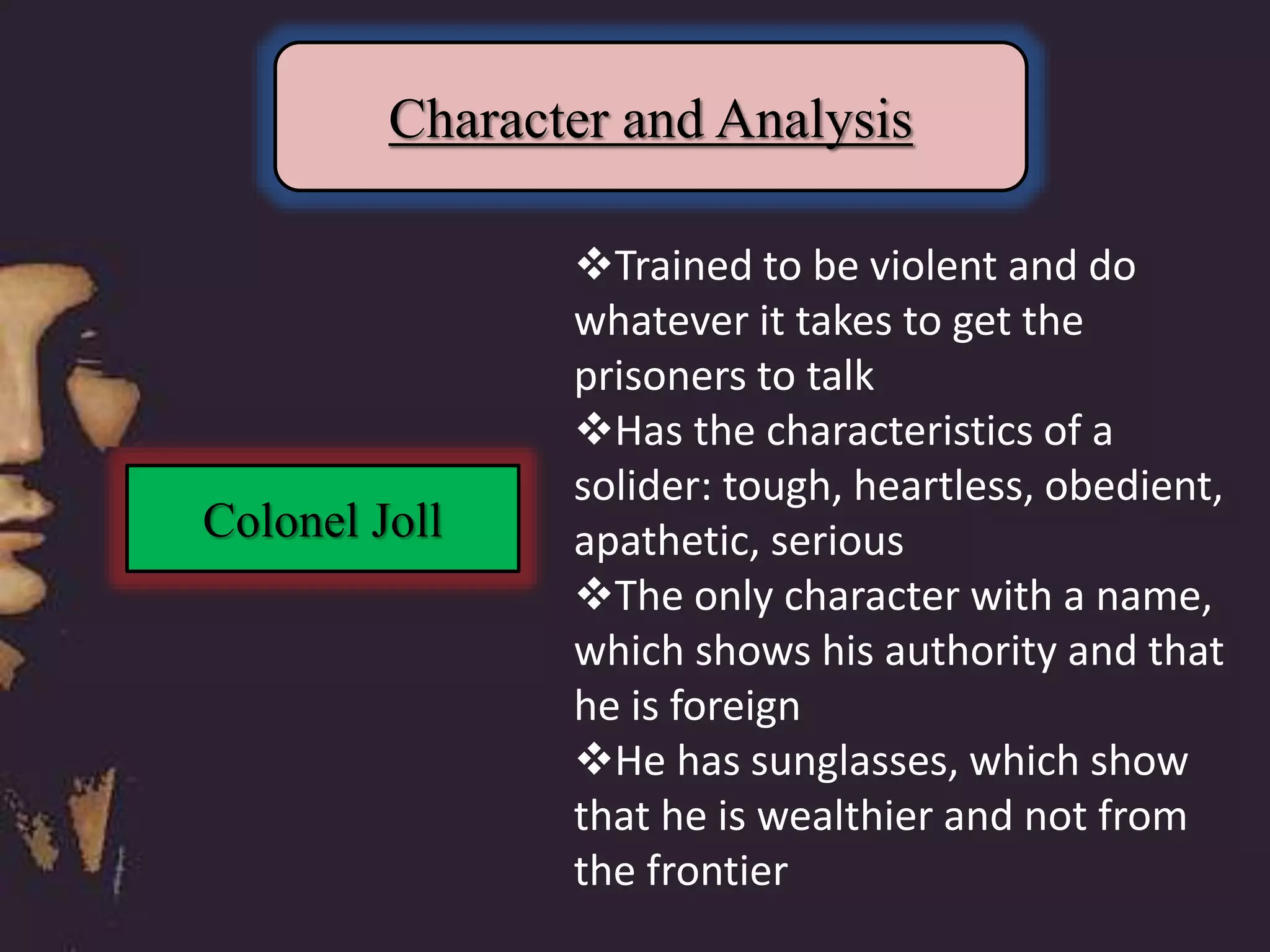
Character and Analysis
Colonel Joll
Trained to be violent and do
whatever it takes to get the
prisoners to talk
Has the characteristics of a
solider: tough, heartless, obedient,
apathetic, serious
The only character with a name,
which shows his authority and that
he is foreign
He has sunglasses, which show
that he is wealthier and not from
the frontier
The Magistrate
Waiting to retire, inefficient, and letting his
life pass by
Alone and was living a quiet life
Is unsure of Colonel Joll and his actions
Shows compassion for the boy and tries to help
him
Does not know what to do with this
uncertainty
Needs affection so he turns to the barbarian
girl and the prostitute
Is very awkward when with the girl and
prostitute
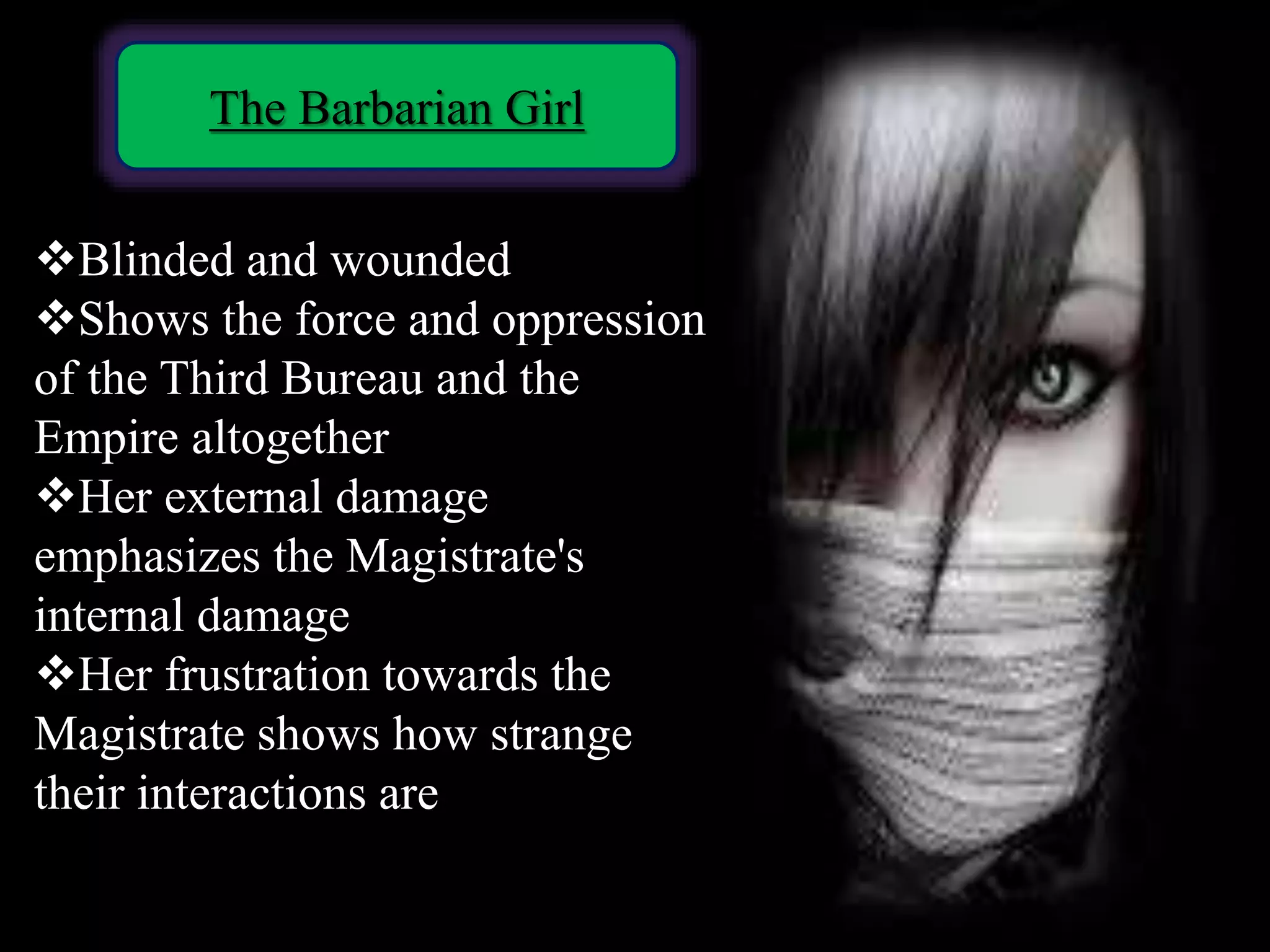
The Barbarian Girl
Blinded and wounded
Shows the force and oppression
of the Third Bureau and the
Empire altogether
Her external damage
emphasizes the Magistrate's
internal damage
Her frustration towards the
Magistrate shows how strange
their interactions are
Symbols
The empire
The empires represent power
that doesn't require that
Those who serve it love others but
merely perform duties.
Barbarians Tribes
According to rumors
barbarian tribes have been
arming and the empire
would have to employ
measures to prevent war.
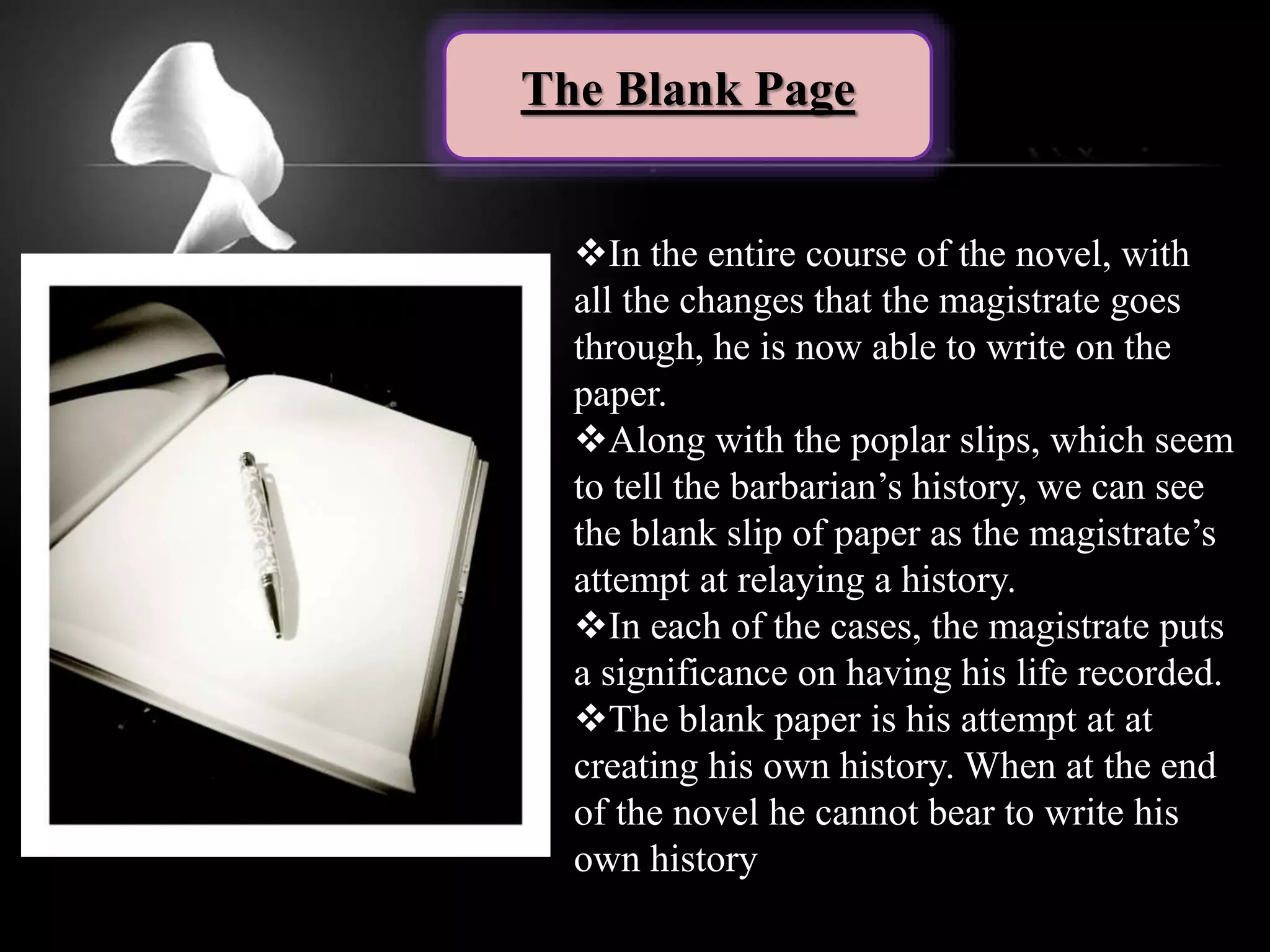
The Blank Page
In the entire course of the novel, with
all the changes that the magistrate goes
through, he is now able to write on the
paper.
Along with the poplar slips, which seem
to tell the barbarian’s history, we can see
the blank slip of paper as the magistrate’s
attempt at relaying a history.
In each of the cases, the magistrate puts
a significance on having his life recorded.
The blank paper is his attempt at at
creating his own history. When at the end
of the novel he cannot bear to write his
own history
The Term “Barbarians"
 Imperialism is an important aspect of the novel,
the term "barbarians" or "barbaric" is also
dominate. Depsite the fact that the Empire wants to
influence the land through military and diplomatic
influences, their technique of interrogation towards
that prisoners makes them as much as barbarians as
the real savages.
"Waiting for the Barbarians" is that the
Magistrate is a source of truth, one who witnesses
all of the good and evil of the Empire and the
villagers. He illuminates to the readers that it's not
always about politics, but it is about our true
human nature in a time of crisis; whether we tend
to be barbaric or civilized.
Critical Analysis Of "The Waiting For Barbarians"

Critical Analysis Of "The Waiting For Barbarians"

  • 1.
    Name :- GohilDevangiba Aniruddhsinh Roll No. :- 14 Email Id :- devangibagohil786@gmail.com Paper No. :- 14 (The African Literature) Topic :- Literary Analysis Of “The Waiting For Barbarians” Submitted To :- Department Of English M.K.B.University
  • 2.
    J. M. Coetzee JohnMaxwell Coetzee Born in South Africa, 1940 Anti-apartheid, wrote a lot on the subject of apartheid. animal rights activist Postmodernist, clinical writing A series of (completely) fictional autobiographies, Summertime (2009) The Lives of Animals (1999) Won the Nobel Prize in Literature, the Jerusalem Prize, two Booker Prizes, three CNA Prizes, and the Prix Femina Etranger
  • 3.
    Waiting for theBarbrians by C. P. Cavafy A poem whose title Coetzee took for his novel. An unnamed empire waits, ready to welcome, or, rather, face the barbarians and "dazzle" them. However, the barbarians don't come. "Now what's going to happen to us without barbarians? Those people were a kind of solution.“ the issue of the "other" as a vehicle to characterize the "self“ described as "an apt description of any state that needs enemies, real or imaginary, as a perpetual excuse"
  • 4.
    “Waiting For” “Barbarians” the Fear Anxiety Uneasy Confusion Savage Cruel Ruthless Brute
  • 5.
    Introduction "Waiting for theBarbarians" by J.M. Coetzee, This novel by Coetzee sheds light onto the imperialism and moral flaws of political powers. The story of "Waiting for the Barbarians" focuses on the Magistrate's thoughts as he experiences the events of torture and power by the Empire. J.M. Coetzee has delivered an entire new culture and struggle into literature and has revealed some of the truths of imperialism internationally.
  • 6.
    Character and Analysis ColonelJoll Trained to be violent and do whatever it takes to get the prisoners to talk Has the characteristics of a solider: tough, heartless, obedient, apathetic, serious The only character with a name, which shows his authority and that he is foreign He has sunglasses, which show that he is wealthier and not from the frontier
  • 7.
    The Magistrate Waiting toretire, inefficient, and letting his life pass by Alone and was living a quiet life Is unsure of Colonel Joll and his actions Shows compassion for the boy and tries to help him Does not know what to do with this uncertainty Needs affection so he turns to the barbarian girl and the prostitute Is very awkward when with the girl and prostitute
  • 8.
    The Barbarian Girl Blindedand wounded Shows the force and oppression of the Third Bureau and the Empire altogether Her external damage emphasizes the Magistrate's internal damage Her frustration towards the Magistrate shows how strange their interactions are
  • 9.
    Symbols The empire The empiresrepresent power that doesn't require that Those who serve it love others but merely perform duties.
  • 10.
    Barbarians Tribes According torumors barbarian tribes have been arming and the empire would have to employ measures to prevent war.
  • 11.
    The Blank Page Inthe entire course of the novel, with all the changes that the magistrate goes through, he is now able to write on the paper. Along with the poplar slips, which seem to tell the barbarian’s history, we can see the blank slip of paper as the magistrate’s attempt at relaying a history. In each of the cases, the magistrate puts a significance on having his life recorded. The blank paper is his attempt at at creating his own history. When at the end of the novel he cannot bear to write his own history
  • 12.
    The Term “Barbarians" Imperialism is an important aspect of the novel, the term "barbarians" or "barbaric" is also dominate. Depsite the fact that the Empire wants to influence the land through military and diplomatic influences, their technique of interrogation towards that prisoners makes them as much as barbarians as the real savages. "Waiting for the Barbarians" is that the Magistrate is a source of truth, one who witnesses all of the good and evil of the Empire and the villagers. He illuminates to the readers that it's not always about politics, but it is about our true human nature in a time of crisis; whether we tend to be barbaric or civilized.