Intoxication
DPP v Beard 1920
Held: Where the
defendant has
the necessary
mens rea despite
his intoxicated
state, then he is
guilty of the
offence. The
intoxication does
not provide a
defence-drunken
intent is still
intent
A-G for Northern Ireland v
Gallagher (1963)
Held: D decided to kill his wife. He brought
a knife to do the killing and also a bottle of
whisky. He drank a large amount of whisky
before killing his wife. His conviction for
murder was upheld.
DPP v Majweski (1977)
Held: The crime was
one of basic intent
and therefore D’s
intoxication could
not be relied on as a
defence.
Kingston (1994)
Held: HL upheld his
conviction for indecent
assault, They held that if a
defendant had formed the
mens rea for an offence then
involuntary intoxication was
not a defence.
Richardson and Irwin 1999
Held: Clarke LJ said
that the question was
not what another
person would have
foreseen but what Ds
themselves would
have foreseen had
they been sober.
Lipman (1970)
Held: D’s intoxication could be used to if he
lacked the MR for murder as murder is a crime
of specific intent. D’s intoxication could not be
a defence to manslaughter as it is a crime of
basic intent. Therefore his conviction for
manslaughter was upheld.
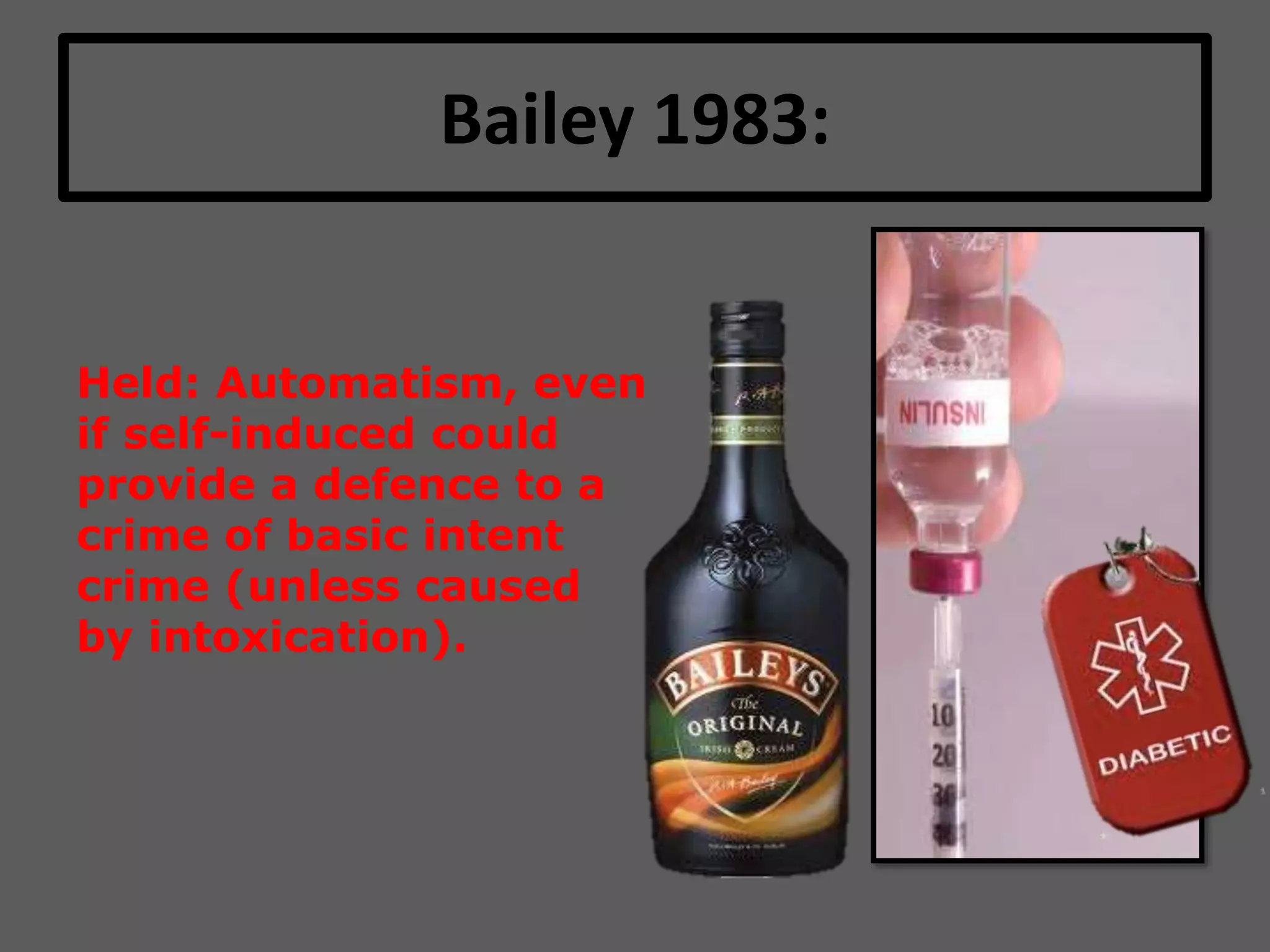
Bailey 1983:
Held: Automatism, even
if self-induced could
provide a defence to a
crime of basic intent
crime (unless caused
by intoxication).
O’Grady (1987)
Held: D was convicted of manslaughter and
appealed against conviction. The CA dismissed
the appeal and said that a mistake arising
from voluntary intoxication could never be
relied on in putting forward a defence,
whatever the crime.
Hatton (2005)
Held: In self-defence, a
mistake induced by
drunkenness cannot be relied
on.
Jaggard v Dickinson
Held: Although D's
mistake was not a
reasonable one,
Parliament had provided
a defence based on
honest belief. Court had
to consider the
defendants actual state
of belief.

Criminal Law: Intoxication

  • 1.
  • 2.
    DPP v Beard1920 Held: Where the defendant has the necessary mens rea despite his intoxicated state, then he is guilty of the offence. The intoxication does not provide a defence-drunken intent is still intent
  • 3.
    A-G for NorthernIreland v Gallagher (1963) Held: D decided to kill his wife. He brought a knife to do the killing and also a bottle of whisky. He drank a large amount of whisky before killing his wife. His conviction for murder was upheld.
  • 4.
    DPP v Majweski(1977) Held: The crime was one of basic intent and therefore D’s intoxication could not be relied on as a defence.
  • 5.
    Kingston (1994) Held: HLupheld his conviction for indecent assault, They held that if a defendant had formed the mens rea for an offence then involuntary intoxication was not a defence.
  • 6.
    Richardson and Irwin1999 Held: Clarke LJ said that the question was not what another person would have foreseen but what Ds themselves would have foreseen had they been sober.
  • 7.
    Lipman (1970) Held: D’sintoxication could be used to if he lacked the MR for murder as murder is a crime of specific intent. D’s intoxication could not be a defence to manslaughter as it is a crime of basic intent. Therefore his conviction for manslaughter was upheld.
  • 8.
    Bailey 1983: Held: Automatism,even if self-induced could provide a defence to a crime of basic intent crime (unless caused by intoxication).
  • 9.
    O’Grady (1987) Held: Dwas convicted of manslaughter and appealed against conviction. The CA dismissed the appeal and said that a mistake arising from voluntary intoxication could never be relied on in putting forward a defence, whatever the crime.
  • 10.
    Hatton (2005) Held: Inself-defence, a mistake induced by drunkenness cannot be relied on.
  • 11.
    Jaggard v Dickinson Held:Although D's mistake was not a reasonable one, Parliament had provided a defence based on honest belief. Court had to consider the defendants actual state of belief.