Crime Victimization and

Disabilities

                Dan L. Petersen, Ph.D
      Joint Center on Violence and Victim Studies
                 Washburn University
“The basis of people’s lives with one another
is twofold, and it is one– the wish of each
person to be confirmed as what each person
is, even as what that person can become;
and the innate capacity in each person to
confirm others in this way…..
…… actual humanity exists only where this
capacity unfolds.”
                           Martin Buber
Communication and Respect
 Person first language

 Be Respectful
   If a person uses a chair, get permission before
   touching it
   If the person uses a working dog, ask permission
   before interacting with the dog
   Ask if a person would like your help
   Address the person and not their care attendant or
   translator
Disabilities – background
information

 It is estimated that 54 million
 Americans have some form of
 disability.
 Approximately 1 in 5 have some kind
 of disability that interferes with
 functioning
 With 1 in 10 having a severe disability
For each disability group or type,
different dynamics of abuse and crime
come into play.
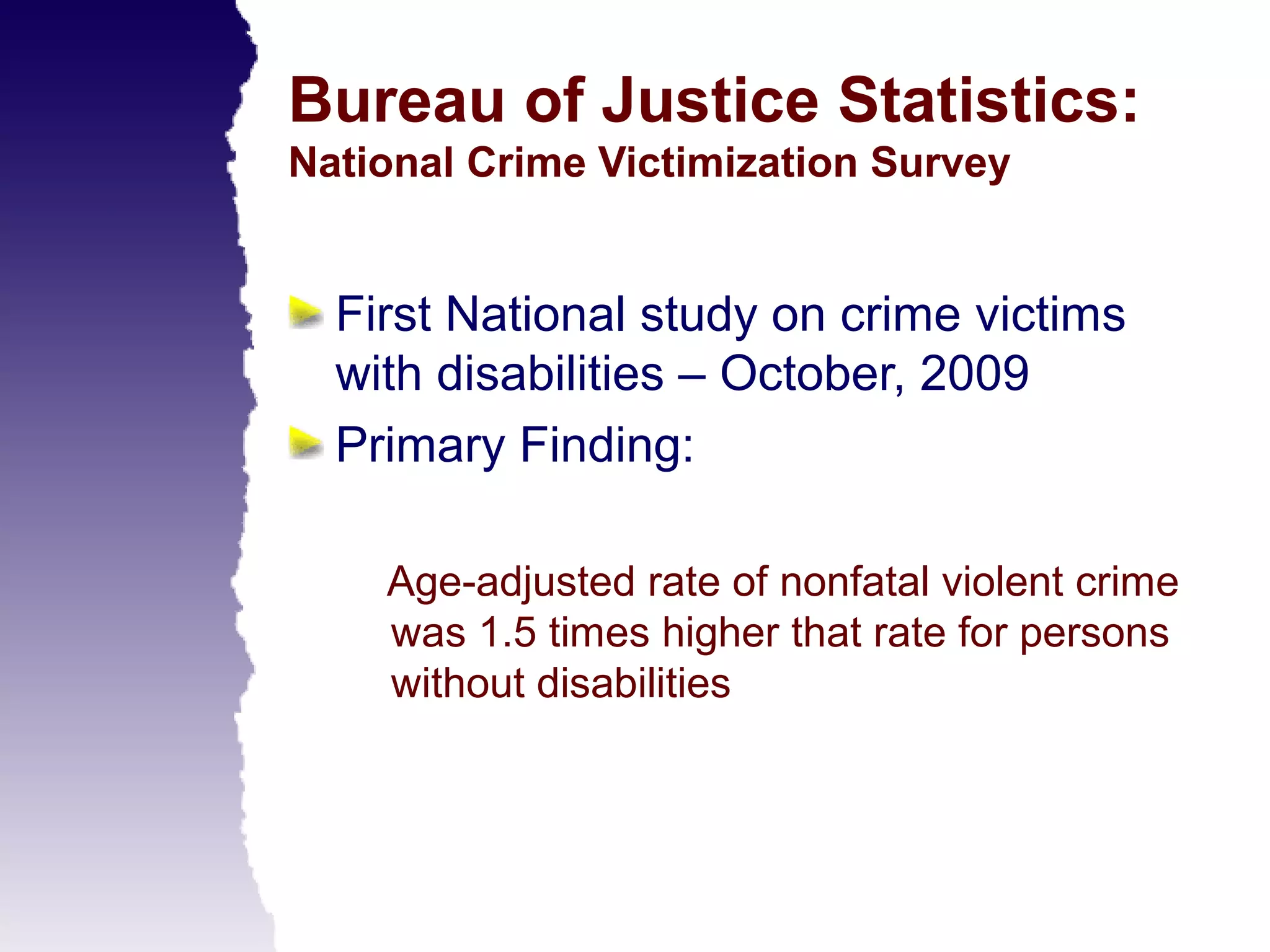
Bureau of Justice Statistics:
National Crime Victimization Survey


  First National study on crime victims
  with disabilities – October, 2009
  Primary Finding:

    Age-adjusted rate of nonfatal violent crime
    was 1.5 times higher that rate for persons
    without disabilities
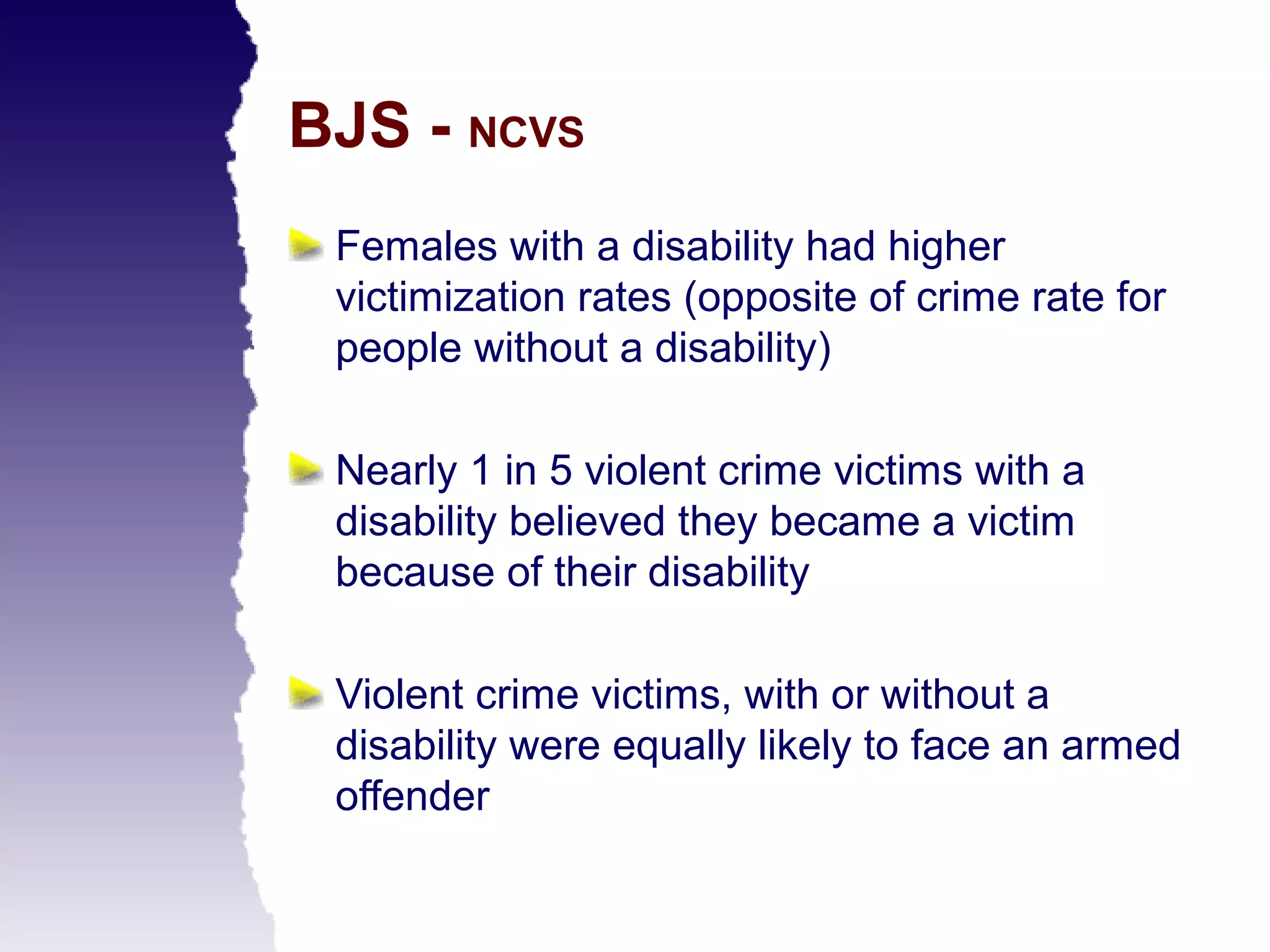
BJS - NCVS
 Females with a disability had higher
 victimization rates (opposite of crime rate for
 people without a disability)

 Nearly 1 in 5 violent crime victims with a
 disability believed they became a victim
 because of their disability

 Violent crime victims, with or without a
 disability were equally likely to face an armed
 offender
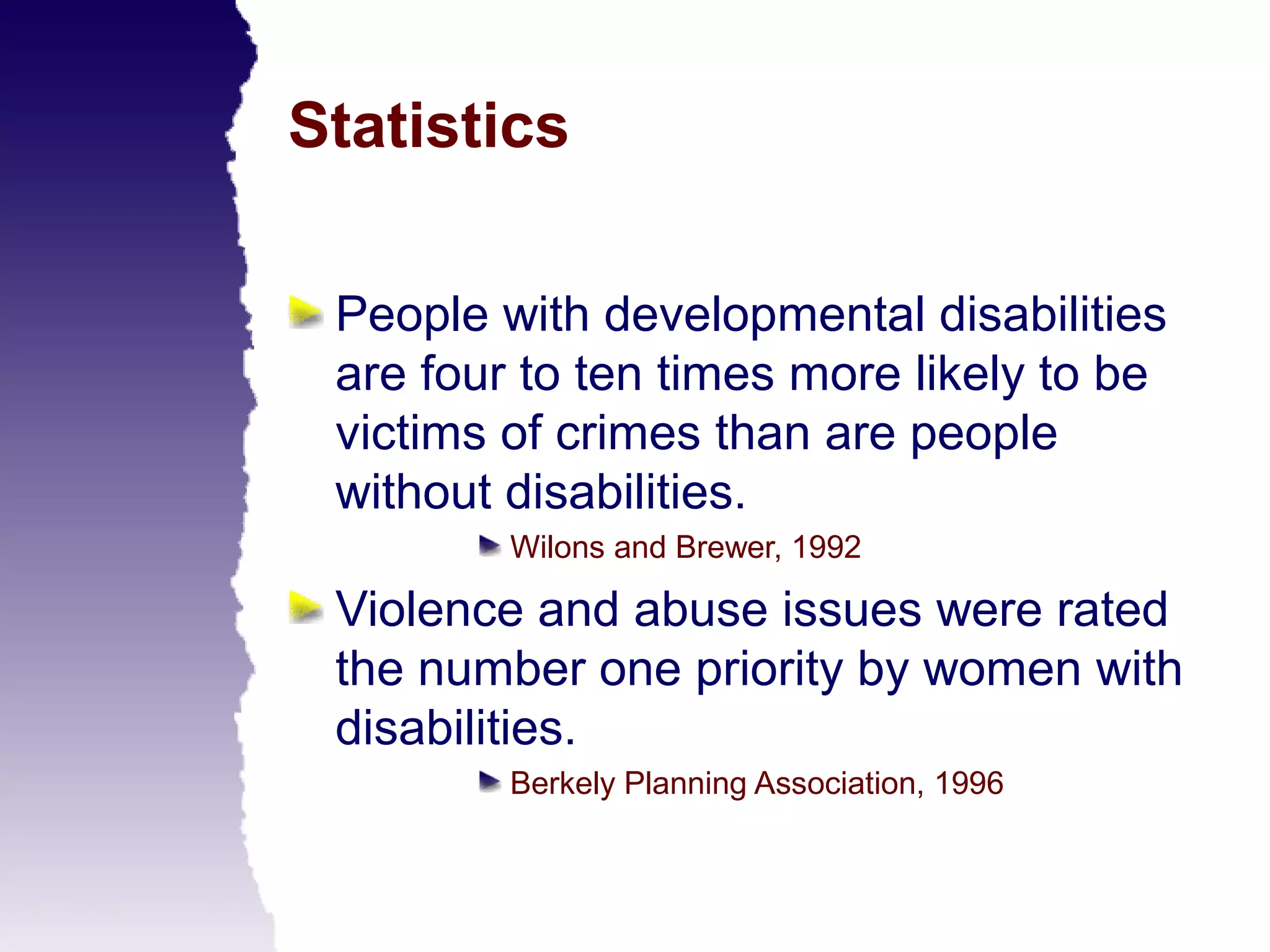
Statistics

 People with developmental disabilities
 are four to ten times more likely to be
 victims of crimes than are people
 without disabilities.
         Wilons and Brewer, 1992

 Violence and abuse issues were rated
 the number one priority by women with
 disabilities.
         Berkely Planning Association, 1996
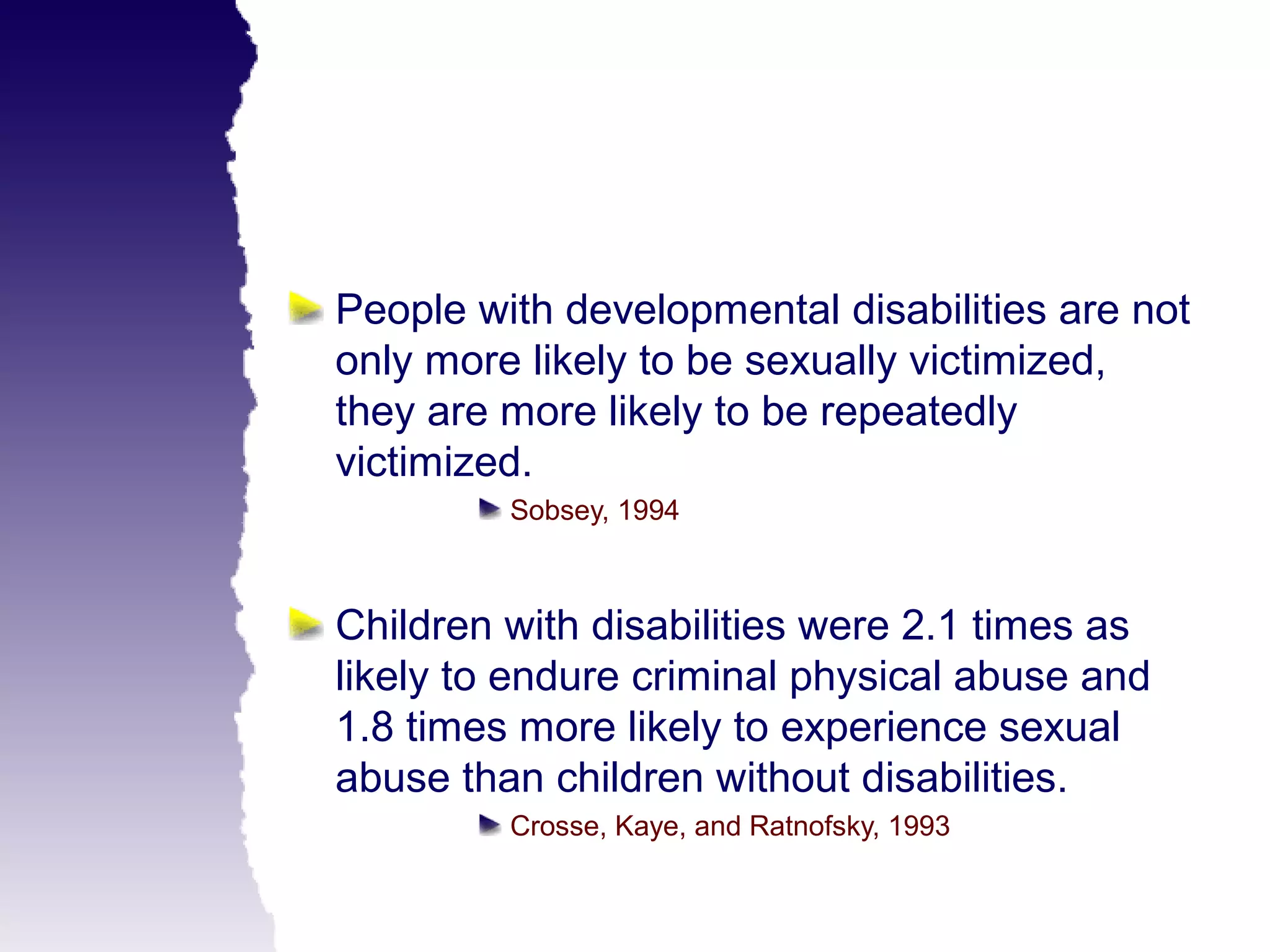
People with developmental disabilities are not
only more likely to be sexually victimized,
they are more likely to be repeatedly
victimized.
         Sobsey, 1994


Children with disabilities were 2.1 times as
likely to endure criminal physical abuse and
1.8 times more likely to experience sexual
abuse than children without disabilities.
         Crosse, Kaye, and Ratnofsky, 1993
54% of boys who have a severe
hearing impairment and 50% of girls
who have a severe hearing impairment
have been sexually abused.
          Stimpson and Best, 1991


10% of consumers of attendant care
services have been abused; 40% have
been victims of theft.
          Ulnicy, 1990
In one study, thirteen (13%) of women
with physical disabilities described
experiencing physical abuse in the
past year.
       Colorado Task Group, 1994
In one study, researchers reported a
history of sexual abuse among 25% of
adolescent girls with mental retardation
surveyed.
        Nosek, et al., 1995
Women with disabilities were more likely than
women without disabilities to experience
abuse by health care providers.
Women with disabilities were abused by a
greater number of perpetrators than women
without disabilities.
Women with physical disabilities were more
likely to experience more intense patterns of
abuse over their lifetimes than women
without disabilities.
            Nosek, et al., 1995
Women with disabilities reported
significantly longer durations of
physical abuse or sexual abuse
compared to women without
disabilities (3.9 yrs. versus 2.5 yrs.)
              Nosek, Rintala, Young, Howland, Foley, Rossi, &
              Chanpong, 1995


        Responding to Rural Crime Victimization
In spite of high percentages, few
women with disabilities receive
treatment from victim services
specialists.
        Andrews & Veronen, 1993


       Responding to Rural Crime Victimization
Domestic Violence

 One survey of 598 battered women’s
 programs showed:
   Programs were least likely to serve women with
   visual or hearing impairments. The most common
   disability was mental illness.
   For nearly half the programs, less that 1% of the
   women served had physical disabilities
   Only 35% of the programs offered disability
   awareness training for their staff
   49% of the programs reported that the most
   effective outreach service for making women with
   disabilities aware of their services was community
   presentations, but only 16% offered such outreach
   services
Reporting issues

 Women with disabilities are less likely to
 report abuse because:
    Have limited job opportunities and lack the means
    with which to support themselves independently
    Lack shelter, housing options, or transportation
    May experience extreme isolation fostered by
    society’s attitudes of segregation
    The experience of having a disability significantly
    impacts their ability to become and remain socially
    and economically independent
    Society often questions the ability of a person with
    a disability to parent effectively
Complications in Reporting

 Believability
 Health related issues
 Income/employability
 Finances (credit history)
 Personal assistance needs
 Child custody
 Housing
 Transportation
 Legal system difficulties
 Speech and cognition difficulties
 Judged too rapidly
Areas of potential crime or
abuse often overlooked

 Withholding medication
 Withholding personal care services
 Withholding needed medical equipment like walkers,
 canes, wheelchairs, etc.
 Causing physical pain during routines of daily living
 Physically restraining the person
 Making the individual lie in their own waste or remain
 unwashed/bathed
 Withholding benefits/money or controlling the person’s
 finances
 Using personal items or property without permission
What constitutes a crime?

 What is the difference between abuse
 and a crime?
     Webster Dict. –
        Abuse: “to treat badly, mistreat, maltreatment,
        etc.”
        Crime: “a grave offense, an act punishable by
        law, forbidden, etc.”

 Can we identify possible
 abuses/crimes that law enforcement
 may not immediately recognize as a
 crime?
Children with disabilities
have a right to:

 Be told the truth
 Be believed
 Have their disability kept in perspective
 Have their own life and privacy
 afforded to all children
 Be protected
 Be a child
Services

 Make shelters for battered women fully
 accessible, including barrier-free
 access to sleeping rooms and
 common areas, architectural features
 that comply with the ADA legislation,
 visual and auditory alaRMs systems,
 and TDDs for telephone
 communication
Provide, or refer to, legal assistance
for obtaining restraining orders and
managing court systems which are
accessible to persons with disabilities
Assist and encourage police in
recording disability status in their crime
reports, as well as , encouraging
adoption of a separate category for
perpetrators who are caregivers
Offer training to disability-related
service providers, including
independent living centers and
churches, on recognizing the
symptoms of abuse and the
characteristics of potential batterers.
Train staff or learn how to
communicate with persons who have
hearing, cognitive, speech, or
psychiatric impairments. They should
understand environmental barriers
faced by persons with physical and
sensory disabilities when offering
advice or referrals for obtaining shelter.
Question the equality of all
services


 Question the equality of all services

    Is there equal protection?
    Is there equal access?
    Are services equal?

Crime victimization and disabilities 2012

  • 1.
    Crime Victimization and Disabilities Dan L. Petersen, Ph.D Joint Center on Violence and Victim Studies Washburn University
  • 2.
    “The basis ofpeople’s lives with one another is twofold, and it is one– the wish of each person to be confirmed as what each person is, even as what that person can become; and the innate capacity in each person to confirm others in this way….. …… actual humanity exists only where this capacity unfolds.” Martin Buber
  • 3.
    Communication and Respect Person first language Be Respectful If a person uses a chair, get permission before touching it If the person uses a working dog, ask permission before interacting with the dog Ask if a person would like your help Address the person and not their care attendant or translator
  • 4.
    Disabilities – background information It is estimated that 54 million Americans have some form of disability. Approximately 1 in 5 have some kind of disability that interferes with functioning With 1 in 10 having a severe disability
  • 5.
    For each disabilitygroup or type, different dynamics of abuse and crime come into play.
  • 6.
    Bureau of JusticeStatistics: National Crime Victimization Survey First National study on crime victims with disabilities – October, 2009 Primary Finding: Age-adjusted rate of nonfatal violent crime was 1.5 times higher that rate for persons without disabilities
  • 7.
    BJS - NCVS Females with a disability had higher victimization rates (opposite of crime rate for people without a disability) Nearly 1 in 5 violent crime victims with a disability believed they became a victim because of their disability Violent crime victims, with or without a disability were equally likely to face an armed offender
  • 8.
    Statistics People withdevelopmental disabilities are four to ten times more likely to be victims of crimes than are people without disabilities. Wilons and Brewer, 1992 Violence and abuse issues were rated the number one priority by women with disabilities. Berkely Planning Association, 1996
  • 9.
    People with developmentaldisabilities are not only more likely to be sexually victimized, they are more likely to be repeatedly victimized. Sobsey, 1994 Children with disabilities were 2.1 times as likely to endure criminal physical abuse and 1.8 times more likely to experience sexual abuse than children without disabilities. Crosse, Kaye, and Ratnofsky, 1993
  • 10.
    54% of boyswho have a severe hearing impairment and 50% of girls who have a severe hearing impairment have been sexually abused. Stimpson and Best, 1991 10% of consumers of attendant care services have been abused; 40% have been victims of theft. Ulnicy, 1990
  • 11.
    In one study,thirteen (13%) of women with physical disabilities described experiencing physical abuse in the past year. Colorado Task Group, 1994
  • 12.
    In one study,researchers reported a history of sexual abuse among 25% of adolescent girls with mental retardation surveyed. Nosek, et al., 1995
  • 13.
    Women with disabilitieswere more likely than women without disabilities to experience abuse by health care providers. Women with disabilities were abused by a greater number of perpetrators than women without disabilities. Women with physical disabilities were more likely to experience more intense patterns of abuse over their lifetimes than women without disabilities. Nosek, et al., 1995
  • 14.
    Women with disabilitiesreported significantly longer durations of physical abuse or sexual abuse compared to women without disabilities (3.9 yrs. versus 2.5 yrs.) Nosek, Rintala, Young, Howland, Foley, Rossi, & Chanpong, 1995 Responding to Rural Crime Victimization
  • 15.
    In spite ofhigh percentages, few women with disabilities receive treatment from victim services specialists. Andrews & Veronen, 1993 Responding to Rural Crime Victimization
  • 16.
    Domestic Violence Onesurvey of 598 battered women’s programs showed: Programs were least likely to serve women with visual or hearing impairments. The most common disability was mental illness. For nearly half the programs, less that 1% of the women served had physical disabilities Only 35% of the programs offered disability awareness training for their staff 49% of the programs reported that the most effective outreach service for making women with disabilities aware of their services was community presentations, but only 16% offered such outreach services
  • 17.
    Reporting issues Womenwith disabilities are less likely to report abuse because: Have limited job opportunities and lack the means with which to support themselves independently Lack shelter, housing options, or transportation May experience extreme isolation fostered by society’s attitudes of segregation The experience of having a disability significantly impacts their ability to become and remain socially and economically independent Society often questions the ability of a person with a disability to parent effectively
  • 18.
    Complications in Reporting Believability Health related issues Income/employability Finances (credit history) Personal assistance needs Child custody Housing Transportation Legal system difficulties Speech and cognition difficulties Judged too rapidly
  • 19.
    Areas of potentialcrime or abuse often overlooked Withholding medication Withholding personal care services Withholding needed medical equipment like walkers, canes, wheelchairs, etc. Causing physical pain during routines of daily living Physically restraining the person Making the individual lie in their own waste or remain unwashed/bathed Withholding benefits/money or controlling the person’s finances Using personal items or property without permission
  • 20.
    What constitutes acrime? What is the difference between abuse and a crime? Webster Dict. – Abuse: “to treat badly, mistreat, maltreatment, etc.” Crime: “a grave offense, an act punishable by law, forbidden, etc.” Can we identify possible abuses/crimes that law enforcement may not immediately recognize as a crime?
  • 21.
    Children with disabilities havea right to: Be told the truth Be believed Have their disability kept in perspective Have their own life and privacy afforded to all children Be protected Be a child
  • 22.
    Services Make sheltersfor battered women fully accessible, including barrier-free access to sleeping rooms and common areas, architectural features that comply with the ADA legislation, visual and auditory alaRMs systems, and TDDs for telephone communication
  • 23.
    Provide, or referto, legal assistance for obtaining restraining orders and managing court systems which are accessible to persons with disabilities
  • 24.
    Assist and encouragepolice in recording disability status in their crime reports, as well as , encouraging adoption of a separate category for perpetrators who are caregivers
  • 25.
    Offer training todisability-related service providers, including independent living centers and churches, on recognizing the symptoms of abuse and the characteristics of potential batterers.
  • 26.
    Train staff orlearn how to communicate with persons who have hearing, cognitive, speech, or psychiatric impairments. They should understand environmental barriers faced by persons with physical and sensory disabilities when offering advice or referrals for obtaining shelter.
  • 27.
    Question the equalityof all services Question the equality of all services Is there equal protection? Is there equal access? Are services equal?