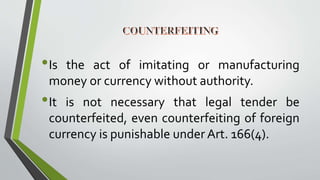
•Is the act of imitating or manufacturing
money or currency without authority.
•It is not necessary that legal tender be
counterfeited, even counterfeiting of foreign
currency is punishable under Art. 166(4).
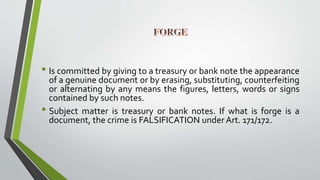
• Is committed by giving to a treasury or bank note the appearance
of a genuine document or by erasing, substituting, counterfeiting
or alternating by any means the figures, letters, words or signs
contained by such notes.
• Subject matter is treasury or bank notes. If what is forge is a
document, the crime is FALSIFICATION under Art. 171/172.
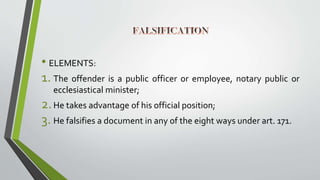
• ELEMENTS:
1. The offender is a public officer or employee, notary public or
ecclesiastical minister;
2.He takes advantage of his official position;
3. He falsifies a document in any of the eight ways under art. 171.
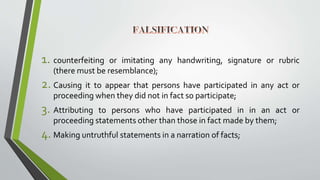
1. counterfeiting or imitating any handwriting, signature or rubric
(there must be resemblance);
2. Causing it to appear that persons have participated in any act or
proceeding when they did not in fact so participate;
3. Attributing to persons who have participated in in an act or
proceeding statements other than those in fact made by them;
4. Making untruthful statements in a narration of facts;
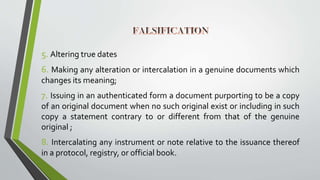
5. Altering true dates
6. Making any alteration or intercalation in a genuine documents which
changes its meaning;
7. Issuing in an authenticated form a document purporting to be a copy
of an original document when no such original exist or including in such
copy a statement contrary to or different from that of the genuine
original ;
8. Intercalating any instrument or note relative to the issuance thereof
in a protocol, registry, or official book.
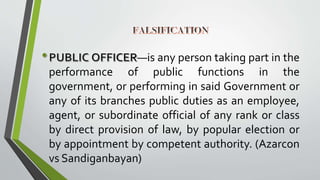
—is any person taking part in the
performance of public functions in the
government, or performing in said Government or
any of its branches public duties as an employee,
agent, or subordinate official of any rank or class
by direct provision of law, by popular election or
by appointment by competent authority. (Azarcon
vs Sandiganbayan)
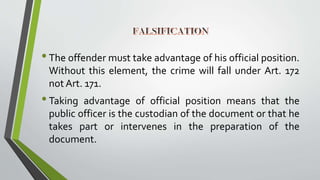
•The offender must take advantage of his official position.
Without this element, the crime will fall under Art. 172
not Art. 171.
•Taking advantage of official position means that the
public officer is the custodian of the document or that he
takes part or intervenes in the preparation of the
document.
• Legal presumption: when a person makes use of a falsified
document, he is deemed to be the falsifier. Where:
1. The user benefited from the use of the false document;
2.The time between the falsification is established and when the
offender is not able to overcome such presumption, he can be
convicted.
• 4 KINDS OF DOCUMENTS:
1. PRIVATE DOCUMENTS– deed between private individuals by which
something is proved, evidenced or set forth and for which a notary public
or one authorized to administer oath has not intervened.
 A private document becomes public when the same had been notarized or
made part of the public record.
2. PUBLIC DOCUMENTS– referring to a private document
that has been notarized or made part of the public record.
3. OFFICIAL DOCUMENTS– required by law to be issued or
one issued in the performance of official duty.
4. COMMERCIAL DOCUMENTS– which complies with
mercantile laws.
• Damage or intent to cause is not a n element of falsification. It is the
violation of the faith or trust of the public and destruction of the truth as
solemnly proclaimed in the document that is penalized.
• Requires criminal intent –to prevent the truth, where:
1. The accused did not profit
2. No damage was caused to any private property or the government—the
intent to pervert the truth is absent.
 Where the mind is not criminal, the act cannot be criminal. (ACTUS NON
FACIT REUM, NISI MENS SIT REA)
• REQUISITES: (PP vs Layno)
1. The offender makes in a document untruthful statements in a narrow
of facts;
2. That he has a legal obligation to disclose the truth of the facts
narrated by him;
3. The facts narrated by the offender are absolutely false.
•Is committed by any person who by false pretense
represents himself to be a public officer, agent or
representative of any department or agency of the
Philippine government or foreign.
(misrepresentation)-- (PP vs Gigantoni)
• Is committed when a person performs function pertaining to
public officer under false pretense of public authority without
being lawfully entitled thereto.
• If the performance of public function is without a claim of public
authority, there is no criminal liability as this is sanctioned.
• Example: directing traffic during an accident as a form of civil
spirit (false pretense of a person he is not)
ELEMENTS:
1.There must be a statement or affidavit under oath;
2.The oath must be administered by an officer competent
to do so because it is essential that the OATH beVALID.
3.The witness affiant
•Is knowingly making untruthful statements and not
being included in the provisions of Art. 180-182 on false
testimony, shall testify under oath or make an affidavit,
upon any material matter before a competent person
authorized to administer an oath in cases in which the
law so requires.
• C.A. 142 as amended was enacted primarily to curb the
practice of adopting scores of different names and aliases
which created tremendous confusion in the field of trade.
• Penalized the act of using an alias UNLESS it was duly
authorized by proper judicial proceedings and registered in the
civil registry. (Ursua vs CA)
• An individual can make use of a 2nd name without infringing upon the law in
the following instances:
1. As pseudonym solely for literary, cinema, television, radio or other
entertainment purposes and in athletic events where the use of pseudonym
is accepted practice.
2. When the use of 2nd name or alias is judicially authorized and duly recorded
in the proper local civil registry.
3. The use of fictitious name or a different name belonging to a single instance
without any sign or indication that the user intends to be known by this
name in addition to his real name from that day fourth.
THANK YOU FOR READING!
CHELDHAYE

Crime against public interest

  • 2.
    •Is the actof imitating or manufacturing money or currency without authority. •It is not necessary that legal tender be counterfeited, even counterfeiting of foreign currency is punishable under Art. 166(4).
  • 3.
    • Is committedby giving to a treasury or bank note the appearance of a genuine document or by erasing, substituting, counterfeiting or alternating by any means the figures, letters, words or signs contained by such notes. • Subject matter is treasury or bank notes. If what is forge is a document, the crime is FALSIFICATION under Art. 171/172.
  • 4.
    • ELEMENTS: 1. Theoffender is a public officer or employee, notary public or ecclesiastical minister; 2.He takes advantage of his official position; 3. He falsifies a document in any of the eight ways under art. 171.
  • 5.
    1. counterfeiting orimitating any handwriting, signature or rubric (there must be resemblance); 2. Causing it to appear that persons have participated in any act or proceeding when they did not in fact so participate; 3. Attributing to persons who have participated in in an act or proceeding statements other than those in fact made by them; 4. Making untruthful statements in a narration of facts;
  • 6.
    5. Altering truedates 6. Making any alteration or intercalation in a genuine documents which changes its meaning; 7. Issuing in an authenticated form a document purporting to be a copy of an original document when no such original exist or including in such copy a statement contrary to or different from that of the genuine original ; 8. Intercalating any instrument or note relative to the issuance thereof in a protocol, registry, or official book.
  • 7.
    —is any persontaking part in the performance of public functions in the government, or performing in said Government or any of its branches public duties as an employee, agent, or subordinate official of any rank or class by direct provision of law, by popular election or by appointment by competent authority. (Azarcon vs Sandiganbayan)
  • 8.
    •The offender musttake advantage of his official position. Without this element, the crime will fall under Art. 172 not Art. 171. •Taking advantage of official position means that the public officer is the custodian of the document or that he takes part or intervenes in the preparation of the document.
  • 9.
    • Legal presumption:when a person makes use of a falsified document, he is deemed to be the falsifier. Where: 1. The user benefited from the use of the false document; 2.The time between the falsification is established and when the offender is not able to overcome such presumption, he can be convicted.
  • 10.
    • 4 KINDSOF DOCUMENTS: 1. PRIVATE DOCUMENTS– deed between private individuals by which something is proved, evidenced or set forth and for which a notary public or one authorized to administer oath has not intervened.  A private document becomes public when the same had been notarized or made part of the public record.
  • 11.
    2. PUBLIC DOCUMENTS–referring to a private document that has been notarized or made part of the public record. 3. OFFICIAL DOCUMENTS– required by law to be issued or one issued in the performance of official duty. 4. COMMERCIAL DOCUMENTS– which complies with mercantile laws.
  • 12.
    • Damage orintent to cause is not a n element of falsification. It is the violation of the faith or trust of the public and destruction of the truth as solemnly proclaimed in the document that is penalized. • Requires criminal intent –to prevent the truth, where: 1. The accused did not profit 2. No damage was caused to any private property or the government—the intent to pervert the truth is absent.  Where the mind is not criminal, the act cannot be criminal. (ACTUS NON FACIT REUM, NISI MENS SIT REA)
  • 13.
    • REQUISITES: (PPvs Layno) 1. The offender makes in a document untruthful statements in a narrow of facts; 2. That he has a legal obligation to disclose the truth of the facts narrated by him; 3. The facts narrated by the offender are absolutely false.
  • 14.
    •Is committed byany person who by false pretense represents himself to be a public officer, agent or representative of any department or agency of the Philippine government or foreign. (misrepresentation)-- (PP vs Gigantoni)
  • 15.
    • Is committedwhen a person performs function pertaining to public officer under false pretense of public authority without being lawfully entitled thereto. • If the performance of public function is without a claim of public authority, there is no criminal liability as this is sanctioned. • Example: directing traffic during an accident as a form of civil spirit (false pretense of a person he is not)
  • 16.
    ELEMENTS: 1.There must bea statement or affidavit under oath; 2.The oath must be administered by an officer competent to do so because it is essential that the OATH beVALID. 3.The witness affiant
  • 17.
    •Is knowingly makinguntruthful statements and not being included in the provisions of Art. 180-182 on false testimony, shall testify under oath or make an affidavit, upon any material matter before a competent person authorized to administer an oath in cases in which the law so requires.
  • 18.
    • C.A. 142as amended was enacted primarily to curb the practice of adopting scores of different names and aliases which created tremendous confusion in the field of trade. • Penalized the act of using an alias UNLESS it was duly authorized by proper judicial proceedings and registered in the civil registry. (Ursua vs CA)
  • 19.
    • An individualcan make use of a 2nd name without infringing upon the law in the following instances: 1. As pseudonym solely for literary, cinema, television, radio or other entertainment purposes and in athletic events where the use of pseudonym is accepted practice. 2. When the use of 2nd name or alias is judicially authorized and duly recorded in the proper local civil registry. 3. The use of fictitious name or a different name belonging to a single instance without any sign or indication that the user intends to be known by this name in addition to his real name from that day fourth.
  • 20.
    THANK YOU FORREADING! CHELDHAYE