DEVELOPING AND
USING CREATIVITY
IN LEARNING
Objectives
 What is creativity.
 The Benefits of Creative Learning.
 Strategies for Developing Creativity
 Removing Barriers to Creativity in Learning
 Strategies for Enhancing Creativity in Learning
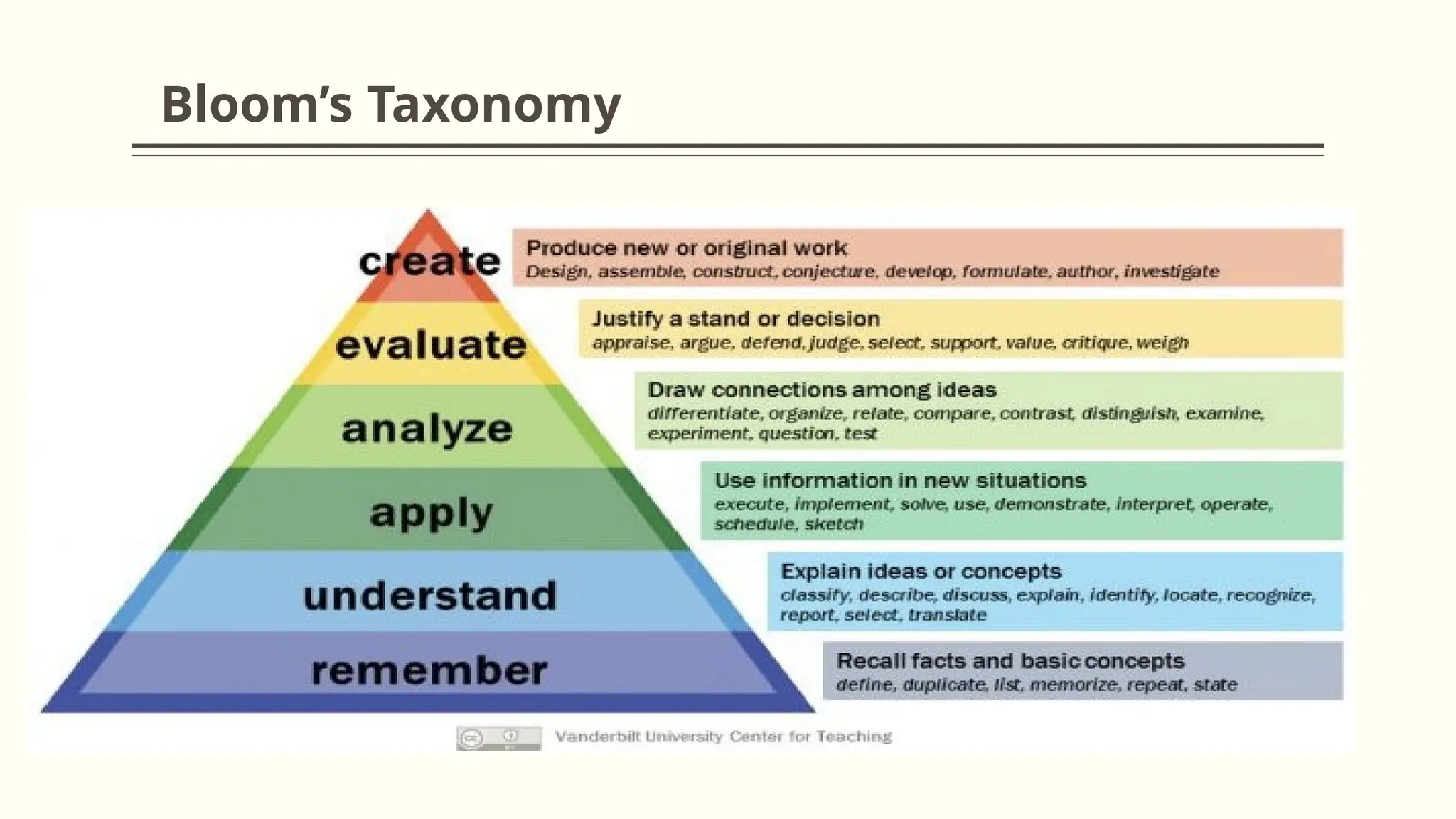
Bloom’s Taxonomy
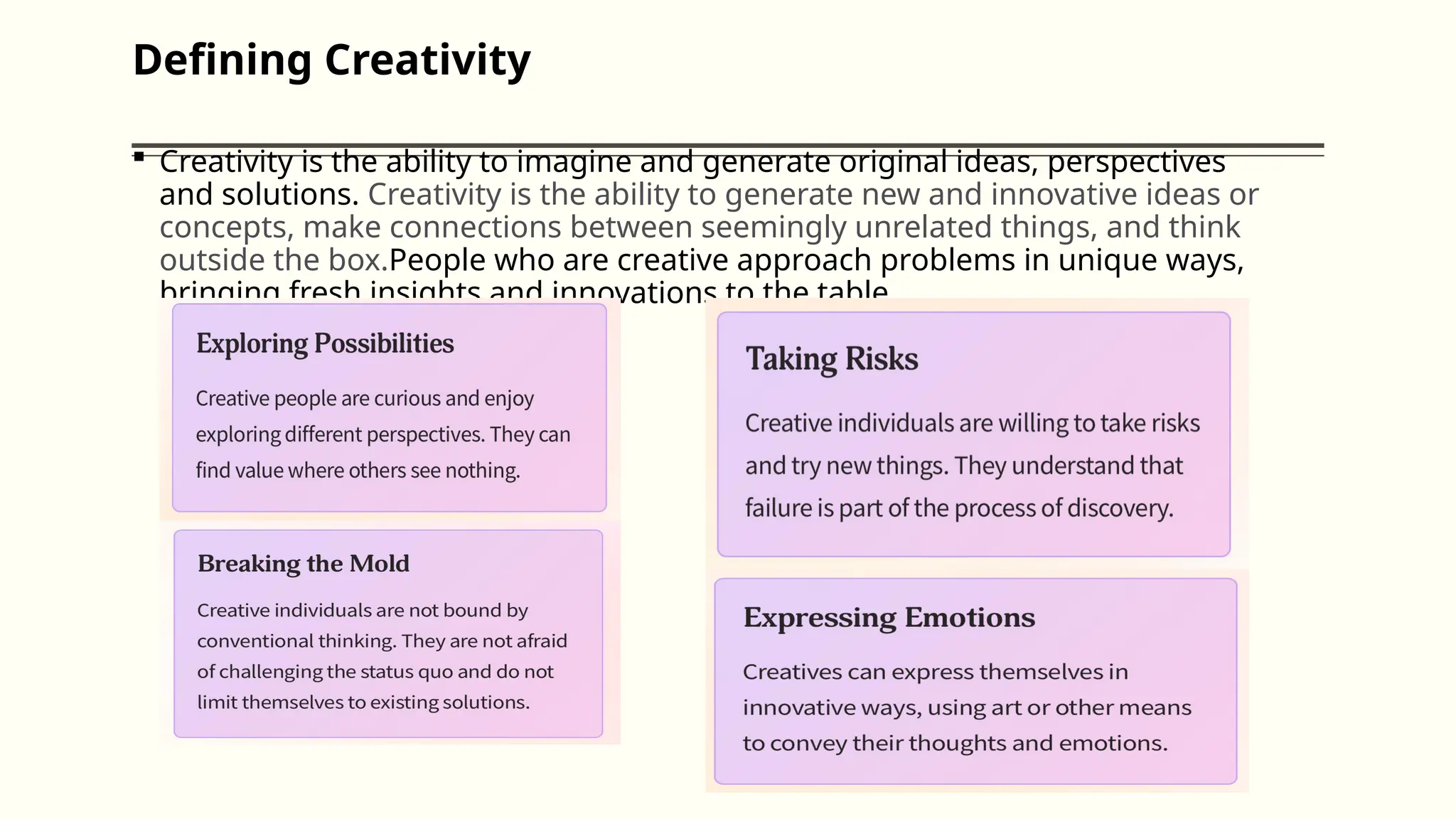
Defining Creativity
 Creativity is the ability to imagine and generate original ideas, perspectives
and solutions. Creativity is the ability to generate new and innovative ideas or
concepts, make connections between seemingly unrelated things, and think
outside the box.People who are creative approach problems in unique ways,
bringing fresh insights and innovations to the table
The Benefits of Creative Learning
 Better Collaboration
Collaborative creativity leads to better team dynamics and problem-solving skills.
 Improved Engagement
Allowing children to explore and create in a safe environment fosters interest and
engagement in learning.
 Enhanced Communication
Presenting creative ideas not only improves communication skills but the ability to
articulate their perspective.
Inspires Critical Thinking 🤔
Creativity compels learners to think and question beyond conventional
boundaries.
Improves Memory 🧠
Creative experiences help students remember key concepts longer and
better.
Fosters Innovation 🚀
By encouraging students to think creatively, they may come up with novel
approaches and solutions.
Creativity can ignite those hard-to-reach students.
Some students don’t do well on tests or don’t do well grade-wise, but
they’re super-creative kids,” Terral says. “It may be that the structure
HOW CAN YOU ENCOURAGE
CREATIVITY IN THE CLASSROOM?
 Encourage Divergent Thinking
Teach kids how to brainstorm by asking open-ended questions and exploring multiple
possibilities.
 Provide Opportunities for Exploration and Experimentation
Allow children to explore new ideas and learn by doing. Give them time to work on passion
projects outside the classroom.
 - Foster a Supportive and Safe Learning Environment
Make the classroom an environment where children feel safe and comfortable taking
creative risks.
 Mind Mapping
Using mind maps can stimulate creativity, encourage associations, and help learners
organize their thoughts.
 Role Play
Role-playing enables learners to explore multiple perspectives, build empathy and
understand complex ideas better.
 Students work in many different formats — from group projects to solo assessments, listening to
presentations and more. Create collaborative learning layouts to keep the creativity flowing between
different activities. Instead of lining up desks, create pods, a U-shaped layout or separate group tables
where students can work together.
 Visualize ideas and goals
Empower your students to set their own goals and map out ideas in their own original ways. Teach them
how to use different types of graphic organizers like mind maps, Venn diagrams, visual timelines and
other resources.
 Create opportunities for reflection
Reflective activities help students absorb information more deeply, enhancing their creative and
contextual understanding of new concepts. Display reflective learning resources in your classroom that
students can focus on.
 Take your teaching outside
Speaking of outside — when the weather’s nice, dedicate some of the day to hosting an outdoor
classroom. Choose active, exploratory activities you can’t do indoors. Consider setting up an outdoor
project like a vegetable garden as well. This adds a whole new dimension to the learning environment.
.
 Incorporate humor into your classroom
Comedy requires creativity, and inviting tasteful humor into the school day can help create a positive
environment where outside-the-box thinking can flourish. Encourage your kids to think of relevant pop
culture references, puns and jokes for a lighthearted dose of classroom cleverness.
 Have students practice creative journaling
Learning and creativity are all about growth — and journaling is a great way to record the journey and
encourage reflection. But this doesn’t have to be limited to writing. Students can create anything from a
video diary to an art journal where each sketchbook page is a catchall for combining ideas and notes
with new art techniques.
 Encourage more color
Color in the classroom can have value beyond elementary school. Encourage students to color-
coordinate their school subjects and use color when note-taking and studying. Use color around the
room as well with vibrant posters or themed corners.
 Visualization
Visualization can enhance creativity and imagination, making learning more interactive and fun.
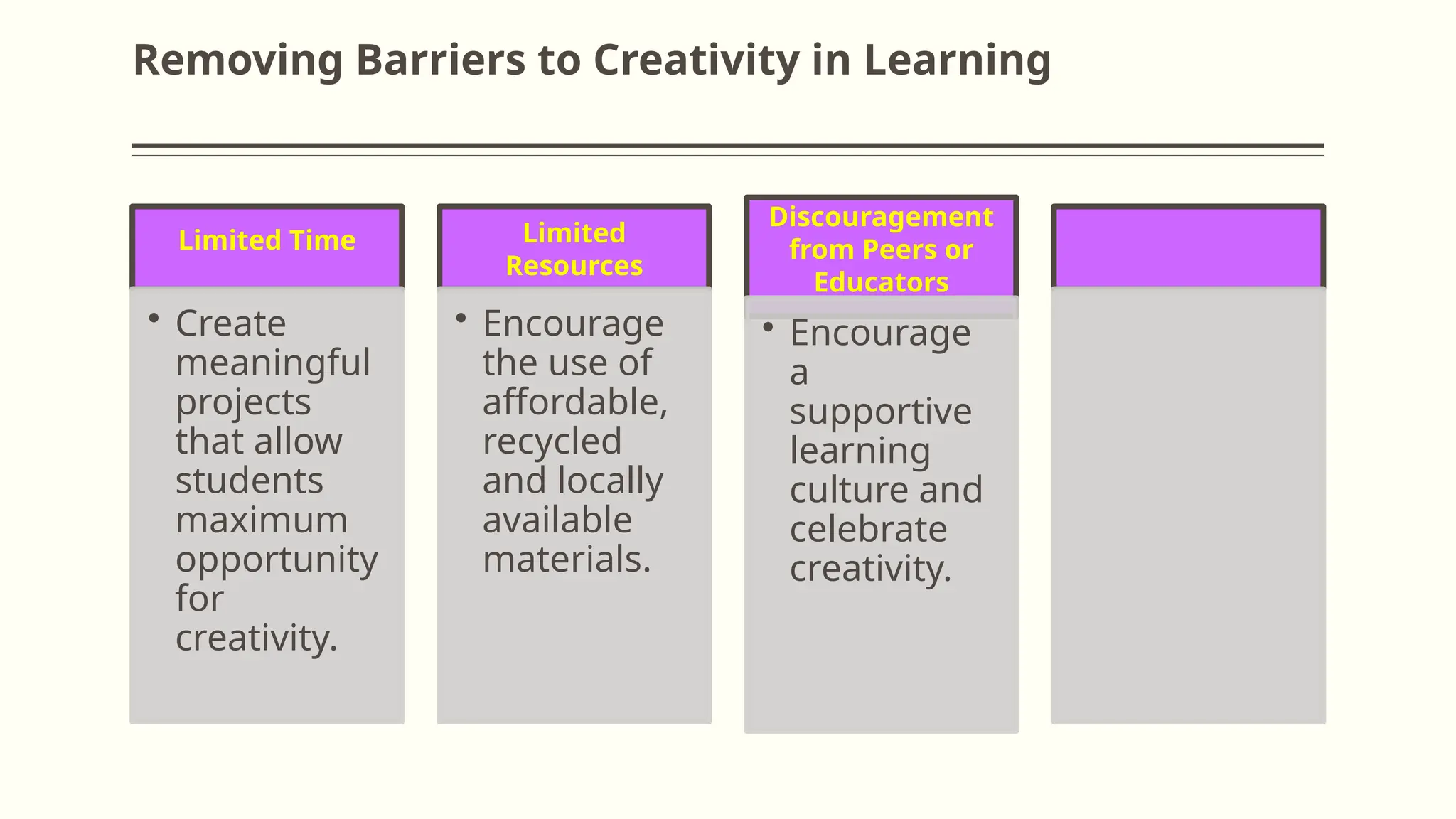
Removing Barriers to Creativity in Learning
Limited Time
• Create
meaningful
projects
that allow
students
maximum
opportunity
for
creativity.
Limited
Resources
• Encourage
the use of
affordable,
recycled
and locally
available
materials.
Discouragement
from Peers or
Educators
• Encourage
a
supportive
learning
culture and
celebrate
creativity.
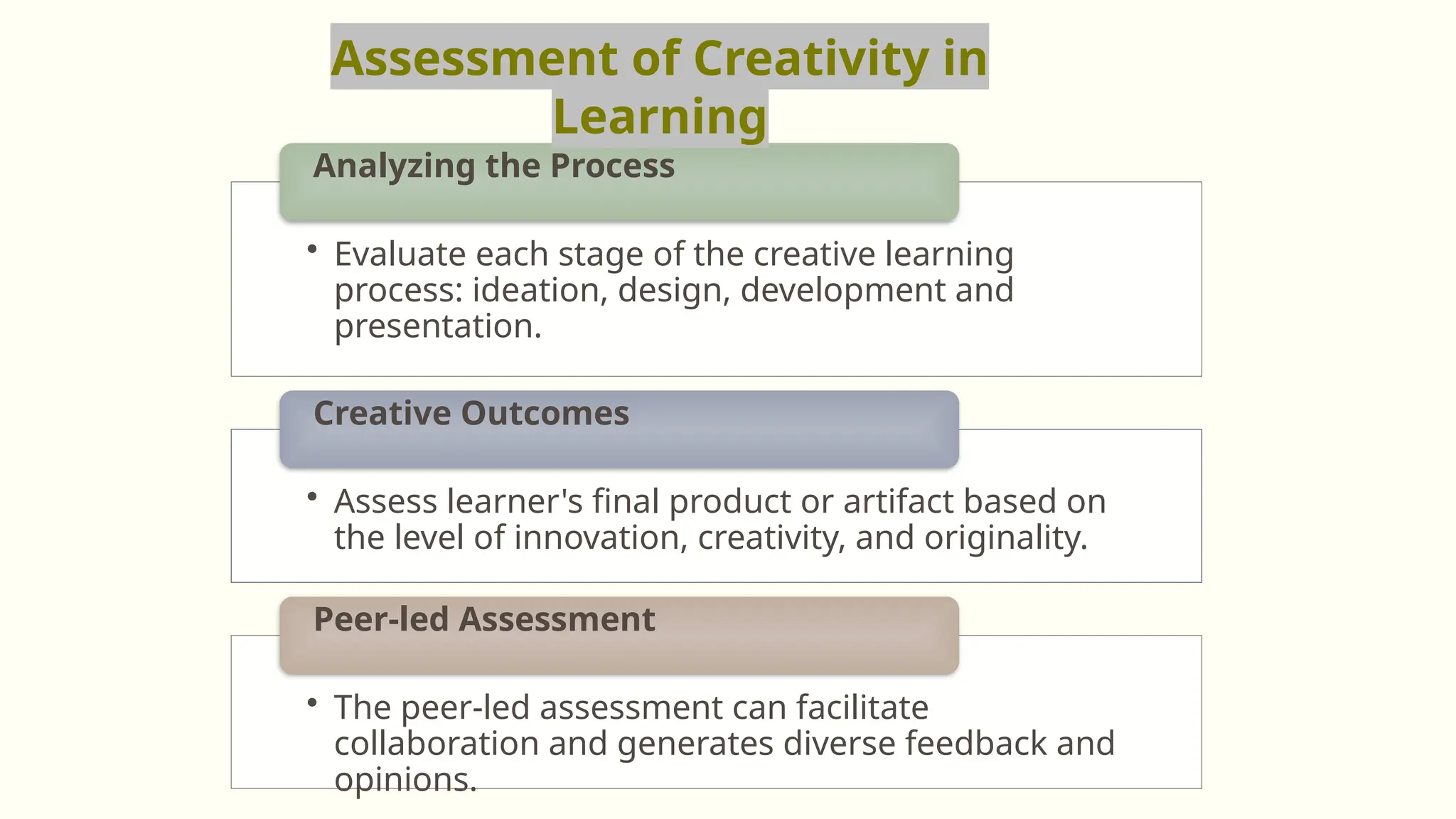
• Evaluate each stage of the creative learning
process: ideation, design, development and
presentation.
Analyzing the Process
• Assess learner's final product or artifact based on
the level of innovation, creativity, and originality.
Creative Outcomes
• The peer-led assessment can facilitate
collaboration and generates diverse feedback and
opinions.
Peer-led Assessment
Assessment of Creativity in
Learning
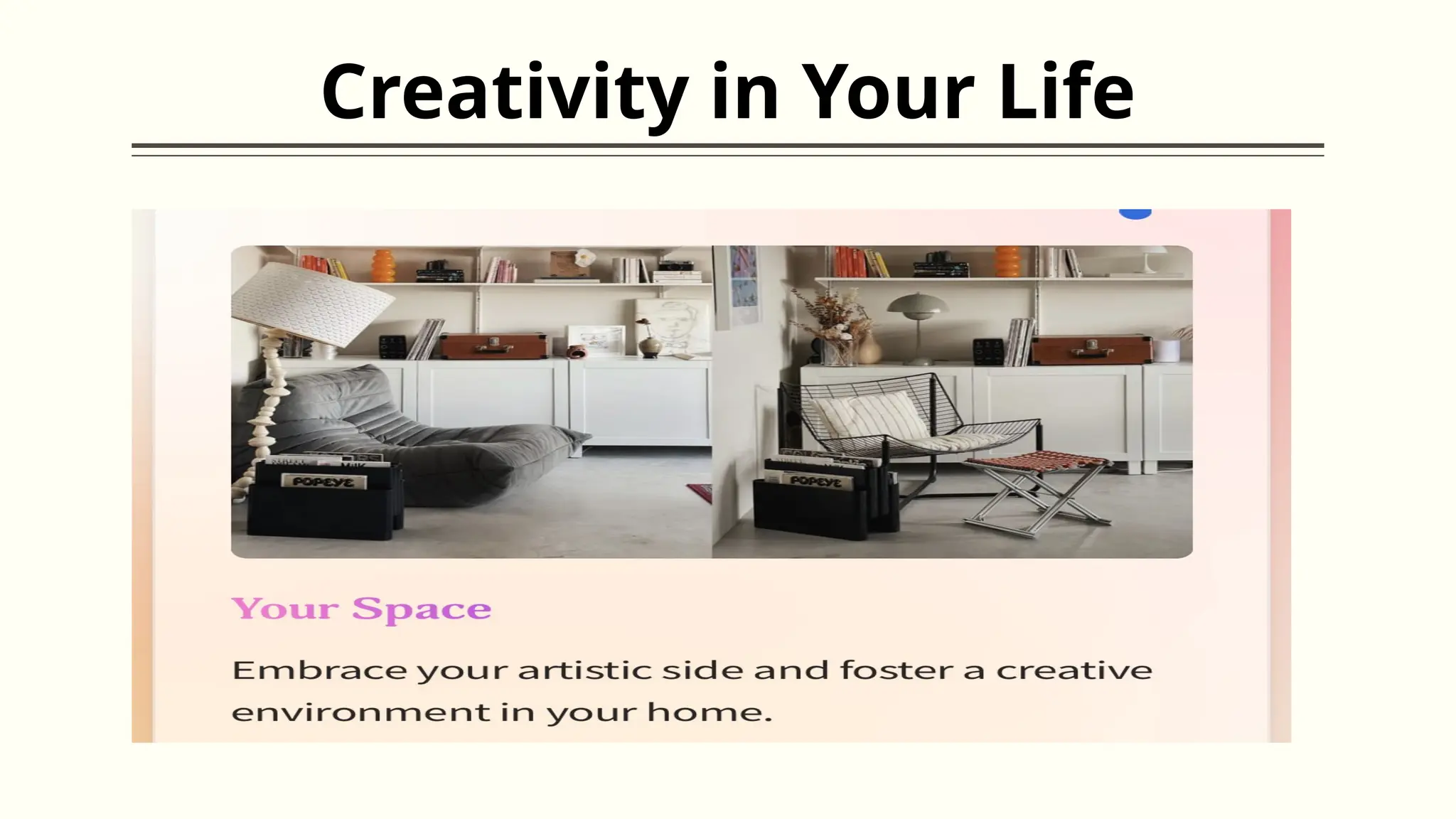
Creativity in Your Life
Creativity.pptx how to make creative class

Creativity.pptx how to make creative class

  • 1.
  • 2.
    Objectives  What iscreativity.  The Benefits of Creative Learning.  Strategies for Developing Creativity  Removing Barriers to Creativity in Learning  Strategies for Enhancing Creativity in Learning
  • 3.
  • 4.
    Defining Creativity  Creativityis the ability to imagine and generate original ideas, perspectives and solutions. Creativity is the ability to generate new and innovative ideas or concepts, make connections between seemingly unrelated things, and think outside the box.People who are creative approach problems in unique ways, bringing fresh insights and innovations to the table
  • 5.
    The Benefits ofCreative Learning  Better Collaboration Collaborative creativity leads to better team dynamics and problem-solving skills.  Improved Engagement Allowing children to explore and create in a safe environment fosters interest and engagement in learning.  Enhanced Communication Presenting creative ideas not only improves communication skills but the ability to articulate their perspective.
  • 6.
    Inspires Critical Thinking🤔 Creativity compels learners to think and question beyond conventional boundaries. Improves Memory 🧠 Creative experiences help students remember key concepts longer and better. Fosters Innovation 🚀 By encouraging students to think creatively, they may come up with novel approaches and solutions. Creativity can ignite those hard-to-reach students. Some students don’t do well on tests or don’t do well grade-wise, but they’re super-creative kids,” Terral says. “It may be that the structure
  • 7.
    HOW CAN YOUENCOURAGE CREATIVITY IN THE CLASSROOM?
  • 8.
     Encourage DivergentThinking Teach kids how to brainstorm by asking open-ended questions and exploring multiple possibilities.  Provide Opportunities for Exploration and Experimentation Allow children to explore new ideas and learn by doing. Give them time to work on passion projects outside the classroom.  - Foster a Supportive and Safe Learning Environment Make the classroom an environment where children feel safe and comfortable taking creative risks.  Mind Mapping Using mind maps can stimulate creativity, encourage associations, and help learners organize their thoughts.  Role Play Role-playing enables learners to explore multiple perspectives, build empathy and understand complex ideas better.
  • 9.
     Students workin many different formats — from group projects to solo assessments, listening to presentations and more. Create collaborative learning layouts to keep the creativity flowing between different activities. Instead of lining up desks, create pods, a U-shaped layout or separate group tables where students can work together.  Visualize ideas and goals Empower your students to set their own goals and map out ideas in their own original ways. Teach them how to use different types of graphic organizers like mind maps, Venn diagrams, visual timelines and other resources.  Create opportunities for reflection Reflective activities help students absorb information more deeply, enhancing their creative and contextual understanding of new concepts. Display reflective learning resources in your classroom that students can focus on.  Take your teaching outside Speaking of outside — when the weather’s nice, dedicate some of the day to hosting an outdoor classroom. Choose active, exploratory activities you can’t do indoors. Consider setting up an outdoor project like a vegetable garden as well. This adds a whole new dimension to the learning environment. .
  • 10.
     Incorporate humorinto your classroom Comedy requires creativity, and inviting tasteful humor into the school day can help create a positive environment where outside-the-box thinking can flourish. Encourage your kids to think of relevant pop culture references, puns and jokes for a lighthearted dose of classroom cleverness.  Have students practice creative journaling Learning and creativity are all about growth — and journaling is a great way to record the journey and encourage reflection. But this doesn’t have to be limited to writing. Students can create anything from a video diary to an art journal where each sketchbook page is a catchall for combining ideas and notes with new art techniques.  Encourage more color Color in the classroom can have value beyond elementary school. Encourage students to color- coordinate their school subjects and use color when note-taking and studying. Use color around the room as well with vibrant posters or themed corners.  Visualization Visualization can enhance creativity and imagination, making learning more interactive and fun.
  • 11.
    Removing Barriers toCreativity in Learning Limited Time • Create meaningful projects that allow students maximum opportunity for creativity. Limited Resources • Encourage the use of affordable, recycled and locally available materials. Discouragement from Peers or Educators • Encourage a supportive learning culture and celebrate creativity.
  • 13.
    • Evaluate eachstage of the creative learning process: ideation, design, development and presentation. Analyzing the Process • Assess learner's final product or artifact based on the level of innovation, creativity, and originality. Creative Outcomes • The peer-led assessment can facilitate collaboration and generates diverse feedback and opinions. Peer-led Assessment Assessment of Creativity in Learning
  • 14.

Editor's Notes

  • #1 NOTE: Want a different image on this slide? Select the picture and delete it. Now click the Pictures icon in the placeholder to insert your own image.