LIFE MAP: A VISUAL
SERIES REPRESENTING
YOUR LIFE COURSE
Important life questions to ask:
 Where did you start out?
 Where have you been?
 Where are you now?
 Where would you like to go?
 How will you get there?
 What will affect whether you'll get there?
What is a life map?
A life map tracks your journey through life and
marks out important events along the way.
Remember, an important event doesn’t have to
be exciting or memorable for others, the map
is all about showing what is important to you.
What makes an event important?
Important events in your life
 Events that teach you something about life e.g. being
selected for a team might have taught you the value of
hard work and perseverance
 Events that made you feel suddenly more mature/
older/ grown up e.g. looking after your little brother or
sister for the first time
 Events that gave you inspiration for your future e.g.
the first time you were given Lego and built a 1000
piece skyscraper hinted at you future love of
architecture.
 Events that highlight how important it is to enjoy life
e.g. loss of a family member or pet
Both good and bad events can make you appreciate,
adapt or change your life in some way
What should your map include?
 A minimum of 10 events that represent your
past.
 A minimum of 5 events that you image or
would like to be part of your future.
 Have a clear understanding of the reasons
why you have selected these events.
What should your map include?
 Select events from all of the life stages –
baby, toddler, child, teenager, young adult,
and older adult.
 For life stages you've already experienced, like being a
baby or toddler, use family photos and anecdotes from
family members about special events or achievements
they remember. Did anything major in your family life
happen, like a move to a new country? Also include
major historical events that took place during your life
stages, like 9/11.
 For life stages you haven't experienced, imagine what
you'd like them to be like. Include education, career
possibilities, health, hobbies, lifestyle, and family.
What should your map include?
 A symbol or picture that represents each
selected event. The picture should give an
indication of how you felt about the event.
 A label which identifies and roughly dates the
event. You can be creative and poetic with
these labels e.g. the road to happiness on my
new skateboard.
What should your map include?
 Connectors between events which help the
viewer understand the order in which they
happened. The connectors can also indicate
how the road between one event and
another event are connected. What important
lesson or understanding did you come to
during this period of time?
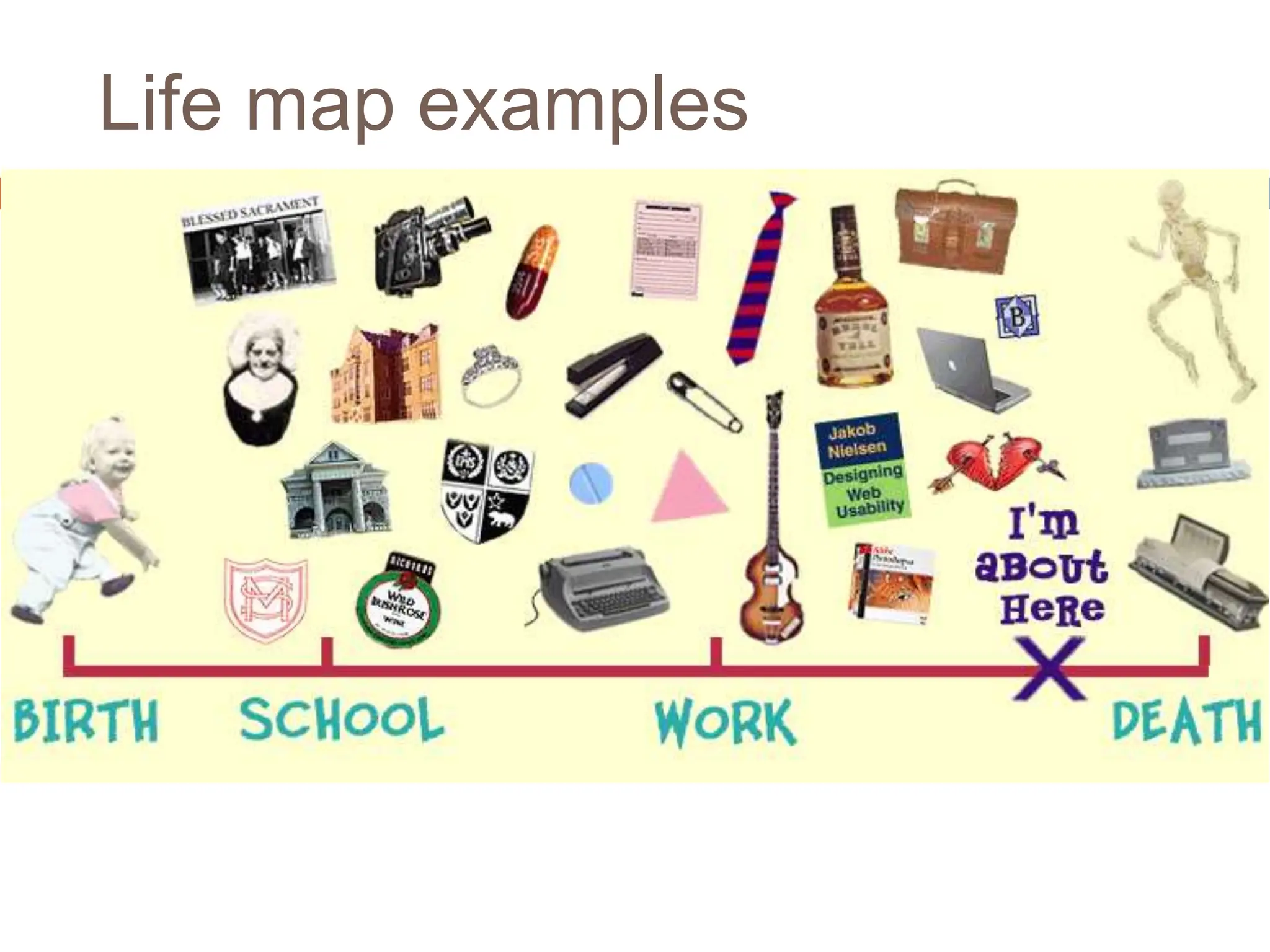
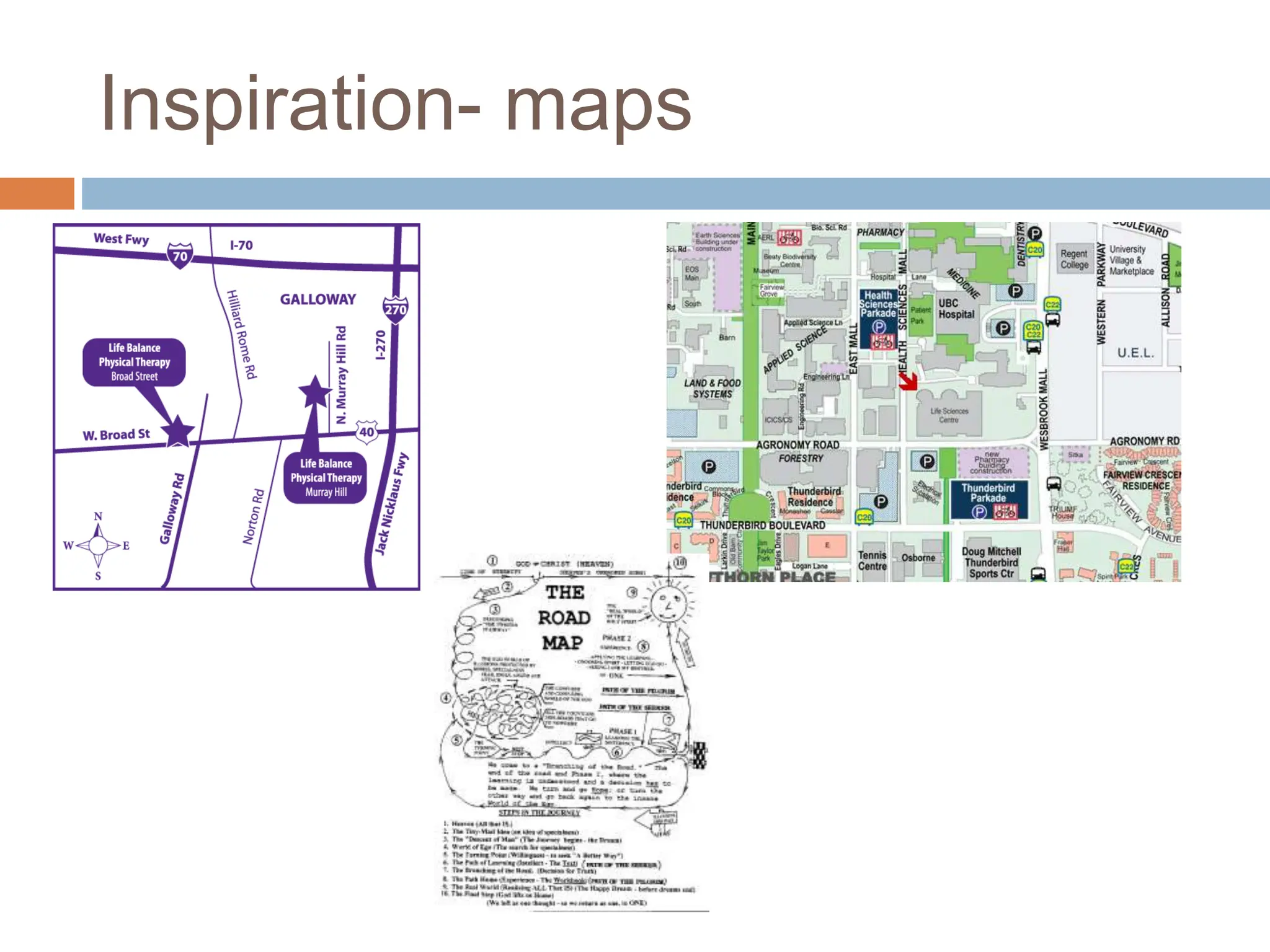
 Some people use arrows, some people draw roads,
some people draw a bunch of islands and draw little
boats travelling between each; it is up to you how you
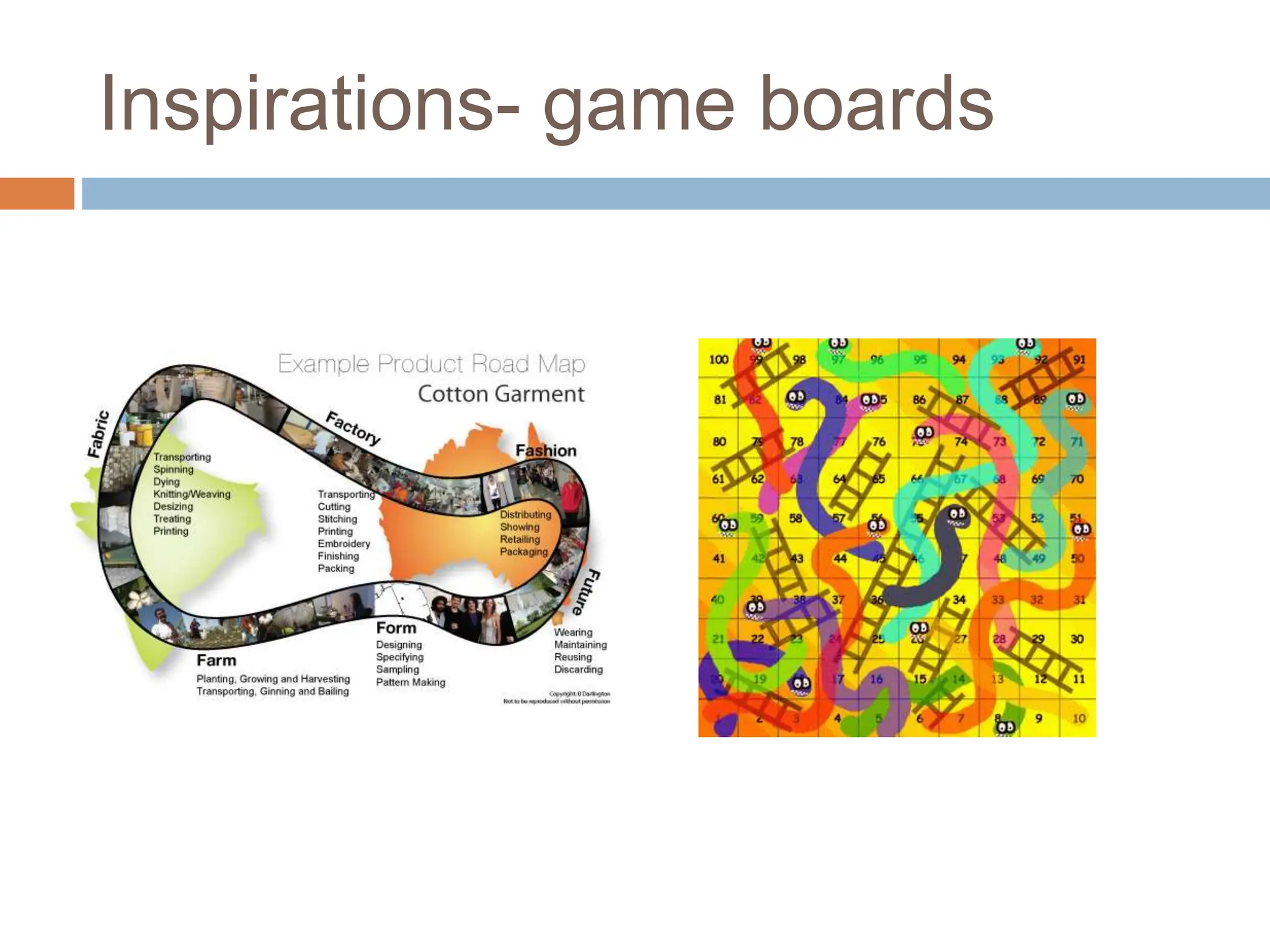
see your map. Is your life map a road map, a diagram, a
geographical map, a maze, a swirling circle or a game of
snakes and ladders?
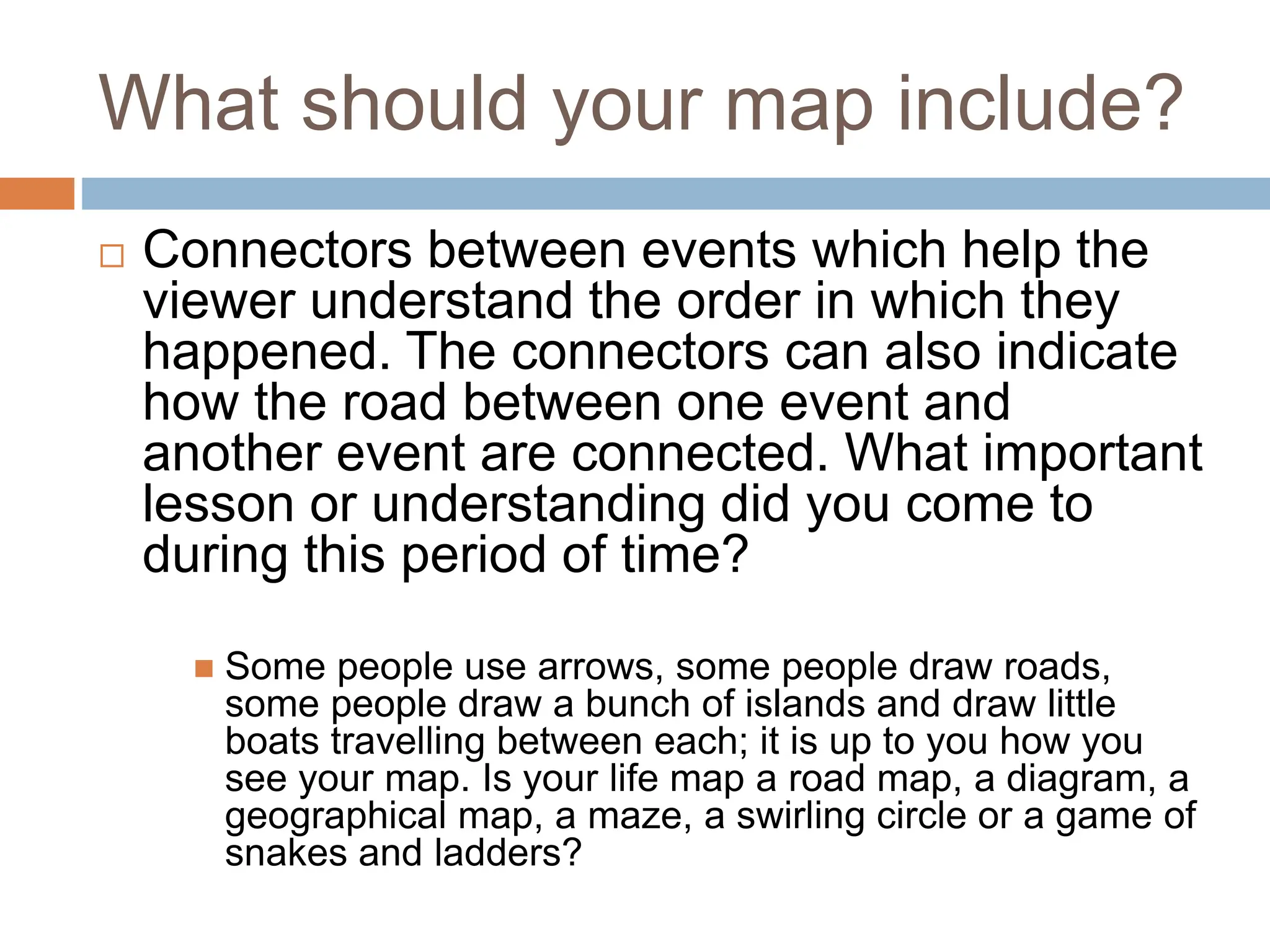
Life map examples
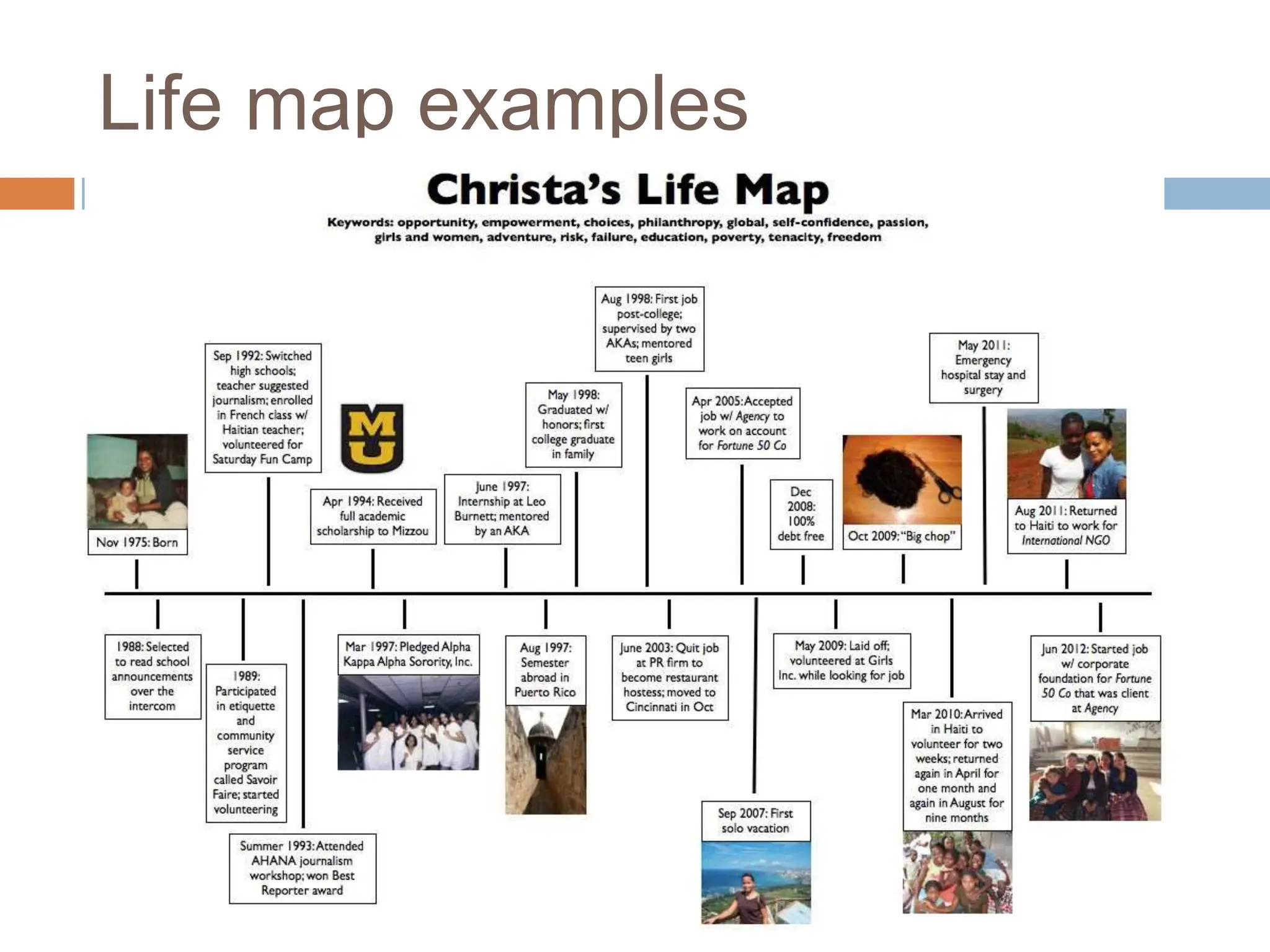
(Somebody's future life map but a good example of layout)
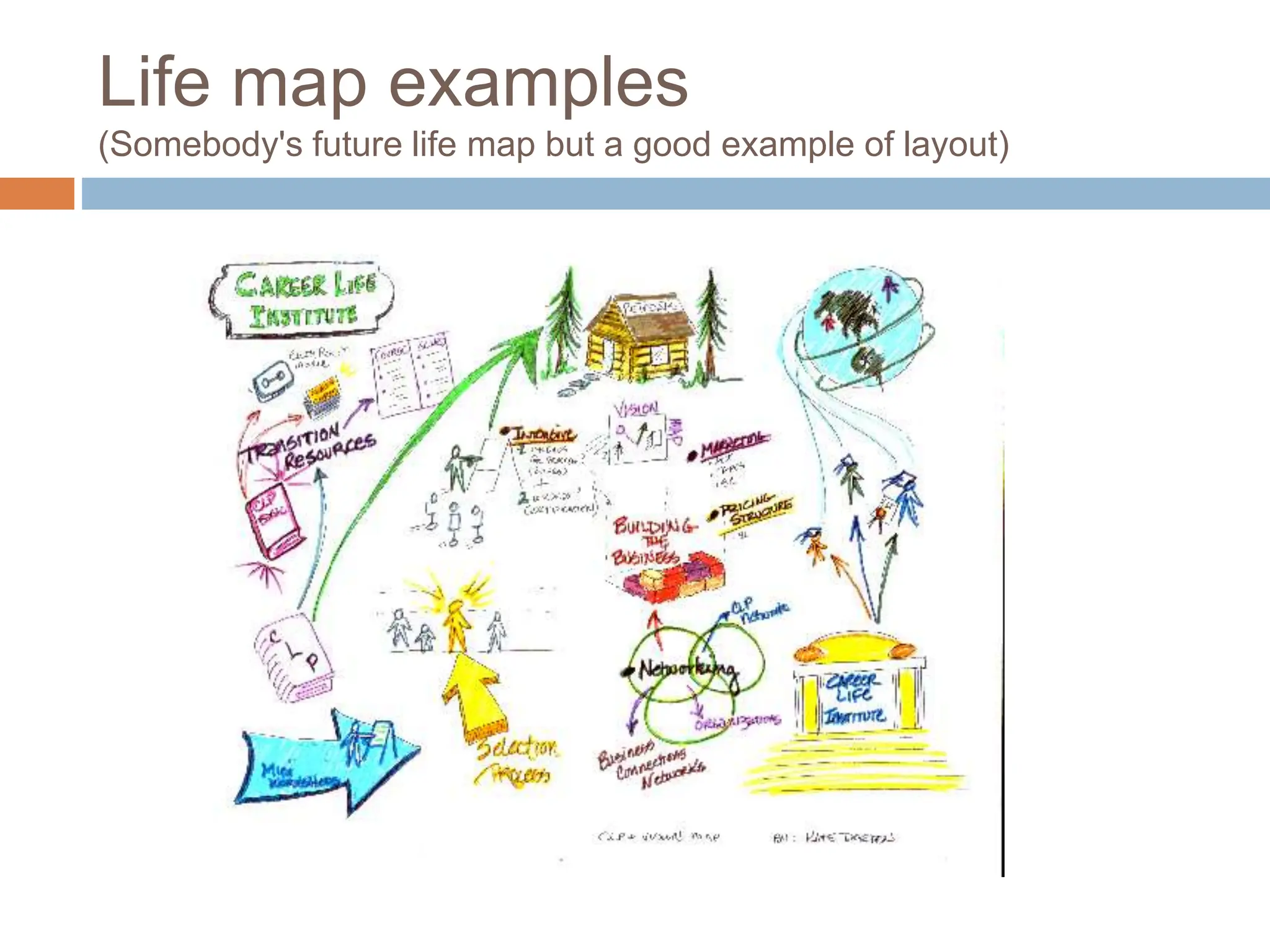
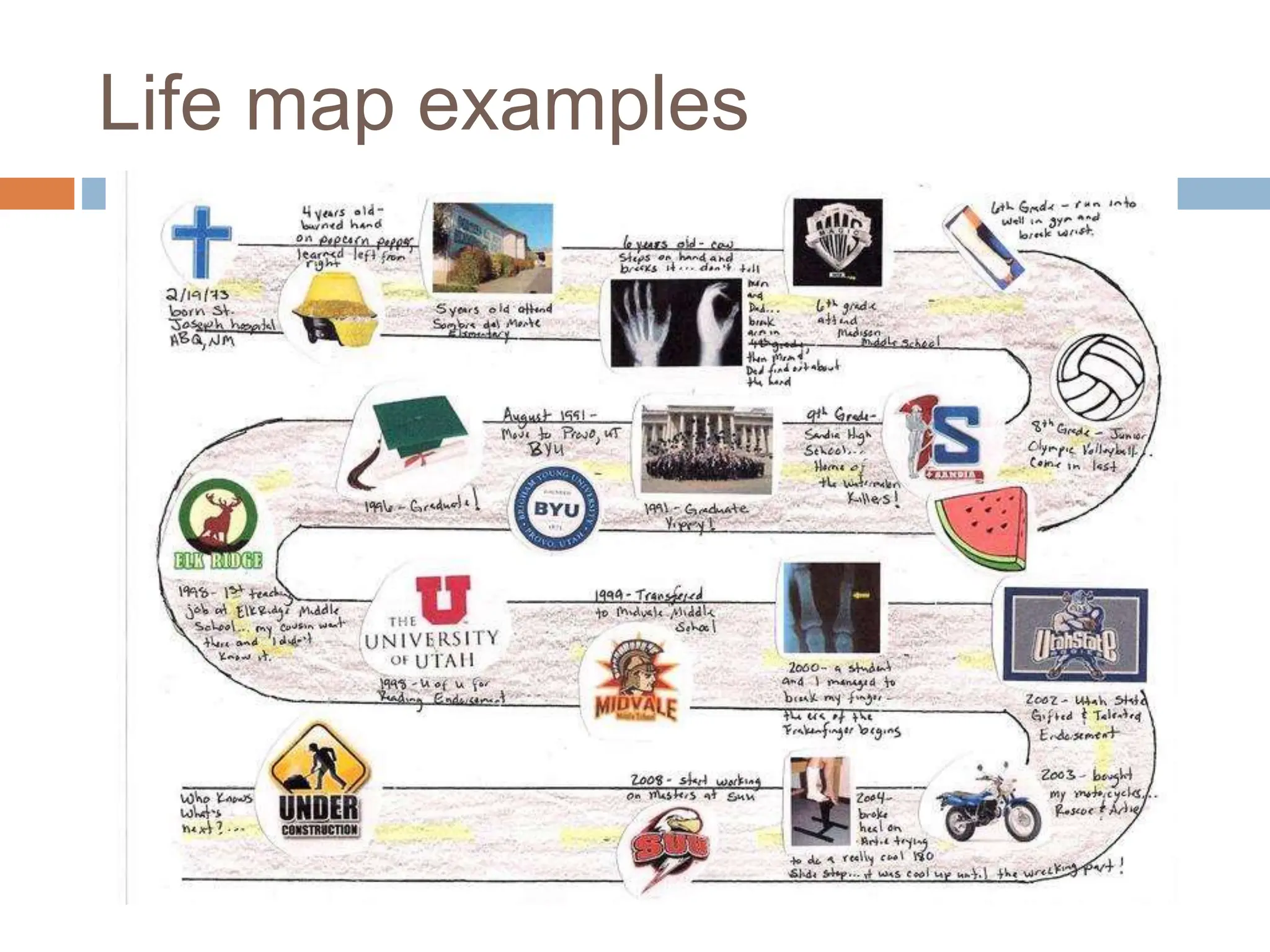
Life map examples
(Done by much younger student but a good concept if more detail is
added)
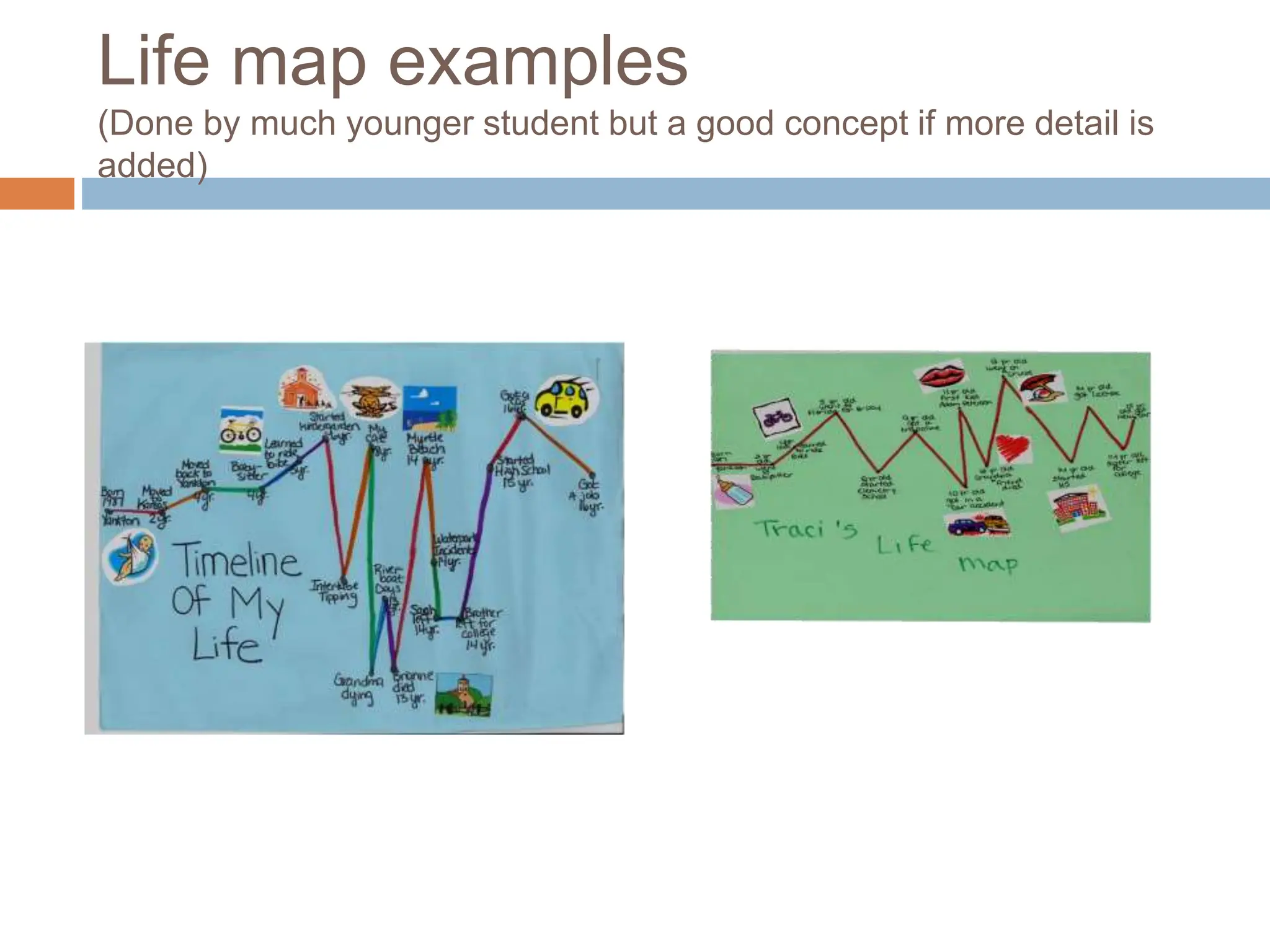
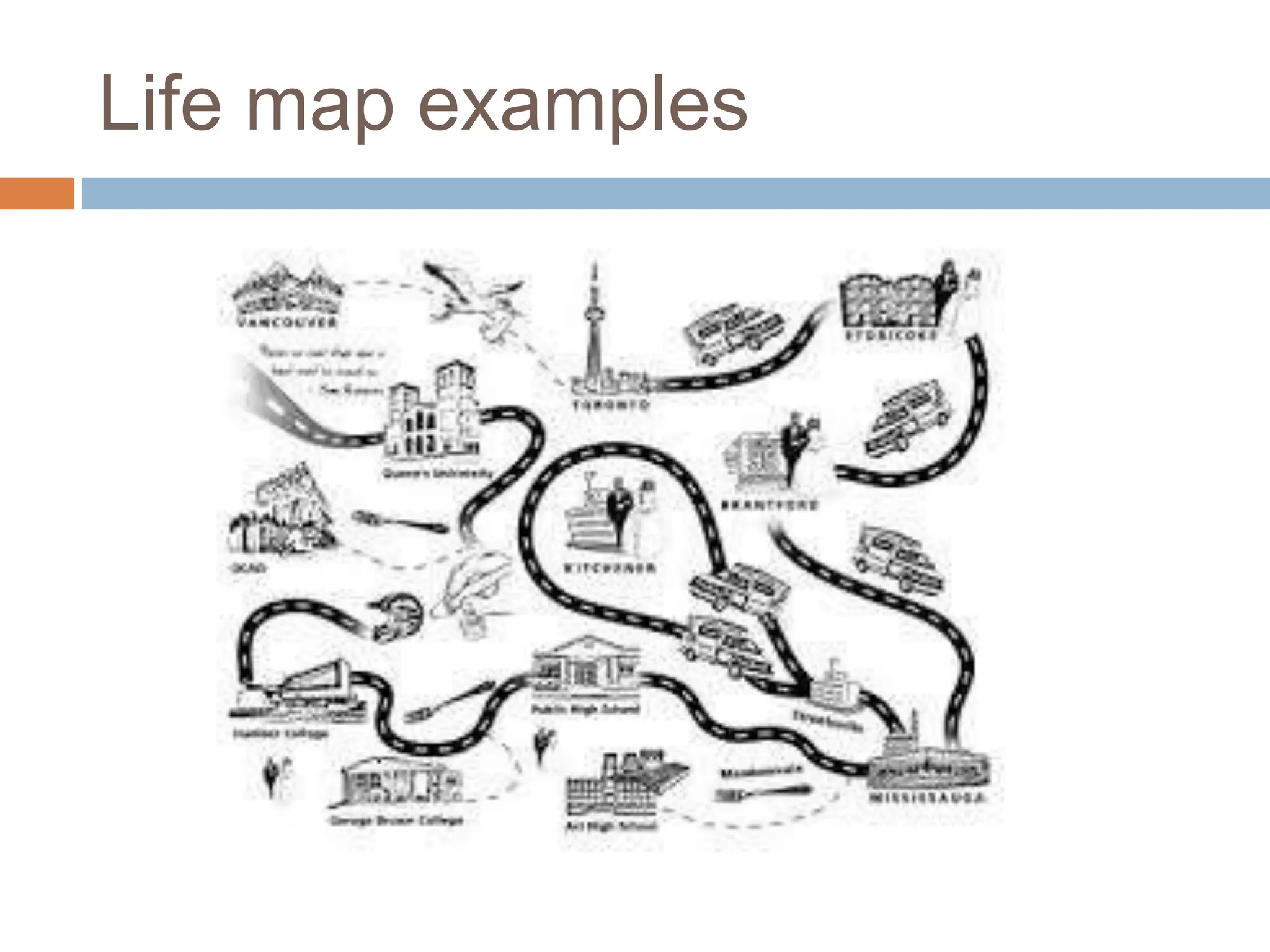
Life map examples
(just needs the connectors to show the path of events)
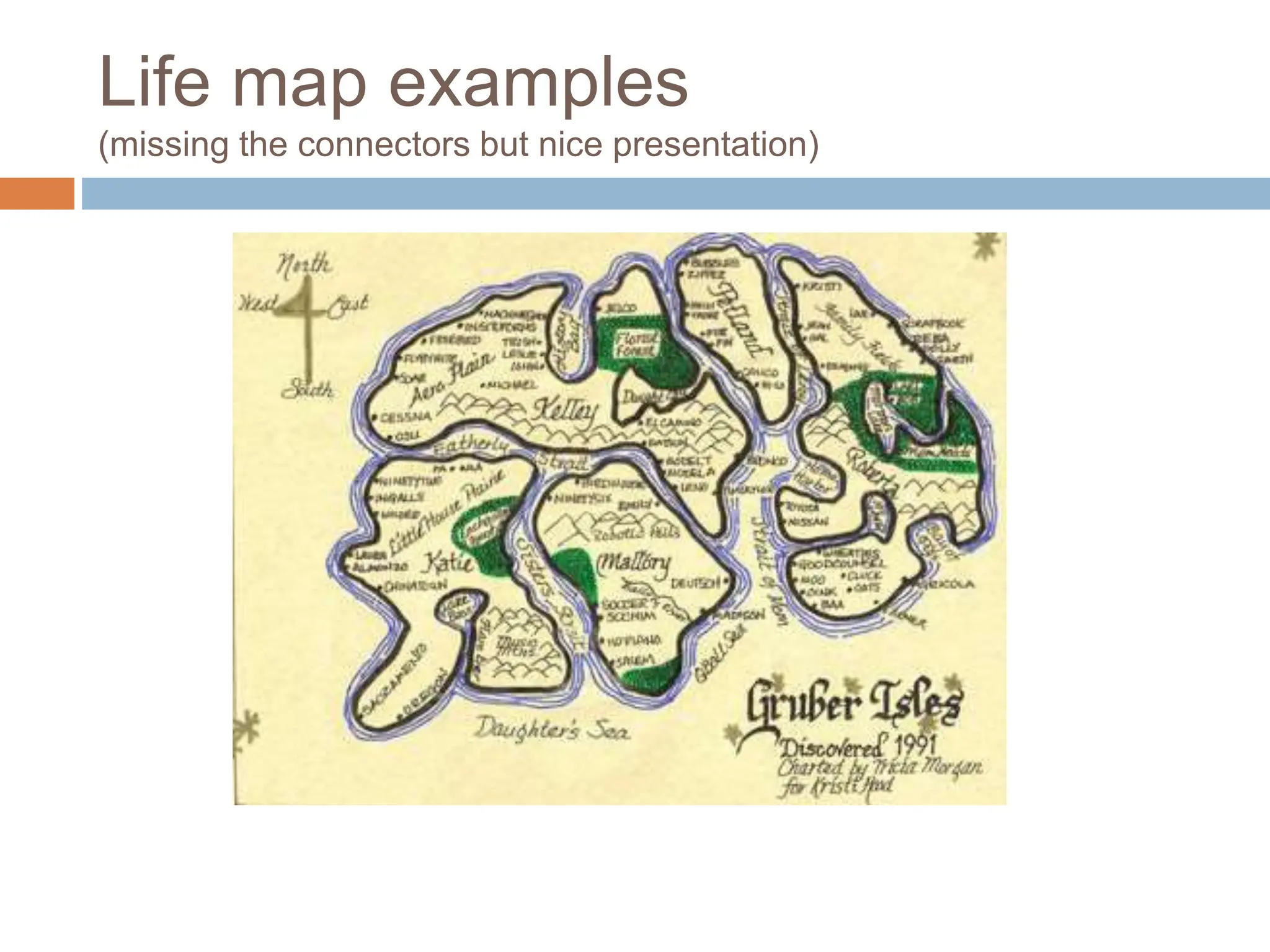
Life map examples
(missing the connectors but nice presentation)
Life map examples
Life map examples
Life map examples
Life map examples
Life map examples
Inspiration- mazes
Inspiration- maps
Inspirations- game boards
Reflection of My Life…
When your Life Map is complete, answer the following questions:
 Imagine your life-map belongs to someone else. How do you feel
about that person when you look at the life map?
 What values do you notice reflected in the important events?
 What would you change about your life-map if you could? Why?
 Where are you going in the future?
 List and describe 3 things you can do in your life stage now to
make future life stages happen the way you'd like them to?
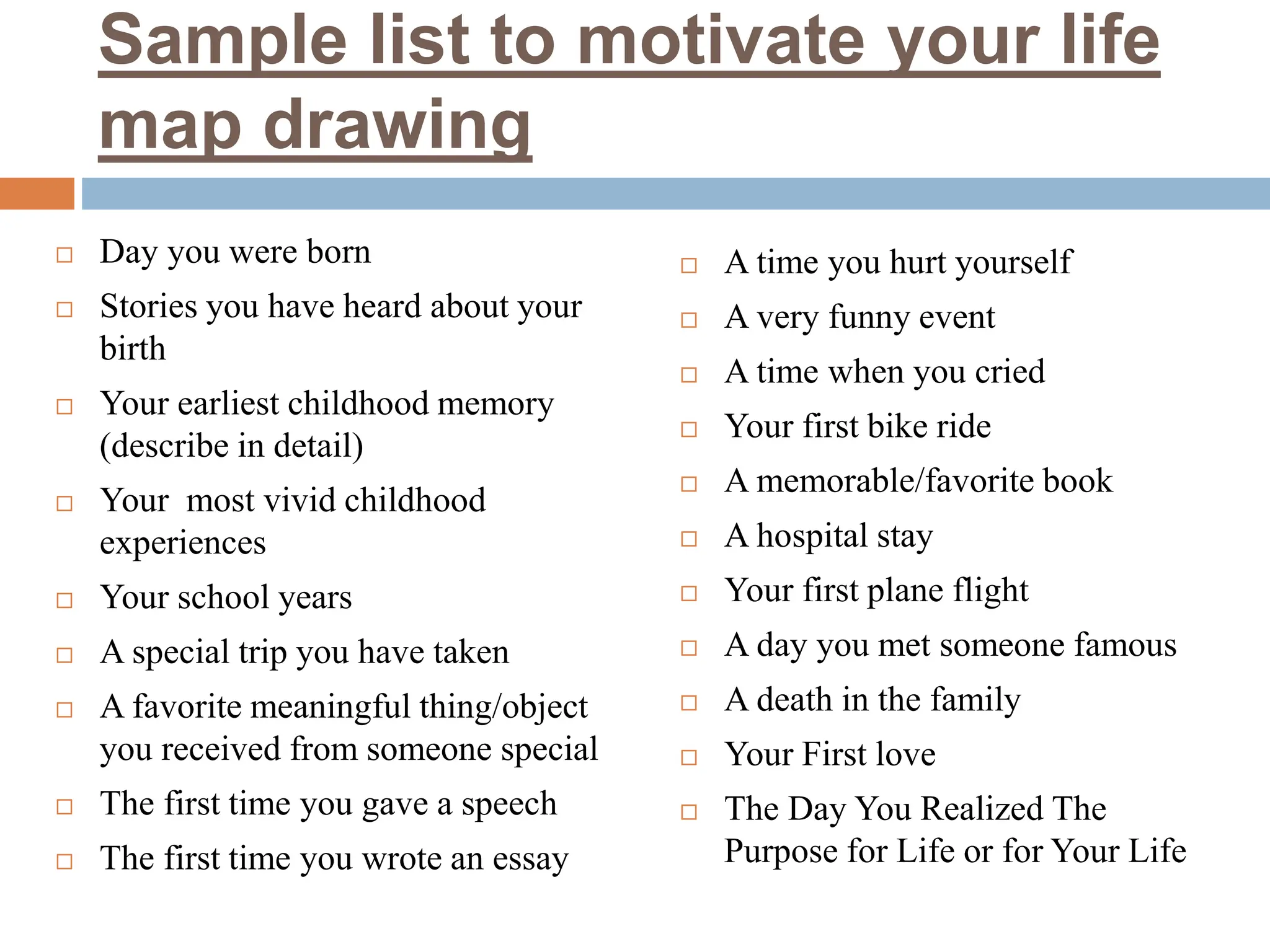
Sample list to motivate your life
map drawing
 Day you were born
 Stories you have heard about your
birth
 Your earliest childhood memory
(describe in detail)
 Your most vivid childhood
experiences
 Your school years
 A special trip you have taken
 A favorite meaningful thing/object
you received from someone special
 The first time you gave a speech
 The first time you wrote an essay
 A time you hurt yourself
 A very funny event
 A time when you cried
 Your first bike ride
 A memorable/favorite book
 A hospital stay
 Your first plane flight
 A day you met someone famous
 A death in the family
 Your First love
 The Day You Realized The
Purpose for Life or for Your Life

Creating-a-life-map.ppt

  • 1.
    LIFE MAP: AVISUAL SERIES REPRESENTING YOUR LIFE COURSE
  • 2.
    Important life questionsto ask:  Where did you start out?  Where have you been?  Where are you now?  Where would you like to go?  How will you get there?  What will affect whether you'll get there?
  • 3.
    What is alife map? A life map tracks your journey through life and marks out important events along the way. Remember, an important event doesn’t have to be exciting or memorable for others, the map is all about showing what is important to you. What makes an event important?
  • 4.
    Important events inyour life  Events that teach you something about life e.g. being selected for a team might have taught you the value of hard work and perseverance  Events that made you feel suddenly more mature/ older/ grown up e.g. looking after your little brother or sister for the first time  Events that gave you inspiration for your future e.g. the first time you were given Lego and built a 1000 piece skyscraper hinted at you future love of architecture.  Events that highlight how important it is to enjoy life e.g. loss of a family member or pet Both good and bad events can make you appreciate, adapt or change your life in some way
  • 5.
    What should yourmap include?  A minimum of 10 events that represent your past.  A minimum of 5 events that you image or would like to be part of your future.  Have a clear understanding of the reasons why you have selected these events.
  • 6.
    What should yourmap include?  Select events from all of the life stages – baby, toddler, child, teenager, young adult, and older adult.  For life stages you've already experienced, like being a baby or toddler, use family photos and anecdotes from family members about special events or achievements they remember. Did anything major in your family life happen, like a move to a new country? Also include major historical events that took place during your life stages, like 9/11.  For life stages you haven't experienced, imagine what you'd like them to be like. Include education, career possibilities, health, hobbies, lifestyle, and family.
  • 7.
    What should yourmap include?  A symbol or picture that represents each selected event. The picture should give an indication of how you felt about the event.  A label which identifies and roughly dates the event. You can be creative and poetic with these labels e.g. the road to happiness on my new skateboard.
  • 8.
    What should yourmap include?  Connectors between events which help the viewer understand the order in which they happened. The connectors can also indicate how the road between one event and another event are connected. What important lesson or understanding did you come to during this period of time?  Some people use arrows, some people draw roads, some people draw a bunch of islands and draw little boats travelling between each; it is up to you how you see your map. Is your life map a road map, a diagram, a geographical map, a maze, a swirling circle or a game of snakes and ladders?
  • 9.
    Life map examples (Somebody'sfuture life map but a good example of layout)
  • 10.
    Life map examples (Doneby much younger student but a good concept if more detail is added)
  • 11.
    Life map examples (justneeds the connectors to show the path of events)
  • 12.
    Life map examples (missingthe connectors but nice presentation)
  • 13.
  • 14.
  • 15.
  • 17.
  • 18.
  • 19.
  • 20.
  • 21.
  • 22.
    Reflection of MyLife… When your Life Map is complete, answer the following questions:  Imagine your life-map belongs to someone else. How do you feel about that person when you look at the life map?  What values do you notice reflected in the important events?  What would you change about your life-map if you could? Why?  Where are you going in the future?  List and describe 3 things you can do in your life stage now to make future life stages happen the way you'd like them to?
  • 23.
    Sample list tomotivate your life map drawing  Day you were born  Stories you have heard about your birth  Your earliest childhood memory (describe in detail)  Your most vivid childhood experiences  Your school years  A special trip you have taken  A favorite meaningful thing/object you received from someone special  The first time you gave a speech  The first time you wrote an essay  A time you hurt yourself  A very funny event  A time when you cried  Your first bike ride  A memorable/favorite book  A hospital stay  Your first plane flight  A day you met someone famous  A death in the family  Your First love  The Day You Realized The Purpose for Life or for Your Life