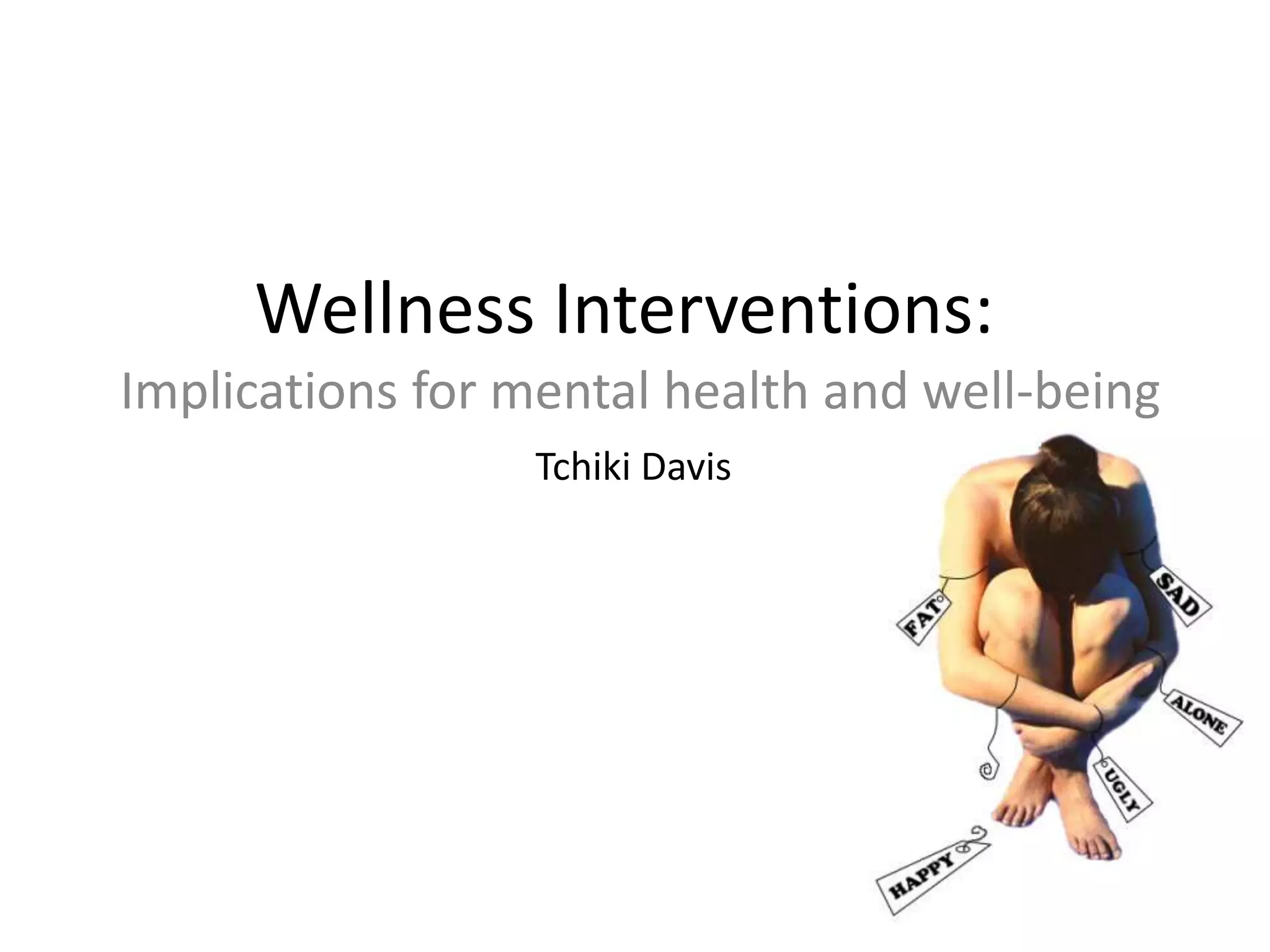
Wellness Interventions:
Implications for mental health and well-being
Tchiki Davis
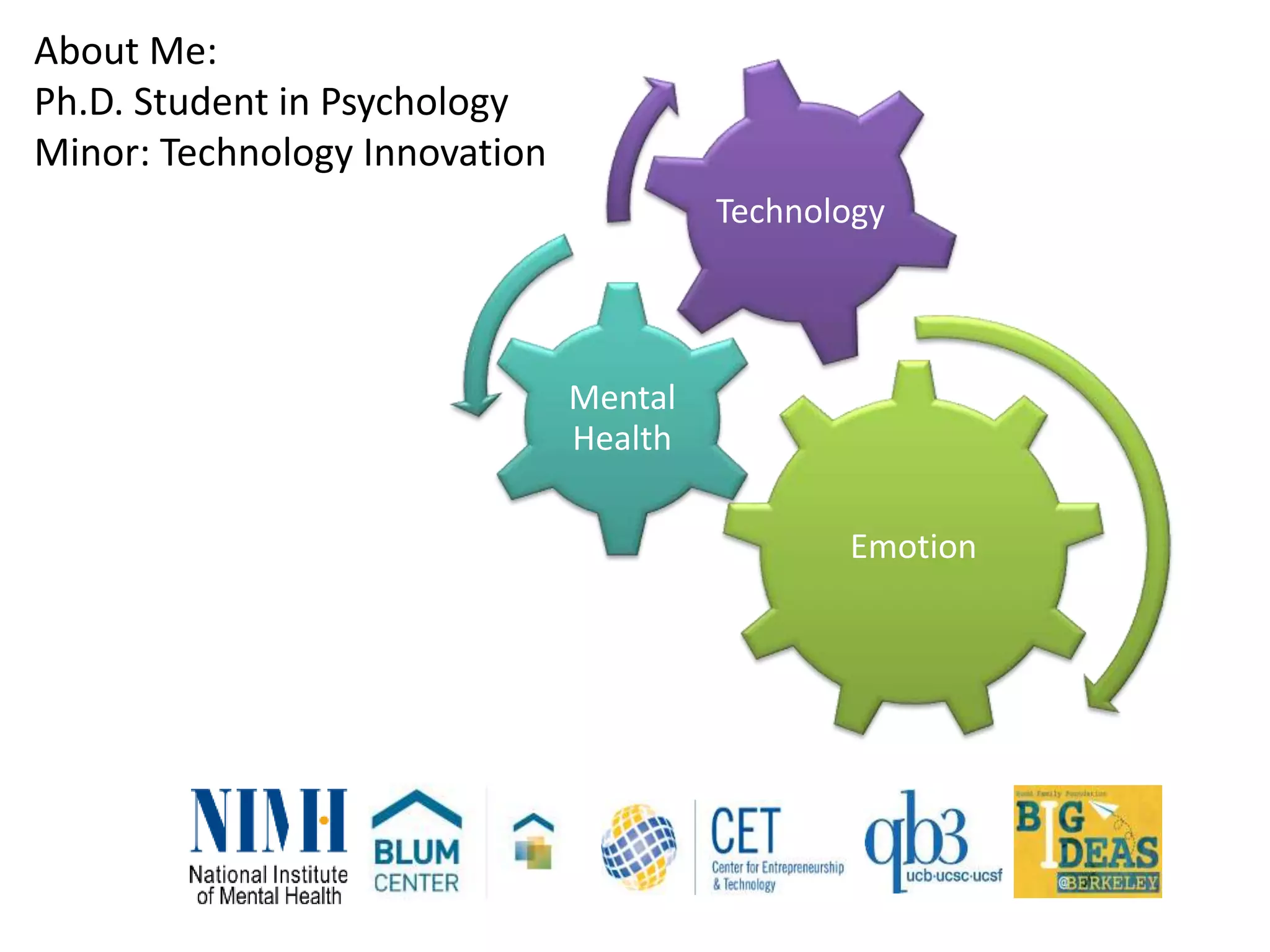
Emotion
Mental
Health
Technology
About Me:
Ph.D. Student in Psychology
Minor: Technology Innovation
Outline
1. What are wellness interventions and why do
we need them?
2. What are the current standards for
intervention and assessment?
3. How do we create wellness interventions
that will work in applied settings?
4. Discussion
2/12/2016 3
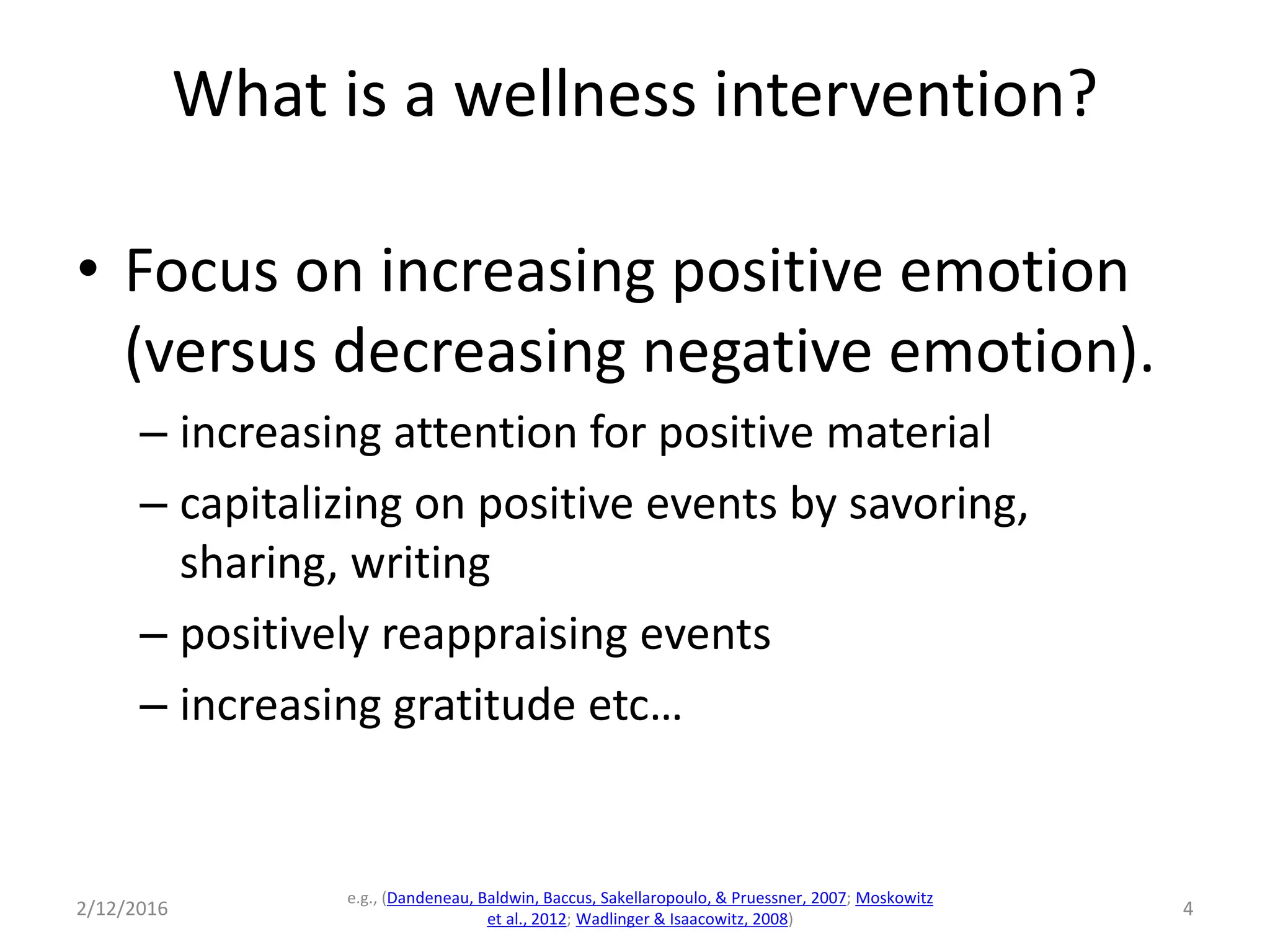
What is a wellness intervention?
• Focus on increasing positive emotion
(versus decreasing negative emotion).
– increasing attention for positive material
– capitalizing on positive events by savoring,
sharing, writing
– positively reappraising events
– increasing gratitude etc…
2/12/2016
e.g., (Dandeneau, Baldwin, Baccus, Sakellaropoulo, & Pruessner, 2007; Moskowitz
et al., 2012; Wadlinger & Isaacowitz, 2008)
4
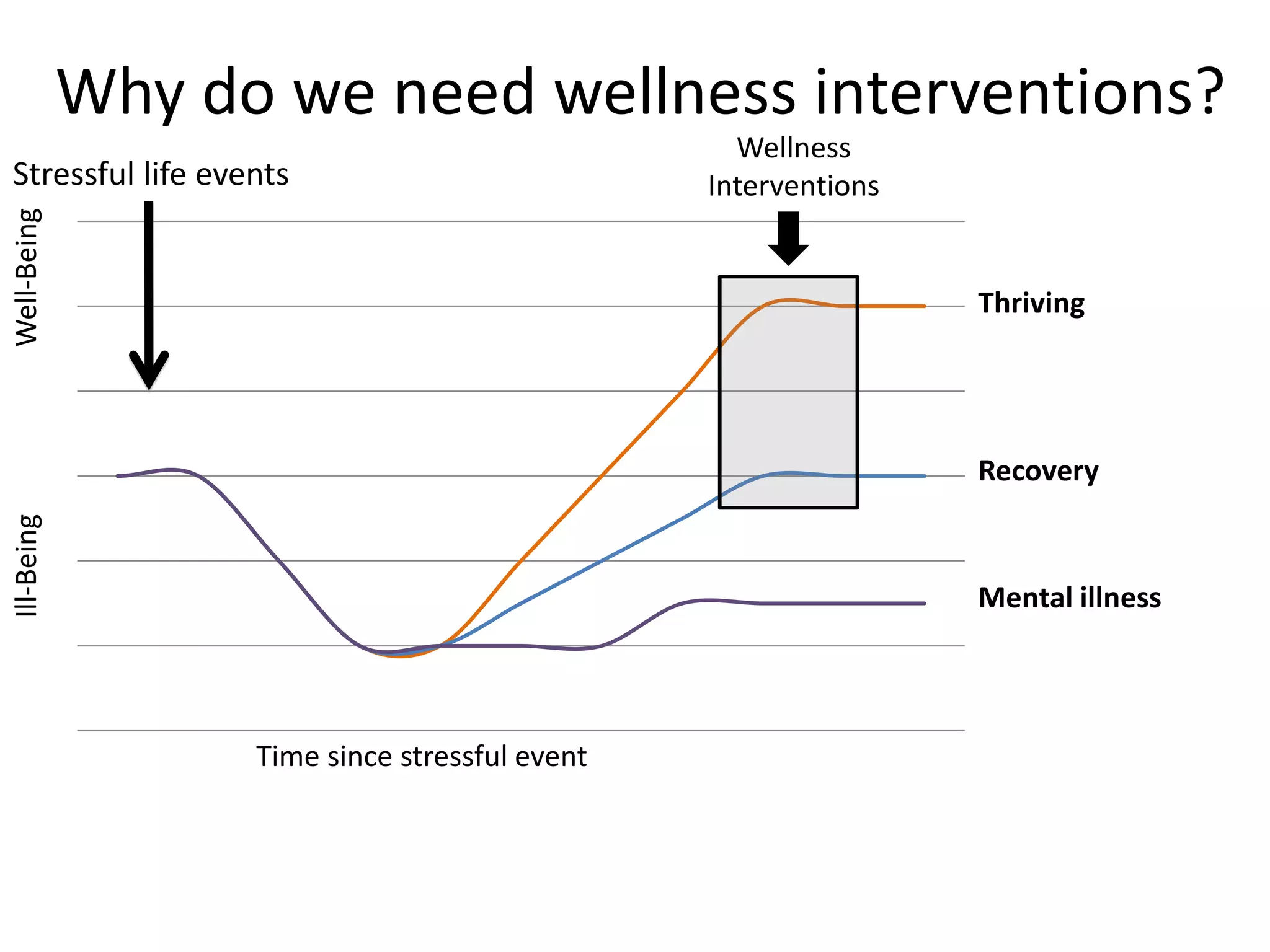
Why do we need wellness interventions?
Time since stressful event
Well-Being
Thriving
Recovery
Mental illness
Wellness
Interventions
Ill-Being
Stressful life events
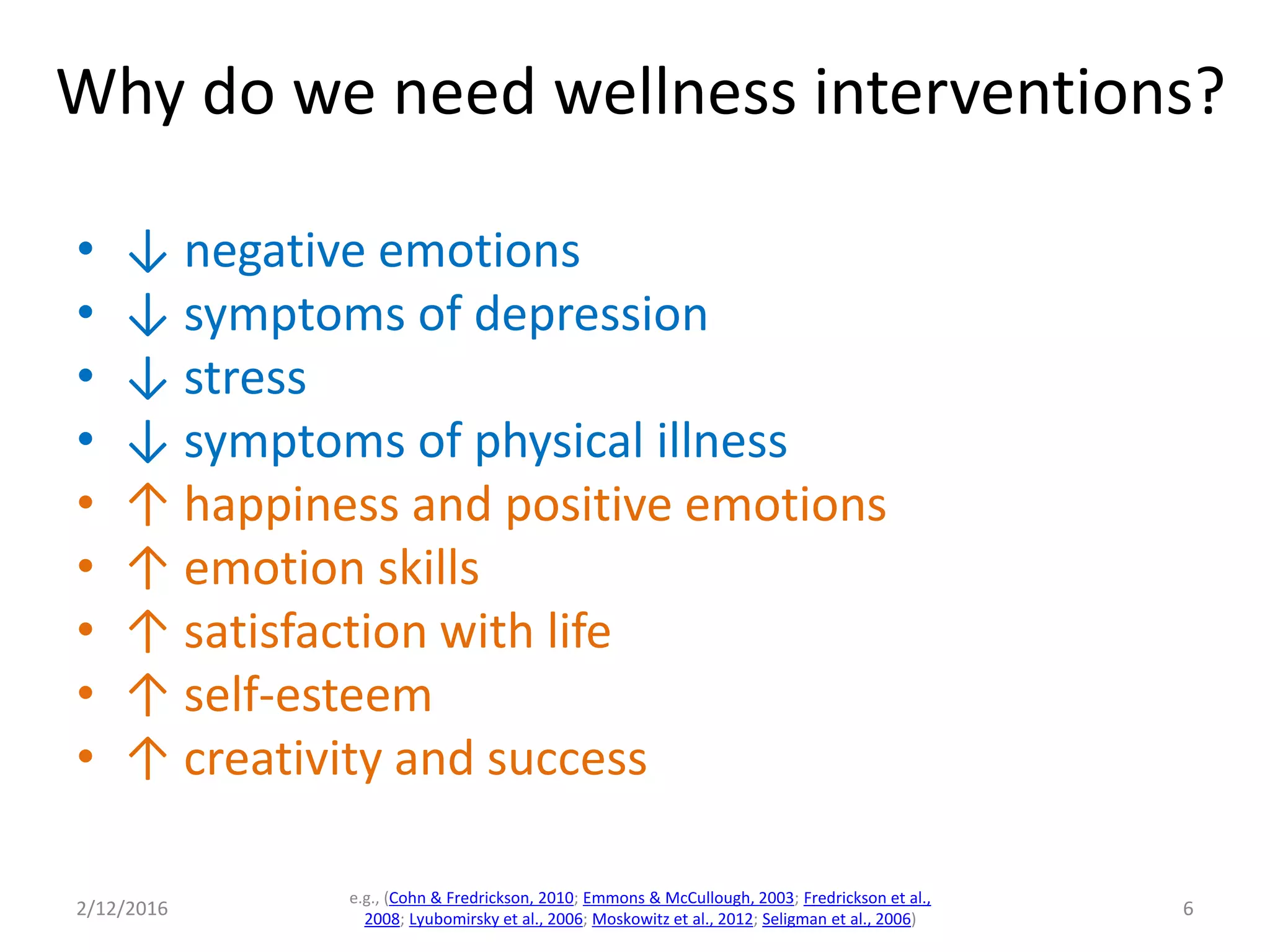
• ↓ negative emotions
• ↓ symptoms of depression
• ↓ stress
• ↓ symptoms of physical illness
• ↑ happiness and positive emotions
• ↑ emotion skills
• ↑ satisfaction with life
• ↑ self-esteem
• ↑ creativity and success
2/12/2016
e.g., (Cohn & Fredrickson, 2010; Emmons & McCullough, 2003; Fredrickson et al.,
2008; Lyubomirsky et al., 2006; Moskowitz et al., 2012; Seligman et al., 2006)
6
Why do we need wellness interventions?
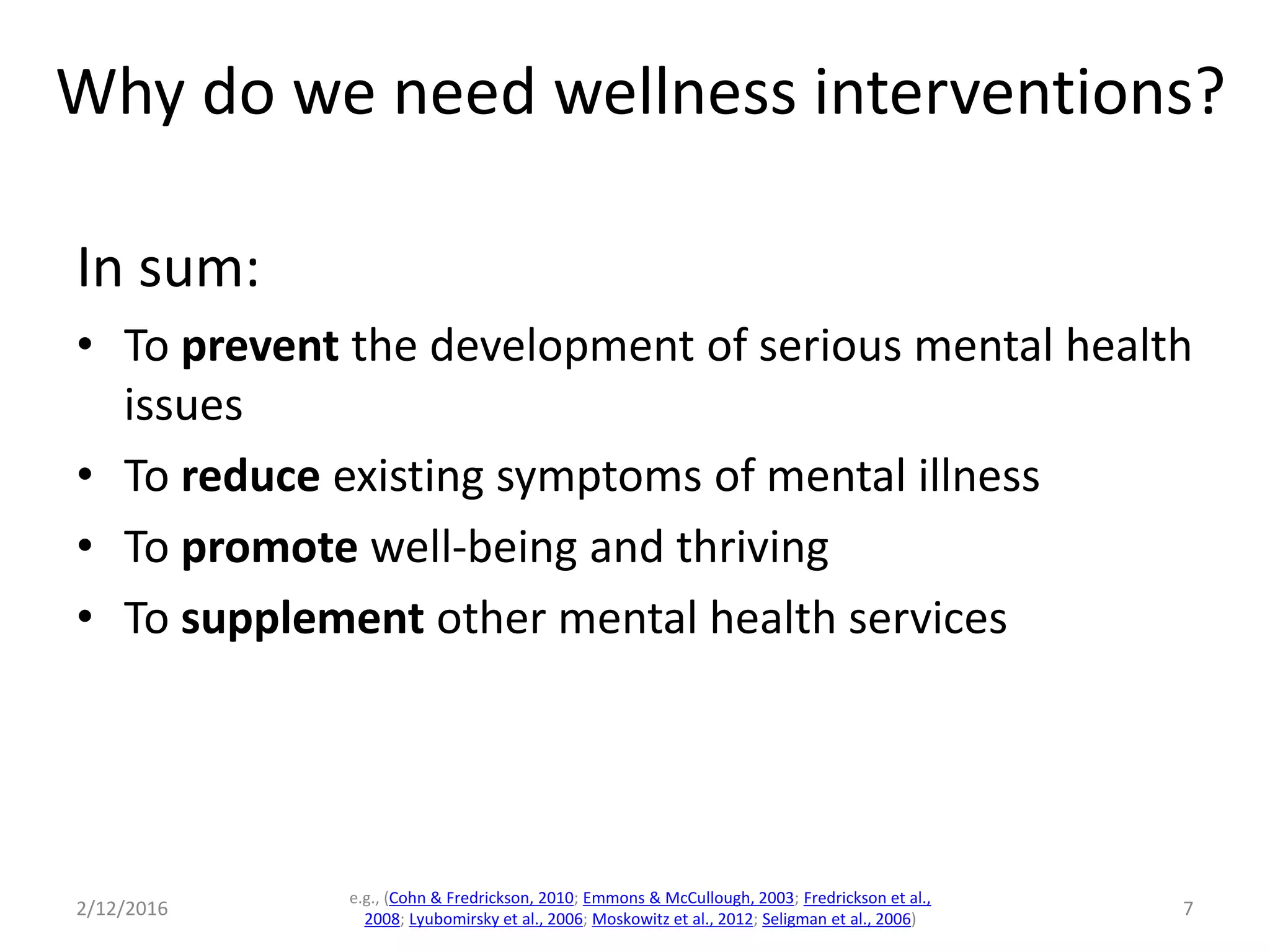
In sum:
• To prevent the development of serious mental health
issues
• To reduce existing symptoms of mental illness
• To promote well-being and thriving
• To supplement other mental health services
2/12/2016
e.g., (Cohn & Fredrickson, 2010; Emmons & McCullough, 2003; Fredrickson et al.,
2008; Lyubomirsky et al., 2006; Moskowitz et al., 2012; Seligman et al., 2006)
7
Why do we need wellness interventions?
Outline
1. What are wellness interventions and why do
we need them?
2. What are the current standards for
intervention and assessment?
3. How do we create wellness interventions
that will work in applied settings?
4. Discussion
2/12/2016 8
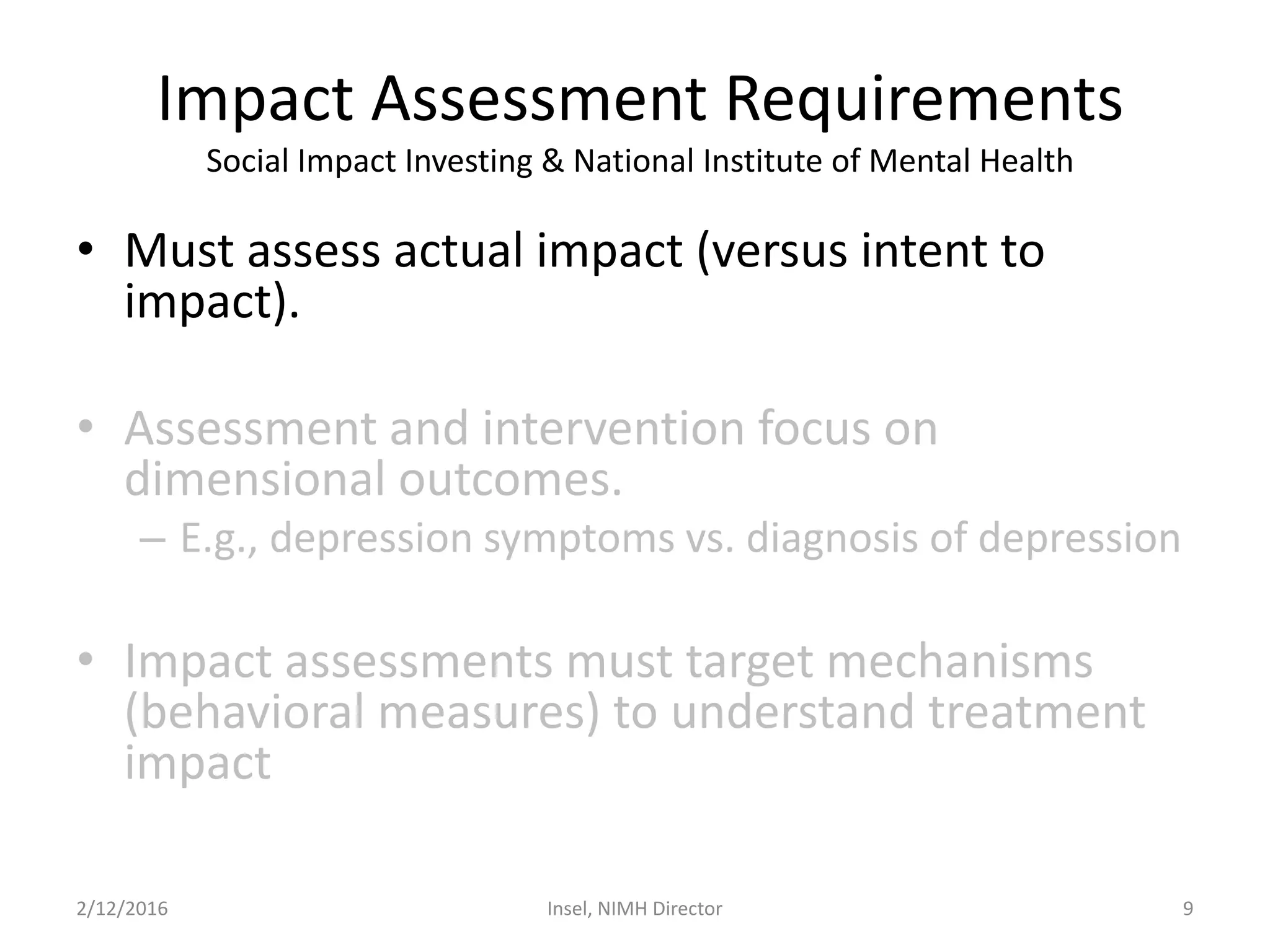
Impact Assessment Requirements
Social Impact Investing & National Institute of Mental Health
• Must assess actual impact (versus intent to
impact).
• Assessment and intervention focus on
dimensional outcomes.
– E.g., depression symptoms vs. diagnosis of depression
• Impact assessments must target mechanisms
(behavioral measures) to understand treatment
impact
2/12/2016 Insel, NIMH Director 9
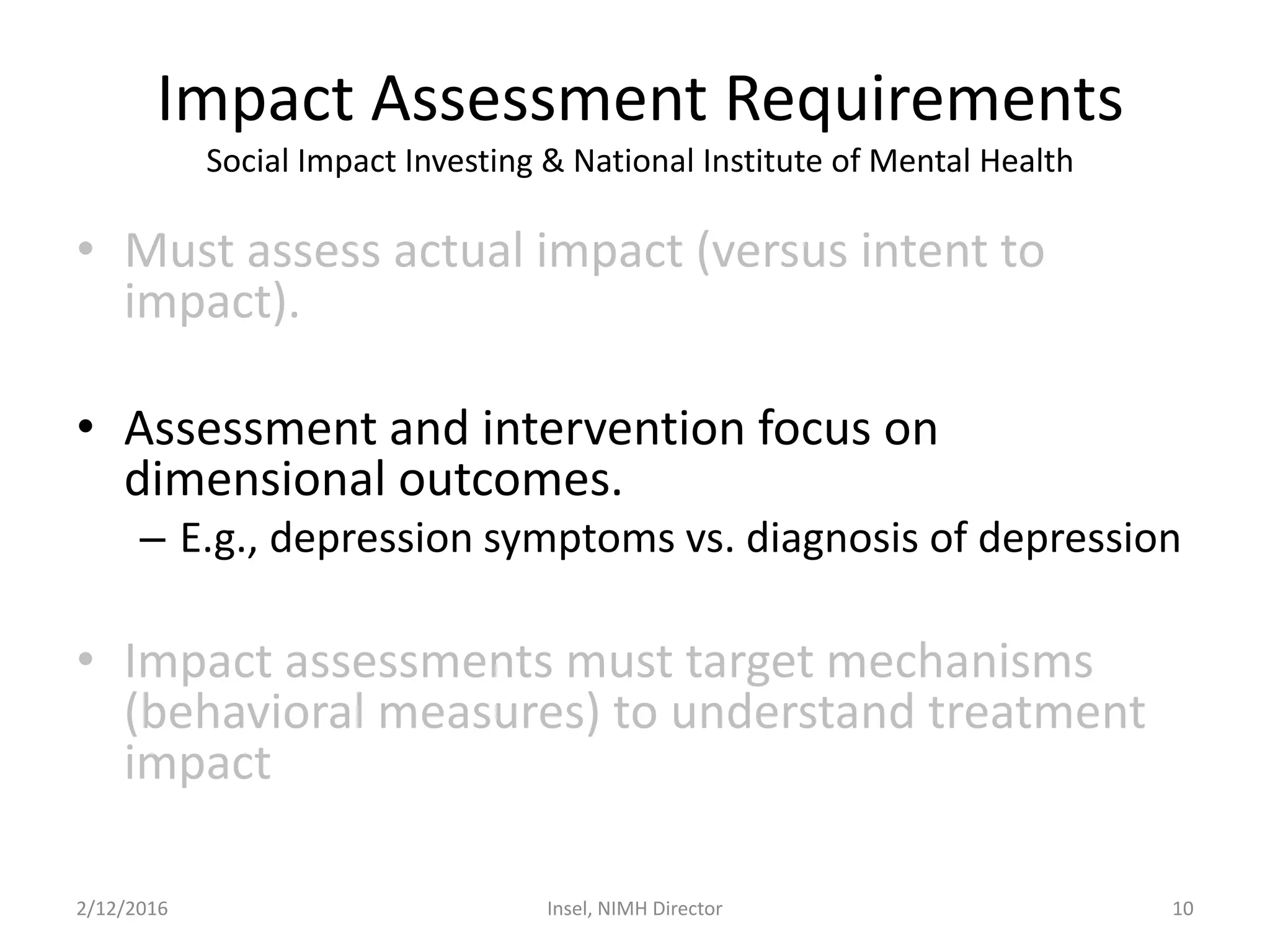
Impact Assessment Requirements
Social Impact Investing & National Institute of Mental Health
• Must assess actual impact (versus intent to
impact).
• Assessment and intervention focus on
dimensional outcomes.
– E.g., depression symptoms vs. diagnosis of depression
• Impact assessments must target mechanisms
(behavioral measures) to understand treatment
impact
2/12/2016 Insel, NIMH Director 10
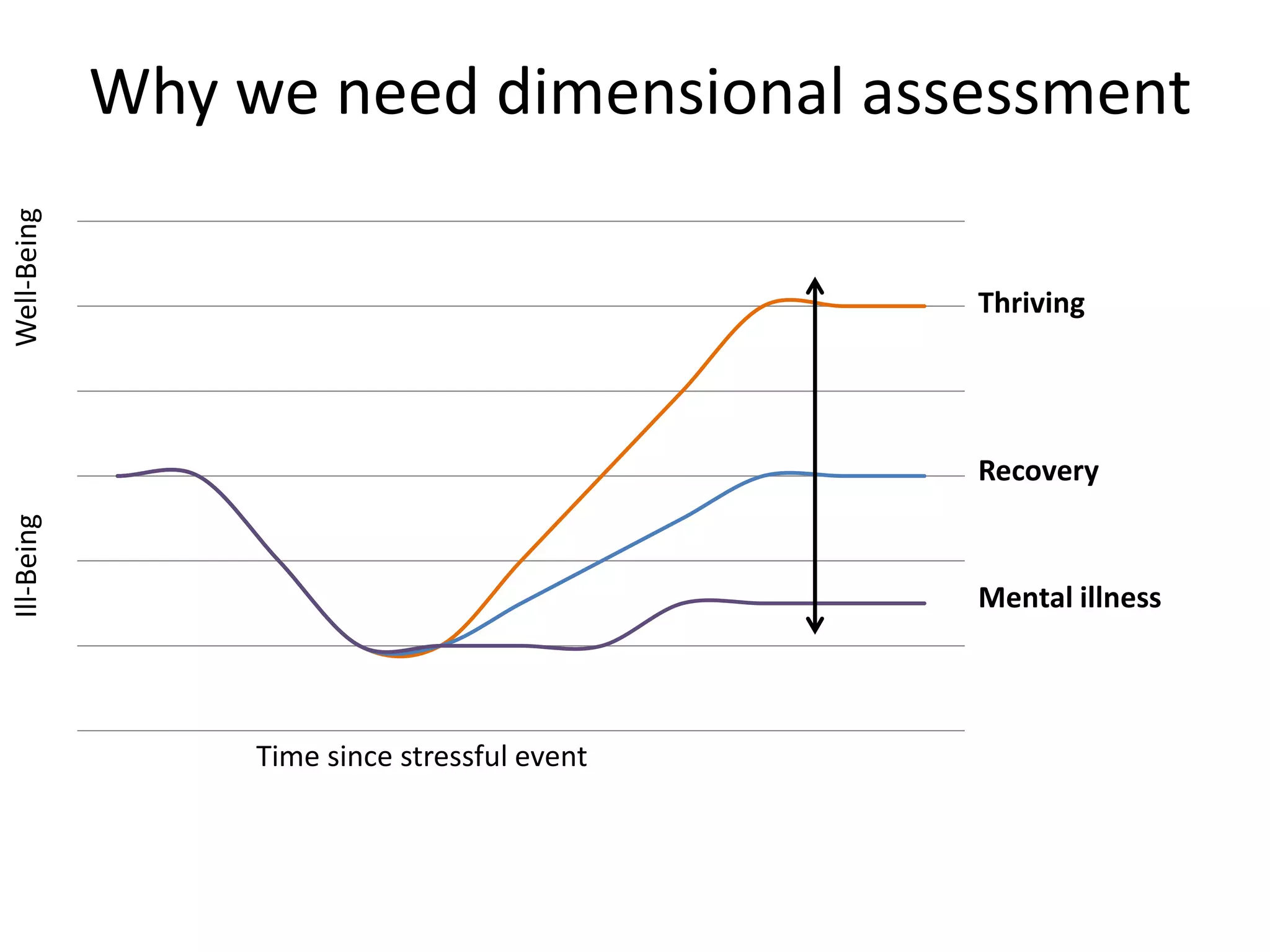
Why we need dimensional assessment
Time since stressful event
Well-Being
Thriving
Recovery
Mental illness
Ill-Being
Impact Assessment Requirements
Social Impact Investing & National Institute of Mental Health
• Must assess actual impact (versus intent to
impact).
• Assessment and treatment focus on dimensional
outcomes.
– E.g., depression symptoms vs. diagnosis of depression
• Impact assessments must target mechanisms
(behavioral measures) to understand treatment
impact
2/12/2016 Insel, NIMH Director 12
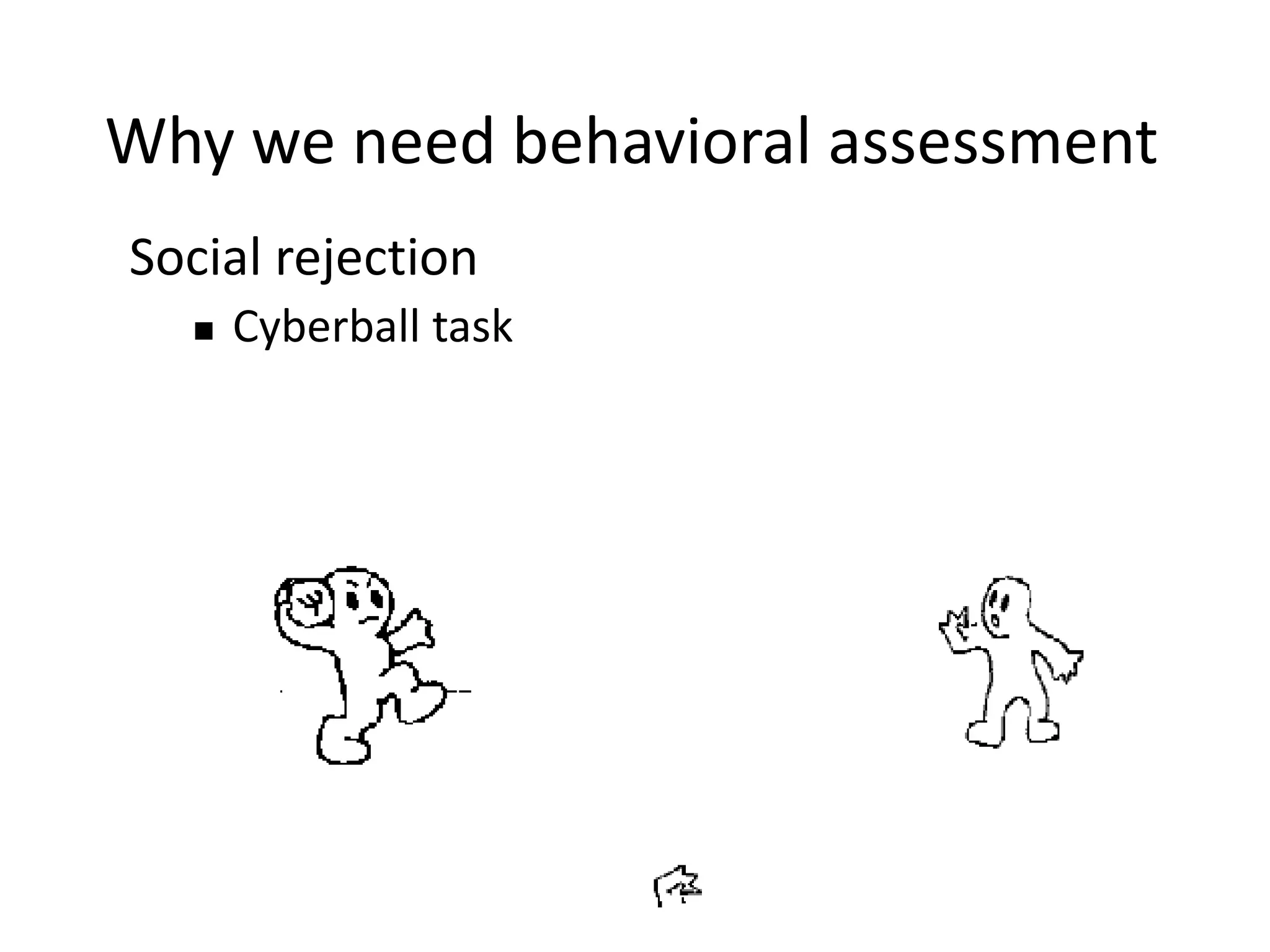
Social rejection
 Cyberball task
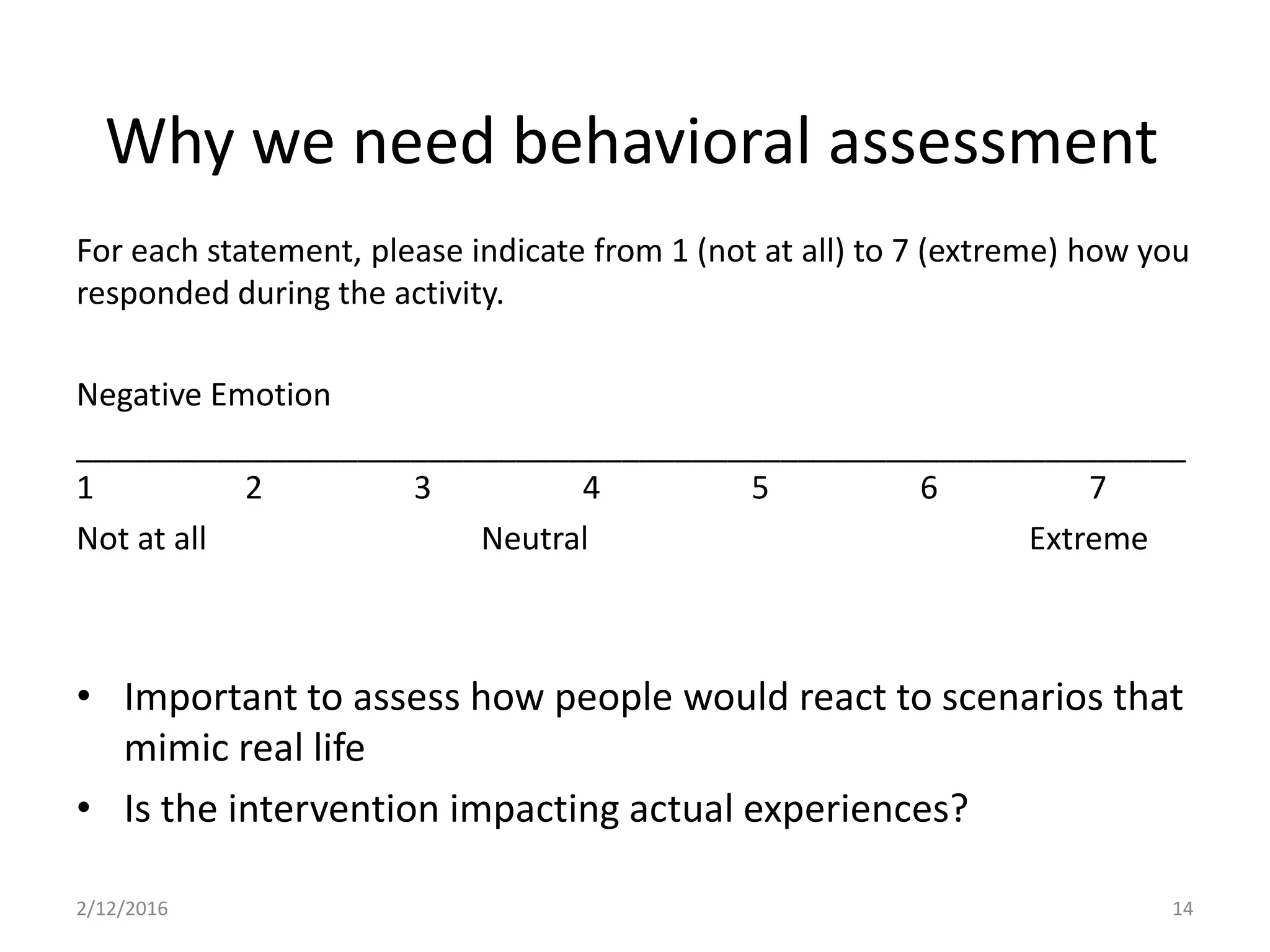
Why we need behavioral assessment
For each statement, please indicate from 1 (not at all) to 7 (extreme) how you
responded during the activity.
Negative Emotion
_______________________________________________________________
1 2 3 4 5 6 7
Not at all Neutral Extreme
• Important to assess how people would react to scenarios that
mimic real life
• Is the intervention impacting actual experiences?
2/12/2016 14
Why we need behavioral assessment
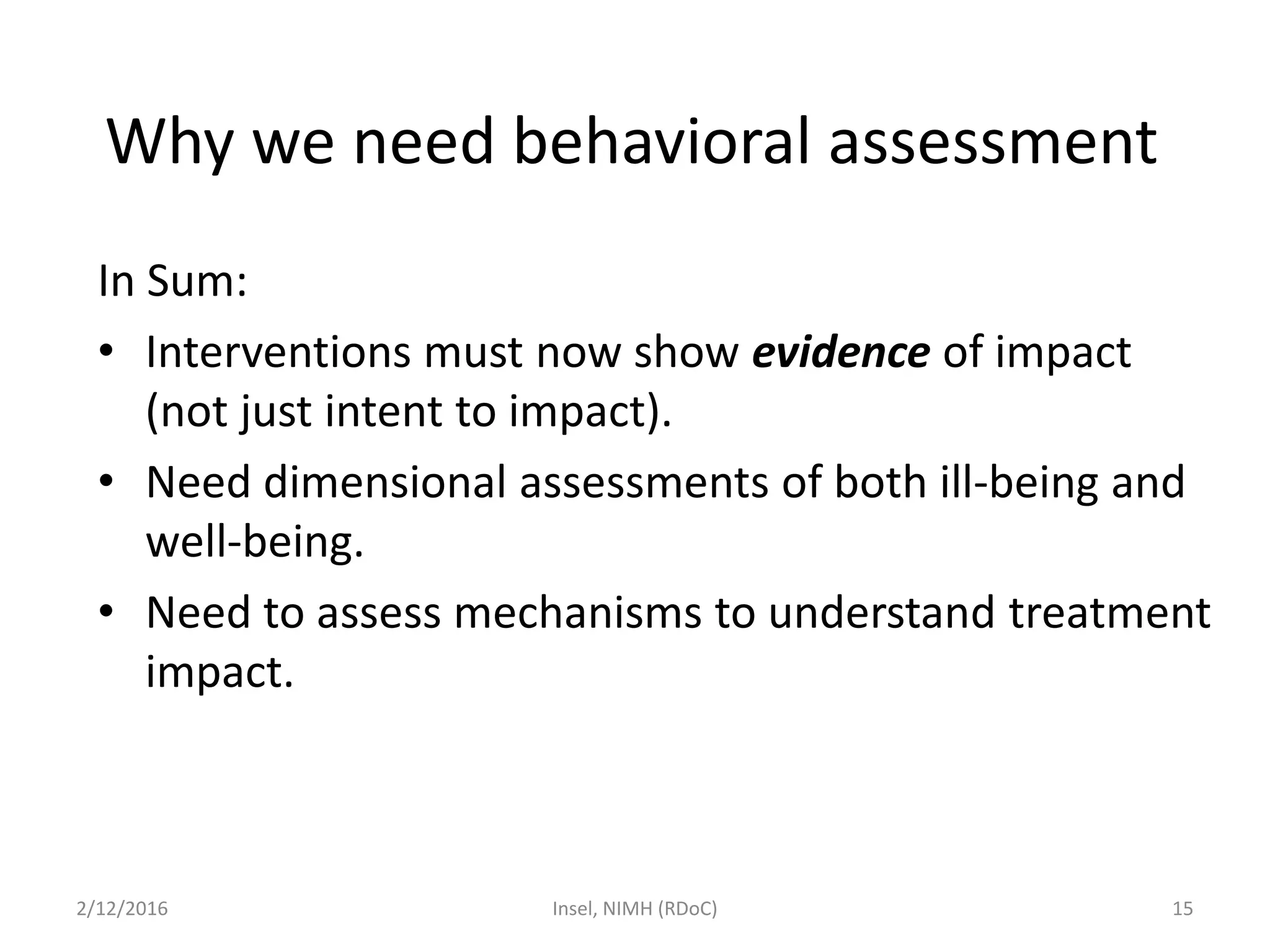
In Sum:
• Interventions must now show evidence of impact
(not just intent to impact).
• Need dimensional assessments of both ill-being and
well-being.
• Need to assess mechanisms to understand treatment
impact.
2/12/2016 Insel, NIMH (RDoC) 15
Why we need behavioral assessment
Outline
1. What are wellness interventions and why do
we need them?
2. What are the current standards for
intervention and assessment?
3. How do we create wellness interventions
that will work in applied settings?
4. Discussion
2/12/2016 16
2/12/2016 (Layous & Lyubomirsky, 2012) 17
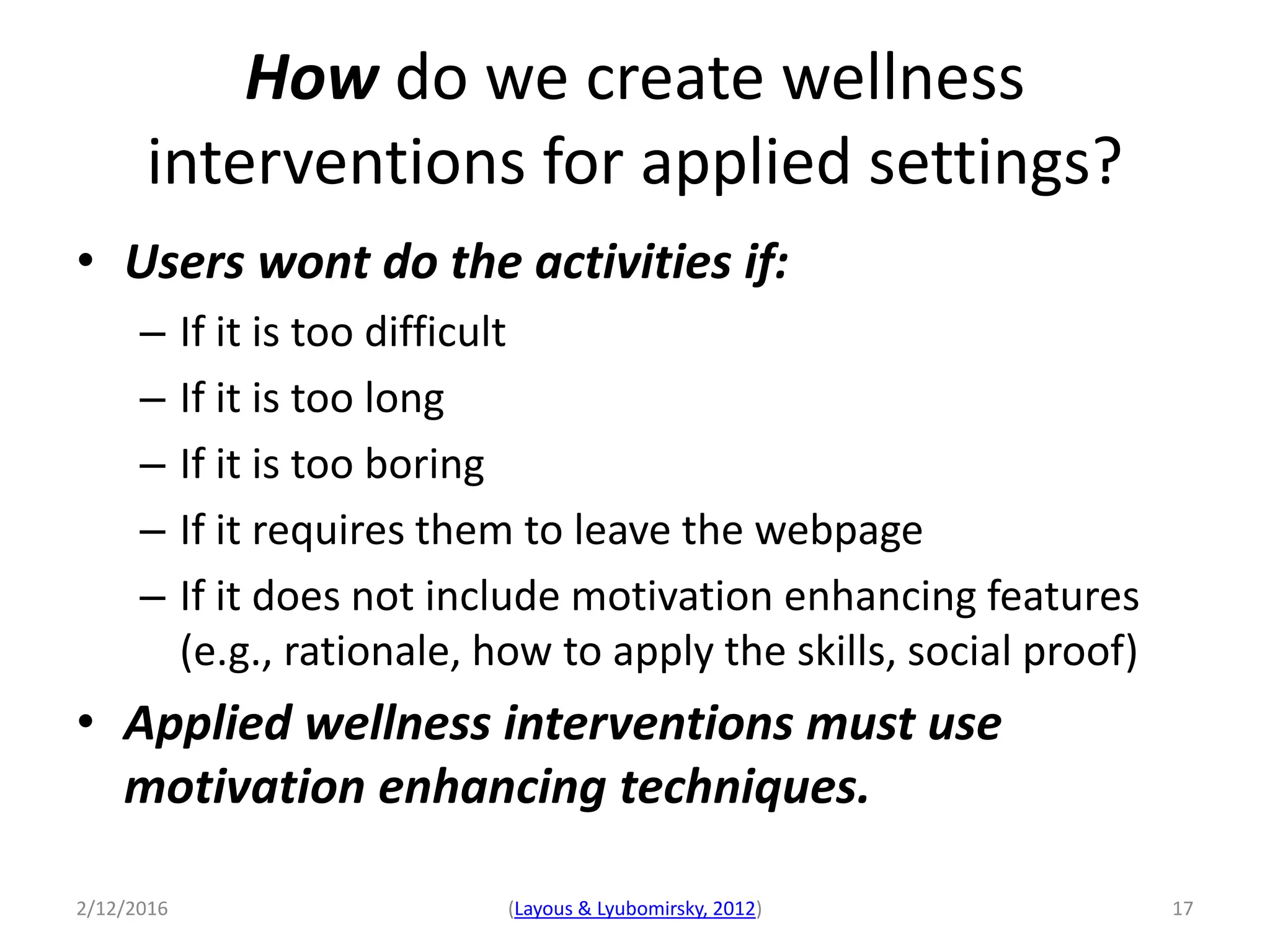
• Users wont do the activities if:
– If it is too difficult
– If it is too long
– If it is too boring
– If it requires them to leave the webpage
– If it does not include motivation enhancing features
(e.g., rationale, how to apply the skills, social proof)
• Applied wellness interventions must use
motivation enhancing techniques.
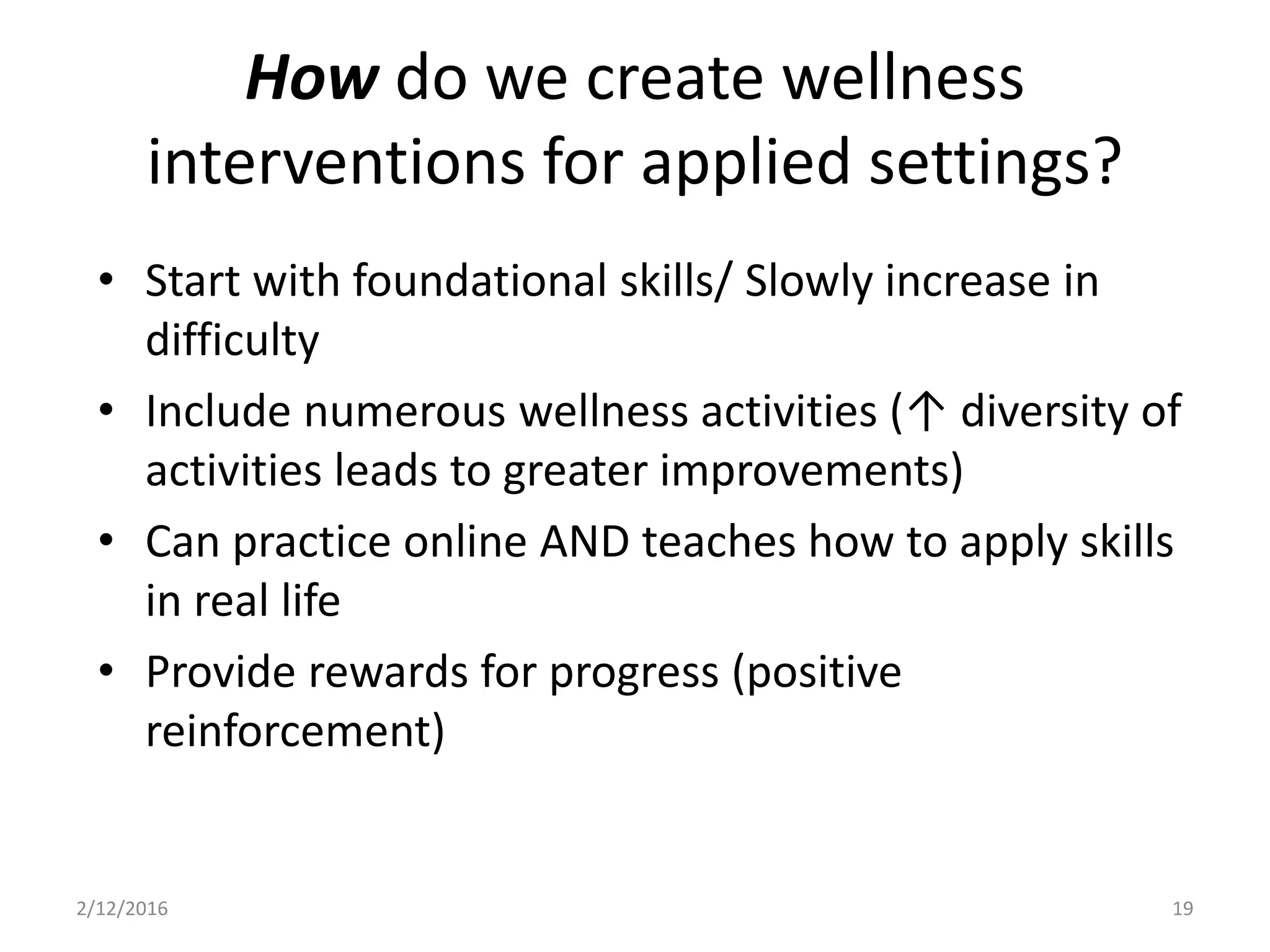
How do we create wellness
interventions for applied settings?
2/12/2016 Tchiki.s.davis@gmail.com; Davis, T.S., 2014 NIMH grant (submitted) 18
How do we create wellness
interventions for applied settings?
Merge: Cutting edge wellness interventions
+ NIH standards for assessment
+ Motivation enhancing features
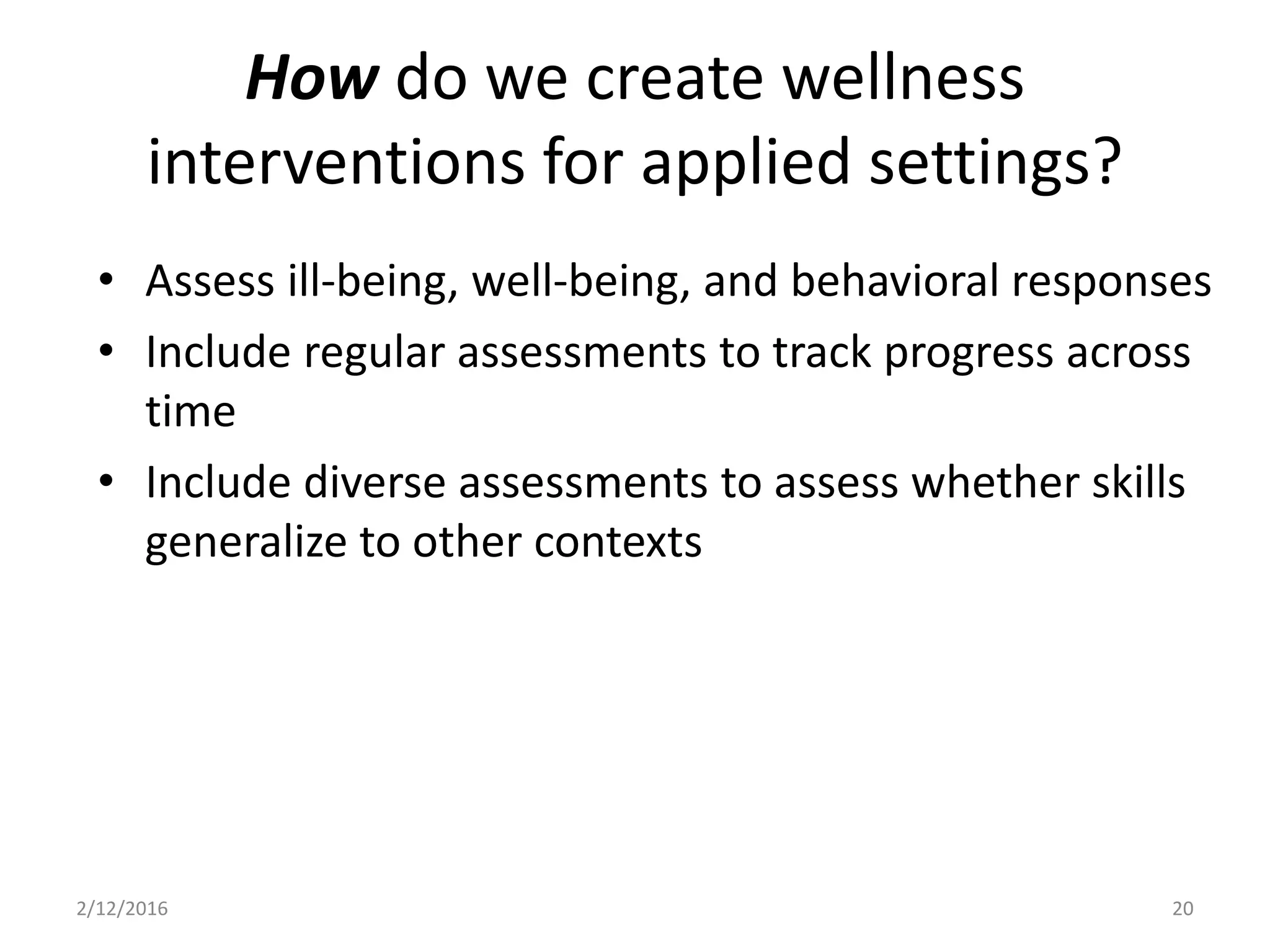
• Start with foundational skills/ Slowly increase in
difficulty
• Include numerous wellness activities (↑ diversity of
activities leads to greater improvements)
• Can practice online AND teaches how to apply skills
in real life
• Provide rewards for progress (positive
reinforcement)
2/12/2016 19
How do we create wellness
interventions for applied settings?
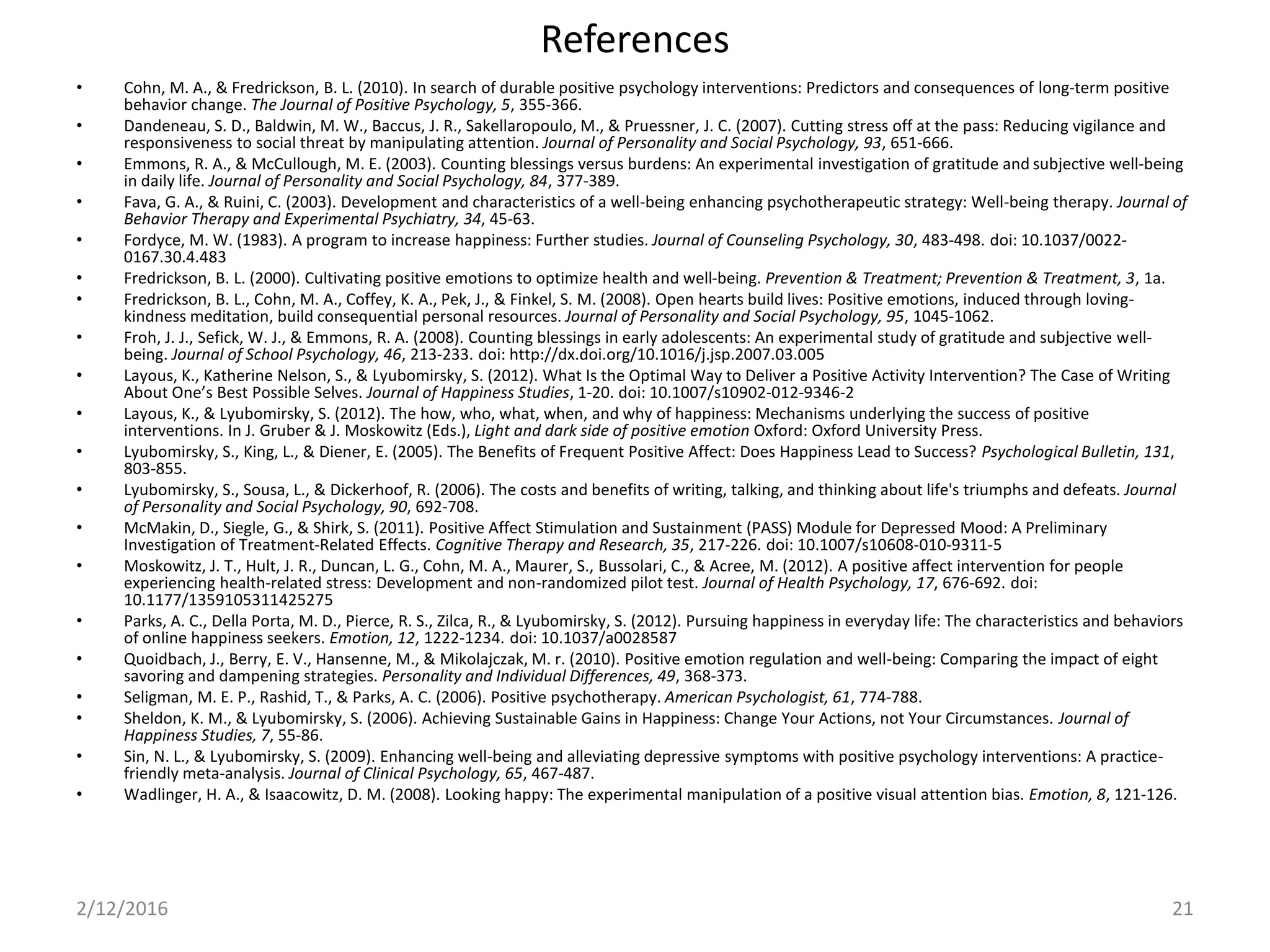
• Assess ill-being, well-being, and behavioral responses
• Include regular assessments to track progress across
time
• Include diverse assessments to assess whether skills
generalize to other contexts
2/12/2016 20
How do we create wellness
interventions for applied settings?
References
• Cohn, M. A., & Fredrickson, B. L. (2010). In search of durable positive psychology interventions: Predictors and consequences of long-term positive
behavior change. The Journal of Positive Psychology, 5, 355-366.
• Dandeneau, S. D., Baldwin, M. W., Baccus, J. R., Sakellaropoulo, M., & Pruessner, J. C. (2007). Cutting stress off at the pass: Reducing vigilance and
responsiveness to social threat by manipulating attention. Journal of Personality and Social Psychology, 93, 651-666.
• Emmons, R. A., & McCullough, M. E. (2003). Counting blessings versus burdens: An experimental investigation of gratitude and subjective well-being
in daily life. Journal of Personality and Social Psychology, 84, 377-389.
• Fava, G. A., & Ruini, C. (2003). Development and characteristics of a well-being enhancing psychotherapeutic strategy: Well-being therapy. Journal of
Behavior Therapy and Experimental Psychiatry, 34, 45-63.
• Fordyce, M. W. (1983). A program to increase happiness: Further studies. Journal of Counseling Psychology, 30, 483-498. doi: 10.1037/0022-
0167.30.4.483
• Fredrickson, B. L. (2000). Cultivating positive emotions to optimize health and well-being. Prevention & Treatment; Prevention & Treatment, 3, 1a.
• Fredrickson, B. L., Cohn, M. A., Coffey, K. A., Pek, J., & Finkel, S. M. (2008). Open hearts build lives: Positive emotions, induced through loving-
kindness meditation, build consequential personal resources. Journal of Personality and Social Psychology, 95, 1045-1062.
• Froh, J. J., Sefick, W. J., & Emmons, R. A. (2008). Counting blessings in early adolescents: An experimental study of gratitude and subjective well-
being. Journal of School Psychology, 46, 213-233. doi: http://dx.doi.org/10.1016/j.jsp.2007.03.005
• Layous, K., Katherine Nelson, S., & Lyubomirsky, S. (2012). What Is the Optimal Way to Deliver a Positive Activity Intervention? The Case of Writing
About One’s Best Possible Selves. Journal of Happiness Studies, 1-20. doi: 10.1007/s10902-012-9346-2
• Layous, K., & Lyubomirsky, S. (2012). The how, who, what, when, and why of happiness: Mechanisms underlying the success of positive
interventions. In J. Gruber & J. Moskowitz (Eds.), Light and dark side of positive emotion Oxford: Oxford University Press.
• Lyubomirsky, S., King, L., & Diener, E. (2005). The Benefits of Frequent Positive Affect: Does Happiness Lead to Success? Psychological Bulletin, 131,
803-855.
• Lyubomirsky, S., Sousa, L., & Dickerhoof, R. (2006). The costs and benefits of writing, talking, and thinking about life's triumphs and defeats. Journal
of Personality and Social Psychology, 90, 692-708.
• McMakin, D., Siegle, G., & Shirk, S. (2011). Positive Affect Stimulation and Sustainment (PASS) Module for Depressed Mood: A Preliminary
Investigation of Treatment-Related Effects. Cognitive Therapy and Research, 35, 217-226. doi: 10.1007/s10608-010-9311-5
• Moskowitz, J. T., Hult, J. R., Duncan, L. G., Cohn, M. A., Maurer, S., Bussolari, C., & Acree, M. (2012). A positive affect intervention for people
experiencing health-related stress: Development and non-randomized pilot test. Journal of Health Psychology, 17, 676-692. doi:
10.1177/1359105311425275
• Parks, A. C., Della Porta, M. D., Pierce, R. S., Zilca, R., & Lyubomirsky, S. (2012). Pursuing happiness in everyday life: The characteristics and behaviors
of online happiness seekers. Emotion, 12, 1222-1234. doi: 10.1037/a0028587
• Quoidbach, J., Berry, E. V., Hansenne, M., & Mikolajczak, M. r. (2010). Positive emotion regulation and well-being: Comparing the impact of eight
savoring and dampening strategies. Personality and Individual Differences, 49, 368-373.
• Seligman, M. E. P., Rashid, T., & Parks, A. C. (2006). Positive psychotherapy. American Psychologist, 61, 774-788.
• Sheldon, K. M., & Lyubomirsky, S. (2006). Achieving Sustainable Gains in Happiness: Change Your Actions, not Your Circumstances. Journal of
Happiness Studies, 7, 55-86.
• Sin, N. L., & Lyubomirsky, S. (2009). Enhancing well-being and alleviating depressive symptoms with positive psychology interventions: A practice-
friendly meta-analysis. Journal of Clinical Psychology, 65, 467-487.
• Wadlinger, H. A., & Isaacowitz, D. M. (2008). Looking happy: The experimental manipulation of a positive visual attention bias. Emotion, 8, 121-126.
2/12/2016 21

Creating well-being interventions

  • 1.
    Wellness Interventions: Implications formental health and well-being Tchiki Davis
  • 2.
    Emotion Mental Health Technology About Me: Ph.D. Studentin Psychology Minor: Technology Innovation
  • 3.
    Outline 1. What arewellness interventions and why do we need them? 2. What are the current standards for intervention and assessment? 3. How do we create wellness interventions that will work in applied settings? 4. Discussion 2/12/2016 3
  • 4.
    What is awellness intervention? • Focus on increasing positive emotion (versus decreasing negative emotion). – increasing attention for positive material – capitalizing on positive events by savoring, sharing, writing – positively reappraising events – increasing gratitude etc… 2/12/2016 e.g., (Dandeneau, Baldwin, Baccus, Sakellaropoulo, & Pruessner, 2007; Moskowitz et al., 2012; Wadlinger & Isaacowitz, 2008) 4
  • 5.
    Why do weneed wellness interventions? Time since stressful event Well-Being Thriving Recovery Mental illness Wellness Interventions Ill-Being Stressful life events
  • 6.
    • ↓ negativeemotions • ↓ symptoms of depression • ↓ stress • ↓ symptoms of physical illness • ↑ happiness and positive emotions • ↑ emotion skills • ↑ satisfaction with life • ↑ self-esteem • ↑ creativity and success 2/12/2016 e.g., (Cohn & Fredrickson, 2010; Emmons & McCullough, 2003; Fredrickson et al., 2008; Lyubomirsky et al., 2006; Moskowitz et al., 2012; Seligman et al., 2006) 6 Why do we need wellness interventions?
  • 7.
    In sum: • Toprevent the development of serious mental health issues • To reduce existing symptoms of mental illness • To promote well-being and thriving • To supplement other mental health services 2/12/2016 e.g., (Cohn & Fredrickson, 2010; Emmons & McCullough, 2003; Fredrickson et al., 2008; Lyubomirsky et al., 2006; Moskowitz et al., 2012; Seligman et al., 2006) 7 Why do we need wellness interventions?
  • 8.
    Outline 1. What arewellness interventions and why do we need them? 2. What are the current standards for intervention and assessment? 3. How do we create wellness interventions that will work in applied settings? 4. Discussion 2/12/2016 8
  • 9.
    Impact Assessment Requirements SocialImpact Investing & National Institute of Mental Health • Must assess actual impact (versus intent to impact). • Assessment and intervention focus on dimensional outcomes. – E.g., depression symptoms vs. diagnosis of depression • Impact assessments must target mechanisms (behavioral measures) to understand treatment impact 2/12/2016 Insel, NIMH Director 9
  • 10.
    Impact Assessment Requirements SocialImpact Investing & National Institute of Mental Health • Must assess actual impact (versus intent to impact). • Assessment and intervention focus on dimensional outcomes. – E.g., depression symptoms vs. diagnosis of depression • Impact assessments must target mechanisms (behavioral measures) to understand treatment impact 2/12/2016 Insel, NIMH Director 10
  • 11.
    Why we needdimensional assessment Time since stressful event Well-Being Thriving Recovery Mental illness Ill-Being
  • 12.
    Impact Assessment Requirements SocialImpact Investing & National Institute of Mental Health • Must assess actual impact (versus intent to impact). • Assessment and treatment focus on dimensional outcomes. – E.g., depression symptoms vs. diagnosis of depression • Impact assessments must target mechanisms (behavioral measures) to understand treatment impact 2/12/2016 Insel, NIMH Director 12
  • 13.
    Social rejection  Cyberballtask Why we need behavioral assessment
  • 14.
    For each statement,please indicate from 1 (not at all) to 7 (extreme) how you responded during the activity. Negative Emotion _______________________________________________________________ 1 2 3 4 5 6 7 Not at all Neutral Extreme • Important to assess how people would react to scenarios that mimic real life • Is the intervention impacting actual experiences? 2/12/2016 14 Why we need behavioral assessment
  • 15.
    In Sum: • Interventionsmust now show evidence of impact (not just intent to impact). • Need dimensional assessments of both ill-being and well-being. • Need to assess mechanisms to understand treatment impact. 2/12/2016 Insel, NIMH (RDoC) 15 Why we need behavioral assessment
  • 16.
    Outline 1. What arewellness interventions and why do we need them? 2. What are the current standards for intervention and assessment? 3. How do we create wellness interventions that will work in applied settings? 4. Discussion 2/12/2016 16
  • 17.
    2/12/2016 (Layous &Lyubomirsky, 2012) 17 • Users wont do the activities if: – If it is too difficult – If it is too long – If it is too boring – If it requires them to leave the webpage – If it does not include motivation enhancing features (e.g., rationale, how to apply the skills, social proof) • Applied wellness interventions must use motivation enhancing techniques. How do we create wellness interventions for applied settings?
  • 18.
    2/12/2016 Tchiki.s.davis@gmail.com; Davis,T.S., 2014 NIMH grant (submitted) 18 How do we create wellness interventions for applied settings? Merge: Cutting edge wellness interventions + NIH standards for assessment + Motivation enhancing features
  • 19.
    • Start withfoundational skills/ Slowly increase in difficulty • Include numerous wellness activities (↑ diversity of activities leads to greater improvements) • Can practice online AND teaches how to apply skills in real life • Provide rewards for progress (positive reinforcement) 2/12/2016 19 How do we create wellness interventions for applied settings?
  • 20.
    • Assess ill-being,well-being, and behavioral responses • Include regular assessments to track progress across time • Include diverse assessments to assess whether skills generalize to other contexts 2/12/2016 20 How do we create wellness interventions for applied settings?
  • 21.
    References • Cohn, M.A., & Fredrickson, B. L. (2010). In search of durable positive psychology interventions: Predictors and consequences of long-term positive behavior change. The Journal of Positive Psychology, 5, 355-366. • Dandeneau, S. D., Baldwin, M. W., Baccus, J. R., Sakellaropoulo, M., & Pruessner, J. C. (2007). Cutting stress off at the pass: Reducing vigilance and responsiveness to social threat by manipulating attention. Journal of Personality and Social Psychology, 93, 651-666. • Emmons, R. A., & McCullough, M. E. (2003). Counting blessings versus burdens: An experimental investigation of gratitude and subjective well-being in daily life. Journal of Personality and Social Psychology, 84, 377-389. • Fava, G. A., & Ruini, C. (2003). Development and characteristics of a well-being enhancing psychotherapeutic strategy: Well-being therapy. Journal of Behavior Therapy and Experimental Psychiatry, 34, 45-63. • Fordyce, M. W. (1983). A program to increase happiness: Further studies. Journal of Counseling Psychology, 30, 483-498. doi: 10.1037/0022- 0167.30.4.483 • Fredrickson, B. L. (2000). Cultivating positive emotions to optimize health and well-being. Prevention & Treatment; Prevention & Treatment, 3, 1a. • Fredrickson, B. L., Cohn, M. A., Coffey, K. A., Pek, J., & Finkel, S. M. (2008). Open hearts build lives: Positive emotions, induced through loving- kindness meditation, build consequential personal resources. Journal of Personality and Social Psychology, 95, 1045-1062. • Froh, J. J., Sefick, W. J., & Emmons, R. A. (2008). Counting blessings in early adolescents: An experimental study of gratitude and subjective well- being. Journal of School Psychology, 46, 213-233. doi: http://dx.doi.org/10.1016/j.jsp.2007.03.005 • Layous, K., Katherine Nelson, S., & Lyubomirsky, S. (2012). What Is the Optimal Way to Deliver a Positive Activity Intervention? The Case of Writing About One’s Best Possible Selves. Journal of Happiness Studies, 1-20. doi: 10.1007/s10902-012-9346-2 • Layous, K., & Lyubomirsky, S. (2012). The how, who, what, when, and why of happiness: Mechanisms underlying the success of positive interventions. In J. Gruber & J. Moskowitz (Eds.), Light and dark side of positive emotion Oxford: Oxford University Press. • Lyubomirsky, S., King, L., & Diener, E. (2005). The Benefits of Frequent Positive Affect: Does Happiness Lead to Success? Psychological Bulletin, 131, 803-855. • Lyubomirsky, S., Sousa, L., & Dickerhoof, R. (2006). The costs and benefits of writing, talking, and thinking about life's triumphs and defeats. Journal of Personality and Social Psychology, 90, 692-708. • McMakin, D., Siegle, G., & Shirk, S. (2011). Positive Affect Stimulation and Sustainment (PASS) Module for Depressed Mood: A Preliminary Investigation of Treatment-Related Effects. Cognitive Therapy and Research, 35, 217-226. doi: 10.1007/s10608-010-9311-5 • Moskowitz, J. T., Hult, J. R., Duncan, L. G., Cohn, M. A., Maurer, S., Bussolari, C., & Acree, M. (2012). A positive affect intervention for people experiencing health-related stress: Development and non-randomized pilot test. Journal of Health Psychology, 17, 676-692. doi: 10.1177/1359105311425275 • Parks, A. C., Della Porta, M. D., Pierce, R. S., Zilca, R., & Lyubomirsky, S. (2012). Pursuing happiness in everyday life: The characteristics and behaviors of online happiness seekers. Emotion, 12, 1222-1234. doi: 10.1037/a0028587 • Quoidbach, J., Berry, E. V., Hansenne, M., & Mikolajczak, M. r. (2010). Positive emotion regulation and well-being: Comparing the impact of eight savoring and dampening strategies. Personality and Individual Differences, 49, 368-373. • Seligman, M. E. P., Rashid, T., & Parks, A. C. (2006). Positive psychotherapy. American Psychologist, 61, 774-788. • Sheldon, K. M., & Lyubomirsky, S. (2006). Achieving Sustainable Gains in Happiness: Change Your Actions, not Your Circumstances. Journal of Happiness Studies, 7, 55-86. • Sin, N. L., & Lyubomirsky, S. (2009). Enhancing well-being and alleviating depressive symptoms with positive psychology interventions: A practice- friendly meta-analysis. Journal of Clinical Psychology, 65, 467-487. • Wadlinger, H. A., & Isaacowitz, D. M. (2008). Looking happy: The experimental manipulation of a positive visual attention bias. Emotion, 8, 121-126. 2/12/2016 21