The New Age of Social TV,
    Are We there Yet?
Channel 10 In The Current
                       State
After seeking community feedback for over 7 months on what viewers like about channel 10
and what they would like to see we have not received a phone call or email= NO ROI
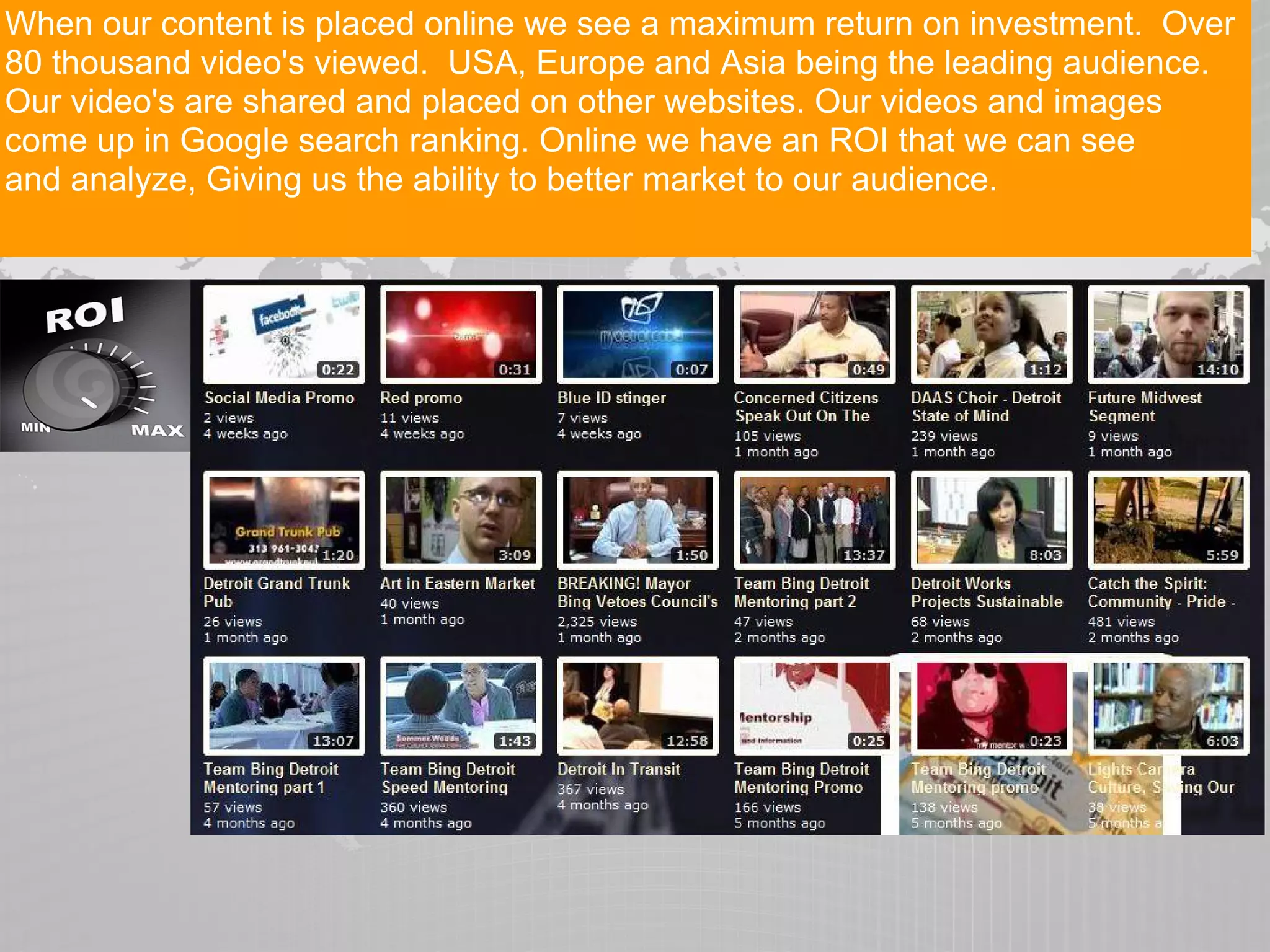
When our content is placed online we see a maximum return on investment. Over
80 thousand video's viewed. USA, Europe and Asia being the leading audience.
Our video's are shared and placed on other websites. Our videos and images
come up in Google search ranking. Online we have an ROI that we can see
and analyze, Giving us the ability to better market to our audience.
Today many large and small channels are bridging the gap between their TV and
online audience. Small stations can become giants online because the world now has access
to their content. With social media web users can now interact with your television content in
many different ways.
Trends and tools being used to bridge the gap between TV, social media and
     your audience. The goal is the put your online audience on TV.


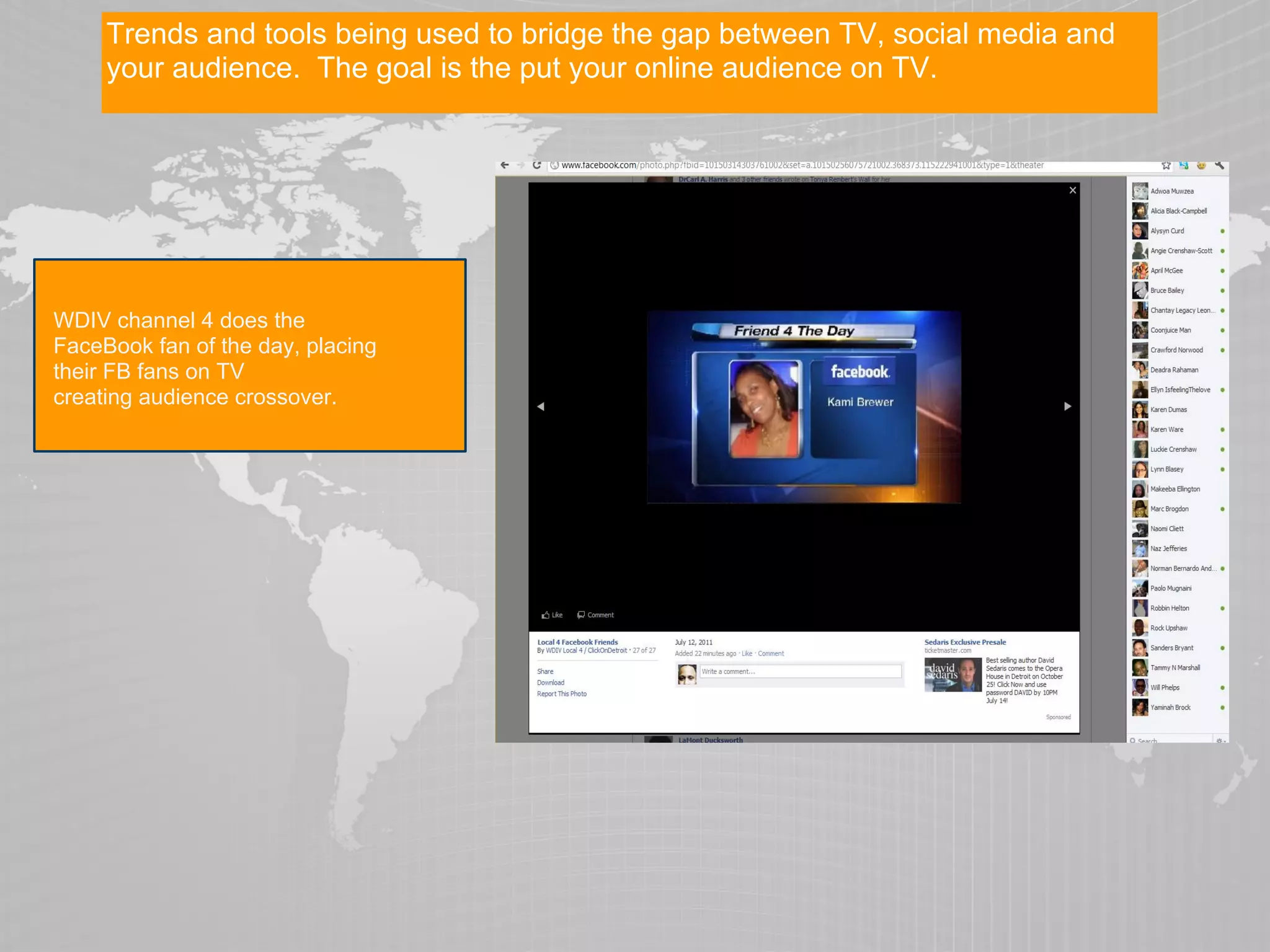
WDIV channel 4 does the
FaceBook fan of the day, placing
their FB fans on TV
creating audience crossover.
Trends and tools being used to bridge the gap between TV, social media and
    your audience. The goal is the bring your online audience on to TV.


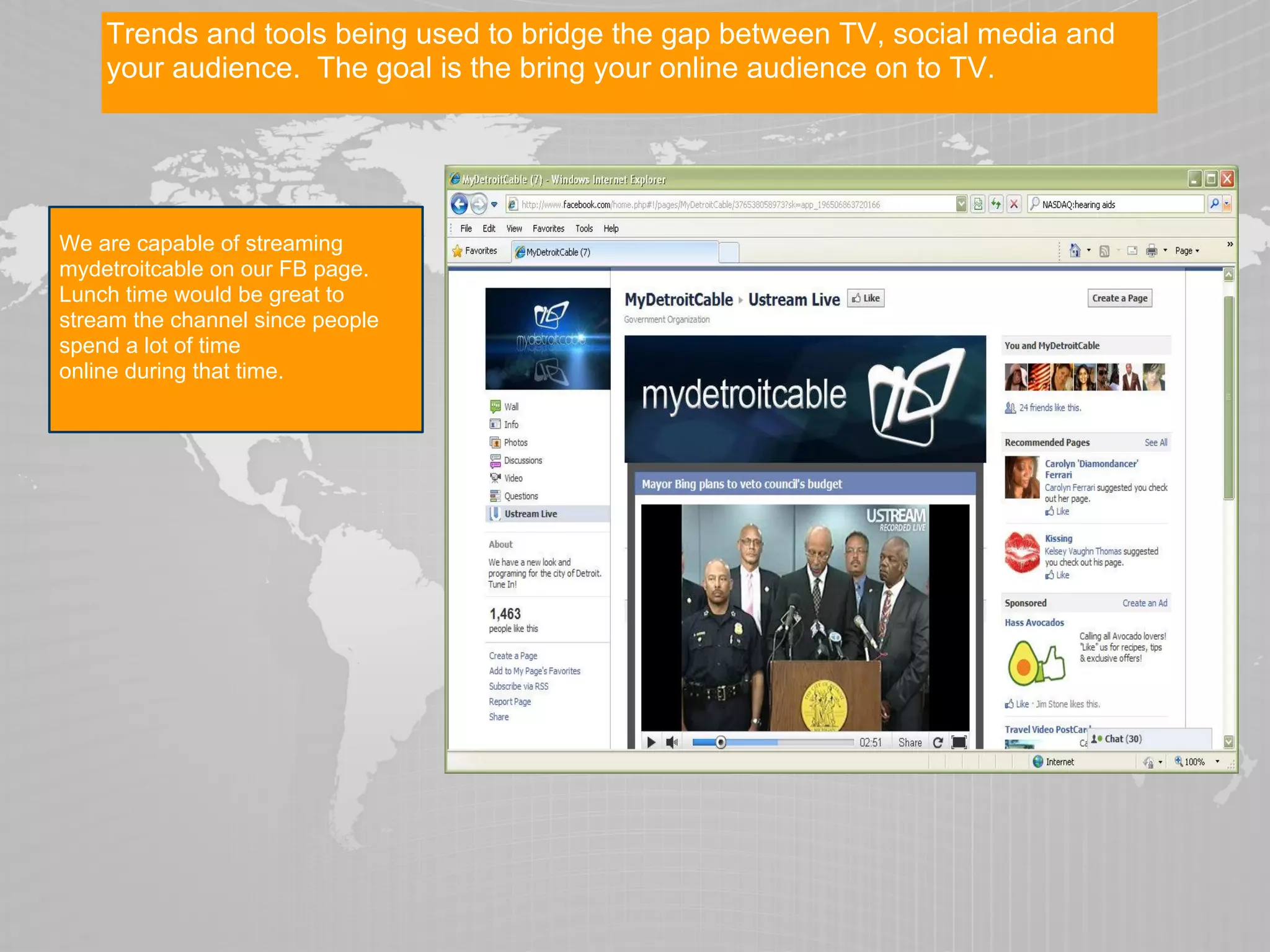
We are capable of streaming
mydetroitcable on our FB page.
Lunch time would be great to
stream the channel since people
spend a lot of time
online during that time.
Trends and tools being used to bridge the gap between TV, social media and
    your audience. The goal is the bring your online audience on to TV.


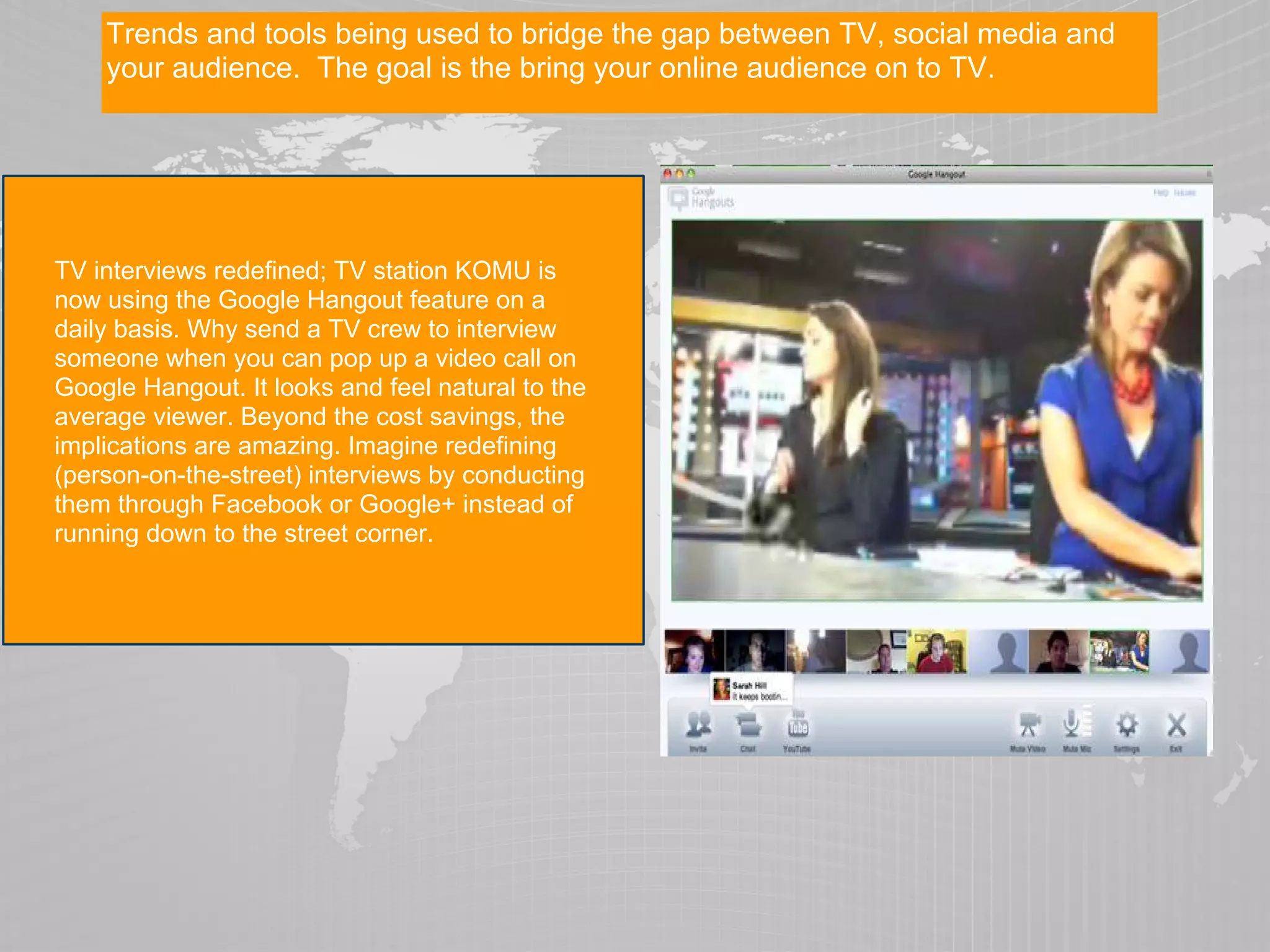
TV interviews redefined; TV station KOMU is
now using the Google Hangout feature on a
daily basis. Why send a TV crew to interview
someone when you can pop up a video call on
Google Hangout. It looks and feel natural to the
average viewer. Beyond the cost savings, the
implications are amazing. Imagine redefining
(person-on-the-street) interviews by conducting
them through Facebook or Google+ instead of
running down to the street corner.
Trends and tools being used to bridge the gap between TV, social media and
your audience. The goal is the bring your online audience on to TV.


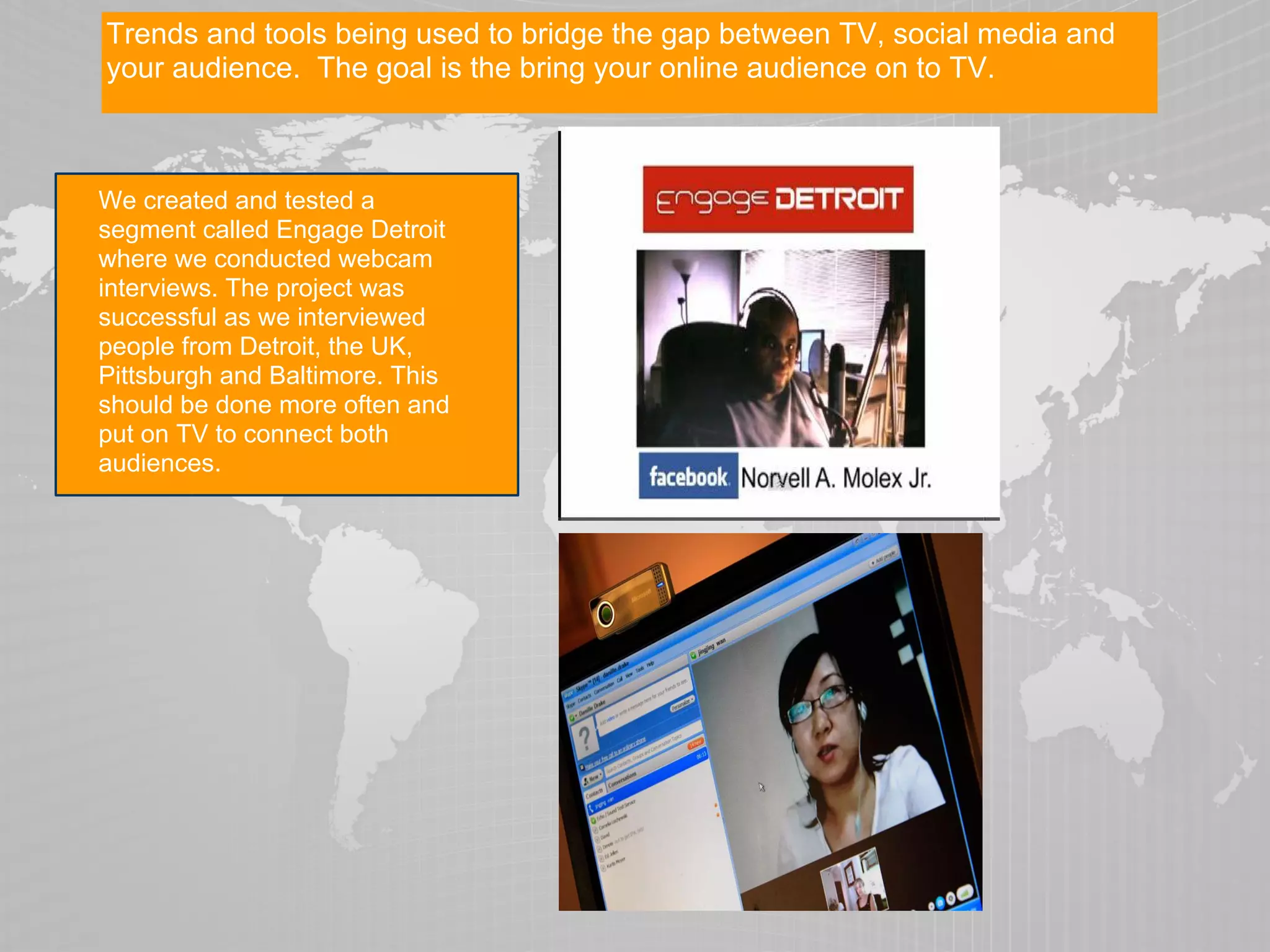
We created and tested a
segment called Engage Detroit
where we conducted webcam
interviews. The project was
successful as we interviewed
people from Detroit, the UK,
Pittsburgh and Baltimore. This
should be done more often and
put on TV to connect both
audiences.
Trends and tools being used to bridge the gap between TV, social media and
    your audience. The goal is the bring your online audience on to TV.


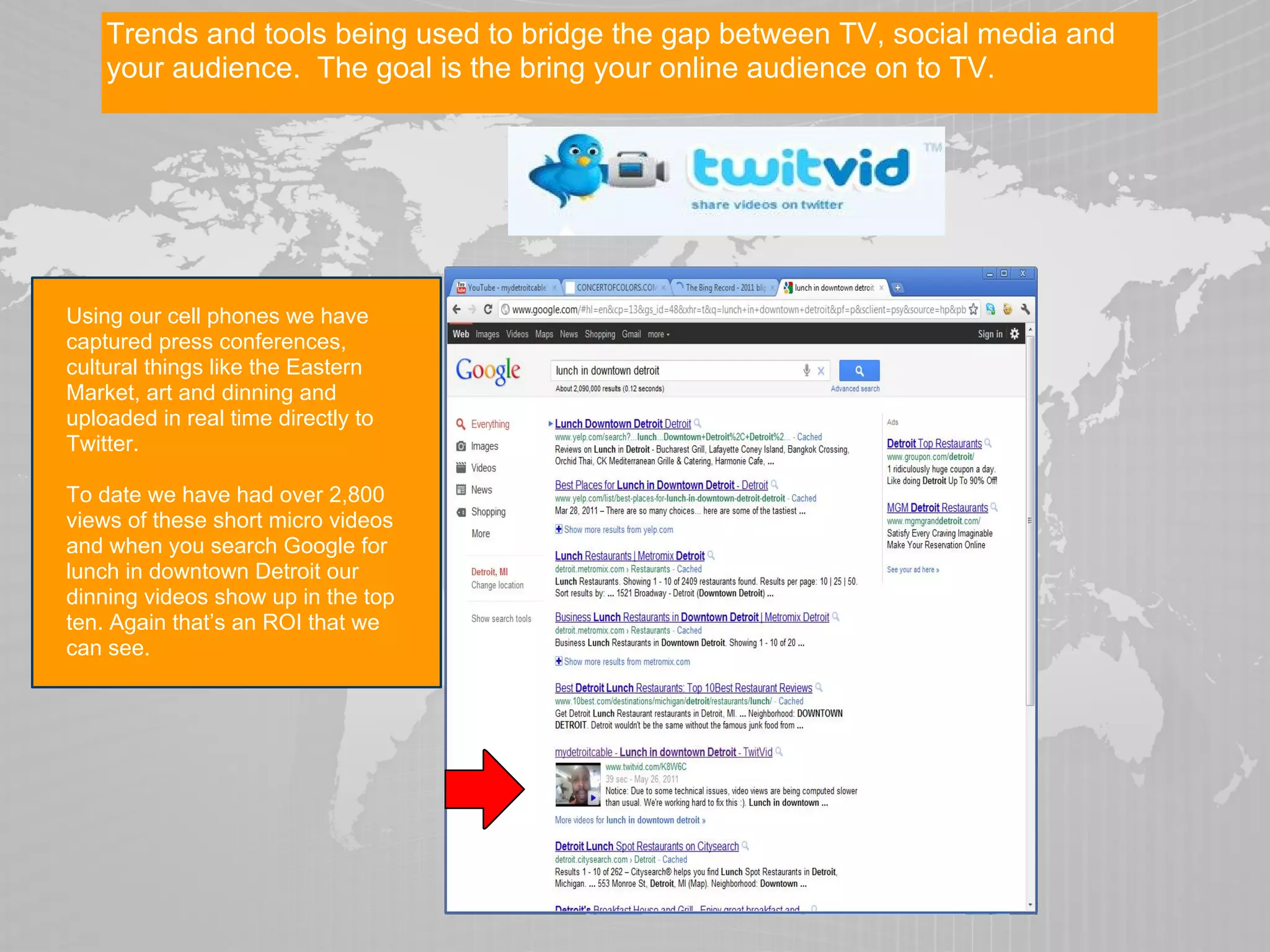
Using our cell phones we have
captured press conferences,
cultural things like the Eastern
Market, art and dinning and
uploaded in real time directly to
Twitter.

To date we have had over 2,800
views of these short micro videos
and when you search Google for
lunch in downtown Detroit our
dinning videos show up in the top
ten. Again that’s an ROI that we
can see.
Trends and tools being used to bridge the gap between TV, social media and
      your audience. The goal is the bring your online audience on to TV.


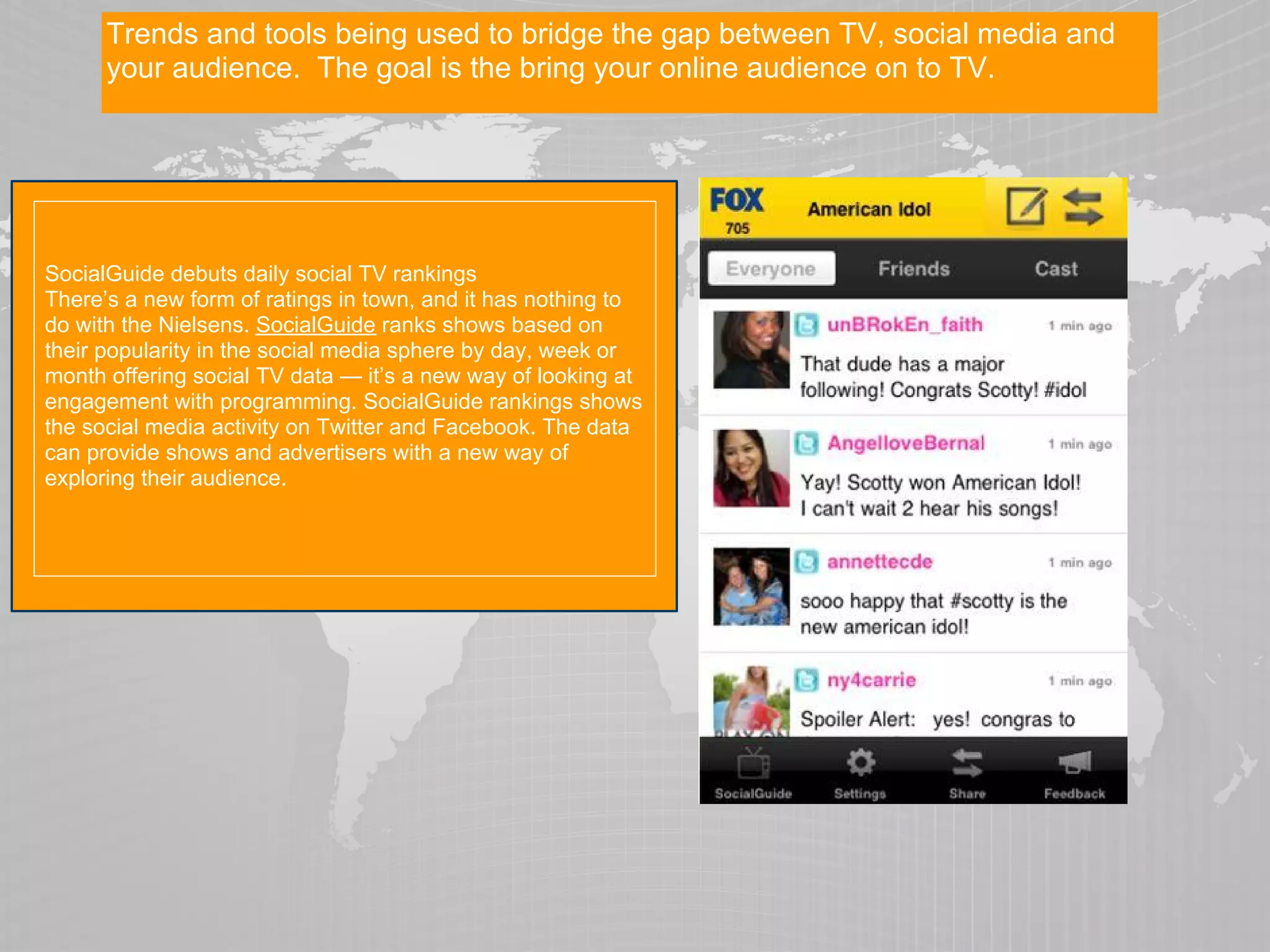
SocialGuide debuts daily social TV rankings
There’s a new form of ratings in town, and it has nothing to
do with the Nielsens. SocialGuide ranks shows based on
their popularity in the social media sphere by day, week or
month offering social TV data — it’s a new way of looking at
engagement with programming. SocialGuide rankings shows
the social media activity on Twitter and Facebook. The data
can provide shows and advertisers with a new way of
exploring their audience.
Getting On The Bus of Innovation


Although channel 10 has its place as a tool to communicate the city of Detroit’s message, it has a limited
reach in its current state but combined with the Internet as a social TV platform it can be a powerful tool
that can show and sale the world on Detroit.

The former CEO of Endemol, the world’s largest independent production house, says social TV is “going
to be huge.” The CEO of Hulu calls it a game-changer. And the research firm Future scape says social TV
has “radical implications for the future of television viewing.” Is it just hyperbole, or are real economics in
play? There are three arenas where social TV is quickly gaining traction, and all three have the potential
to become billion dollar businesses by themselves.
Creating Social TV

Creating Social TV

  • 1.
    The New Ageof Social TV, Are We there Yet?
  • 2.
    Channel 10 InThe Current State After seeking community feedback for over 7 months on what viewers like about channel 10 and what they would like to see we have not received a phone call or email= NO ROI
  • 3.
    When our contentis placed online we see a maximum return on investment. Over 80 thousand video's viewed. USA, Europe and Asia being the leading audience. Our video's are shared and placed on other websites. Our videos and images come up in Google search ranking. Online we have an ROI that we can see and analyze, Giving us the ability to better market to our audience.
  • 4.
    Today many largeand small channels are bridging the gap between their TV and online audience. Small stations can become giants online because the world now has access to their content. With social media web users can now interact with your television content in many different ways.
  • 5.
    Trends and toolsbeing used to bridge the gap between TV, social media and your audience. The goal is the put your online audience on TV. WDIV channel 4 does the FaceBook fan of the day, placing their FB fans on TV creating audience crossover.
  • 6.
    Trends and toolsbeing used to bridge the gap between TV, social media and your audience. The goal is the bring your online audience on to TV. We are capable of streaming mydetroitcable on our FB page. Lunch time would be great to stream the channel since people spend a lot of time online during that time.
  • 7.
    Trends and toolsbeing used to bridge the gap between TV, social media and your audience. The goal is the bring your online audience on to TV. TV interviews redefined; TV station KOMU is now using the Google Hangout feature on a daily basis. Why send a TV crew to interview someone when you can pop up a video call on Google Hangout. It looks and feel natural to the average viewer. Beyond the cost savings, the implications are amazing. Imagine redefining (person-on-the-street) interviews by conducting them through Facebook or Google+ instead of running down to the street corner.
  • 8.
    Trends and toolsbeing used to bridge the gap between TV, social media and your audience. The goal is the bring your online audience on to TV. We created and tested a segment called Engage Detroit where we conducted webcam interviews. The project was successful as we interviewed people from Detroit, the UK, Pittsburgh and Baltimore. This should be done more often and put on TV to connect both audiences.
  • 9.
    Trends and toolsbeing used to bridge the gap between TV, social media and your audience. The goal is the bring your online audience on to TV. Using our cell phones we have captured press conferences, cultural things like the Eastern Market, art and dinning and uploaded in real time directly to Twitter. To date we have had over 2,800 views of these short micro videos and when you search Google for lunch in downtown Detroit our dinning videos show up in the top ten. Again that’s an ROI that we can see.
  • 10.
    Trends and toolsbeing used to bridge the gap between TV, social media and your audience. The goal is the bring your online audience on to TV. SocialGuide debuts daily social TV rankings There’s a new form of ratings in town, and it has nothing to do with the Nielsens. SocialGuide ranks shows based on their popularity in the social media sphere by day, week or month offering social TV data — it’s a new way of looking at engagement with programming. SocialGuide rankings shows the social media activity on Twitter and Facebook. The data can provide shows and advertisers with a new way of exploring their audience.
  • 11.
    Getting On TheBus of Innovation Although channel 10 has its place as a tool to communicate the city of Detroit’s message, it has a limited reach in its current state but combined with the Internet as a social TV platform it can be a powerful tool that can show and sale the world on Detroit. The former CEO of Endemol, the world’s largest independent production house, says social TV is “going to be huge.” The CEO of Hulu calls it a game-changer. And the research firm Future scape says social TV has “radical implications for the future of television viewing.” Is it just hyperbole, or are real economics in play? There are three arenas where social TV is quickly gaining traction, and all three have the potential to become billion dollar businesses by themselves.