GROUP K MEMBERS
1. KYOMUKAMA LINDAH VU-HEB-2307-0459-DAY
2. NABIDDO SHAKIRA VU-HEB-2307-0452-DAY
3. KOBUSINGYE NATASHA PHIONA VU-HEB-2307-0510-DAY
4. NAMUGANYI MONICAH VU-HEB-2307-1046-DAY
5. MITPIW ROBERT NYIKANG VU-HEB-2307-0031-DAY
6. SANYU .M. SAM VU-HEB-2307-0281-DAY
7. KAMURA SHARON CHARLES VU-HEB-2307-0945-DAY
8. VICTORIA VIER TELAR VU-HEB-2307-0206-DAY
9. MANYANG MAKER BONA DENG VU-HEB-2307-0693-DAY
10. KIGUSU MUSINGO RASHID VU-HEB-2301-0902-DAY
11. NYATHENA GATJUNG DAK VU-HEB-2307-0712-DAY
SANITATION AND
HYGIENE
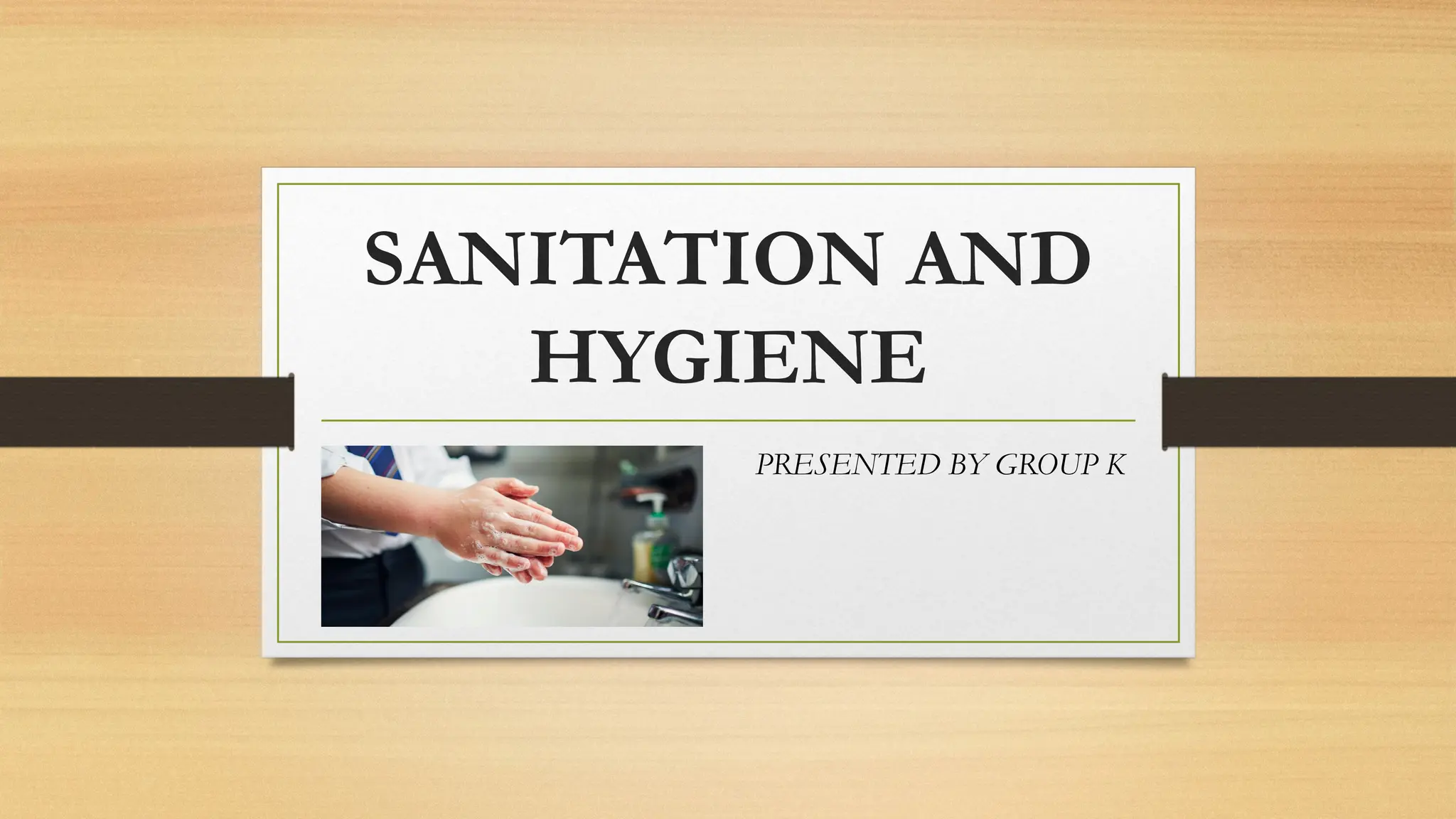
PRESENTED BY GROUP K
SANITATION
• ASPECTS OF SANITATION
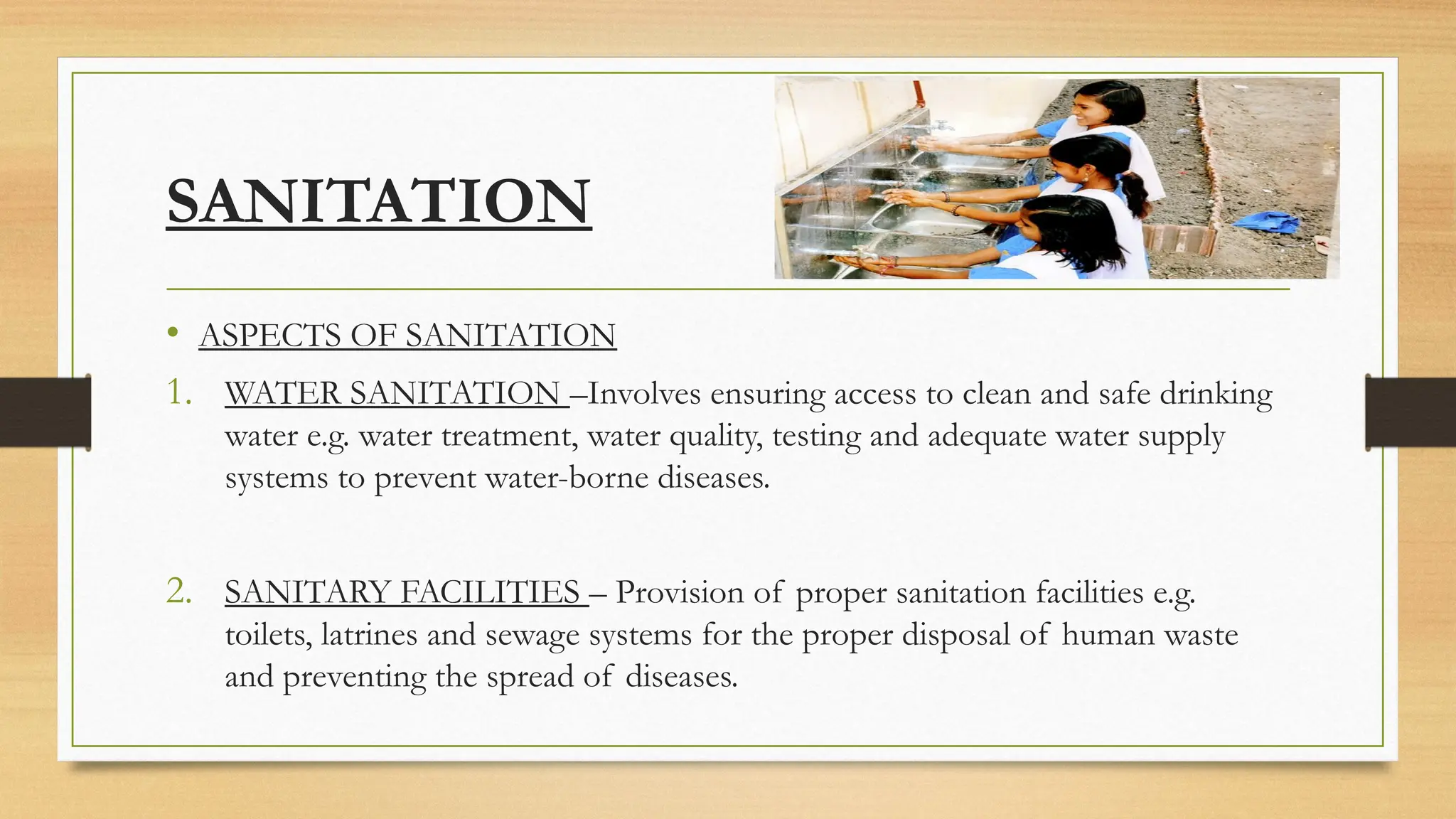
1. WATER SANITATION –Involves ensuring access to clean and safe drinking
water e.g. water treatment, water quality, testing and adequate water supply
systems to prevent water-borne diseases.
2. SANITARY FACILITIES – Provision of proper sanitation facilities e.g.
toilets, latrines and sewage systems for the proper disposal of human waste
and preventing the spread of diseases.
Cont...
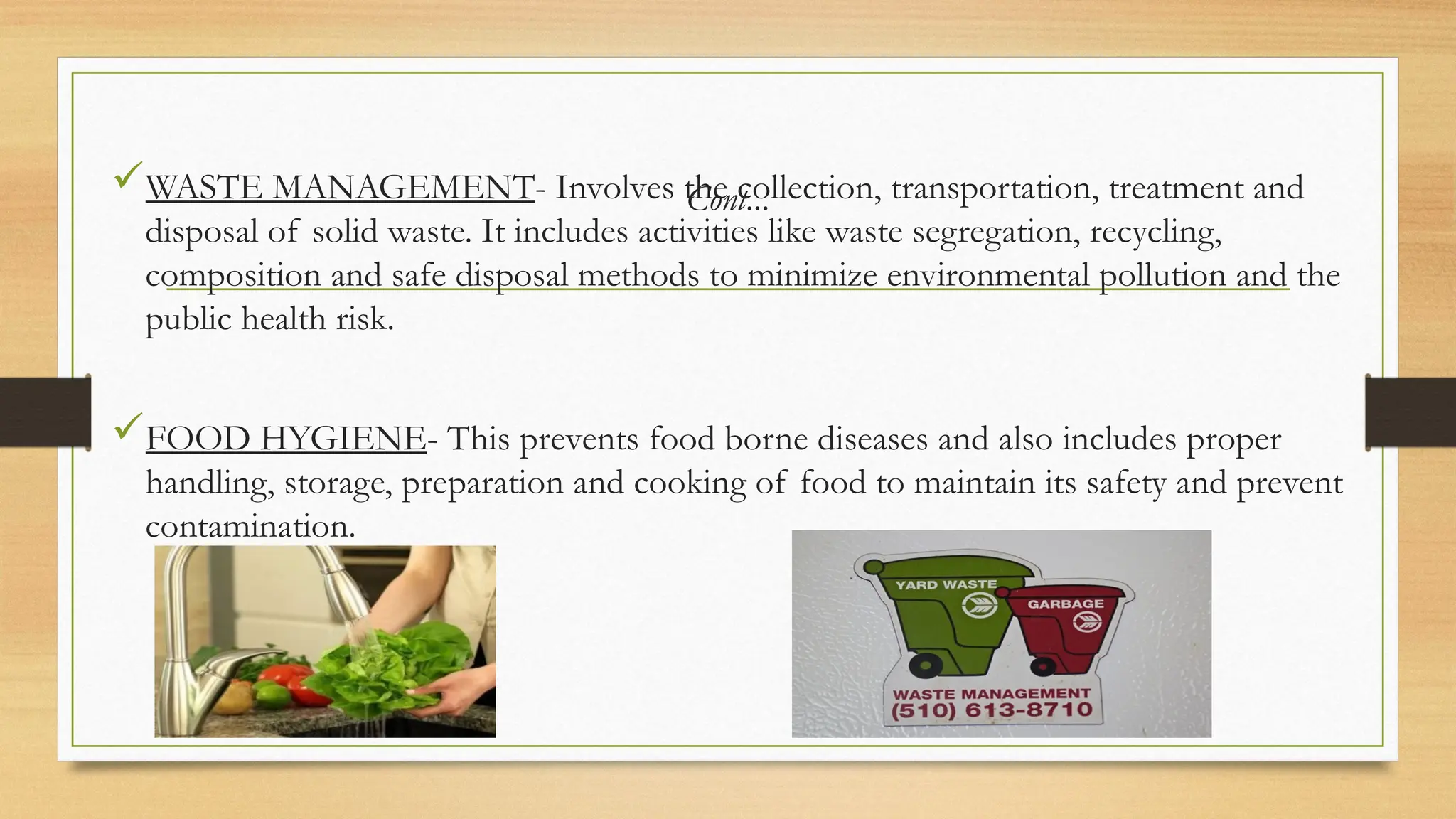
WASTE MANAGEMENT- Involves the collection, transportation, treatment and
disposal of solid waste. It includes activities like waste segregation, recycling,
composition and safe disposal methods to minimize environmental pollution and the
public health risk.
FOOD HYGIENE- This prevents food borne diseases and also includes proper
handling, storage, preparation and cooking of food to maintain its safety and prevent
contamination.
Cont.…..
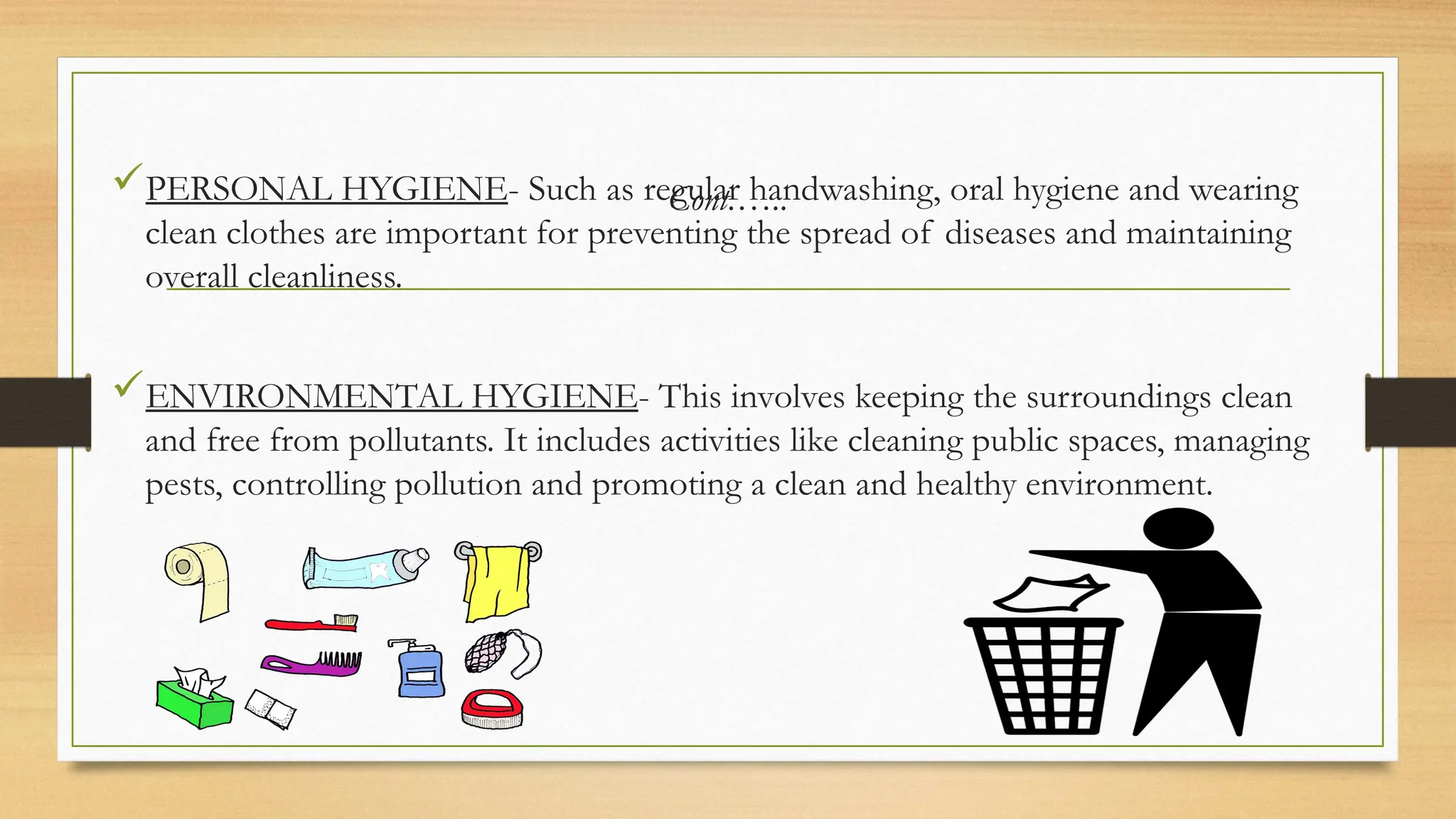
PERSONAL HYGIENE- Such as regular handwashing, oral hygiene and wearing
clean clothes are important for preventing the spread of diseases and maintaining
overall cleanliness.
ENVIRONMENTAL HYGIENE- This involves keeping the surroundings clean
and free from pollutants. It includes activities like cleaning public spaces, managing
pests, controlling pollution and promoting a clean and healthy environment.
Cont.…
 Sanitation plays a vital role in promoting public health, preventing the
spread of diseases and improving the quality of life for individuals and
communities. Its essential aspect of overall hygiene and well-being.
HYGIENE
• This refers to the practices and conditions that promote cleanliness, health and well-being.
• Hygiene involves maintaining personal cleanliness, practicing good habits and creating a clean and
safe environment.
Hygiene consists of various aspects as stated below;-
 Personal hygiene
 Environmental hygiene
 Food hygiene
Cont.…
Common examples of good hygiene practices;-
 Regular handwashing
 Taking showers or baths with soap
 Brushing teeth regularly
 Wearing of clean clothes
 Keeping living spaces clean
 Handling food safely
Good hygiene habits are essential for preventing the spread of diseases, promoting overall health and
maintaining a clean and pleasant living environment.

COURSEWORK HEALTH SCIENCES (1) on Hygiene

  • 1.
    GROUP K MEMBERS 1.KYOMUKAMA LINDAH VU-HEB-2307-0459-DAY 2. NABIDDO SHAKIRA VU-HEB-2307-0452-DAY 3. KOBUSINGYE NATASHA PHIONA VU-HEB-2307-0510-DAY 4. NAMUGANYI MONICAH VU-HEB-2307-1046-DAY 5. MITPIW ROBERT NYIKANG VU-HEB-2307-0031-DAY 6. SANYU .M. SAM VU-HEB-2307-0281-DAY 7. KAMURA SHARON CHARLES VU-HEB-2307-0945-DAY 8. VICTORIA VIER TELAR VU-HEB-2307-0206-DAY 9. MANYANG MAKER BONA DENG VU-HEB-2307-0693-DAY 10. KIGUSU MUSINGO RASHID VU-HEB-2301-0902-DAY 11. NYATHENA GATJUNG DAK VU-HEB-2307-0712-DAY
  • 2.
  • 3.
    SANITATION • ASPECTS OFSANITATION 1. WATER SANITATION –Involves ensuring access to clean and safe drinking water e.g. water treatment, water quality, testing and adequate water supply systems to prevent water-borne diseases. 2. SANITARY FACILITIES – Provision of proper sanitation facilities e.g. toilets, latrines and sewage systems for the proper disposal of human waste and preventing the spread of diseases.
  • 4.
    Cont... WASTE MANAGEMENT- Involvesthe collection, transportation, treatment and disposal of solid waste. It includes activities like waste segregation, recycling, composition and safe disposal methods to minimize environmental pollution and the public health risk. FOOD HYGIENE- This prevents food borne diseases and also includes proper handling, storage, preparation and cooking of food to maintain its safety and prevent contamination.
  • 5.
    Cont.….. PERSONAL HYGIENE- Suchas regular handwashing, oral hygiene and wearing clean clothes are important for preventing the spread of diseases and maintaining overall cleanliness. ENVIRONMENTAL HYGIENE- This involves keeping the surroundings clean and free from pollutants. It includes activities like cleaning public spaces, managing pests, controlling pollution and promoting a clean and healthy environment.
  • 6.
    Cont.…  Sanitation playsa vital role in promoting public health, preventing the spread of diseases and improving the quality of life for individuals and communities. Its essential aspect of overall hygiene and well-being.
  • 7.
    HYGIENE • This refersto the practices and conditions that promote cleanliness, health and well-being. • Hygiene involves maintaining personal cleanliness, practicing good habits and creating a clean and safe environment. Hygiene consists of various aspects as stated below;-  Personal hygiene  Environmental hygiene  Food hygiene
  • 8.
    Cont.… Common examples ofgood hygiene practices;-  Regular handwashing  Taking showers or baths with soap  Brushing teeth regularly  Wearing of clean clothes  Keeping living spaces clean  Handling food safely Good hygiene habits are essential for preventing the spread of diseases, promoting overall health and maintaining a clean and pleasant living environment.