PARA EMPEZAR
http://www.youtube.com/watch?v=KlGYyeUl2K0
LA LENGUA
•   Spanish is the official language
•   English spoken very well in many of the heavy tourist areas
•   Indigenous languages: Bribri, Maleku, Guaymí, Cabécar and Boruca
Useful Phrases and Terms:
o Tico: Costa Rican
  Pura vida: Everything is good, great, can be used as thank you and as
  fine, Pura Vida is a philosophy of life and shows the happiness and
  good attitude of Costa Ricans.
  Mae: body, friend, dude, guy
  Soda: small place to eat usually serving Costa Rican meals in a very
  basic establishment.
  ¡Upe! Knock, Knock Is anybody home? (very common in rural areas)
  Jale: Let’s go
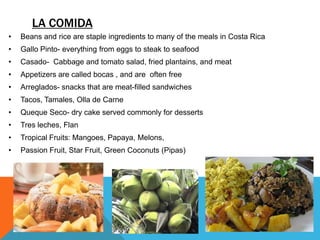
LA COMIDA
•   Beans and rice are staple ingredients to many of the meals in Costa Rica
•   Gallo Pinto- everything from eggs to steak to seafood
•   Casado- Cabbage and tomato salad, fried plantains, and meat
•   Appetizers are called bocas , and are often free
•   Arreglados- snacks that are meat-filled sandwiches
•   Tacos, Tamales, Olla de Carne
•   Queque Seco- dry cake served commonly for desserts
•   Tres leches, Flan
•   Tropical Fruits: Mangoes, Papaya, Melons,
•   Passion Fruit, Star Fruit, Green Coconuts (Pipas)
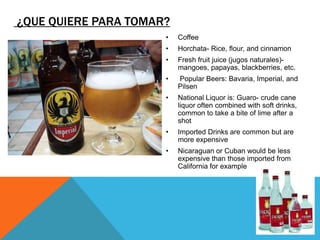
¿QUE QUIERE PARA TOMAR?
                      •   Coffee
                      •   Horchata- Rice, flour, and cinnamon
                      •   Fresh fruit juice (jugos naturales)-
                          mangoes, papayas, blackberries, etc.
                      •   Popular Beers: Bavaria, Imperial, and
                          Pilsen
                      •   National Liquor is: Guaro- crude cane
                          liquor often combined with soft drinks,
                          common to take a bite of lime after a
                          shot
                      •   Imported Drinks are common but are
                          more expensive
                      •   Nicaraguan or Cuban would be less
                          expensive than those imported from
                          California for example
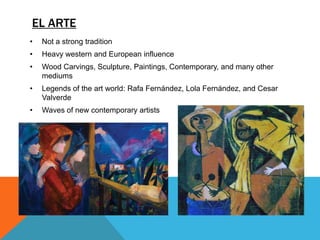
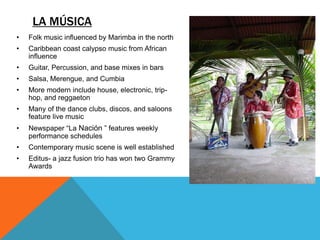
EL ARTE
•   Not a strong tradition
•   Heavy western and European influence
•   Wood Carvings, Sculpture, Paintings, Contemporary, and many other
    mediums
•   Legends of the art world: Rafa Fernández, Lola Fernández, and Cesar
    Valverde
•   Waves of new contemporary artists
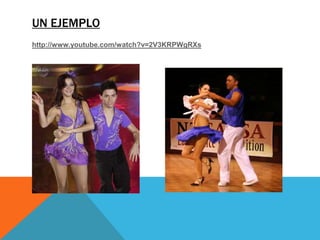
LA MÚSICA
•   Folk music influenced by Marimba in the north
•   Caribbean coast calypso music from African
    influence
•   Guitar, Percussion, and base mixes in bars
•   Salsa, Merengue, and Cumbia
•   More modern include house, electronic, trip-
    hop, and reggaeton
•   Many of the dance clubs, discos, and saloons
    feature live music
•   Newspaper “La Nación ” features weekly
    performance schedules
•   Contemporary music scene is well established
•   Editus- a jazz fusion trio has won two Grammy
    Awards
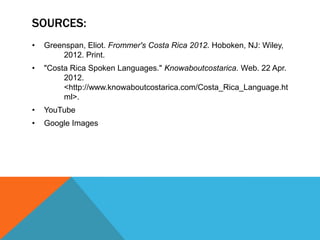
UN EJEMPLO
http://www.youtube.com/watch?v=2V3KRPWgRXs
SOURCES:
•   Greenspan, Eliot. Frommer's Costa Rica 2012. Hoboken, NJ: Wiley,
         2012. Print.
•   "Costa Rica Spoken Languages." Knowaboutcostarica. Web. 22 Apr.
         2012.
         <http://www.knowaboutcostarica.com/Costa_Rica_Language.ht
         ml>.
•   YouTube
•   Google Images
¿Más Preguntas?

Costa rica presentation

  • 2.
  • 3.
    LA LENGUA • Spanish is the official language • English spoken very well in many of the heavy tourist areas • Indigenous languages: Bribri, Maleku, Guaymí, Cabécar and Boruca Useful Phrases and Terms: o Tico: Costa Rican Pura vida: Everything is good, great, can be used as thank you and as fine, Pura Vida is a philosophy of life and shows the happiness and good attitude of Costa Ricans. Mae: body, friend, dude, guy Soda: small place to eat usually serving Costa Rican meals in a very basic establishment. ¡Upe! Knock, Knock Is anybody home? (very common in rural areas) Jale: Let’s go
  • 4.
    LA COMIDA • Beans and rice are staple ingredients to many of the meals in Costa Rica • Gallo Pinto- everything from eggs to steak to seafood • Casado- Cabbage and tomato salad, fried plantains, and meat • Appetizers are called bocas , and are often free • Arreglados- snacks that are meat-filled sandwiches • Tacos, Tamales, Olla de Carne • Queque Seco- dry cake served commonly for desserts • Tres leches, Flan • Tropical Fruits: Mangoes, Papaya, Melons, • Passion Fruit, Star Fruit, Green Coconuts (Pipas)
  • 5.
    ¿QUE QUIERE PARATOMAR? • Coffee • Horchata- Rice, flour, and cinnamon • Fresh fruit juice (jugos naturales)- mangoes, papayas, blackberries, etc. • Popular Beers: Bavaria, Imperial, and Pilsen • National Liquor is: Guaro- crude cane liquor often combined with soft drinks, common to take a bite of lime after a shot • Imported Drinks are common but are more expensive • Nicaraguan or Cuban would be less expensive than those imported from California for example
  • 6.
    EL ARTE • Not a strong tradition • Heavy western and European influence • Wood Carvings, Sculpture, Paintings, Contemporary, and many other mediums • Legends of the art world: Rafa Fernández, Lola Fernández, and Cesar Valverde • Waves of new contemporary artists
  • 7.
    LA MÚSICA • Folk music influenced by Marimba in the north • Caribbean coast calypso music from African influence • Guitar, Percussion, and base mixes in bars • Salsa, Merengue, and Cumbia • More modern include house, electronic, trip- hop, and reggaeton • Many of the dance clubs, discos, and saloons feature live music • Newspaper “La Nación ” features weekly performance schedules • Contemporary music scene is well established • Editus- a jazz fusion trio has won two Grammy Awards
  • 8.
  • 9.
    SOURCES: • Greenspan, Eliot. Frommer's Costa Rica 2012. Hoboken, NJ: Wiley, 2012. Print. • "Costa Rica Spoken Languages." Knowaboutcostarica. Web. 22 Apr. 2012. <http://www.knowaboutcostarica.com/Costa_Rica_Language.ht ml>. • YouTube • Google Images
  • 10.