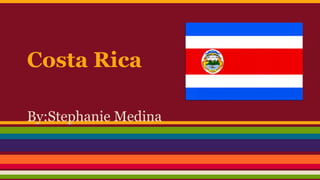
Costa Rica
By:Stephanie Medina
:
:
Major Landforms
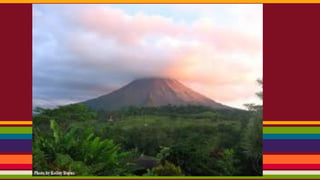
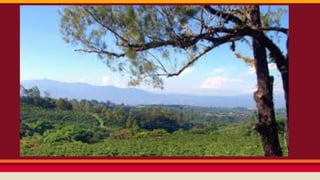
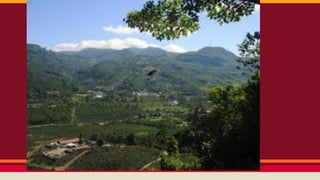
Most of Costa Rica is dominated by mountains especially the “Sierra
Madre.” Costa Rica has an active volcano named “Arenal.” Costa Rica
also has many rivers crossing through, heavily forested plains, and
valleys.
Climate
It is tropical year round
has many microclimates depending on elevation, rainfall, and by the
geography of each particular region.
Costa Rica's seasons are defined by how much rain falls during a
particular period.
The dry seasons are known as “summer” and rainy seasons are known
as “winter” for the residents in Costa Rica.
Brief History
Costa rica meaning “rich coast” was inhabited by indigenous people
before the spanish rule in the 16th century. Became independent in the
18th century. Costa Rica has become one of the most stable, prosperous,
and progressive nations in Latin America. Abolished its army in 1949.
Costa Rica never fought for independence from Spain, but on September
15, 1821, after the final Spanish defeat in the Mexican war of
independence, the authorities in Guatemala declared the independence of
all of Central America.
Language Spoken
Spanish the second language spoken is English
Capital
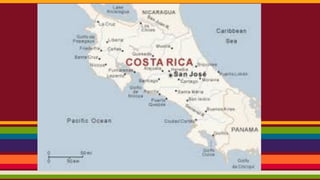
San Jose
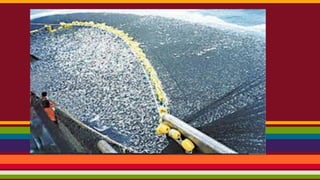
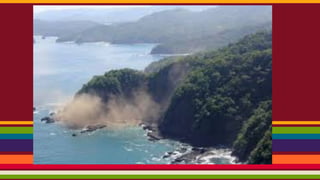
Challenges by nature
Across Costa Rica there are problems like overfishing, unregulated
tourism, development, colonization, logging and clearing of land for
subsistence farms are contributing to loss of forests, and water pollution.
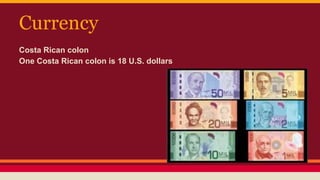
Currency
Costa Rican colon
One Costa Rican colon is 18 U.S. dollars
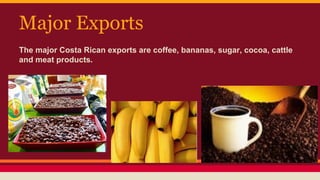
Major Exports
The major Costa Rican exports are coffee, bananas, sugar, cocoa, cattle
and meat products.

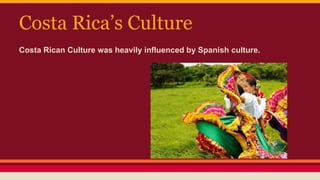
Costa Rica’s Culture
Costa Rican Culture was heavily influenced by Spanish culture.
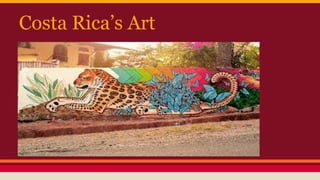
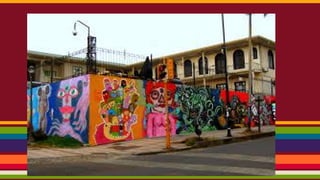
Costa Rica’s Art
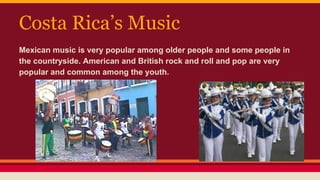
Costa Rica’s Music
Mexican music is very popular among older people and some people in
the countryside. American and British rock and roll and pop are very
popular and common among the youth.
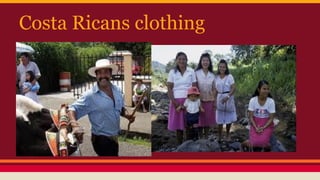
Costa Ricans clothing
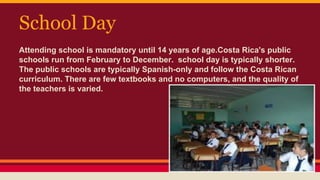
School Day
Attending school is mandatory until 14 years of age.Costa Rica's public
schools run from February to December. school day is typically shorter.
The public schools are typically Spanish-only and follow the Costa Rican
curriculum. There are few textbooks and no computers, and the quality of
the teachers is varied.
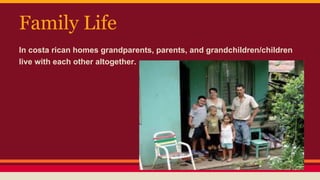
Family Life
In costa rican homes grandparents, parents, and grandchildren/children
live with each other altogether.
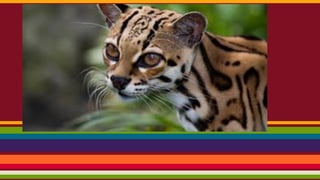
Animals
Food
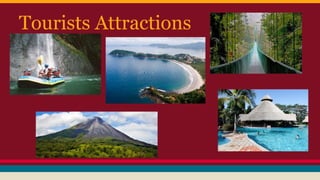
Tourists Attractions

Costa rica

  • 1.
  • 3.
    : : Major Landforms Most ofCosta Rica is dominated by mountains especially the “Sierra Madre.” Costa Rica has an active volcano named “Arenal.” Costa Rica also has many rivers crossing through, heavily forested plains, and valleys.
  • 7.
    Climate It is tropicalyear round has many microclimates depending on elevation, rainfall, and by the geography of each particular region. Costa Rica's seasons are defined by how much rain falls during a particular period. The dry seasons are known as “summer” and rainy seasons are known as “winter” for the residents in Costa Rica.
  • 10.
    Brief History Costa ricameaning “rich coast” was inhabited by indigenous people before the spanish rule in the 16th century. Became independent in the 18th century. Costa Rica has become one of the most stable, prosperous, and progressive nations in Latin America. Abolished its army in 1949. Costa Rica never fought for independence from Spain, but on September 15, 1821, after the final Spanish defeat in the Mexican war of independence, the authorities in Guatemala declared the independence of all of Central America.
  • 11.
    Language Spoken Spanish thesecond language spoken is English
  • 12.
  • 13.
    Challenges by nature AcrossCosta Rica there are problems like overfishing, unregulated tourism, development, colonization, logging and clearing of land for subsistence farms are contributing to loss of forests, and water pollution.
  • 16.
    Currency Costa Rican colon OneCosta Rican colon is 18 U.S. dollars
  • 17.
    Major Exports The majorCosta Rican exports are coffee, bananas, sugar, cocoa, cattle and meat products.
  • 18.
    Costa Rica’s Culture CostaRican Culture was heavily influenced by Spanish culture.
  • 19.
  • 22.
    Costa Rica’s Music Mexicanmusic is very popular among older people and some people in the countryside. American and British rock and roll and pop are very popular and common among the youth.
  • 23.
  • 24.
    School Day Attending schoolis mandatory until 14 years of age.Costa Rica's public schools run from February to December. school day is typically shorter. The public schools are typically Spanish-only and follow the Costa Rican curriculum. There are few textbooks and no computers, and the quality of the teachers is varied.
  • 25.
    Family Life In costarican homes grandparents, parents, and grandchildren/children live with each other altogether.
  • 26.
  • 32.
  • 33.