SPAINPRESENTED BY: DEAN MOSES
SHELDON PEREIRA
BALA PADHI
SENNEN TIXERIA
KEITH MACHADO
SWAPNIL PATIL
ROSHAN MOOLYA
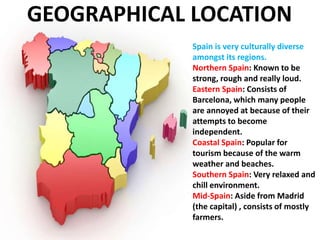
GEOGRAPHICAL LOCATION
Spain is very culturally diverse
amongst its regions.
Northern Spain: Known to be
strong, rough and really loud.
Eastern Spain: Consists of
Barcelona, which many people
are annoyed at because of their
attempts to become
independent.
Coastal Spain: Popular for
tourism because of the warm
weather and beaches.
Southern Spain: Very relaxed and
chill environment.
Mid-Spain: Aside from Madrid
(the capital) , consists of mostly
farmers.
HISTORICAL BACKGROUND
• Many different groups of people have settled
in Spain throughout history
• The oldest known cave painting is found in the
Cave of El Castillo in northern Spain.
• The official name of Spain is the Kingdom of
Spain
• The Moors occupied Spain for 800 years
• 4,000 Arabic words and Arabic-derived phrases
have been absorbed into the Spanish
language..
• The Moors were also advanced in medicine,
science, and astronomy.
STAPLE FOOD & SPECIALITIES
• Mediterranean Spain – all such coastal
regions, from Catalonia to Andalusia: heavy
use of seafood
• Inner Spain – Castile – Food is traditionally
conserved by salting, like Spanish ham, or
immersed in olive oil, like Manchego cheese
here
• Atlantic Spain – the whole Northern coast,
• The best known cuisine of the northern
countries often rely on ocean seafood
SPANISH SPECIALITY DISHES
SALMOREJO PAELLA
OCTOPUS GALICIA
CHURROS
TORTILLA ESPANOLA
SANGRIA
TOURIST DESTINATIONS
 Spain is a surprise to those who have the
image of having to fight for towel space at
one of its crowded beaches or sipping
sangria while watching a bull fight or
flamenco.
 From the ancient monuments left by the
Romans and Moors, the medieval castles
of the interior, the white villages in inland
Andalucía or the vibrant cities of Barcelona
and Madrid
 The evergreen estuaries of Galicia could
hardly be more different from the deserts
of Almería or the rugged mountains of the
Sierra Nevada.
 countless glittering beaches that dot the
Spanish coast.
ALHAMBRA
MEZQUITA OF CORDOBA
EL ESCORIAL
TOP TOURIST DESTINATIONS
SAGRADA FAMILIA
IBIZA SANTANDER
PACHA
SPANISH FAMOUS SPORTS
• SPORT IN SPAIN IN THE SECOND
HALF OF 20TH CENTURY HAS
ALWAYS BEEN DOMINATED BY
FOOTBALL.
• OTHER POPULAR SPORT ACTIVITIES
INCLUDE BASKETBALL, TENNIS,
CYCLING,FORMULA ONE, WATER
SPORTS.
SOME OF THE FAMOUS SPORTS
FOOTBALL
REGIONAL ATTIRE
Flamenco dressesAndalucia
FESTIVALS IN SPAIN
THREE KINGS DAY
ELS ENFARINATS, IBI IN ALICANTE
NADAL (CHRISTMAS), BARCELONA
FIESTA DE LA MERCÉ, BARCELONA
FESTA MAJOR DE GRÀCIA,
CATALONIA
HARO WINE FESTIVAL
RUNNING OF THE BULLS (FIESTA DE
SAN FERMÍN), PAMPLONA
EURO
CURENCY USED IN SPAIN
EQUIPMENTS & RAW INGREDIENTS
PREPARING SPANISH FOOD DOES NOT NEED SPECIAL KITCHEN TOOLS.
IT REQUIRES A BASIC, WELL-EQUIPPED KITCHEN. THE FOLLOWING ARE
ESSENTIAL ITEMS FOR COOKING IN A SPANISH KITCHEN.
CERAMIC OR CLAY POTS - THESE TRADITIONAL DISHES ARE A NICE
ADDITION TO THE KITCHEN TOOLS
COLANDER - A METAL OR PLASTIC COLANDER, LARGE ENOUGH TO
DRAIN A POUND PACKAGE OF PASTA OR A COUPLE DOZEN CLAMS
AFTER SCRUBBING.
CUTTING BOARDS - SOLID WOODEN OR PLASTIC CUTTING BOARDS,
USED FOR VARIOUS TASKS.
PAELLA PAN - FOR COOKING PAELLA
RAMEKINS - FOR FLAN, SPANISH CUSTARD WITH CARAMEL
SAUCEMORTAR AND PESTLE - FOR CRUSHING GARLIC AND MAKING
PASTES.
RAW INGREDIENTS
• Olive oil
• Ham
• Fish and Seafood
• Cheeses
• Sausages
• Beef, Lamb and Pork
• Eggs
• Chicken
• Fruits and Vegetables
• Legumes
• Nuts
• Herbs and Spices
PAELLA RICE

Spain

  • 1.
    SPAINPRESENTED BY: DEANMOSES SHELDON PEREIRA BALA PADHI SENNEN TIXERIA KEITH MACHADO SWAPNIL PATIL ROSHAN MOOLYA
  • 2.
    GEOGRAPHICAL LOCATION Spain isvery culturally diverse amongst its regions. Northern Spain: Known to be strong, rough and really loud. Eastern Spain: Consists of Barcelona, which many people are annoyed at because of their attempts to become independent. Coastal Spain: Popular for tourism because of the warm weather and beaches. Southern Spain: Very relaxed and chill environment. Mid-Spain: Aside from Madrid (the capital) , consists of mostly farmers.
  • 3.
    HISTORICAL BACKGROUND • Manydifferent groups of people have settled in Spain throughout history • The oldest known cave painting is found in the Cave of El Castillo in northern Spain. • The official name of Spain is the Kingdom of Spain • The Moors occupied Spain for 800 years • 4,000 Arabic words and Arabic-derived phrases have been absorbed into the Spanish language.. • The Moors were also advanced in medicine, science, and astronomy.
  • 4.
    STAPLE FOOD &SPECIALITIES • Mediterranean Spain – all such coastal regions, from Catalonia to Andalusia: heavy use of seafood • Inner Spain – Castile – Food is traditionally conserved by salting, like Spanish ham, or immersed in olive oil, like Manchego cheese here • Atlantic Spain – the whole Northern coast, • The best known cuisine of the northern countries often rely on ocean seafood
  • 5.
    SPANISH SPECIALITY DISHES SALMOREJOPAELLA OCTOPUS GALICIA CHURROS TORTILLA ESPANOLA SANGRIA
  • 6.
    TOURIST DESTINATIONS  Spainis a surprise to those who have the image of having to fight for towel space at one of its crowded beaches or sipping sangria while watching a bull fight or flamenco.  From the ancient monuments left by the Romans and Moors, the medieval castles of the interior, the white villages in inland Andalucía or the vibrant cities of Barcelona and Madrid  The evergreen estuaries of Galicia could hardly be more different from the deserts of Almería or the rugged mountains of the Sierra Nevada.  countless glittering beaches that dot the Spanish coast.
  • 7.
    ALHAMBRA MEZQUITA OF CORDOBA ELESCORIAL TOP TOURIST DESTINATIONS SAGRADA FAMILIA IBIZA SANTANDER PACHA
  • 8.
    SPANISH FAMOUS SPORTS •SPORT IN SPAIN IN THE SECOND HALF OF 20TH CENTURY HAS ALWAYS BEEN DOMINATED BY FOOTBALL. • OTHER POPULAR SPORT ACTIVITIES INCLUDE BASKETBALL, TENNIS, CYCLING,FORMULA ONE, WATER SPORTS.
  • 9.
    SOME OF THEFAMOUS SPORTS FOOTBALL
  • 12.
  • 13.
    FESTIVALS IN SPAIN THREEKINGS DAY ELS ENFARINATS, IBI IN ALICANTE NADAL (CHRISTMAS), BARCELONA FIESTA DE LA MERCÉ, BARCELONA FESTA MAJOR DE GRÀCIA, CATALONIA HARO WINE FESTIVAL RUNNING OF THE BULLS (FIESTA DE SAN FERMÍN), PAMPLONA
  • 14.
  • 15.
    EQUIPMENTS & RAWINGREDIENTS PREPARING SPANISH FOOD DOES NOT NEED SPECIAL KITCHEN TOOLS. IT REQUIRES A BASIC, WELL-EQUIPPED KITCHEN. THE FOLLOWING ARE ESSENTIAL ITEMS FOR COOKING IN A SPANISH KITCHEN. CERAMIC OR CLAY POTS - THESE TRADITIONAL DISHES ARE A NICE ADDITION TO THE KITCHEN TOOLS COLANDER - A METAL OR PLASTIC COLANDER, LARGE ENOUGH TO DRAIN A POUND PACKAGE OF PASTA OR A COUPLE DOZEN CLAMS AFTER SCRUBBING. CUTTING BOARDS - SOLID WOODEN OR PLASTIC CUTTING BOARDS, USED FOR VARIOUS TASKS. PAELLA PAN - FOR COOKING PAELLA RAMEKINS - FOR FLAN, SPANISH CUSTARD WITH CARAMEL SAUCEMORTAR AND PESTLE - FOR CRUSHING GARLIC AND MAKING PASTES.
  • 16.
    RAW INGREDIENTS • Oliveoil • Ham • Fish and Seafood • Cheeses • Sausages • Beef, Lamb and Pork • Eggs • Chicken • Fruits and Vegetables • Legumes • Nuts • Herbs and Spices PAELLA RICE