Dr. Chit Soe
Associate Professor
Consultant Physician & Rheumatologist
Use of Steroid in Rheumatology
2Rheumato C Soe
Long Term Steroid
 The millennium brings with it the 50th
anniversary of Hench’s discovery that
corticosteroids might be used to treat
rheumatoid arthritis.
 Attitudes towards such use have waxed and
waned since then.
 Initial hope that steroids might dramatically
alter the long term course of the disorder gave
way to a recognition of serious adverse effects,
that accompany high dose treatment.
 The use of low dose corticosteroids in arthritis
remains highly controversial.
3Rheumato C Soe
 A recent survey in general practice
found that 1.4% of patients aged over
54 were using corticosteroids at a
mean dose of 8mg daily
 Although rheumatologists claim to use
less the audit had found use (as great
as 80%).
4Rheumato C Soe
Reasons
 in an attempt to modify the progression
of structural disease.
 “bridge” to suppress inflammation while
other disease modifying drugs take effect
or
 to combat acute flares of the disease
5Rheumato C Soe
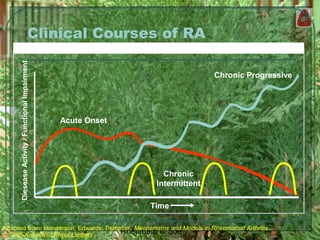
Clinical Courses of RA
Adapted from: Henderson, Edwards, Pettipher. Mechanisms and Models in Rheumatoid Arthritis.
© 1995 Academic Press Limited.
Chronic Progressive
Chronic
Intermittent
Acute Onset
Time
DieseaseActivity/FunctionalImpairment
6Rheumato C Soe
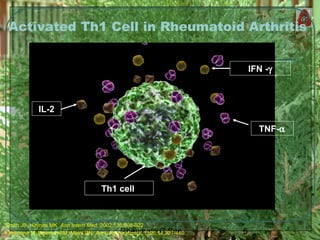
Th1 cell
IFN -γ
TNF-α
IL-2
Activated Th1 Cell in Rheumatoid Arthritis
Smith JB, Haynes MK. Ann Intern Med. 2002;136:908-922
Feldmann M, Brennan FM, Maini RN. Annu Rev Immunol. 1996;14:397-440.
7Rheumato C Soe
Regulation of Gene
Expression by
Glucocorticoids
 Following ligand binding, HSP90 and several
other of the associated proteins dissociate,
and the GR is directed into the nucleus where
it can interact with specific DNA sequences
within the regulatory regions of affected genes.
 These short DNA sequences that are
recognized by the activated glucocorticoid
receptor are termed glucocorticoid-responsive
elements (GREs)
 and provide specificity to the induction of gene
transcription by glucocorticoids.
 The currently acknowledged consensus GRE
DNA sequence is GGTACAnnnTGTTCT,
8Rheumato C Soe
Improve symptom
 A Dutch trial comparing prednisolone 10 mg
daily with placebo as an adjunct to
intramuscular gold reported clinical
improvement in both groups over 12 weeks;
 this was greatest among those trearted with
prednisolone.
 The Arthritis and Rheumatism Council trial
randomised 128 patients to prednisolone 7.5
mg daily or placebo in additon to non-steroidal
and disease modifying agents.
 Symptomatic benefit was maintained for only
6-9 months of the two year follow up.
9Rheumato C Soe
Meta-analysis
 A meta-analysis of the effectiveness of low
dose corticosteroidsa in rheumatoid arthritis
based on 9 of 34 studies identified in a
rigorous search strategy
 compared the effectiveness of prednisolone to
either placebo or active drug controls (aspirin,
chloroquine, or deflazacort).
 Although corticosteroids tended to be better at
reducing the number of tender or swollen joints
and the number of erythrocyte sedimentation
rate, these differences were not significant.
10Rheumato C Soe
Retard Erosion!!
 Whether corticosteroids attenuate the
progression of erosive damage is also
unresolved.
 In the Arthritis and Rheumatism Council
study showed prednisolone had a
pronounced and significant (p<0.004)
effect on the development of hand
erosions in patients with rheumatoid
arthritis of less than two year’s duration.
11Rheumato C Soe
 Gotzsche and Johansen report a further
meta-analysis comparing prednisolone at
a dose of 2.5-15 mg daily with palacebo
or non-steroidal anti-inflammatory drugs
 They show that at these dose
prednisolone is much more effective than
non-steroidal drugs at improving joint
tenderness, pain, and grip strength.
12Rheumato C Soe
Concern
 To the practising rheumatologist the great
disincentive to using short term low dose
prednisolone is not concern about lack of
anti-aiflammatory effect
 but the worry that stepping treatment down
may be difficult, with the consequence
 that the patient is exposed to the risk of
adverse effects.
CPT
Corticosteroid Pulse Therapy
14Rheumato C Soe
Corticosteroid Pusle Therapy in Active Rheumatiod
Arthritis
By Bas L.A.M. Weusten, Johannes W.G.Jacobs, and
Johnnes W.J.Bijisma
 In an attempt to reduce the frequent and
potentially servere side effects of long-term
oral steroid therahy, the intermittent
intravenous administration of high doses of
corticosteroids (corticosteroid pulse therapy,
CPT) was introduced.
 CPT was reported to be effective against
renal allograft rejection.
15Rheumato C Soe
 Later reports showed that patients with
idiopathic glomerulomephritis and
glomerulonephritis associated with
systemic lupus erythematous respond
well to this from of treatment.
In the course of the past
decade,CPT also has been used to
treat rheumatoid arthritis (RA).
16Rheumato C Soe
Different Regimens
(For Acute Flare Up)
 Many studies of the efficacy of (different
regimens of) CPT in RA have been performed
 1,000 mg of methylprednisolone intravenously
in 10 RA patients once a month for 6
consecutive months
 Tender joint counts, walking time, and grip
strength improvement were still apparent more
than 7 months after the last corticosteriod
infusion.
 CPT did not influence the progression of erosions
followed radiologically
17Rheumato C Soe
 Forster et al reported long-lasting clinical
improvement in their RA patients after a
regimen of
 1,000 mg of methylprednisolone given on 3
alternate days and 1,000 mg intravenously
on 3 consecutive days
 The benefit lasted more than 1 year
 erythrocyte sedimentation rate and C-
reactive protein level, was of shorter duration
(about 2 weeks)
 whereas methylpredisolone is metabolized
and excreted within a few days
18Rheumato C Soe
CPT IN CONJUNTION
WITH DISEASE-MODIFYING
ANTIRHEUMATIC DRUG THERAPY
(Bridging)
 Neumann et al investigated the
possibility of maintaining the clinical
improvement induced by intiating (new)
diseasemodifying antirheumatic drug
(DMARD) therapy concomitantaly.
 They found that a regimen of 3
*1,000mg methylpredisolone
intravenously on alternate days,
19Rheumato C Soe
 If started simultaneously with a new DMARD,
was able to bridge the gap between the start and
effect of at least two different DMARDs: D-
penicillamine and sulphasalazine.
 In 1988, a similar effect of CPT in conjunction
with sodium aurothiomalate was demonstrated.
 In contrast, we found that CPT (3x1,000 mg
methylperdnisolone) is unable to bridge the gap
between the start and the effect of azathioprine.
20Rheumato C Soe
COMPARISON OF THE EFFICACY
OF DIFFERENT REGIMENS OF CPT
 After intial reports on the efficacy of high-dose
intravenous CPT, several investigators studied
the effects of reduced doses of methylpred-
nisolone.
 Radia and Frust compared the efficacies of a
single dose of 1,000 mg of methylprednisolone
given intravenously,
 320 mg of methylprednisolone administered
intravenously,
 and 320 mg of methylprednisolone given
intramuscularly.
21Rheumato C Soe
 Shipley et al claimed a significantly
better response to a single intravenous
1,000-mg dose of methylprednisolone
than to 500 mg and 40 mg.
 Dexamethasone (200 mg),given via an
intravenous infusion on alternate days
over a 5-day period was also tried.
22Rheumato C Soe
 They found that 85% of patients treated
with 1,000 mg of methylprednisolone
considered the therapy worthwhile,
 compared with only half the patients
receiving lower dosages.
 Several authors have compared high-
dose oral prednisolone with intravenous
methylprednisolone.
23Rheumato C Soe
 In conclusion, different regimens of CPT are of
clinical benefit for patients with severe,
intractable RA.
 As for bridging the gap between the start and
effect of a newly introduced DMARD, the effect
of low-dose or oral CPT has not been proved,
 Recommended regimens consisting of three
1,000-mg doses of methylprednisolone.
24Rheumato C Soe
25Rheumato C Soe
SIDE EFFECTS OF CPT
 sudden death, infections,
hypersensitivity, osteonecrosis of the
femoral head, and multiple other
complications
26Rheumato C Soe
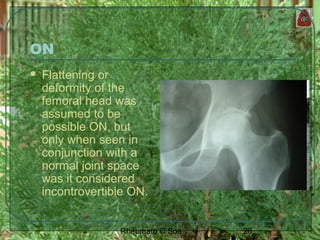
ON
 Flattening or
deformity of the
femoral head was
assumed to be
possible ON, but
only when seen in
conjunction with a
normal joint space
was it considered
incontrovertible ON.
27Rheumato C Soe
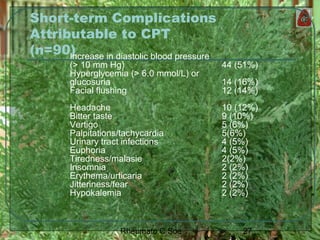
Short-term Complications
Attributable to CPT
(n=90)Increase in diastolic blood pressure
(> 10 mm Hg) 44 (51%)
Hyperglycemia (> 6.0 mmol/L) or
glucosuria 14 (16%)
Facial flushing 12 (14%)
Headache 10 (12%)
Bitter taste 9 (10%)
Vertigo 5 (6%)
Palpitations/tachycardia 5(6%)
Urinary tract infections 4 (5%)
Euphoria 4 (5%)
Tiredness/malasie 2(2%)
Insomnia 2 (2%)
Erythema/urticaria 2 (2%)
Jitteriness/fear 2 (2%)
Hypokalemia 2 (2%)
28Rheumato C Soe
Long term
 TB
 Osteoporosis
29Rheumato C Soe
Recent Developments in the
Therapy of patients with
Severe Systemic Lupus
Erythematosus
Dimitrios T.Boumpas,M.D.
Long-term follow-up of patients
participation in these controlled trials
suggest that toxicity is low and benefit
outweigh the risk.
30Rheumato C Soe
31Rheumato C Soe
EBM
 The Cochrane Controlled Trial Registry,
MEDLINE, and EMBASE were searched for
RCTs of treatment for DPLN.
 All available RCTs of patients with biopsy-
proven DPLN were included, and data were
extracted for overall mortality, end-stage renal
disease, doubling of serum creatinine level,
relapse, major infection, herpes zoster
infection, ovarian failure, malignancy, and
bladder toxicity.
32Rheumato C Soe
 Twenty-five of 920 articles identified
were eligible RCTs and were included.
 The majority compared
cyclophosphamide or azathioprine plus
steroids versus steroids alone.
 cyclophosphamide combined with
steroids remains the best option to
preserve renal function
33Rheumato C Soe
Other Use
 Systemic use also in
• Vasculitis
• Dermatomyositis
 Local Injection
• Joint-(RA, OA, Gout)
• Soft tissue- (Painful arc,
tennis elbow, carpal
tunnel)
 Local application
• Psoriasis
34Rheumato C Soe
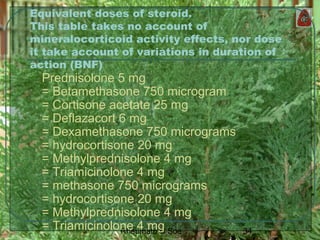
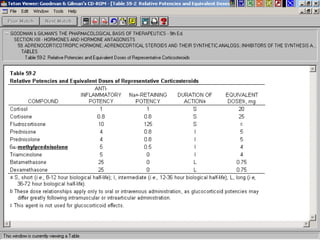
Equivalent doses of steroid.
This table takes no account of
mineralocorticoid activity effects, nor dose
it take account of variations in duration of
action (BNF)
Prednisolone 5 mg
= Betamethasone 750 microgram
= Cortisone acetate 25 mg
= Deflazacort 6 mg
= Dexamethasone 750 micrograms
= hydrocortisone 20 mg
= Methylprednisolone 4 mg
= Triamicinolone 4 mg
= methasone 750 micrograms
= hydrocortisone 20 mg
= Methylprednisolone 4 mg
= Triamicinolone 4 mg
35Rheumato C Soe
36Rheumato C Soe
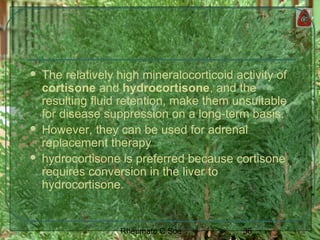
 The relatively high mineralocorticoid activity of
cortisone and hydrocortisone, and the
resulting fluid retention, make them unsuitable
for disease suppression on a long-term basis.
 However, they can be used for adrenal
replacement therapy
 hydrocortisone is preferred because cortisone
requires conversion in the liver to
hydrocortisone.
37Rheumato C Soe
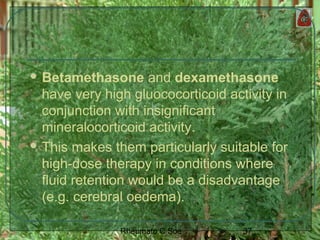
 Betamethasone and dexamethasone
have very high gluococorticoid activity in
conjunction with insignificant
mineralocorticoid activity.
 This makes them particularly suitable for
high-dose therapy in conditions where
fluid retention would be a disadvantage
(e.g. cerebral oedema).
38Rheumato C Soe
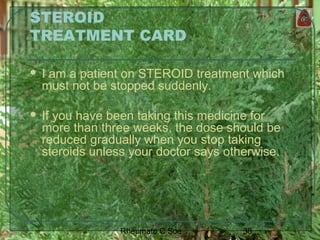
STEROID
TREATMENT CARD
 I am a patient on STEROID treatment which
must not be stopped suddenly.
 If you have been taking this medicine for
more than three weeks, the dose should be
reduced gradually when you stop taking
steroids unless your doctor says otherwise.
39Rheumato C Soe
 Read the patient information leaflet given with
the medicine.
Always carry this card with you and show it to
anyone who treats you (for example a doctor,
nurse, pharamacist or dentist).
 For one year after you stop the treatment, you
must mention that you have taken steriods.

If you become ill, or if you come into contact
with anyone who has an infectious disease,
consult your doctor promptly. If you have never
had chickenpox, you should avoid close
contact with people who have chickenpox or
shingles. If you do come into contact with
chickenpox, see your doctor urgently.
 Make sure that the information on the card is
kept up to date.
40Rheumato C Soe
Summary
 Steroid reduce symptoms
 Steroid reduce disease progression
 Low dose long term- methylprednisolone 7.5-
15mg / OD CM
 Pulse- methylprednisolone 1000mg in 100 ml
NS in 1 hr alternate day for 3 dose
 Beware of side effects
 Educate to use steroid card
41Rheumato C Soe

Use of Steroid in Rheumatology

  • 1.
    Dr. Chit Soe AssociateProfessor Consultant Physician & Rheumatologist Use of Steroid in Rheumatology
  • 2.
    2Rheumato C Soe LongTerm Steroid  The millennium brings with it the 50th anniversary of Hench’s discovery that corticosteroids might be used to treat rheumatoid arthritis.  Attitudes towards such use have waxed and waned since then.  Initial hope that steroids might dramatically alter the long term course of the disorder gave way to a recognition of serious adverse effects, that accompany high dose treatment.  The use of low dose corticosteroids in arthritis remains highly controversial.

  • 3.
    3Rheumato C Soe A recent survey in general practice found that 1.4% of patients aged over 54 were using corticosteroids at a mean dose of 8mg daily  Although rheumatologists claim to use less the audit had found use (as great as 80%).
  • 4.
    4Rheumato C Soe Reasons in an attempt to modify the progression of structural disease.  “bridge” to suppress inflammation while other disease modifying drugs take effect or  to combat acute flares of the disease
  • 5.
    5Rheumato C Soe ClinicalCourses of RA Adapted from: Henderson, Edwards, Pettipher. Mechanisms and Models in Rheumatoid Arthritis. © 1995 Academic Press Limited. Chronic Progressive Chronic Intermittent Acute Onset Time DieseaseActivity/FunctionalImpairment
  • 6.
    6Rheumato C Soe Th1cell IFN -γ TNF-α IL-2 Activated Th1 Cell in Rheumatoid Arthritis Smith JB, Haynes MK. Ann Intern Med. 2002;136:908-922 Feldmann M, Brennan FM, Maini RN. Annu Rev Immunol. 1996;14:397-440.
  • 7.
    7Rheumato C Soe Regulationof Gene Expression by Glucocorticoids  Following ligand binding, HSP90 and several other of the associated proteins dissociate, and the GR is directed into the nucleus where it can interact with specific DNA sequences within the regulatory regions of affected genes.  These short DNA sequences that are recognized by the activated glucocorticoid receptor are termed glucocorticoid-responsive elements (GREs)  and provide specificity to the induction of gene transcription by glucocorticoids.  The currently acknowledged consensus GRE DNA sequence is GGTACAnnnTGTTCT,
  • 8.
    8Rheumato C Soe Improvesymptom  A Dutch trial comparing prednisolone 10 mg daily with placebo as an adjunct to intramuscular gold reported clinical improvement in both groups over 12 weeks;  this was greatest among those trearted with prednisolone.  The Arthritis and Rheumatism Council trial randomised 128 patients to prednisolone 7.5 mg daily or placebo in additon to non-steroidal and disease modifying agents.  Symptomatic benefit was maintained for only 6-9 months of the two year follow up.
  • 9.
    9Rheumato C Soe Meta-analysis A meta-analysis of the effectiveness of low dose corticosteroidsa in rheumatoid arthritis based on 9 of 34 studies identified in a rigorous search strategy  compared the effectiveness of prednisolone to either placebo or active drug controls (aspirin, chloroquine, or deflazacort).  Although corticosteroids tended to be better at reducing the number of tender or swollen joints and the number of erythrocyte sedimentation rate, these differences were not significant.
  • 10.
    10Rheumato C Soe RetardErosion!!  Whether corticosteroids attenuate the progression of erosive damage is also unresolved.  In the Arthritis and Rheumatism Council study showed prednisolone had a pronounced and significant (p<0.004) effect on the development of hand erosions in patients with rheumatoid arthritis of less than two year’s duration.
  • 11.
    11Rheumato C Soe Gotzsche and Johansen report a further meta-analysis comparing prednisolone at a dose of 2.5-15 mg daily with palacebo or non-steroidal anti-inflammatory drugs  They show that at these dose prednisolone is much more effective than non-steroidal drugs at improving joint tenderness, pain, and grip strength.
  • 12.
    12Rheumato C Soe Concern To the practising rheumatologist the great disincentive to using short term low dose prednisolone is not concern about lack of anti-aiflammatory effect  but the worry that stepping treatment down may be difficult, with the consequence  that the patient is exposed to the risk of adverse effects.
  • 13.
  • 14.
    14Rheumato C Soe CorticosteroidPusle Therapy in Active Rheumatiod Arthritis By Bas L.A.M. Weusten, Johannes W.G.Jacobs, and Johnnes W.J.Bijisma  In an attempt to reduce the frequent and potentially servere side effects of long-term oral steroid therahy, the intermittent intravenous administration of high doses of corticosteroids (corticosteroid pulse therapy, CPT) was introduced.  CPT was reported to be effective against renal allograft rejection.
  • 15.
    15Rheumato C Soe Later reports showed that patients with idiopathic glomerulomephritis and glomerulonephritis associated with systemic lupus erythematous respond well to this from of treatment. In the course of the past decade,CPT also has been used to treat rheumatoid arthritis (RA).
  • 16.
    16Rheumato C Soe DifferentRegimens (For Acute Flare Up)  Many studies of the efficacy of (different regimens of) CPT in RA have been performed  1,000 mg of methylprednisolone intravenously in 10 RA patients once a month for 6 consecutive months  Tender joint counts, walking time, and grip strength improvement were still apparent more than 7 months after the last corticosteriod infusion.  CPT did not influence the progression of erosions followed radiologically
  • 17.
    17Rheumato C Soe Forster et al reported long-lasting clinical improvement in their RA patients after a regimen of  1,000 mg of methylprednisolone given on 3 alternate days and 1,000 mg intravenously on 3 consecutive days  The benefit lasted more than 1 year  erythrocyte sedimentation rate and C- reactive protein level, was of shorter duration (about 2 weeks)  whereas methylpredisolone is metabolized and excreted within a few days
  • 18.
    18Rheumato C Soe CPTIN CONJUNTION WITH DISEASE-MODIFYING ANTIRHEUMATIC DRUG THERAPY (Bridging)  Neumann et al investigated the possibility of maintaining the clinical improvement induced by intiating (new) diseasemodifying antirheumatic drug (DMARD) therapy concomitantaly.  They found that a regimen of 3 *1,000mg methylpredisolone intravenously on alternate days,
  • 19.
    19Rheumato C Soe If started simultaneously with a new DMARD, was able to bridge the gap between the start and effect of at least two different DMARDs: D- penicillamine and sulphasalazine.  In 1988, a similar effect of CPT in conjunction with sodium aurothiomalate was demonstrated.  In contrast, we found that CPT (3x1,000 mg methylperdnisolone) is unable to bridge the gap between the start and the effect of azathioprine.
  • 20.
    20Rheumato C Soe COMPARISONOF THE EFFICACY OF DIFFERENT REGIMENS OF CPT  After intial reports on the efficacy of high-dose intravenous CPT, several investigators studied the effects of reduced doses of methylpred- nisolone.  Radia and Frust compared the efficacies of a single dose of 1,000 mg of methylprednisolone given intravenously,  320 mg of methylprednisolone administered intravenously,  and 320 mg of methylprednisolone given intramuscularly.
  • 21.
    21Rheumato C Soe Shipley et al claimed a significantly better response to a single intravenous 1,000-mg dose of methylprednisolone than to 500 mg and 40 mg.  Dexamethasone (200 mg),given via an intravenous infusion on alternate days over a 5-day period was also tried.
  • 22.
    22Rheumato C Soe They found that 85% of patients treated with 1,000 mg of methylprednisolone considered the therapy worthwhile,  compared with only half the patients receiving lower dosages.  Several authors have compared high- dose oral prednisolone with intravenous methylprednisolone.
  • 23.
    23Rheumato C Soe In conclusion, different regimens of CPT are of clinical benefit for patients with severe, intractable RA.  As for bridging the gap between the start and effect of a newly introduced DMARD, the effect of low-dose or oral CPT has not been proved,  Recommended regimens consisting of three 1,000-mg doses of methylprednisolone.
  • 24.
  • 25.
    25Rheumato C Soe SIDEEFFECTS OF CPT  sudden death, infections, hypersensitivity, osteonecrosis of the femoral head, and multiple other complications
  • 26.
    26Rheumato C Soe ON Flattening or deformity of the femoral head was assumed to be possible ON, but only when seen in conjunction with a normal joint space was it considered incontrovertible ON.
  • 27.
    27Rheumato C Soe Short-termComplications Attributable to CPT (n=90)Increase in diastolic blood pressure (> 10 mm Hg) 44 (51%) Hyperglycemia (> 6.0 mmol/L) or glucosuria 14 (16%) Facial flushing 12 (14%) Headache 10 (12%) Bitter taste 9 (10%) Vertigo 5 (6%) Palpitations/tachycardia 5(6%) Urinary tract infections 4 (5%) Euphoria 4 (5%) Tiredness/malasie 2(2%) Insomnia 2 (2%) Erythema/urticaria 2 (2%) Jitteriness/fear 2 (2%) Hypokalemia 2 (2%)
  • 28.
    28Rheumato C Soe Longterm  TB  Osteoporosis
  • 29.
    29Rheumato C Soe RecentDevelopments in the Therapy of patients with Severe Systemic Lupus Erythematosus Dimitrios T.Boumpas,M.D. Long-term follow-up of patients participation in these controlled trials suggest that toxicity is low and benefit outweigh the risk.
  • 30.
  • 31.
    31Rheumato C Soe EBM The Cochrane Controlled Trial Registry, MEDLINE, and EMBASE were searched for RCTs of treatment for DPLN.  All available RCTs of patients with biopsy- proven DPLN were included, and data were extracted for overall mortality, end-stage renal disease, doubling of serum creatinine level, relapse, major infection, herpes zoster infection, ovarian failure, malignancy, and bladder toxicity.
  • 32.
    32Rheumato C Soe Twenty-five of 920 articles identified were eligible RCTs and were included.  The majority compared cyclophosphamide or azathioprine plus steroids versus steroids alone.  cyclophosphamide combined with steroids remains the best option to preserve renal function
  • 33.
    33Rheumato C Soe OtherUse  Systemic use also in • Vasculitis • Dermatomyositis  Local Injection • Joint-(RA, OA, Gout) • Soft tissue- (Painful arc, tennis elbow, carpal tunnel)  Local application • Psoriasis
  • 34.
    34Rheumato C Soe Equivalentdoses of steroid. This table takes no account of mineralocorticoid activity effects, nor dose it take account of variations in duration of action (BNF) Prednisolone 5 mg = Betamethasone 750 microgram = Cortisone acetate 25 mg = Deflazacort 6 mg = Dexamethasone 750 micrograms = hydrocortisone 20 mg = Methylprednisolone 4 mg = Triamicinolone 4 mg = methasone 750 micrograms = hydrocortisone 20 mg = Methylprednisolone 4 mg = Triamicinolone 4 mg
  • 35.
  • 36.
    36Rheumato C Soe The relatively high mineralocorticoid activity of cortisone and hydrocortisone, and the resulting fluid retention, make them unsuitable for disease suppression on a long-term basis.  However, they can be used for adrenal replacement therapy  hydrocortisone is preferred because cortisone requires conversion in the liver to hydrocortisone.
  • 37.
    37Rheumato C Soe Betamethasone and dexamethasone have very high gluococorticoid activity in conjunction with insignificant mineralocorticoid activity.  This makes them particularly suitable for high-dose therapy in conditions where fluid retention would be a disadvantage (e.g. cerebral oedema).
  • 38.
    38Rheumato C Soe STEROID TREATMENTCARD  I am a patient on STEROID treatment which must not be stopped suddenly.  If you have been taking this medicine for more than three weeks, the dose should be reduced gradually when you stop taking steroids unless your doctor says otherwise.
  • 39.
    39Rheumato C Soe Read the patient information leaflet given with the medicine. Always carry this card with you and show it to anyone who treats you (for example a doctor, nurse, pharamacist or dentist).  For one year after you stop the treatment, you must mention that you have taken steriods.  If you become ill, or if you come into contact with anyone who has an infectious disease, consult your doctor promptly. If you have never had chickenpox, you should avoid close contact with people who have chickenpox or shingles. If you do come into contact with chickenpox, see your doctor urgently.  Make sure that the information on the card is kept up to date.
  • 40.
    40Rheumato C Soe Summary Steroid reduce symptoms  Steroid reduce disease progression  Low dose long term- methylprednisolone 7.5- 15mg / OD CM  Pulse- methylprednisolone 1000mg in 100 ml NS in 1 hr alternate day for 3 dose  Beware of side effects  Educate to use steroid card
  • 41.

Editor's Notes

  • #6 &amp;lt;number&amp;gt; The course of RA is different from patient to patient, but generally progresses along three different pathways: acute onset, chronic intermittent and chronic progressive. Most patients have chronic progressive disease that, left untreated, will result in future serious complications and debilitation.1-3 American College of Rheumatology Subcommittee on Rheumatoid Arthritis Guidelines. Guidelines for the management of rheumatoid arthritis 2002 update. Arthritis Rheum. 2002;46:328-346. Visser H, le Cessie S, Vis K, Breedveld FC, Hazes JMW. How to diagnose rheumatoid arthritis early. A prediction model for persistent (erosive) arthritis. Arthritis Rheum. 2002;46:357-365. Henderson, Edwards, Pettipher. Mechanisms and Models in Rheumatoid Arthritis.© 1995 Academic Press Limited.
  • #7 &amp;lt;number&amp;gt; The initiating factors for RA include a genetic predisposition and a presenting antigen leading to disease onset.1 The antigen triggers the inflammatory cascade that is the hallmark of RA pathophysiology. Ultimately the antigen is processed and converts the Th0 cell into an activated Th1 cell. The Th1 cell produces cytokines such as IL-2, interferon-gamma, and TNF- which initiate the inflammatory cascade and promote downstream mediators that lead to bone erosion and inflammation.2   Smith JB, Haynes MK. Rheumatoid arthritis - A molecular understanding. Ann Intern Med. 2002;136:908-922 Feldmann M, Brennan FM, Maini RN. Role of cytokines in rheumatoid arthritis. Annu Rev Immunol. 1996;14:397-440.