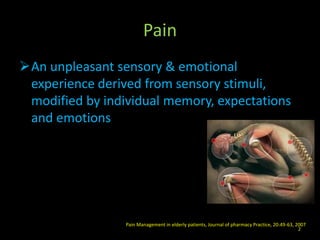
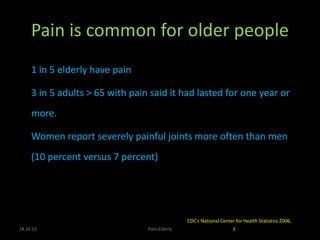
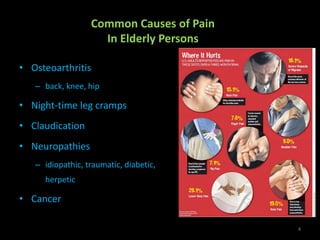
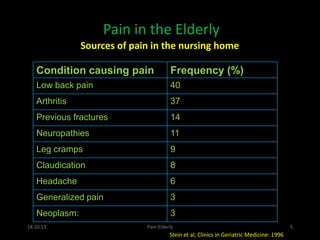
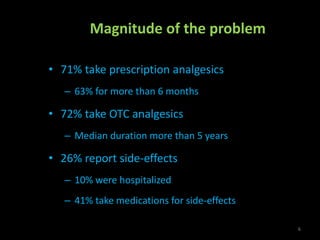
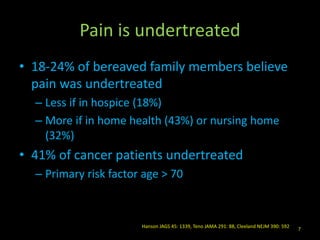
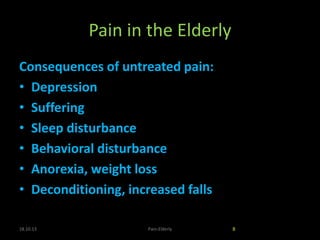
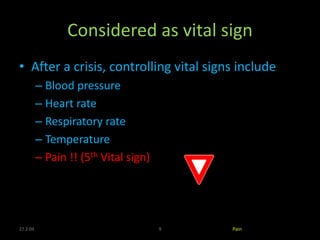
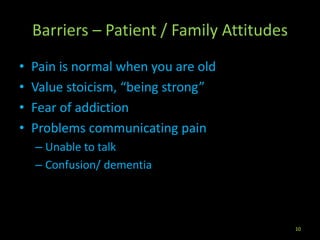
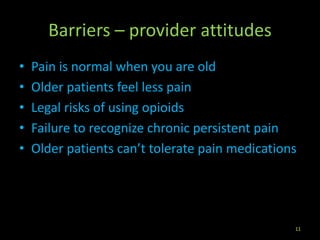
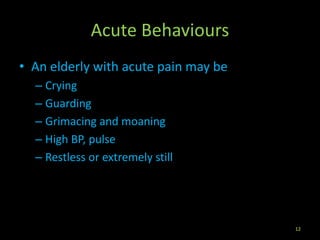
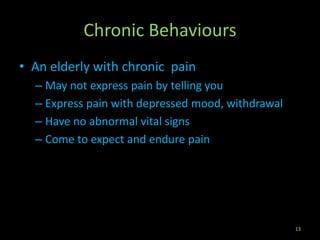
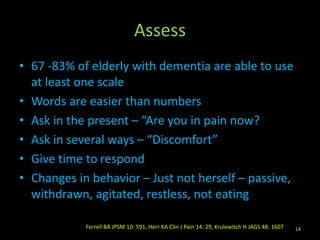
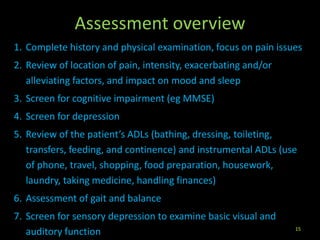
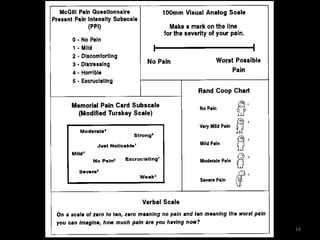
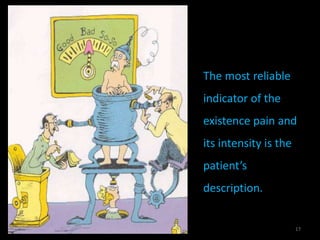
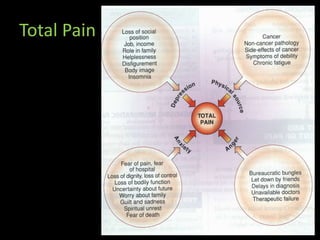
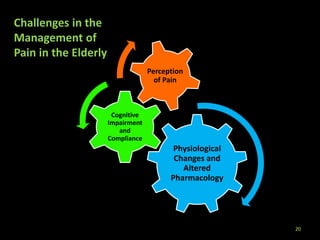
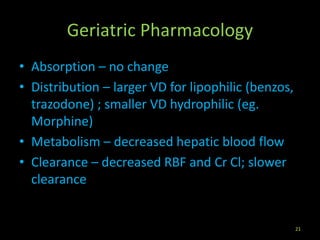
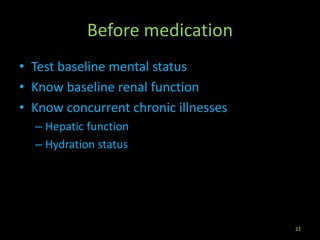
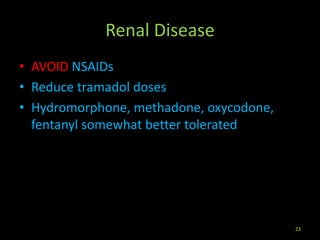
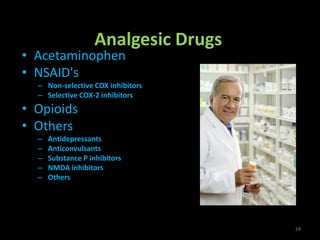
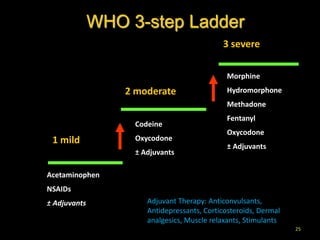
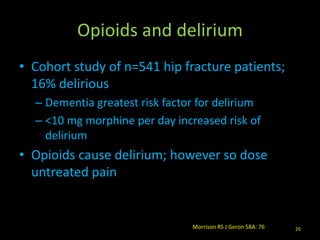
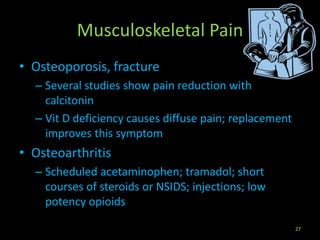
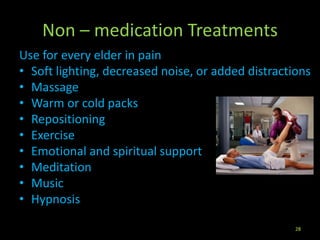
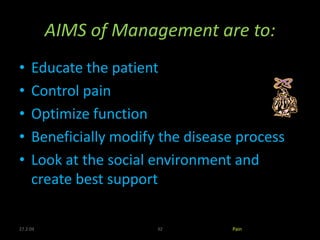
Pain is common in elderly patients, with osteoarthritis, neuropathies, and cancer being leading causes. It is often undertreated in this population due to attitudes that pain is normal with age and concerns about side effects of pain medications. A comprehensive assessment involves evaluating location, intensity, and impact of pain, as well as cognitive and functional status. Treatment should begin with non-pharmacological options and follow the WHO analgesic ladder when drugs are needed. Careful medication management is especially important due to changes in pharmacokinetics and risk of delirium. Effective pain control improves quality of life while communication between providers and education of patients and caregivers are also crucial.



![ONFH[AVN HIP] -TRIPLE REGIME -A NOVAL SURGICAL CONCEPT .pptx](https://cdn.slidesharecdn.com/ss_thumbnails/onfhavnhip2026koaconcalicutdrgokuldevdrmashraf-260210064517-213ec005-thumbnail.jpg?width=640&height=640&fit=bounds)


![CTEV [ clubfoot] DR ARUN LAL ,DR MOHAMED ASHRAF travancore medical college k...](https://cdn.slidesharecdn.com/ss_thumbnails/ctevclubfootdrarunlaldrmohamedashraftravancoremedicalcollegekollamkeralaindia-260208063247-18fc466c-thumbnail.jpg?width=640&height=640&fit=bounds)


