CORTEX – CORe monitoring Techniques and
Experimental validation and demonstration
Prof. Christophe Demazière
Chalmers University of Technology
Department of Physics
Division of Subatomic and Plasma Physics
SE-412 96 Gothenburg, Sweden
demaz@chalmers.se
Task Force on Deterministic REActor Modelling
at Chalmers University of Technology
Background and motivation
• Ageing fleet of reactors
• Nuclear reactors operating closer to their safety limits
• Advanced high-burnup fuel designs and core loadings
 Important to maintain a high level of availability via:
 Monitoring the instantaneous state of the reactor during operation
 Detecting possible anomalies early on
Background and motivation
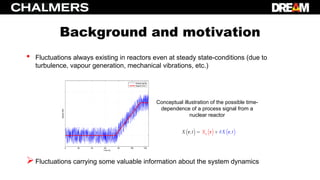
• Fluctuations always existing in reactors even at steady state-conditions (due to
turbulence, vapour generation, mechanical vibrations, etc.)
Fluctuations carrying some valuable information about the system dynamics
Conceptual illustration of the possible time-
dependence of a process signal from a
nuclear reactor
     0
,, X Xt tX  r rr
Background and motivation
• Need for core monitoring techniques recently demonstrated by the increase in the
neutron noise levels in some Spanish, German, and Swiss Pre-Konvoi PWRs
Need to develop the necessary tools before the problems occur
CORTEX project proposal submitted to the Euratom 2016-2017 work program (CORe
monitoring Techniques and EXperimental validation and demonstration)
CORTEX obtained the NUGENIA label in August 2016
CORTEX project approved for funding by the European Commission in February 2017
Presentation aimed at giving an overview of the project
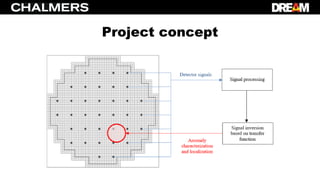
Project concept
Project concept
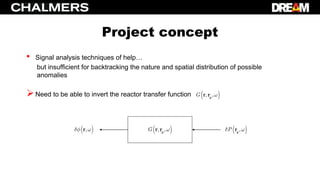
• Signal analysis techniques of help…
but insufficient for backtracking the nature and spatial distribution of possible
anomalies
Need to be able to invert the reactor transfer function  , ,G p
r r
 , ,G p
r r , r  ,P p
r
Project concept
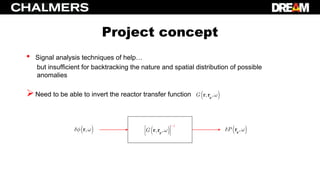
• Signal analysis techniques of help…
but insufficient for backtracking the nature and spatial distribution of possible
anomalies
Need to be able to invert the reactor transfer function  , ,G p
r r
 
1
, ,G 

 
  p
r r , r  ,P p
r
Project aims
• Developing high fidelity tools for simulating stationary fluctuations
• Validating those tools against experiments to be performed at research reactors
• Developing advanced signal processing techniques (to be combined with the simulation
tools)
• Demonstrating the proposed methods for both on-line and off-line core diagnostics and
monitoring
• Disseminating the knowledge gathered from within the project to stakeholders in the nuclear
sector
Project participants
• Project led and coordinated by Chalmers University of Technology
• 17 European organizations involved in the project:
 CEA and LGI Consulting (France)
 Centre for Energy Research, Hungarian Academy of Sciences – MTA EK (Hungary)
 EPFL, KKG, PSI (Switzerland)
 GRS, ISTec, PEL, TU Dresden and TU Munich (Germany)
 Ιnstitute of Communication & Computer Systems - National Technical University of
Athens (Greece)
 UJV (Czech Republic)
 Uiniversity of Lincoln (UK)
 UPM and UPV (Spain)
Project participants
• 2 non-European organizations formally involved in the project:
 KURRI (Japan)
 AMS Corp (USA)
+ 1 organization informally involved in the project: Nagoya University (Japan)
• 3 additional organizations involved in the Advisory End-User Group:
 IRSN (France)
 KKG (Switzerland)
 PEL (Germany)
 Ringhals (Sweden)
 Tractebel (Belgium)
Project structure
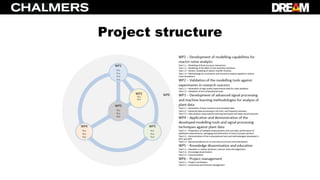
• Proposed technical Work Packages (WPs):
 WP1: Development of modelling capabilities for reactor noise analysis (lead
organization: Chalmers University of Technology, Sweden)
Objectives:
To develop modelling capabilities allowing the determination, for any reactor core,
of the fluctuations in neutron flux resulting from known perturbations applied to the
system
To express such perturbations as either fluctuations of macroscopic cross-sections
based on expert opinion, or in more physical terms, such as vibrations of
components (FSI)
To evaluate the uncertainties associated to the estimation of the reactor transfer
function and to perform sensitivity analysis in reactor dynamic calculations
Project structure
• Proposed technical Work Packages (WPs):
 WP2: Validation of the modelling tools against experiments in research reactors
(lead organization: PSI/EPFL, Switzerland)
Use of the AKR-2 (TU Dresden) and CROCUS (EPFL) research reactors for reactor
transfer function validation
Objectives:
Validation of the modelling tools produced in WP1 against experimental
measurements: localized absorber of variable strength + moving absorber
Development of new detectors
Project structure
• Proposed technical Work Packages (WPs):
 WP3: Development of advanced signal processing and machine learning
methodologies for analysis of plant data (lead organization: University of Lincoln,
UK)
Objectives:
Detection of abnormal fluctuations and their classification
Inversion of the reactor transfer function
Handling of the scarcity of in-core instrumentation
Handling of intermittences
Project structure
• Proposed technical Work Packages (WPs):
 WP4: Application and demonstration of the developed modelling tools and signal
processing techniques against plant data (lead organization: GRS, Germany)
Objectives:
Demonstration of the applicability and usefulness of the tools
Detection of abnormal fluctuations, understanding of their origin and classification
according to their safety impact
Recommendations about in-core/out-of-core instrumentation
Project structure
• Other Work Packages (WPs):
 WP5: Knowledge dissemination and education (lead organization: Chalmers
University of Technology, Sweden)
Objectives:
Designing of short courses on reactor dynamics, reactor neutron noise, and signal
processing methods
Development of a workshops series: (a) to present the application of the models
and methodologies to real cases; and (b) to discuss recommendations and
improvements for monitoring reactor operations and future advancements with end-
users
Setting up communication tools for the public and interested stakeholders
Project structure
• Other Work Packages (WPs):
 WP6: Project management (lead organization: Chalmers University of Technology,
Sweden)
Objectives:
Timely and qualitative achievement of the project results to reach the objectives
and contractual commitments
Project structure
Project implementation
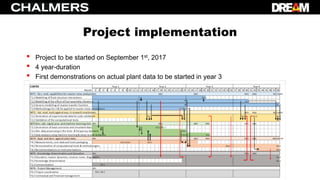
• Project to be started on September 1st, 2017
• 4 year-duration
• First demonstrations on actual plant data to be started in year 3
Project implementation
• Distribution of efforts:
 WP1: 200.25 man-months
 WP2: 127 man-months
 WP3: 106.5 man-months
 WP4: 132 man-months
 WP5: 47.75 man-months
 WP6: 20 man-months
• Funding:
 Approved funding: 5.093 M€
 Total eligible costs: 5.243 M€
Project relevance to NUGENIA
• Nugenia Technology Roadmap 3 (Improved Reactor Operation)
Improvement of the operation economics
Improvement of core management modelling tools and core monitoring and
instrumentation
• Discussions with NUGENIA members about possible interactions between CORTEX
and NUGENIA
Conclusions
• Core monitoring becoming increasingly important
• Need to develop the necessary tools and expertise before the problems occur
• Interested in the project and its outcome? Let us know!
• Follow the project on LinkedIn, Twitter and Facebook
CORTEX – CORe monitoring Techniques and
Experimental validation and demonstration
Prof. Christophe Demazière
Chalmers University of Technology
Department of Physics
Division of Subatomic and Plasma Physics
SE-412 96 Gothenburg, Sweden
demaz@chalmers.se
Task Force on Deterministic REActor Modelling
at Chalmers University of Technology

CORTEX presentation at NUGENIA 2017 Forum

  • 1.
    CORTEX – CORemonitoring Techniques and Experimental validation and demonstration Prof. Christophe Demazière Chalmers University of Technology Department of Physics Division of Subatomic and Plasma Physics SE-412 96 Gothenburg, Sweden demaz@chalmers.se Task Force on Deterministic REActor Modelling at Chalmers University of Technology
  • 2.
    Background and motivation •Ageing fleet of reactors • Nuclear reactors operating closer to their safety limits • Advanced high-burnup fuel designs and core loadings  Important to maintain a high level of availability via:  Monitoring the instantaneous state of the reactor during operation  Detecting possible anomalies early on
  • 3.
    Background and motivation •Fluctuations always existing in reactors even at steady state-conditions (due to turbulence, vapour generation, mechanical vibrations, etc.) Fluctuations carrying some valuable information about the system dynamics Conceptual illustration of the possible time- dependence of a process signal from a nuclear reactor      0 ,, X Xt tX  r rr
  • 4.
    Background and motivation •Need for core monitoring techniques recently demonstrated by the increase in the neutron noise levels in some Spanish, German, and Swiss Pre-Konvoi PWRs Need to develop the necessary tools before the problems occur CORTEX project proposal submitted to the Euratom 2016-2017 work program (CORe monitoring Techniques and EXperimental validation and demonstration) CORTEX obtained the NUGENIA label in August 2016 CORTEX project approved for funding by the European Commission in February 2017 Presentation aimed at giving an overview of the project
  • 5.
  • 6.
    Project concept • Signalanalysis techniques of help… but insufficient for backtracking the nature and spatial distribution of possible anomalies Need to be able to invert the reactor transfer function  , ,G p r r  , ,G p r r , r  ,P p r
  • 7.
    Project concept • Signalanalysis techniques of help… but insufficient for backtracking the nature and spatial distribution of possible anomalies Need to be able to invert the reactor transfer function  , ,G p r r   1 , ,G       p r r , r  ,P p r
  • 8.
    Project aims • Developinghigh fidelity tools for simulating stationary fluctuations • Validating those tools against experiments to be performed at research reactors • Developing advanced signal processing techniques (to be combined with the simulation tools) • Demonstrating the proposed methods for both on-line and off-line core diagnostics and monitoring • Disseminating the knowledge gathered from within the project to stakeholders in the nuclear sector
  • 9.
    Project participants • Projectled and coordinated by Chalmers University of Technology • 17 European organizations involved in the project:  CEA and LGI Consulting (France)  Centre for Energy Research, Hungarian Academy of Sciences – MTA EK (Hungary)  EPFL, KKG, PSI (Switzerland)  GRS, ISTec, PEL, TU Dresden and TU Munich (Germany)  Ιnstitute of Communication & Computer Systems - National Technical University of Athens (Greece)  UJV (Czech Republic)  Uiniversity of Lincoln (UK)  UPM and UPV (Spain)
  • 10.
    Project participants • 2non-European organizations formally involved in the project:  KURRI (Japan)  AMS Corp (USA) + 1 organization informally involved in the project: Nagoya University (Japan) • 3 additional organizations involved in the Advisory End-User Group:  IRSN (France)  KKG (Switzerland)  PEL (Germany)  Ringhals (Sweden)  Tractebel (Belgium)
  • 11.
    Project structure • Proposedtechnical Work Packages (WPs):  WP1: Development of modelling capabilities for reactor noise analysis (lead organization: Chalmers University of Technology, Sweden) Objectives: To develop modelling capabilities allowing the determination, for any reactor core, of the fluctuations in neutron flux resulting from known perturbations applied to the system To express such perturbations as either fluctuations of macroscopic cross-sections based on expert opinion, or in more physical terms, such as vibrations of components (FSI) To evaluate the uncertainties associated to the estimation of the reactor transfer function and to perform sensitivity analysis in reactor dynamic calculations
  • 12.
    Project structure • Proposedtechnical Work Packages (WPs):  WP2: Validation of the modelling tools against experiments in research reactors (lead organization: PSI/EPFL, Switzerland) Use of the AKR-2 (TU Dresden) and CROCUS (EPFL) research reactors for reactor transfer function validation Objectives: Validation of the modelling tools produced in WP1 against experimental measurements: localized absorber of variable strength + moving absorber Development of new detectors
  • 13.
    Project structure • Proposedtechnical Work Packages (WPs):  WP3: Development of advanced signal processing and machine learning methodologies for analysis of plant data (lead organization: University of Lincoln, UK) Objectives: Detection of abnormal fluctuations and their classification Inversion of the reactor transfer function Handling of the scarcity of in-core instrumentation Handling of intermittences
  • 14.
    Project structure • Proposedtechnical Work Packages (WPs):  WP4: Application and demonstration of the developed modelling tools and signal processing techniques against plant data (lead organization: GRS, Germany) Objectives: Demonstration of the applicability and usefulness of the tools Detection of abnormal fluctuations, understanding of their origin and classification according to their safety impact Recommendations about in-core/out-of-core instrumentation
  • 15.
    Project structure • OtherWork Packages (WPs):  WP5: Knowledge dissemination and education (lead organization: Chalmers University of Technology, Sweden) Objectives: Designing of short courses on reactor dynamics, reactor neutron noise, and signal processing methods Development of a workshops series: (a) to present the application of the models and methodologies to real cases; and (b) to discuss recommendations and improvements for monitoring reactor operations and future advancements with end- users Setting up communication tools for the public and interested stakeholders
  • 16.
    Project structure • OtherWork Packages (WPs):  WP6: Project management (lead organization: Chalmers University of Technology, Sweden) Objectives: Timely and qualitative achievement of the project results to reach the objectives and contractual commitments
  • 17.
  • 18.
    Project implementation • Projectto be started on September 1st, 2017 • 4 year-duration • First demonstrations on actual plant data to be started in year 3
  • 19.
    Project implementation • Distributionof efforts:  WP1: 200.25 man-months  WP2: 127 man-months  WP3: 106.5 man-months  WP4: 132 man-months  WP5: 47.75 man-months  WP6: 20 man-months • Funding:  Approved funding: 5.093 M€  Total eligible costs: 5.243 M€
  • 20.
    Project relevance toNUGENIA • Nugenia Technology Roadmap 3 (Improved Reactor Operation) Improvement of the operation economics Improvement of core management modelling tools and core monitoring and instrumentation • Discussions with NUGENIA members about possible interactions between CORTEX and NUGENIA
  • 21.
    Conclusions • Core monitoringbecoming increasingly important • Need to develop the necessary tools and expertise before the problems occur • Interested in the project and its outcome? Let us know! • Follow the project on LinkedIn, Twitter and Facebook
  • 22.
    CORTEX – CORemonitoring Techniques and Experimental validation and demonstration Prof. Christophe Demazière Chalmers University of Technology Department of Physics Division of Subatomic and Plasma Physics SE-412 96 Gothenburg, Sweden demaz@chalmers.se Task Force on Deterministic REActor Modelling at Chalmers University of Technology