Correlation Based Fingerprint
Liveness Detection
Under The Guidance of: Ashish Pawar
Prof. Mrs. Vidya Patil 30349
Biometrics
 Bio = “life” metrics = “measure”
 To analyse physiological and behavioural characteristics
 Biometric is based on anatomic uniqueness of a person
 Three ways authentication can be done:
1. Something the person knows(password)
2. Something the person has(key , special card)
3. Something the person is(fingerprint , footprint)
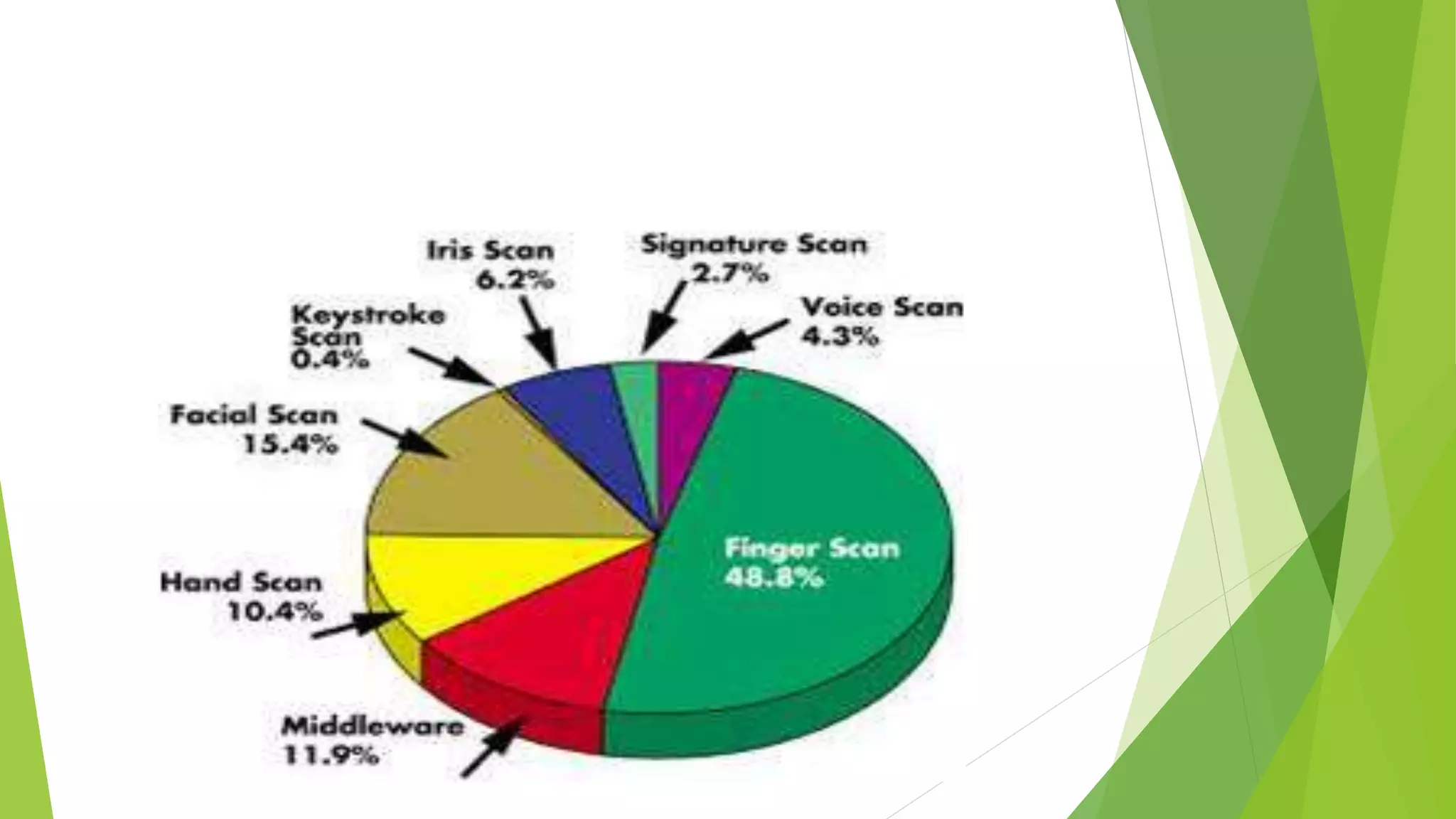
Biometric Identifiers
 Fingerprint Recognition
 Iris Recognition
 Face Detection
 Voice Recognition
 DNA
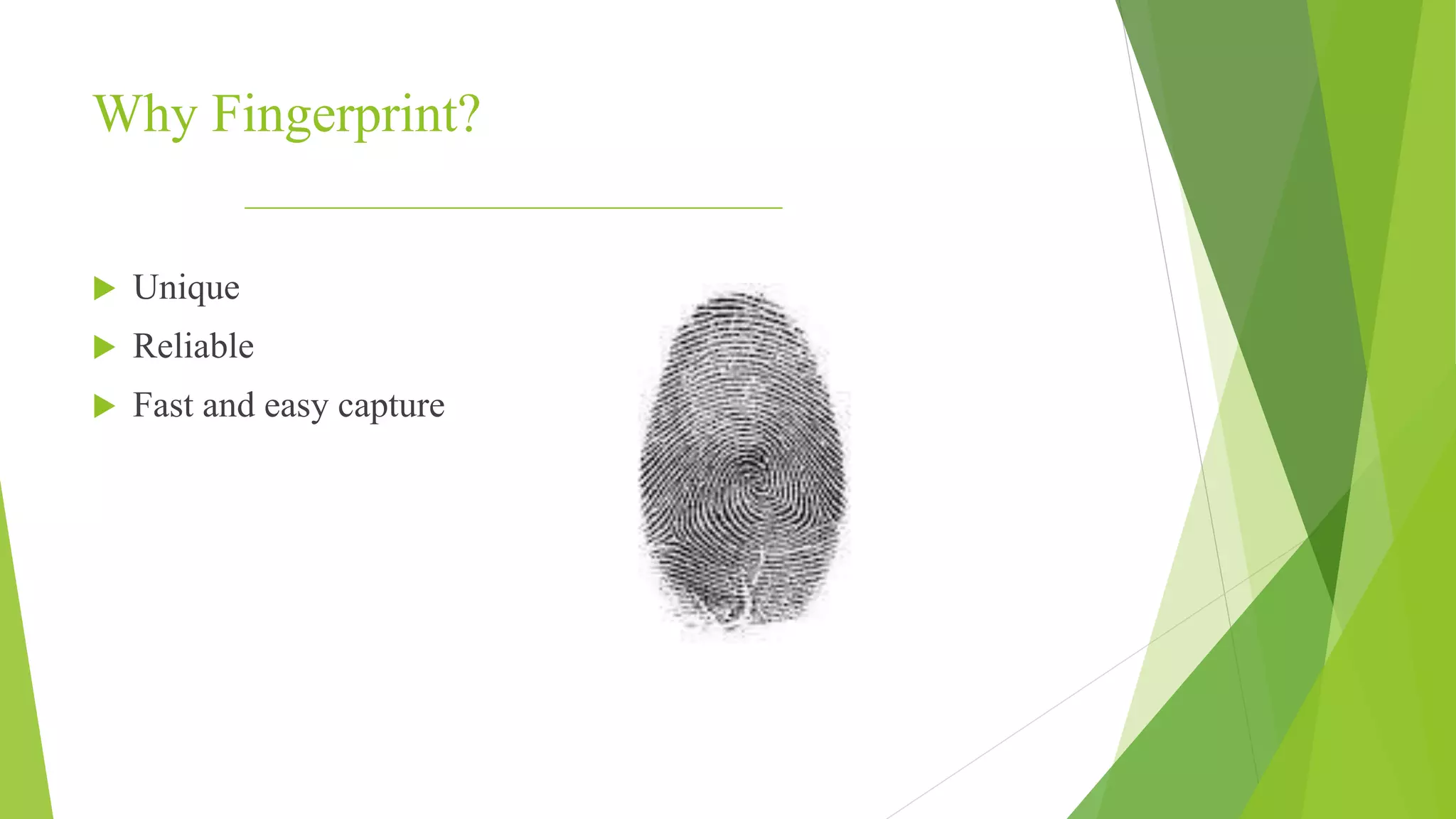
Why Fingerprint?
 Unique
 Reliable
 Fast and easy capture
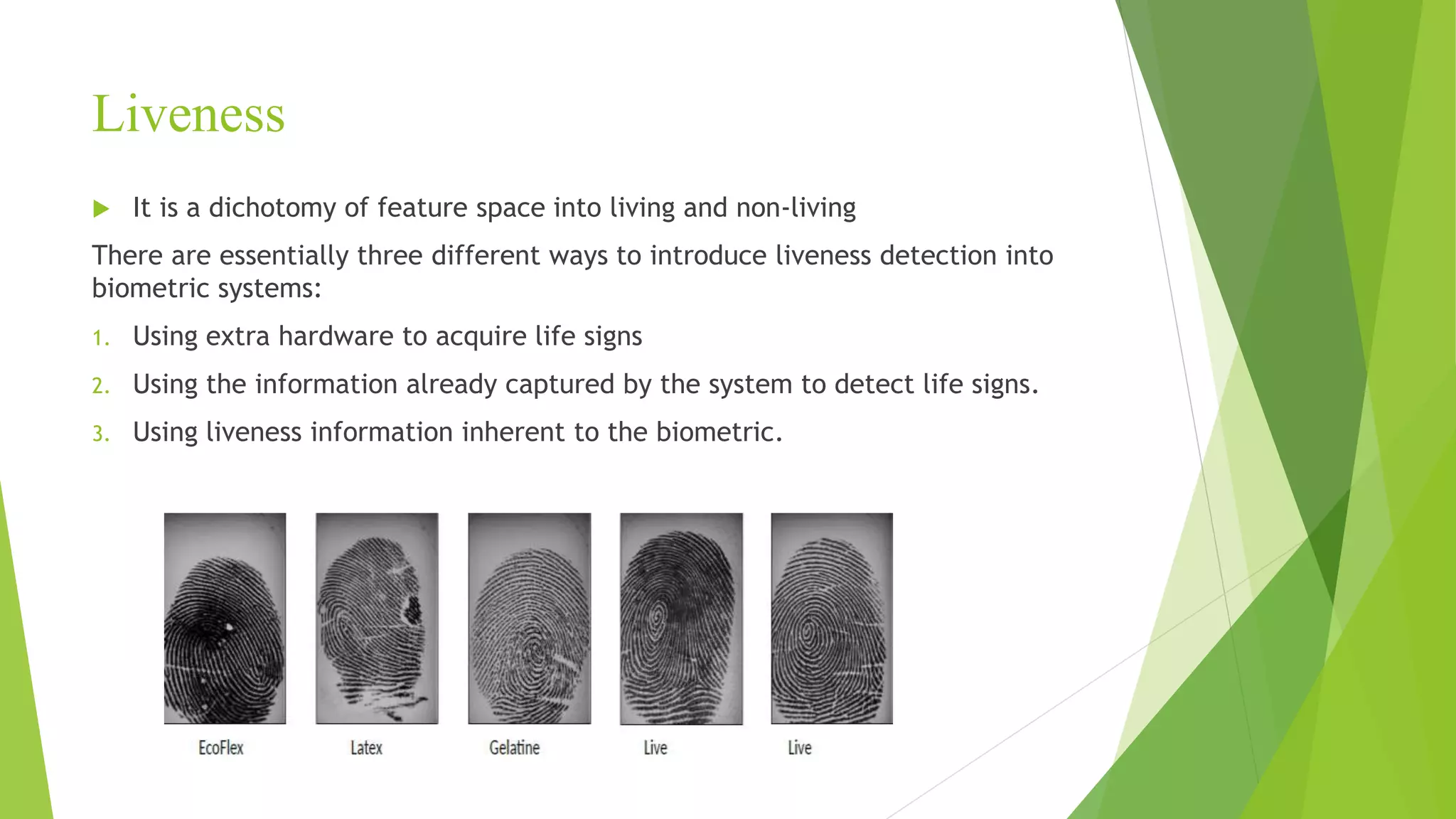
Liveness
 It is a dichotomy of feature space into living and non-living
There are essentially three different ways to introduce liveness detection into
biometric systems:
1. Using extra hardware to acquire life signs
2. Using the information already captured by the system to detect life signs.
3. Using liveness information inherent to the biometric.
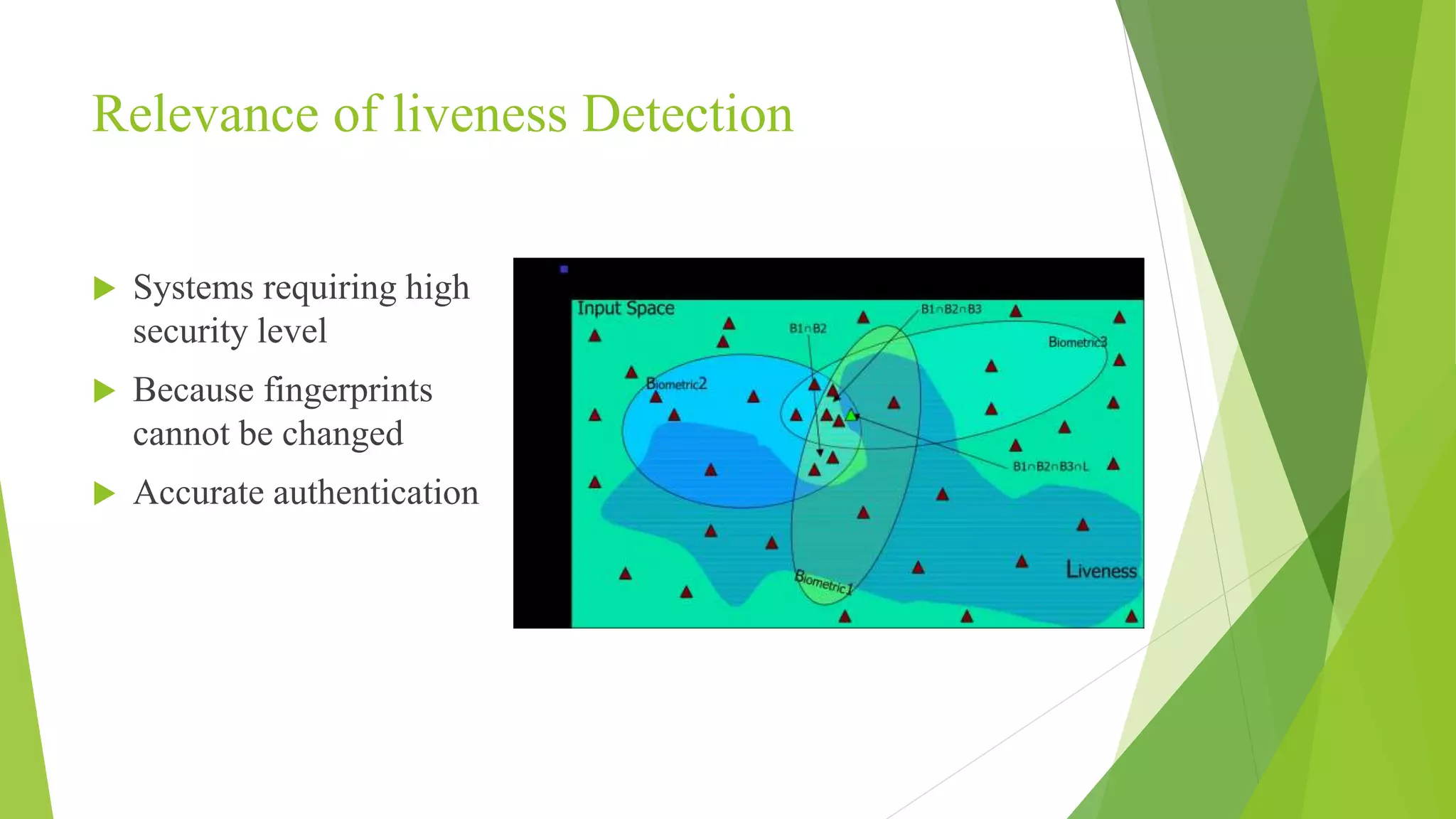
Relevance of liveness Detection
 Systems requiring high
security level
 Because fingerprints
cannot be changed
 Accurate authentication
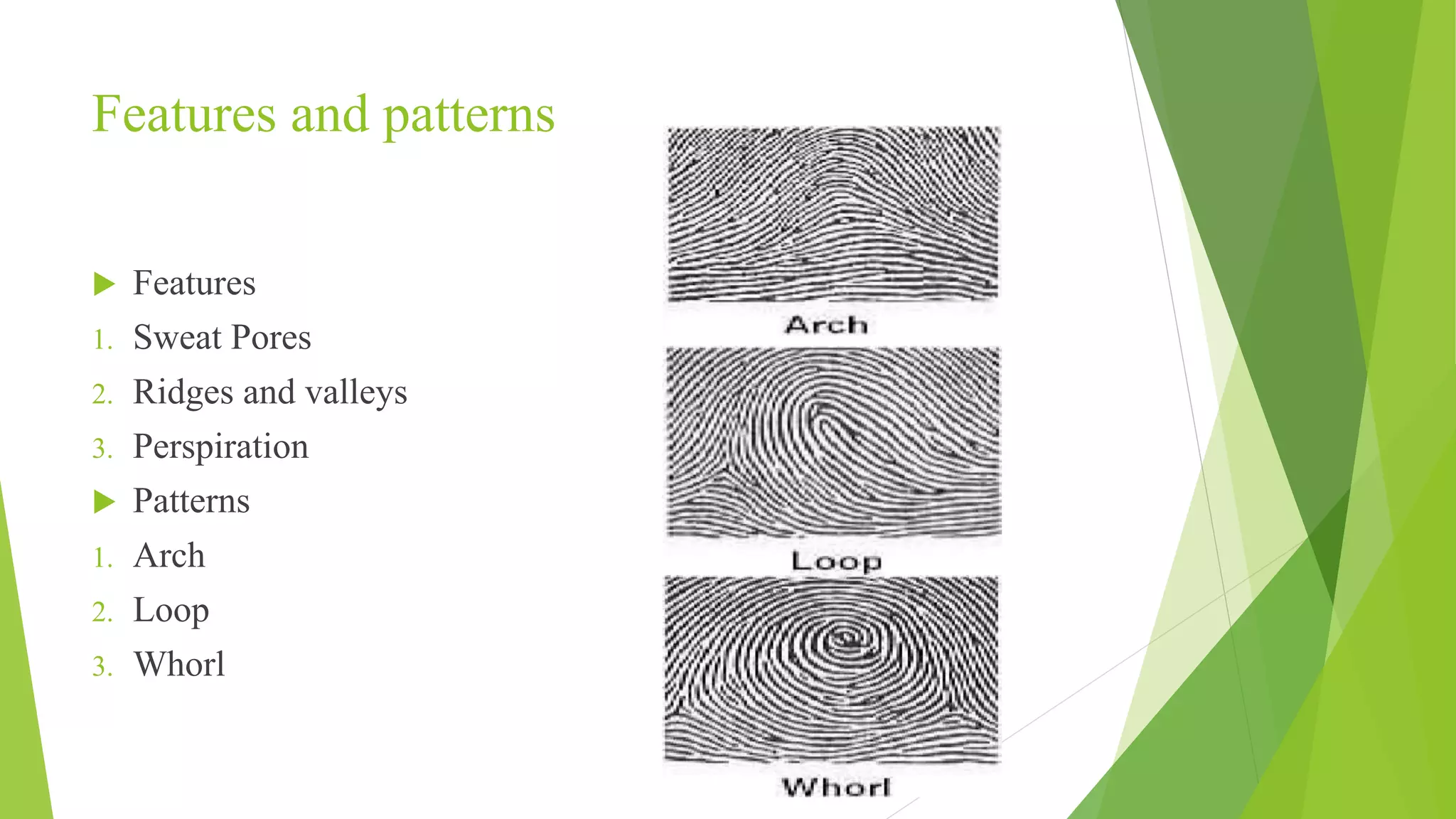
Features and patterns
 Features
1. Sweat Pores
2. Ridges and valleys
3. Perspiration
 Patterns
1. Arch
2. Loop
3. Whorl
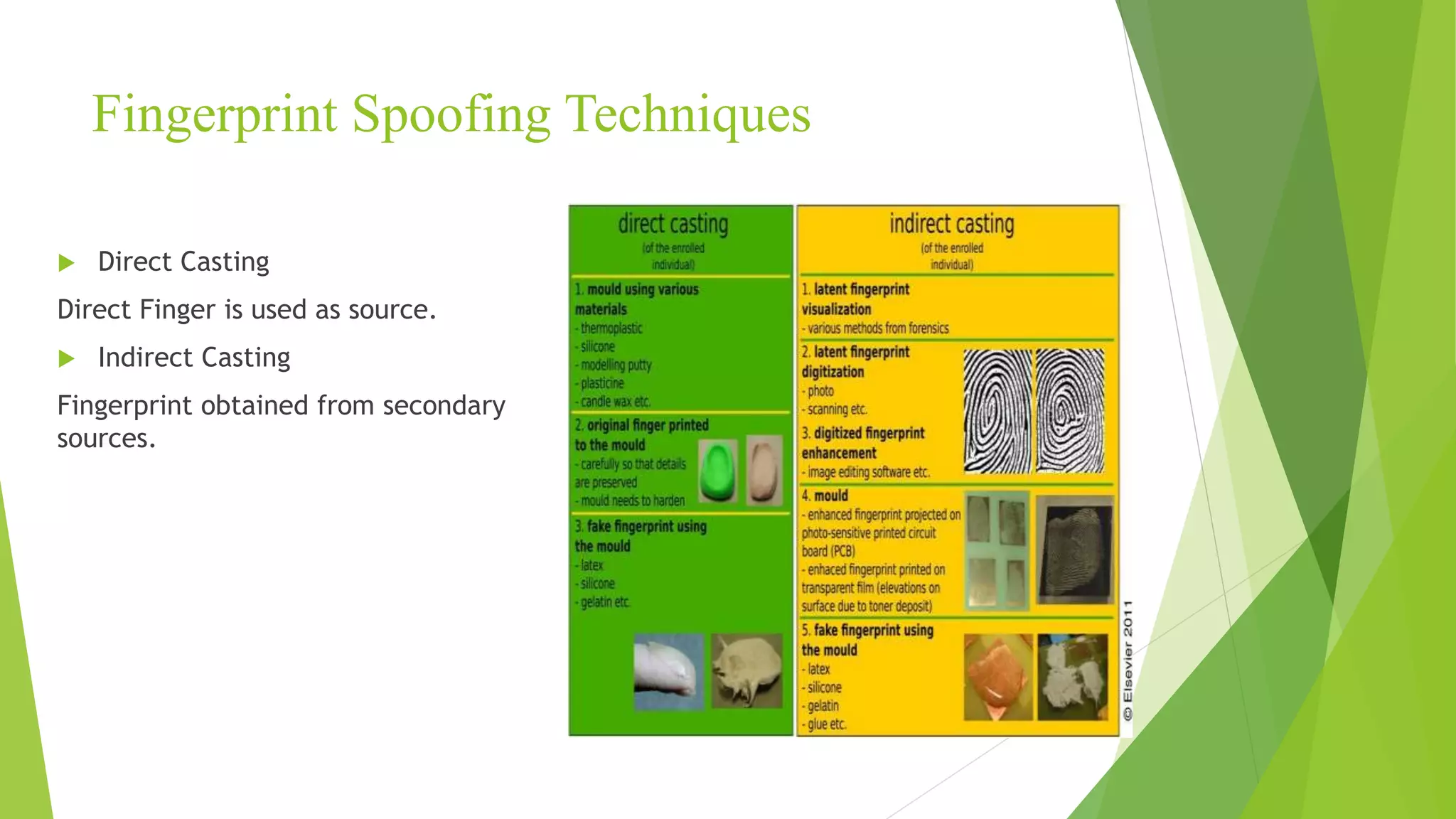
Fingerprint Spoofing Techniques
 Direct Casting
Direct Finger is used as source.
 Indirect Casting
Fingerprint obtained from secondary
sources.
Existing Methods
 Local Binary Pattern(LBP)
 Pore Detection
 Power Spectrum
 Ridges Wavelet
 Valley Wavelet
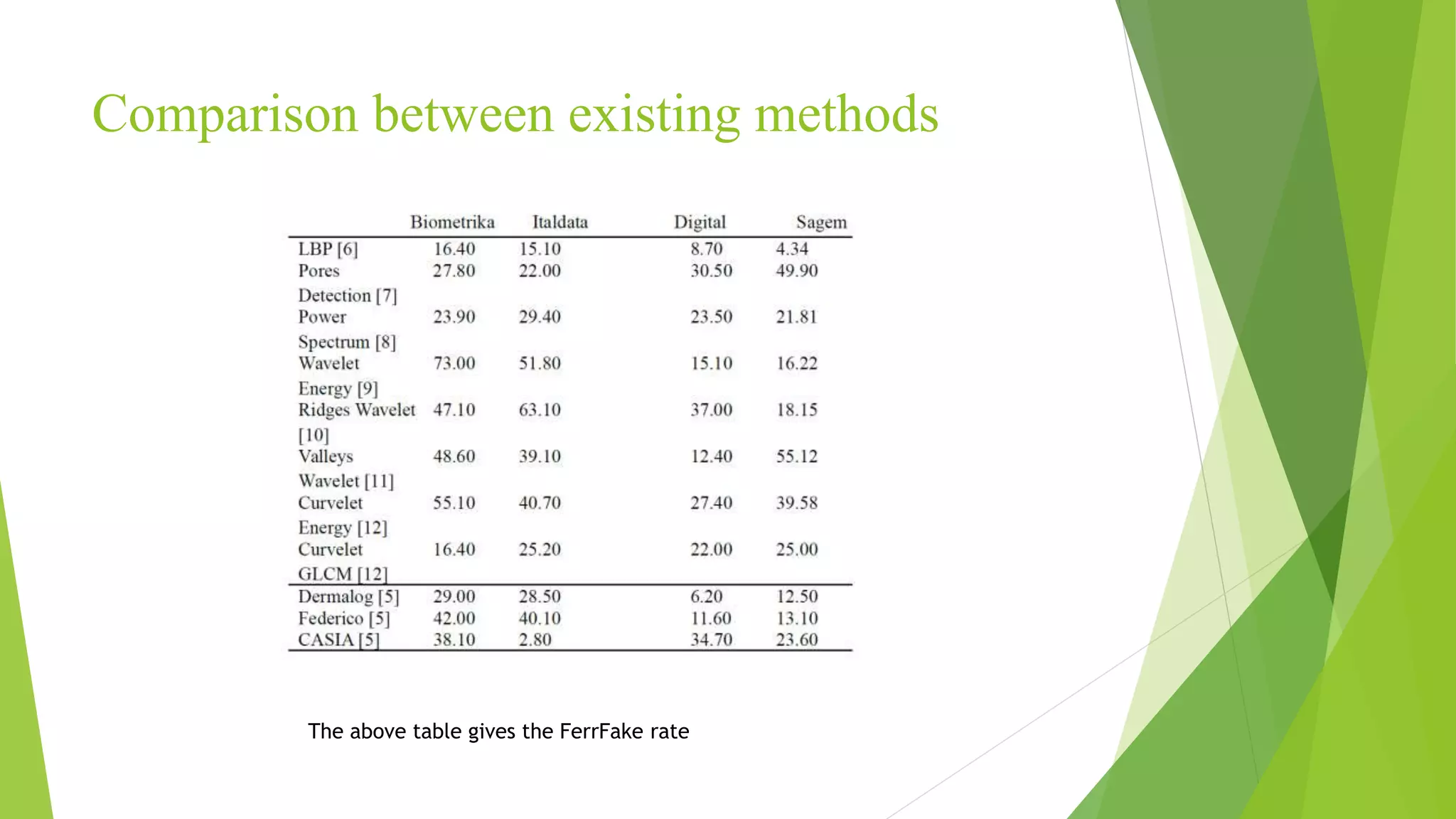
Comparison between existing methods
The above table gives the FerrFake rate
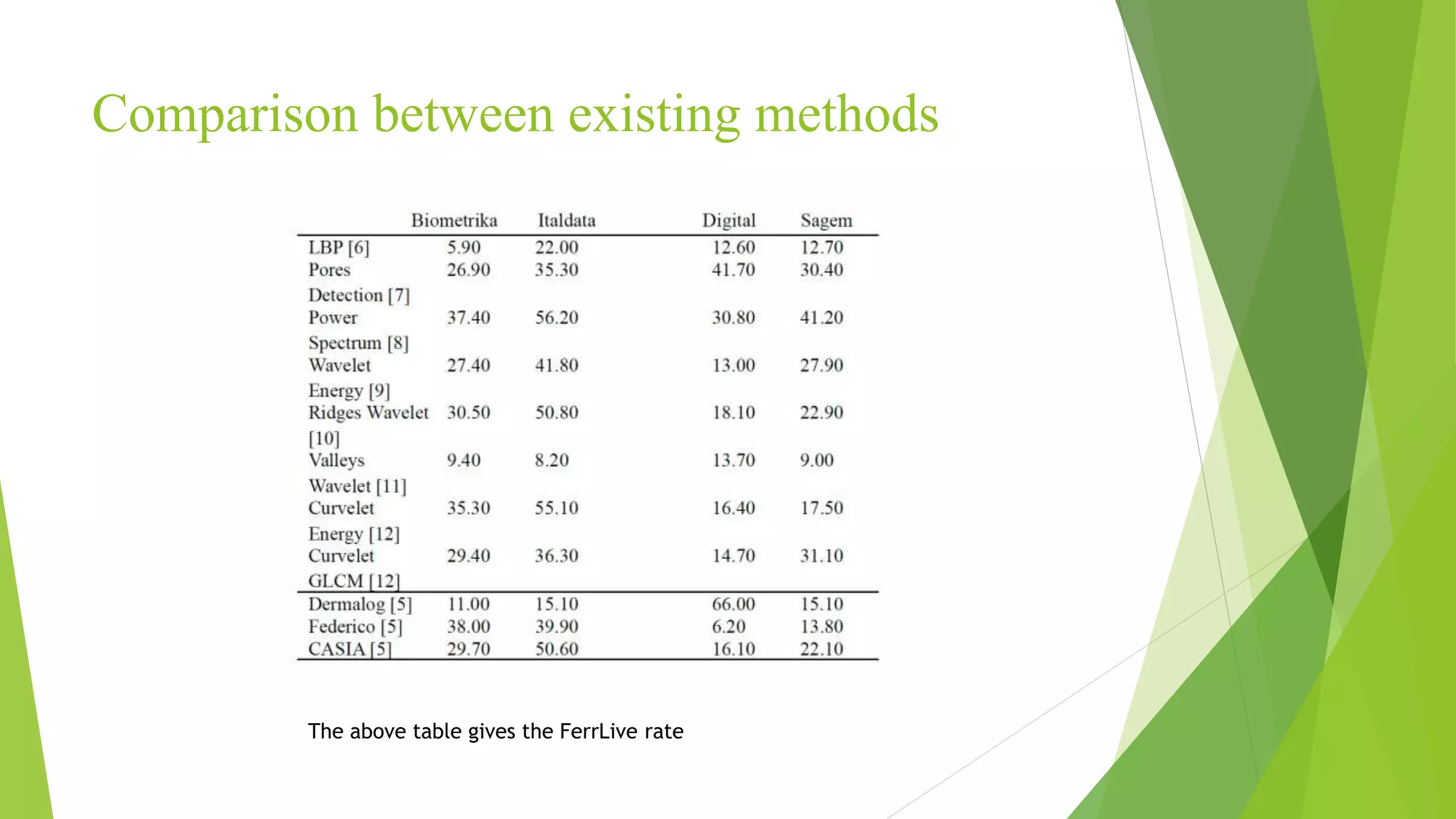
Comparison between existing methods
The above table gives the FerrLive rate
Overview of the proposed method
 Used for distinguishing spoofed and live.
 Makes use of correlation
 Based on the underlying assumption of same class
 Automatic Adaptation to new fingerprint images
Algorithms used
 Partial Least Square Method
1. It is mostly used for prediction
2. Used when factors are more as compared to observed values
3. In this method used for correlation
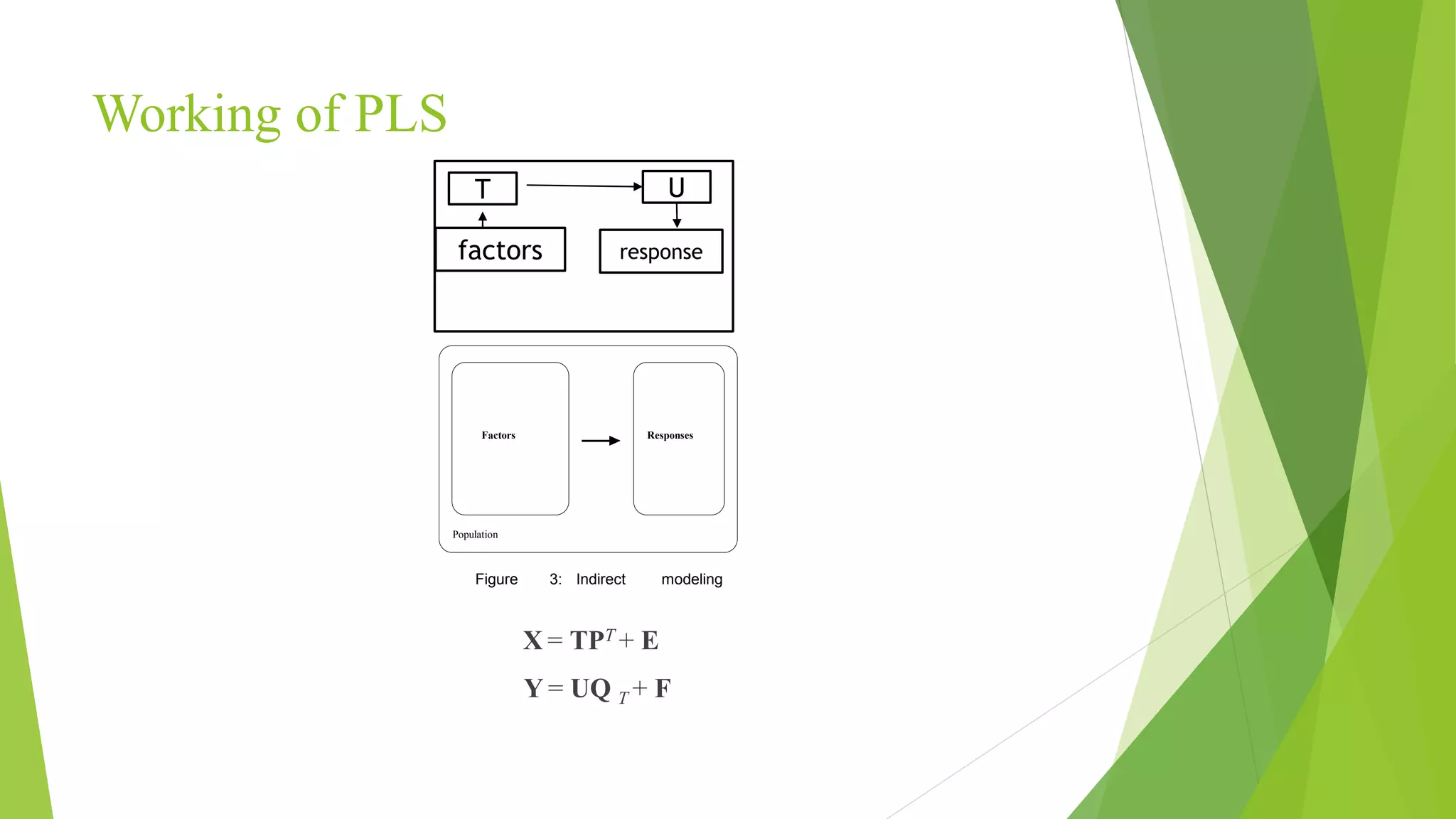
Working of PLS
X = TPT + E
Y = UQ T + F
Factors Responses
Population
Figure 3: Indirect modeling
T U
factors response
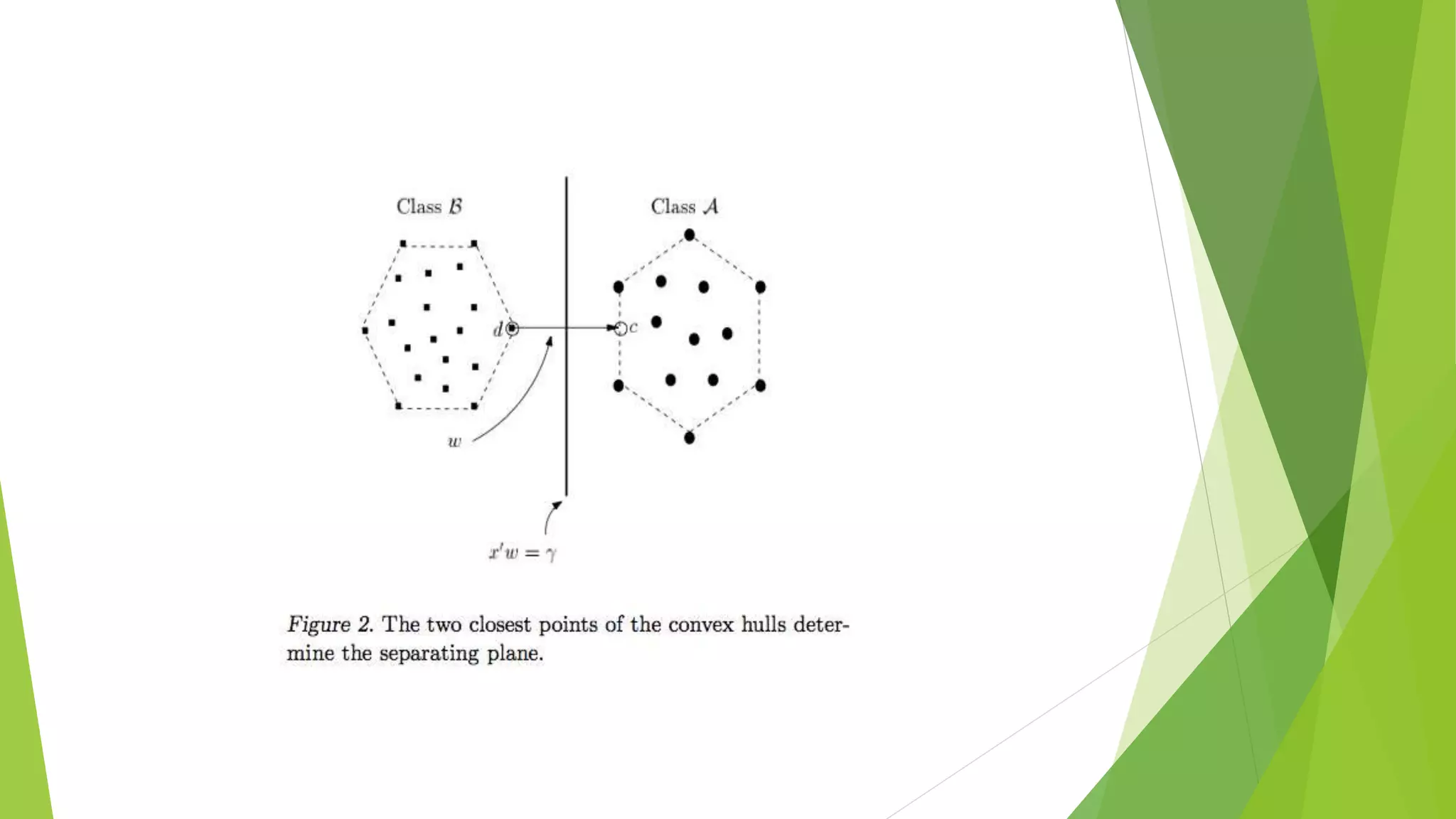
 Support Vector Machine(SVM)
1. SVM is a supervised learning method that generates ip/op
mapping function from a set of labelled training data
2. It basically calculates probability of input applied .
3. In this method it is combined along wih the classifier algorithms
like GMM,GC and QDA
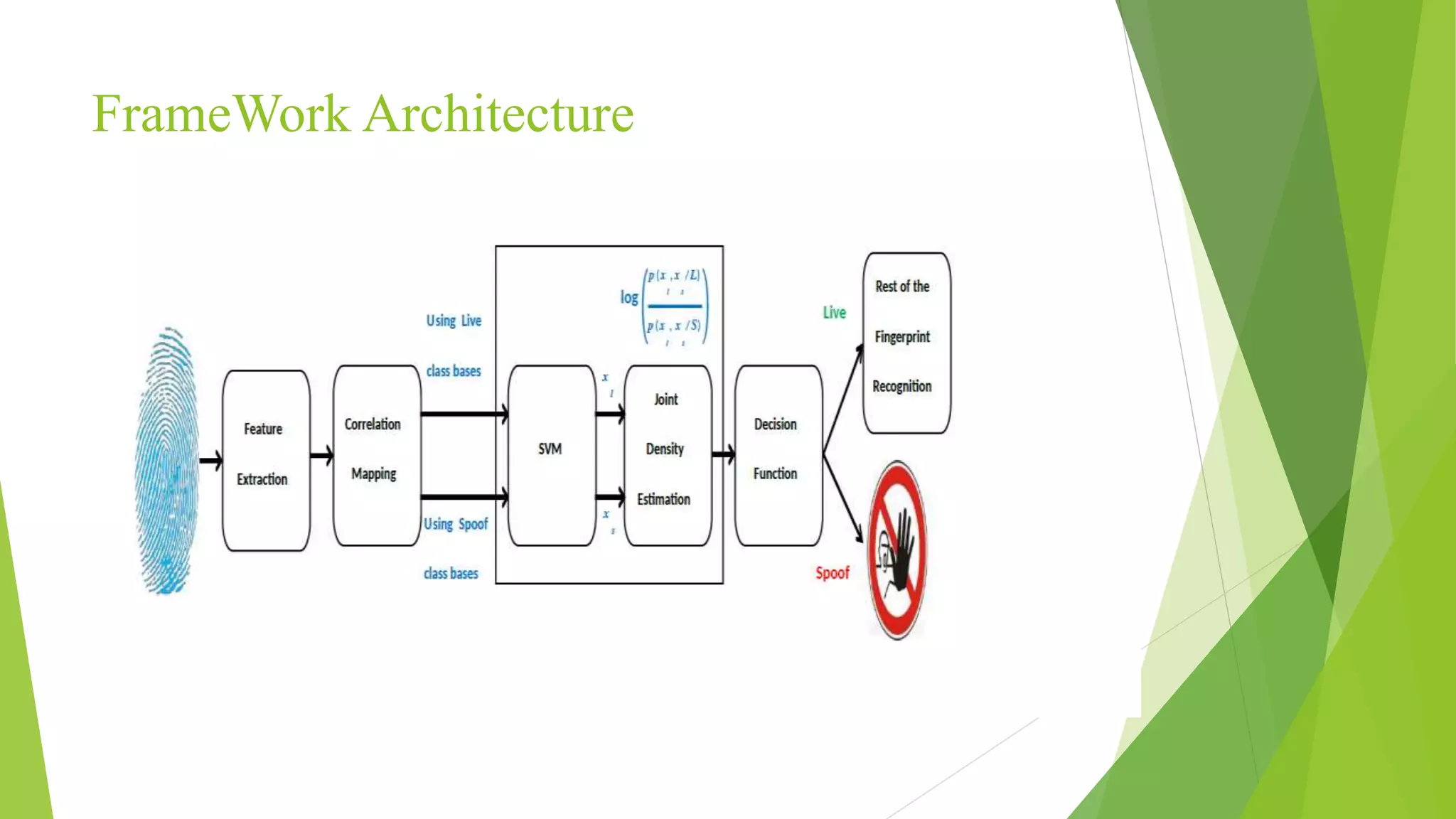
FrameWork Architecture
Working
 Feature Extraction phase
Features are extracted using specific descriptor like LBP and LPQ.
 Correlation Phase
Correlation is performed using PLS
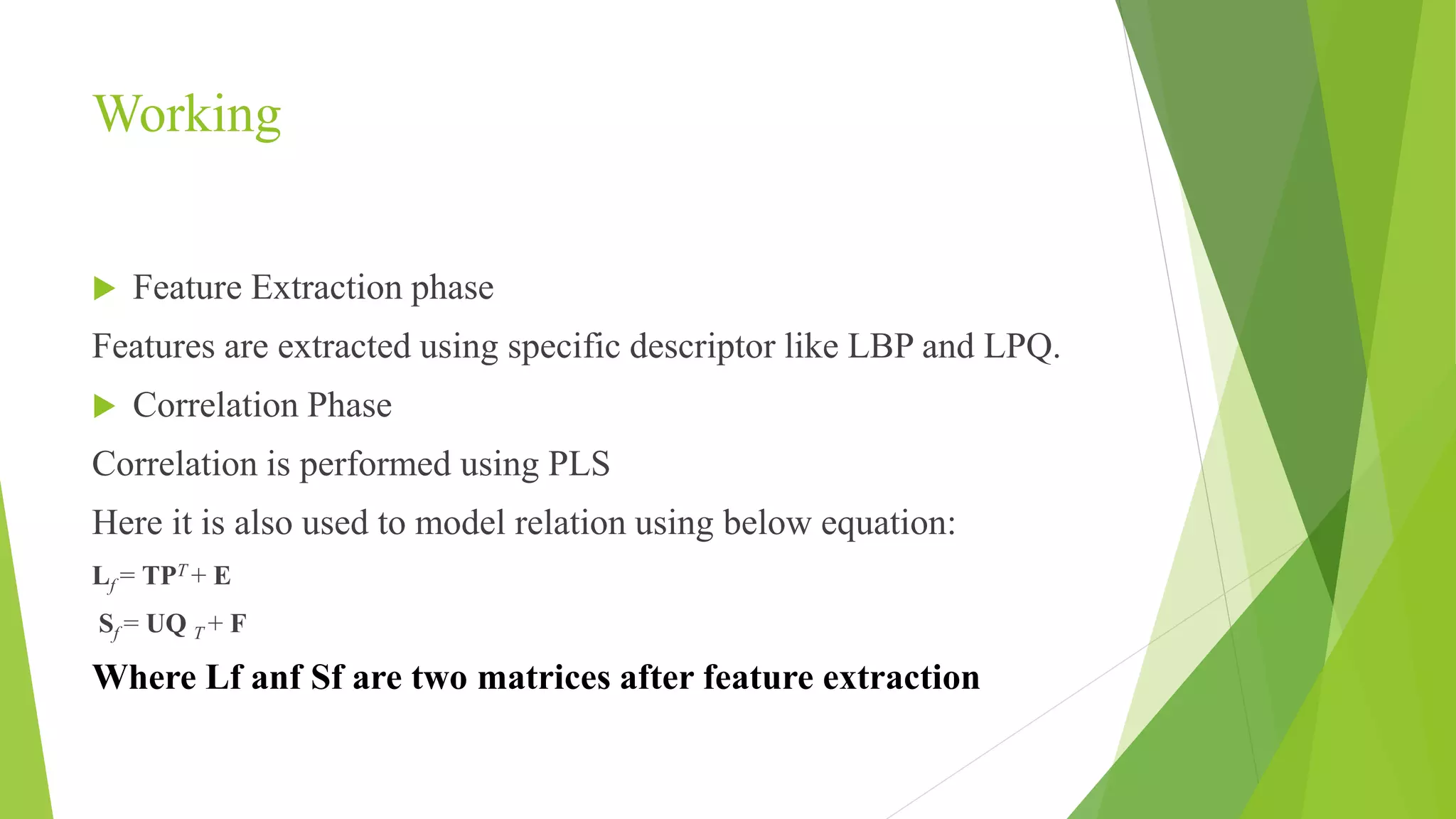
Here it is also used to model relation using below equation:
Lf = TPT + E
Sf = UQ T + F
Where Lf anf Sf are two matrices after feature extraction
 SVM Phase
Probablities are calculated for live and spoof classes
Denoted by xl,xs.
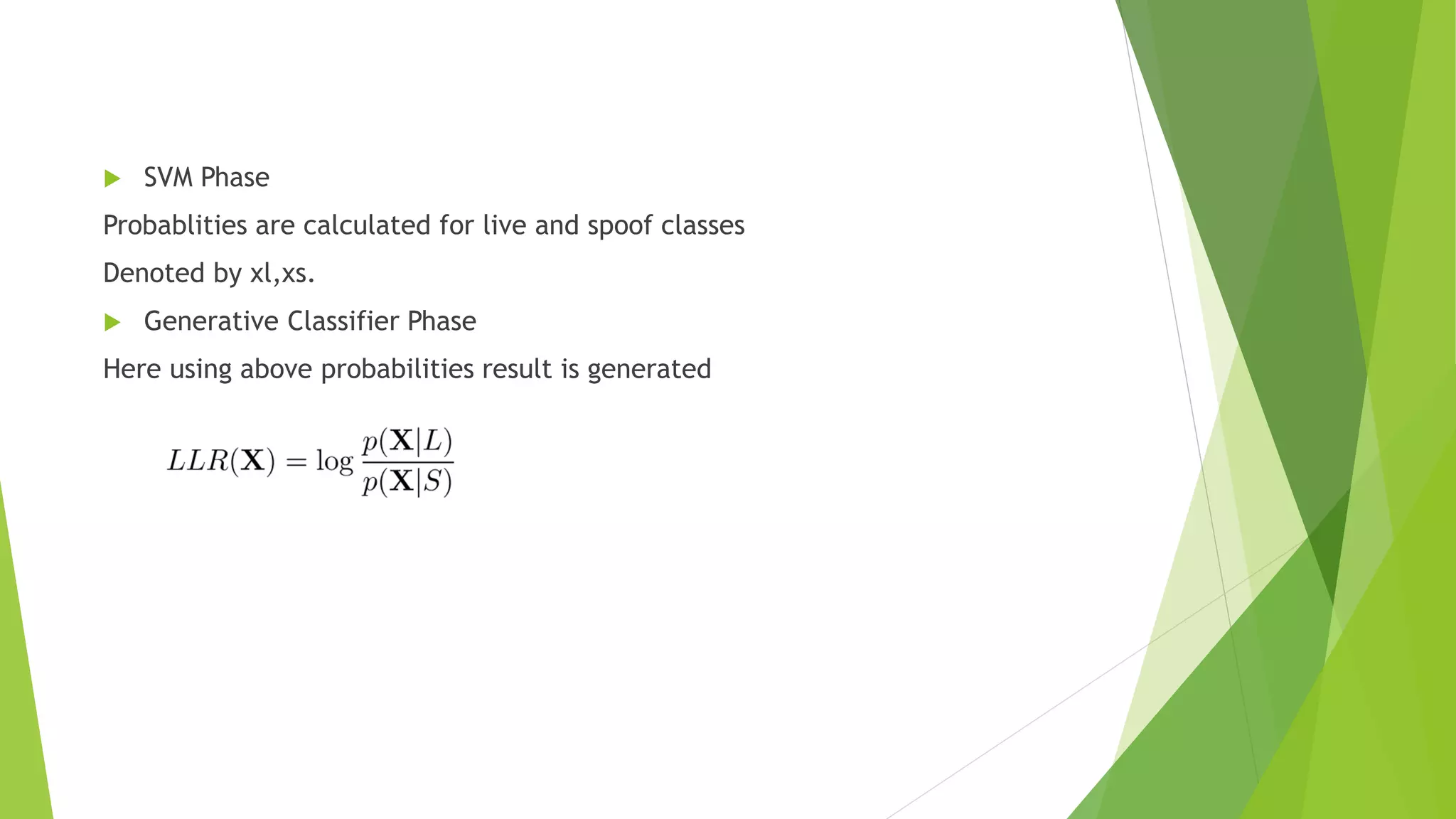
 Generative Classifier Phase
Here using above probabilities result is generated
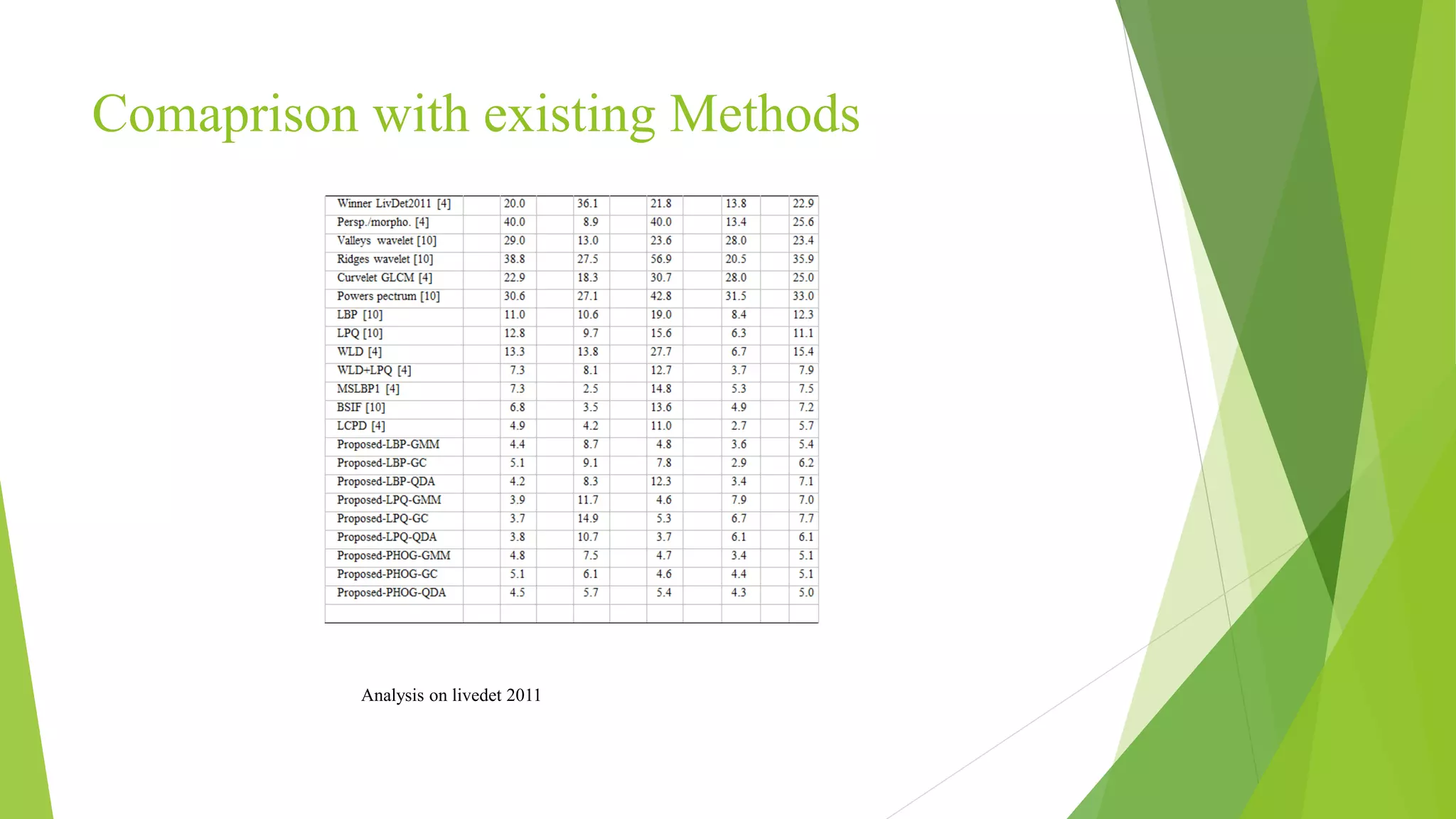
Comaprison with existing Methods
Analysis on livedet 2011
Analysis on livedet2013
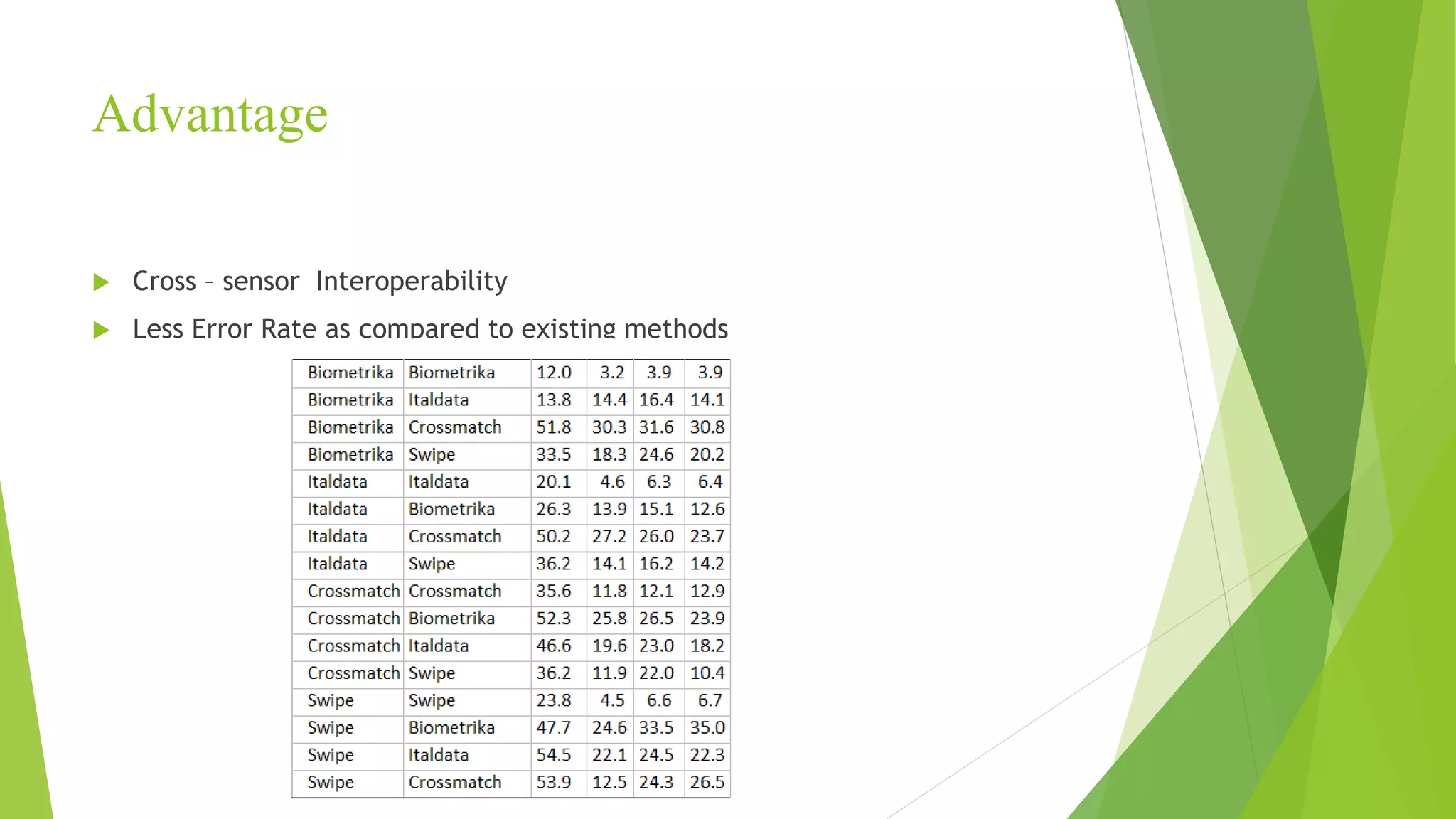
Advantage
 Cross – sensor Interoperability
 Less Error Rate as compared to existing methods
Thank You!

Correlation Based Fingerprint Liveness Detection

  • 1.
    Correlation Based Fingerprint LivenessDetection Under The Guidance of: Ashish Pawar Prof. Mrs. Vidya Patil 30349
  • 2.
    Biometrics  Bio =“life” metrics = “measure”  To analyse physiological and behavioural characteristics  Biometric is based on anatomic uniqueness of a person  Three ways authentication can be done: 1. Something the person knows(password) 2. Something the person has(key , special card) 3. Something the person is(fingerprint , footprint)
  • 3.
    Biometric Identifiers  FingerprintRecognition  Iris Recognition  Face Detection  Voice Recognition  DNA
  • 4.
    Why Fingerprint?  Unique Reliable  Fast and easy capture
  • 6.
    Liveness  It isa dichotomy of feature space into living and non-living There are essentially three different ways to introduce liveness detection into biometric systems: 1. Using extra hardware to acquire life signs 2. Using the information already captured by the system to detect life signs. 3. Using liveness information inherent to the biometric.
  • 7.
    Relevance of livenessDetection  Systems requiring high security level  Because fingerprints cannot be changed  Accurate authentication
  • 8.
    Features and patterns Features 1. Sweat Pores 2. Ridges and valleys 3. Perspiration  Patterns 1. Arch 2. Loop 3. Whorl
  • 9.
    Fingerprint Spoofing Techniques Direct Casting Direct Finger is used as source.  Indirect Casting Fingerprint obtained from secondary sources.
  • 10.
    Existing Methods  LocalBinary Pattern(LBP)  Pore Detection  Power Spectrum  Ridges Wavelet  Valley Wavelet
  • 11.
    Comparison between existingmethods The above table gives the FerrFake rate
  • 12.
    Comparison between existingmethods The above table gives the FerrLive rate
  • 13.
    Overview of theproposed method  Used for distinguishing spoofed and live.  Makes use of correlation  Based on the underlying assumption of same class  Automatic Adaptation to new fingerprint images
  • 14.
    Algorithms used  PartialLeast Square Method 1. It is mostly used for prediction 2. Used when factors are more as compared to observed values 3. In this method used for correlation
  • 15.
    Working of PLS X= TPT + E Y = UQ T + F Factors Responses Population Figure 3: Indirect modeling T U factors response
  • 16.
     Support VectorMachine(SVM) 1. SVM is a supervised learning method that generates ip/op mapping function from a set of labelled training data 2. It basically calculates probability of input applied . 3. In this method it is combined along wih the classifier algorithms like GMM,GC and QDA
  • 18.
  • 19.
    Working  Feature Extractionphase Features are extracted using specific descriptor like LBP and LPQ.  Correlation Phase Correlation is performed using PLS Here it is also used to model relation using below equation: Lf = TPT + E Sf = UQ T + F Where Lf anf Sf are two matrices after feature extraction
  • 20.
     SVM Phase Probablitiesare calculated for live and spoof classes Denoted by xl,xs.  Generative Classifier Phase Here using above probabilities result is generated
  • 21.
    Comaprison with existingMethods Analysis on livedet 2011
  • 22.
  • 23.
    Advantage  Cross –sensor Interoperability  Less Error Rate as compared to existing methods
  • 24.