There are going
to be times when
the successful
leader must
point out errors
and "correct"
those working with him. This is truly
an art, and one that most would-be
leaders fall down on.
Not long ago
Someone was
discussing
this subject
with
Walter Johnson,
vice-president of American Airlines.
They were discussing the real need for
criticism, and how it could be a real
help.
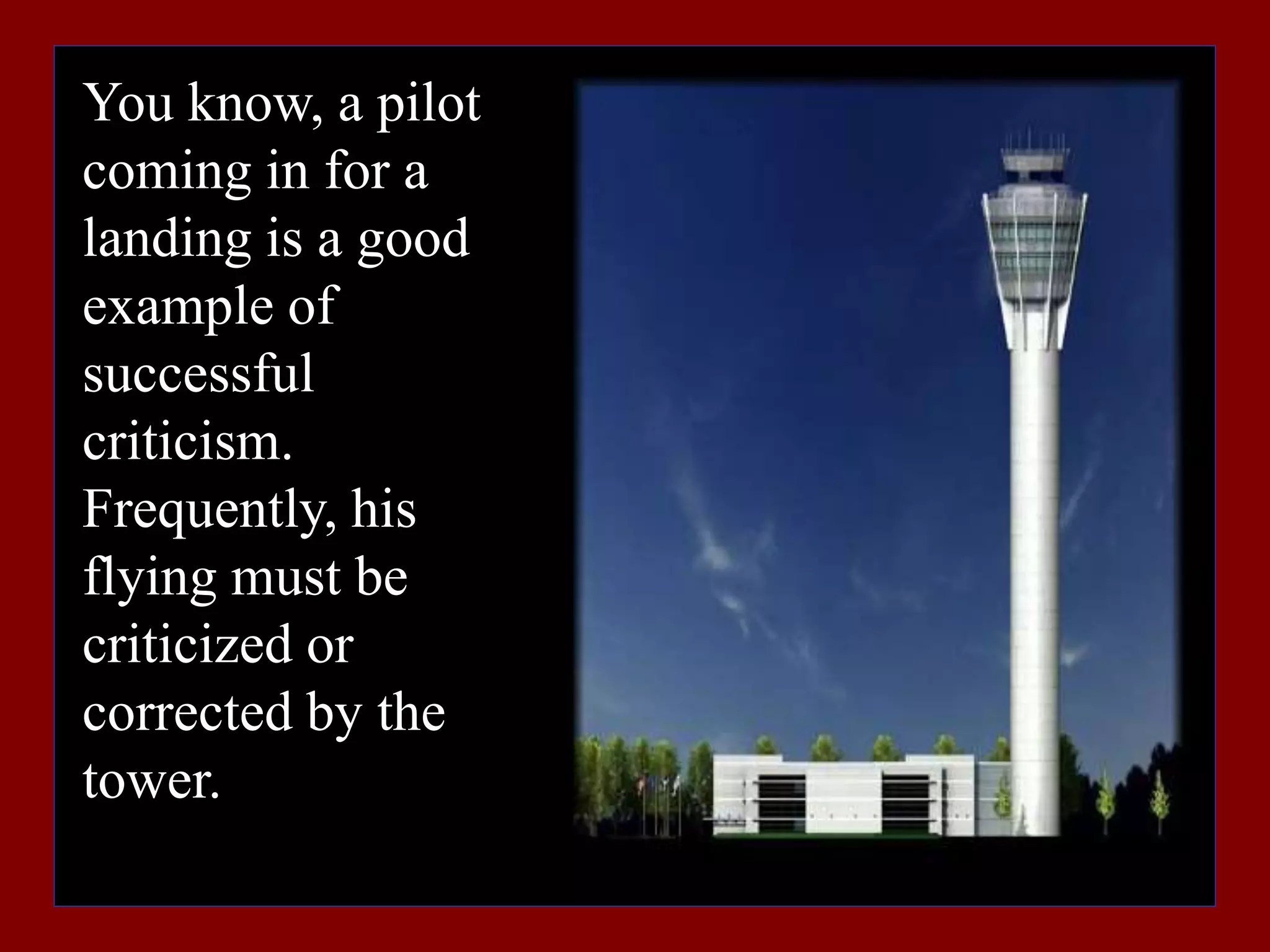
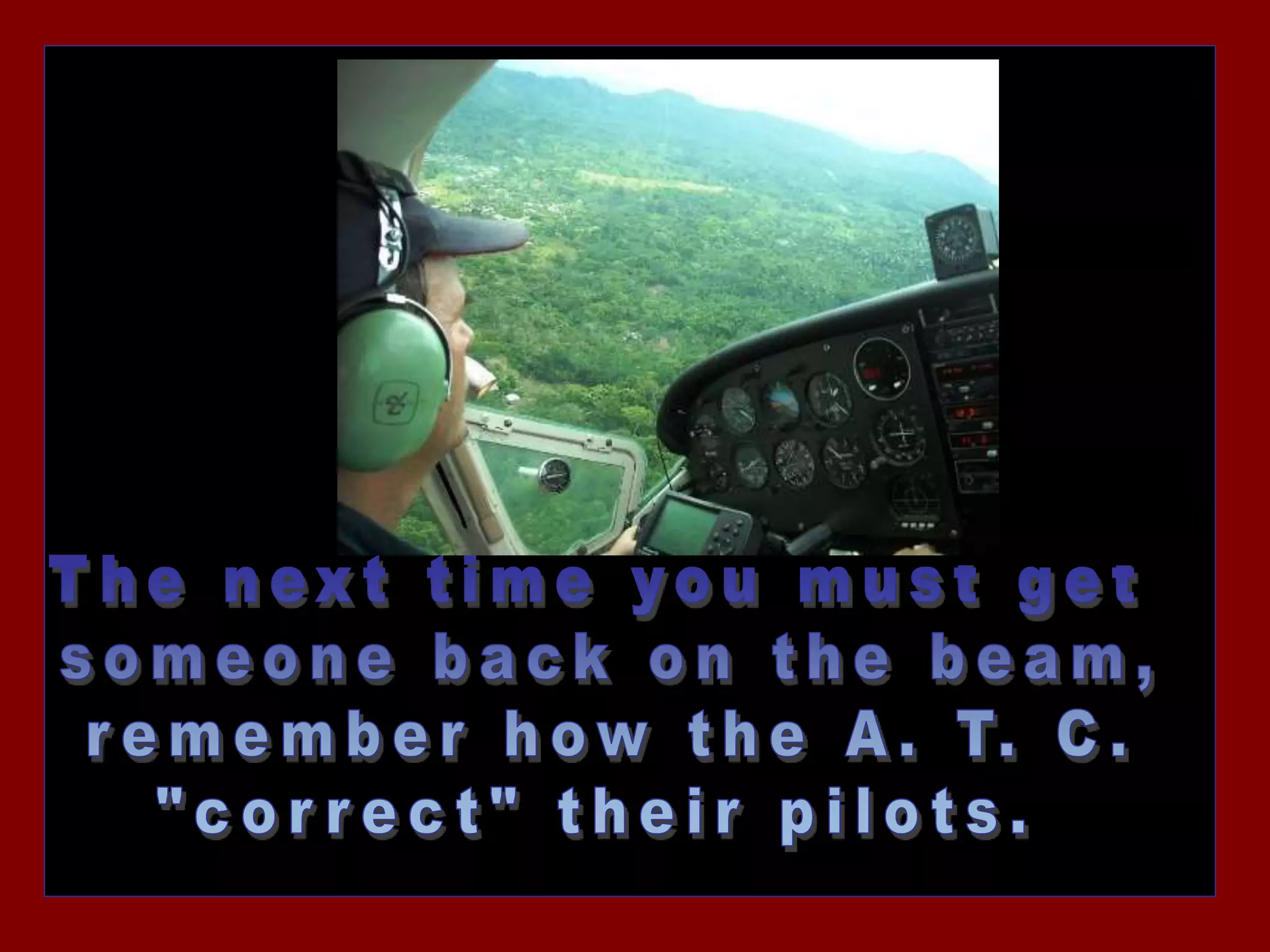
You know, a pilot
coming in for a
landing is a good
example of
successful
criticism.
Frequently, his
flying must be
criticized or
corrected by the
tower.
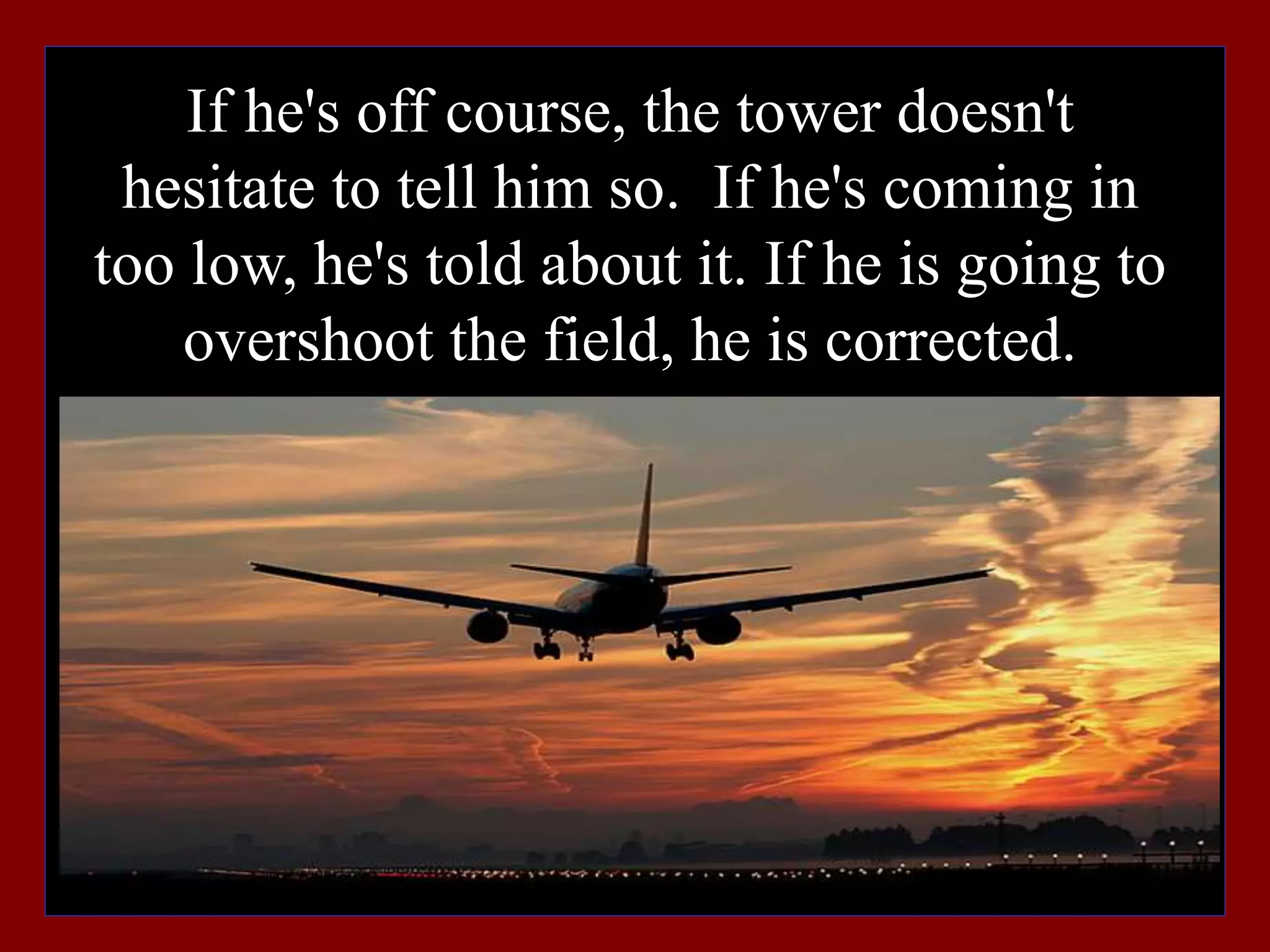
If he's off course, the tower doesn't
hesitate to tell him so. If he's coming in
too low, he's told about it. If he is going to
overshoot the field, he is corrected.
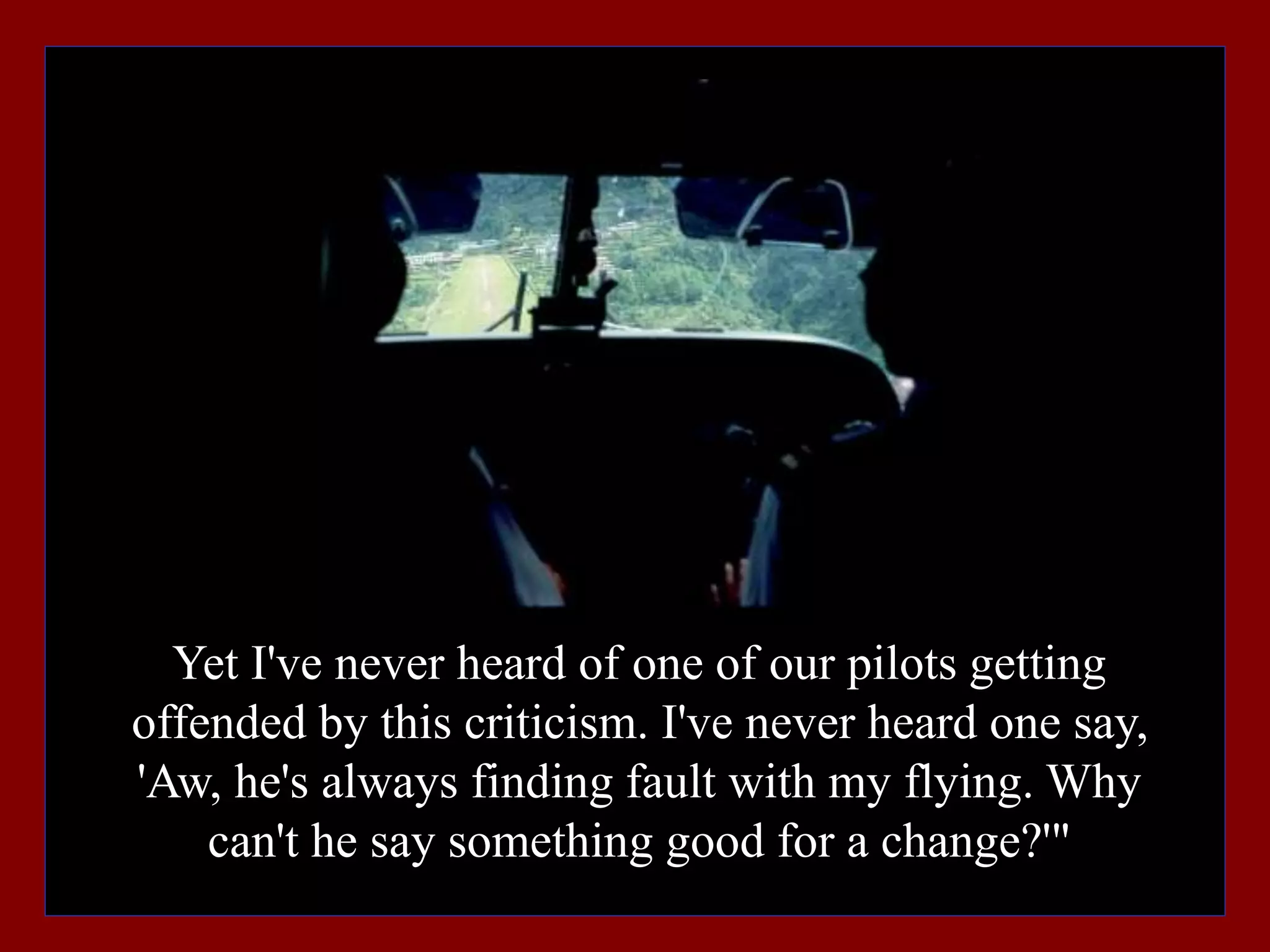
Yet I've never heard of one of our pilots getting
offended by this criticism. I've never heard one say,
'Aw, he's always finding fault with my flying. Why
can't he say something good for a change?'"
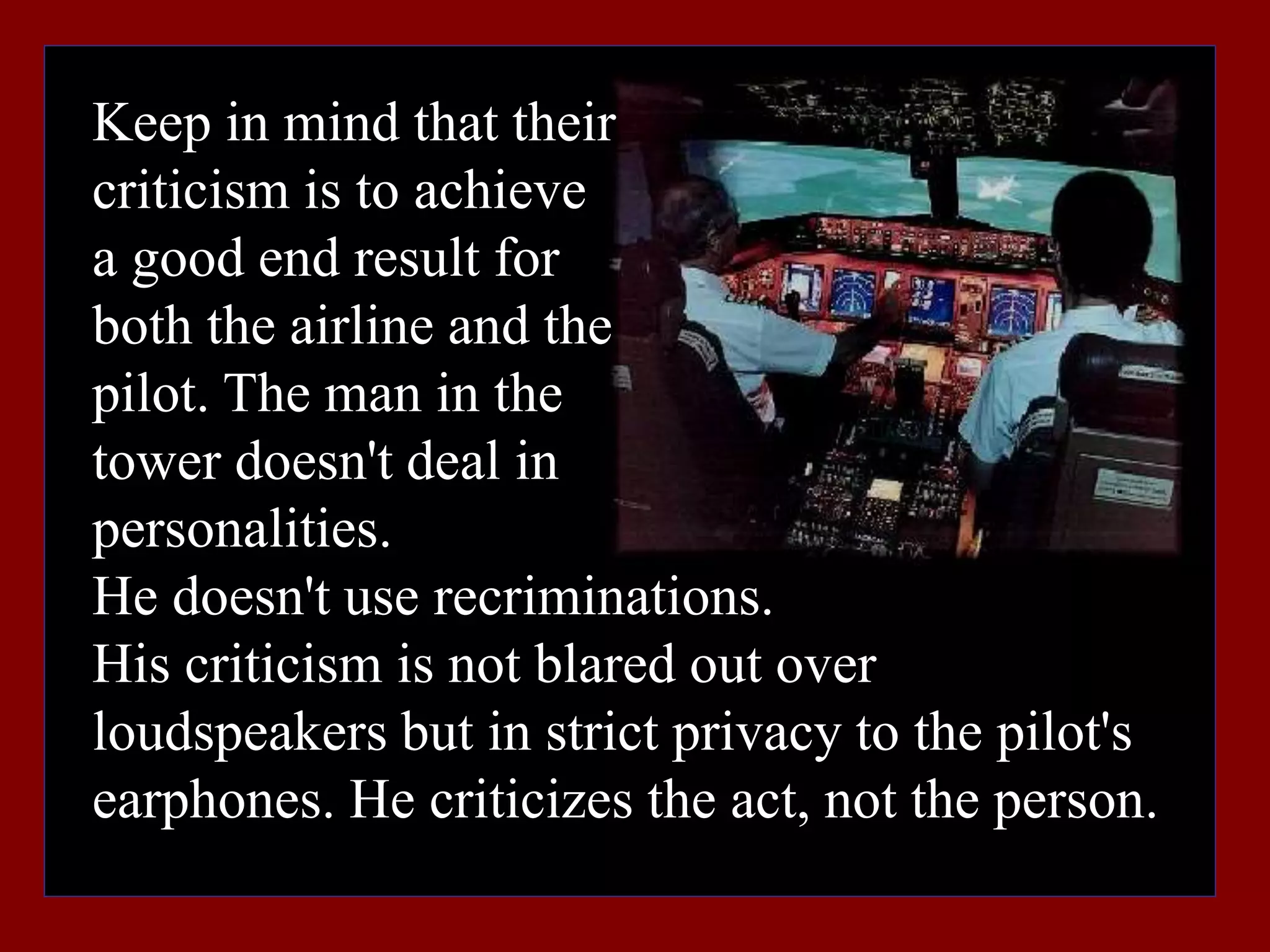
Keep in mind that their
criticism is to achieve
a good end result for
both the airline and the
pilot. The man in the
tower doesn't deal in
personalities.
He doesn't use recriminations.
His criticism is not blared out over
loudspeakers but in strict privacy to the pilot's
earphones. He criticizes the act, not the person.
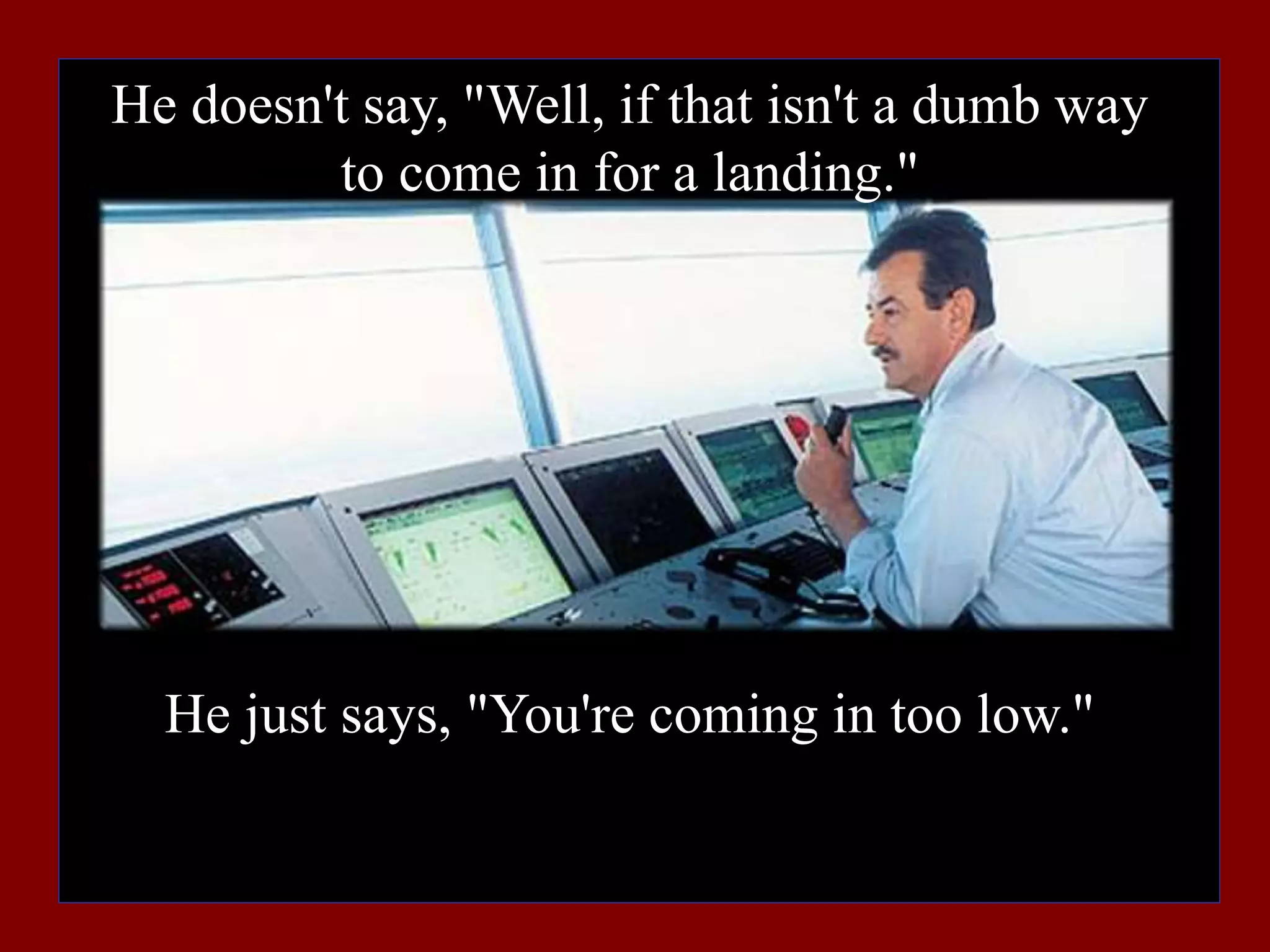
He doesn't say, "Well, if that isn't a dumb way
to come in for a landing."
He just says, "You're coming in too low."
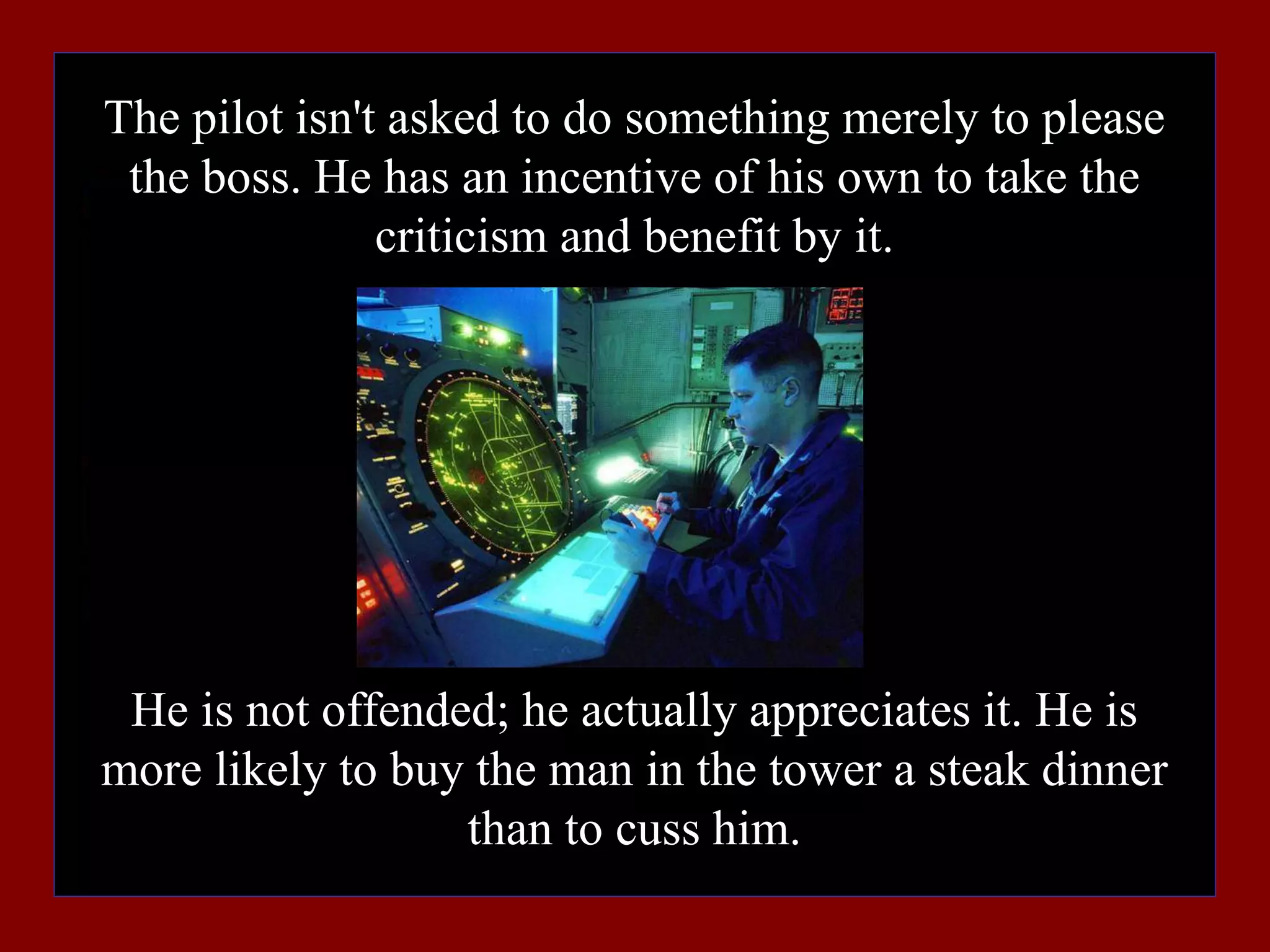
The pilot isn't asked to do something merely to please
the boss. He has an incentive of his own to take the
criticism and benefit by it.
He is not offended; he actually appreciates it. He is
more likely to buy the man in the tower a steak dinner
than to cuss him.
And the really
important thing
is that both the
pilot and his
"boss" achieve
some useful end
result.
If you want your criticism
to take effect, you must
not engage the other
person's ego against you.
The mildest form of
criticism made in the
presence of others is very
likely to be resented by
the other person.
Kind words, compliments,
and praise have the effect
of setting the stage in a
friendly atmosphere.
It serves notice on the
other fellow that you are not attacking his
ego, and puts him more at his ease.
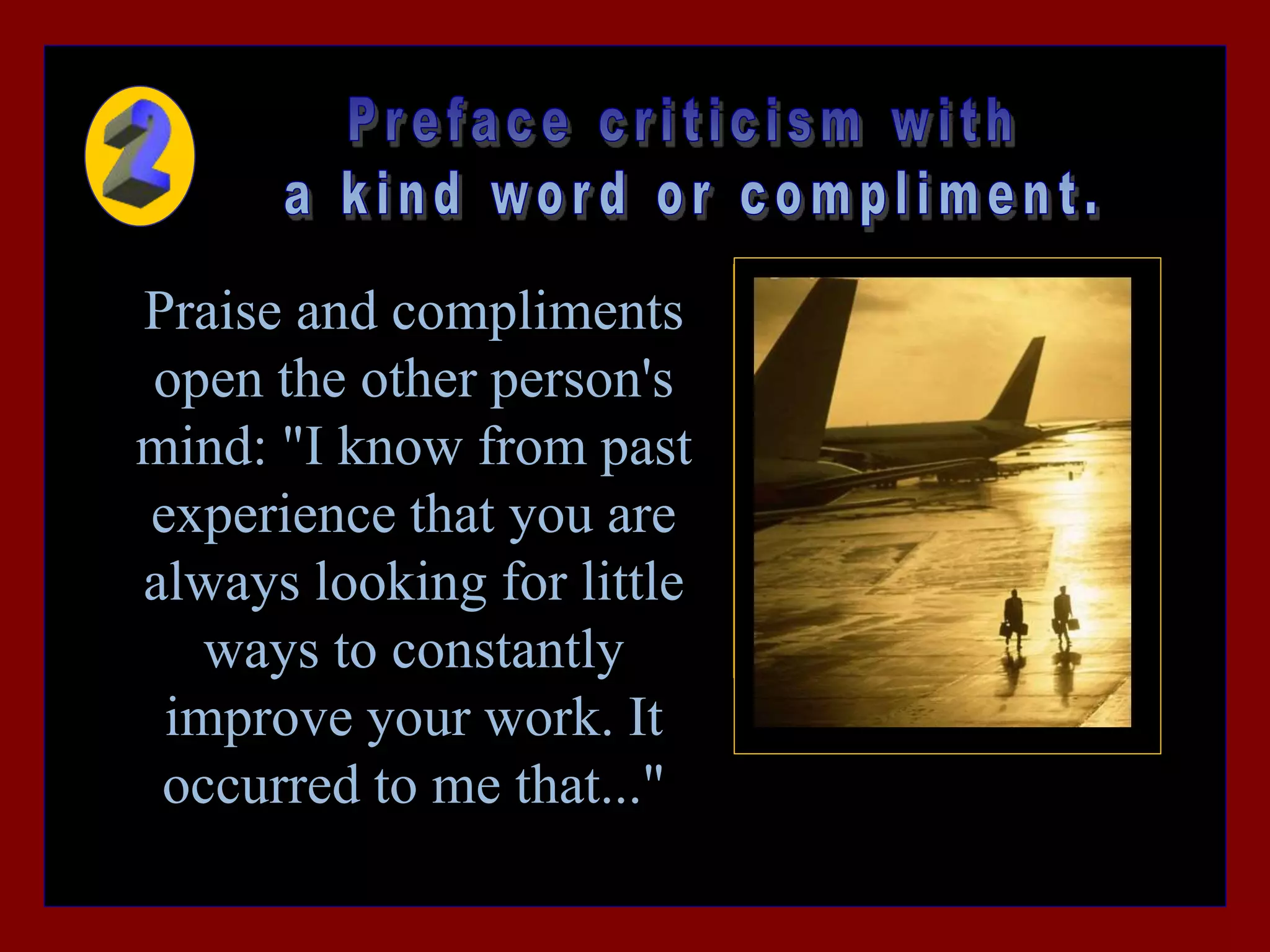
Praise and compliments
open the other person's
mind: "I know from past
experience that you are
always looking for little
ways to constantly
improve your work. It
occurred to me that..."
Criticize the act,
not the person.
After all, it's his
actions that you
are interested in
anyway.
Deal with the faults of others as gently
as you do with your own.
When you tell the
other person what
he did wrong, also
tell him how to do
it right.
The emphasis should not be on the mistake,
but the means and ways to correct the
mistake and avoid a recurrence.
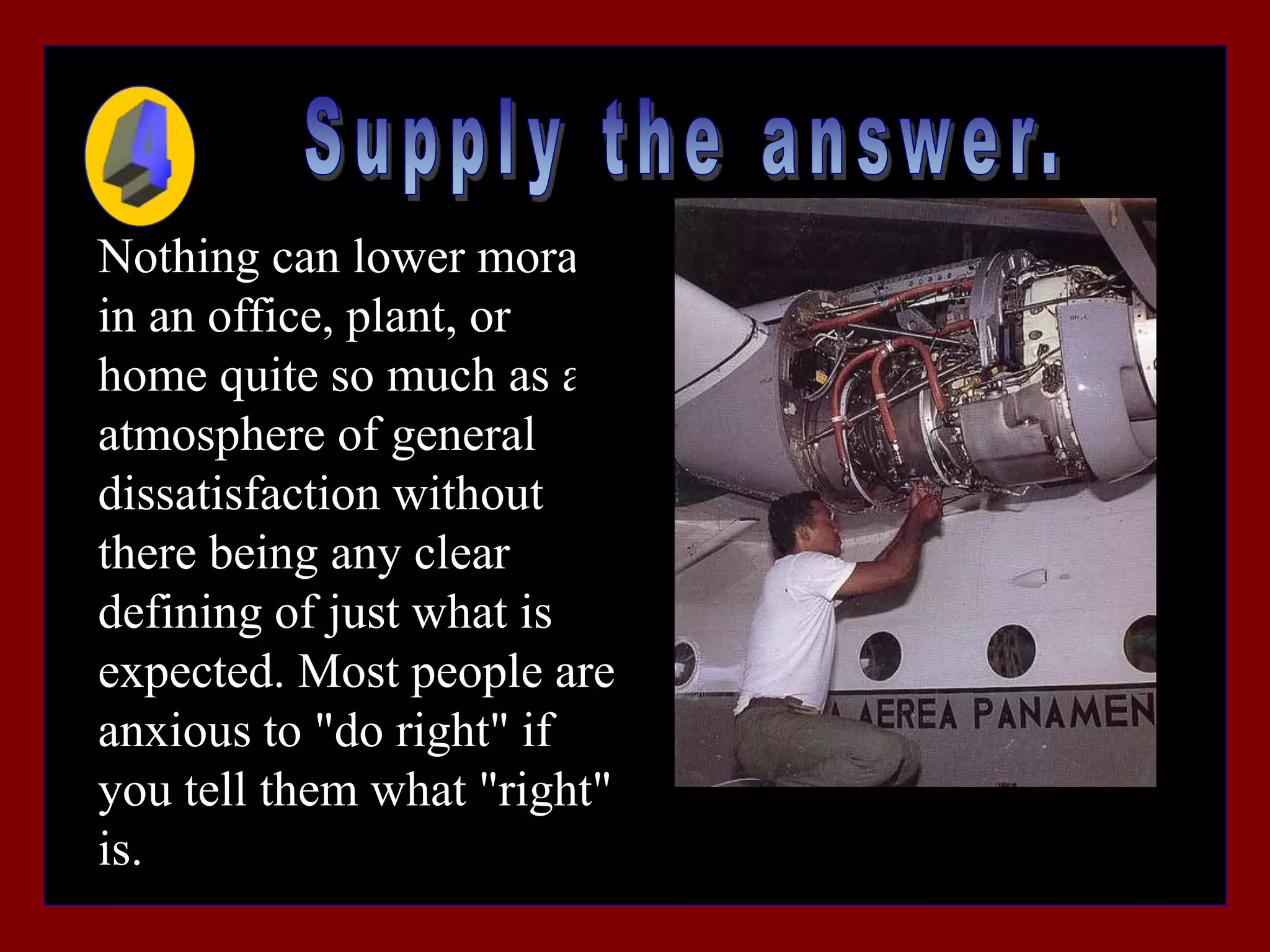
Nothing can lower morale
in an office, plant, or
home quite so much as an
atmosphere of general
dissatisfaction without
there being any clear
defining of just what is
expected. Most people are
anxious to "do right" if
you tell them what "right"
is.
Asking always brings
more cooperation than
demanding. When you
demand, you place the
other fellow in the role
of slave and yourself in
the role of slave driver.
When you ask,
you place him in
the role of a
member of your
team. Team
feeling gets much
more cooperation
than force.
To call attention
to a given error
one time is
justified. Twice
is unnecessary.
And three times
is nagging.
Remember your goal in criticism:
TO GET A JOB DONE!
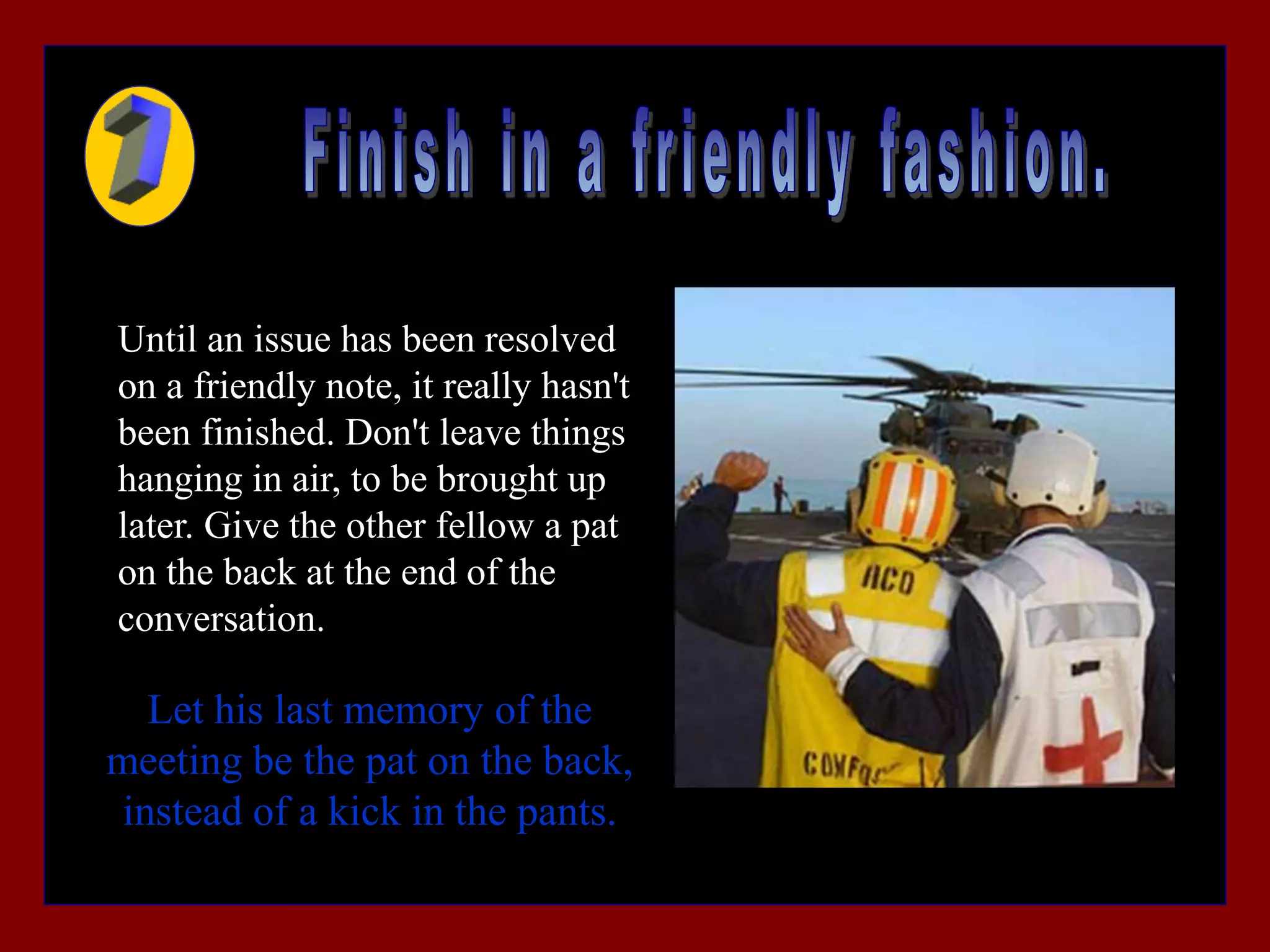
Until an issue has been resolved
on a friendly note, it really hasn't
been finished. Don't leave things
hanging in air, to be brought up
later. Give the other fellow a pat
on the back at the end of the
conversation.
Let his last memory of the
meeting be the pat on the back,
instead of a kick in the pants.
Correcting without being critical

Correcting without being critical

  • 2.
    There are going tobe times when the successful leader must point out errors and "correct" those working with him. This is truly an art, and one that most would-be leaders fall down on.
  • 4.
    Not long ago Someonewas discussing this subject with Walter Johnson, vice-president of American Airlines. They were discussing the real need for criticism, and how it could be a real help.
  • 5.
    You know, apilot coming in for a landing is a good example of successful criticism. Frequently, his flying must be criticized or corrected by the tower.
  • 6.
    If he's offcourse, the tower doesn't hesitate to tell him so. If he's coming in too low, he's told about it. If he is going to overshoot the field, he is corrected.
  • 7.
    Yet I've neverheard of one of our pilots getting offended by this criticism. I've never heard one say, 'Aw, he's always finding fault with my flying. Why can't he say something good for a change?'"
  • 8.
    Keep in mindthat their criticism is to achieve a good end result for both the airline and the pilot. The man in the tower doesn't deal in personalities. He doesn't use recriminations. His criticism is not blared out over loudspeakers but in strict privacy to the pilot's earphones. He criticizes the act, not the person.
  • 10.
    He doesn't say,"Well, if that isn't a dumb way to come in for a landing." He just says, "You're coming in too low."
  • 11.
    The pilot isn'tasked to do something merely to please the boss. He has an incentive of his own to take the criticism and benefit by it. He is not offended; he actually appreciates it. He is more likely to buy the man in the tower a steak dinner than to cuss him.
  • 12.
    And the really importantthing is that both the pilot and his "boss" achieve some useful end result.
  • 14.
    If you wantyour criticism to take effect, you must not engage the other person's ego against you. The mildest form of criticism made in the presence of others is very likely to be resented by the other person.
  • 16.
    Kind words, compliments, andpraise have the effect of setting the stage in a friendly atmosphere. It serves notice on the other fellow that you are not attacking his ego, and puts him more at his ease.
  • 17.
    Praise and compliments openthe other person's mind: "I know from past experience that you are always looking for little ways to constantly improve your work. It occurred to me that..."
  • 19.
    Criticize the act, notthe person. After all, it's his actions that you are interested in anyway. Deal with the faults of others as gently as you do with your own.
  • 21.
    When you tellthe other person what he did wrong, also tell him how to do it right. The emphasis should not be on the mistake, but the means and ways to correct the mistake and avoid a recurrence.
  • 22.
    Nothing can lowermorale in an office, plant, or home quite so much as an atmosphere of general dissatisfaction without there being any clear defining of just what is expected. Most people are anxious to "do right" if you tell them what "right" is.
  • 23.
    Asking always brings morecooperation than demanding. When you demand, you place the other fellow in the role of slave and yourself in the role of slave driver.
  • 24.
    When you ask, youplace him in the role of a member of your team. Team feeling gets much more cooperation than force.
  • 25.
    To call attention toa given error one time is justified. Twice is unnecessary. And three times is nagging. Remember your goal in criticism: TO GET A JOB DONE!
  • 27.
    Until an issuehas been resolved on a friendly note, it really hasn't been finished. Don't leave things hanging in air, to be brought up later. Give the other fellow a pat on the back at the end of the conversation. Let his last memory of the meeting be the pat on the back, instead of a kick in the pants.