Core Layers of
Enterprise Information
Security Architecture (EISA)
Swipe
Swipe
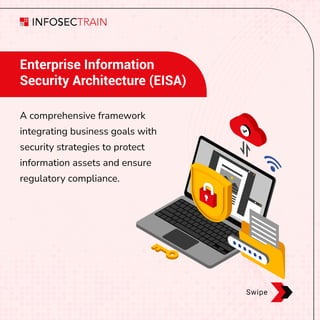
Enterprise Information
Security Architecture (EISA)
A comprehensive framework
integrating business goals with
security strategies to protect
information assets and ensure
regulatory compliance.
Core Layers of EISA
1 Business Context
Swipe
Align security with business goals, risk
tolerance, and regulations
Support and enhance business
functionality
Swipe
Establish security policies, standards, and
guidelines
Define acceptable use, data classification,
and incident response protocols
2 Governance
Swipe
3 Security Services
Preventive: Firewalls, IDS, encryption
Detective: SIEM tools for incident detection
Corrective: Incident response plans
Swipe
4 Security Processes
Risk Assessments: Identify and evaluate risks
Incident Response: Plan for effective response and
recovery
Security Audits: Review and ensure control
effectiveness
Compliance Monitoring: Adhere to regulations and
data privacy laws
Swipe
5 Technology Architecture
Hardware: Secure servers, workstations, network
devices
Software: Secure applications, patch management
Network Security: Segmentation, access controls
Swipe
6 Operational Security
Security Awareness Training: Educate employees
on optimal procedures and protocols
Patch Management: Regularly apply security
patches
Log Management: Analyze and store security logs
Vulnerability Management: Identify and address
system vulnerabilities
To Get More Insights Through Our FREE
FOUND THIS USEFUL?
Courses | Workshops | eBooks | Checklists | Mock Tests
LIKE FOLLOW
SHARE

Core Layers of Enterprise Information Security Architecture (EISA).pdf

  • 1.
    Core Layers of EnterpriseInformation Security Architecture (EISA) Swipe
  • 2.
    Swipe Enterprise Information Security Architecture(EISA) A comprehensive framework integrating business goals with security strategies to protect information assets and ensure regulatory compliance.
  • 3.
    Core Layers ofEISA 1 Business Context Swipe Align security with business goals, risk tolerance, and regulations Support and enhance business functionality
  • 4.
    Swipe Establish security policies,standards, and guidelines Define acceptable use, data classification, and incident response protocols 2 Governance
  • 5.
    Swipe 3 Security Services Preventive:Firewalls, IDS, encryption Detective: SIEM tools for incident detection Corrective: Incident response plans
  • 6.
    Swipe 4 Security Processes RiskAssessments: Identify and evaluate risks Incident Response: Plan for effective response and recovery Security Audits: Review and ensure control effectiveness Compliance Monitoring: Adhere to regulations and data privacy laws
  • 7.
    Swipe 5 Technology Architecture Hardware:Secure servers, workstations, network devices Software: Secure applications, patch management Network Security: Segmentation, access controls
  • 8.
    Swipe 6 Operational Security SecurityAwareness Training: Educate employees on optimal procedures and protocols Patch Management: Regularly apply security patches Log Management: Analyze and store security logs Vulnerability Management: Identify and address system vulnerabilities
  • 9.
    To Get MoreInsights Through Our FREE FOUND THIS USEFUL? Courses | Workshops | eBooks | Checklists | Mock Tests LIKE FOLLOW SHARE