World COPD Day
Dr. Mohammad Zannatul Rayhan
MBBS, MD(Pulmonology)
Medical Officer
Chest Disease Hospital, Rajshahi
COPD
 COPD is a lung disease caused by
chronic interference with lung airflow
that impairs breathing, and is not fully
reversible
 Usually symptoms- shortness of breath,
recurrent coughing, clearing throat, and
progressive exercise intolerance,
worsen over time
 Many doctors and researchers consider
terms such as chronic bronchitis and
emphysema as forms of COPD
 The major cause of COPD is smoking
Asthma
 It is a respiratory condition
marked by spasms of the
bronchi, due to inflamed
and narrowed
 It causes difficulty in
breathing that often results
from an allergic reaction
 Asthma usually causes
recurring periods of
shortness of breath,
wheezing and/or chest
tightness
Similarities between
COPD vs. asthma
 Coughing
 Shortness of breath
 Chest tightness
 Exercise intolerance
 Wheezing
 Anxiety with increased heart rate may
occur in both diseases.
Differences between
COPD vs. asthma
 In asthma, breathing can return to normal between attacks,
while breathing with COPD usually does not return to normal.
 The symptoms of COPD gradually become more severe
 COPD produces more mucus and phlegm compared to asthma
 Chronic cough is common with COPD
 People with COPD often have chronic blueness to fingernail
beds and/or lips
 Asthma can occur in a person of almost any age, while COPD
usually occurs in those over age 40
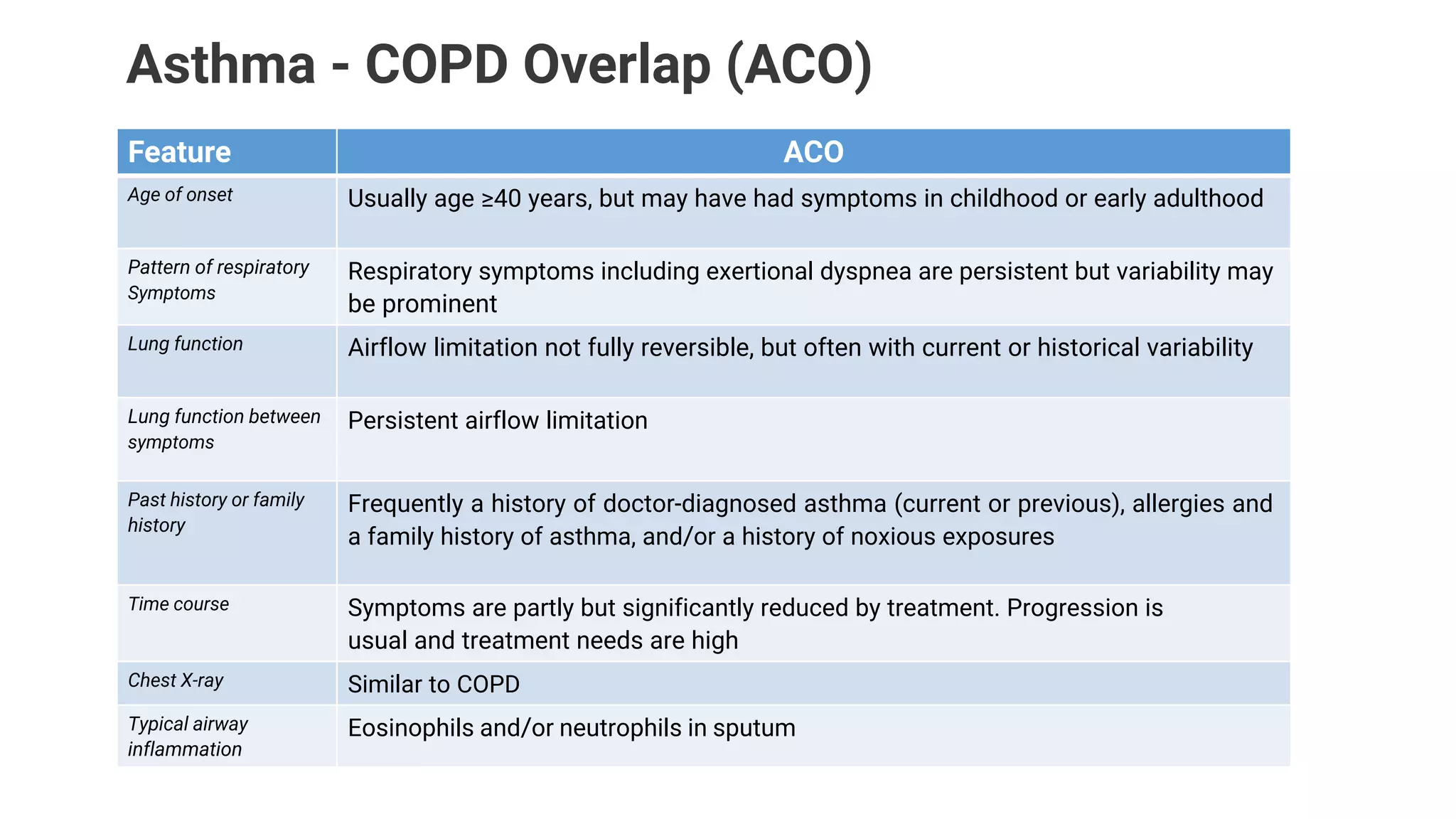
Asthma - COPD Overlap (ACO)
Feature ACO
Age of onset Usually age ≥40 years, but may have had symptoms in childhood or early adulthood
Pattern of respiratory
Symptoms
Respiratory symptoms including exertional dyspnea are persistent but variability may
be prominent
Lung function Airflow limitation not fully reversible, but often with current or historical variability
Lung function between
symptoms
Persistent airflow limitation
Past history or family
history
Frequently a history of doctor-diagnosed asthma (current or previous), allergies and
a family history of asthma, and/or a history of noxious exposures
Time course Symptoms are partly but significantly reduced by treatment. Progression is
usual and treatment needs are high
Chest X-ray Similar to COPD
Typical airway
inflammation
Eosinophils and/or neutrophils in sputum
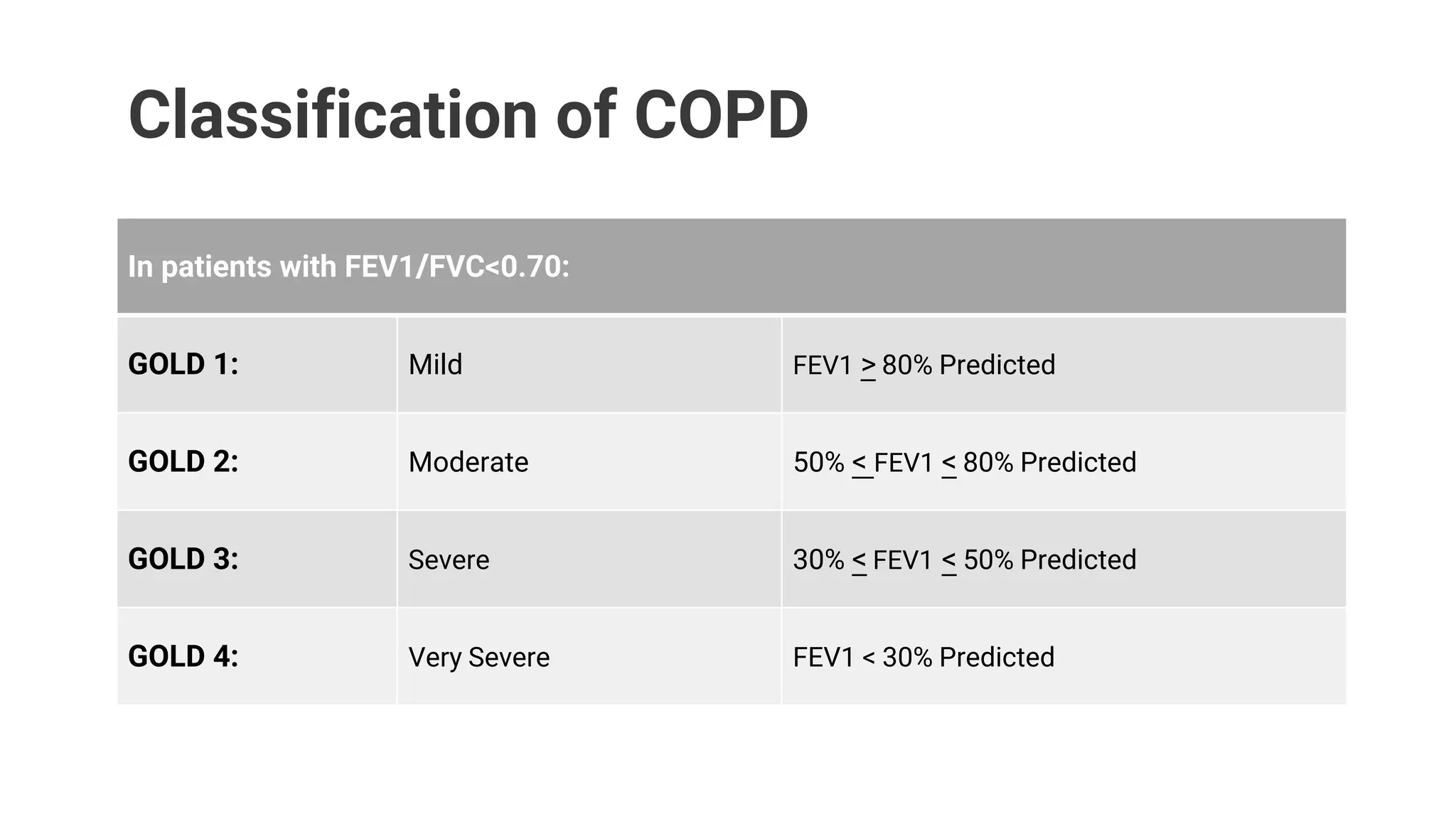
Classification of COPD
In patients with FEV1/FVC<0.70:
GOLD 1: Mild FEV1 > 80% Predicted
GOLD 2: Moderate 50% < FEV1 < 80% Predicted
GOLD 3: Severe 30% < FEV1 < 50% Predicted
GOLD 4: Very Severe FEV1 < 30% Predicted
The redefined ABCD
assessment tool
Grade FEV1
(%predicted)
GOLD 1 > 80
GOLD 2 50-79
GOLD 3 30-49
GOLD 4 <30
C D
A B
Spirometrically
Confirmed diagnosis
Assessment of
Airflow Limitation
Assessment of
Symptoms/Risk of
Execerbation
> >
Post Bronchodilator
FEV1/FVC <0.7
Moderate or Severe
Exacerbation History
> 2 or > 1
Leading to hospital
admission
0 or 1
(not leading to
hospital
admission)
mMRC 0-1 mMRC≥2
CAT<10 CAT ≥10
Symptoms
Pharmacological Therapy for
Stable COPD
 Bronchodilators
 Anti-Muscarinic drugs
 Methylxanthines
 Combination of bronchodilator therapy
(LABA/LAMA)
 Anti-Inflammatory agents
 ICS
 Oral Glucocorticosteroids
 PDE4 inhibitor
 Antibiotics
 Mucoregulators and anti-oxidatns
 Other anti-inflammatory agents
 Triple therapy (LABA/LAMA/ICS)
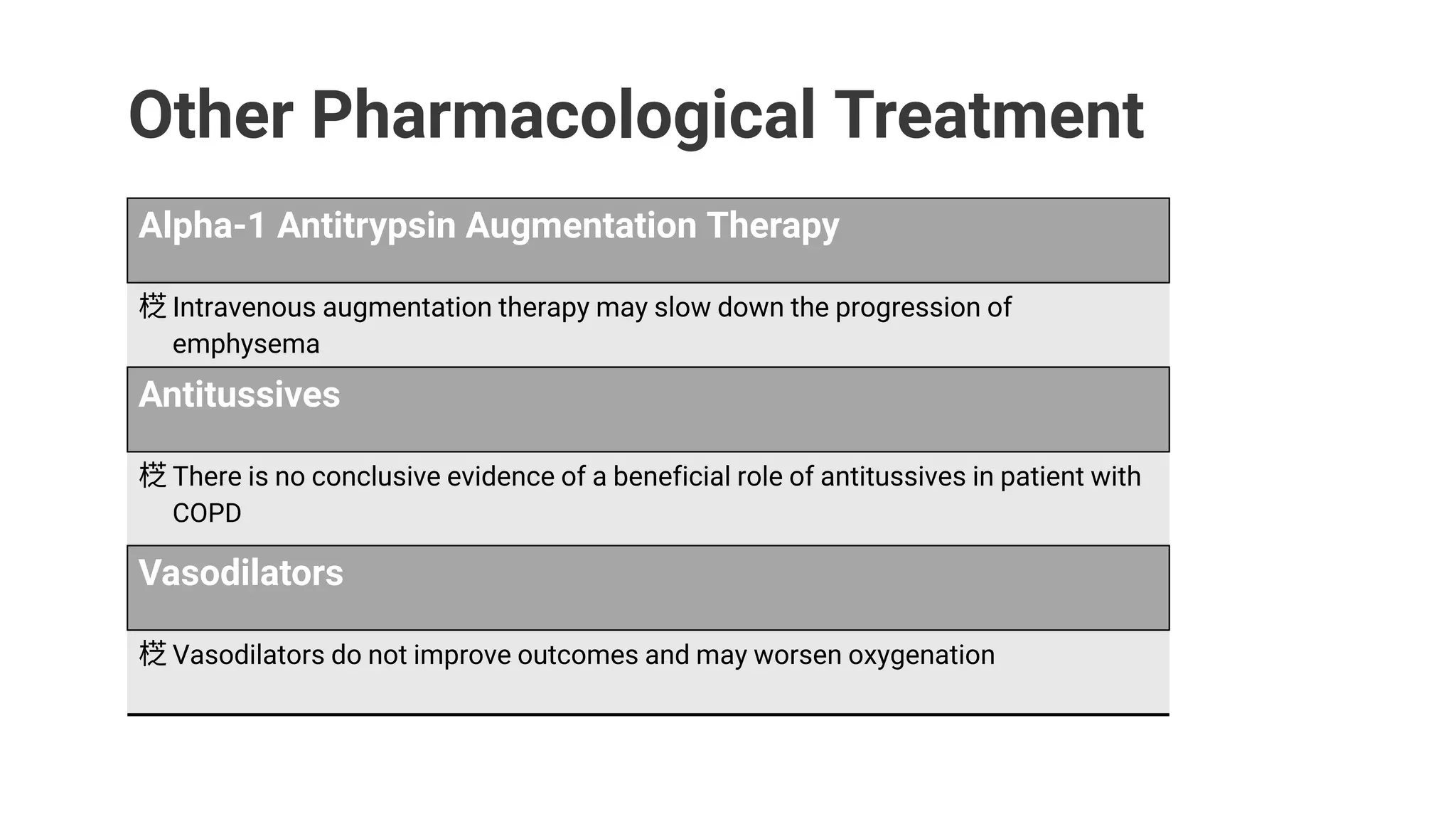
Other Pharmacological Treatment
Alpha-1 Antitrypsin Augmentation Therapy
 Intravenous augmentation therapy may slow down the progression of
emphysema
Antitussives
 There is no conclusive evidence of a beneficial role of antitussives in patient with
COPD
Vasodilators
 Vasodilators do not improve outcomes and may worsen oxygenation
Oxygen therapy and Ventilator
support in Stable COPD
 NPPV may improve hospitalization-free survival in selected patients
after recent hospitalization, particularly in those with pronounced
daytime persistant hypercapnia (PaCO2 > 52 mmHg)
 Long term administration of oxygen increases survival in patients
with severe chronic resting arterial hypoxemia
 In patient with stable COPD and moderate resting or exercise-
induced arterial desaturation, prescription of long-term oxygen
does not lengthen time to death
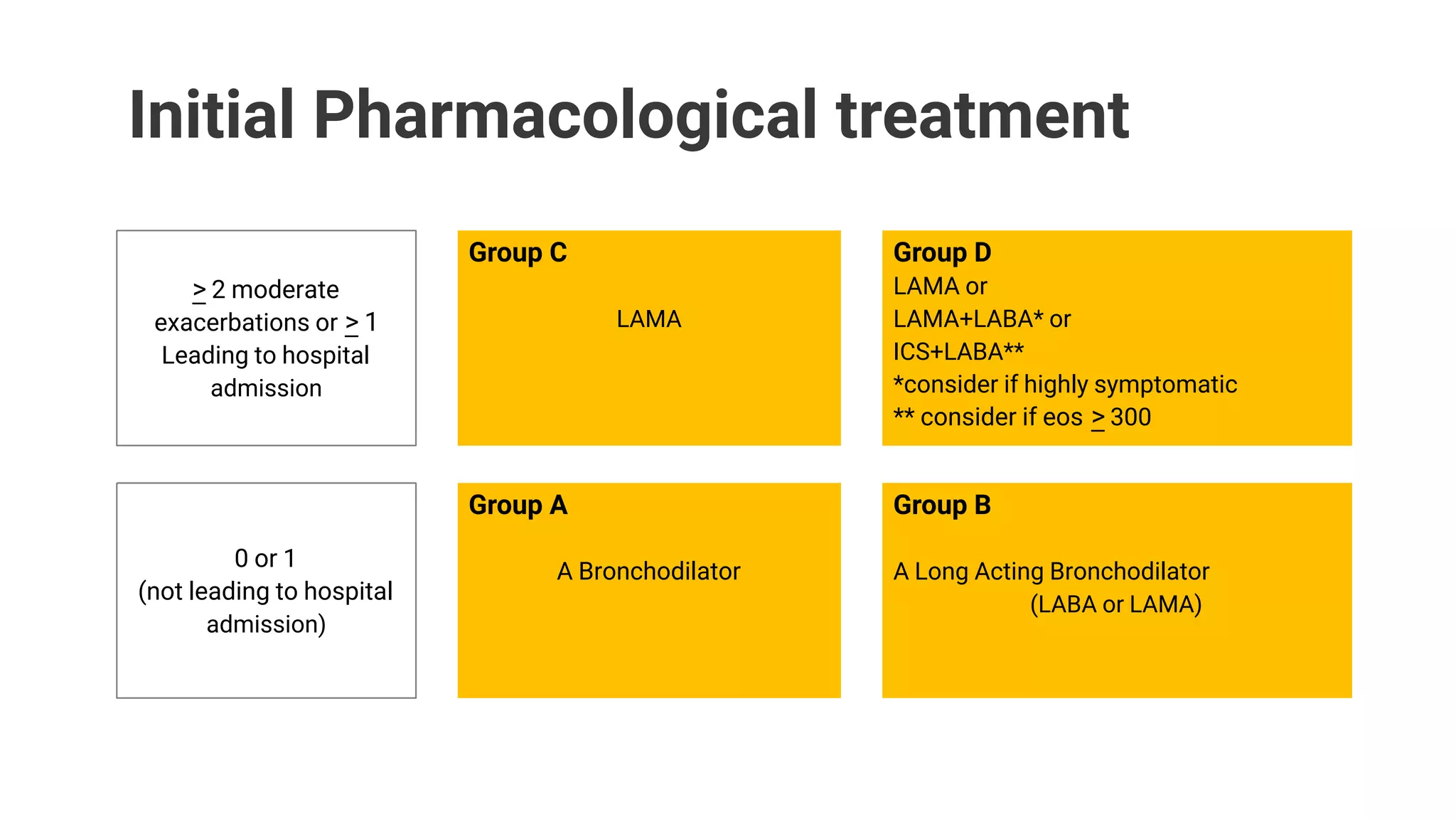
Initial Pharmacological treatment
> 2 moderate
exacerbations or > 1
Leading to hospital
admission
Group C
LAMA
Group D
LAMA or
LAMA+LABA* or
ICS+LABA**
*consider if highly symptomatic
** consider if eos > 300
0 or 1
(not leading to hospital
admission)
Group A
A Bronchodilator
Group B
A Long Acting Bronchodilator
(LABA or LAMA)
Pulmonary rehabilitation, self-management
and integrative care in COPD
Pulmonary
Rehabilitation
Education and
Self-
Management
Integrated care
programs
 Pulmonary Rehabilitation improves dyspnea, health status and exercise
tolerance in stable patients
 Pulmonary Rehabilitation reduces hospitalization among patients who have
had a recent exacerbation (<4weeks from prior hospitalization)
 Pulmonary Rehabilitation leads to a reduction in symptoms of anxiety and
depression
 Education alone has not been shown to be effective
 Self-management intervention with communication with professional improves
health status and decrease hospitalizations and emergency department visits
 Integrative care and telehealth have no demonstrated benefit at this time
Non-pharmacological management of
COPD Patient
group
Essential Recommended Depending on
local guidelines
A Smoking cessation
(can include
pharmacological
treatment)
Physical Activity  Flu vaccination
 Pneumococcal
vaccination
 Pertussis
vaccination
B, C &
D
 Smoking
cessation
 (can include
pharmacological
treatment)
 Pulmonary
Rehabilitation
Physical activity  Flu vaccination
 Pneumococcal
vaccination
 Pertussis
vaccination
COPD Management in Brief.pdf

COPD Management in Brief.pdf

  • 1.
    World COPD Day Dr.Mohammad Zannatul Rayhan MBBS, MD(Pulmonology) Medical Officer Chest Disease Hospital, Rajshahi
  • 3.
    COPD  COPD isa lung disease caused by chronic interference with lung airflow that impairs breathing, and is not fully reversible  Usually symptoms- shortness of breath, recurrent coughing, clearing throat, and progressive exercise intolerance, worsen over time  Many doctors and researchers consider terms such as chronic bronchitis and emphysema as forms of COPD  The major cause of COPD is smoking
  • 4.
    Asthma  It isa respiratory condition marked by spasms of the bronchi, due to inflamed and narrowed  It causes difficulty in breathing that often results from an allergic reaction  Asthma usually causes recurring periods of shortness of breath, wheezing and/or chest tightness
  • 5.
    Similarities between COPD vs.asthma  Coughing  Shortness of breath  Chest tightness  Exercise intolerance  Wheezing  Anxiety with increased heart rate may occur in both diseases.
  • 6.
    Differences between COPD vs.asthma  In asthma, breathing can return to normal between attacks, while breathing with COPD usually does not return to normal.  The symptoms of COPD gradually become more severe  COPD produces more mucus and phlegm compared to asthma  Chronic cough is common with COPD  People with COPD often have chronic blueness to fingernail beds and/or lips  Asthma can occur in a person of almost any age, while COPD usually occurs in those over age 40
  • 7.
    Asthma - COPDOverlap (ACO) Feature ACO Age of onset Usually age ≥40 years, but may have had symptoms in childhood or early adulthood Pattern of respiratory Symptoms Respiratory symptoms including exertional dyspnea are persistent but variability may be prominent Lung function Airflow limitation not fully reversible, but often with current or historical variability Lung function between symptoms Persistent airflow limitation Past history or family history Frequently a history of doctor-diagnosed asthma (current or previous), allergies and a family history of asthma, and/or a history of noxious exposures Time course Symptoms are partly but significantly reduced by treatment. Progression is usual and treatment needs are high Chest X-ray Similar to COPD Typical airway inflammation Eosinophils and/or neutrophils in sputum
  • 8.
    Classification of COPD Inpatients with FEV1/FVC<0.70: GOLD 1: Mild FEV1 > 80% Predicted GOLD 2: Moderate 50% < FEV1 < 80% Predicted GOLD 3: Severe 30% < FEV1 < 50% Predicted GOLD 4: Very Severe FEV1 < 30% Predicted
  • 9.
    The redefined ABCD assessmenttool Grade FEV1 (%predicted) GOLD 1 > 80 GOLD 2 50-79 GOLD 3 30-49 GOLD 4 <30 C D A B Spirometrically Confirmed diagnosis Assessment of Airflow Limitation Assessment of Symptoms/Risk of Execerbation > > Post Bronchodilator FEV1/FVC <0.7 Moderate or Severe Exacerbation History > 2 or > 1 Leading to hospital admission 0 or 1 (not leading to hospital admission) mMRC 0-1 mMRC≥2 CAT<10 CAT ≥10 Symptoms
  • 11.
    Pharmacological Therapy for StableCOPD  Bronchodilators  Anti-Muscarinic drugs  Methylxanthines  Combination of bronchodilator therapy (LABA/LAMA)  Anti-Inflammatory agents  ICS  Oral Glucocorticosteroids  PDE4 inhibitor  Antibiotics  Mucoregulators and anti-oxidatns  Other anti-inflammatory agents  Triple therapy (LABA/LAMA/ICS)
  • 12.
    Other Pharmacological Treatment Alpha-1Antitrypsin Augmentation Therapy  Intravenous augmentation therapy may slow down the progression of emphysema Antitussives  There is no conclusive evidence of a beneficial role of antitussives in patient with COPD Vasodilators  Vasodilators do not improve outcomes and may worsen oxygenation
  • 13.
    Oxygen therapy andVentilator support in Stable COPD  NPPV may improve hospitalization-free survival in selected patients after recent hospitalization, particularly in those with pronounced daytime persistant hypercapnia (PaCO2 > 52 mmHg)  Long term administration of oxygen increases survival in patients with severe chronic resting arterial hypoxemia  In patient with stable COPD and moderate resting or exercise- induced arterial desaturation, prescription of long-term oxygen does not lengthen time to death
  • 14.
    Initial Pharmacological treatment >2 moderate exacerbations or > 1 Leading to hospital admission Group C LAMA Group D LAMA or LAMA+LABA* or ICS+LABA** *consider if highly symptomatic ** consider if eos > 300 0 or 1 (not leading to hospital admission) Group A A Bronchodilator Group B A Long Acting Bronchodilator (LABA or LAMA)
  • 15.
    Pulmonary rehabilitation, self-management andintegrative care in COPD Pulmonary Rehabilitation Education and Self- Management Integrated care programs  Pulmonary Rehabilitation improves dyspnea, health status and exercise tolerance in stable patients  Pulmonary Rehabilitation reduces hospitalization among patients who have had a recent exacerbation (<4weeks from prior hospitalization)  Pulmonary Rehabilitation leads to a reduction in symptoms of anxiety and depression  Education alone has not been shown to be effective  Self-management intervention with communication with professional improves health status and decrease hospitalizations and emergency department visits  Integrative care and telehealth have no demonstrated benefit at this time
  • 16.
    Non-pharmacological management of COPDPatient group Essential Recommended Depending on local guidelines A Smoking cessation (can include pharmacological treatment) Physical Activity  Flu vaccination  Pneumococcal vaccination  Pertussis vaccination B, C & D  Smoking cessation  (can include pharmacological treatment)  Pulmonary Rehabilitation Physical activity  Flu vaccination  Pneumococcal vaccination  Pertussis vaccination