



Chronic Obstructive Pulmonary Disease
(COPD/COLD/COAD/CB & Emphysema)
S. K. Jindal
Department of Pulmonary Medicine
Postgraduate Institute of Medical Education and Research
Chandigarh, India
Definition of COPD
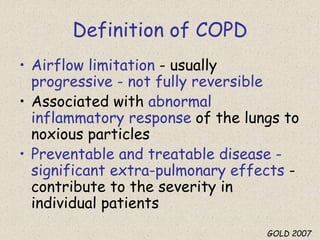
• Airflow limitation - usually
progressive - not fully reversible
• Associated with abnormal
inflammatory response of the lungs to
noxious particles
• Preventable and treatable disease -
significant extra-pulmonary effects -
contribute to the severity in
individual patients
GOLD 2007
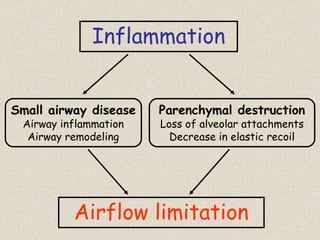
Inflammation
Small airway disease
Airway inflammation
Airway remodeling
Parenchymal destruction
Loss of alveolar attachments
Decrease in elastic recoil
Airflow limitation
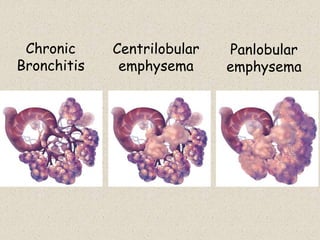
Chronic
Bronchitis
Centrilobular
emphysema
Panlobular
emphysema
Burden of COPD in Various
Indian Studies
Population Prevalence (%) M:F ratio
Men Women
Smoker :
nonsmoker
ratio
Wig (1964) Rural, Delhi 3.36 2.54 1.3 2.0
Viswanathan (1966) Patna 2.12 1.33 1.6
Sikand (1966) Delhi 7.0 4.3 1.6 2.5
Bhattacharya (1975) Rural, U.P. 6.67 4.48 1.6
Viswanathan (1977) Delhi Rural 4.7 3.5 1.3 9.6
Urban 8.0 4.3 1.9 4.0
Thiruvengadam (1977) Madras 1.9 1.2 1.6 10.2
Charan (1977) Rural Punjab 2.28 1.63 1.4
Radha (1977) New Delhi 8.1 4.6 1.8 1.8
Malik (1986) N. India Rural 9.4 4.9 1.9 5.5
Urban 3.7 1.6 2.3 7.0
Jindal (1993) N. India Rural 6.2 3.9 1.6
Urban 4.2 1.6 2.6 9.6
Ray (1995) South India 4.08 2.55 1.6 1.6
Jindal (2006) Multicentric 5.0 3.2 1.6 2.65
Jindal et al. IJCDAS 2001, IJCDAS 2006
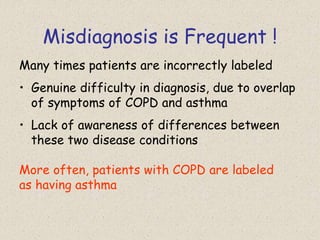
Misdiagnosis is Frequent !
Many times patients are incorrectly labeled
• Genuine difficulty in diagnosis, due to overlap
of symptoms of COPD and asthma
• Lack of awareness of differences between
these two disease conditions
More often, patients with COPD are labeled
as having asthma
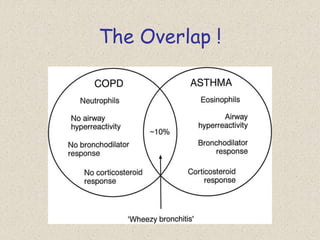
The Overlap !
COPD is not Asthma
• Different causes
• Different inflammatory cells
• Different mediators
• Different inflammatory consequences
• Different sites
• Different response to treatment
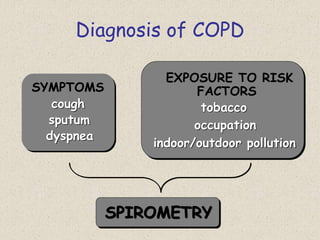
Diagnosis of COPD
SYMPTOMS
cough
sputum
dyspnea
EXPOSURE TO RISK
FACTORS
tobacco
occupation
indoor/outdoor pollution
SPIROMETRY
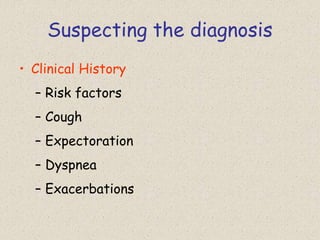
Suspecting the diagnosis
• Clinical History
– Risk factors
– Cough
– Expectoration
– Dyspnea
– Exacerbations
Examination…
• Physical examination is rarely diagnostic
• Physical signs of airflow limitation are
rarely present until significant impairment
of lung function has occurred
• Certain findings on clinical examination do
point towards the diagnosis of COPD
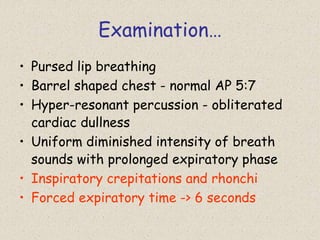
Examination…
• Pursed lip breathing
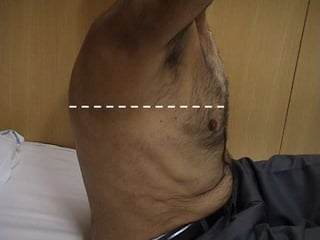
• Barrel shaped chest - normal AP 5:7
• Hyper-resonant percussion - obliterated
cardiac dullness
• Uniform diminished intensity of breath
sounds with prolonged expiratory phase
• Inspiratory crepitations and rhonchi
• Forced expiratory time -> 6 seconds
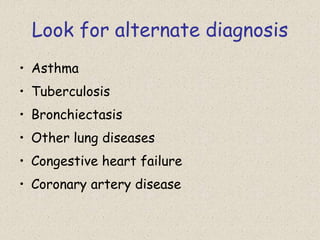
Look for alternate diagnosis
• Asthma
• Tuberculosis
• Bronchiectasis
• Other lung diseases
• Congestive heart failure
• Coronary artery disease
Look for Complications
• Chronic cor pulmonale
• Respiratory failure
• Chest infections
• Pneumothorax
• Associated CAD
Cardiovascular Disease
• COPD - powerful, independent risk factor
for cardiovascular morbidity and mortality
• For every 10% ↓ in FEV1 – CV mortality ↑ by
28% - and nonfatal coronary event ↑ by
about 20% in mild to moderate COPD
• Even in severe COPD - leading cause of
death is cardiovascular
Investigations…
Sputum examination
– Exclude TB in suspected patients
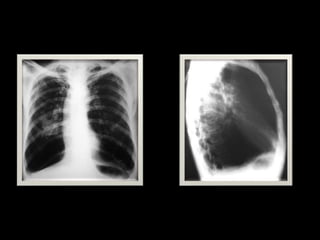
Chest X-ray
– Identify alternate diseases
(TB, Ca lung, etc.)
– Detect complications
ABG analysis
– Patients with FEV1 < 40%, respiratory
failure or right heart failure
Spirometry…
• Gold standard – confirming diagnosis and
severity
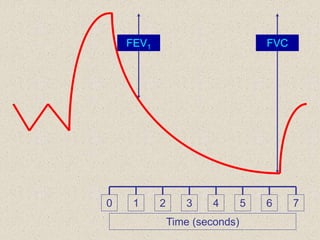
• Should measure FVC, FEV1, and the
FEV1/FVC ratio
• Post-bronchodilator FEV1 < 80% predicted
with FEV1/FVC < 70% - presence of airflow
limitation that is not fully reversible
Role of Spirometry in COPD
• Determine best lung function
• Subclinical disease detection
• Evaluation of treatment
• Prediction of outcomes
• Intensive monitoring
• Epidemiology and research
Management: Objectives
• Prevent disease progression
• Relieve symptoms
• Improve exercise tolerance
• Improve health status
• Prevent and treat exacerbations
• Prevent and treat complications
• Reduce mortality
• Minimize side effects from treatment
GOLD 2007
Management of stable COPD
• None of the existing medications for
COPD has been shown to modify the long-
term decline in lung function that is the
hallmark of this disease (Evidence A)
• Pharmacotherapy for COPD is used to
decrease symptoms and/or complications
Basic considerations
• Heterogeneous condition
• All patients should be viewed as
individuals - presentation, history,
symptoms, disability; response to drugs
• Important factors - acceptability,
adverse effects, efficacy, costs
• Drug titration - airflow obstruction,
symptoms, exercise tolerance, frequency
of exacerbations
Bronchodilators
• Bronchodilator medications - central to
symptom management
• Reduce breathlessness, improve lung
function, improve HRQOL
• Inhaled therapy is preferred
• Choice between β2-agonist (short acting
and long-acting), anticholinergic agents,
theophylline or a combination
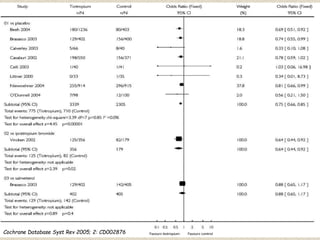
Bronchodilator in COPD
• Predominant parasympathetic tone – first
choice – anticholinergic
• Tiotropium or Ipratropium
• Tiotropium reduced the COPD
exacerbation (OR 0.74; 95% CI 0.66 to
0.83) and hospitalizations (OR 0.64; 95%
CI 0.51 to 0.82) compared to placebo or
ipratropium
• Combination of tiotropium and formoterol
ideal
Cochrane Database Syst Rev 2005; 2: CD002876
Commonly used
bronchodilators
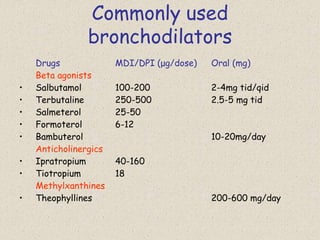
Drugs MDI/DPI (μg/dose) Oral (mg)
Beta agonists
• Salbutamol 100-200 2-4mg tid/qid
• Terbutaline 250-500 2.5-5 mg tid
• Salmeterol 25-50
• Formoterol 6-12
• Bambuterol 10-20mg/day
Anticholinergics
• Ipratropium 40-160
• Tiotropium 18
Methylxanthines
• Theophyllines 200-600 mg/day
Inhalers vs Oral drugs
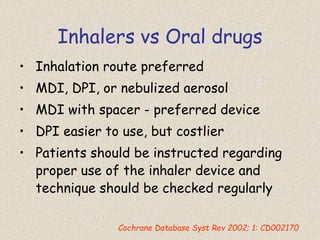
• Inhalation route preferred
• MDI, DPI, or nebulized aerosol
• MDI with spacer - preferred device
• DPI easier to use, but costlier
• Patients should be instructed regarding
proper use of the inhaler device and
technique should be checked regularly
Cochrane Database Syst Rev 2002; 1: CD002170
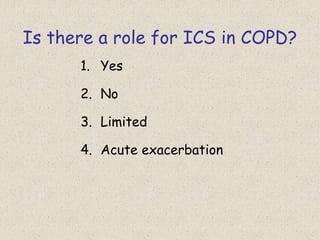
Is there a role for ICS in COPD?
1. Yes
2. No
3. Limited
4. Acute exacerbation
Inhaled corticosteroids
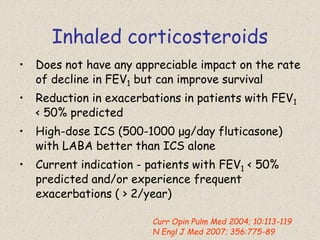
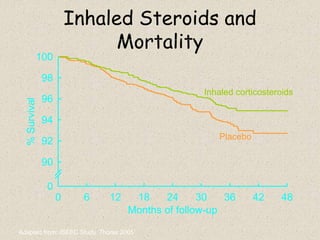
• Does not have any appreciable impact on the rate
of decline in FEV1 but can improve survival
• Reduction in exacerbations in patients with FEV1
< 50% predicted
• High-dose ICS (500-1000 μg/day fluticasone)
with LABA better than ICS alone
• Current indication - patients with FEV1 < 50%
predicted and/or experience frequent
exacerbations ( > 2/year)
Curr Opin Pulm Med 2004; 10:113-119
N Engl J Med 2007; 356:775-89
What other therapies can be used
in patients with COPD?
1. Mucolytics
2. Immunomodulator
3. Antibiotics
4. Respiratory stimulants
5. Anti-oxidants
6. Vaccinations
Nonpharmacologic Therapy
All stages
• Education
• Smoking cessation
• Pulmonary
rehabilitation
• Immunization
• Nutrition
Late Stages
• Long-term oxygen
therapy (LTOT)
• Surgical options
• Non-invasive
positive pressure
ventilation (NIPPV)
Patient Education
• Nature and prognosis of disease
• Avoidance of potential risk factors
• Treatment options and compliance
• Technique to take inhaled drug
• Recognition of disease exacerbation
• Strategies to minimize dyspnea
• Specific facets: smoking cessation
nutrition
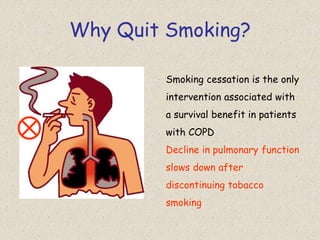
Why Quit Smoking?
Smoking cessation is the only
intervention associated with
a survival benefit in patients
with COPD
Decline in pulmonary function
slows down after
discontinuing tobacco
smoking
Drugs for Smoking Cessation
• Useful when counseling alone is
not sufficient to help patients
• Nicotine replacement products
(gum, patch, tablets, lozenges)
• Others (bupropion, varineciline,
nortriptyline)
Pulmonary Rehabilitation
• Aim to reduce symptoms, improve quality of life,
& increase physical and emotional participation
in everyday activities
• Covers a wide range of non-pulmonary problems
that may not be adequately addressed by
medical therapy for COPD
Exercise training Nutrition counseling
Education Regular follow-up
• Benefit to patients at all disease stages
Immunization
Influenza vaccine
• Live inactivated viruses of currently
prevalent strains
• Annually
Polyvalent pneumococcal vaccine
• Inadequate data on benefit in COPD
Nutrition
• Weight loss and depletion of fat-free mass
may be observed in stable COPD patients
• Being underweight is associated with an
increased mortality risk
• Increase calories, and take small frequent
meals (to avoid dyspnea while eating)
• Nutritional therapy effective if combined
with exercise or other anabolic stimuli
Oxygen Therapy
• Long-term continuous therapy
• During exercise
• To relieve acute dyspnea
• Goal Improve PaO2 to 60 mm Hg
Improve SaO2 to 90%
• Important to decide:
Who needs it?
How to prescribe?
Surgery for COPD
• Bullectomy
• Lung volume reduction surgery
• Lung transplantation
• Improved lung function, exercise capacity,
dyspnea, health-related quality of life and
possibly survival in highly selected pts.
Noninvasive Ventilation
• NIPPV has a definitely proven role in the
management of acute respiratory failure
related to COPD exacerbation
• Routine domiciliary use not recommended
• May be useful in selected patients on long
term oxygen therapy having persistent and
pronounced daytime hypercapnia
What are the local
guidelines???
Indian guidelines
DIAGNOSIS
• Clinical: symptoms and signs
• Six minute walk test
• Peak expiratory flow
• Spirometry
Indian J Chest Dis Allied Sci 2004; 46 : 137-153
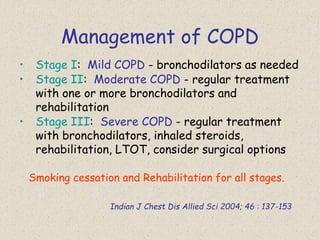
Management of COPD
• Stage I: Mild COPD - bronchodilators as needed
• Stage II: Moderate COPD - regular treatment
with one or more bronchodilators and
rehabilitation
• Stage III: Severe COPD - regular treatment
with bronchodilators, inhaled steroids,
rehabilitation, LTOT, consider surgical options
Smoking cessation and Rehabilitation for all stages.
Indian J Chest Dis Allied Sci 2004; 46 : 137-153
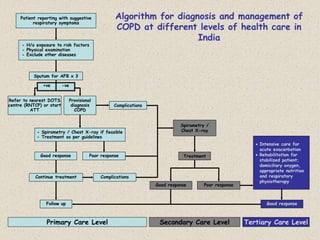
Patient reporting with suggestive
respiratory symptoms
- H/o exposure to risk factors
- Physical examination
- Exclude other diseases
Sputum for AFB x 3
Refer to nearest DOTS
centre (RNTCP) or start
ATT
Provisional
diagnosis
COPD
- Spirometry / Chest X-ray if feasible
- Treatment as per guidelines
Good response
Continue treatment
Follow up
Complications
Poor response Treatment
Spirometry /
Chest X-ray
 Intensive care for
acute exacerbation
 Rehabilitation for
stabilized patient;
domiciliary oxygen,
appropriate nutrition
and respiratory
physiotherapy
Tertiary Care Level
Secondary Care Level
Primary Care Level
+ve -ve
Complications
Algorithm for diagnosis and management of
COPD at different levels of health care in
India
Good response Poor response
Good response
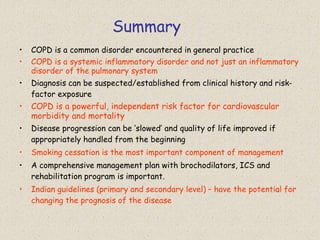
Summary
• COPD is a common disorder encountered in general practice
• COPD is a systemic inflammatory disorder and not just an inflammatory
disorder of the pulmonary system
• Diagnosis can be suspected/established from clinical history and risk-
factor exposure
• COPD is a powerful, independent risk factor for cardiovascular
morbidity and mortality
• Disease progression can be ‘slowed’ and quality of life improved if
appropriately handled from the beginning
• Smoking cessation is the most important component of management
• A comprehensive management plan with brochodilators, ICS and
rehabilitation program is important.
• Indian guidelines (primary and secondary level) – have the potential for
changing the prognosis of the disease
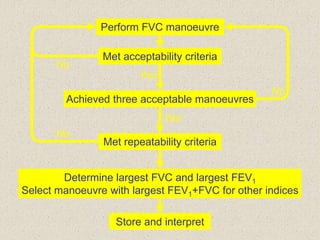
Thank you
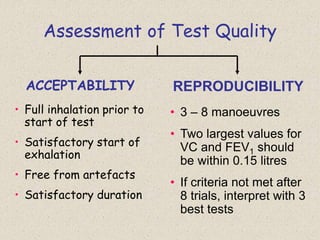
Assessment of Test Quality
ACCEPTABILITY
• Full inhalation prior to
start of test
• Satisfactory start of
exhalation
• Free from artefacts
• Satisfactory duration
REPRODUCIBILITY
• 3 – 8 manoeuvres
• Two largest values for
VC and FEV1 should
be within 0.15 litres
• If criteria not met after
8 trials, interpret with 3
best tests
• For every 10% ↓ in FEV1 – CV mortality ↑ by
about 28% - and nonfatal coronary event ↑
by about 20% in mild to moderate COPD
• Even in severe COPD - leading cause of
death is cardiovascular
Summary
• Measurement of respiratory function using
spirometry should play an important part in
health assessment programs
• Patients with CAD should be evaluated for
their FEV1 as a possible risk factor and
considered for treatment
COPD: diagnosis
• History of exposure to risk factors
• Presence of airflow limitation that is not
fully reversible
– Can be present in a patient with a
history of exposure to risk factors and
no symptoms
GOLD 2007
The Testing Procedure
• Patient can be seated or standing
• Nose clips are recommended
• Seal lips tightly over mouthpiece
• Begin with normal tidal volume breaths
• At end-expiration, perform a maximal
inspiration to total lung capacity
• Then exhale as hard, as fast, and as
completely as possible
• Measure volumes and report at BTPS
Perform FVC manoeuvre
Met acceptability criteria
Achieved three acceptable manoeuvres
Met repeatability criteria
Determine largest FVC and largest FEV1
Select manoeuvre with largest FEV1+FVC for other indices
Store and interpret
No
No
No
Yes
Yes
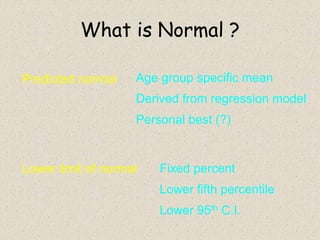
What is Normal ?
Fixed percent
Lower fifth percentile
Lower 95th C.I.
Predicted normal
Lower limit of normal
Age group specific mean
Derived from regression model
Personal best (?)
Which Variables ?
• Some computerized equipments generate
>20 spirometric variables
• Do not use more than few such variables
• Increasing the number of variables used
increases number of false positive results
• In most cases, VC, FEV1 and FEV1/VC%
suffice to provide all the information needed
to interpret a spirogram
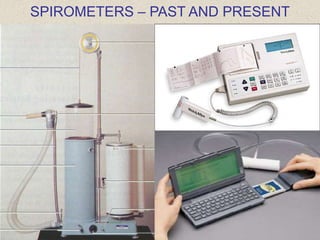
SPIROMETERS – PAST AND PRESENT
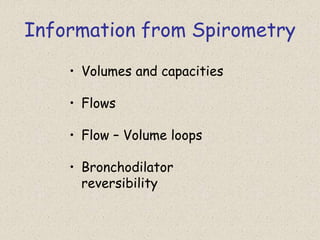
Information from Spirometry
• Volumes and capacities
• Flows
• Flow – Volume loops
• Bronchodilator
reversibility
Remember …
• All that wheezes is not asthma
• All smokers with respiratory symptoms do not
have COPD
• Asthma & COPD are not the same disease
• No single rule of thumb to differentiate
Inflammation
But clinicians have no means to assess
these differences in inflammation
For proper diagnosis, they must rely on
• History
• Physical examination
• Simple investigations
Take Home Message
Important for clinicians to
• understand that asthma and COPD are two
entirely different disorders
• appreciate that clinical judgement has a
far greater role than investigations in
differentiating COPD from asthma
What are your objectives while
treating a patient with COPD?
No treatment has shown to reverse the pre-
existing changes that have occurred in COPD
History…
• Chronic cough
– Present on most days for at least 3
months in a year for 2 or more
consecutive years
– Usually but not always associated with
sputum production
– Characteristically more in the early
morning on waking up
History…
• Breathlessness (dyspnea)
– may not be present initially
– progressive over time
– worse on exercise and during
exacerbations
• Acute exacerbations:
– repeated episodes of worsening of
symptoms ‘acute bronchitis’
Time (seconds)
0 1 2 3 4 5 6 7
FEV1 FVC
Bronchodilator Reversibility
• No bronchodilator use for 4 hours
• Perform baseline spirometry
• Four puffs of salbutamol (100 μg each)
• Repeat spirometry after 15-30 minutes
• BDR present if increase in FEV1 and/or VC
is >12% and >200 mL
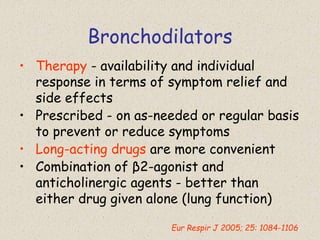
Bronchodilators
• Therapy - availability and individual
response in terms of symptom relief and
side effects
• Prescribed - on as-needed or regular basis
to prevent or reduce symptoms
• Long-acting drugs are more convenient
• Combination of β2-agonist and
anticholinergic agents - better than
either drug given alone (lung function)
Eur Respir J 2005; 25: 1084-1106
Which bronchodilator???
1. Theophylline
2. Ipratropium
3. Tiotropium
4. Beta-2 agonists
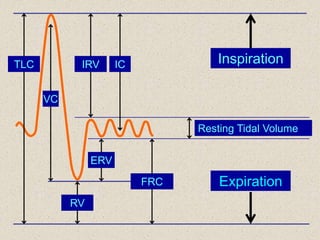
Inspiration
Expiration
ERV
IC
VC
IRV
Resting Tidal Volume
RV
FRC
TLC
Inhaled Steroids and
Mortality
Months of follow-up
0 6 12 18 24 30 36 42 48
%
Survival
0
90
92
94
96
98
100
Inhaled corticosteroids
Placebo
Adapted from: ISEEC Study, Thorax 2005
Other drugs
• Vaccines – Influenza and Pneumococcus –
in all patients
• Oral mucolytics - reduce the viscosity of
sputum, no effect on lung function
• Oral immunostimulatory agent – OM-85
BV (extract of 8 bacteria) - recurrent
exacerbations
• Antioxidants - N-acetylcysteine- no clear
role [Lancet 2005; 365: 1552–60 ]
GOLD 2007
Other drugs
• Respiratory stimulants – almitrine and
doxapram – no role
• Antibiotics – no role in stable COPD
• Others - Nedocromil, leukotriene
modifiers and alternate forms of medicine
- no clear role
GOLD 2007
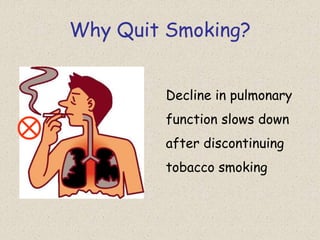
Why Quit Smoking?
Decline in pulmonary
function slows down
after discontinuing
tobacco smoking
Pulmonary Rehabilitation
• Exercise training
• Nutrition counseling
• Education
• Regular follow-up
Long Term Oxygen Therapy
• Who needs it?
• How to
prescribe?

COPD - Ldh Jan 2010.ppt

  • 1.
    Chronic Obstructive PulmonaryDisease (COPD/COLD/COAD/CB & Emphysema) S. K. Jindal Department of Pulmonary Medicine Postgraduate Institute of Medical Education and Research Chandigarh, India
  • 2.
    Definition of COPD •Airflow limitation - usually progressive - not fully reversible • Associated with abnormal inflammatory response of the lungs to noxious particles • Preventable and treatable disease - significant extra-pulmonary effects - contribute to the severity in individual patients GOLD 2007
  • 3.
    Inflammation Small airway disease Airwayinflammation Airway remodeling Parenchymal destruction Loss of alveolar attachments Decrease in elastic recoil Airflow limitation
  • 4.
  • 5.
    Burden of COPDin Various Indian Studies Population Prevalence (%) M:F ratio Men Women Smoker : nonsmoker ratio Wig (1964) Rural, Delhi 3.36 2.54 1.3 2.0 Viswanathan (1966) Patna 2.12 1.33 1.6 Sikand (1966) Delhi 7.0 4.3 1.6 2.5 Bhattacharya (1975) Rural, U.P. 6.67 4.48 1.6 Viswanathan (1977) Delhi Rural 4.7 3.5 1.3 9.6 Urban 8.0 4.3 1.9 4.0 Thiruvengadam (1977) Madras 1.9 1.2 1.6 10.2 Charan (1977) Rural Punjab 2.28 1.63 1.4 Radha (1977) New Delhi 8.1 4.6 1.8 1.8 Malik (1986) N. India Rural 9.4 4.9 1.9 5.5 Urban 3.7 1.6 2.3 7.0 Jindal (1993) N. India Rural 6.2 3.9 1.6 Urban 4.2 1.6 2.6 9.6 Ray (1995) South India 4.08 2.55 1.6 1.6 Jindal (2006) Multicentric 5.0 3.2 1.6 2.65 Jindal et al. IJCDAS 2001, IJCDAS 2006
  • 6.
    Misdiagnosis is Frequent! Many times patients are incorrectly labeled • Genuine difficulty in diagnosis, due to overlap of symptoms of COPD and asthma • Lack of awareness of differences between these two disease conditions More often, patients with COPD are labeled as having asthma
  • 7.
  • 8.
    COPD is notAsthma • Different causes • Different inflammatory cells • Different mediators • Different inflammatory consequences • Different sites • Different response to treatment
  • 9.
    Diagnosis of COPD SYMPTOMS cough sputum dyspnea EXPOSURETO RISK FACTORS tobacco occupation indoor/outdoor pollution SPIROMETRY
  • 10.
    Suspecting the diagnosis •Clinical History – Risk factors – Cough – Expectoration – Dyspnea – Exacerbations
  • 11.
    Examination… • Physical examinationis rarely diagnostic • Physical signs of airflow limitation are rarely present until significant impairment of lung function has occurred • Certain findings on clinical examination do point towards the diagnosis of COPD
  • 12.
    Examination… • Pursed lipbreathing • Barrel shaped chest - normal AP 5:7 • Hyper-resonant percussion - obliterated cardiac dullness • Uniform diminished intensity of breath sounds with prolonged expiratory phase • Inspiratory crepitations and rhonchi • Forced expiratory time -> 6 seconds
  • 13.
    Look for alternatediagnosis • Asthma • Tuberculosis • Bronchiectasis • Other lung diseases • Congestive heart failure • Coronary artery disease
  • 14.
    Look for Complications •Chronic cor pulmonale • Respiratory failure • Chest infections • Pneumothorax • Associated CAD
  • 15.
    Cardiovascular Disease • COPD- powerful, independent risk factor for cardiovascular morbidity and mortality • For every 10% ↓ in FEV1 – CV mortality ↑ by 28% - and nonfatal coronary event ↑ by about 20% in mild to moderate COPD • Even in severe COPD - leading cause of death is cardiovascular
  • 16.
    Investigations… Sputum examination – ExcludeTB in suspected patients Chest X-ray – Identify alternate diseases (TB, Ca lung, etc.) – Detect complications ABG analysis – Patients with FEV1 < 40%, respiratory failure or right heart failure
  • 18.
    Spirometry… • Gold standard– confirming diagnosis and severity • Should measure FVC, FEV1, and the FEV1/FVC ratio • Post-bronchodilator FEV1 < 80% predicted with FEV1/FVC < 70% - presence of airflow limitation that is not fully reversible
  • 19.
    Role of Spirometryin COPD • Determine best lung function • Subclinical disease detection • Evaluation of treatment • Prediction of outcomes • Intensive monitoring • Epidemiology and research
  • 20.
    Management: Objectives • Preventdisease progression • Relieve symptoms • Improve exercise tolerance • Improve health status • Prevent and treat exacerbations • Prevent and treat complications • Reduce mortality • Minimize side effects from treatment GOLD 2007
  • 21.
    Management of stableCOPD • None of the existing medications for COPD has been shown to modify the long- term decline in lung function that is the hallmark of this disease (Evidence A) • Pharmacotherapy for COPD is used to decrease symptoms and/or complications
  • 22.
    Basic considerations • Heterogeneouscondition • All patients should be viewed as individuals - presentation, history, symptoms, disability; response to drugs • Important factors - acceptability, adverse effects, efficacy, costs • Drug titration - airflow obstruction, symptoms, exercise tolerance, frequency of exacerbations
  • 23.
    Bronchodilators • Bronchodilator medications- central to symptom management • Reduce breathlessness, improve lung function, improve HRQOL • Inhaled therapy is preferred • Choice between β2-agonist (short acting and long-acting), anticholinergic agents, theophylline or a combination
  • 24.
    Bronchodilator in COPD •Predominant parasympathetic tone – first choice – anticholinergic • Tiotropium or Ipratropium • Tiotropium reduced the COPD exacerbation (OR 0.74; 95% CI 0.66 to 0.83) and hospitalizations (OR 0.64; 95% CI 0.51 to 0.82) compared to placebo or ipratropium • Combination of tiotropium and formoterol ideal Cochrane Database Syst Rev 2005; 2: CD002876
  • 25.
    Cochrane Database SystRev 2005; 2: CD002876
  • 26.
    Commonly used bronchodilators Drugs MDI/DPI(μg/dose) Oral (mg) Beta agonists • Salbutamol 100-200 2-4mg tid/qid • Terbutaline 250-500 2.5-5 mg tid • Salmeterol 25-50 • Formoterol 6-12 • Bambuterol 10-20mg/day Anticholinergics • Ipratropium 40-160 • Tiotropium 18 Methylxanthines • Theophyllines 200-600 mg/day
  • 27.
    Inhalers vs Oraldrugs • Inhalation route preferred • MDI, DPI, or nebulized aerosol • MDI with spacer - preferred device • DPI easier to use, but costlier • Patients should be instructed regarding proper use of the inhaler device and technique should be checked regularly Cochrane Database Syst Rev 2002; 1: CD002170
  • 28.
    Is there arole for ICS in COPD? 1. Yes 2. No 3. Limited 4. Acute exacerbation
  • 29.
    Inhaled corticosteroids • Doesnot have any appreciable impact on the rate of decline in FEV1 but can improve survival • Reduction in exacerbations in patients with FEV1 < 50% predicted • High-dose ICS (500-1000 μg/day fluticasone) with LABA better than ICS alone • Current indication - patients with FEV1 < 50% predicted and/or experience frequent exacerbations ( > 2/year) Curr Opin Pulm Med 2004; 10:113-119 N Engl J Med 2007; 356:775-89
  • 30.
    What other therapiescan be used in patients with COPD? 1. Mucolytics 2. Immunomodulator 3. Antibiotics 4. Respiratory stimulants 5. Anti-oxidants 6. Vaccinations
  • 31.
    Nonpharmacologic Therapy All stages •Education • Smoking cessation • Pulmonary rehabilitation • Immunization • Nutrition Late Stages • Long-term oxygen therapy (LTOT) • Surgical options • Non-invasive positive pressure ventilation (NIPPV)
  • 32.
    Patient Education • Natureand prognosis of disease • Avoidance of potential risk factors • Treatment options and compliance • Technique to take inhaled drug • Recognition of disease exacerbation • Strategies to minimize dyspnea • Specific facets: smoking cessation nutrition
  • 33.
    Why Quit Smoking? Smokingcessation is the only intervention associated with a survival benefit in patients with COPD Decline in pulmonary function slows down after discontinuing tobacco smoking
  • 34.
    Drugs for SmokingCessation • Useful when counseling alone is not sufficient to help patients • Nicotine replacement products (gum, patch, tablets, lozenges) • Others (bupropion, varineciline, nortriptyline)
  • 35.
    Pulmonary Rehabilitation • Aimto reduce symptoms, improve quality of life, & increase physical and emotional participation in everyday activities • Covers a wide range of non-pulmonary problems that may not be adequately addressed by medical therapy for COPD Exercise training Nutrition counseling Education Regular follow-up • Benefit to patients at all disease stages
  • 36.
    Immunization Influenza vaccine • Liveinactivated viruses of currently prevalent strains • Annually Polyvalent pneumococcal vaccine • Inadequate data on benefit in COPD
  • 37.
    Nutrition • Weight lossand depletion of fat-free mass may be observed in stable COPD patients • Being underweight is associated with an increased mortality risk • Increase calories, and take small frequent meals (to avoid dyspnea while eating) • Nutritional therapy effective if combined with exercise or other anabolic stimuli
  • 38.
    Oxygen Therapy • Long-termcontinuous therapy • During exercise • To relieve acute dyspnea • Goal Improve PaO2 to 60 mm Hg Improve SaO2 to 90% • Important to decide: Who needs it? How to prescribe?
  • 39.
    Surgery for COPD •Bullectomy • Lung volume reduction surgery • Lung transplantation • Improved lung function, exercise capacity, dyspnea, health-related quality of life and possibly survival in highly selected pts.
  • 40.
    Noninvasive Ventilation • NIPPVhas a definitely proven role in the management of acute respiratory failure related to COPD exacerbation • Routine domiciliary use not recommended • May be useful in selected patients on long term oxygen therapy having persistent and pronounced daytime hypercapnia
  • 41.
    What are thelocal guidelines???
  • 42.
    Indian guidelines DIAGNOSIS • Clinical:symptoms and signs • Six minute walk test • Peak expiratory flow • Spirometry Indian J Chest Dis Allied Sci 2004; 46 : 137-153
  • 43.
    Management of COPD •Stage I: Mild COPD - bronchodilators as needed • Stage II: Moderate COPD - regular treatment with one or more bronchodilators and rehabilitation • Stage III: Severe COPD - regular treatment with bronchodilators, inhaled steroids, rehabilitation, LTOT, consider surgical options Smoking cessation and Rehabilitation for all stages. Indian J Chest Dis Allied Sci 2004; 46 : 137-153
  • 44.
    Patient reporting withsuggestive respiratory symptoms - H/o exposure to risk factors - Physical examination - Exclude other diseases Sputum for AFB x 3 Refer to nearest DOTS centre (RNTCP) or start ATT Provisional diagnosis COPD - Spirometry / Chest X-ray if feasible - Treatment as per guidelines Good response Continue treatment Follow up Complications Poor response Treatment Spirometry / Chest X-ray  Intensive care for acute exacerbation  Rehabilitation for stabilized patient; domiciliary oxygen, appropriate nutrition and respiratory physiotherapy Tertiary Care Level Secondary Care Level Primary Care Level +ve -ve Complications Algorithm for diagnosis and management of COPD at different levels of health care in India Good response Poor response Good response
  • 45.
    Summary • COPD isa common disorder encountered in general practice • COPD is a systemic inflammatory disorder and not just an inflammatory disorder of the pulmonary system • Diagnosis can be suspected/established from clinical history and risk- factor exposure • COPD is a powerful, independent risk factor for cardiovascular morbidity and mortality • Disease progression can be ‘slowed’ and quality of life improved if appropriately handled from the beginning • Smoking cessation is the most important component of management • A comprehensive management plan with brochodilators, ICS and rehabilitation program is important. • Indian guidelines (primary and secondary level) – have the potential for changing the prognosis of the disease
  • 46.
  • 47.
    Assessment of TestQuality ACCEPTABILITY • Full inhalation prior to start of test • Satisfactory start of exhalation • Free from artefacts • Satisfactory duration REPRODUCIBILITY • 3 – 8 manoeuvres • Two largest values for VC and FEV1 should be within 0.15 litres • If criteria not met after 8 trials, interpret with 3 best tests
  • 49.
    • For every10% ↓ in FEV1 – CV mortality ↑ by about 28% - and nonfatal coronary event ↑ by about 20% in mild to moderate COPD • Even in severe COPD - leading cause of death is cardiovascular
  • 50.
    Summary • Measurement ofrespiratory function using spirometry should play an important part in health assessment programs • Patients with CAD should be evaluated for their FEV1 as a possible risk factor and considered for treatment
  • 51.
    COPD: diagnosis • Historyof exposure to risk factors • Presence of airflow limitation that is not fully reversible – Can be present in a patient with a history of exposure to risk factors and no symptoms GOLD 2007
  • 52.
    The Testing Procedure •Patient can be seated or standing • Nose clips are recommended • Seal lips tightly over mouthpiece • Begin with normal tidal volume breaths • At end-expiration, perform a maximal inspiration to total lung capacity • Then exhale as hard, as fast, and as completely as possible • Measure volumes and report at BTPS
  • 53.
    Perform FVC manoeuvre Metacceptability criteria Achieved three acceptable manoeuvres Met repeatability criteria Determine largest FVC and largest FEV1 Select manoeuvre with largest FEV1+FVC for other indices Store and interpret No No No Yes Yes
  • 54.
    What is Normal? Fixed percent Lower fifth percentile Lower 95th C.I. Predicted normal Lower limit of normal Age group specific mean Derived from regression model Personal best (?)
  • 55.
    Which Variables ? •Some computerized equipments generate >20 spirometric variables • Do not use more than few such variables • Increasing the number of variables used increases number of false positive results • In most cases, VC, FEV1 and FEV1/VC% suffice to provide all the information needed to interpret a spirogram
  • 56.
  • 57.
    Information from Spirometry •Volumes and capacities • Flows • Flow – Volume loops • Bronchodilator reversibility
  • 58.
    Remember … • Allthat wheezes is not asthma • All smokers with respiratory symptoms do not have COPD • Asthma & COPD are not the same disease • No single rule of thumb to differentiate
  • 59.
    Inflammation But clinicians haveno means to assess these differences in inflammation For proper diagnosis, they must rely on • History • Physical examination • Simple investigations
  • 60.
    Take Home Message Importantfor clinicians to • understand that asthma and COPD are two entirely different disorders • appreciate that clinical judgement has a far greater role than investigations in differentiating COPD from asthma
  • 61.
    What are yourobjectives while treating a patient with COPD? No treatment has shown to reverse the pre- existing changes that have occurred in COPD
  • 62.
    History… • Chronic cough –Present on most days for at least 3 months in a year for 2 or more consecutive years – Usually but not always associated with sputum production – Characteristically more in the early morning on waking up
  • 63.
    History… • Breathlessness (dyspnea) –may not be present initially – progressive over time – worse on exercise and during exacerbations • Acute exacerbations: – repeated episodes of worsening of symptoms ‘acute bronchitis’
  • 64.
    Time (seconds) 0 12 3 4 5 6 7 FEV1 FVC
  • 65.
    Bronchodilator Reversibility • Nobronchodilator use for 4 hours • Perform baseline spirometry • Four puffs of salbutamol (100 μg each) • Repeat spirometry after 15-30 minutes • BDR present if increase in FEV1 and/or VC is >12% and >200 mL
  • 66.
    Bronchodilators • Therapy -availability and individual response in terms of symptom relief and side effects • Prescribed - on as-needed or regular basis to prevent or reduce symptoms • Long-acting drugs are more convenient • Combination of β2-agonist and anticholinergic agents - better than either drug given alone (lung function) Eur Respir J 2005; 25: 1084-1106
  • 67.
    Which bronchodilator??? 1. Theophylline 2.Ipratropium 3. Tiotropium 4. Beta-2 agonists
  • 68.
  • 69.
    Inhaled Steroids and Mortality Monthsof follow-up 0 6 12 18 24 30 36 42 48 % Survival 0 90 92 94 96 98 100 Inhaled corticosteroids Placebo Adapted from: ISEEC Study, Thorax 2005
  • 70.
    Other drugs • Vaccines– Influenza and Pneumococcus – in all patients • Oral mucolytics - reduce the viscosity of sputum, no effect on lung function • Oral immunostimulatory agent – OM-85 BV (extract of 8 bacteria) - recurrent exacerbations • Antioxidants - N-acetylcysteine- no clear role [Lancet 2005; 365: 1552–60 ] GOLD 2007
  • 71.
    Other drugs • Respiratorystimulants – almitrine and doxapram – no role • Antibiotics – no role in stable COPD • Others - Nedocromil, leukotriene modifiers and alternate forms of medicine - no clear role GOLD 2007
  • 72.
    Why Quit Smoking? Declinein pulmonary function slows down after discontinuing tobacco smoking
  • 73.
    Pulmonary Rehabilitation • Exercisetraining • Nutrition counseling • Education • Regular follow-up
  • 75.
    Long Term OxygenTherapy • Who needs it? • How to prescribe?