Coordination
Welcome to the world of coordination, where teamwork makes the dream
work. Discover the importance, types, and effective strategies for
coordination.
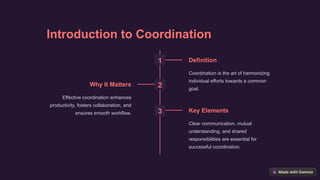
Introduction to Coordination
1 Definition
Coordination is the art of harmonizing
individual efforts towards a common
goal.
2
Why It Matters
Effective coordination enhances
productivity, fosters collaboration, and
ensures smooth workflow. 3 Key Elements
Clear communication, mutual
understanding, and shared
responsibilities are essential for
successful coordination.
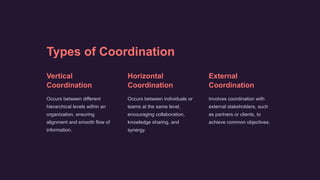
Types of Coordination
Vertical
Coordination
Occurs between different
hierarchical levels within an
organization, ensuring
alignment and smooth flow of
information.
Horizontal
Coordination
Occurs between individuals or
teams at the same level,
encouraging collaboration,
knowledge sharing, and
synergy.
External
Coordination
Involves coordination with
external stakeholders, such
as partners or clients, to
achieve common objectives.
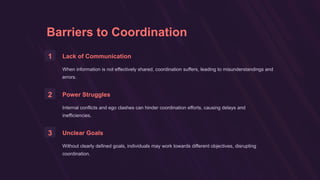
Barriers to Coordination
1 Lack of Communication
When information is not effectively shared, coordination suffers, leading to misunderstandings and
errors.
2 Power Struggles
Internal conflicts and ego clashes can hinder coordination efforts, causing delays and
inefficiencies.
3 Unclear Goals
Without clearly defined goals, individuals may work towards different objectives, disrupting
coordination.
Strategies for Effective Coordination
Open Communication
Encourage transparent and
frequent communication
channels to facilitate effective
coordination.
Collaborative Problem
Solving
Engage team members in
collective decision-making to
find innovative solutions.
Clear Timelines
Establish and communicate
clear deadlines to ensure tasks
are completed on time.
Conclusion and Key
Takeaways
Coordination is the backbone of successful teamwork, fostering
collaboration, productivity, and goal achievement. Embrace effective
communication, overcome barriers, and apply strategies to unlock the full
potential of coordination.

Coordination powerpoint presentation ppt

  • 1.
    Coordination Welcome to theworld of coordination, where teamwork makes the dream work. Discover the importance, types, and effective strategies for coordination.
  • 2.
    Introduction to Coordination 1Definition Coordination is the art of harmonizing individual efforts towards a common goal. 2 Why It Matters Effective coordination enhances productivity, fosters collaboration, and ensures smooth workflow. 3 Key Elements Clear communication, mutual understanding, and shared responsibilities are essential for successful coordination.
  • 3.
    Types of Coordination Vertical Coordination Occursbetween different hierarchical levels within an organization, ensuring alignment and smooth flow of information. Horizontal Coordination Occurs between individuals or teams at the same level, encouraging collaboration, knowledge sharing, and synergy. External Coordination Involves coordination with external stakeholders, such as partners or clients, to achieve common objectives.
  • 4.
    Barriers to Coordination 1Lack of Communication When information is not effectively shared, coordination suffers, leading to misunderstandings and errors. 2 Power Struggles Internal conflicts and ego clashes can hinder coordination efforts, causing delays and inefficiencies. 3 Unclear Goals Without clearly defined goals, individuals may work towards different objectives, disrupting coordination.
  • 5.
    Strategies for EffectiveCoordination Open Communication Encourage transparent and frequent communication channels to facilitate effective coordination. Collaborative Problem Solving Engage team members in collective decision-making to find innovative solutions. Clear Timelines Establish and communicate clear deadlines to ensure tasks are completed on time.
  • 6.
    Conclusion and Key Takeaways Coordinationis the backbone of successful teamwork, fostering collaboration, productivity, and goal achievement. Embrace effective communication, overcome barriers, and apply strategies to unlock the full potential of coordination.