Why & What is
Cooperative Learning
with Computer?
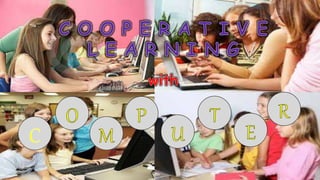
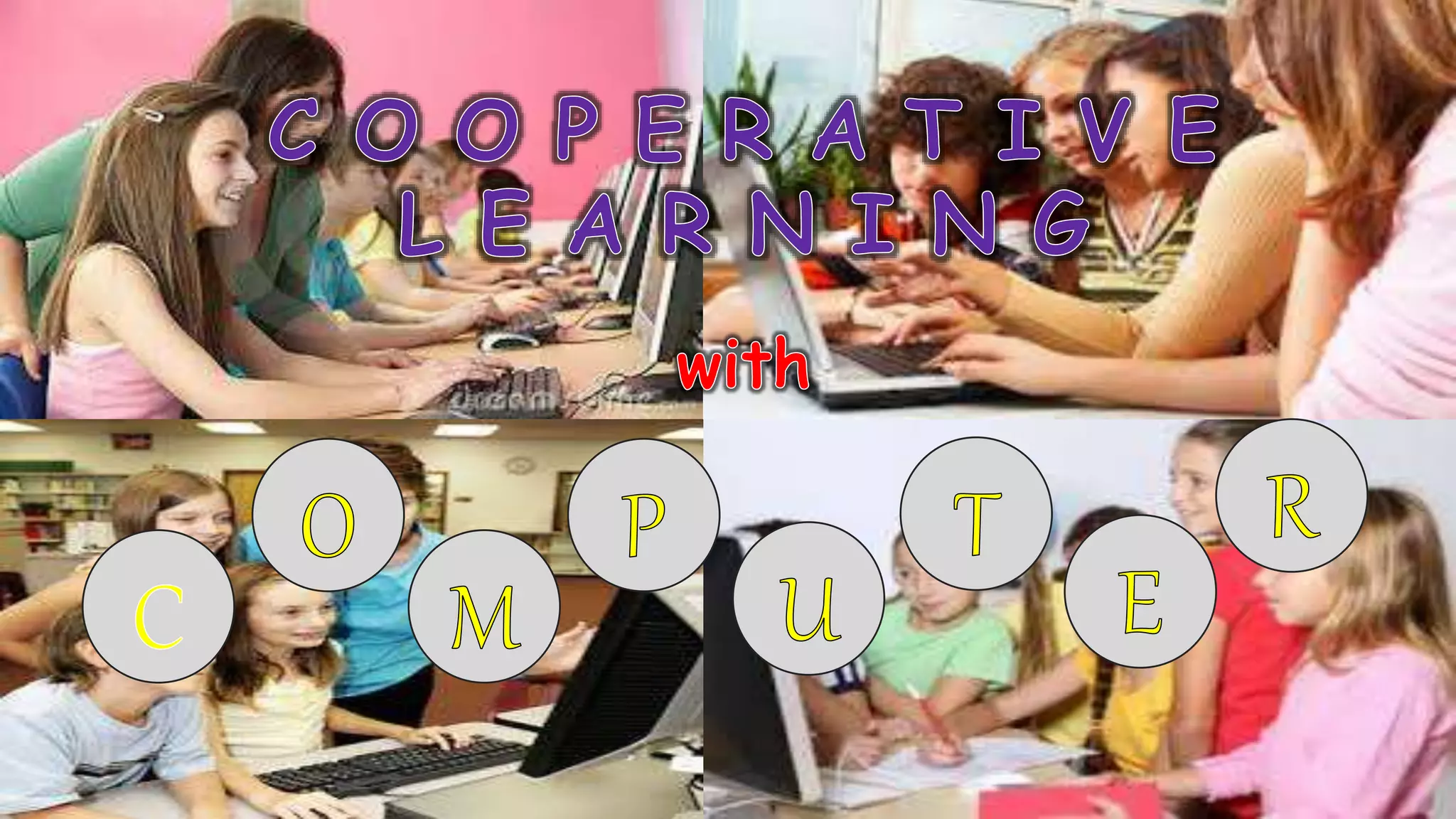
Cooperative learning strategies help
students work together, sharing one keyboard,
one mouse, and one screen.
Cooperative learning strategies also direct
and integrate the use of two or more
different programs in a lesson.
Researchers at John Hopkins, the
University of California, and the
University of Minnesota have been
studying how learning is enhanced
through cooperative behavior. They have
been able to quantify that many of us
have known experientially for years.
...when students work together they experience
better acquisition, retention and integration of
content. Cooperative learning also promotes
positive peer to peer relationships, student self-
esteem and the desire to learn.
Why Computers andCooperative Learning are a Great Match?
When properly used, the computer
can be a wonderful tool to facilitate
discussion. frequently find it
difficult to open up and share with
their peers.
With a cooperative learning strategy,
the computer helps them get around the
problem. The reason is this: students want to
succeed with these tools and this motivates
them to overcome their natural shyness about
sharing or working together.
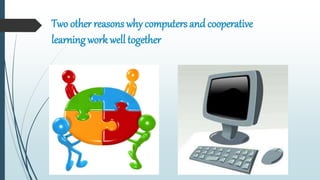
Two other reasons why computers and cooperative
learning work well together
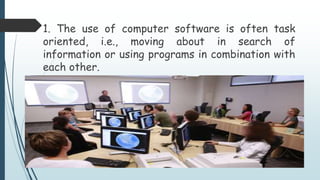
1. The use of computer software is often task
oriented, i.e., moving about in search of
information or using programs in combination with
each other.
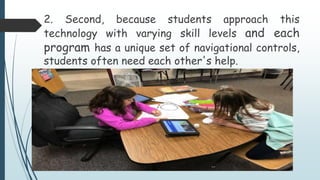
2. Second, because students approach this
technology with varying skill levels and each
program has a unique set of navigational controls,
students often need each other's help.
3. Computers can generate a lot of excitement and
some anxiety among the students.
Advantages
1. Encourage active learning, while motivating
students.
2. Increases academic performances
3. Promotes literacy and language skill
4. Improves teacher effectiveness
Disadvantages
1. Plagiarism
2. Student Privacy
3. Low Income Groups
4. Time Management
Prepared by:
Bataanon, Mabelle P.
De Jesus, Jesse A.
Orit, Neilfie P.
Sacro, Aya M.

Cooperative learning with computer

  • 2.
    Why & Whatis Cooperative Learning with Computer?
  • 3.
    Cooperative learning strategieshelp students work together, sharing one keyboard, one mouse, and one screen. Cooperative learning strategies also direct and integrate the use of two or more different programs in a lesson.
  • 4.
    Researchers at JohnHopkins, the University of California, and the University of Minnesota have been studying how learning is enhanced through cooperative behavior. They have been able to quantify that many of us have known experientially for years.
  • 5.
    ...when students worktogether they experience better acquisition, retention and integration of content. Cooperative learning also promotes positive peer to peer relationships, student self- esteem and the desire to learn.
  • 6.
    Why Computers andCooperativeLearning are a Great Match? When properly used, the computer can be a wonderful tool to facilitate discussion. frequently find it difficult to open up and share with their peers.
  • 7.
    With a cooperativelearning strategy, the computer helps them get around the problem. The reason is this: students want to succeed with these tools and this motivates them to overcome their natural shyness about sharing or working together.
  • 8.
    Two other reasonswhy computers and cooperative learning work well together
  • 9.
    1. The useof computer software is often task oriented, i.e., moving about in search of information or using programs in combination with each other.
  • 10.
    2. Second, becausestudents approach this technology with varying skill levels and each program has a unique set of navigational controls, students often need each other's help.
  • 11.
    3. Computers cangenerate a lot of excitement and some anxiety among the students.
  • 12.
    Advantages 1. Encourage activelearning, while motivating students.
  • 13.
  • 14.
    3. Promotes literacyand language skill
  • 15.
    4. Improves teachereffectiveness
  • 16.
  • 17.
  • 18.
  • 19.
  • 21.
    Prepared by: Bataanon, MabelleP. De Jesus, Jesse A. Orit, Neilfie P. Sacro, Aya M.