COOPERATIVE
  FREEDOM

The author of this Theory is Dr. Morten Paulsen
Professor of Online Education at NITH and Director
of Development at NKI Distance Education in
Norway
The Theory of Cooperative Freedom is based on
three theoretical perspectives on distance education:

  Autonomy and independence

  Industrialization

  Interaction and communication
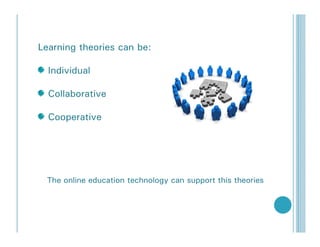
Learning theories can be:

  Individual

  Collaborative

  Cooperative


 The online education technology can support this theories
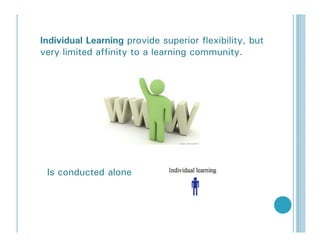
Individual Learning provide superior flexibility, but
very limited affinity to a learning community.


 Is conducted alone
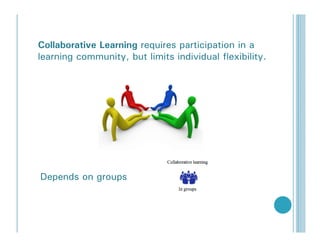
Collaborative Learning requires participation in a
learning community, but limits individual flexibility.


Depends on groups
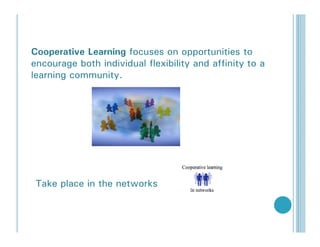
Cooperative Learning focuses on opportunities to
encourage both individual flexibility and affinity to a
learning community.


 Take place in the networks
The Theory of Cooperative Learning is based on
three pillars:

  Voluntary, but attractive participation
  Students should be stimulated to be visible as
potential partners and resources for others. A
successful cooperative learning community may
depend on members who are committed to serve as
resources for learning community.
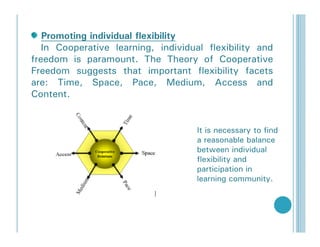
Promoting individual flexibility
   In Cooperative learning, individual flexibility and
freedom is paramount. The Theory of Cooperative
Freedom suggests that important flexibility facets
are: Time, Space, Pace, Medium, Access and
Content.


                                     It is necessary to find
                                     a reasonable balance
                                     between individual
                                     flexibility and
                                     participation in
                                     learning community.
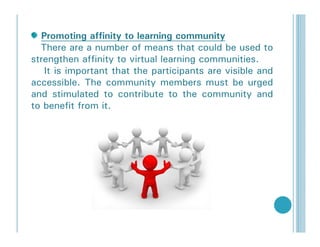
Promoting affinity to learning community
  There are a number of means that could be used to
strengthen affinity to virtual learning communities.
   It is important that the participants are visible and
accessible. The community members must be urged
and stimulated to contribute to the community and
to benefit from it.
Trabalho realizado por: Eduarda Rondão

U.C. : PROCESSOS PEDAGÓGICOS EM ELEARNING

Novembro 2009

Cooperative Freedom

  • 1.
    COOPERATIVE FREEDOM Theauthor of this Theory is Dr. Morten Paulsen Professor of Online Education at NITH and Director of Development at NKI Distance Education in Norway
  • 2.
    The Theory ofCooperative Freedom is based on three theoretical perspectives on distance education: Autonomy and independence Industrialization Interaction and communication
  • 3.
    Learning theories canbe: Individual Collaborative Cooperative The online education technology can support this theories
  • 4.
    Individual Learning providesuperior flexibility, but very limited affinity to a learning community. Is conducted alone
  • 5.
    Collaborative Learning requiresparticipation in a learning community, but limits individual flexibility. Depends on groups
  • 6.
    Cooperative Learning focuseson opportunities to encourage both individual flexibility and affinity to a learning community. Take place in the networks
  • 7.
    The Theory ofCooperative Learning is based on three pillars: Voluntary, but attractive participation Students should be stimulated to be visible as potential partners and resources for others. A successful cooperative learning community may depend on members who are committed to serve as resources for learning community.
  • 8.
    Promoting individual flexibility In Cooperative learning, individual flexibility and freedom is paramount. The Theory of Cooperative Freedom suggests that important flexibility facets are: Time, Space, Pace, Medium, Access and Content. It is necessary to find a reasonable balance between individual flexibility and participation in learning community.
  • 9.
    Promoting affinity tolearning community There are a number of means that could be used to strengthen affinity to virtual learning communities. It is important that the participants are visible and accessible. The community members must be urged and stimulated to contribute to the community and to benefit from it.
  • 10.
    Trabalho realizado por:Eduarda Rondão U.C. : PROCESSOS PEDAGÓGICOS EM ELEARNING Novembro 2009