CONVERSE,
INVERSE, and
CONTRAPOSITIVE
STATEMENT
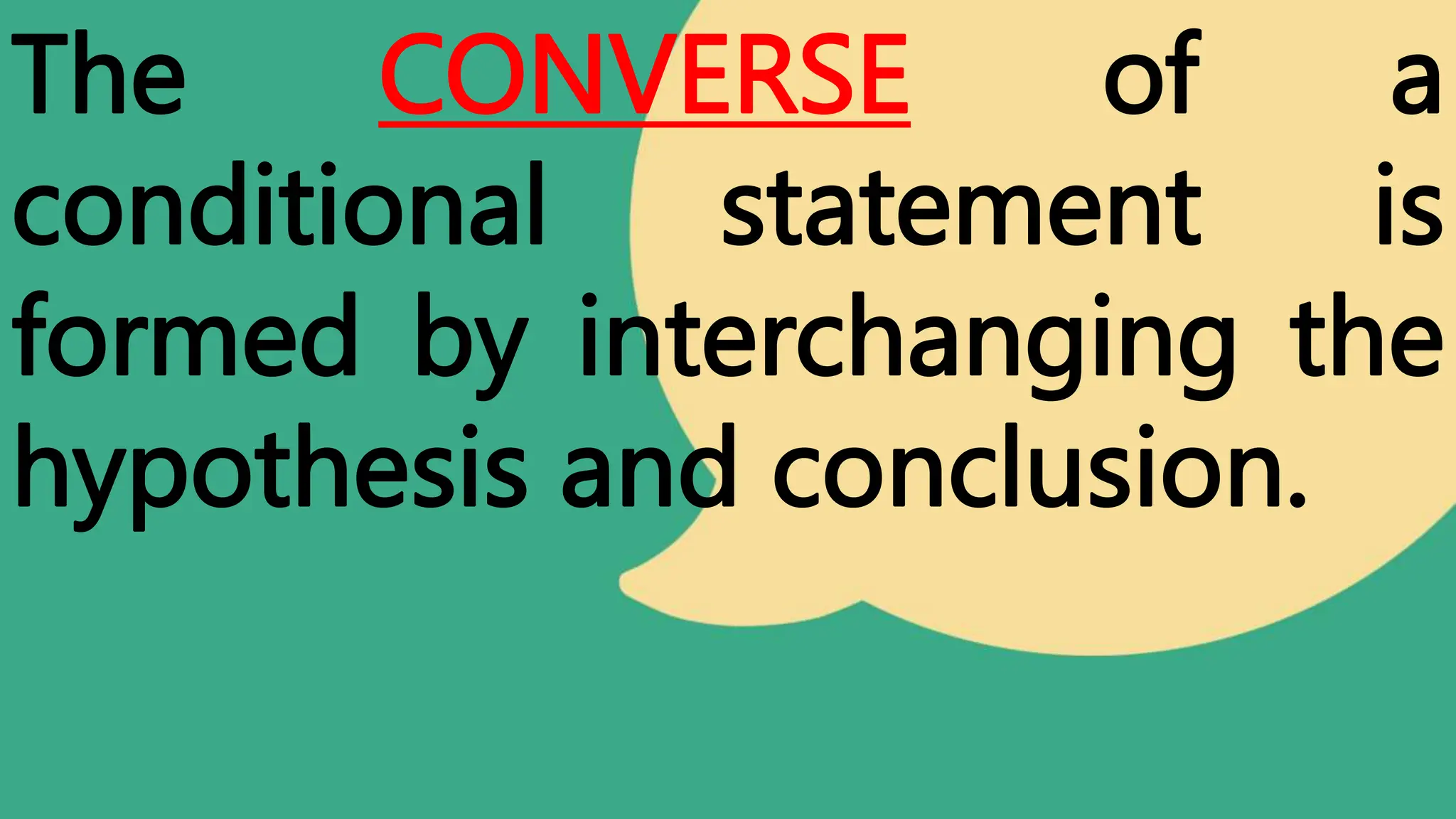
The CONVERSE of a
conditional statement is
formed by interchanging the
hypothesis and conclusion.
1. IF two angles are adjacent,
THEN they have a common
vertex.
CONVERSE - IF two angles
a common vertex, THEN they
are adjacent.
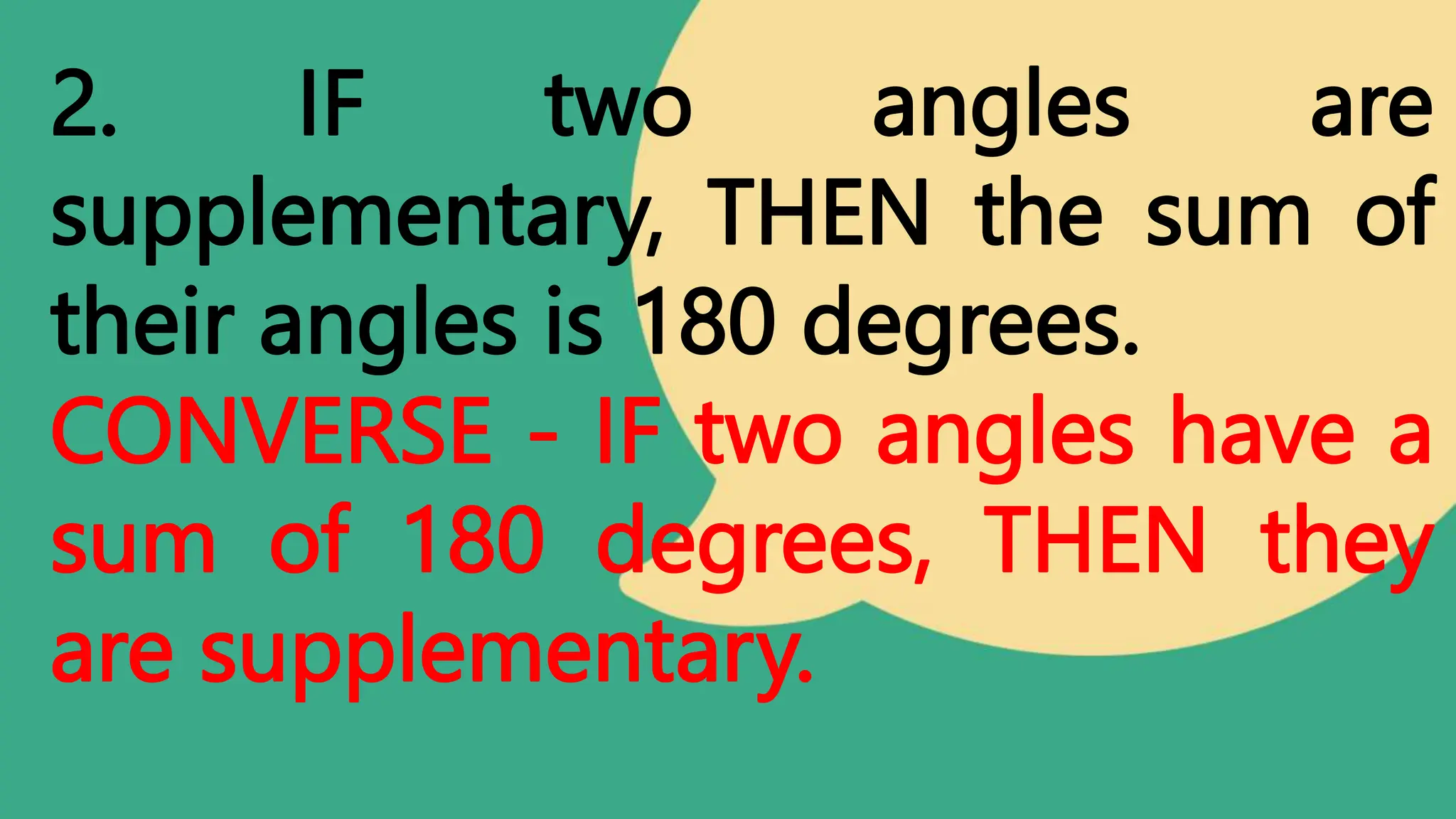
2. IF two angles are
supplementary, THEN the sum of
their angles is 180 degrees.
CONVERSE - IF two angles have a
sum of 180 degrees, THEN they
are supplementary.
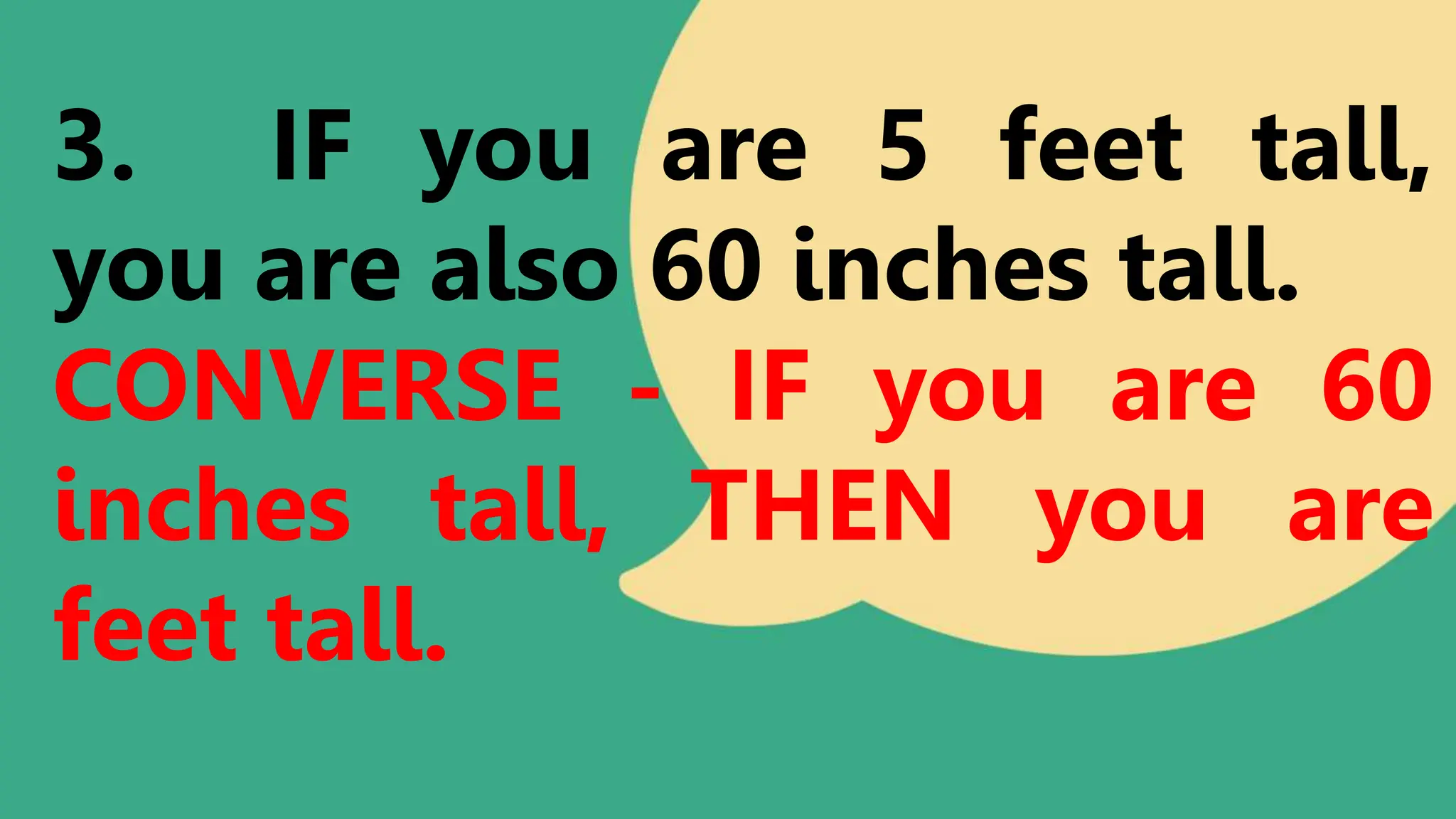
3. IF you are 5 feet tall,
you are also 60 inches tall.
CONVERSE - IF you are 60
inches tall, THEN you are
feet tall.
Given a conditional
statement, its INVERSE can
be formed by negating both
the hypothesis and
conclusion.
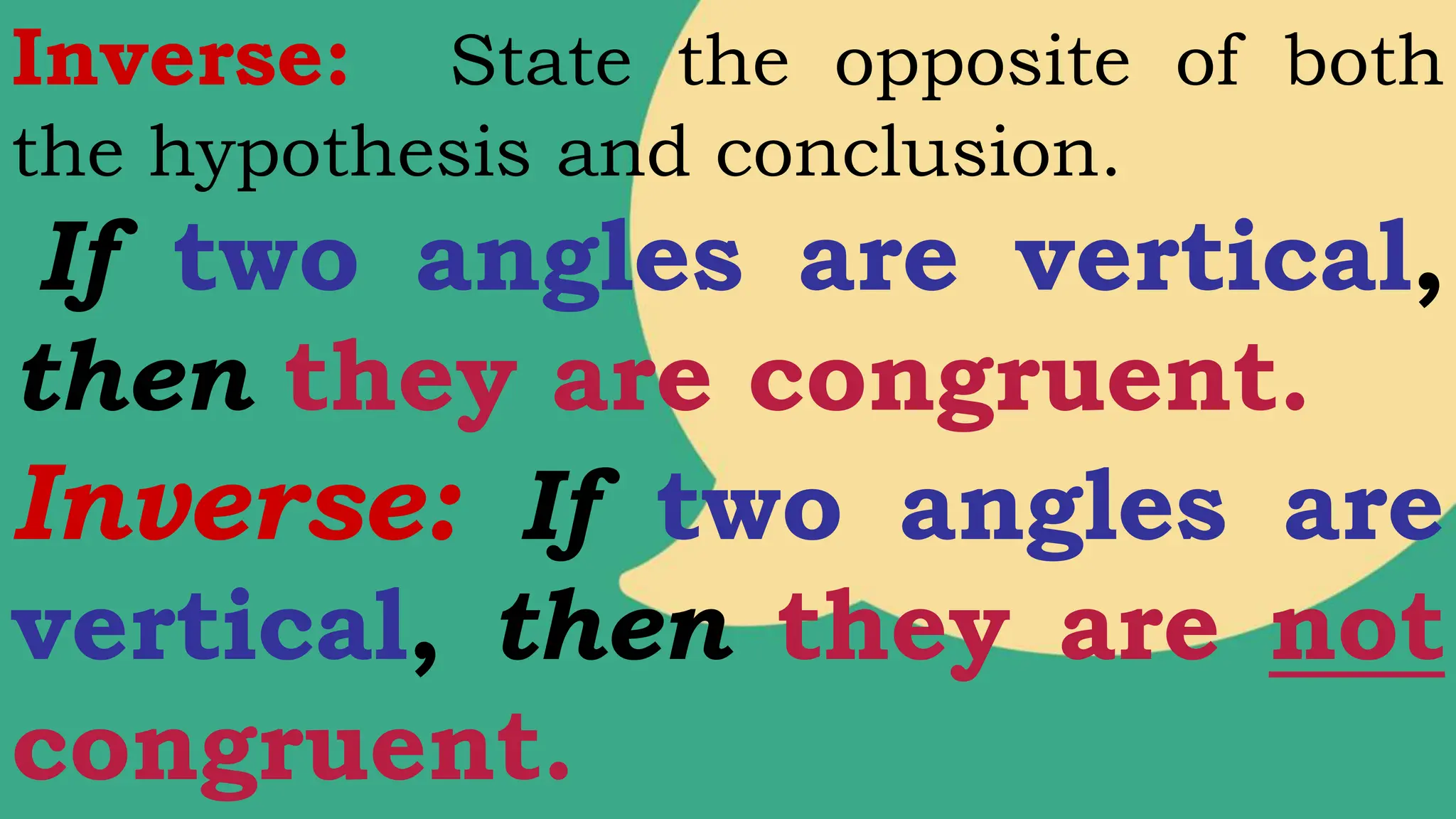
Inverse: State the opposite of both
the hypothesis and conclusion.
If two angles are vertical,
then they are congruent.
Inverse: If two angles are
vertical, then they are not
congruent.
Given a conditional
statement, its
CONTRAPOSITIVE are
logically equivalent to
the original conditional
statement.
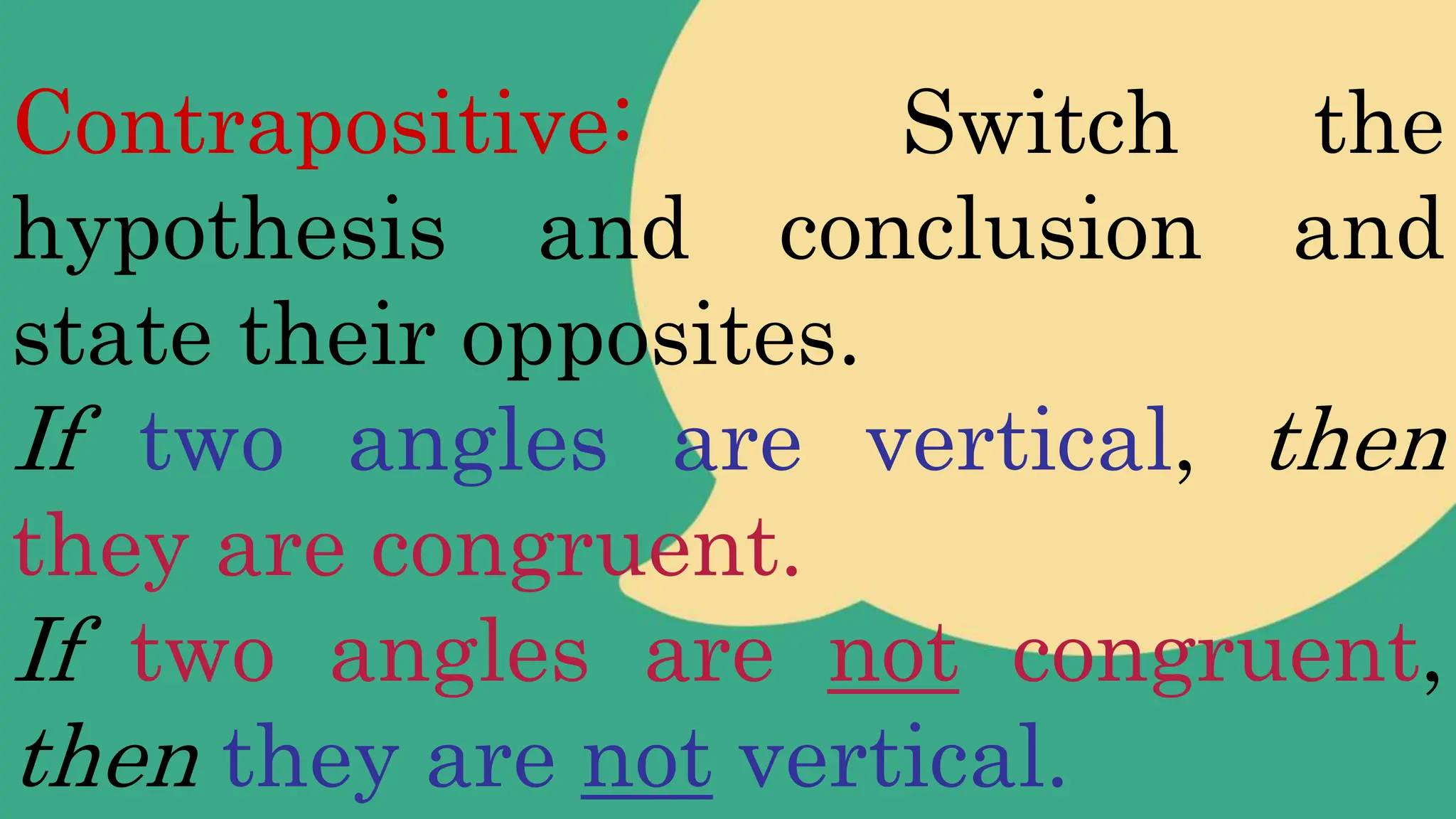
Contrapositive: Switch the
hypothesis and conclusion and
state their opposites.
If two angles are vertical, then
they are congruent.
If two angles are not congruent,
then they are not vertical.
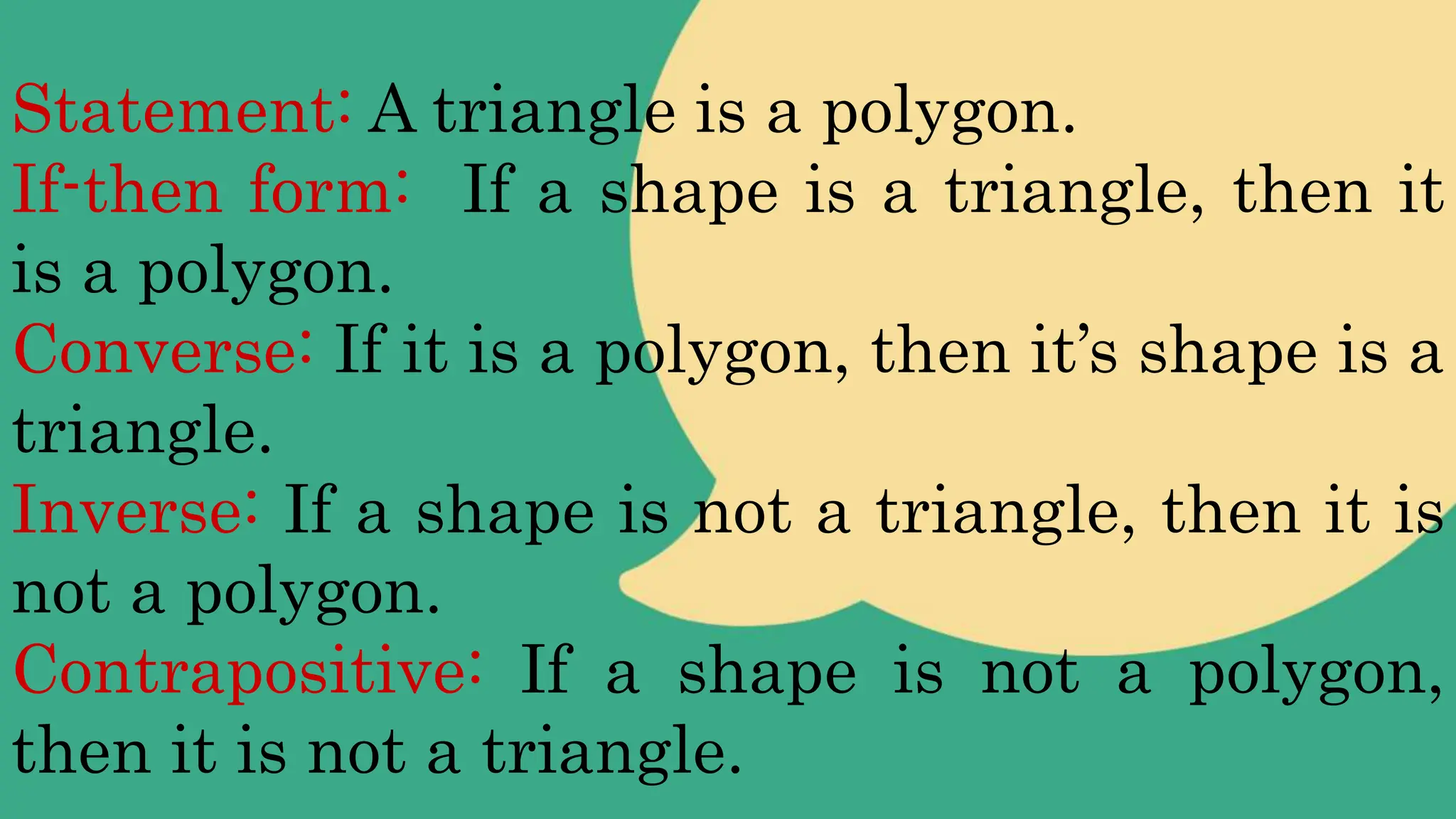
Statement: A triangle is a polygon.
If-then form: If a shape is a triangle, then it
is a polygon.
Converse: If it is a polygon, then it’s shape is a
triangle.
Inverse: If a shape is not a triangle, then it is
not a polygon.
Contrapositive: If a shape is not a polygon,
then it is not a triangle.
1. All right angles are equal.
2. A segment has exactly one
midpoint.
3. Angles in a linear pair are
supplementary.
4. Pentagon has five sides.
5. Drinking Pepsi makes you happy.

CONVERSE inverse contrapositive statement

  • 1.
  • 2.
    The CONVERSE ofa conditional statement is formed by interchanging the hypothesis and conclusion.
  • 3.
    1. IF twoangles are adjacent, THEN they have a common vertex. CONVERSE - IF two angles a common vertex, THEN they are adjacent.
  • 4.
    2. IF twoangles are supplementary, THEN the sum of their angles is 180 degrees. CONVERSE - IF two angles have a sum of 180 degrees, THEN they are supplementary.
  • 5.
    3. IF youare 5 feet tall, you are also 60 inches tall. CONVERSE - IF you are 60 inches tall, THEN you are feet tall.
  • 6.
    Given a conditional statement,its INVERSE can be formed by negating both the hypothesis and conclusion.
  • 7.
    Inverse: State theopposite of both the hypothesis and conclusion. If two angles are vertical, then they are congruent. Inverse: If two angles are vertical, then they are not congruent.
  • 8.
    Given a conditional statement,its CONTRAPOSITIVE are logically equivalent to the original conditional statement.
  • 9.
    Contrapositive: Switch the hypothesisand conclusion and state their opposites. If two angles are vertical, then they are congruent. If two angles are not congruent, then they are not vertical.
  • 10.
    Statement: A triangleis a polygon. If-then form: If a shape is a triangle, then it is a polygon. Converse: If it is a polygon, then it’s shape is a triangle. Inverse: If a shape is not a triangle, then it is not a polygon. Contrapositive: If a shape is not a polygon, then it is not a triangle.
  • 11.
    1. All rightangles are equal. 2. A segment has exactly one midpoint. 3. Angles in a linear pair are supplementary. 4. Pentagon has five sides. 5. Drinking Pepsi makes you happy.