Media Convergence 
Re-shaping the analysis of television
About the Author: 
Henry Jenkins 
• Born June 4 1958, Atlanta Georgia 
• Provost’s Professor of Communication, Journalism, and 
Cinematic Arts at the University of Southern California 
• Editor/Author of 
12 books 
• Blogs at: 
http://henryjenkins.org
• Convergence of Media 
– Intersection of old and ‘new’ media 
– Vanishing distinction between media participants 
(active/passive) blends: user produced media 
produsers, viewsers 
• Black Box Fallacy 
– Narratives expanded so they no longer “can” be 
contained in a single medium and consistent 
interaction with viewers 
• Affective Economics 
– Emotional bonds “product & 
consumer” 
• Collective Intelligence
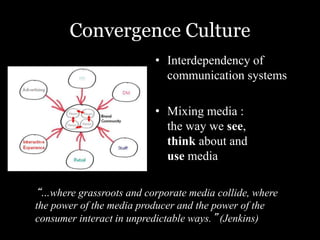
Convergence Culture 
• Interdependency of 
communication systems 
• Mixing media : 
the way we see, 
think about and 
use media 
“…where grassroots and corporate media collide, where 
the power of the media producer and the power of the 
consumer interact in unpredictable ways.” (Jenkins)
Black Box Fallacy 
“Old media are not being displaced. Rather, 
their functions and status are shifted by the 
introduction of new technologies” 
(Jenkins) 
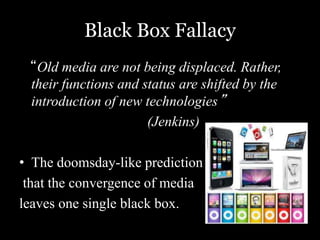
• The doomsday-like prediction 
that the convergence of media 
leaves one single black box.
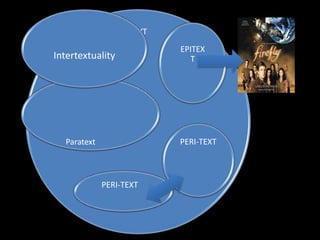
TEXT 
Paratext 
EPITEX 
T 
PERI-TEXT 
PERI-TEXT 
Intertextuality
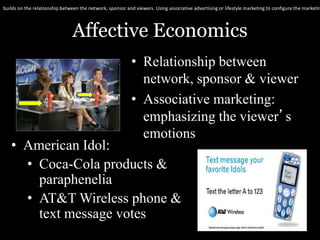
builds on the relationship between the network, sponsor and viewers. Using associative advertising or lifestyle marketing to configure the marketing 
Affective Economics 
• Relationship between 
network, sponsor & viewer 
• Associative marketing: 
emphasizing the viewer’s 
emotions 
• American Idol: 
• Coca-Cola products & 
paraphenelia 
• AT&T Wireless phone & 
text message votes
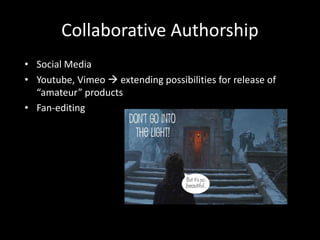
Collaborative Authorship 
• Social Media 
• Youtube, Vimeo  extending possibilities for release of 
“amateur” products 
• Fan-editing
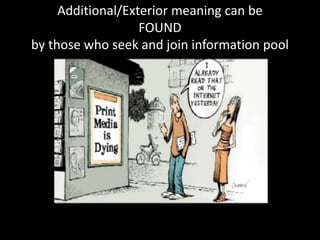
Collective Intelligence
Additional/Exterior meaning can be 
FOUND 
by those who seek and join information pool

Convergence intro tv

  • 1.
    Media Convergence Re-shapingthe analysis of television
  • 2.
    About the Author: Henry Jenkins • Born June 4 1958, Atlanta Georgia • Provost’s Professor of Communication, Journalism, and Cinematic Arts at the University of Southern California • Editor/Author of 12 books • Blogs at: http://henryjenkins.org
  • 3.
    • Convergence ofMedia – Intersection of old and ‘new’ media – Vanishing distinction between media participants (active/passive) blends: user produced media produsers, viewsers • Black Box Fallacy – Narratives expanded so they no longer “can” be contained in a single medium and consistent interaction with viewers • Affective Economics – Emotional bonds “product & consumer” • Collective Intelligence
  • 4.
    Convergence Culture •Interdependency of communication systems • Mixing media : the way we see, think about and use media “…where grassroots and corporate media collide, where the power of the media producer and the power of the consumer interact in unpredictable ways.” (Jenkins)
  • 5.
    Black Box Fallacy “Old media are not being displaced. Rather, their functions and status are shifted by the introduction of new technologies” (Jenkins) • The doomsday-like prediction that the convergence of media leaves one single black box.
  • 6.
    TEXT Paratext EPITEX T PERI-TEXT PERI-TEXT Intertextuality
  • 7.
    builds on therelationship between the network, sponsor and viewers. Using associative advertising or lifestyle marketing to configure the marketing Affective Economics • Relationship between network, sponsor & viewer • Associative marketing: emphasizing the viewer’s emotions • American Idol: • Coca-Cola products & paraphenelia • AT&T Wireless phone & text message votes
  • 8.
    Collaborative Authorship •Social Media • Youtube, Vimeo  extending possibilities for release of “amateur” products • Fan-editing
  • 9.
  • 10.
    Additional/Exterior meaning canbe FOUND by those who seek and join information pool