• A Large amount of Radio Broadcasting is scripted before
transmission.
• Quite a lot of radio stations use pre-written scripts for many parts of
the shows including speech packages, music sequences, continuity
announcements and discussions.
• The purpose of scripts within radio is to ensure coverage of all the
intended content and to make sure everything meets the schedule
requirements and timings.
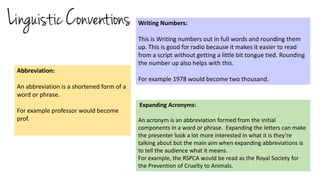
Writing Numbers:
This is Writing numbers out in full words and rounding them
up. This is good for radio because it makes it easier to read
from a script without getting a little bit tongue tied. Rounding
the number up also helps with this.
Abbreviation:
For example 1978 would become two thousand.

An abbreviation is a shortened form of a
word or phrase.
For example professor would become
prof.

Expanding Acronyms:
An acronym is an abbreviation formed from the initial
components in a word or phrase. Expanding the letters can make
the presenter look a lot more interested in what it is they’re
talking about but the main aim when expanding abbreviations is
to tell the audience what it means.
For example, the RSPCA would be read as the Royal Society for
the Prevention of Cruelty to Animals.
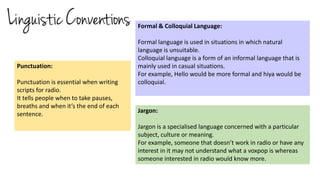
Formal & Colloquial Language:

Punctuation:
Punctuation is essential when writing
scripts for radio.
It tells people when to take pauses,
breaths and when it’s the end of each
sentence.

Formal language is used in situations in which natural
language is unsuitable.
Colloquial language is a form of an informal language that is
mainly used in casual situations.
For example, Hello would be more formal and hiya would be
colloquial.

Jargon:
Jargon is a specialised language concerned with a particular
subject, culture or meaning.
For example, someone that doesn’t work in radio or have any
interest in it may not understand what a voxpop is whereas
someone interested in radio would know more.
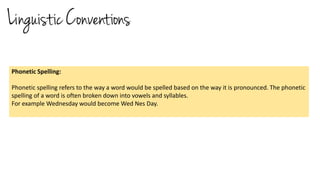
Phonetic Spelling:
Phonetic spelling refers to the way a word would be spelled based on the way it is pronounced. The phonetic
spelling of a word is often broken down into vowels and syllables.
For example Wednesday would become Wed Nes Day.
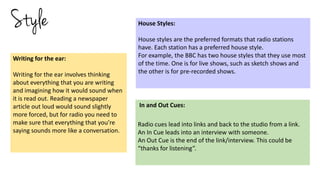
House Styles:

Writing for the ear:
Writing for the ear involves thinking
about everything that you are writing
and imagining how it would sound when
it is read out. Reading a newspaper
article out loud would sound slightly
more forced, but for radio you need to
make sure that everything that you’re
saying sounds more like a conversation.

House styles are the preferred formats that radio stations
have. Each station has a preferred house style.
For example, the BBC has two house styles that they use most
of the time. One is for live shows, such as sketch shows and
the other is for pre-recorded shows.

In and Out Cues:
Radio cues lead into links and back to the studio from a link.
An In Cue leads into an interview with someone.
An Out Cue is the end of the link/interview. This could be
“thanks for listening”.
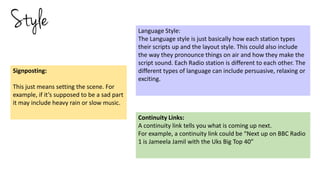
Signposting:

Language Style:
The Language style is just basically how each station types
their scripts up and the layout style. This could also include
the way they pronounce things on air and how they make the
script sound. Each Radio station is different to each other. The
different types of language can include persuasive, relaxing or
exciting.

This just means setting the scene. For
example, if it’s supposed to be a sad part
it may include heavy rain or slow music.
Continuity Links:
A continuity link tells you what is coming up next.
For example, a continuity link could be “Next up on BBC Radio
1 is Jameela Jamil with the Uks Big Top 40”
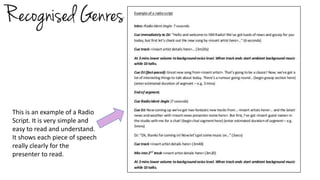
This is an example of a Radio
Script. It is very simple and
easy to read and understand.
It shows each piece of speech
really clearly for the
presenter to read.
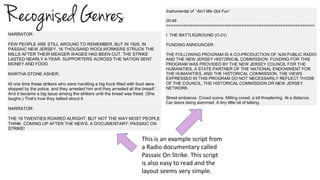
This is an example script from
a Radio documentary called
Passaic On Strike. This script
is also easy to read and the
layout seems very simple.
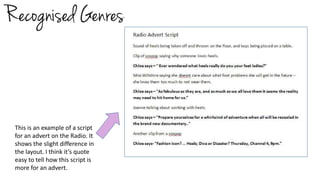
This is an example of a script
for an advert on the Radio. It
shows the slight difference in
the layout. I think it’s quote
easy to tell how this script is
more for an advert.

Assignment 1: Conventions when Scriptwriting for Radio

  • 2.
    • A Largeamount of Radio Broadcasting is scripted before transmission. • Quite a lot of radio stations use pre-written scripts for many parts of the shows including speech packages, music sequences, continuity announcements and discussions. • The purpose of scripts within radio is to ensure coverage of all the intended content and to make sure everything meets the schedule requirements and timings.
  • 3.
    Writing Numbers: This isWriting numbers out in full words and rounding them up. This is good for radio because it makes it easier to read from a script without getting a little bit tongue tied. Rounding the number up also helps with this. Abbreviation: For example 1978 would become two thousand. An abbreviation is a shortened form of a word or phrase. For example professor would become prof. Expanding Acronyms: An acronym is an abbreviation formed from the initial components in a word or phrase. Expanding the letters can make the presenter look a lot more interested in what it is they’re talking about but the main aim when expanding abbreviations is to tell the audience what it means. For example, the RSPCA would be read as the Royal Society for the Prevention of Cruelty to Animals.
  • 4.
    Formal & ColloquialLanguage: Punctuation: Punctuation is essential when writing scripts for radio. It tells people when to take pauses, breaths and when it’s the end of each sentence. Formal language is used in situations in which natural language is unsuitable. Colloquial language is a form of an informal language that is mainly used in casual situations. For example, Hello would be more formal and hiya would be colloquial. Jargon: Jargon is a specialised language concerned with a particular subject, culture or meaning. For example, someone that doesn’t work in radio or have any interest in it may not understand what a voxpop is whereas someone interested in radio would know more.
  • 5.
    Phonetic Spelling: Phonetic spellingrefers to the way a word would be spelled based on the way it is pronounced. The phonetic spelling of a word is often broken down into vowels and syllables. For example Wednesday would become Wed Nes Day.
  • 6.
    House Styles: Writing forthe ear: Writing for the ear involves thinking about everything that you are writing and imagining how it would sound when it is read out. Reading a newspaper article out loud would sound slightly more forced, but for radio you need to make sure that everything that you’re saying sounds more like a conversation. House styles are the preferred formats that radio stations have. Each station has a preferred house style. For example, the BBC has two house styles that they use most of the time. One is for live shows, such as sketch shows and the other is for pre-recorded shows. In and Out Cues: Radio cues lead into links and back to the studio from a link. An In Cue leads into an interview with someone. An Out Cue is the end of the link/interview. This could be “thanks for listening”.
  • 7.
    Signposting: Language Style: The Languagestyle is just basically how each station types their scripts up and the layout style. This could also include the way they pronounce things on air and how they make the script sound. Each Radio station is different to each other. The different types of language can include persuasive, relaxing or exciting. This just means setting the scene. For example, if it’s supposed to be a sad part it may include heavy rain or slow music. Continuity Links: A continuity link tells you what is coming up next. For example, a continuity link could be “Next up on BBC Radio 1 is Jameela Jamil with the Uks Big Top 40”
  • 8.
    This is anexample of a Radio Script. It is very simple and easy to read and understand. It shows each piece of speech really clearly for the presenter to read.
  • 9.
    This is anexample script from a Radio documentary called Passaic On Strike. This script is also easy to read and the layout seems very simple.
  • 10.
    This is anexample of a script for an advert on the Radio. It shows the slight difference in the layout. I think it’s quote easy to tell how this script is more for an advert.