Martin TADOUM,
Deputy Executive Secretary /COMIFAC
1
16TH NOVEMBER 2013

GLOBAL LANDSCAPES FORUM/WARSAW
Background
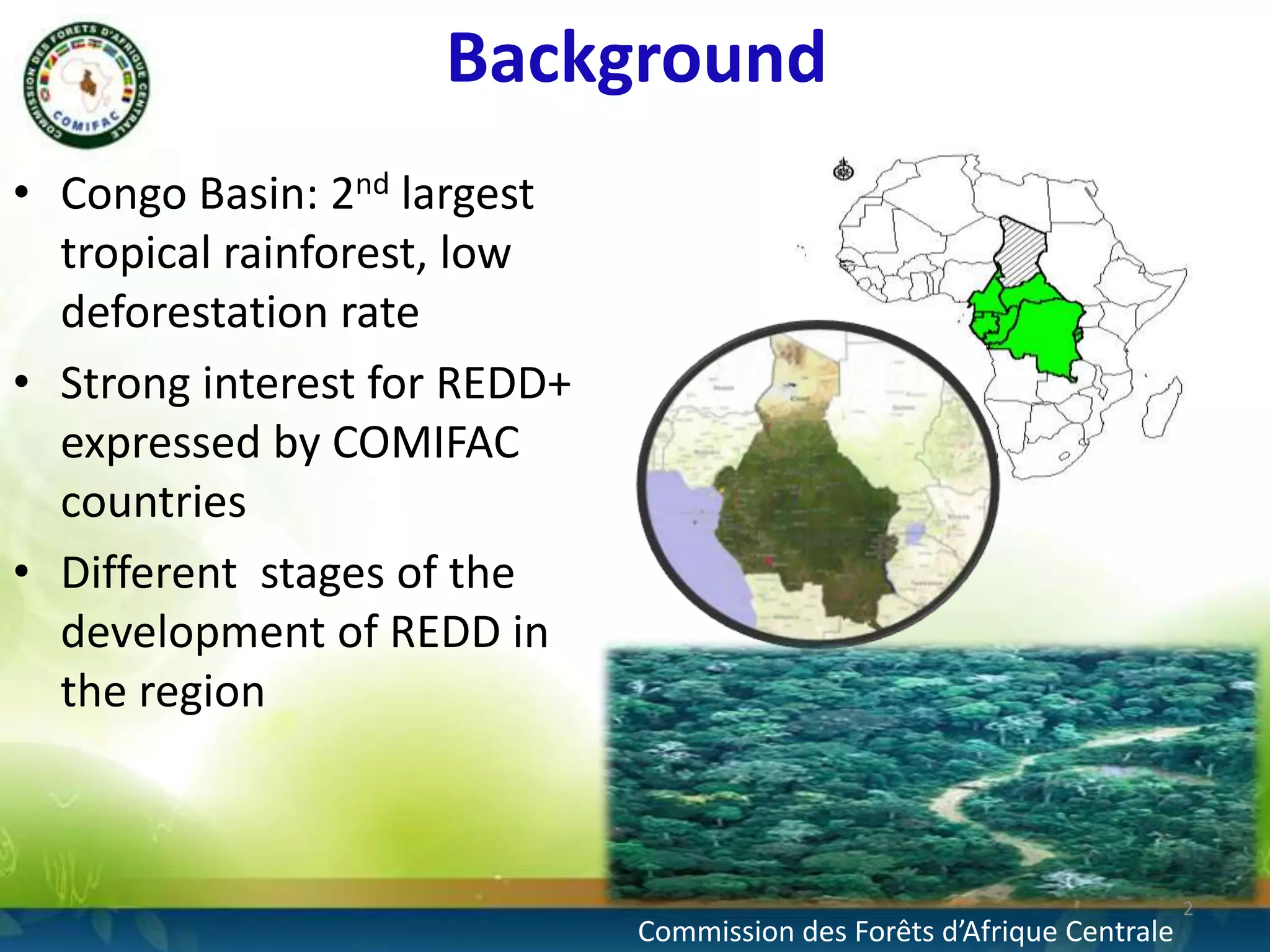
• Congo Basin: 2nd largest
tropical rainforest, low
deforestation rate
• Strong interest for REDD+
expressed by COMIFAC
countries
• Different stages of the
development of REDD in
the region

2
Commission des Forêts d’Afrique Centrale

2
Partial NFMS

Fullyoperational
NFMS

Current situation on REDD

Capacity
Development

Democratic Republic of
Congo
Gabon

Republic of
Congo

Equatorial Guinea
Chad
Burundi
Rwanda
Sao Tome & Principe

Central African
Republic
Cameroon
Phase 1
Readiness

Phase 2
Demonstration
activities

Phase 3
Positive incentives
for verified
performance
REDD Methodological issues
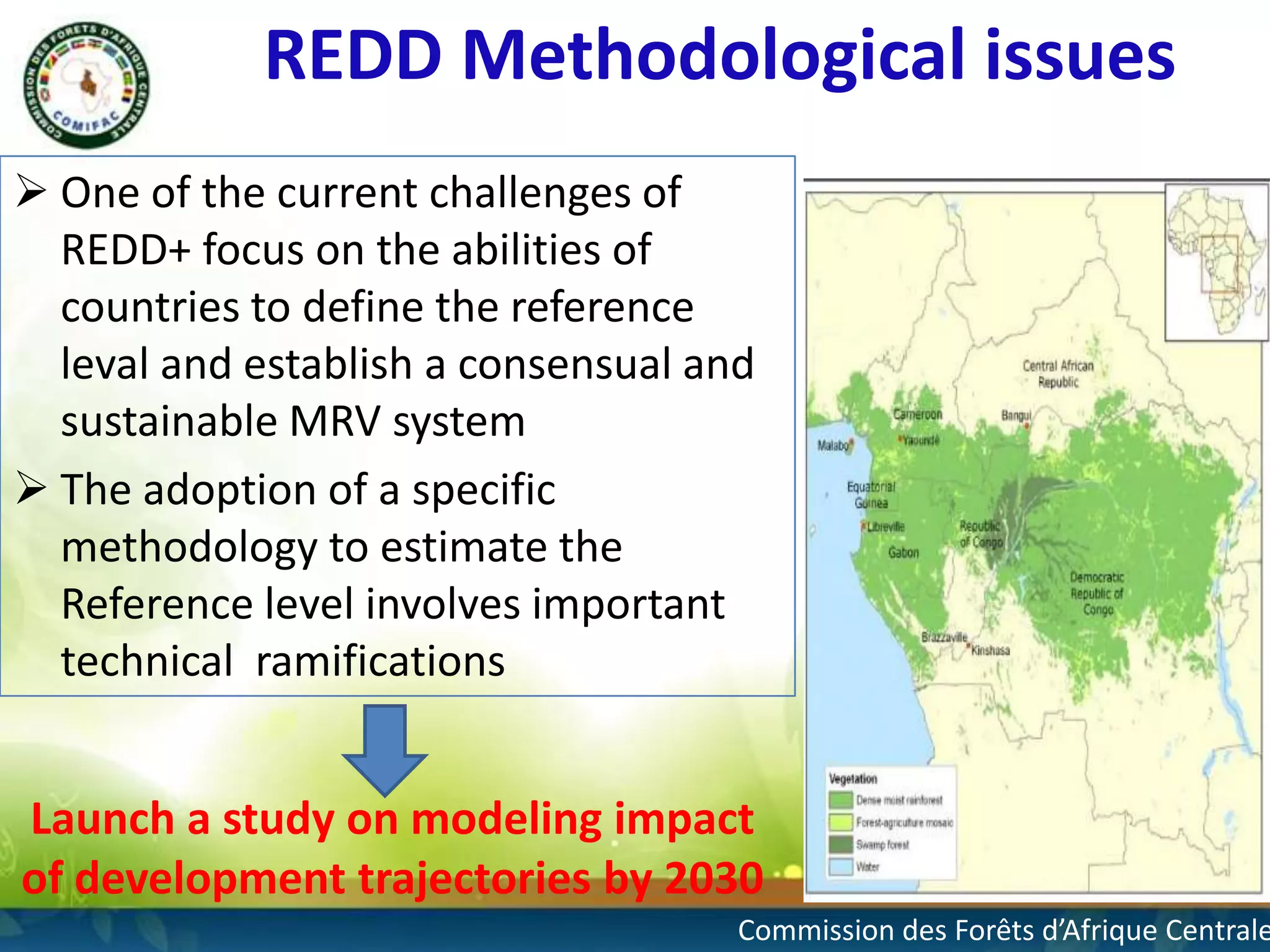
 One of the current challenges of
REDD+ focus on the abilities of
countries to define the reference
leval and establish a consensual and
sustainable MRV system
 The adoption of a specific
methodology to estimate the
Reference level involves important
technical ramifications

Launch a study on modeling impact
of development trajectories by 2030

4

Commission des Forêts d’Afrique Centrale
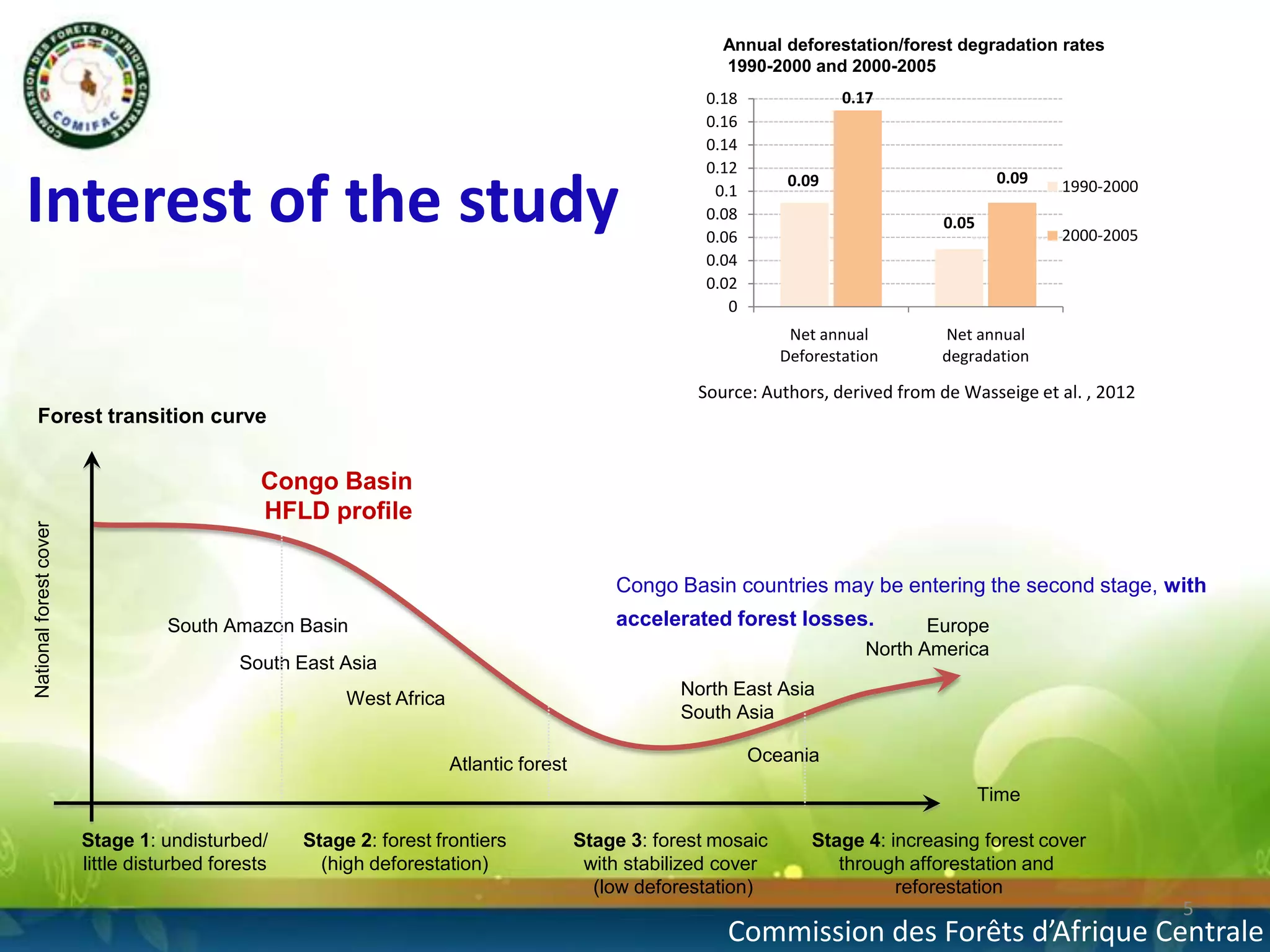
Annual deforestation/forest degradation rates
1990-2000 and 2000-2005

Interest of the study

0.17

0.18
0.16
0.14
0.12
0.1
0.08
0.06
0.04
0.02
0

0.09

0.09
0.05

Net annual
Deforestation

1990-2000
2000-2005

Net annual
degradation

Source: Authors, derived from de Wasseige et al. , 2012

National forest cover

Forest transition curve

Congo Basin
HFLD profile
Congo Basin countries may be entering the second stage, with
accelerated forest losses.

South Amazon Basin

Europe
North America

South East Asia
North East Asia
South Asia

West Africa
Atlantic forest

Oceania
Time

Stage 1: undisturbed/
little disturbed forests

Stage 2: forest frontiers
(high deforestation)

Stage 3: forest mosaic
with stabilized cover
(low deforestation)

Stage 4: increasing forest cover
through afforestation and
reforestation

5

Commission des Forêts d’Afrique Centrale
Development of Congobiom
model and its application
Congobiom is an economic model for the Congo
Basin, derived from GLOBIOM developed by IIASA
This modelling tool can strengthen the better
understanding of the potentiel future trends of
deforestation in the Congo Bassin by
 Providing a depth analysis of the major drivers of
deforestation for the next decades in the countries of
the Congo Basin by analyzing internal pressures
(population growth, development needs, etc…) but
also external pressures (commodity prices for
example)

Commission des Forêts d’Afrique Centrale
Development of Congobiom
model and its applications (cont.)
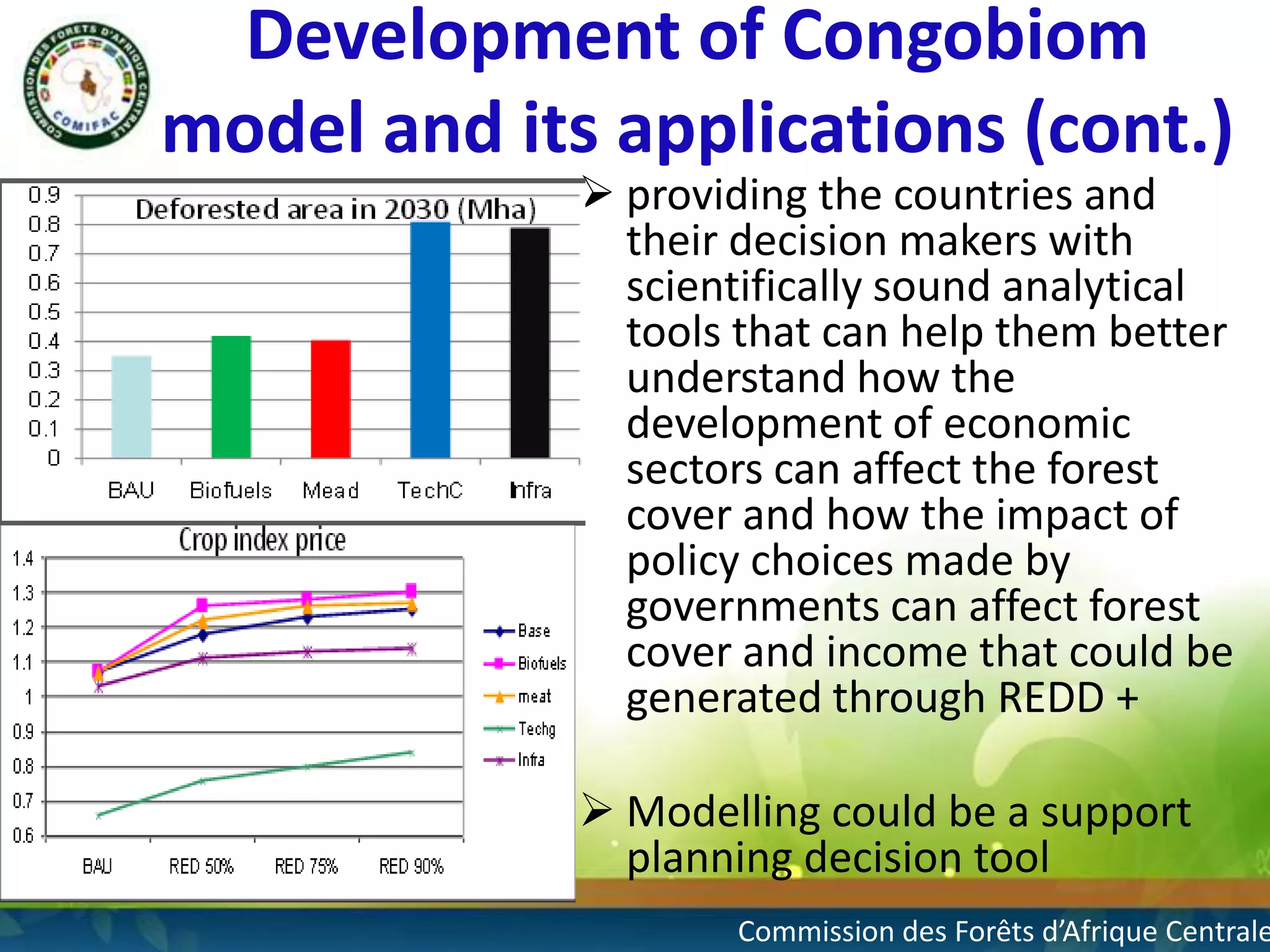
 providing the countries and
their decision makers with
scientifically sound analytical
tools that can help them better
understand how the
development of economic
sectors can affect the forest
cover and how the impact of
policy choices made by
governments can affect forest
cover and income that could be
generated through REDD +
 Modelling could be a support
planning decision tool

Commission des Forêts d’Afrique Centrale
Current phase of the Project and
next steps in the Congo Basin
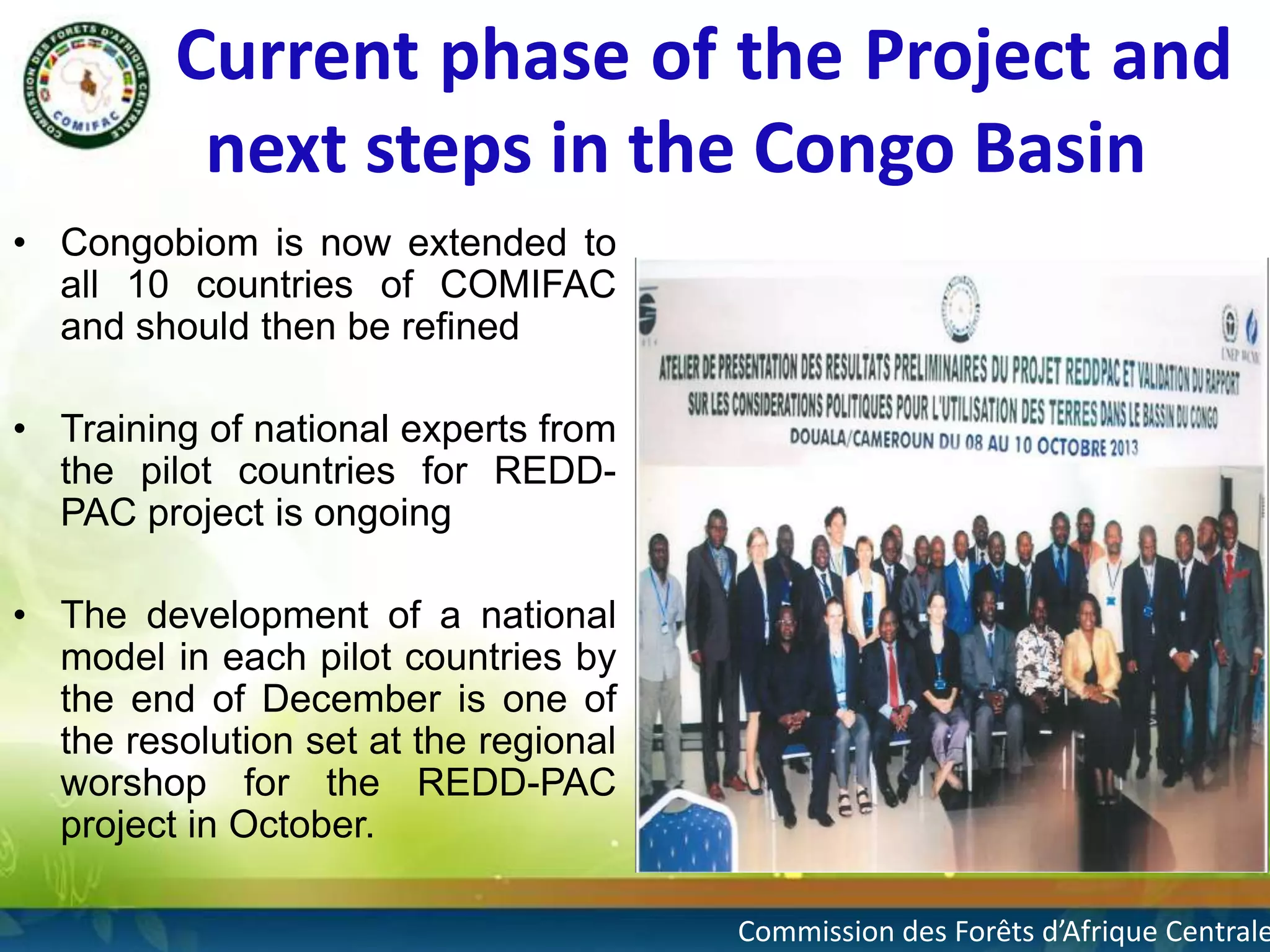
• Congobiom is now extended to
all 10 countries of COMIFAC
and should then be refined

• Training of national experts from
the pilot countries for REDDPAC project is ongoing
• The development of a national
model in each pilot countries by
the end of December is one of
the resolution set at the regional
worshop for the REDD-PAC
project in October.

8

Commission des Forêts d’Afrique Centrale
COMMISSION DES FORETS D’AFRIQUE CENTRALE

Une dimension régionale pour la conservation
et la gestion durable des écosystèmes
forestiers
Tél : (+237) 22 21 35 11 (+237) 22 21 35 12 Fax: (+237) 22 20 48 03 BP. 20818 Yaoundé Cameroun
Email : comifac@comifac.org - comifac2005@yahoo.fr Site web : www.comifac.org

Contribution of land use change models to REDD Process in the Congo Basin

  • 1.
    Martin TADOUM, Deputy ExecutiveSecretary /COMIFAC 1 16TH NOVEMBER 2013 GLOBAL LANDSCAPES FORUM/WARSAW
  • 2.
    Background • Congo Basin:2nd largest tropical rainforest, low deforestation rate • Strong interest for REDD+ expressed by COMIFAC countries • Different stages of the development of REDD in the region 2 Commission des Forêts d’Afrique Centrale 2
  • 3.
    Partial NFMS Fullyoperational NFMS Current situationon REDD Capacity Development Democratic Republic of Congo Gabon Republic of Congo Equatorial Guinea Chad Burundi Rwanda Sao Tome & Principe Central African Republic Cameroon Phase 1 Readiness Phase 2 Demonstration activities Phase 3 Positive incentives for verified performance
  • 4.
    REDD Methodological issues One of the current challenges of REDD+ focus on the abilities of countries to define the reference leval and establish a consensual and sustainable MRV system  The adoption of a specific methodology to estimate the Reference level involves important technical ramifications Launch a study on modeling impact of development trajectories by 2030 4 Commission des Forêts d’Afrique Centrale
  • 5.
    Annual deforestation/forest degradationrates 1990-2000 and 2000-2005 Interest of the study 0.17 0.18 0.16 0.14 0.12 0.1 0.08 0.06 0.04 0.02 0 0.09 0.09 0.05 Net annual Deforestation 1990-2000 2000-2005 Net annual degradation Source: Authors, derived from de Wasseige et al. , 2012 National forest cover Forest transition curve Congo Basin HFLD profile Congo Basin countries may be entering the second stage, with accelerated forest losses. South Amazon Basin Europe North America South East Asia North East Asia South Asia West Africa Atlantic forest Oceania Time Stage 1: undisturbed/ little disturbed forests Stage 2: forest frontiers (high deforestation) Stage 3: forest mosaic with stabilized cover (low deforestation) Stage 4: increasing forest cover through afforestation and reforestation 5 Commission des Forêts d’Afrique Centrale
  • 6.
    Development of Congobiom modeland its application Congobiom is an economic model for the Congo Basin, derived from GLOBIOM developed by IIASA This modelling tool can strengthen the better understanding of the potentiel future trends of deforestation in the Congo Bassin by  Providing a depth analysis of the major drivers of deforestation for the next decades in the countries of the Congo Basin by analyzing internal pressures (population growth, development needs, etc…) but also external pressures (commodity prices for example) Commission des Forêts d’Afrique Centrale
  • 7.
    Development of Congobiom modeland its applications (cont.)  providing the countries and their decision makers with scientifically sound analytical tools that can help them better understand how the development of economic sectors can affect the forest cover and how the impact of policy choices made by governments can affect forest cover and income that could be generated through REDD +  Modelling could be a support planning decision tool Commission des Forêts d’Afrique Centrale
  • 8.
    Current phase ofthe Project and next steps in the Congo Basin • Congobiom is now extended to all 10 countries of COMIFAC and should then be refined • Training of national experts from the pilot countries for REDDPAC project is ongoing • The development of a national model in each pilot countries by the end of December is one of the resolution set at the regional worshop for the REDD-PAC project in October. 8 Commission des Forêts d’Afrique Centrale
  • 9.
    COMMISSION DES FORETSD’AFRIQUE CENTRALE Une dimension régionale pour la conservation et la gestion durable des écosystèmes forestiers Tél : (+237) 22 21 35 11 (+237) 22 21 35 12 Fax: (+237) 22 20 48 03 BP. 20818 Yaoundé Cameroun Email : comifac@comifac.org - comifac2005@yahoo.fr Site web : www.comifac.org

Editor's Notes

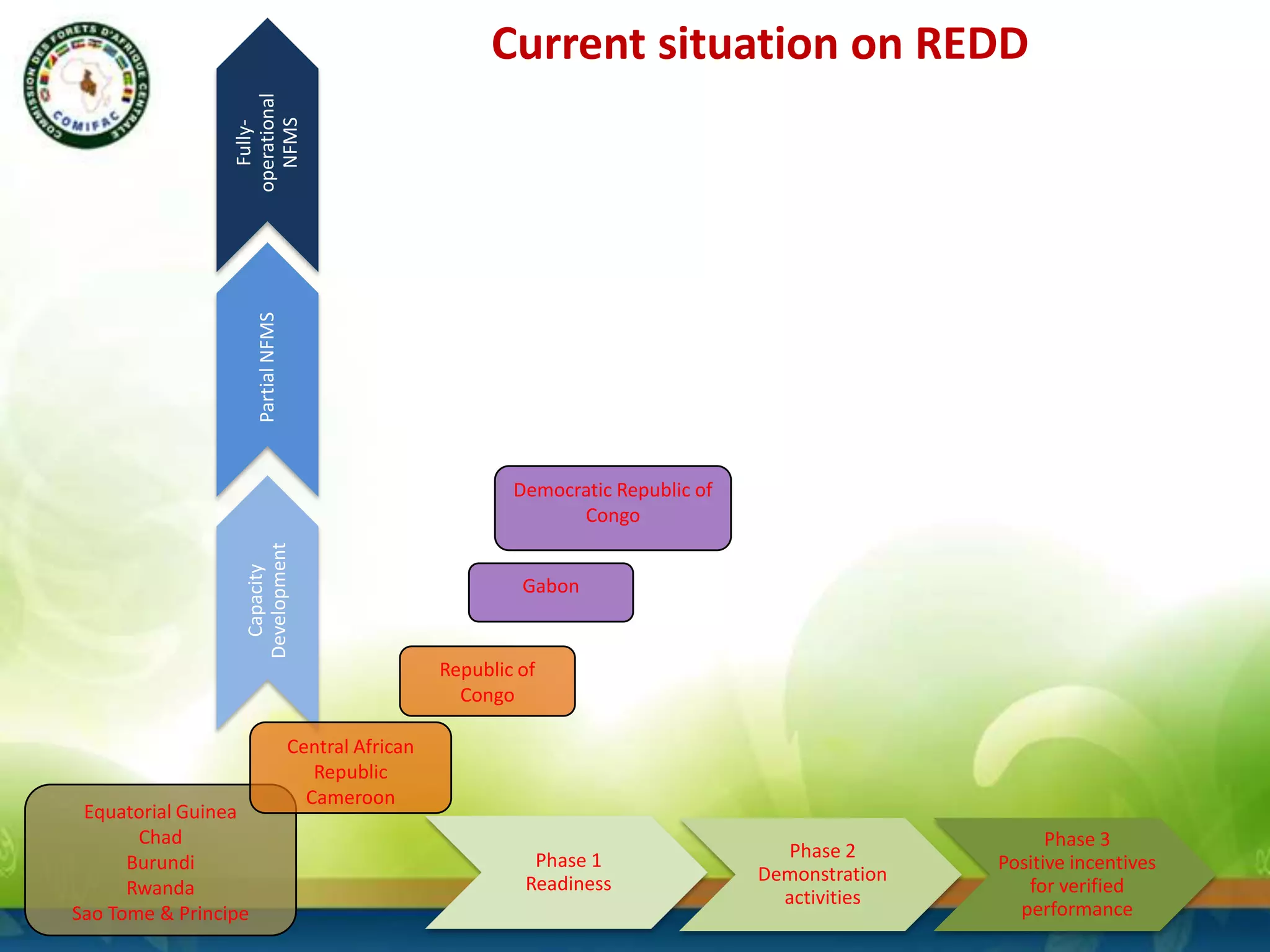
  • #4 Figure 7. Status of countries in the REDD+ phases and the M&MRV key phases.
  • #6 However deforestation in the Congo Basin has accelerated in recent years and annual rates of both degradation and deforestation have almost doubled from 1990-2000 period to 2000-2005. And there are a myriad of signals in the Congo Basin that convergingly indicate an acceleration of forest loss. Based on the Forest transition theory, the Congo Basin may well be entering the second stage, with accelerated forest losses. So far, deforestation and forest degradation have been largely associated with expansion of subsistence activities (agriculture and energy) and concentrated around densely populated areas. Local and regional development, population increases and global demand for commodities are likely to increase deforestation and forest degradation in the Congo Basin.