The Main
  Contexts
of a Literary
    Work
Essential Question

• How can knowledge of the
  various contexts of a literary work
  enhance our understanding and
  appreciation of the text?
Literary Contexts

• To understand and appreciate a
  literary selection, a reader must
  understand the significant contexts in
  which it was written.
Biographical Context


• What biographical facts has the author used
  in the text?

• What insights do readers acquire about the
  author’s life by reading the text?
Historical Context
• What specific historical events were happening
  when the work was being composed?
• What historical events does this work deal
  with?
• In what ways did history influence the writer’s
  outlook?
Geographical Context
• Is this author a regionalist writer?
• How does dialect influence the text?
Political Context
• What political events are significant to
  the text?
• What political events were occurring at
  the time the work was written?
• What political beliefs does the author
  seem to have?
Philosophical/Religious Context
• Are any religions or philosophies mentioned
  specifically in the text?
• What religious/ethical/philosophical beliefs
  does the author seem to favor?
• What behavior do the characters display that
  the author wants us to think is “right”?
• What behavior is “wrong”? How can one tell?
Sociological Context
• What sort of society does the writer describe?
• What does the writer seem to like/dislike about
  this society?
• What changes do you think the writer would
  like to make in the society? Evidence?
• What sorts of pressures does the society put on
  its members? How do members respond?
Psychological Context
• What theories of human behavior does the writer
  seem to believe?
• What theories of human behavior does the writer
  seem to reject?
• How do people’s minds work in the text?
• In what ways does the structure & organization of the
  story indicate the writer’s beliefs about the workings
  of the mind.
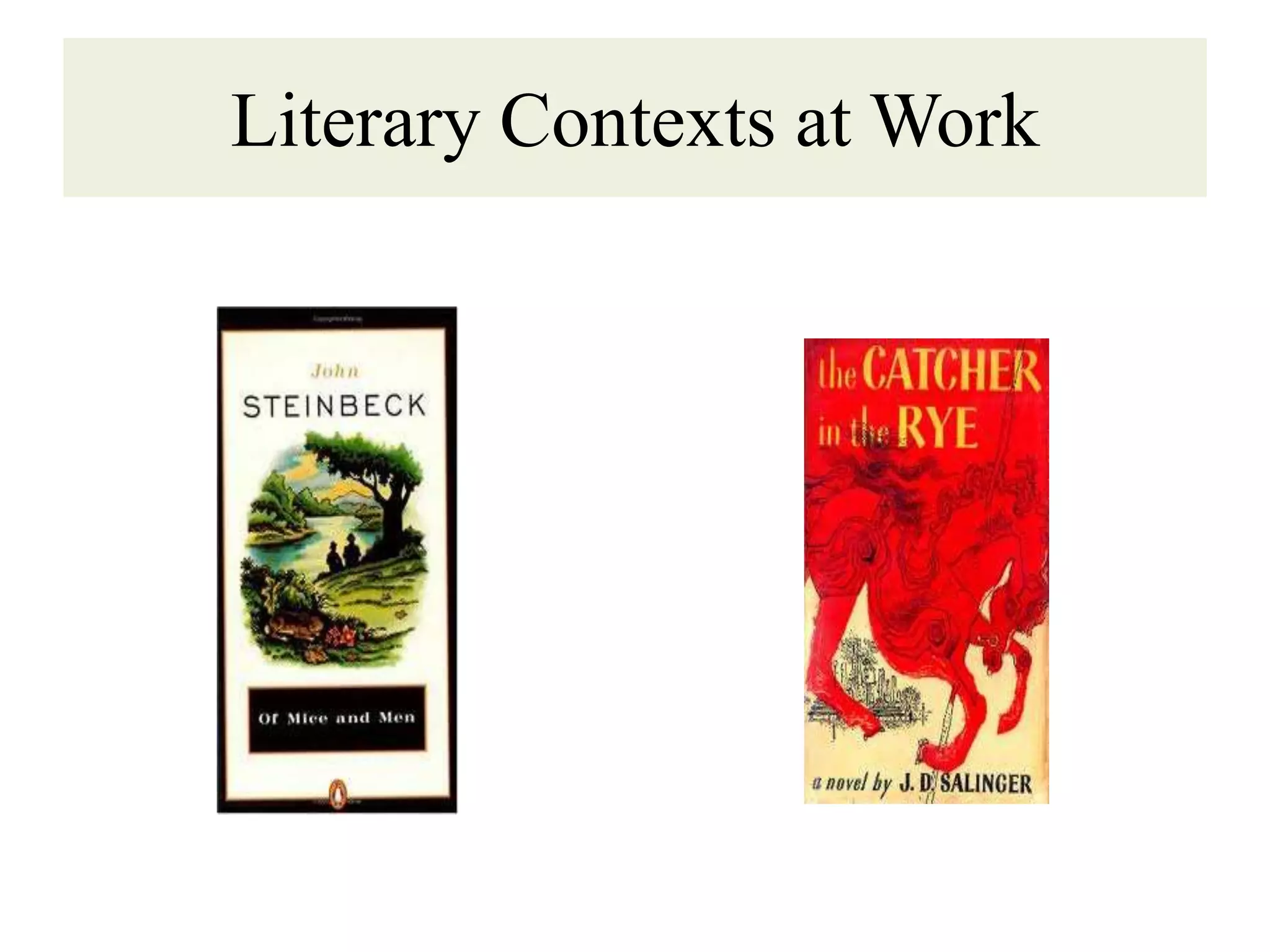
Literary Contexts at Work

Contexts of literary works

  • 1.
    The Main Contexts of a Literary Work
  • 2.
    Essential Question • Howcan knowledge of the various contexts of a literary work enhance our understanding and appreciation of the text?
  • 3.
    Literary Contexts • Tounderstand and appreciate a literary selection, a reader must understand the significant contexts in which it was written.
  • 4.
    Biographical Context • Whatbiographical facts has the author used in the text? • What insights do readers acquire about the author’s life by reading the text?
  • 5.
    Historical Context • Whatspecific historical events were happening when the work was being composed? • What historical events does this work deal with? • In what ways did history influence the writer’s outlook?
  • 6.
    Geographical Context • Isthis author a regionalist writer? • How does dialect influence the text?
  • 7.
    Political Context • Whatpolitical events are significant to the text? • What political events were occurring at the time the work was written? • What political beliefs does the author seem to have?
  • 8.
    Philosophical/Religious Context • Areany religions or philosophies mentioned specifically in the text? • What religious/ethical/philosophical beliefs does the author seem to favor? • What behavior do the characters display that the author wants us to think is “right”? • What behavior is “wrong”? How can one tell?
  • 9.
    Sociological Context • Whatsort of society does the writer describe? • What does the writer seem to like/dislike about this society? • What changes do you think the writer would like to make in the society? Evidence? • What sorts of pressures does the society put on its members? How do members respond?
  • 10.
    Psychological Context • Whattheories of human behavior does the writer seem to believe? • What theories of human behavior does the writer seem to reject? • How do people’s minds work in the text? • In what ways does the structure & organization of the story indicate the writer’s beliefs about the workings of the mind.
  • 11.