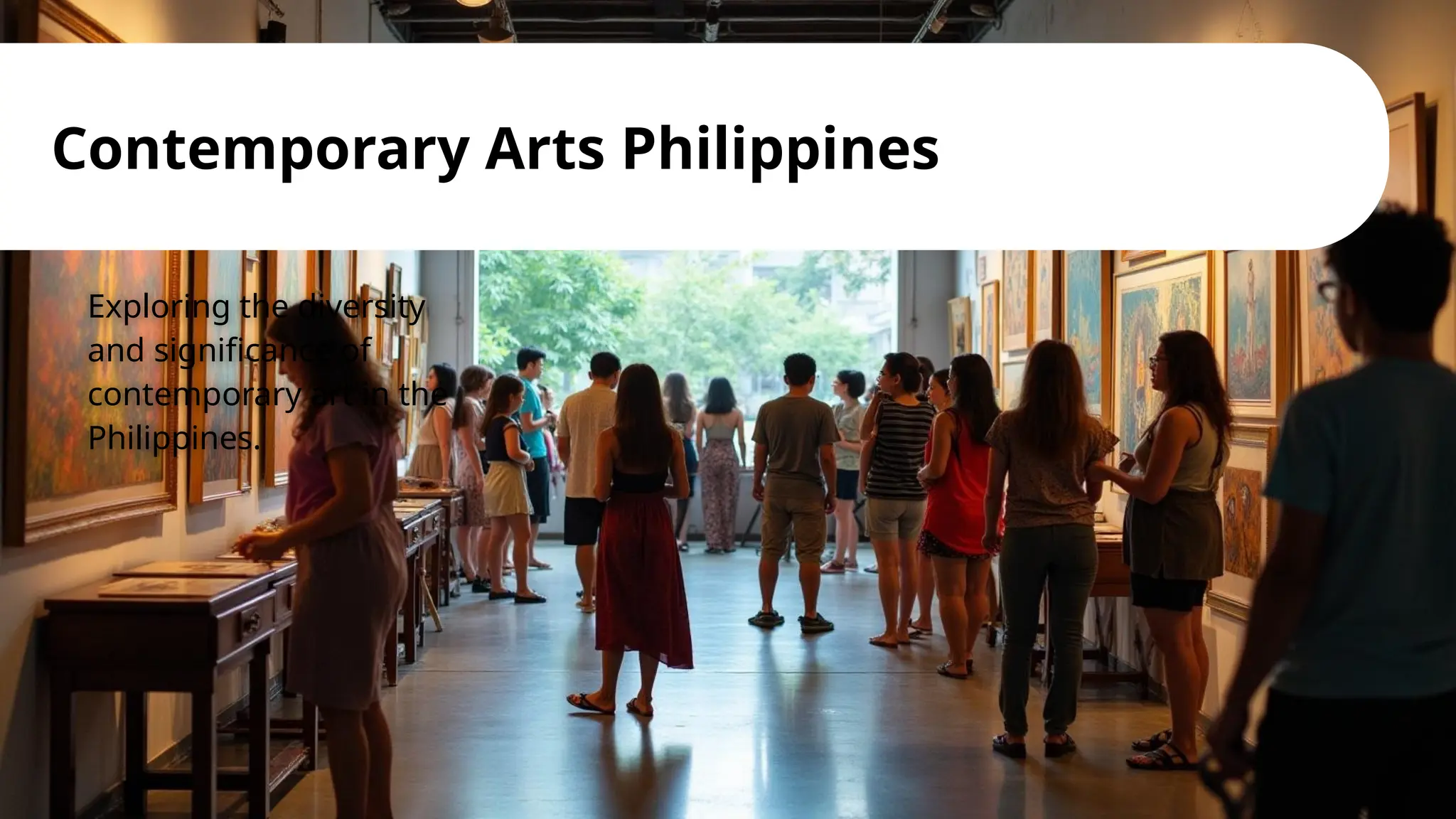
Contemporary Arts Philippines
Exploring the diversity
and significance of
contemporary art in the
Philippines.
Introduction
This presentation explores the meaning and forms of
contemporary arts in the Philippines, highlighting their
cultural significance and diverse expressions across regions.
Defining Art
01
Conceptual understanding of art
Art is a diverse form of expression that reflects cultural,
social, and personal contexts. In the Philippines, art
embodies the collective and individual experiences of its
people, evolving with time and technology.
Historical context of art in the Philippines
Philippine art has evolved from traditional to contemporary
forms, influenced by historical events, social changes, and
technological advancements. Present-day art reflects
contemporary issues and cultural diversity across regions.
Cultural significance of art
forms
Contemporary Philippine art serves as a medium for
expressing identity, community relationships, and
shared experiences. It integrates various elements
and forms, highlighting communal, intuitive, and
holistic features.
Forms of Contemporary Art
02
Visual arts: painting, sculpture, and
installation
Visual arts in the Philippines include pop art, conceptual art,
installation, photography, and more, often combining
traditional and modern media to reflect current realities and
artistic innovation.
Performing arts: theater,
dance, and music
Contemporary performing arts encompass theater,
various dance forms like street dance and flash
mobs, and diverse music genres including hip-hop,
jazz, and experimental styles, showcasing dynamic
cultural expressions.
Digital & Multimedia Art
Digital and multimedia art in the Philippines combines
traditional techniques with modern technology. Artists use
computer applications, video art, photography, and mixed
media to create innovative contemporary artworks that
engage diverse audiences and reflect current cultural
narratives.
Artistic Themes
03
Social & Political Influence
Contemporary Philippine art often addresses social
and political issues such as identity, inequality, and
environmental concerns. Artists express their
perceptions of current events and societal
challenges, making art a vehicle for commentary
and activism.
Identity & Heritage
Artwork frequently explores Filipino identity and cultural
heritage, weaving indigenous traditions and contemporary
experiences. This fusion preserves historical narratives while
engaging with modern realities and global perspectives.
Emerging Art Trends
New art trends incorporate integrative and experimental
approaches including junk art, street art, and performance
art. These trends showcase resourcefulness and creativity,
reflecting evolving cultural expressions and expanding art
forms.
Institutions & Market
04
Galleries & Museums
Galleries and museums play a critical role in preserving and
promoting contemporary Philippine art. They provide
platforms for artists to exhibit their work, facilitate art
education, and foster public appreciation of diverse art
forms.
Support & Funding
Government and private sector initiatives support the arts
through grants, sponsorships, and programs. This backing
enhances the development of artists and ensures the
sustainability of the contemporary art scene.
Art Market Dynamics
The Philippine contemporary art market is vibrant,
influenced by local demand and international
interest. It navigates challenges and opportunities in
commercialization, promotion, and valuation of
artworks.
Conclusions
Contemporary Philippine art exemplifies a dynamic blend of
tradition and innovation. It reflects the country’s rich cultural
identity and societal issues while advancing creative
expression through diverse media and institutional support,
securing its vital role in national and global art landscapes.
CREDITS: This presentation template was created by Slidesgo, and includes
icons, infographics & images by Freepik
Thank you!
Do you have any questions?
+00 000 000 000
Contemporary Arts Philippines from different region

  • 1.
    Contemporary Arts Philippines Exploringthe diversity and significance of contemporary art in the Philippines.
  • 2.
    Introduction This presentation exploresthe meaning and forms of contemporary arts in the Philippines, highlighting their cultural significance and diverse expressions across regions.
  • 3.
  • 4.
    Conceptual understanding ofart Art is a diverse form of expression that reflects cultural, social, and personal contexts. In the Philippines, art embodies the collective and individual experiences of its people, evolving with time and technology.
  • 5.
    Historical context ofart in the Philippines Philippine art has evolved from traditional to contemporary forms, influenced by historical events, social changes, and technological advancements. Present-day art reflects contemporary issues and cultural diversity across regions.
  • 6.
    Cultural significance ofart forms Contemporary Philippine art serves as a medium for expressing identity, community relationships, and shared experiences. It integrates various elements and forms, highlighting communal, intuitive, and holistic features.
  • 7.
  • 8.
    Visual arts: painting,sculpture, and installation Visual arts in the Philippines include pop art, conceptual art, installation, photography, and more, often combining traditional and modern media to reflect current realities and artistic innovation.
  • 9.
    Performing arts: theater, dance,and music Contemporary performing arts encompass theater, various dance forms like street dance and flash mobs, and diverse music genres including hip-hop, jazz, and experimental styles, showcasing dynamic cultural expressions.
  • 10.
    Digital & MultimediaArt Digital and multimedia art in the Philippines combines traditional techniques with modern technology. Artists use computer applications, video art, photography, and mixed media to create innovative contemporary artworks that engage diverse audiences and reflect current cultural narratives.
  • 11.
  • 12.
    Social & PoliticalInfluence Contemporary Philippine art often addresses social and political issues such as identity, inequality, and environmental concerns. Artists express their perceptions of current events and societal challenges, making art a vehicle for commentary and activism.
  • 13.
    Identity & Heritage Artworkfrequently explores Filipino identity and cultural heritage, weaving indigenous traditions and contemporary experiences. This fusion preserves historical narratives while engaging with modern realities and global perspectives.
  • 14.
    Emerging Art Trends Newart trends incorporate integrative and experimental approaches including junk art, street art, and performance art. These trends showcase resourcefulness and creativity, reflecting evolving cultural expressions and expanding art forms.
  • 15.
  • 16.
    Galleries & Museums Galleriesand museums play a critical role in preserving and promoting contemporary Philippine art. They provide platforms for artists to exhibit their work, facilitate art education, and foster public appreciation of diverse art forms.
  • 17.
    Support & Funding Governmentand private sector initiatives support the arts through grants, sponsorships, and programs. This backing enhances the development of artists and ensures the sustainability of the contemporary art scene.
  • 18.
    Art Market Dynamics ThePhilippine contemporary art market is vibrant, influenced by local demand and international interest. It navigates challenges and opportunities in commercialization, promotion, and valuation of artworks.
  • 19.
    Conclusions Contemporary Philippine artexemplifies a dynamic blend of tradition and innovation. It reflects the country’s rich cultural identity and societal issues while advancing creative expression through diverse media and institutional support, securing its vital role in national and global art landscapes.
  • 20.
    CREDITS: This presentationtemplate was created by Slidesgo, and includes icons, infographics & images by Freepik Thank you! Do you have any questions? +00 000 000 000