INTRODUCTION
Practicum in agricultureis designed to give students practical application of
knowledge and skills. Practicum experience can occur in a variety of locations
appropriate to the nature and level of experiences such as employment,
independent study, internships, assistance, mentorships, or laboratories. To prepare
for careers in agriculture food and natural resources.
3.
• Students mustattain academic skills and knowledge, acquire technical knowledge
and skills related to the workplace and develop knowledge and skills regarding
career opportunities, entry requirements, and industry expectations. To prepare
for success, students need opportunities to learn, reinforce, apply, and transfer
their knowledge and skills, and technologies in a variety of settings.
4.
OBJECTIVES
The following arethe objectives of the student:
1. To gain new knowledge and skills.
2. To enhance the ability to communicate and to do the task.
3. To be more productive and capable to share their expertise.
4. To gain proficiency in identifying common crop pest and diseases.
5. To learn how to optimize the use of available resources and to adopt
appropriate equipment to improve efficiency in agricultural operations.
Before the commencementof the practicum, the students were given
an orientation by their instructor, Ma’am Shainabe Riva, regarding the
procedures, objectives, and safety protocols to be observed
throughout the training period. At the beginning of the practicum,
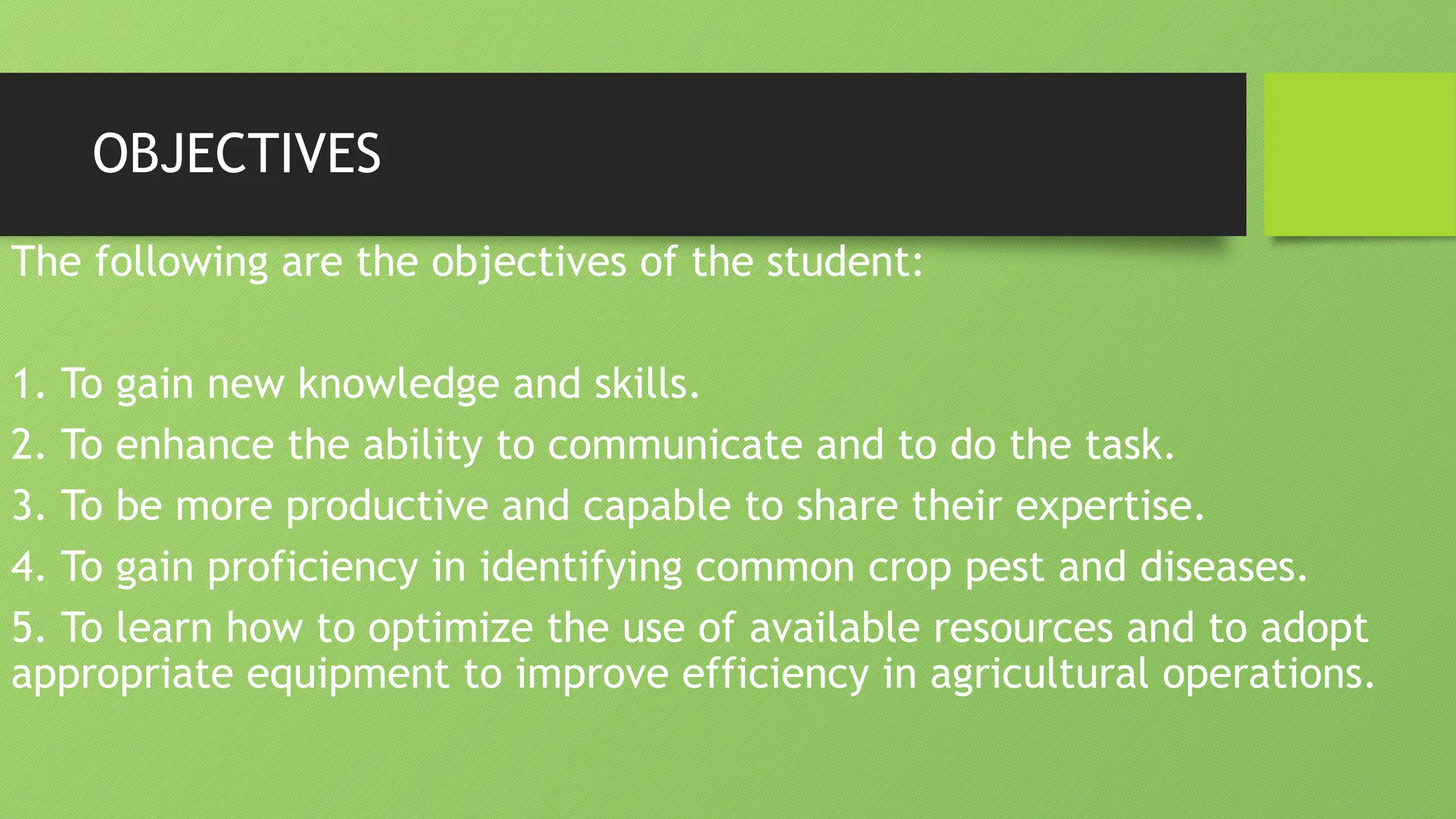
the first activity conducted was the preparation and mixing of soil
media.
8.
The students gatheredand prepared the necessary soil components,
including chicken dung, garden soil, compost, carbonized rice hull,
vermicast, vermi tea, and water, maintaining a ratio of 1:1. Using shovels,
they thoroughly mixed the materials until the soil reached an
approximate moisture content of 40–60%. The resulting soil media
produced high-quality soil suitable for the healthy growth of plants.
9.
After the preparation,they proceeded to sow chili (Capsicum annuum)
seeds, which were then placed in the greenhouse for proper germination
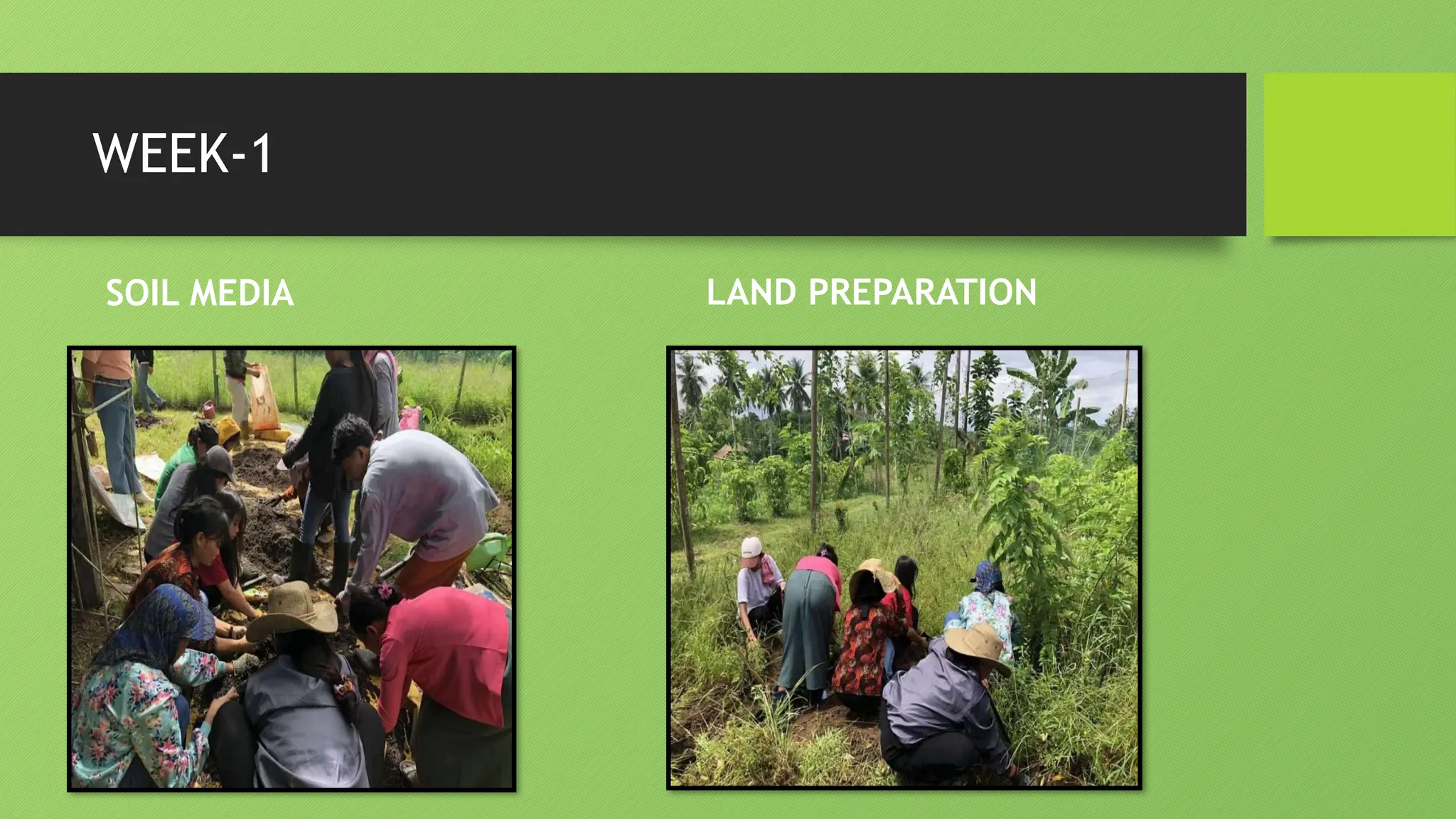
and growth. As the practicum progressed, the students performed land
preparation activities, which involved removing weeds using tools such as
bolo, rake, and pick mattock to ensure efficiency and cleanliness in the
area. These activities continued for several days until the field was fully
prepared and cleared.
10.
On another occasion,the students were assigned to clean the Azolla area,
where they removed water spinach (Ipomoea aquatica) and other
unwanted plants to maintain orderliness and ensure a conducive
environment for cultivation.
During the secondweek of their practicum, the instructor assigned the
different groups to their respective areas. Their group was designated to
work in the duckery and fishpond sections. After receiving brief
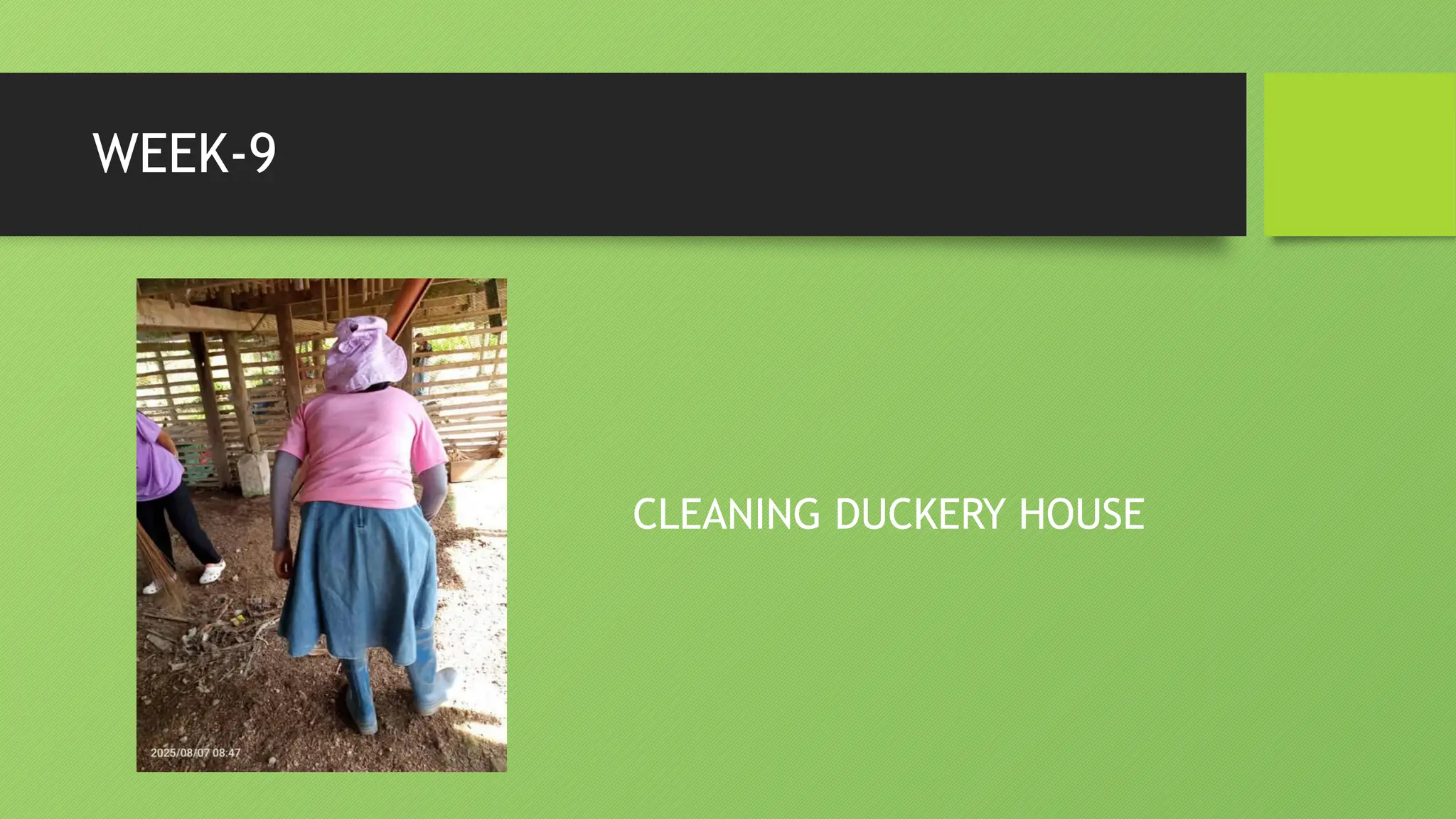
instructions, they immediately began cleaning the duckery house and
removing weeds along the sides of the fishpond to maintain cleanliness and
order in the area.
13.
The following daywas a holiday; however, some students voluntarily went
to school to continue weeding around the fishpond, ensuring that the
surroundings remained presentable and tidy. As the week progressed, the
students regained their energy and continued their tasks with enthusiasm.
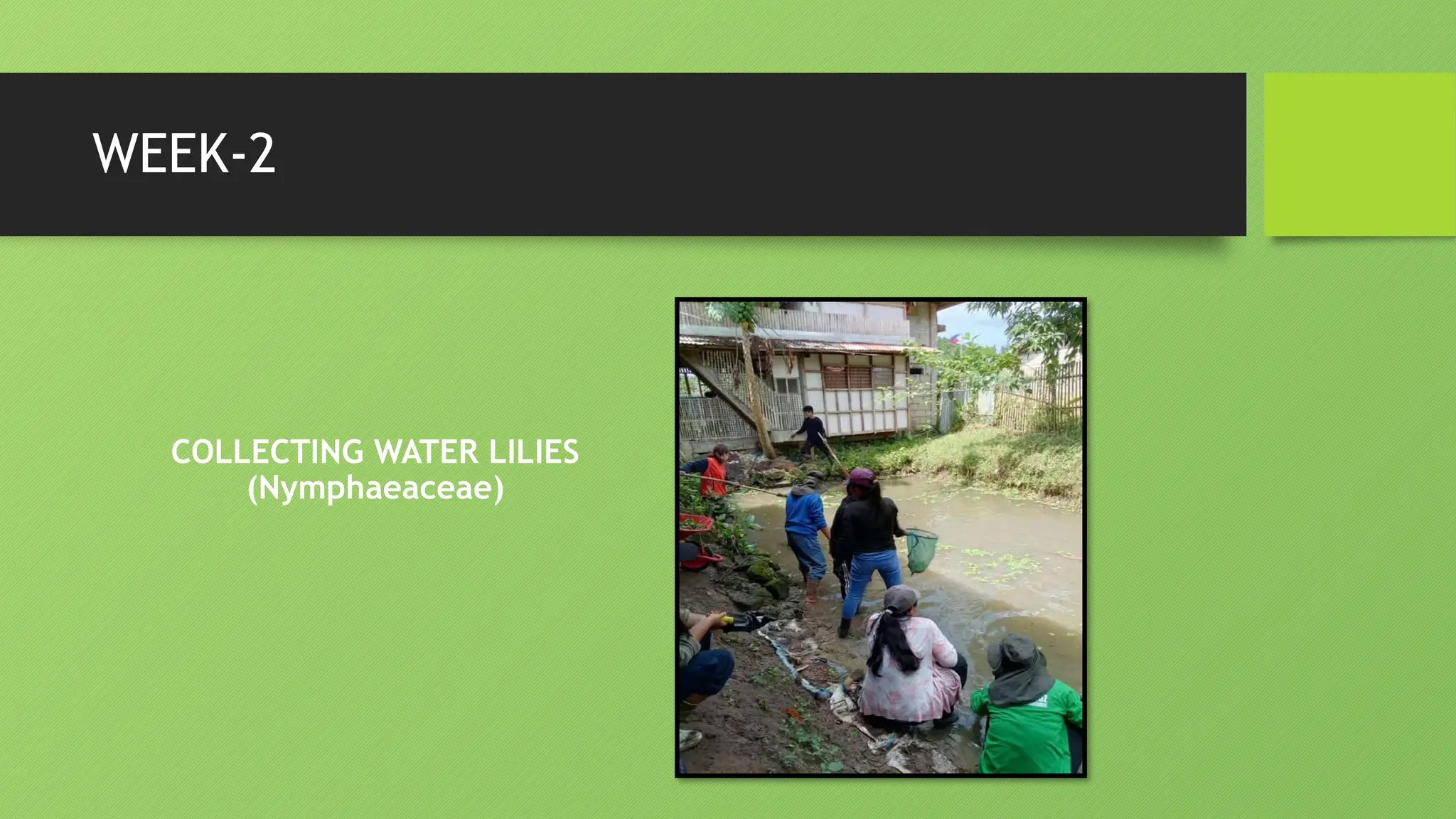
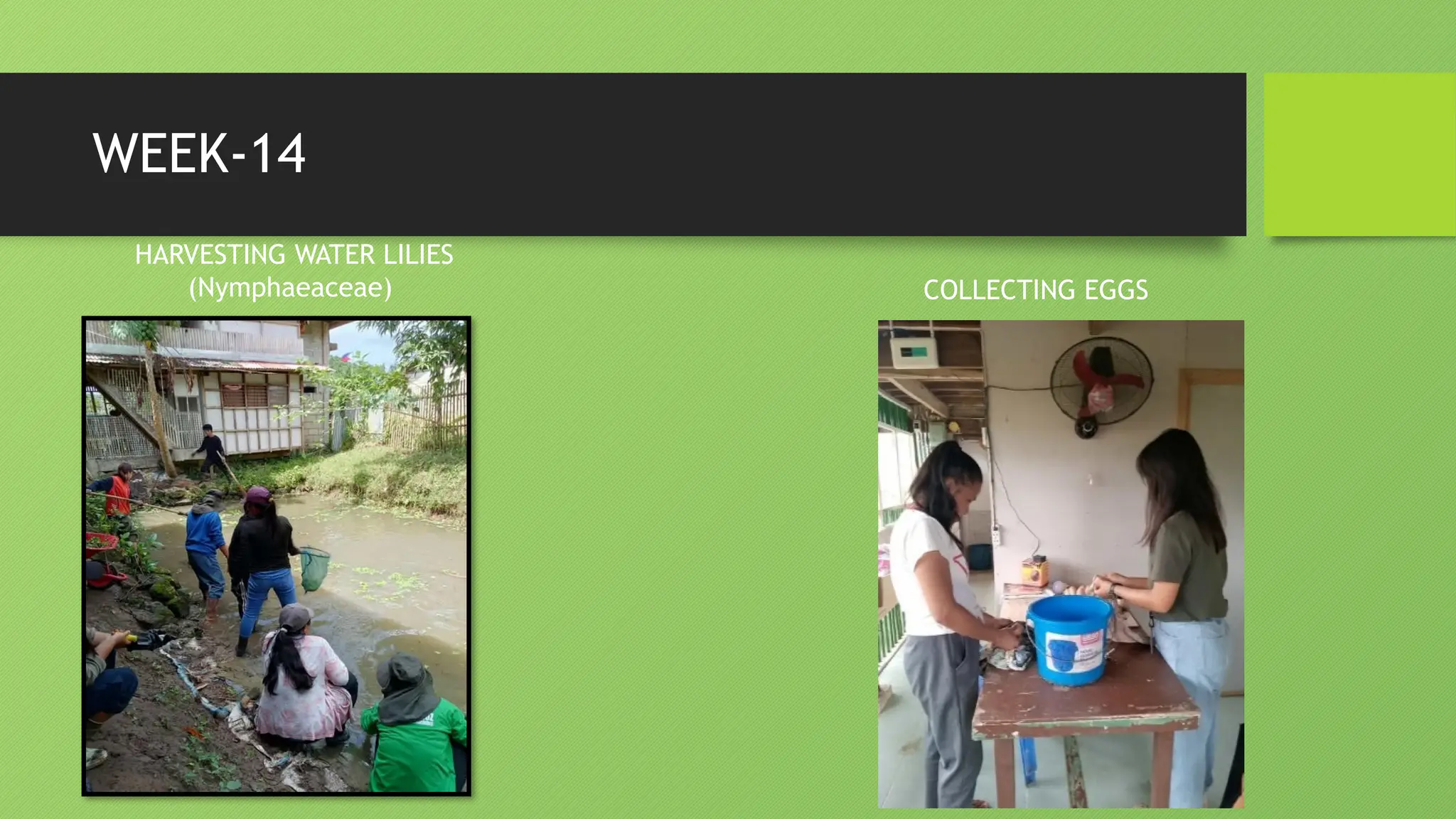
On that day, they focused on removing more weeds and collecting water
lilies (Nymphaeaceae) from the fishpond, as these plants caused certain
problems in the aquatic environment.
14.
The excessive growthof water lilies blocks sunlight from penetrating the
bottom of the pond, making it difficult for aquatic organisms to thrive.
Before the week ended, the students finalized the cleaning of their
assigned areas. They continued removing weeds, properly disposed of all
collected wastes, and repaired the damaged portion of the fishpond to
prevent the Tilapia (Oreochromis niloticus) from escaping.
Throughout the thirdweek of their practicum, the students engaged in
various agricultural activities aimed at maintaining and improving the crop
areas. They began by preparing and cleaning several bamboo poles to be
used in constructing trellises for long beans (Vigna unguiculata), Baguio
beans (Phaseolus vulgaris), and cucumber (Cucumis sativus).
17.
The use oftrellises allows plants to grow vertically instead of spreading
horizontally, which not only saves space but also promotes organized
growth and makes harvesting easier and more efficient. After completing
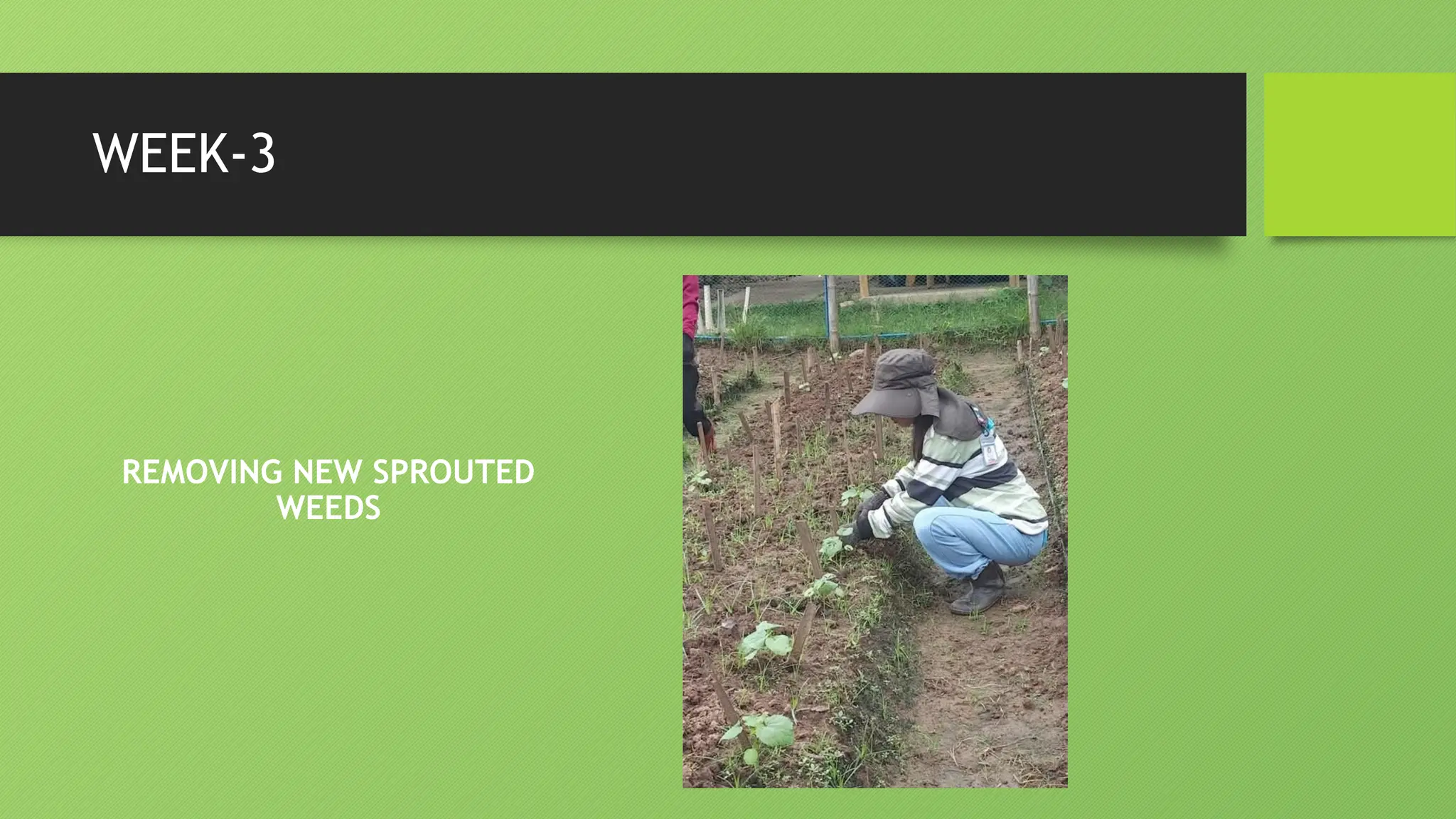
the trellises, the students proceeded to remove newly sprouted weeds in
the vegetable garden to ensure that the plants could grow properly
without competition for nutrients. They also cultivated the soil, which
helped improve soil fertility, reduce erosion, and enhance crop yield.
18.
On the followingday, the group cleaned the greenhouse and pulverized
the soil using rakes and a pulverizer. Afterward, they incorporated
vermicast into the soil to further enrich its nutrient content and promote
better plant growth. They then planted lettuce (Lactuca sativa) at a
spacing of four (4) inches apart, ensuring proper distance for healthy
growth, and watered the seedlings after planting.
19.
In the succeedingdays, the students continued removing weeds in the
vegetable garden to maintain cleanliness and promote good plant
development. Before the week ended, they gathered additional bamboo
poles to continue constructing trellises for the remaining crops
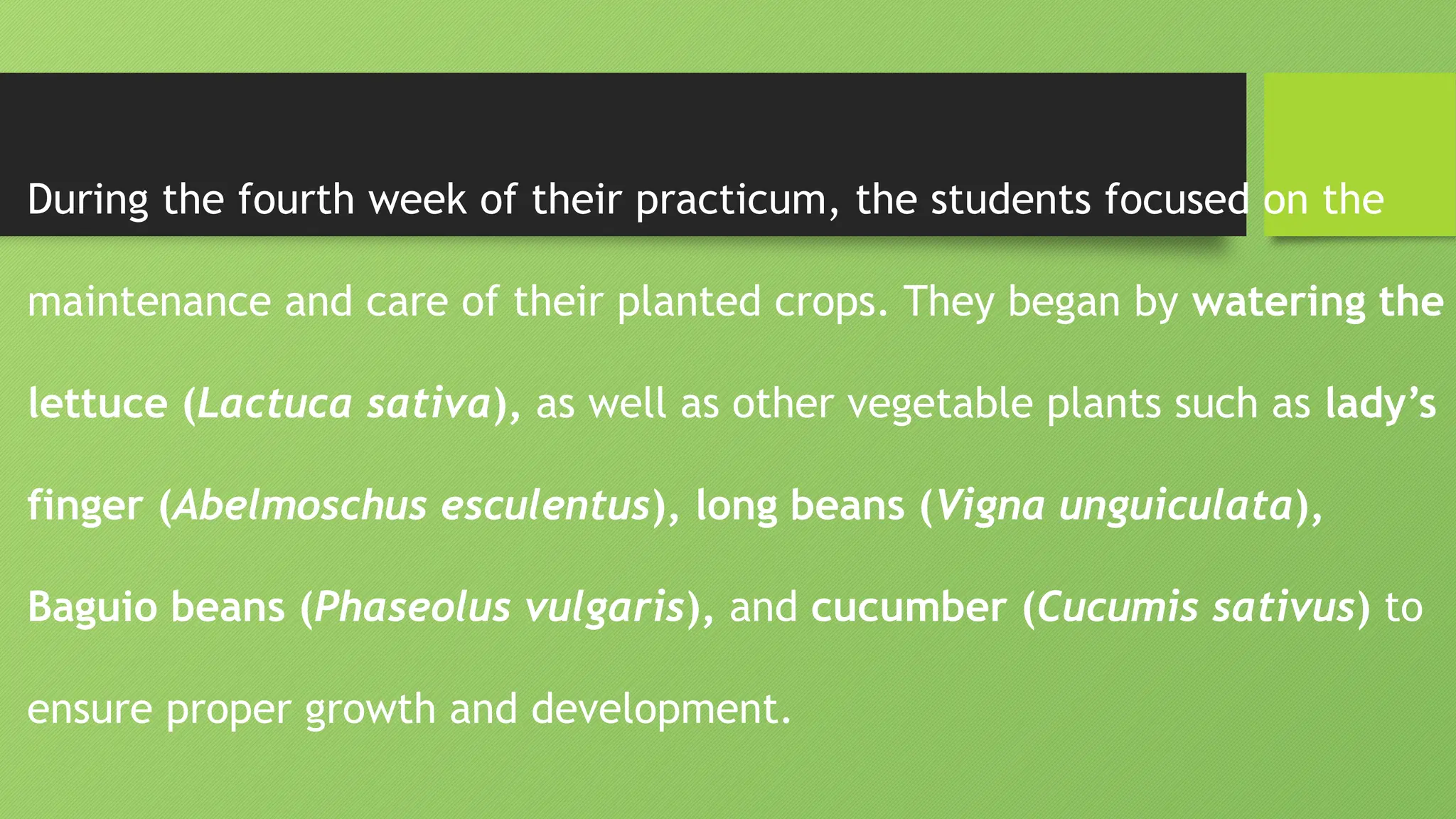
During the fourthweek of their practicum, the students focused on the
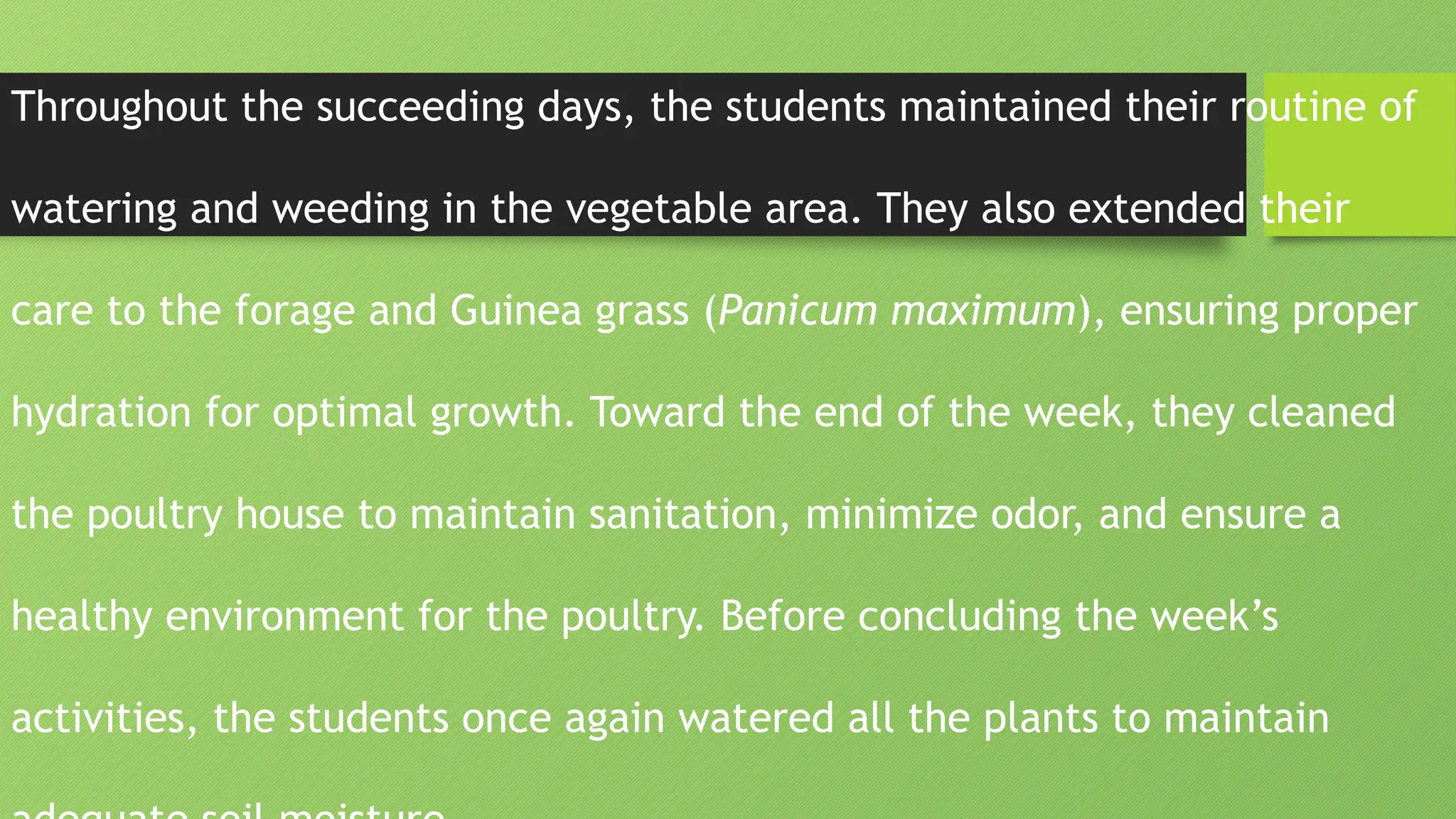
maintenance and care of their planted crops. They began by watering the
lettuce (Lactuca sativa), as well as other vegetable plants such as lady’s
finger (Abelmoschus esculentus), long beans (Vigna unguiculata),
Baguio beans (Phaseolus vulgaris), and cucumber (Cucumis sativus) to
ensure proper growth and development.
22.
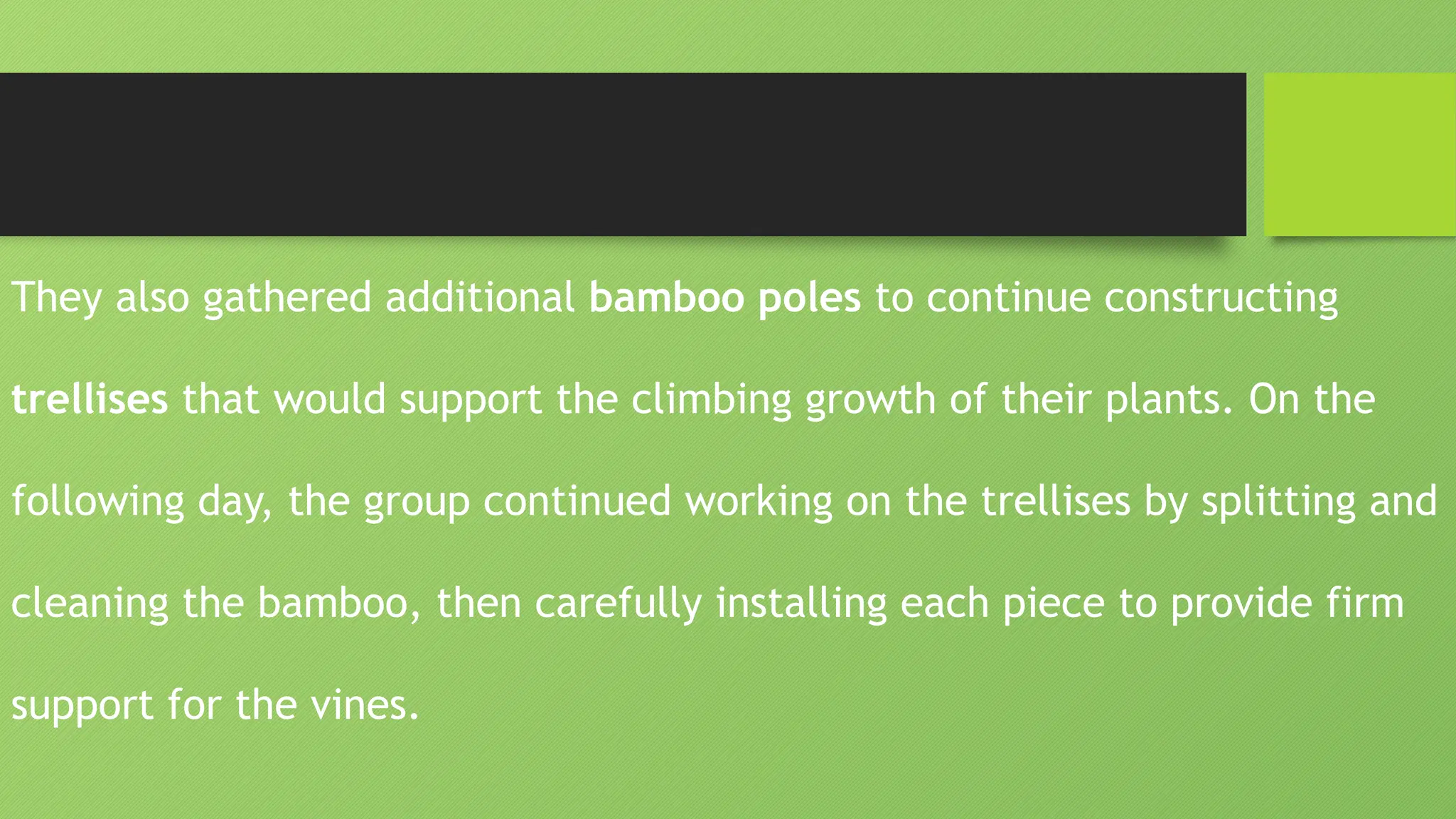
They also gatheredadditional bamboo poles to continue constructing
trellises that would support the climbing growth of their plants. On the
following day, the group continued working on the trellises by splitting and
cleaning the bamboo, then carefully installing each piece to provide firm
support for the vines.
23.
As the weekprogressed, the students consistently watered the plants to
promote healthy growth. They also planted mulberries (Morus spp.) in
black plastic grow bags, ensuring proper spacing and care to help the
plants adapt and develop well in their new containers.
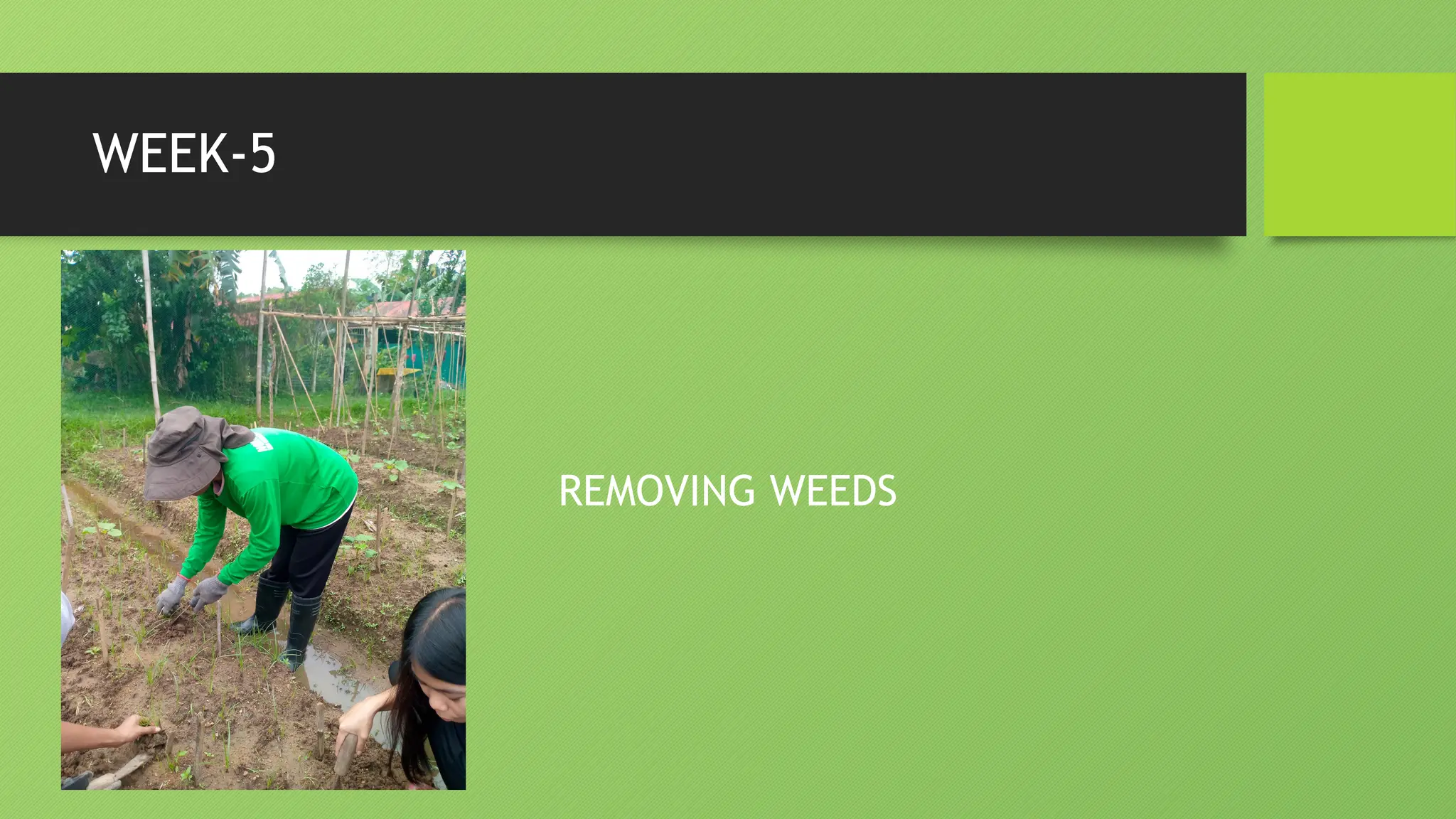
During the fifthweek of their practicum, the students began by cleaning
the Azolla area, removing weeds and water lilies (Nymphaeaceae) from
the fishpond. Water lilies tend to cause several problems in fishponds
because their large leaves block sunlight from reaching the bottom,
making it difficult for aquatic organisms to thrive. Therefore, removing
them was necessary to maintain proper water circulation and support
aquatic life.
26.
On the followingday, the students proceeded to plow the forage area
using traditional methods with the help of a native carabao (Bubalus
bubalis carabanesis) and traditional plowing tools. This hands-on
experience allowed them to understand traditional farming techniques and
their importance in soil preparation. The next day, they created ridges in
the prepared area for planting forage grass (Guinea grass, Panicum
maximum). They also removed the remaining weeds to ensure the area
was clean and suitable for planting.
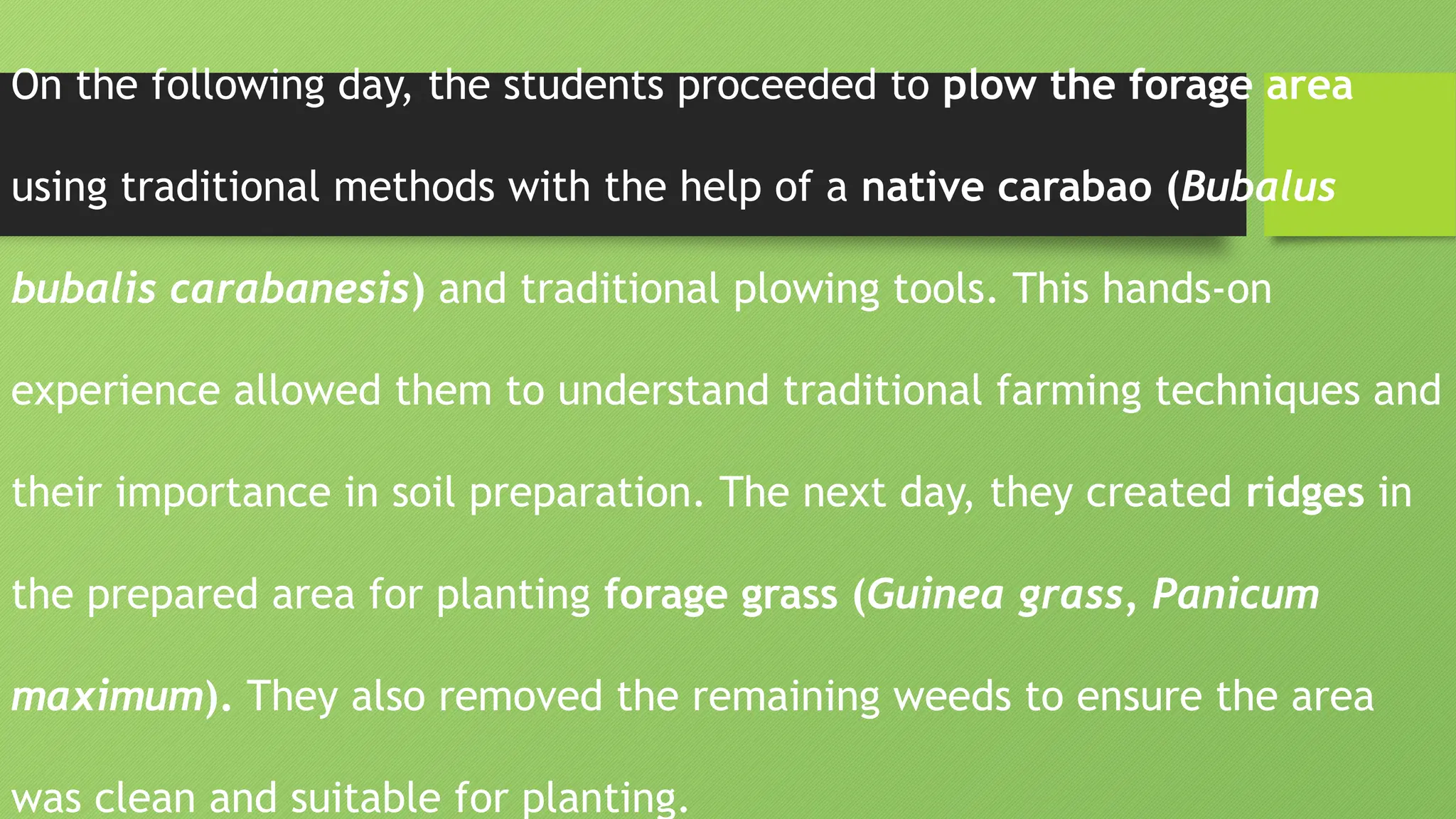
Throughout the sixthweek of their practicum, the students continued
removing weeds from the forage area to maintain a clean and healthy
planting environment. After clearing the area, they gathered forage grass
(Guinea grass, Panicum maximum) and planted it along the ridges they
had previously prepared. On the following day, the students collected
additional forage grass to fill the remaining vacant spaces in the planting
area, ensuring uniform growth throughout the field.
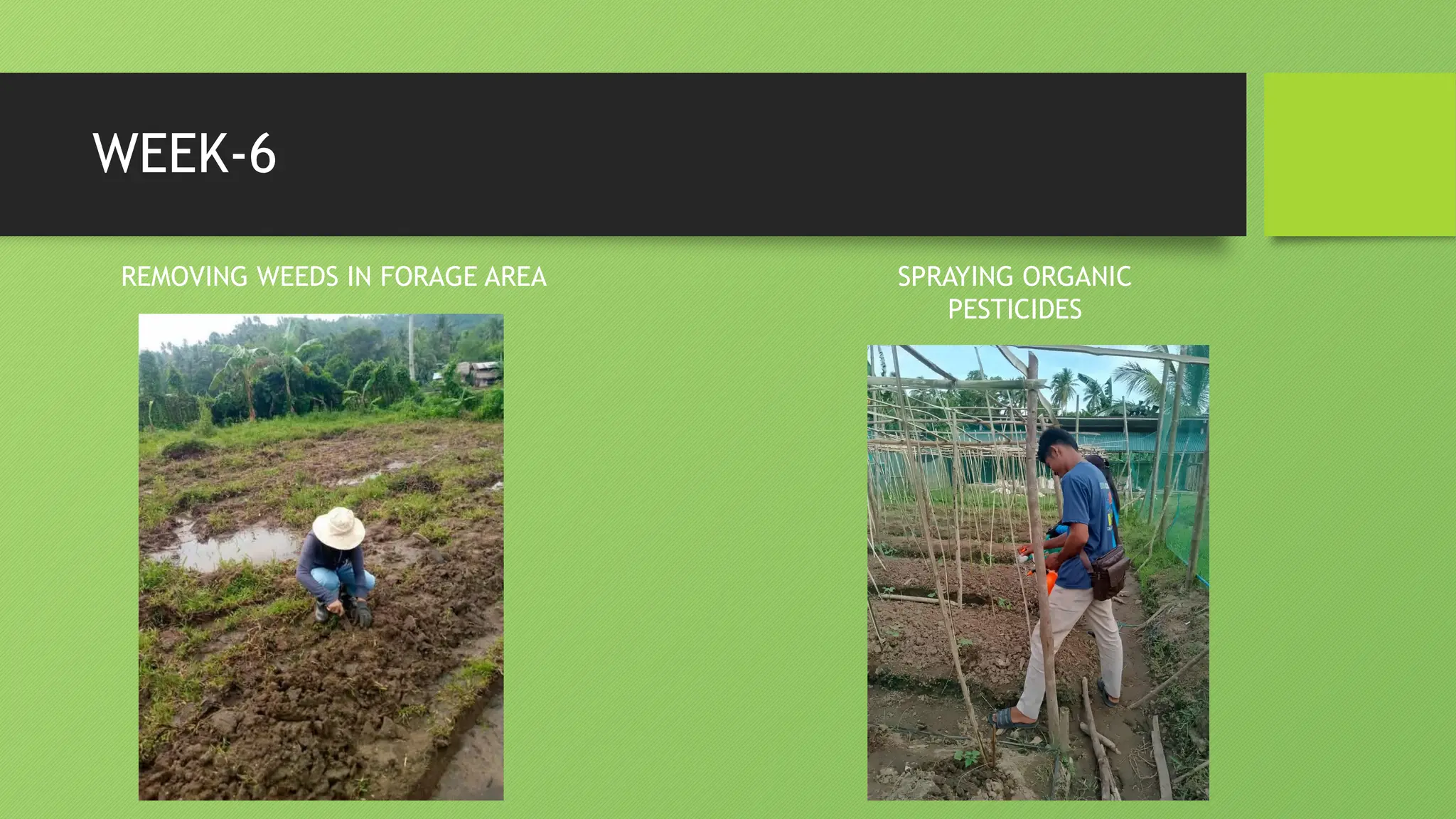
29.
Afterwards, they proceededto remove weeds from the vegetable garden
to prevent any negative effects that weeds could have on plant growth,
such as competition for nutrients, water, and sunlight. Later in the week,
they applied organic pesticides to the long beans (Vigna unguiculata),
which had been affected by aphids, to protect the plants and promote
healthier growth.
During the seventhweek of their practicum, the students focused on the
maintenance and care of the plants in the vegetable area. They began by
watering the crops, which included ladies finger (Abelmoschus
esculentus), long beans (Vigna unguiculata), cucumber (Cucumis sativus),
and Baguio beans (Phaseolus vulgaris). Regular watering helped maintain
soil moisture and supported the healthy growth of the plants.
32.
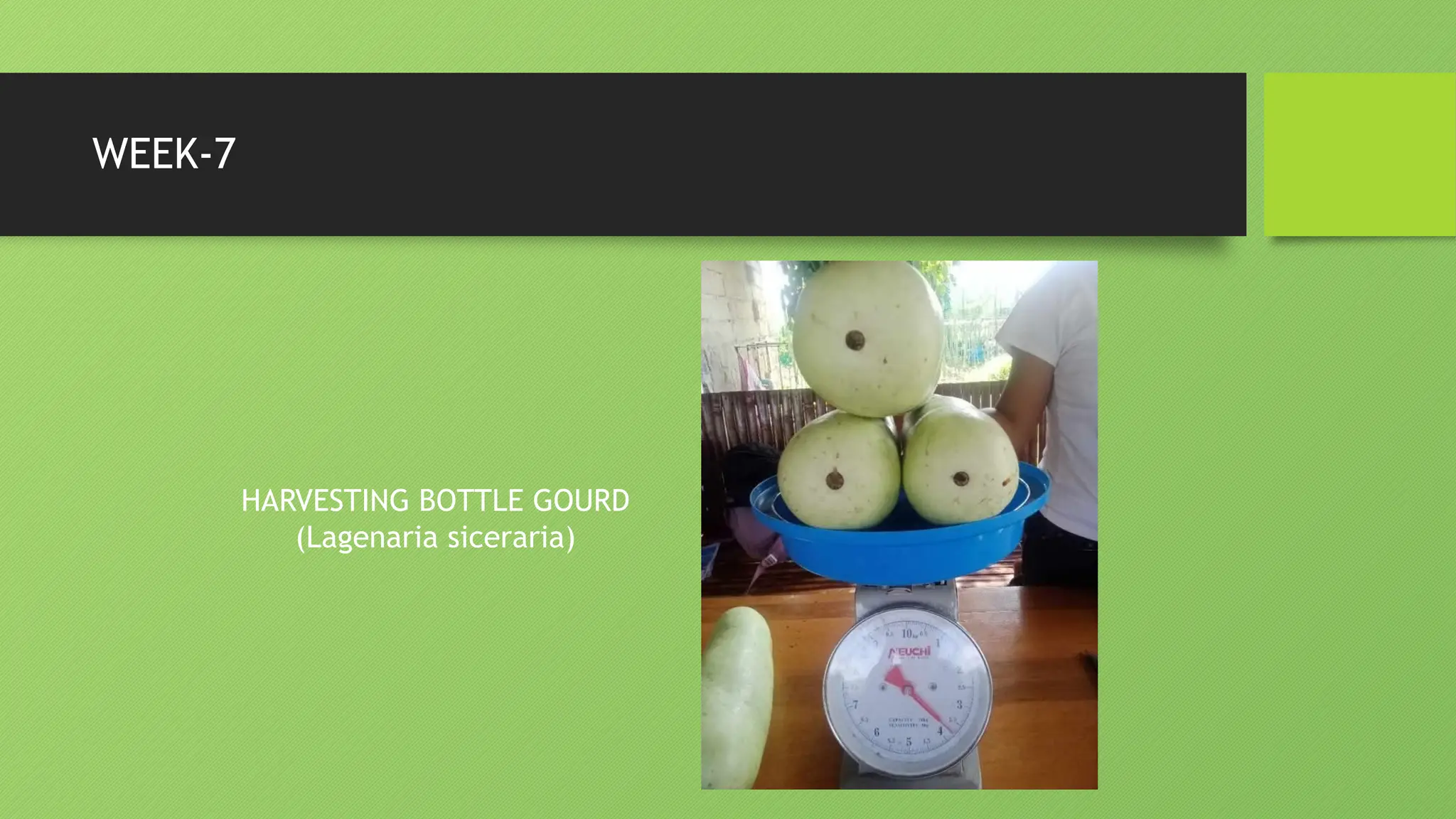
After completing thewatering activity, the students harvested
approximately five (5) kilograms of bottle gourd (Lagenaria siceraria),
which was one of the highlights of the week’s tasks. On the following day,
they removed weeds from the vegetable garden to promote the healthy
growth of plants by preventing weeds from competing for essential
nutrients, water, and sunlight. They also continued watering the plants
afterward to sustain their development.
33.
Throughout the succeedingdays, the students maintained their routine of
watering and weeding in the vegetable area. They also extended their
care to the forage and Guinea grass (Panicum maximum), ensuring proper
hydration for optimal growth. Toward the end of the week, they cleaned
the poultry house to maintain sanitation, minimize odor, and ensure a
healthy environment for the poultry. Before concluding the week’s
activities, the students once again watered all the plants to maintain
Early in themorning, the students began their activities by watering the
plants, including lettuce (Lactuca sativa), mustard (Brassica juncea),
parsley (Petroselinum crispum), ladies finger (Abelmoschus esculentus),
cucumber (Cucumis sativus), long beans (Vigna unguiculata), and Baguio
beans (Phaseolus vulgaris). They performed the same watering routine
again in the afternoon to maintain adequate soil moisture and support
healthy plant growth.
36.
On the followingday, the students removed water lilies (Nymphaeaceae)
from the fishpond, as these plants blocked sunlight from reaching the
pond bottom, making it difficult for aquatic organisms to thrive.The next
day, they once again started by watering the plants and then applied
vermicast to the cucumber, long beans, and Baguio beans to enhance soil
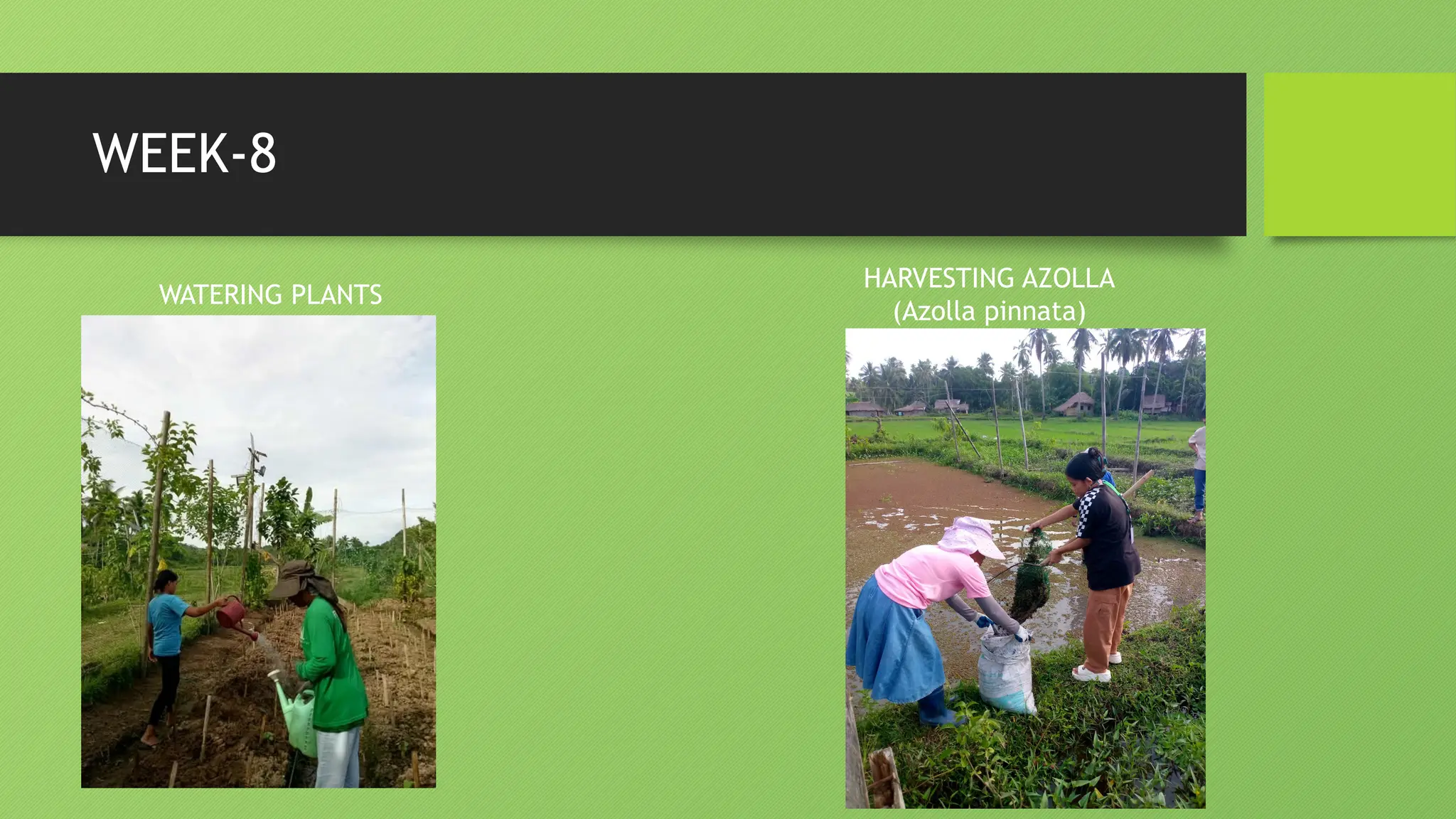
fertility and promote better crop development.Later in the week, the
group harvested Azolla (Azolla pinnata), which was used as a feed
37.
They also cleanedthe feeders and waterers of the ducks (Anas
platyrhynchus) and replaced the litter materials (rice hulls) to reduce
unpleasant odors and maintain sanitation in the duckery. Before
concluding their daily activities, the students watered the plants once
again to ensure proper hydration and healthy growth before going home.
Throughout this week,the students continued cleaning the duckery house
to maintain sanitation and a healthy environment for the ducks. They also
removed weeds around the area to ensure cleanliness and proper
maintenance. The used rice hulls collected from the duckery were
repurposed as organic fertilizer for the vegetable garden, promoting
sustainable waste management and soil enrichment
40.
On the followingday, the students removed newly sprouted weeds in the
vegetable area to eliminate competition for essential nutrients, sunlight,
and water, thereby preventing negative effects on crop growth.
Afterwards, they proceeded to remove water lilies (Nymphaeaceae) from
the fishpond once again to maintain ecological balance and ensure a
healthy environment for the aquatic organisms.
The students beganthe week by removing weeds from both the
greenhouse and the vegetable growing area using bolos. This task ensured
that the cultivated plants would not compete with weeds for essential
nutrients, water, and sunlight. Afterward, they watered the cucumber
(Cucumis sativus), long beans (Vigna unguiculata), ladies finger
(Abelmoschus esculentus), and Baguio beans (Phaseolus vulgaris) to
promote their healthy growth and development.
43.
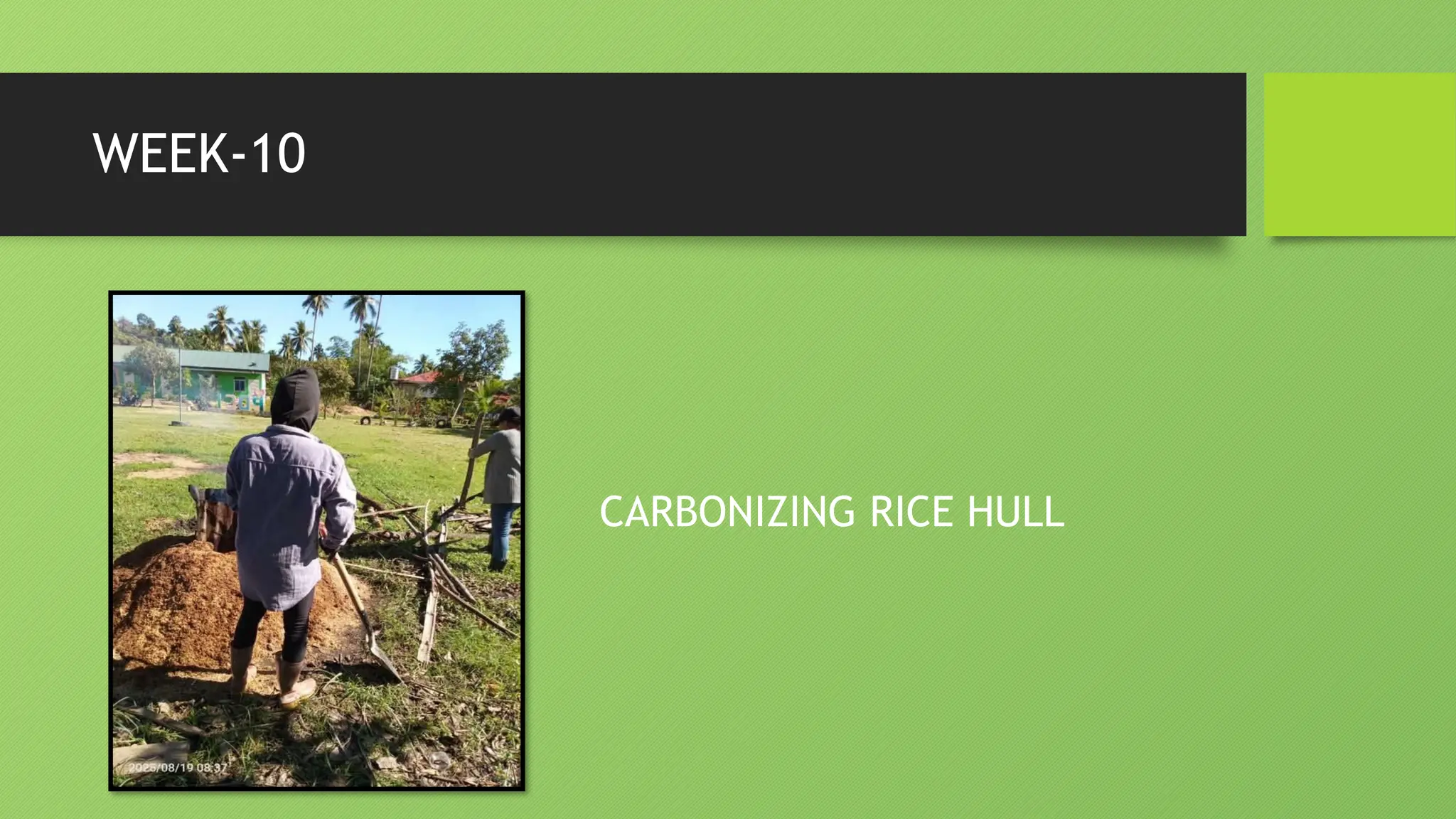
On the followingday, their task involved the preparation of three (3) sacks
of carbonized rice hull, which is known for improving soil structure,
enhancing air and water circulation, and providing essential nutrients that
support faster and healthier plant growth. Later in the week, the group
was assigned to the Central Elementary School, where they were tasked to
cultivate the soil using bolos, spades, and hoes in preparation for a
landscaping project. After cultivating the area, they mixed the carbonized
44.
Finally, they plantedflowering plants to enhance the
beauty and aesthetic appeal of the school environment.
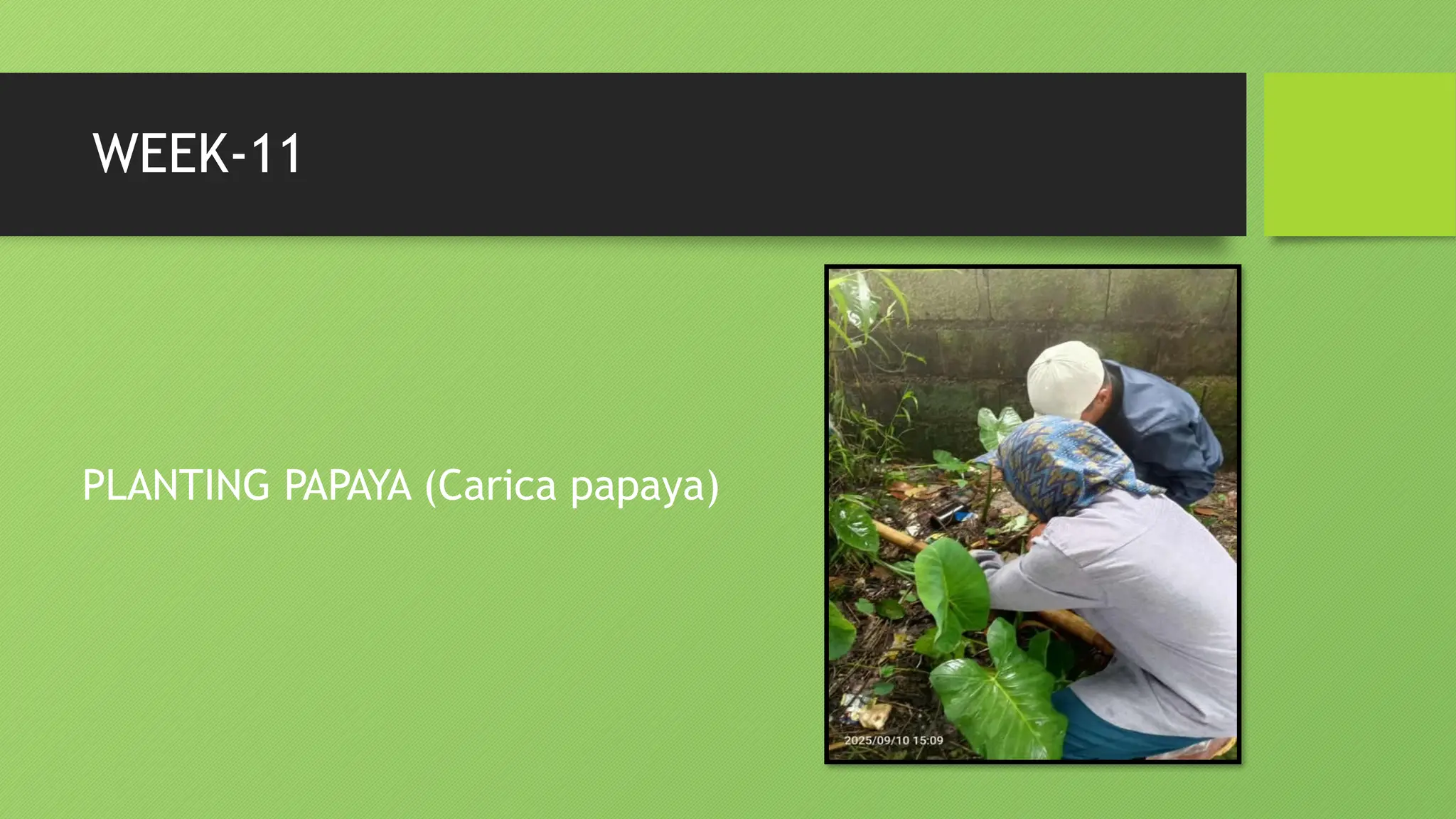
Throughout this week,the students focused on planting papaya (Carica
papaya). They carefully prepared the planting area, ensuring that the soil
was suitable for the growth of papaya plants. Proper spacing and soil
conditioning were observed to promote healthy root development and
optimal growth. This activity allowed the students to apply the
agricultural knowledge and practical skills they had gained during their
practicum, emphasizing the importance of proper crop management and
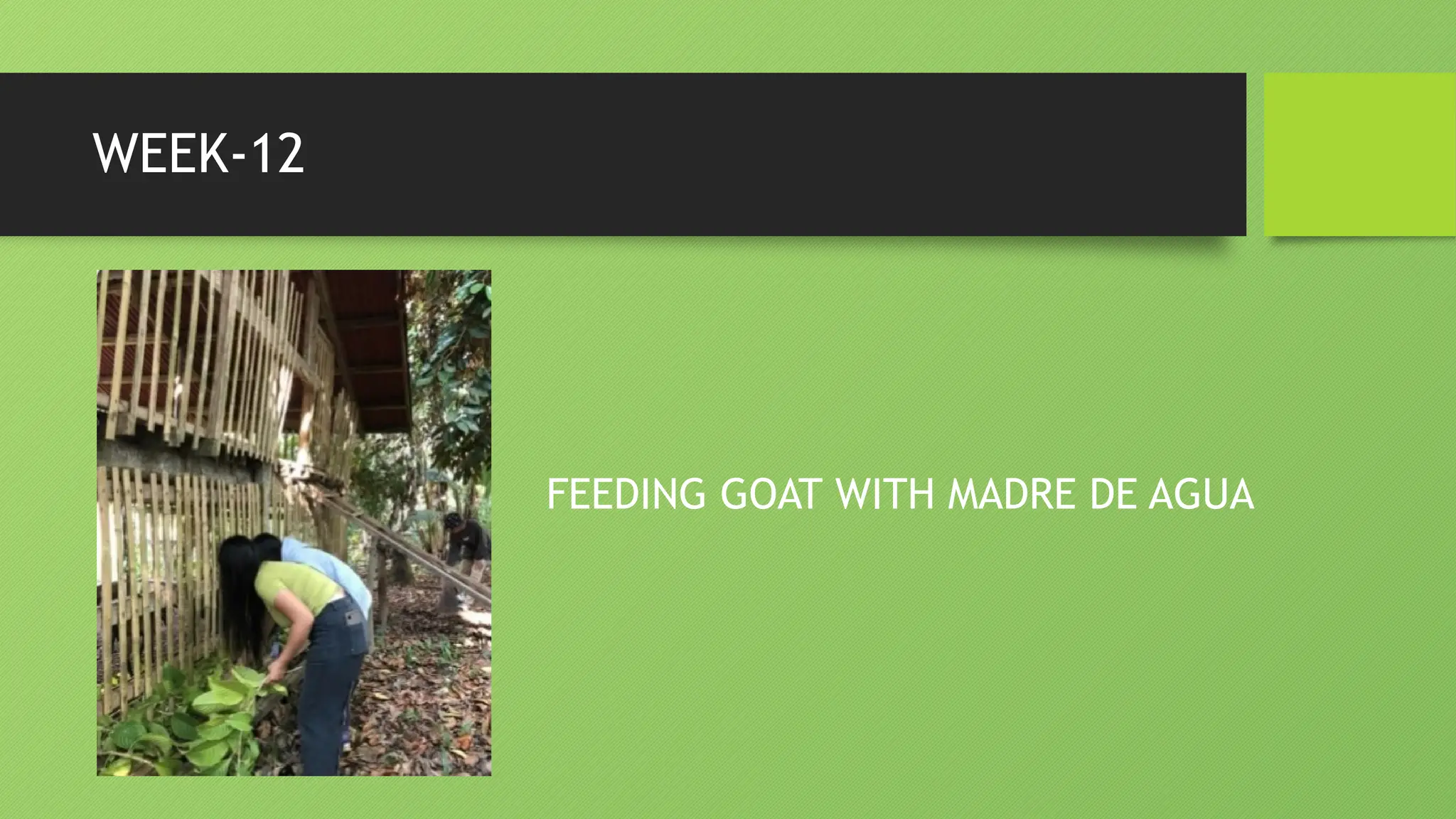
During this week,the students began their activities by gathering Madre
de Agua (Trichanthera gigantea) to serve as a nutritious feed supplement
for goats (Capra hircus). On the following day, they continued with the
planting of papaya (Carica papaya), ensuring proper spacing and soil
preparation for optimal growth. The next day, the students conducted
weeding in the vegetable area, removing unwanted plants that competed
with crops for nutrients, sunlight, and water. This process helped improve
49.
Later in theweek, they harvested approximately ¾ kilogram of lady’s
finger (Abelmoschus esculentus) and lettuce (Lactuca sativa). This activity
allowed the students to witness the results of their hard work and gain
practical experience in proper harvesting techniques
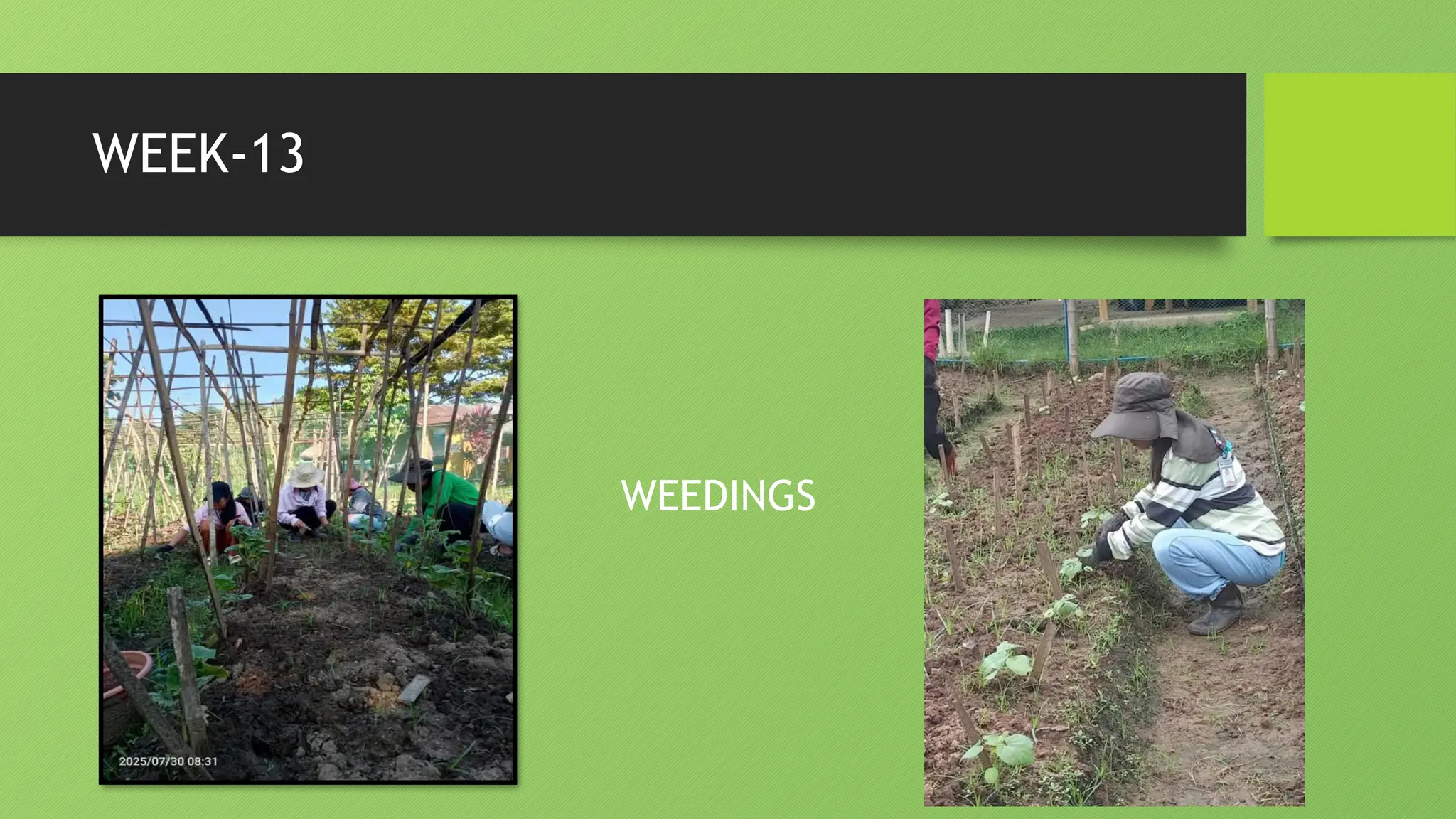
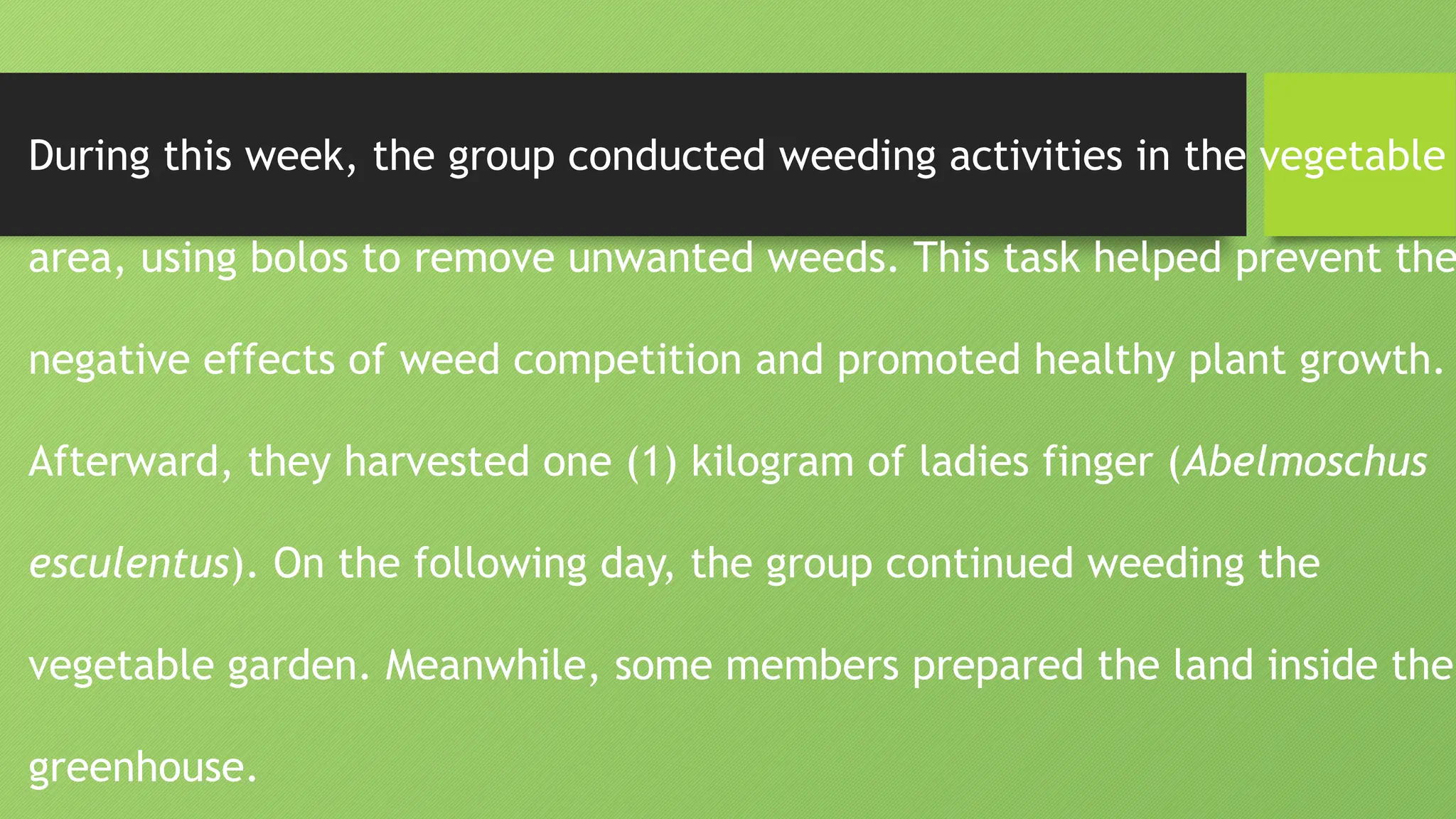
During this week,the group conducted weeding activities in the vegetable
area, using bolos to remove unwanted weeds. This task helped prevent the
negative effects of weed competition and promoted healthy plant growth.
Afterward, they harvested one (1) kilogram of ladies finger (Abelmoschus
esculentus). On the following day, the group continued weeding the
vegetable garden. Meanwhile, some members prepared the land inside the
greenhouse.
52.
They observed thegrowing mustard (Brassica juncea) and ensured its
safety by placing a protective net over the plants to prevent damage from
pests and promote healthy growth. Later in the week, they planted papaya
(Carica papaya) with a 3-meter spacing between each plant to allow
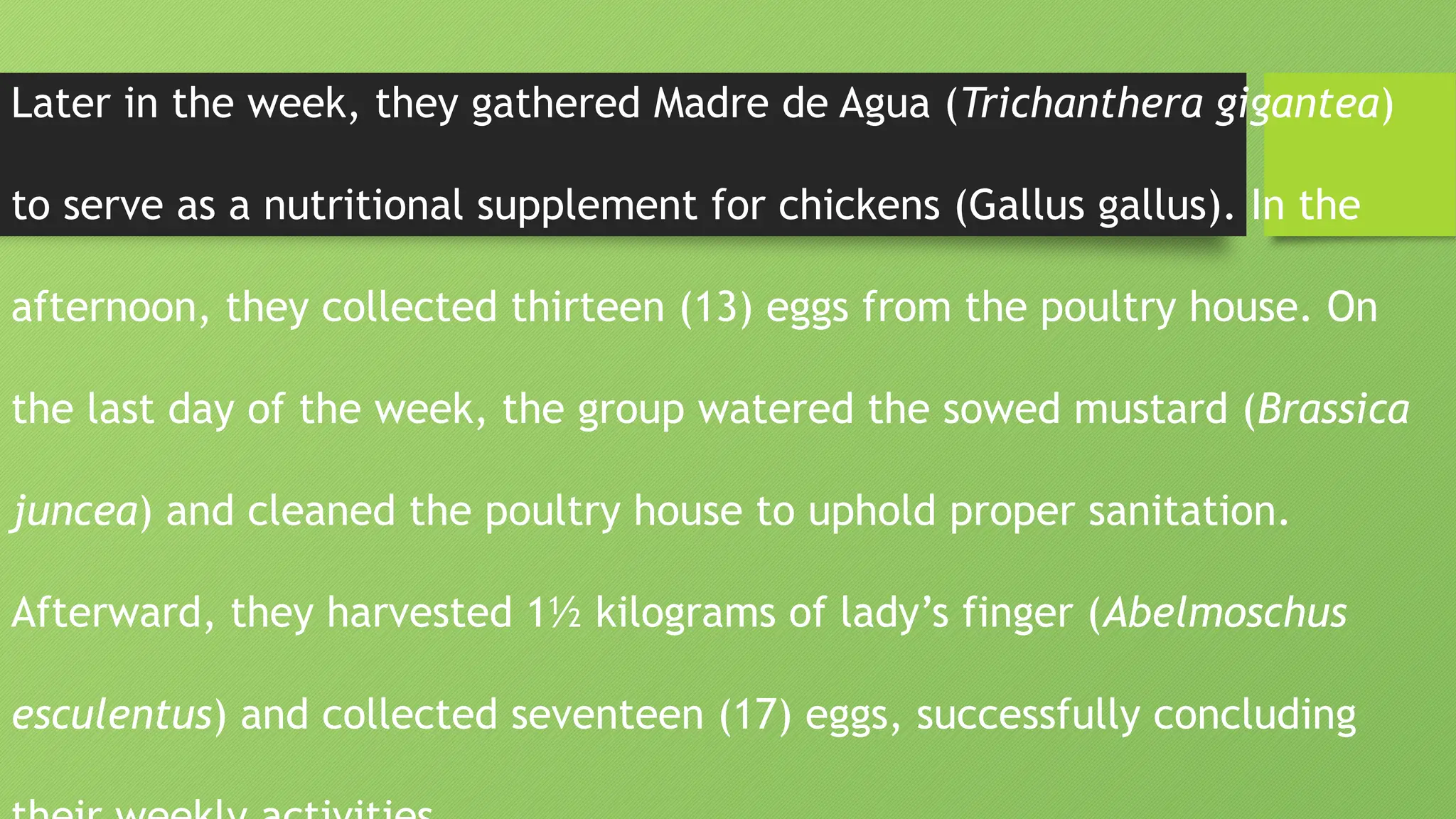
proper air circulation and root development. They also harvested 1½
kilograms of ladies finger (Abelmoschus esculentus).
53.
On the nextday, the group continued weeding the vegetable area to eliminate
competition for essential resources such as water and nutrients. By the end of the
week, they harvested another one (1) kilogram of ladies finger (Abelmoschus
esculentus), demonstrating consistent productivity in their vegetable cultivation
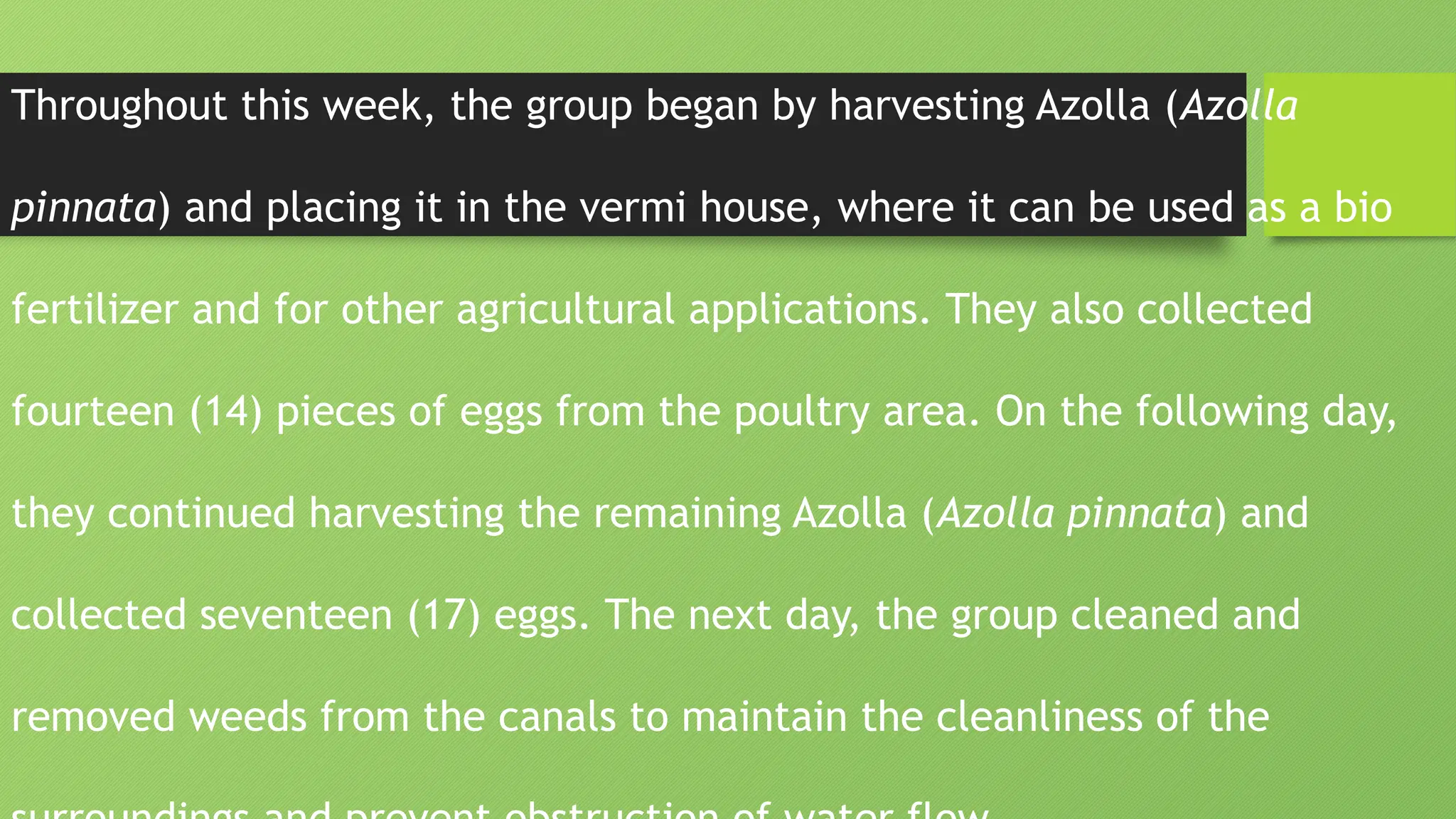
Throughout this week,the group began by harvesting Azolla (Azolla
pinnata) and placing it in the vermi house, where it can be used as a bio
fertilizer and for other agricultural applications. They also collected
fourteen (14) pieces of eggs from the poultry area. On the following day,
they continued harvesting the remaining Azolla (Azolla pinnata) and
collected seventeen (17) eggs. The next day, the group cleaned and
removed weeds from the canals to maintain the cleanliness of the
56.
Later in theweek, they gathered Madre de Agua (Trichanthera gigantea)
to serve as a nutritional supplement for chickens (Gallus gallus). In the
afternoon, they collected thirteen (13) eggs from the poultry house. On
the last day of the week, the group watered the sowed mustard (Brassica
juncea) and cleaned the poultry house to uphold proper sanitation.
Afterward, they harvested 1½ kilograms of lady’s finger (Abelmoschus
esculentus) and collected seventeen (17) eggs, successfully concluding
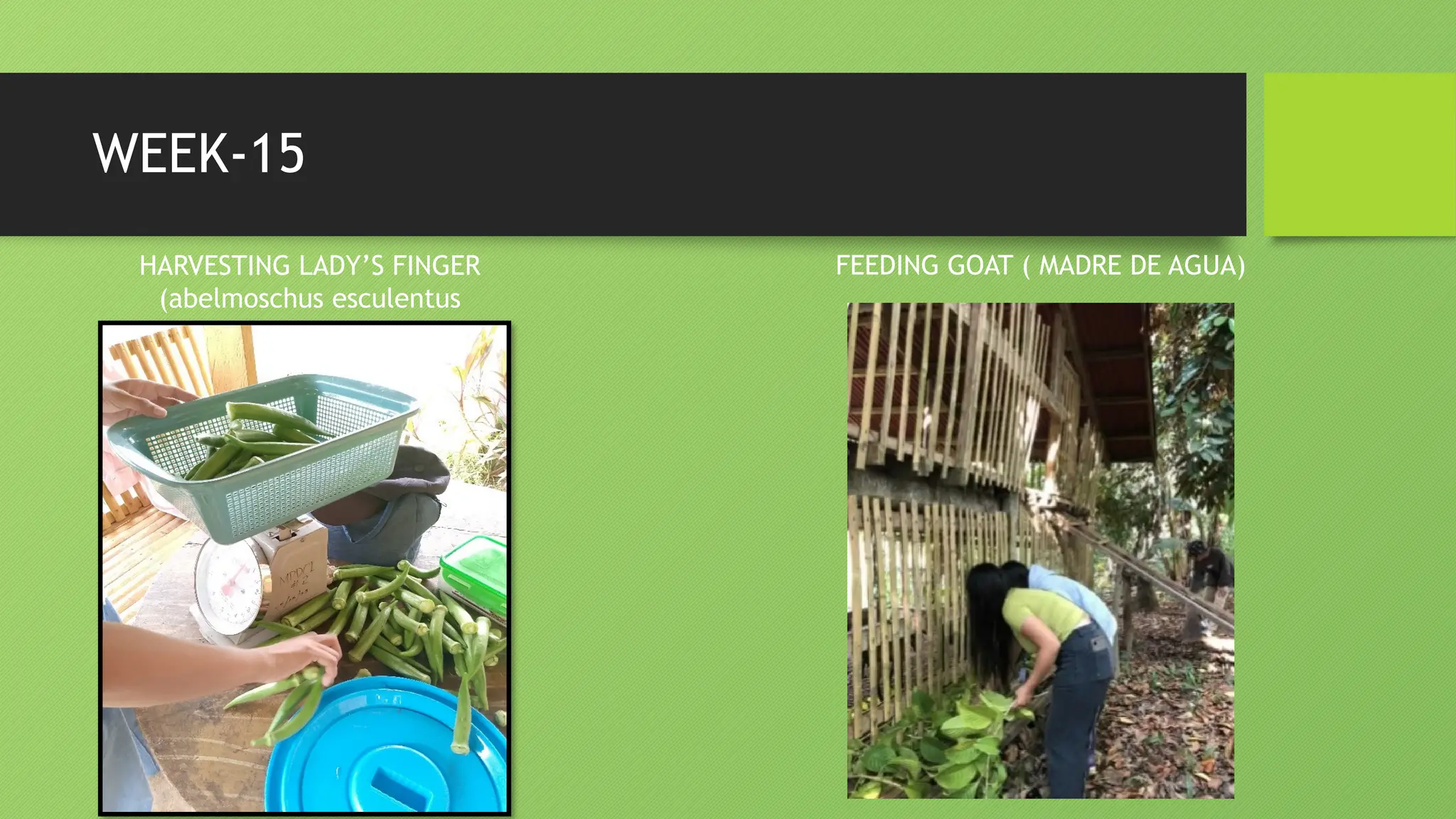
During this week,the group was assigned to clean the ruminant area to
maintain a clean and orderly environment. They also fed the goats (Capra
hircus) with Madre de Agua (Trichanthera gigantea) as a nutritious feed
supplement. On the following day, they harvested ½ kilogram of lady’s
finger (Abelmoschus esculentus). The next day, they continued cleaning
the ruminant area by collecting the goat manure and placing it in the
vermi house to be processed into organic fertilizer.
59.
PROBLEMS MET
• Theseare the following problems that the students encountered during
their Practicum:
Unexpected heavy rains caused delays in planting and harvesting
schedules.
Infestations of pests and diseases affected crop yields.
Poor soil fertility required additional amendments and fertilizers.
60.
KEY SOLUTION
Plantdiverse crop varieties with different maturity periods to
minimize weather-related risks.
Practice crop rotation to break pest and disease.
Conduct regular soil tests to tailor fertilization strategies to
specific nutrient needs.
61.
RECOMMENDATION
The followings arethe recommendations of students:
1. IMPLEMENT WEATHER MONITORING. To train students to
interpret weather forecasts for timely decision-making.
2. IMPLEMENT SOIL CONSERVATION MEASURES. Such as cover
cropping, contour plowing, to prevent erosion and improve
water flow.
3. WATER MANAGEMENT. Train students to monitor soil
moisture levels and adjust irrigation schedules based on crop
water requirements.