CONSUMER BEHAVIOUR &
MARKETING MIX
UNIT-1
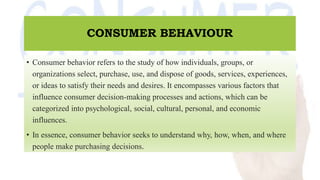
CONSUMER BEHAVIOUR
• Consumer behavior refers to the study of how individuals, groups, or
organizations select, purchase, use, and dispose of goods, services, experiences,
or ideas to satisfy their needs and desires. It encompasses various factors that
influence consumer decision-making processes and actions, which can be
categorized into psychological, social, cultural, personal, and economic
influences.
• In essence, consumer behavior seeks to understand why, how, when, and where
people make purchasing decisions.
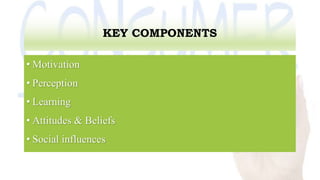
KEY COMPONENTS
• Motivation
• Perception
• Learning
• Attitudes & Beliefs
• Social influences
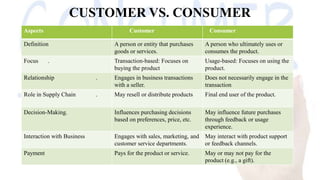
CUSTOMER VS. CONSUMER
Aspects Customer Consumer
Definition A person or entity that purchases
goods or services.
A person who ultimately uses or
consumes the product.
Focus . Transaction-based: Focuses on
buying the product
Usage-based: Focuses on using the
product.
Relationship . Engages in business transactions
with a seller.
Does not necessarily engage in the
transaction
Role in Supply Chain . May resell or distribute products Final end user of the product.
Decision-Making. Influences purchasing decisions
based on preferences, price, etc.
May influence future purchases
through feedback or usage
experience.
Interaction with Business Engages with sales, marketing, and
customer service departments.
May interact with product support
or feedback channels.
Payment Pays for the product or service. May or may not pay for the
product (e.g., a gift).
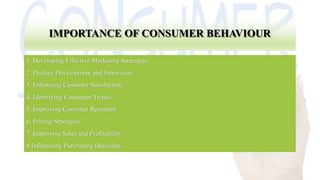
IMPORTANCE OF CONSUMER BEHAVIOUR
1. Developing Effective Marketing Strategies.
2. Product Development and Innovation.
3. Enhancing Customer Satisfaction.
4. Identifying Consumer Trends.
5. Improving Customer Retention.
6. Pricing Strategies.
7. Improving Sales and Profitability.
8.Influencing Purchasing Decisions.
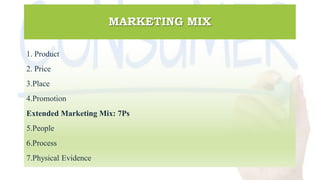
MARKETING MIX
1. Product
2. Price
3.Place
4.Promotion
Extended Marketing Mix: 7Ps
5.People
6.Process
7.Physical Evidence
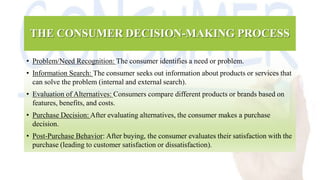
THE CONSUMER DECISION-MAKING PROCESS
• Problem/Need Recognition: The consumer identifies a need or problem.
• Information Search: The consumer seeks out information about products or services that
can solve the problem (internal and external search).
• Evaluation of Alternatives: Consumers compare different products or brands based on
features, benefits, and costs.
• Purchase Decision: After evaluating alternatives, the consumer makes a purchase
decision.
• Post-Purchase Behavior: After buying, the consumer evaluates their satisfaction with the
purchase (leading to customer satisfaction or dissatisfaction).
DIVESTMENT
• Divestment refers to the processes and strategies that consumers or businesses
engage in when they choose to discontinue or dispose of products, brands, or
business units. It can occur on two levels: at the individual consumer level (e.g.,
getting rid of a product) and at the corporate level (e.g., a company selling off a
business unit).
• Divestment refers to how consumers discard, sell, or stop using a product or
service. This phase is an essential part of the consumer decision-making process
and product lifecycle.
KEY CONCEPTS IN CONSUMER DIVESTMENT
• Product Disposal:
• Reselling
• Recycling
• Donating
• Disposing
• Psychological Factors in Divestment:
• Emotional Attachment
• Post-Purchase Regret
• Sustainability and Ethics
• Consumer product lifecycle:
CONSUMER INVOLVEMENT
• Customer involvement is the active involvement of customers in
different parts of a company’s business, such as product
development, marketing, and customer service. It involves talking to
customers to learn about their needs, preferences, and expectations so
that products and services can be made that better meet their needs.
IMPORTANCE OF CUSTOMER INVOLVEMENT
• Better understanding of customer needs
• Improved customer satisfaction and loyalty
• Increased innovation
• Improved brand reputation
• Reduced risk of product failure
TYPES OF CUSTOMER INVOLVEMENT
• Co-creation
• Co-design
• Co-production
• Customer feedback
• crowdsourcing

CONSUMER BEHAVIOUR & MARKETING COMMUNICATION.pdf

  • 1.
  • 2.
    CONSUMER BEHAVIOUR • Consumerbehavior refers to the study of how individuals, groups, or organizations select, purchase, use, and dispose of goods, services, experiences, or ideas to satisfy their needs and desires. It encompasses various factors that influence consumer decision-making processes and actions, which can be categorized into psychological, social, cultural, personal, and economic influences. • In essence, consumer behavior seeks to understand why, how, when, and where people make purchasing decisions.
  • 3.
    KEY COMPONENTS • Motivation •Perception • Learning • Attitudes & Beliefs • Social influences
  • 4.
    CUSTOMER VS. CONSUMER AspectsCustomer Consumer Definition A person or entity that purchases goods or services. A person who ultimately uses or consumes the product. Focus . Transaction-based: Focuses on buying the product Usage-based: Focuses on using the product. Relationship . Engages in business transactions with a seller. Does not necessarily engage in the transaction Role in Supply Chain . May resell or distribute products Final end user of the product. Decision-Making. Influences purchasing decisions based on preferences, price, etc. May influence future purchases through feedback or usage experience. Interaction with Business Engages with sales, marketing, and customer service departments. May interact with product support or feedback channels. Payment Pays for the product or service. May or may not pay for the product (e.g., a gift).
  • 5.
    IMPORTANCE OF CONSUMERBEHAVIOUR 1. Developing Effective Marketing Strategies. 2. Product Development and Innovation. 3. Enhancing Customer Satisfaction. 4. Identifying Consumer Trends. 5. Improving Customer Retention. 6. Pricing Strategies. 7. Improving Sales and Profitability. 8.Influencing Purchasing Decisions.
  • 6.
    MARKETING MIX 1. Product 2.Price 3.Place 4.Promotion Extended Marketing Mix: 7Ps 5.People 6.Process 7.Physical Evidence
  • 7.
    THE CONSUMER DECISION-MAKINGPROCESS • Problem/Need Recognition: The consumer identifies a need or problem. • Information Search: The consumer seeks out information about products or services that can solve the problem (internal and external search). • Evaluation of Alternatives: Consumers compare different products or brands based on features, benefits, and costs. • Purchase Decision: After evaluating alternatives, the consumer makes a purchase decision. • Post-Purchase Behavior: After buying, the consumer evaluates their satisfaction with the purchase (leading to customer satisfaction or dissatisfaction).
  • 8.
    DIVESTMENT • Divestment refersto the processes and strategies that consumers or businesses engage in when they choose to discontinue or dispose of products, brands, or business units. It can occur on two levels: at the individual consumer level (e.g., getting rid of a product) and at the corporate level (e.g., a company selling off a business unit). • Divestment refers to how consumers discard, sell, or stop using a product or service. This phase is an essential part of the consumer decision-making process and product lifecycle.
  • 9.
    KEY CONCEPTS INCONSUMER DIVESTMENT • Product Disposal: • Reselling • Recycling • Donating • Disposing • Psychological Factors in Divestment: • Emotional Attachment • Post-Purchase Regret • Sustainability and Ethics • Consumer product lifecycle:
  • 10.
    CONSUMER INVOLVEMENT • Customerinvolvement is the active involvement of customers in different parts of a company’s business, such as product development, marketing, and customer service. It involves talking to customers to learn about their needs, preferences, and expectations so that products and services can be made that better meet their needs.
  • 11.
    IMPORTANCE OF CUSTOMERINVOLVEMENT • Better understanding of customer needs • Improved customer satisfaction and loyalty • Increased innovation • Improved brand reputation • Reduced risk of product failure
  • 12.
    TYPES OF CUSTOMERINVOLVEMENT • Co-creation • Co-design • Co-production • Customer feedback • crowdsourcing