Download to read offline
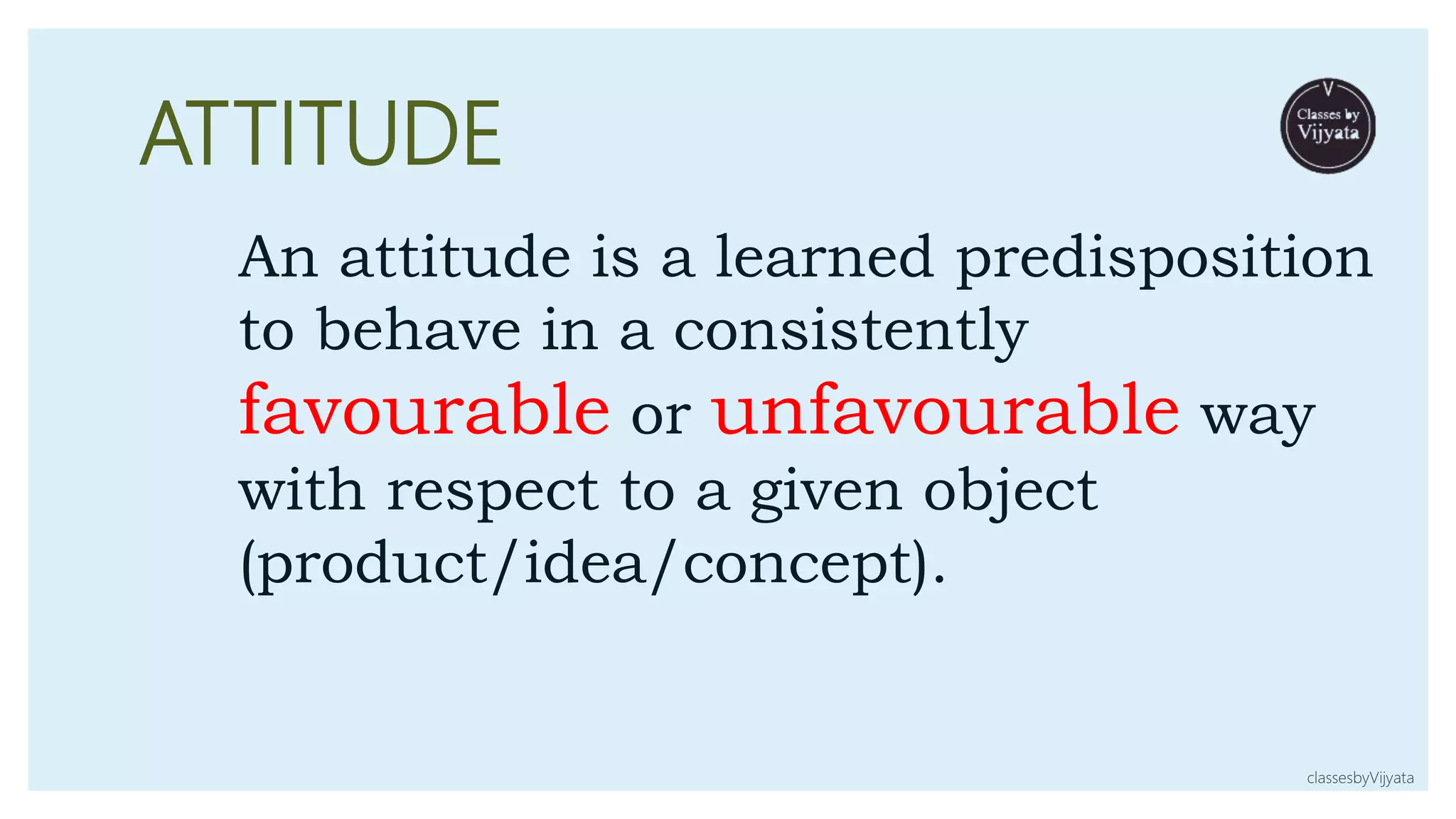
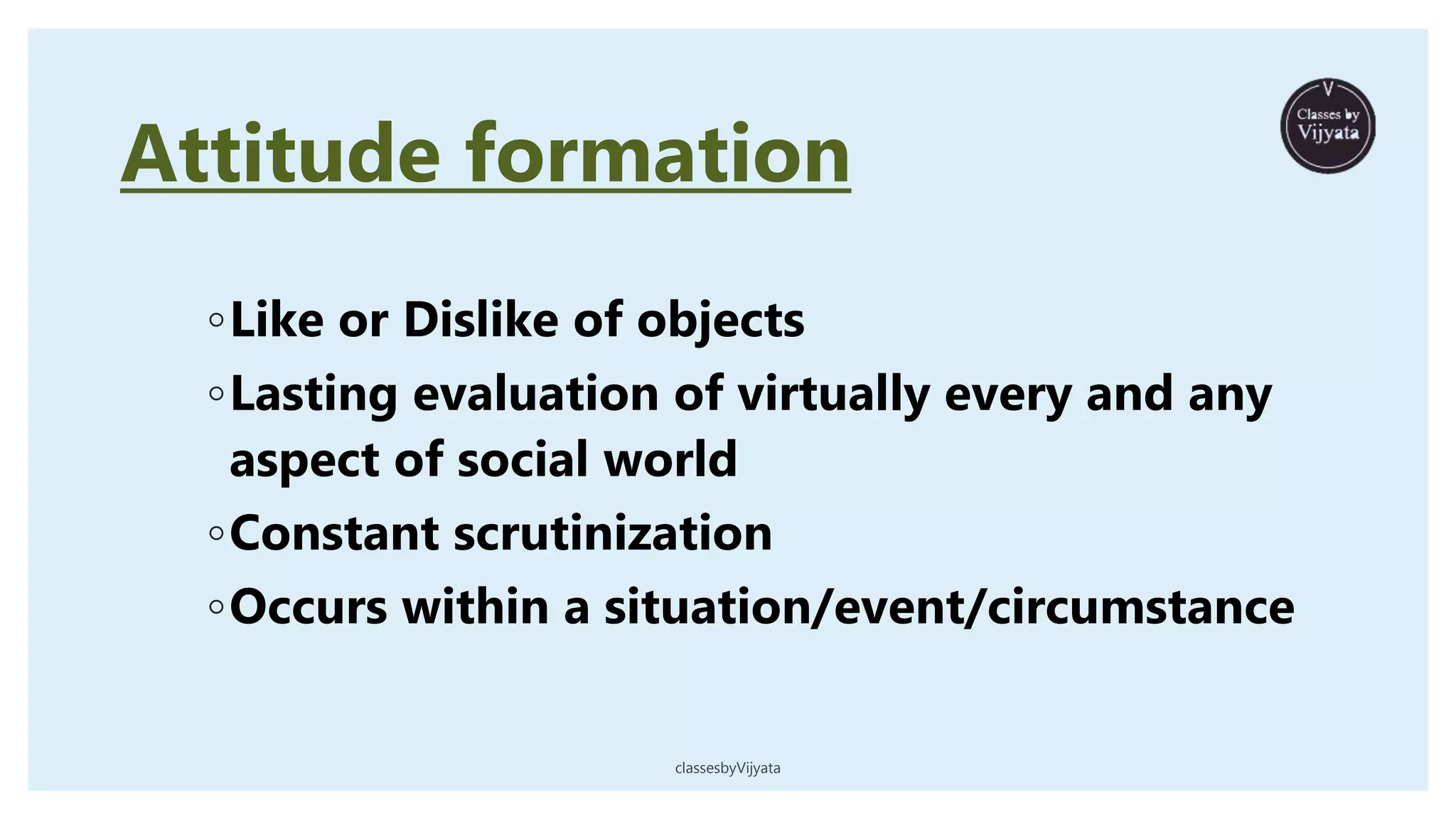
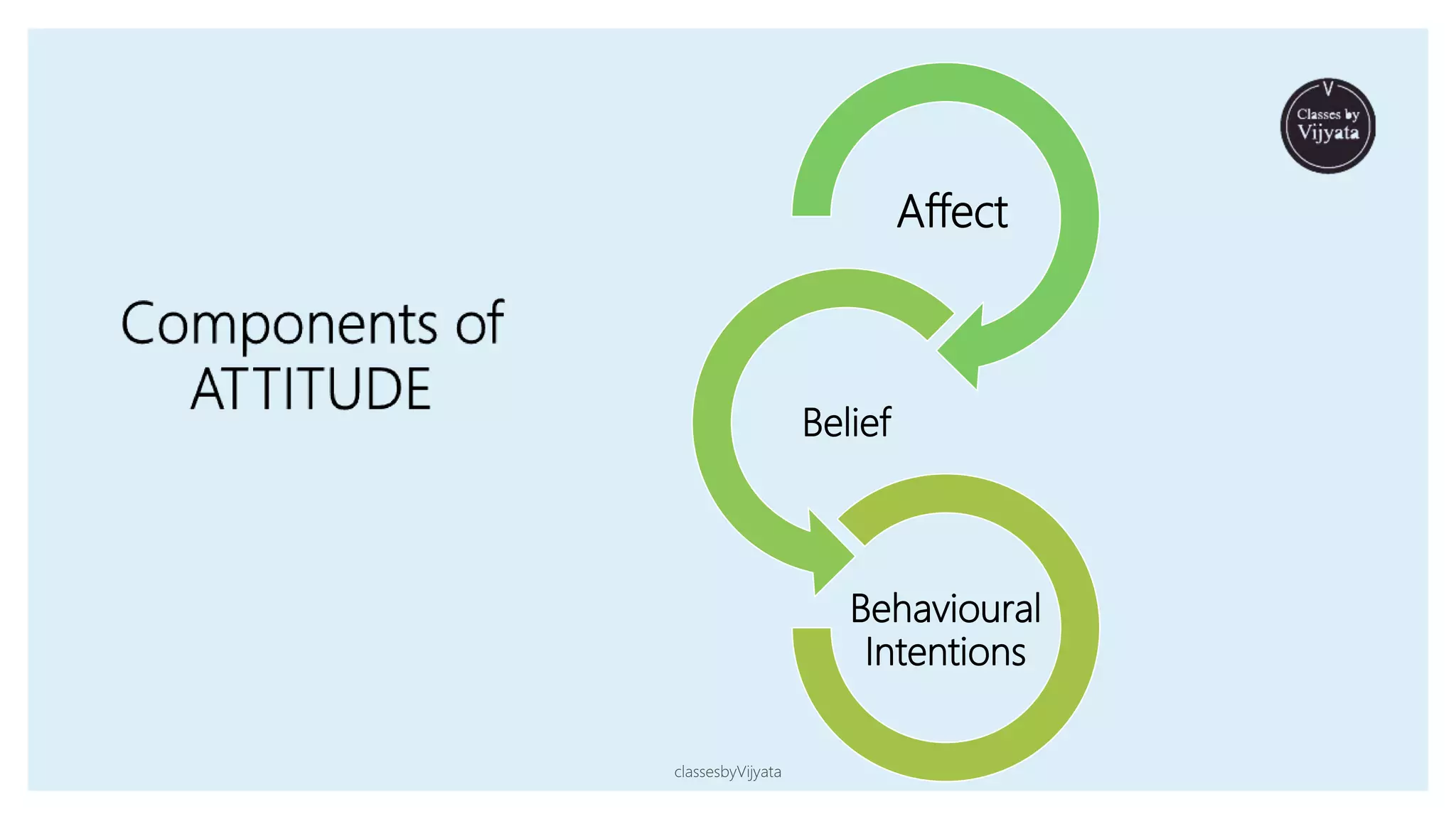
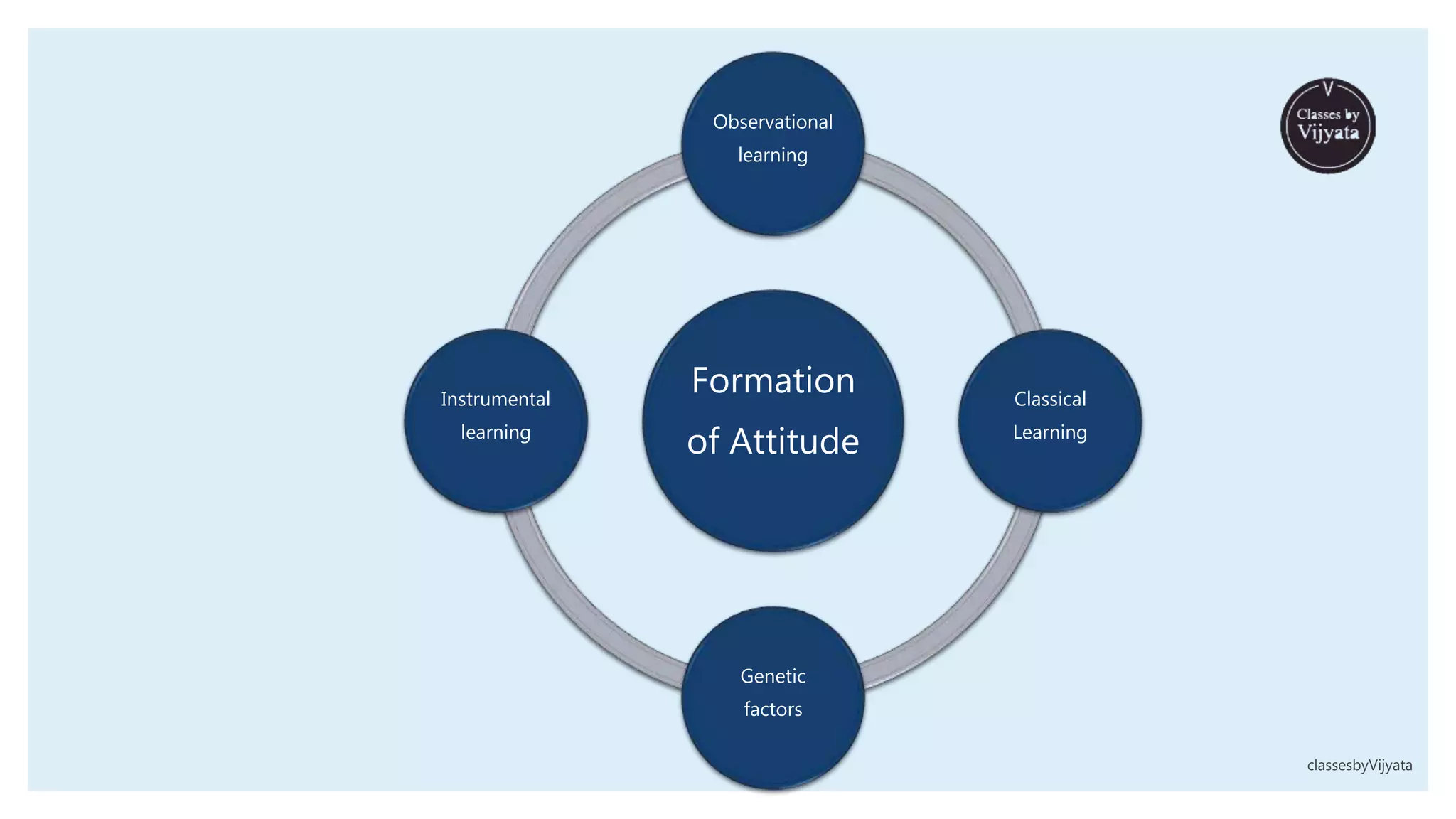
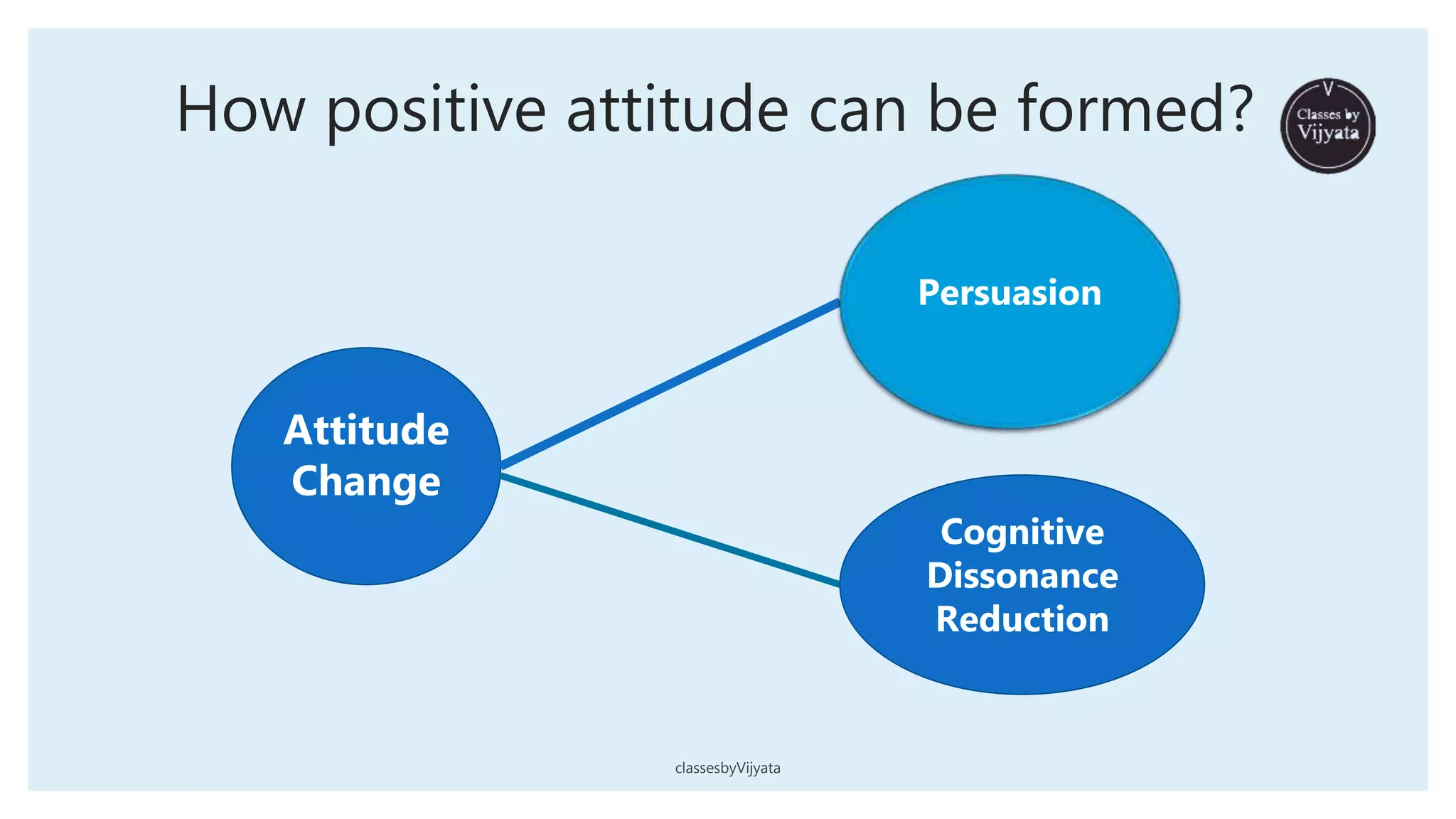
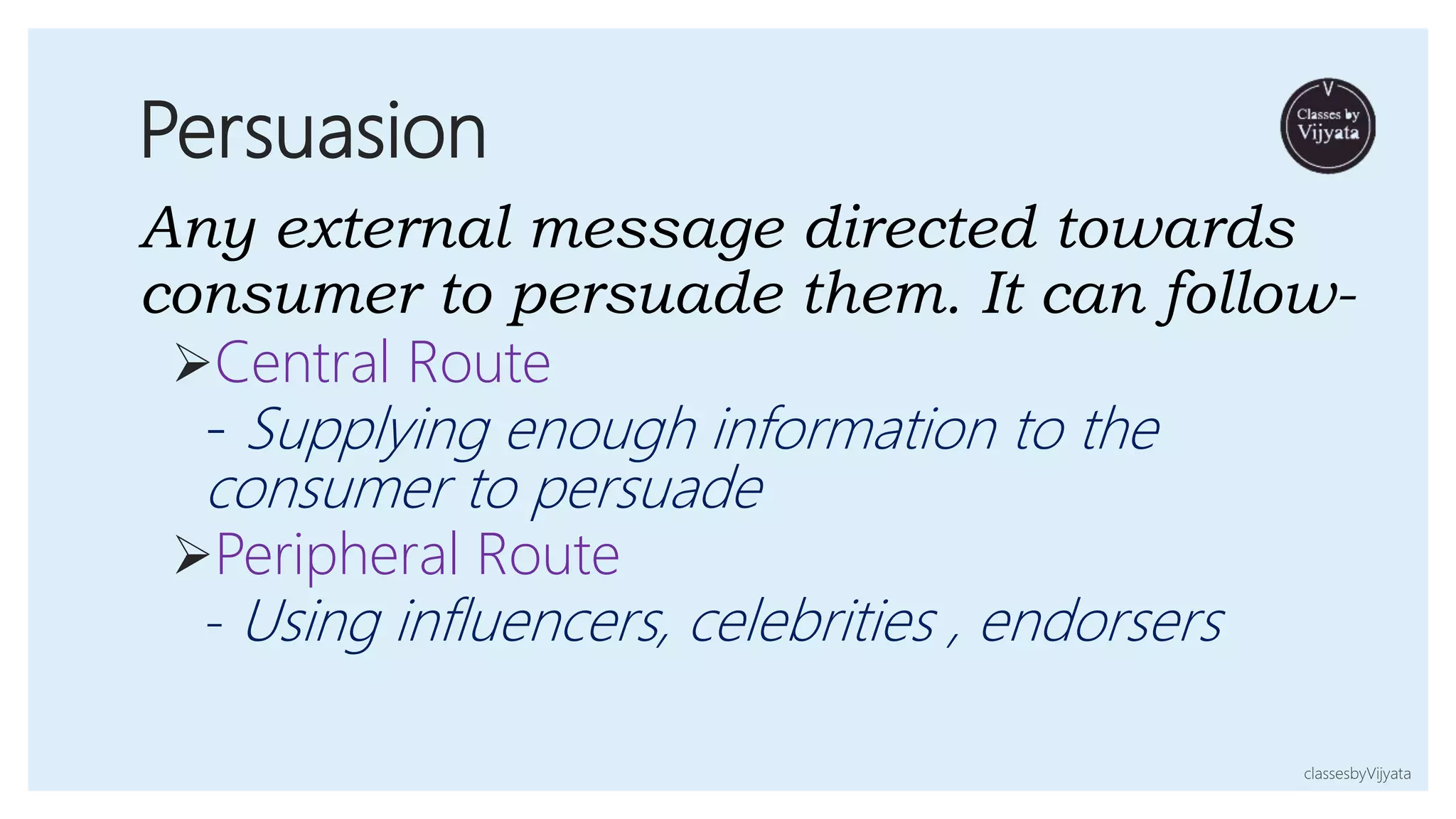

This document discusses consumer attitude and behavior. It defines attitude as a learned tendency to respond favorably or unfavorably to something. Attitudes have three components - affect, beliefs, and behavioral intentions. Attitudes are formed through observational learning, classical conditioning, genetics, and instrumental learning. They can be changed through persuasion and cognitive dissonance reduction. Attitudes serve important functions for consumers, including expressing values and identity, gaining utility and knowledge, and reducing inconsistency in thoughts and actions.


