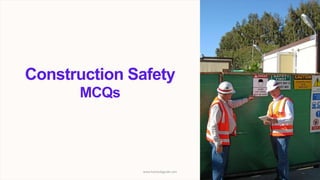
Construction Safety
MCQs
www.hsestudyguide.com
Question: What is the primary purpose of
a Safety Data Sheet (SDS) on a
construction site?
• A) To list the contact information of project managers
• B) To provide information on hazardous chemicals used on-site
• C) To outline the construction timeline
• D) To describe the architectural plans
www.hsestudyguide.com
Answer: B) To provide information on hazardous chemicals used on-site
Explanation: The Safety Data Sheet (SDS) is crucial for providing comprehensive
information about hazardous chemicals used on-site. It includes details about potential
hazards, safe handling procedures, and emergency measures.
www.hsestudyguide.com
Question: What is the minimum
recommended height for fall protection
equipment to be used on construction
sites?
• A) 4 feet (1.2 meters)
• B) 6 feet (1.8 meters)
• C) 8 feet (2.4 meters)
• D) 10 feet (3 meters)
www.hsestudyguide.com
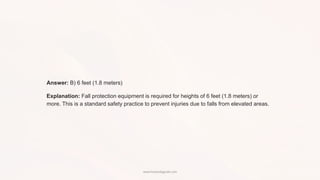
Answer: B) 6 feet (1.8 meters)
Explanation: Fall protection equipment is required for heights of 6 feet (1.8 meters) or
more. This is a standard safety practice to prevent injuries due to falls from elevated areas.
www.hsestudyguide.com
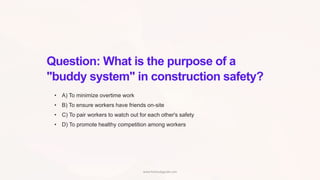
Question: What is the purpose of a
"buddy system" in construction safety?
• A) To minimize overtime work
• B) To ensure workers have friends on-site
• C) To pair workers to watch out for each other's safety
• D) To promote healthy competition among workers
www.hsestudyguide.com
Answer: C) To pair workers to watch out for each other's safety
Explanation: Implementing a "buddy system" ensures that workers watch out for each
other's safety. It fosters a culture of mutual responsibility and aids in immediate assistance in
case of emergencies or accidents.
www.hsestudyguide.com
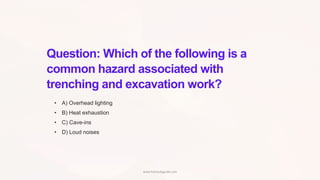
Question: Which of the following is a
common hazard associated with
trenching and excavation work?
• A) Overhead lighting
• B) Heat exhaustion
• C) Cave-ins
• D) Loud noises
www.hsestudyguide.com
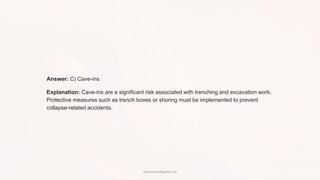
Answer: C) Cave-ins
Explanation: Cave-ins are a significant risk associated with trenching and excavation work.
Protective measures such as trench boxes or shoring must be implemented to prevent
collapse-related accidents.
www.hsestudyguide.com
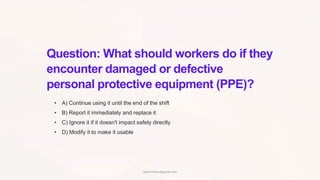
Question: What should workers do if they
encounter damaged or defective
personal protective equipment (PPE)?
• A) Continue using it until the end of the shift
• B) Report it immediately and replace it
• C) Ignore it if it doesn't impact safety directly
• D) Modify it to make it usable
www.hsestudyguide.com
Answer: B) Report it immediately and replace it
Explanation: Any damaged or defective Personal Protective Equipment (PPE) should be
reported immediately and replaced to ensure worker safety. Continued use of compromised
PPE can increase the risk of injuries.
www.hsestudyguide.com
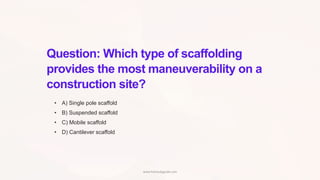
Question: Which type of scaffolding
provides the most maneuverability on a
construction site?
• A) Single pole scaffold
• B) Suspended scaffold
• C) Mobile scaffold
• D) Cantilever scaffold
www.hsestudyguide.com
Answer: C) Mobile scaffold
Explanation: Mobile scaffolding offers easy mobility and flexibility on construction sites,
allowing workers to move it to various locations as needed.
www.hsestudyguide.com
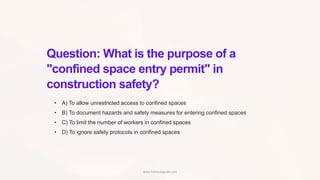
Question: What is the purpose of a
"confined space entry permit" in
construction safety?
• A) To allow unrestricted access to confined spaces
• B) To document hazards and safety measures for entering confined spaces
• C) To limit the number of workers in confined spaces
• D) To ignore safety protocols in confined spaces
www.hsestudyguide.com
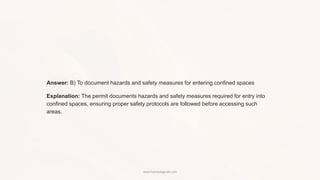
Answer: B) To document hazards and safety measures for entering confined spaces
Explanation: The permit documents hazards and safety measures required for entry into
confined spaces, ensuring proper safety protocols are followed before accessing such
areas.
www.hsestudyguide.com
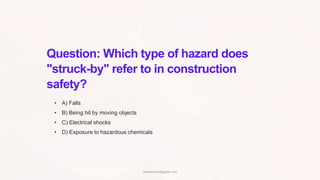
Question: Which type of hazard does
"struck-by" refer to in construction
safety?
• A) Falls
• B) Being hit by moving objects
• C) Electrical shocks
• D) Exposure to hazardous chemicals
www.hsestudyguide.com
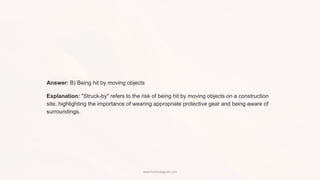
Answer: B) Being hit by moving objects
Explanation: "Struck-by" refers to the risk of being hit by moving objects on a construction
site, highlighting the importance of wearing appropriate protective gear and being aware of
surroundings.
www.hsestudyguide.com
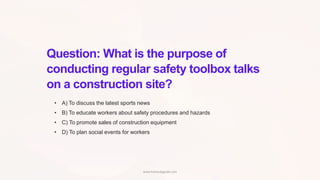
Question: What is the purpose of
conducting regular safety toolbox talks
on a construction site?
• A) To discuss the latest sports news
• B) To educate workers about safety procedures and hazards
• C) To promote sales of construction equipment
• D) To plan social events for workers
www.hsestudyguide.com
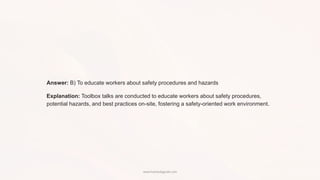
Answer: B) To educate workers about safety procedures and hazards
Explanation: Toolbox talks are conducted to educate workers about safety procedures,
potential hazards, and best practices on-site, fostering a safety-oriented work environment.
www.hsestudyguide.com
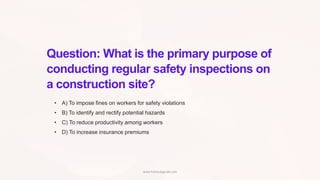
Question: What is the primary purpose of
conducting regular safety inspections on
a construction site?
• A) To impose fines on workers for safety violations
• B) To identify and rectify potential hazards
• C) To reduce productivity among workers
• D) To increase insurance premiums
www.hsestudyguide.com
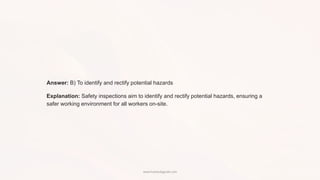
Answer: B) To identify and rectify potential hazards
Explanation: Safety inspections aim to identify and rectify potential hazards, ensuring a
safer working environment for all workers on-site.
www.hsestudyguide.com

Construction-Safety-Multiple-Choice-Questionss.pptx

  • 1.
  • 2.
    Question: What isthe primary purpose of a Safety Data Sheet (SDS) on a construction site? • A) To list the contact information of project managers • B) To provide information on hazardous chemicals used on-site • C) To outline the construction timeline • D) To describe the architectural plans www.hsestudyguide.com
  • 3.
    Answer: B) Toprovide information on hazardous chemicals used on-site Explanation: The Safety Data Sheet (SDS) is crucial for providing comprehensive information about hazardous chemicals used on-site. It includes details about potential hazards, safe handling procedures, and emergency measures. www.hsestudyguide.com
  • 4.
    Question: What isthe minimum recommended height for fall protection equipment to be used on construction sites? • A) 4 feet (1.2 meters) • B) 6 feet (1.8 meters) • C) 8 feet (2.4 meters) • D) 10 feet (3 meters) www.hsestudyguide.com
  • 5.
    Answer: B) 6feet (1.8 meters) Explanation: Fall protection equipment is required for heights of 6 feet (1.8 meters) or more. This is a standard safety practice to prevent injuries due to falls from elevated areas. www.hsestudyguide.com
  • 6.
    Question: What isthe purpose of a "buddy system" in construction safety? • A) To minimize overtime work • B) To ensure workers have friends on-site • C) To pair workers to watch out for each other's safety • D) To promote healthy competition among workers www.hsestudyguide.com
  • 7.
    Answer: C) Topair workers to watch out for each other's safety Explanation: Implementing a "buddy system" ensures that workers watch out for each other's safety. It fosters a culture of mutual responsibility and aids in immediate assistance in case of emergencies or accidents. www.hsestudyguide.com
  • 8.
    Question: Which ofthe following is a common hazard associated with trenching and excavation work? • A) Overhead lighting • B) Heat exhaustion • C) Cave-ins • D) Loud noises www.hsestudyguide.com
  • 9.
    Answer: C) Cave-ins Explanation:Cave-ins are a significant risk associated with trenching and excavation work. Protective measures such as trench boxes or shoring must be implemented to prevent collapse-related accidents. www.hsestudyguide.com
  • 10.
    Question: What shouldworkers do if they encounter damaged or defective personal protective equipment (PPE)? • A) Continue using it until the end of the shift • B) Report it immediately and replace it • C) Ignore it if it doesn't impact safety directly • D) Modify it to make it usable www.hsestudyguide.com
  • 11.
    Answer: B) Reportit immediately and replace it Explanation: Any damaged or defective Personal Protective Equipment (PPE) should be reported immediately and replaced to ensure worker safety. Continued use of compromised PPE can increase the risk of injuries. www.hsestudyguide.com
  • 12.
    Question: Which typeof scaffolding provides the most maneuverability on a construction site? • A) Single pole scaffold • B) Suspended scaffold • C) Mobile scaffold • D) Cantilever scaffold www.hsestudyguide.com
  • 13.
    Answer: C) Mobilescaffold Explanation: Mobile scaffolding offers easy mobility and flexibility on construction sites, allowing workers to move it to various locations as needed. www.hsestudyguide.com
  • 14.
    Question: What isthe purpose of a "confined space entry permit" in construction safety? • A) To allow unrestricted access to confined spaces • B) To document hazards and safety measures for entering confined spaces • C) To limit the number of workers in confined spaces • D) To ignore safety protocols in confined spaces www.hsestudyguide.com
  • 15.
    Answer: B) Todocument hazards and safety measures for entering confined spaces Explanation: The permit documents hazards and safety measures required for entry into confined spaces, ensuring proper safety protocols are followed before accessing such areas. www.hsestudyguide.com
  • 16.
    Question: Which typeof hazard does "struck-by" refer to in construction safety? • A) Falls • B) Being hit by moving objects • C) Electrical shocks • D) Exposure to hazardous chemicals www.hsestudyguide.com
  • 17.
    Answer: B) Beinghit by moving objects Explanation: "Struck-by" refers to the risk of being hit by moving objects on a construction site, highlighting the importance of wearing appropriate protective gear and being aware of surroundings. www.hsestudyguide.com
  • 18.
    Question: What isthe purpose of conducting regular safety toolbox talks on a construction site? • A) To discuss the latest sports news • B) To educate workers about safety procedures and hazards • C) To promote sales of construction equipment • D) To plan social events for workers www.hsestudyguide.com
  • 19.
    Answer: B) Toeducate workers about safety procedures and hazards Explanation: Toolbox talks are conducted to educate workers about safety procedures, potential hazards, and best practices on-site, fostering a safety-oriented work environment. www.hsestudyguide.com
  • 20.
    Question: What isthe primary purpose of conducting regular safety inspections on a construction site? • A) To impose fines on workers for safety violations • B) To identify and rectify potential hazards • C) To reduce productivity among workers • D) To increase insurance premiums www.hsestudyguide.com
  • 21.
    Answer: B) Toidentify and rectify potential hazards Explanation: Safety inspections aim to identify and rectify potential hazards, ensuring a safer working environment for all workers on-site. www.hsestudyguide.com