Constructing Rain Gardens & BioswalesBy Tom Barrett Green Water Infrastructure, Inc.www.ThinkGWI.comTom.Barrett@ThinkGWI.com@TomBarrett_GWIFollow us on Twitter @TomBarrett_GWI
The GREENEconomy
How Much Rain Falls in St. Louis?January - 1.83"February - 1.85"March-   2.88"April-   3.58"May-   4.10"June-  4.72"July -   3.56"August -   3.51"September -   3.17" October -   2.96"November -  2.35"December -  1.85"Total36.36"Image of Rain Falling
How Much Water Falls in St. Louis?2,500 sq. ft. RoofJanuary -    2,852 gallonsFebruary -    2,883March-    4,488April-    5,579May-    6,390June-  7,356July -    5,548August -    5,470September-    4,940 October -    4,613November -  3,662December -    2,883Total    56,664Image of Rain Falling
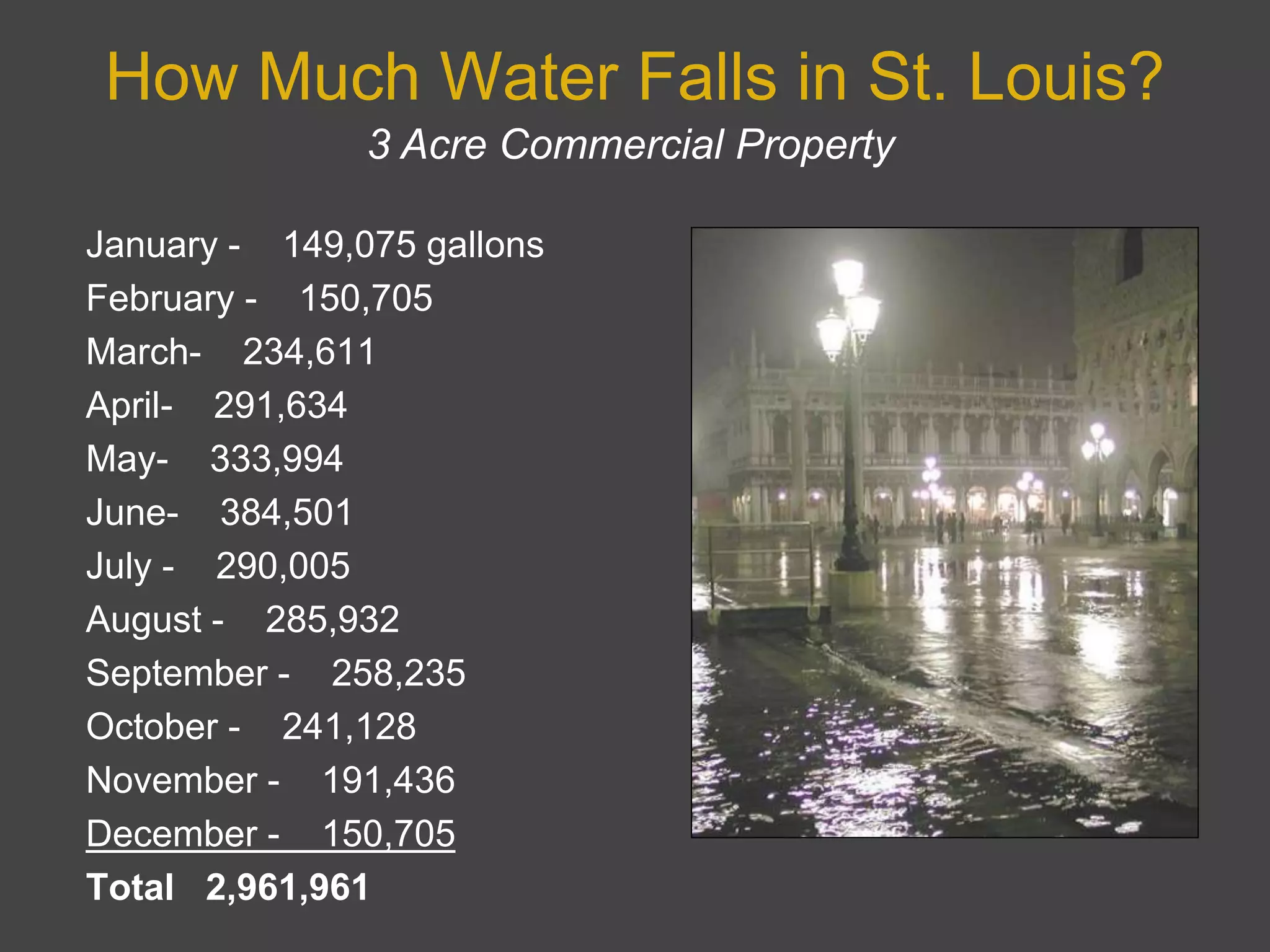
How Much Water Falls in St. Louis?3 Acre Commercial PropertyJanuary -    149,075 gallonsFebruary -    150,705March-    234,611April-    291,634May-    333,994June-    384,501July -    290,005August -    285,932September -    258,235 October -    241,128November -    191,436December -    150,705Total   2,961,961Image of Rain Falling
How Much Water Falls in St. Louis?City Block (5 acres)January -    248,459 gallonsFebruary -    251,176March-    391,018April-    486,057May-    556,657June-    640,834July -    483,341August - 476,553September -    430,391 October -    401,879November -    319,061December -    251,176Total   4,936,602
Low Impact Site Development
Stormwater MitigationStormwater MitigationStormwater MitigationStormwater MitigationStormwater Mitigation
Image of Rain Falling
Pesticide IssuesAtrazine, Nitrogen, Phosphorous
Peak Flow(1 Acre Site)cfs – cubic feet per second
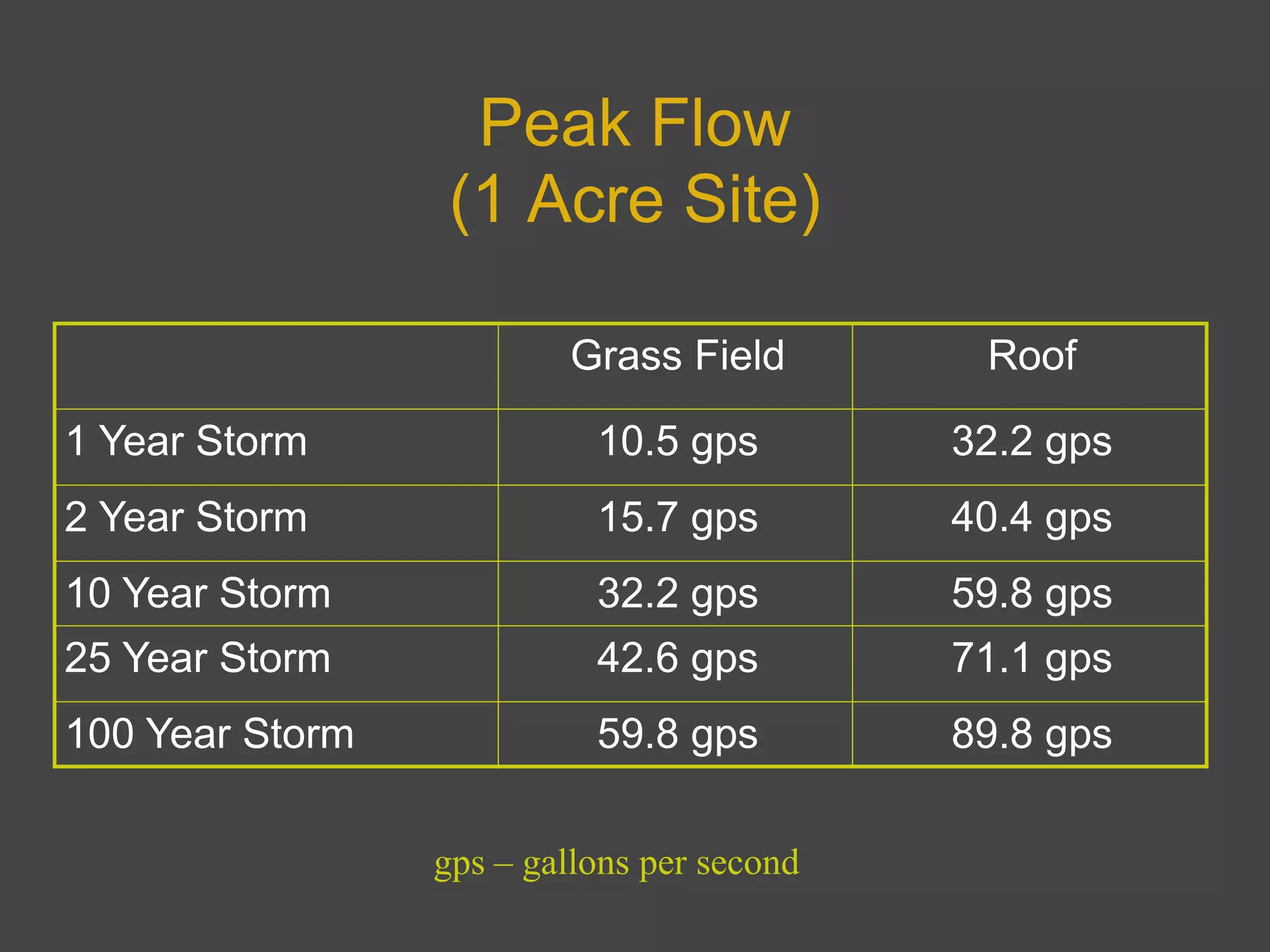
Peak Flow(1 Acre Site)gps – gallons per second
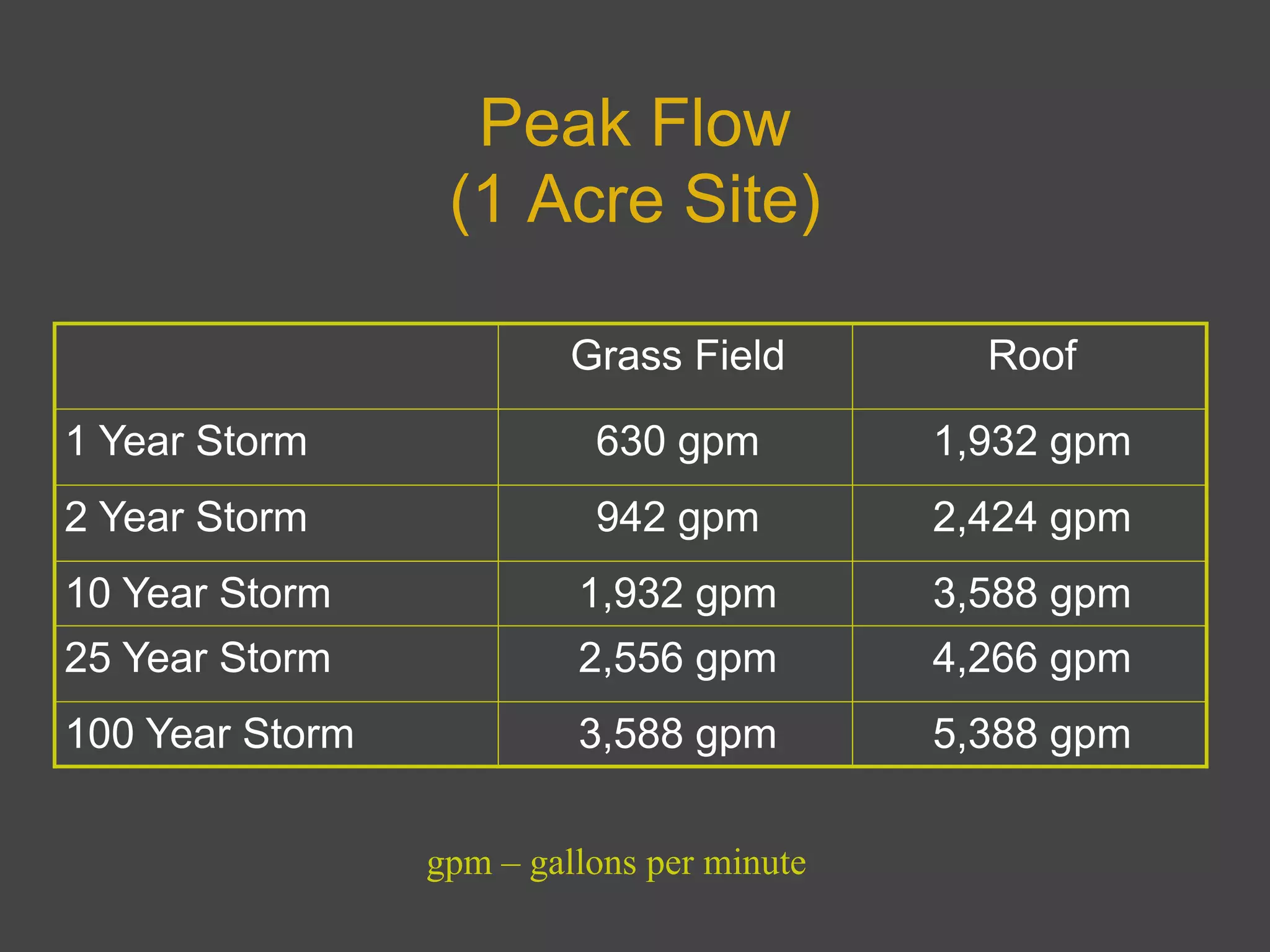
Peak Flow(1 Acre Site)gpm – gallons per minute
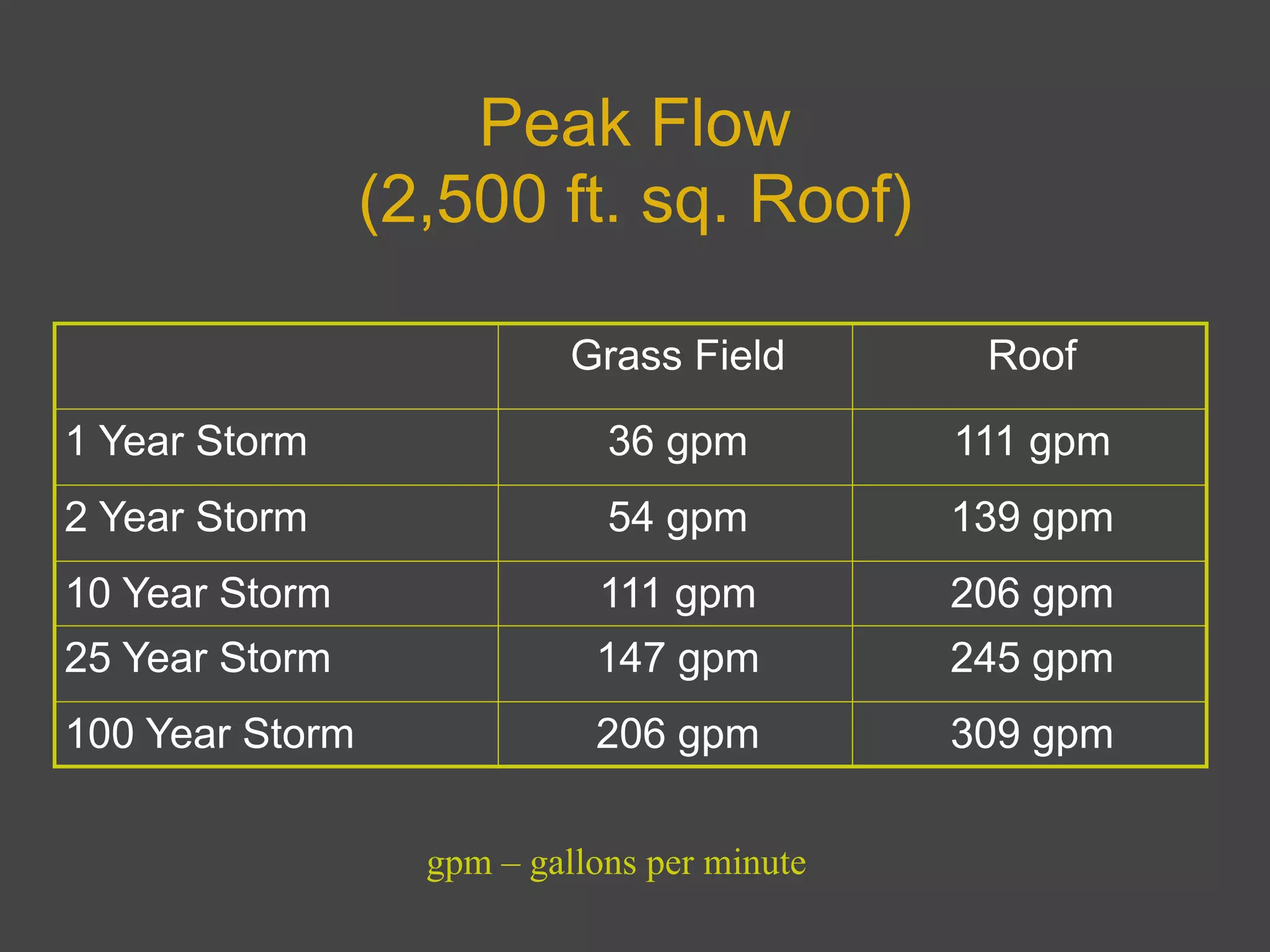
Peak Flow(2,500 sq. ft. Roof)cfs – cubic feet per second
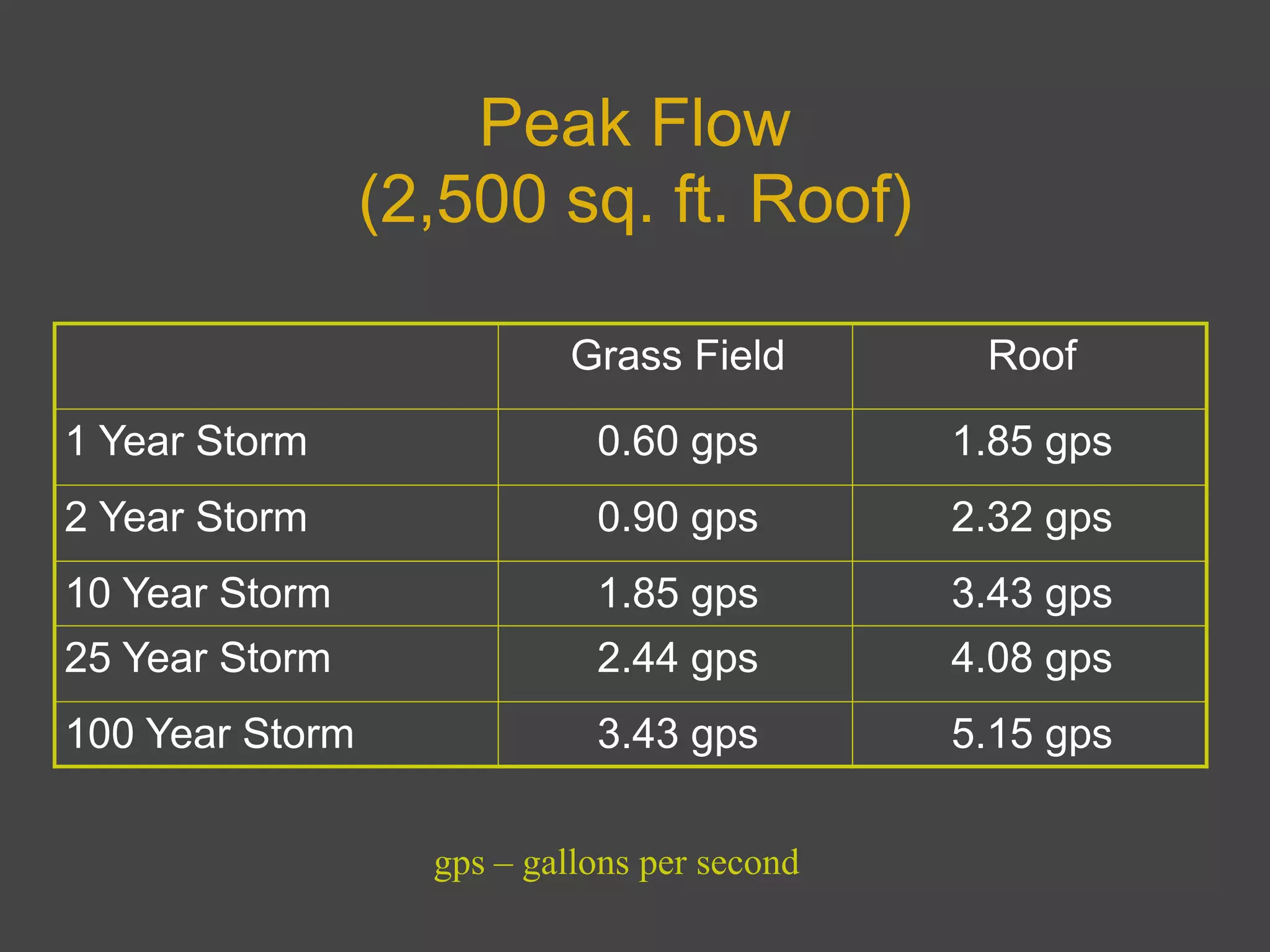
Peak Flow(2,500 sq. ft. Roof)gps – gallons per second
Peak Flow(2,500 ft. sq. Roof)gpm – gallons per minute
Stormwater Effects of Urbanization
Planting Trees
Stormwater MitigationCollection runoff near the sourceSlow it downSoak it inFilter it Apply it to the landscapeCreate habitats
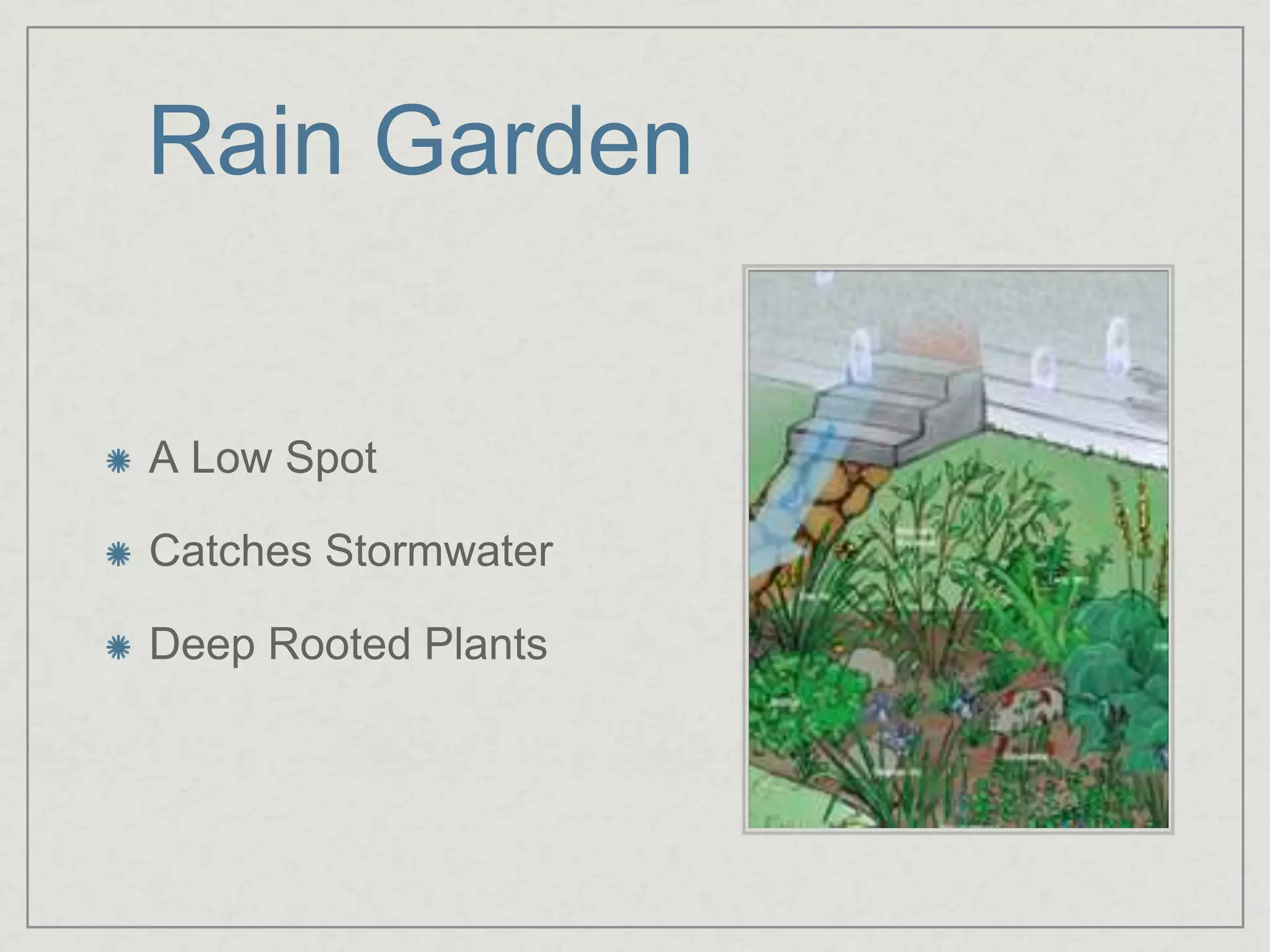
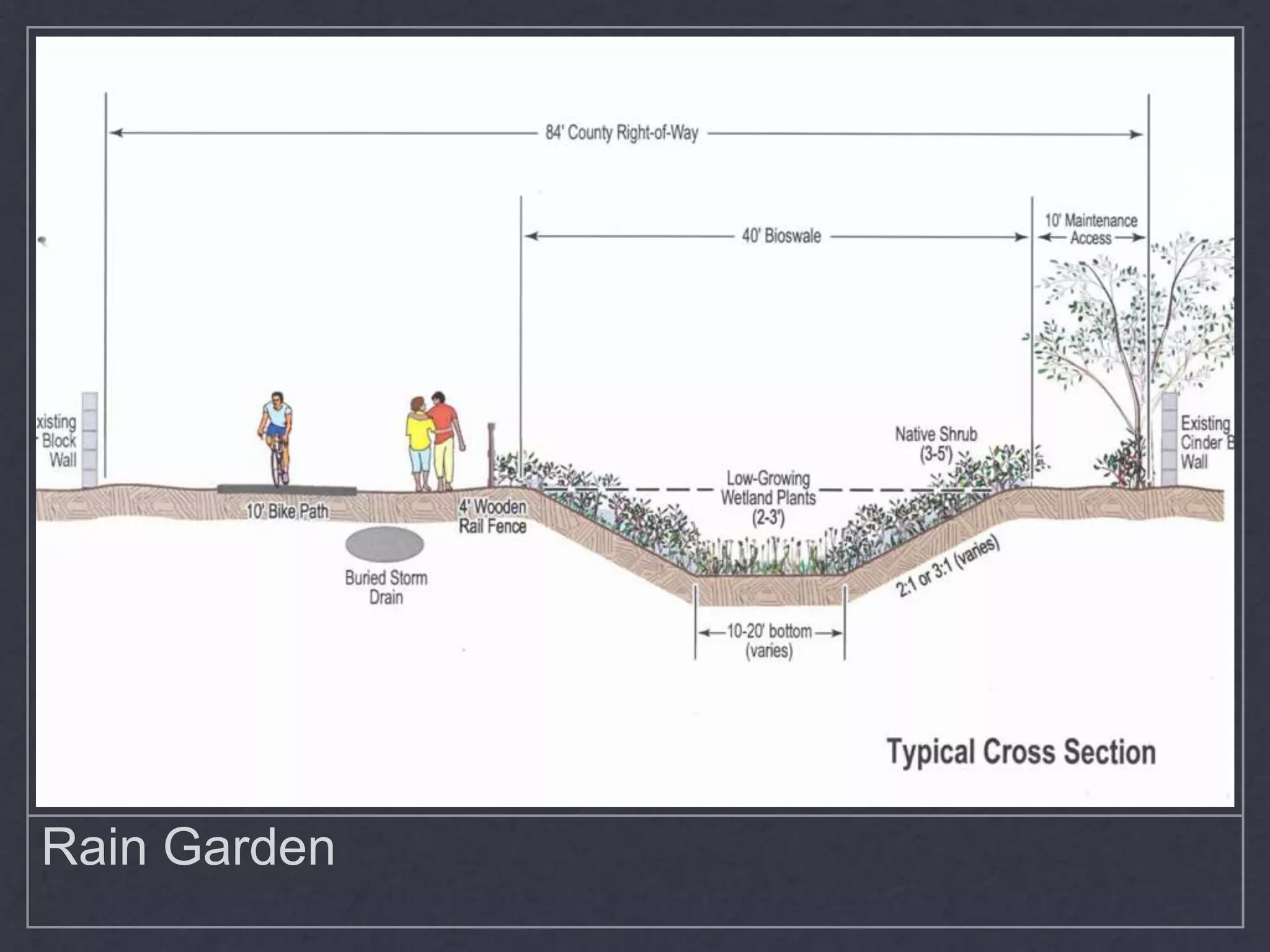
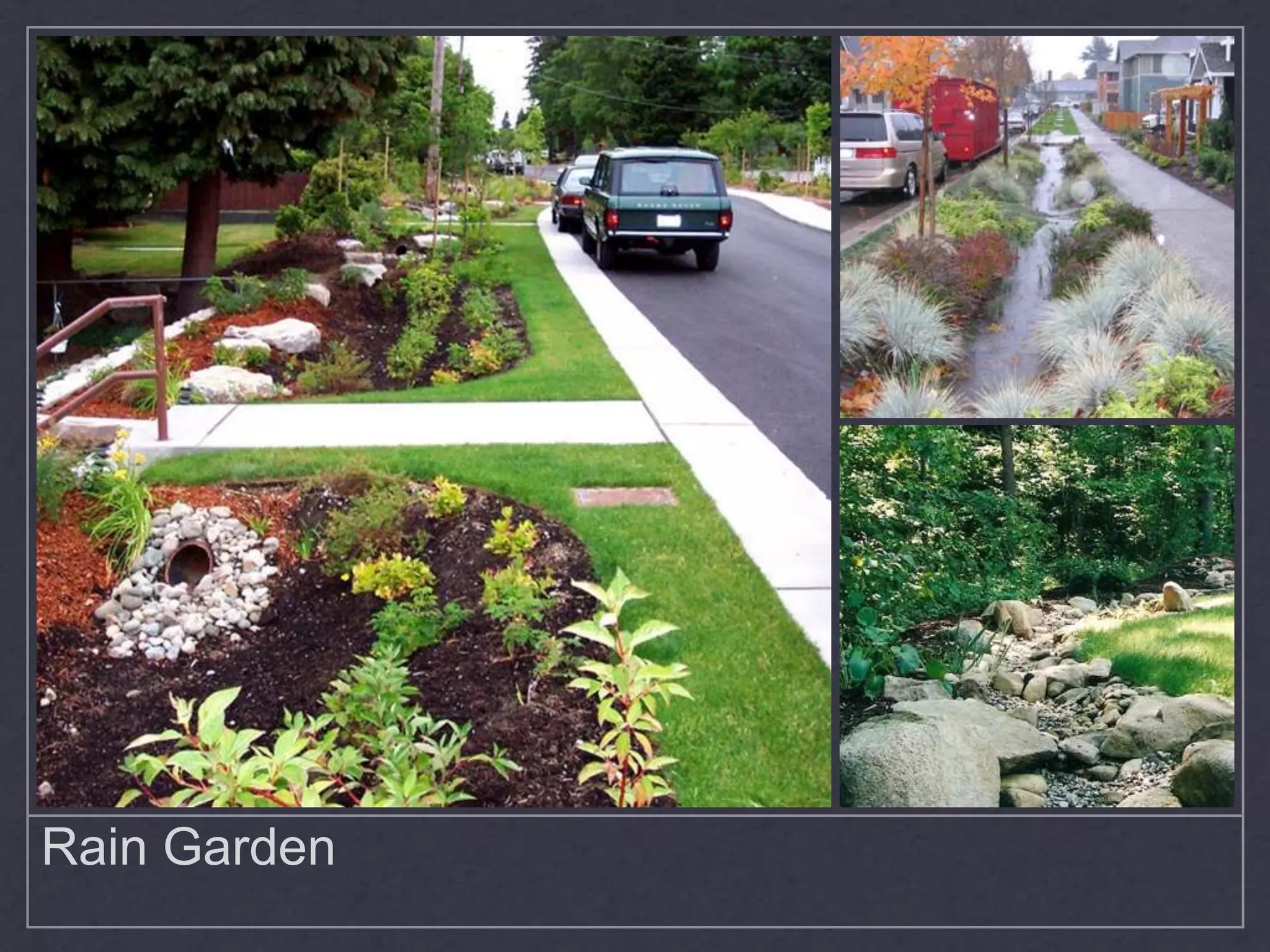
Rain GardenA Low SpotCatches StormwaterDeep Rooted Plants
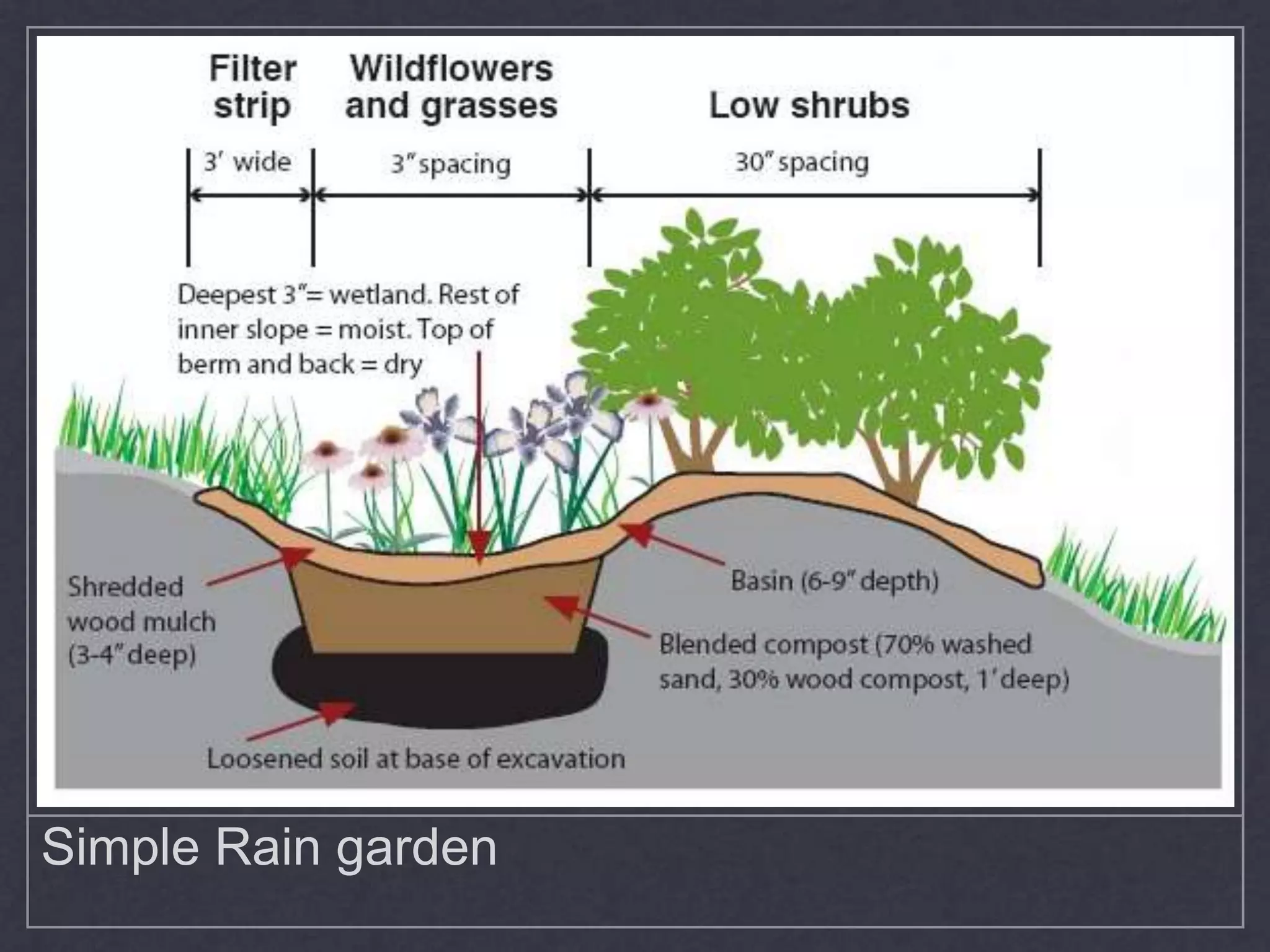
Simple Rain garden
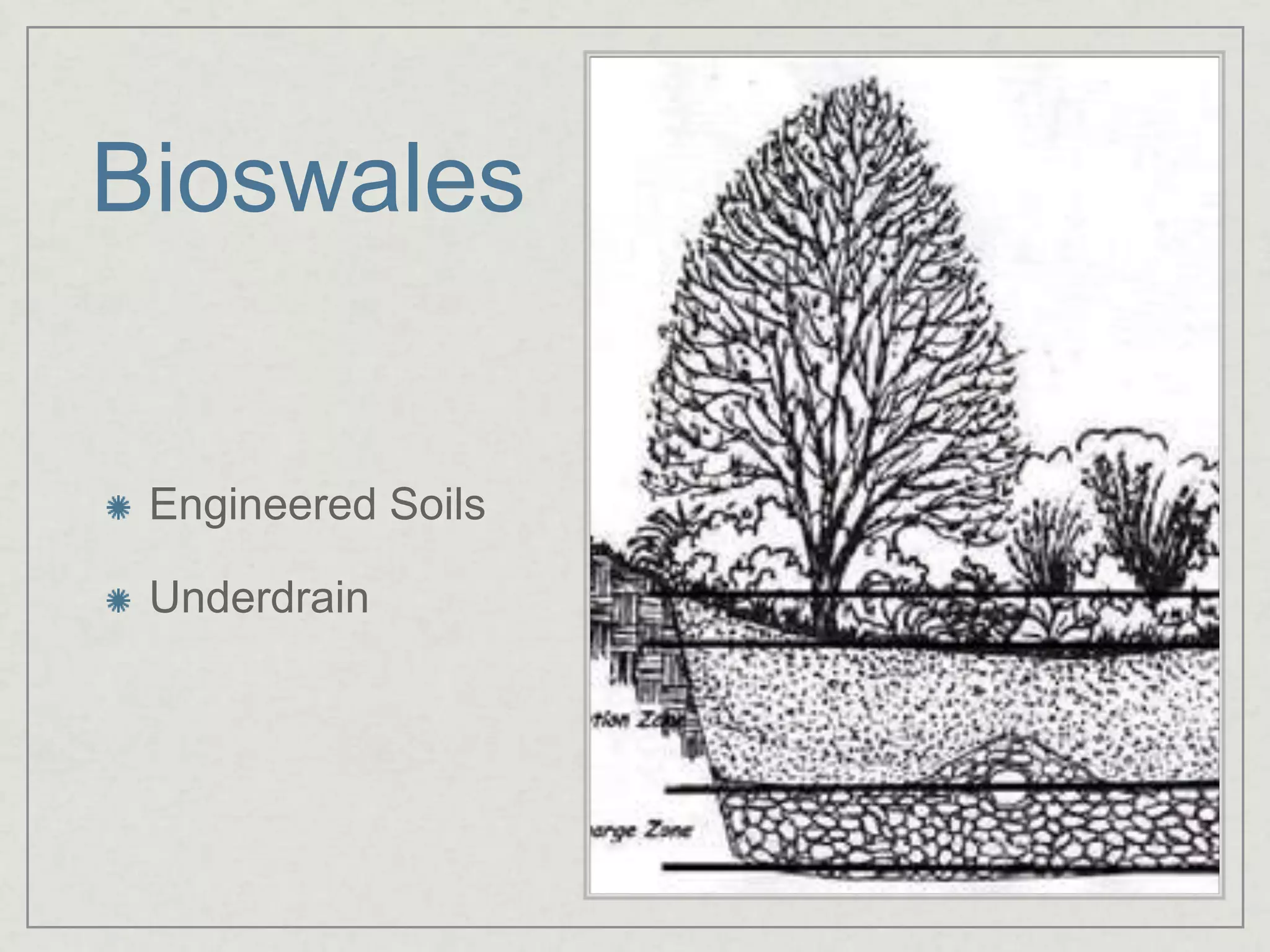
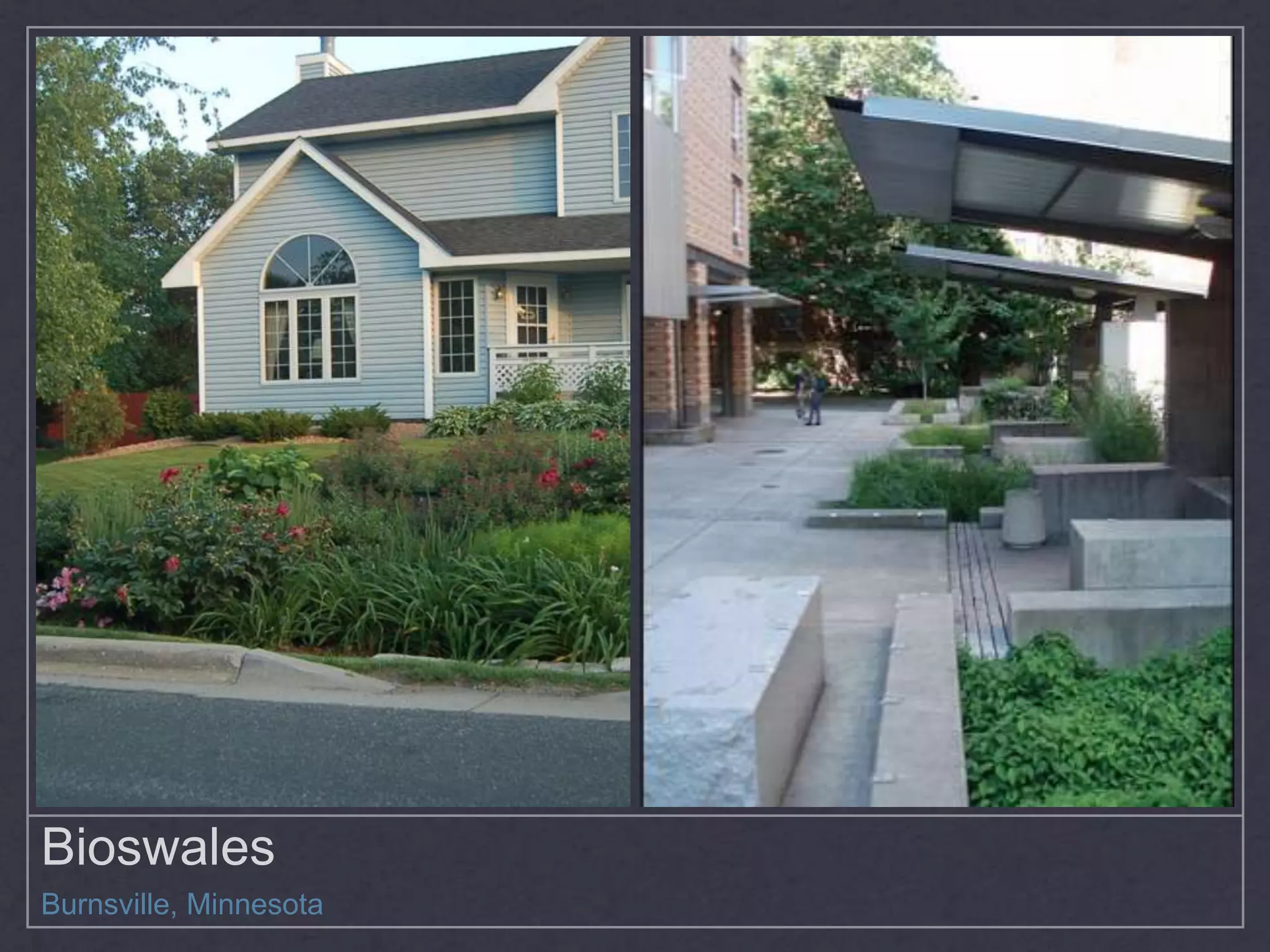
BioswalesEngineered SoilsUnderdrain
Rain GardensLocationRain gardens are often located at the end of a roof or drain spout.Plant ChoicesChoose plants based on the need for light and soil type.DepthA typical Rain Garden is between four to eight inches deep.SizeA Rain Garden usually five to ten percent of the impervious surface area.SoilA tpical mix is 65% sand, 15% top soil, 25% organic matter.
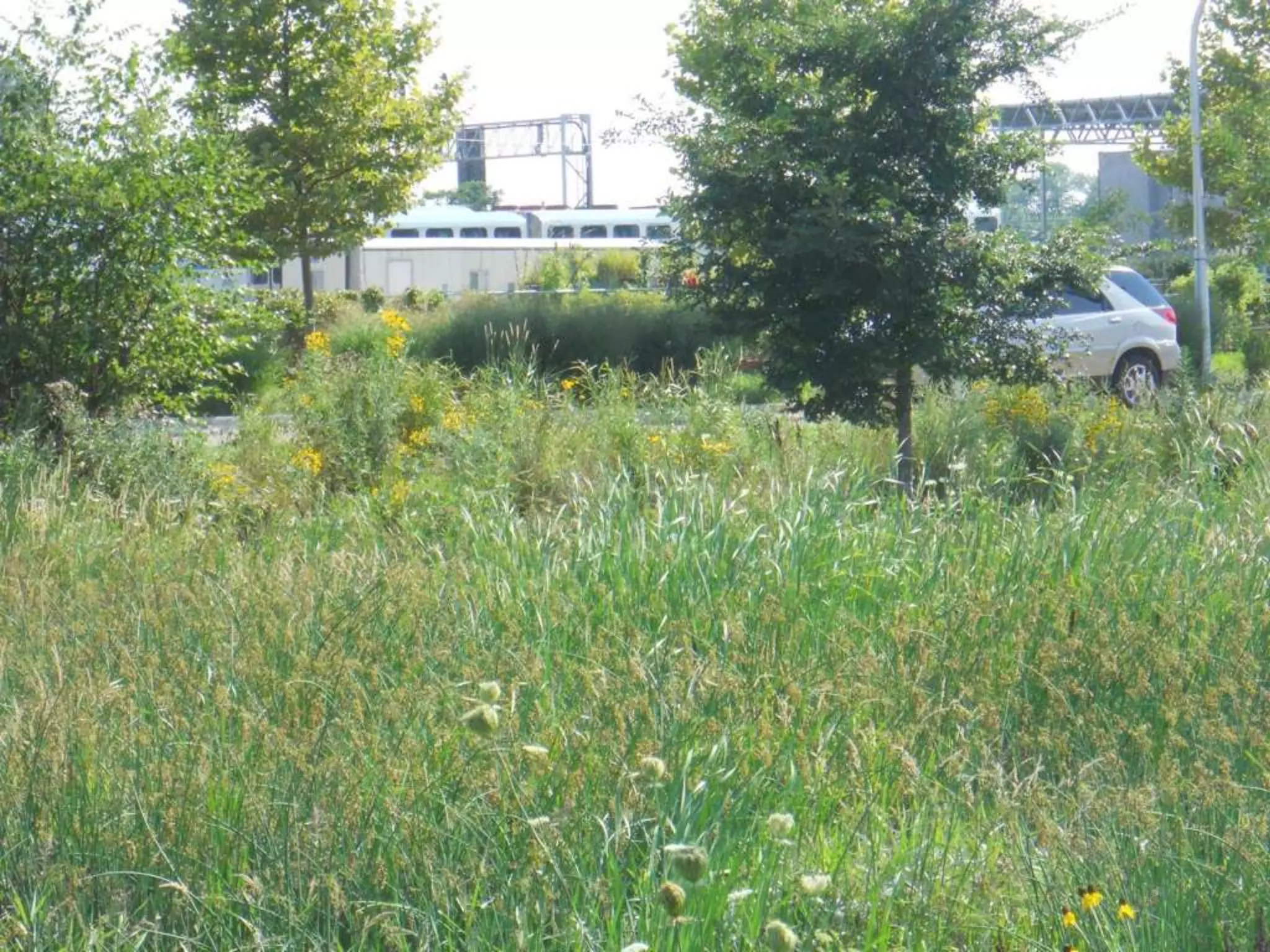
Rain Garden
Rain Garden
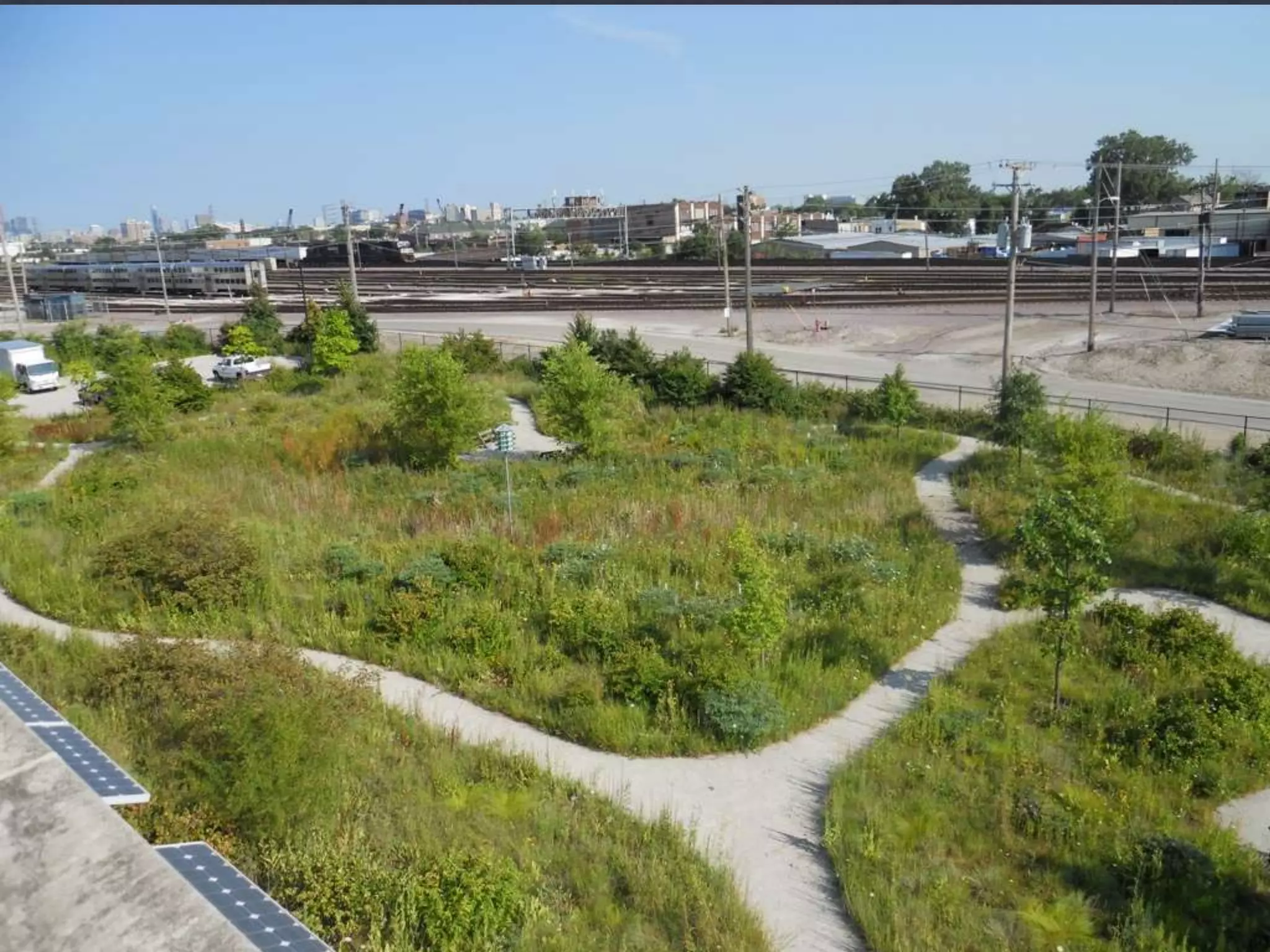
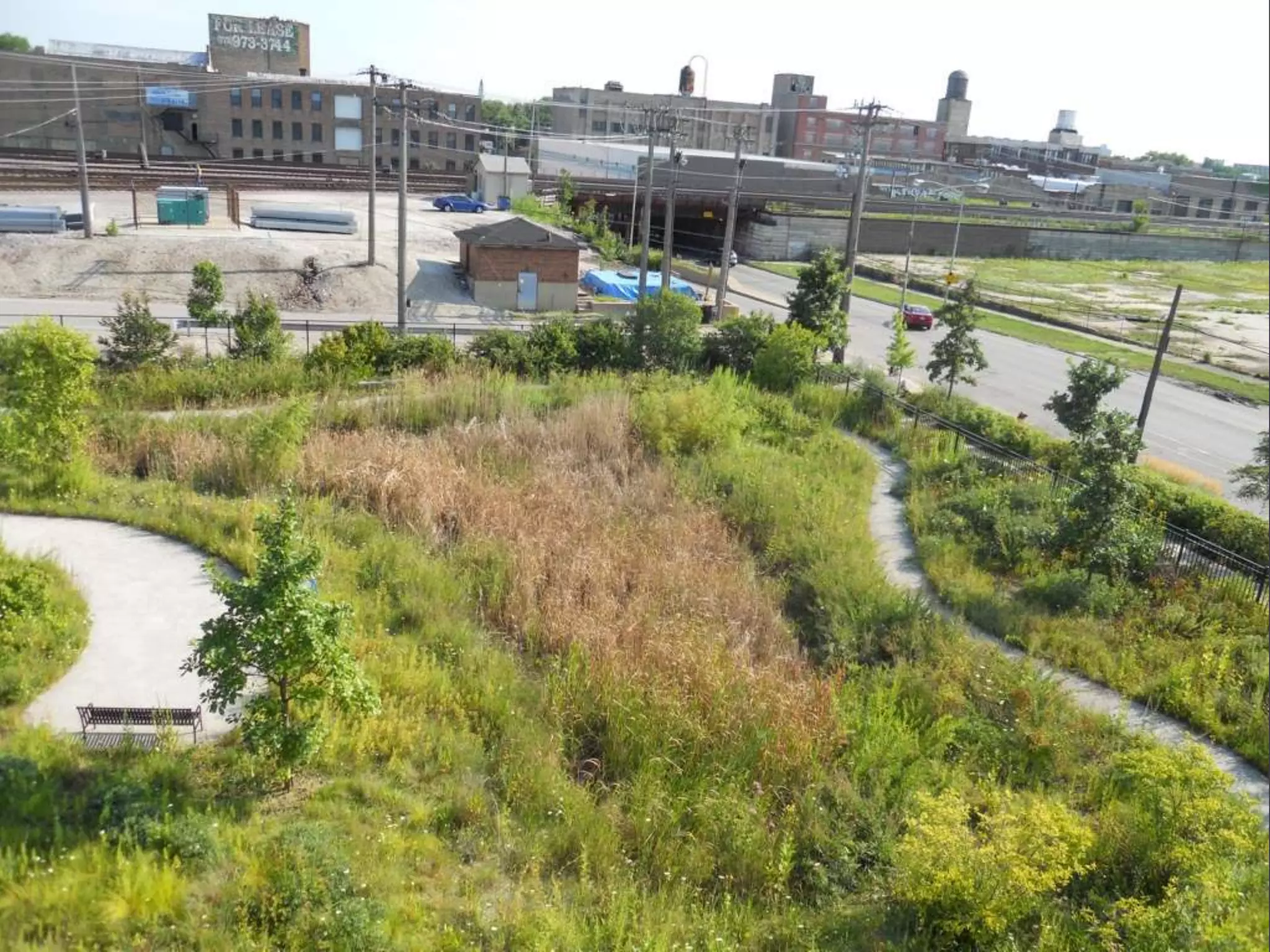
BioswalesBurnsville, Minnesota
Native Vegetationwww.epa.gov/greenacres/                    www.for-wild.org
Street Edges & Medians
Street Median
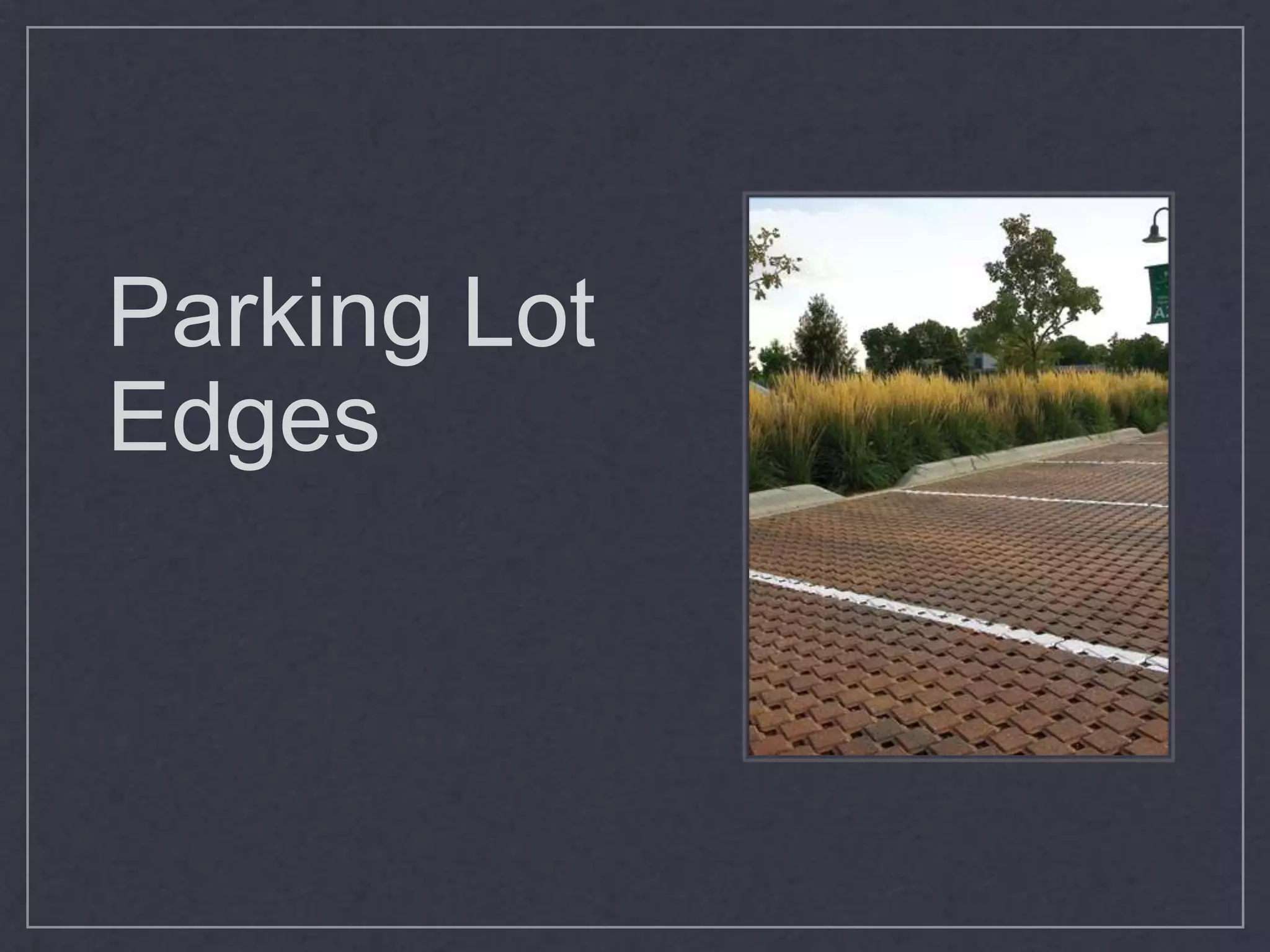
Parking Lot Edges
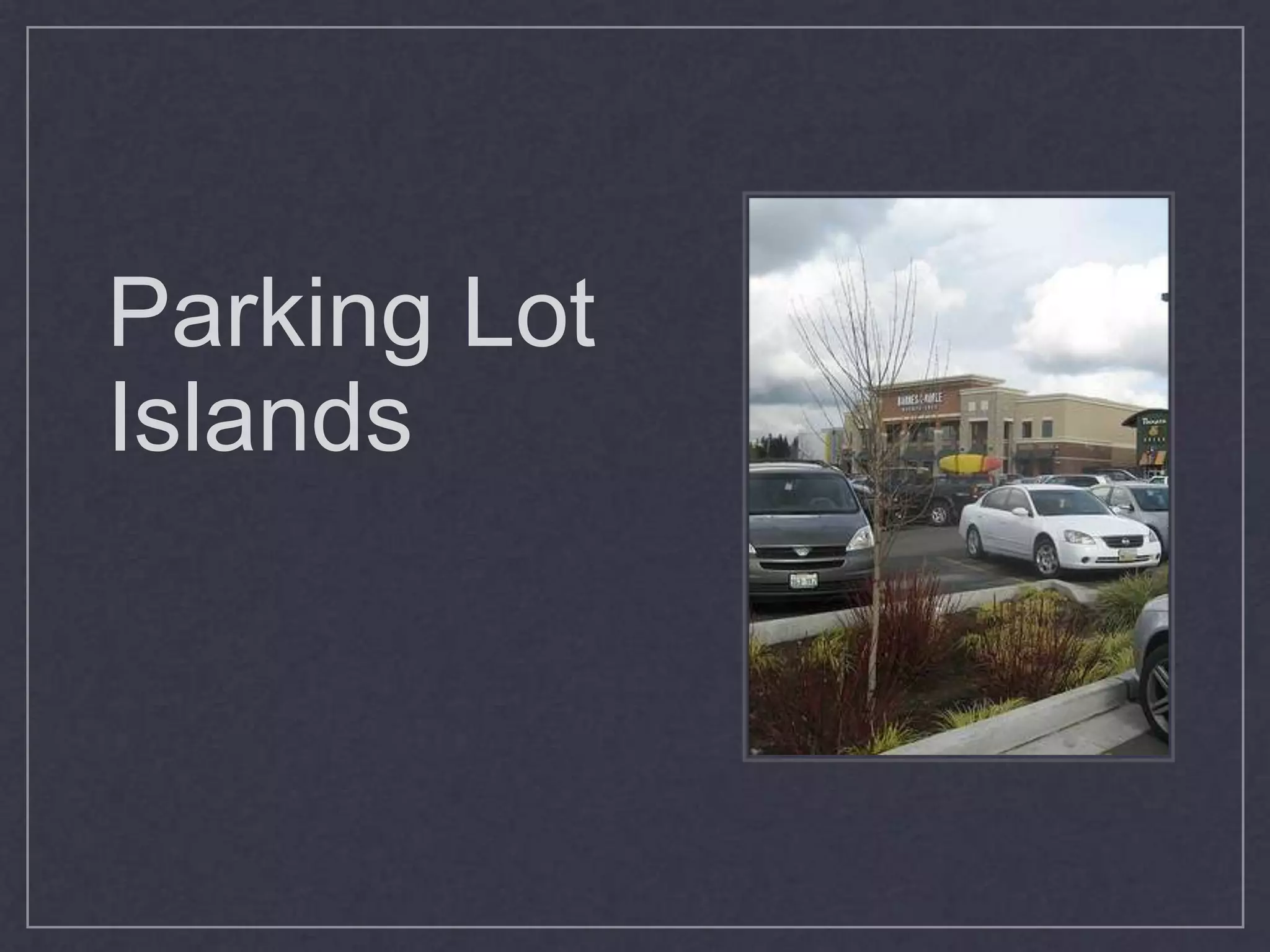
Parking Lot Islands
Driveway Edge
Downspout
Neighborhoods
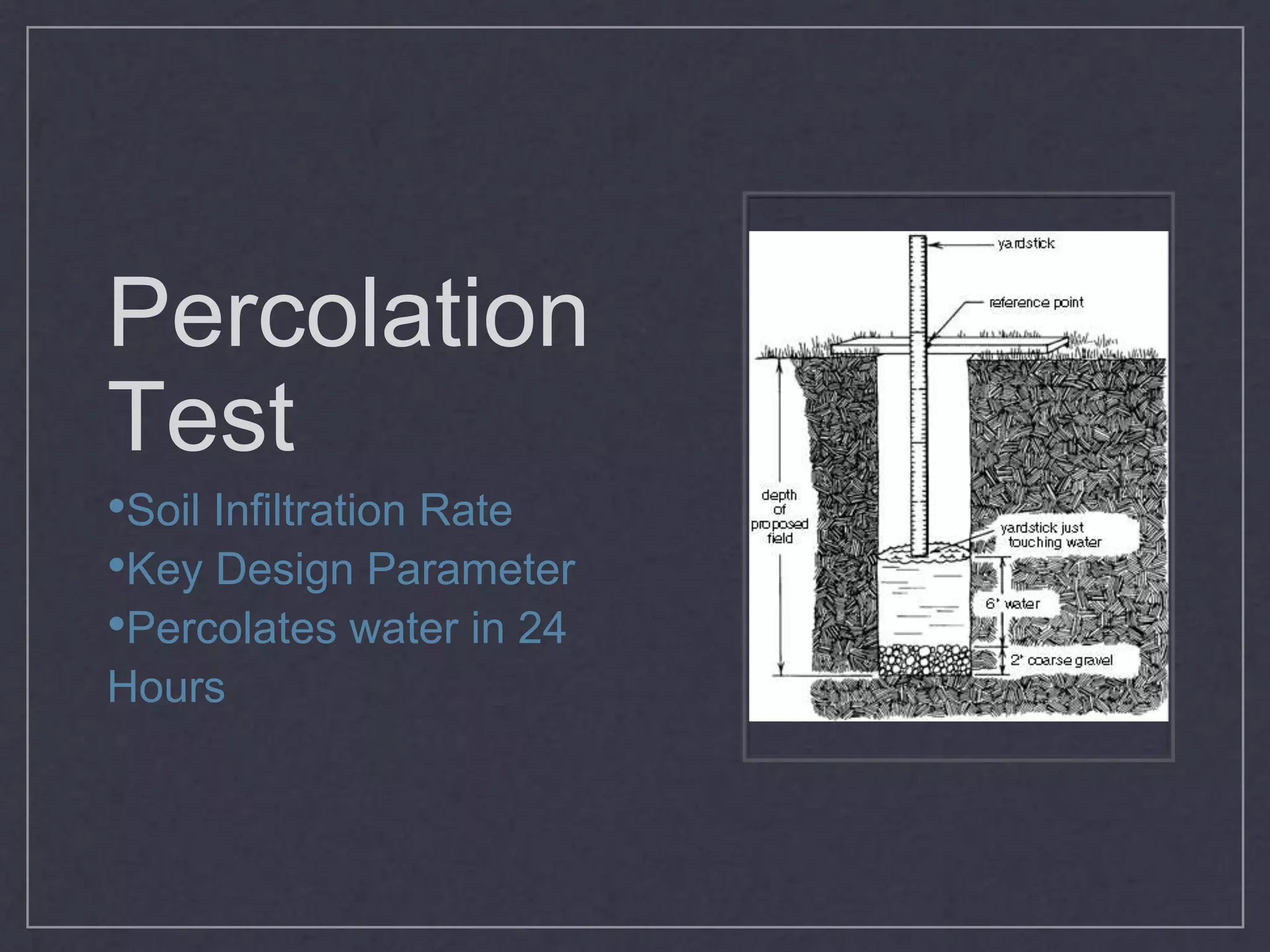
Meet Stormwater RegulationsDetention VolumeFix Drainage IssueFix Erosion IssueUtility ClearanceSoil InvestigationPercolation TestCriteria
Criteria	Near the Rainwater SourceAvoid “End-of Pipe” because of Sedimentation IssuesTypically 10’ to 20’ from BuildingsDistributed Evenly Across the SiteSmall Tributary Areas (usually 1 acre or less)
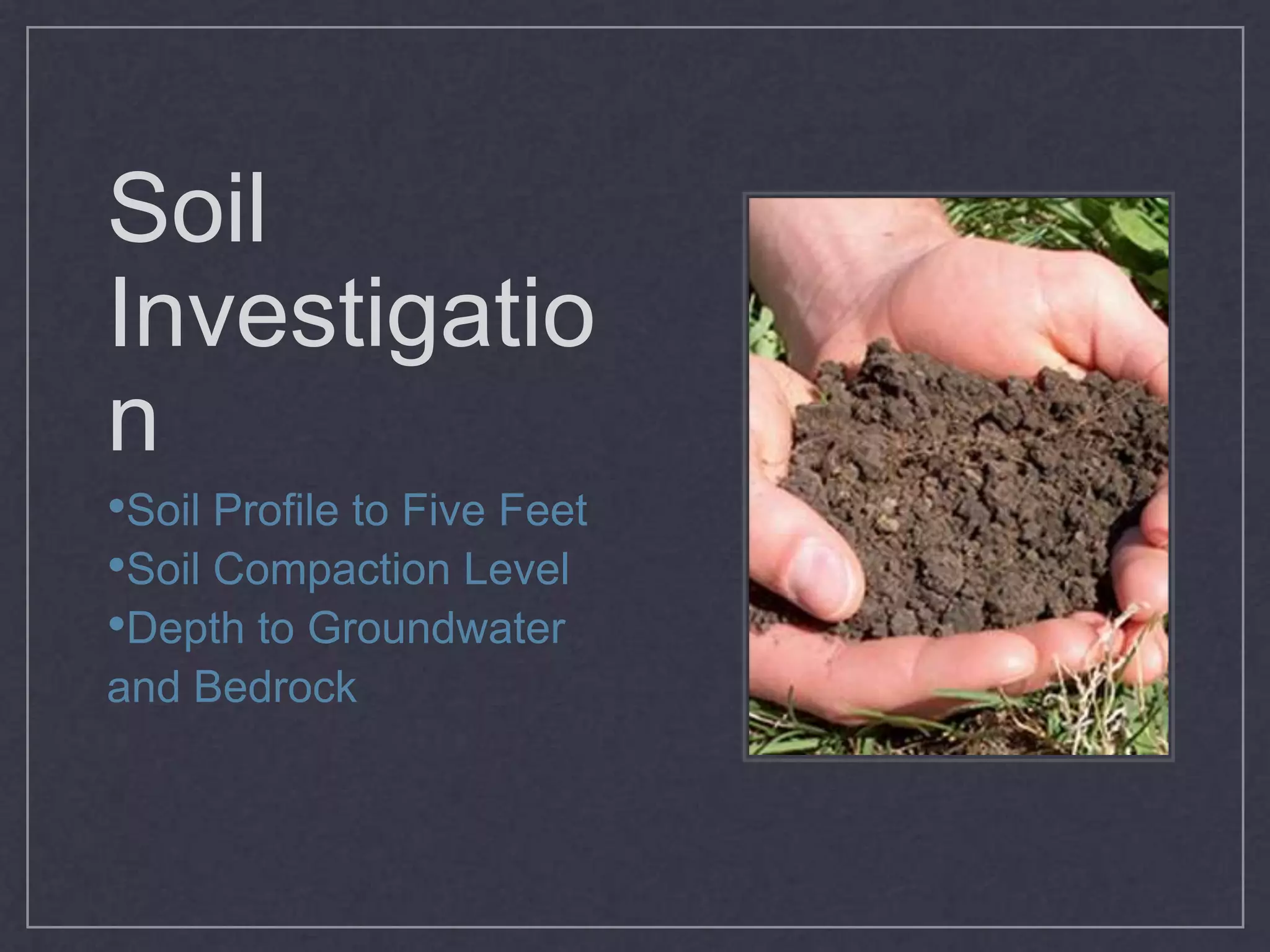
Soil Investigation	Soil Profile to Five Feet
Soil Compaction Level
Depth to Groundwater and BedrockPercolation Test	Soil Infiltration Rate
Key Design Parameter
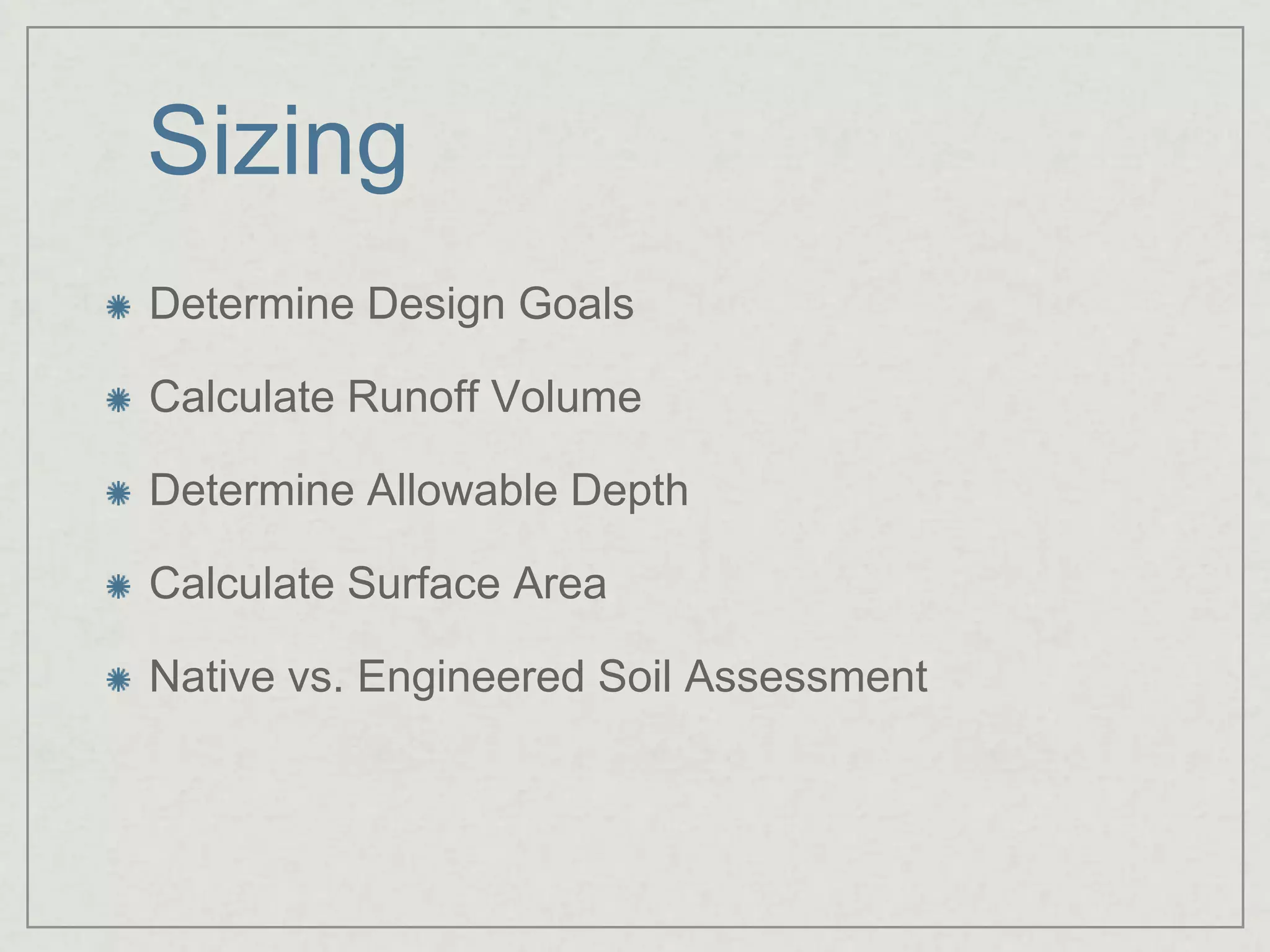
Percolates water in 24 HoursSizing Determine Design GoalsCalculate Runoff VolumeDetermine Allowable DepthCalculate Surface AreaNative vs. Engineered Soil Assessment
SizingRunoff Volume = Precipitation x Drainage Area x Runoff CoefficientRV=Pr  x D(area) x C(un
DepthBased Upon Infiltration RateInfiltration in One DayAvoid MisquotesMaximum Depth 18” for Safety
Surface AreaArea of Rain Garden (ft2) = Runoff Capture Volume (ft3) / Average Depth (ft)A=V/D(average)
Engineered SoilsBioretentionSpace AvailableVolume of StormwaterDrain Faster(the garden can be deeper and not as wide)
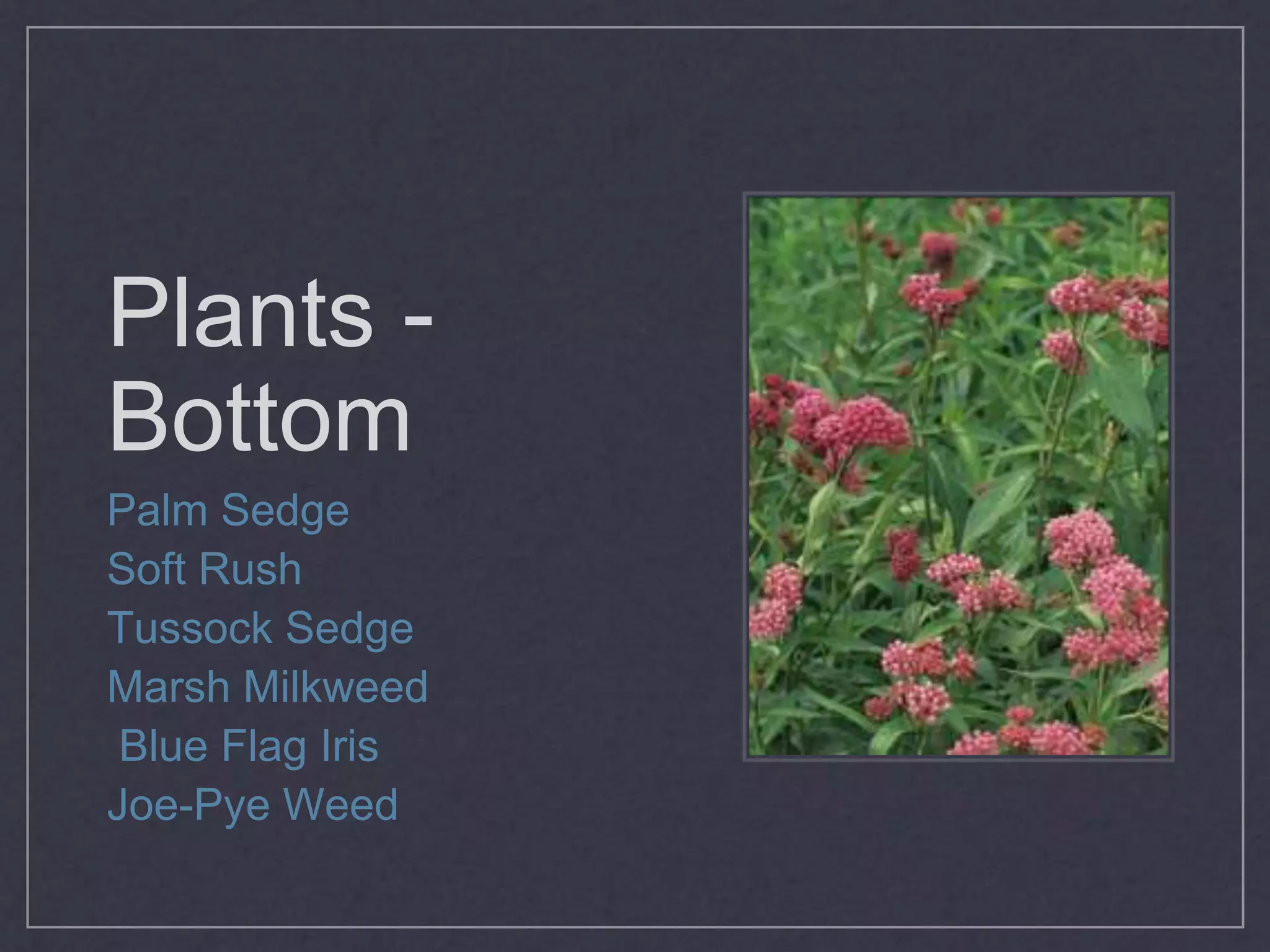
Plants - BottomPalm SedgeSoft RushTussock SedgeMarsh Milkweed Blue Flag IrisJoe-Pye Weed
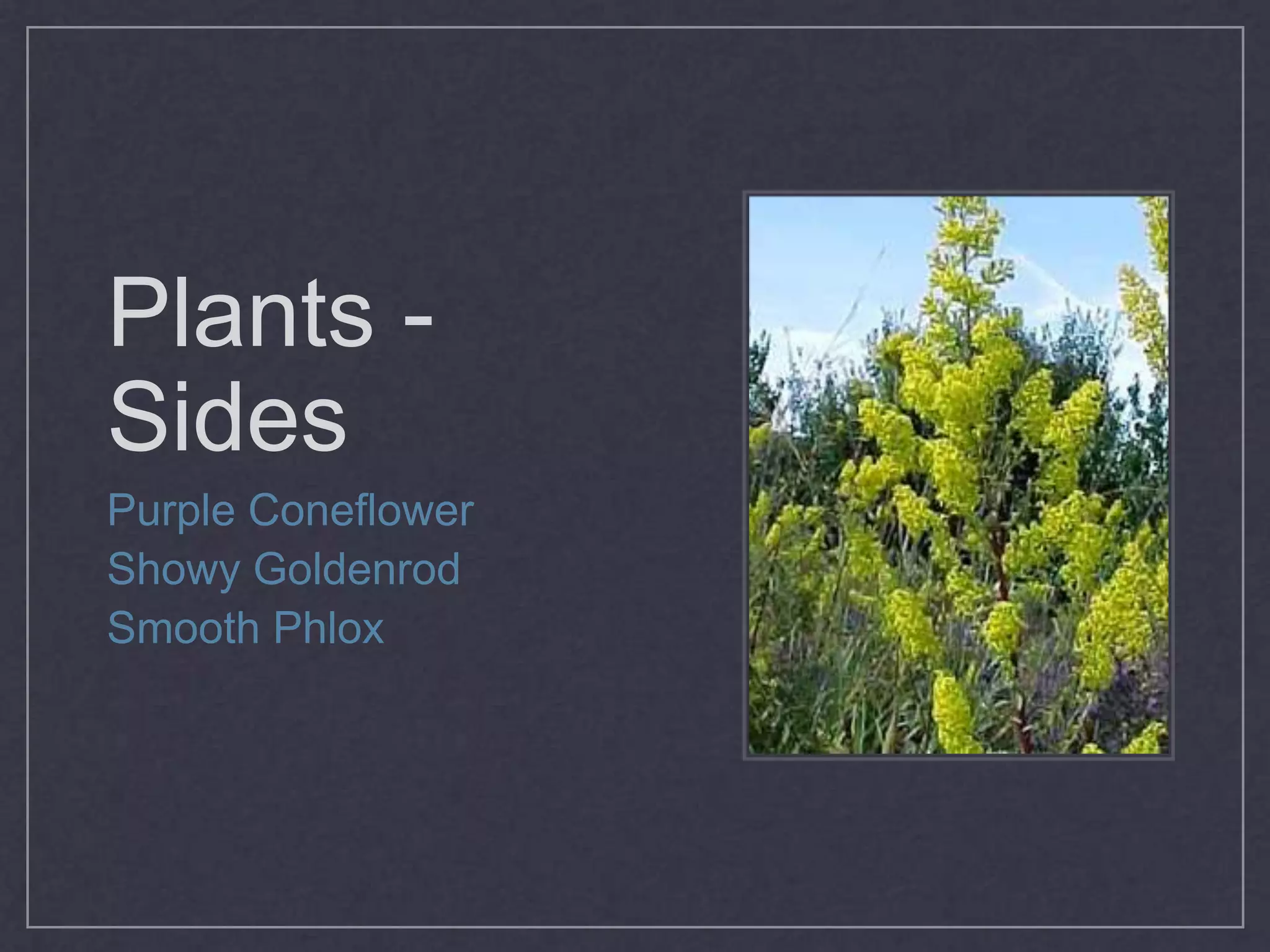
Plants - SidesPurple ConeflowerShowy GoldenrodSmooth Phlox
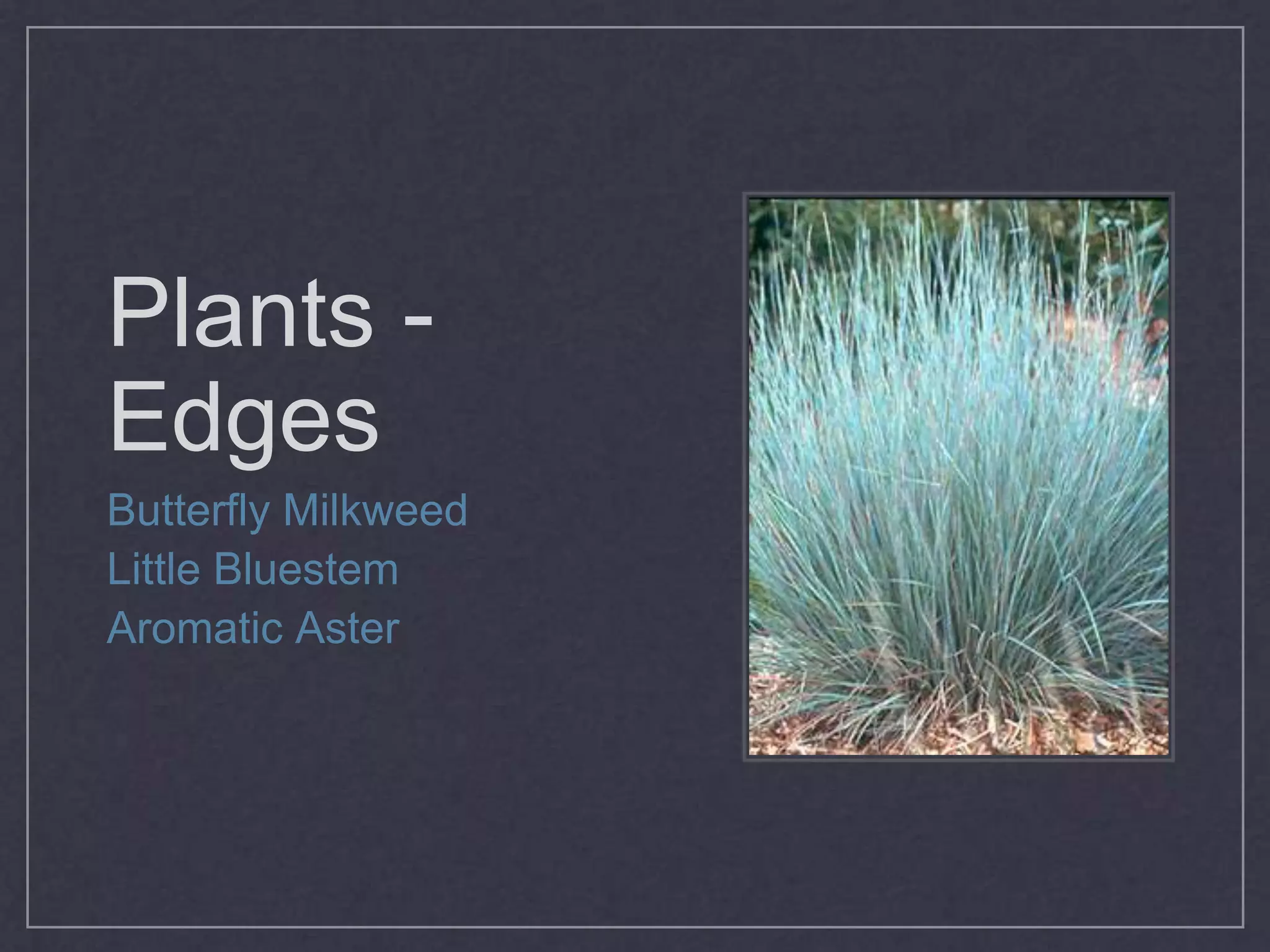
Plants - EdgesButterfly MilkweedLittle BluestemAromatic Aster
Inlets
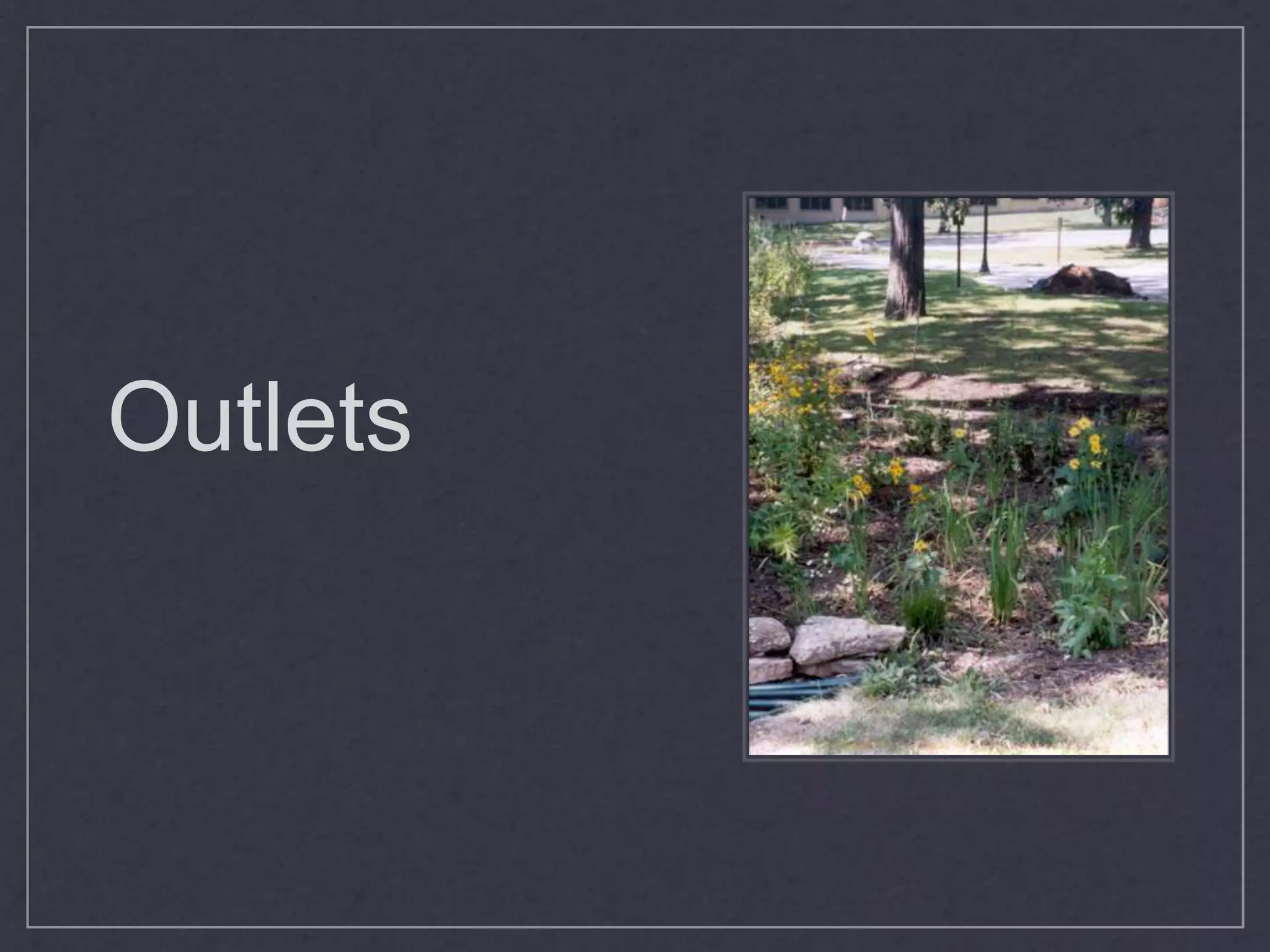
Outlets
Curb Cut & Filter StripControls Sedimentation
Splash BlocksPrevents Erosion and Gullies
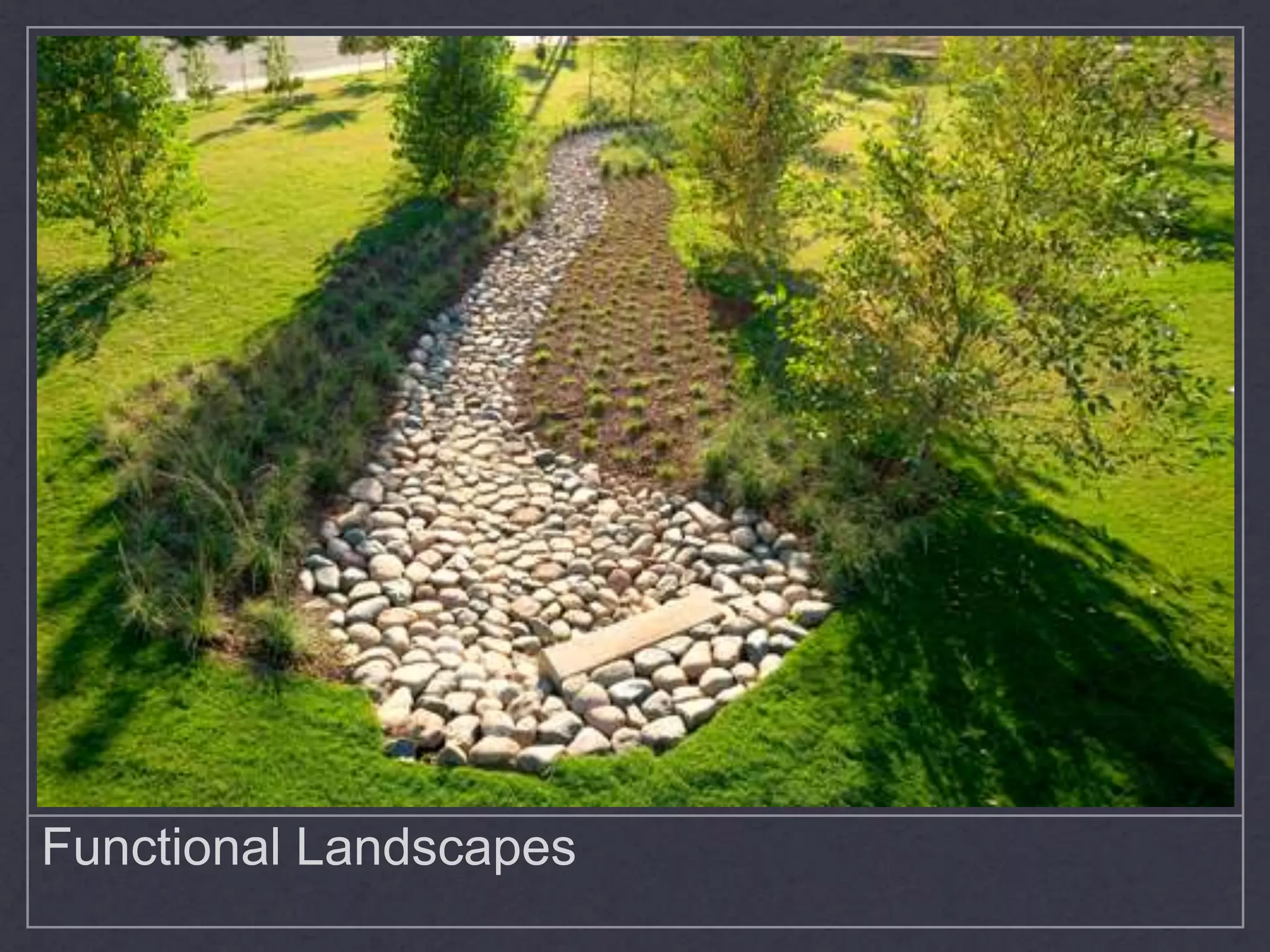
Functional Landscapes

Constructing Rain Gardens & Bioswales (PowerPoint)