Presented by
NAKEER RAZA SYED
Term – 2, Ph.D
KHARAZMI UNIVERSITY,
Tehran
CONNECTING TO THE CANON
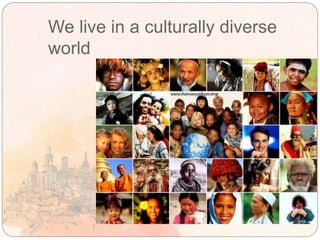
We live in a culturally diverse
world
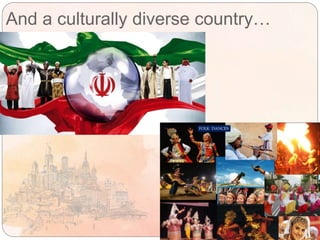
And a culturally diverse country…
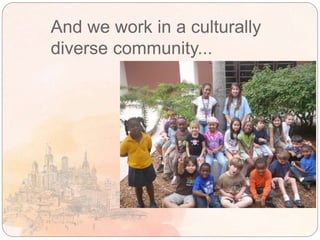
And we work in a culturally
diverse community...
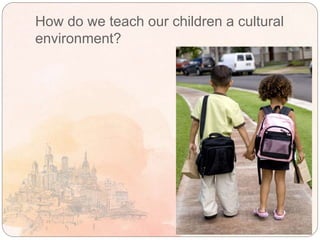
How do we teach our children a cultural
environment?
WHAT DO YOU MEAN
BY CANON?
Tacit agreement
‫ضمنی‬ ‫توافق‬
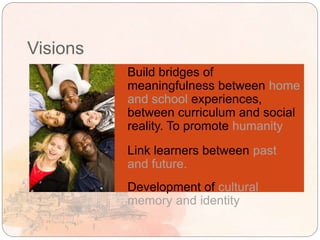
Visions
 Build bridges of
meaningfulness between home
and school experiences,
between curriculum and social
reality. To promote humanity
 Link learners between past
and future.
 Development of cultural
memory and identity
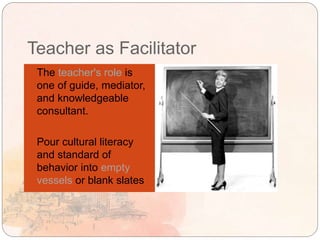
Teacher as Facilitator
 The teacher's role is
one of guide, mediator,
and knowledgeable
consultant.
 Pour cultural literacy
and standard of
behavior into empty
vessels or blank slates
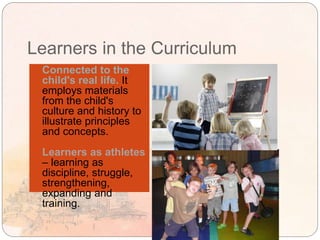
Learners in the Curriculum
 Connected to the
child's real life. It
employs materials
from the child's
culture and history to
illustrate principles
and concepts.
 Learners as athletes
– learning as
discipline, struggle,
strengthening,
expanding and
training.
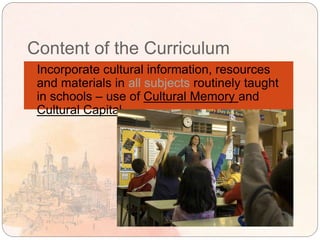
Content of the Curriculum
 Incorporate cultural information, resources
and materials in all subjects routinely taught
in schools – use of Cultural Memory and
Cultural Capital.
Context of the Curriculum
 There is an ongoing dialogue with students, parents,
and community members on issues important to
them, along with the inclusion of these individuals
and issues in classroom curriculum and activities.
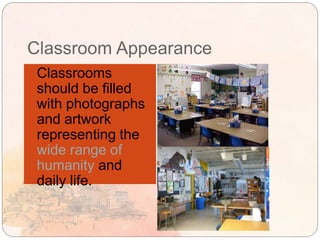
Classroom Appearance
 Classrooms
should be filled
with photographs
and artwork
representing the
wide range of
humanity and
daily life.
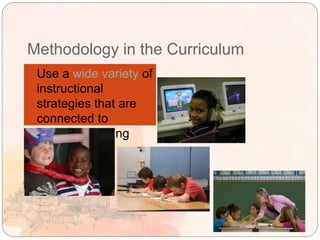
Methodology in the Curriculum
Use a wide variety of
instructional
strategies that are
connected to
different learning
styles.
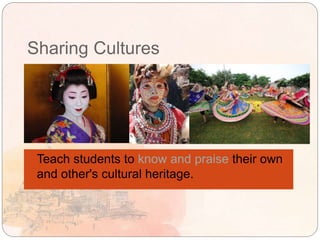
Sharing Cultures
 Teach students to know and praise their own
and other's cultural heritage.
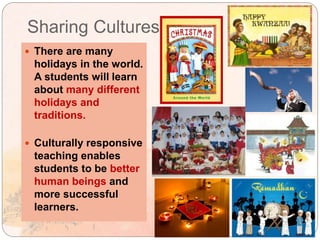
Sharing Cultures
 There are many
holidays in the world.
A students will learn
about many different
holidays and
traditions.
 Culturally responsive
teaching enables
students to be better
human beings and
more successful
learners.
Culturally Responsive Teaching
is Transformative
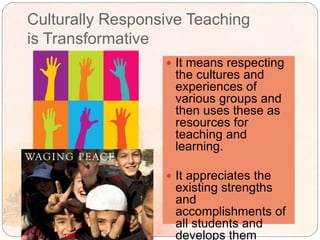
 It means respecting
the cultures and
experiences of
various groups and
then uses these as
resources for
teaching and
learning.
 It appreciates the
existing strengths
and
accomplishments of
all students and
develops them
Culturally Responsive Teaching
is Transformative
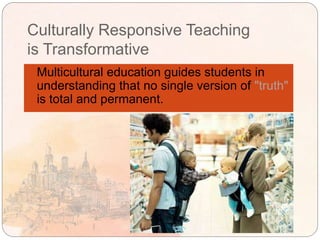
 Multicultural education guides students in
understanding that no single version of "truth"
is total and permanent.
Arguments Against
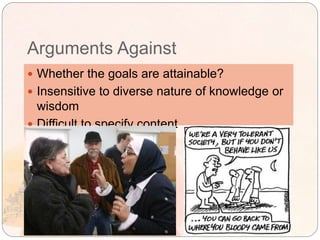
 Whether the goals are attainable?
 Insensitive to diverse nature of knowledge or
wisdom
 Difficult to specify content

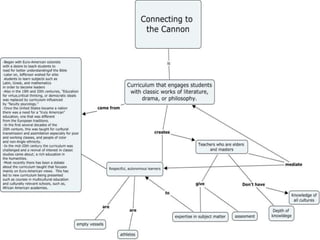
Connecting to the Canon

  • 2.
    Presented by NAKEER RAZASYED Term – 2, Ph.D KHARAZMI UNIVERSITY, Tehran CONNECTING TO THE CANON
  • 3.
    We live ina culturally diverse world
  • 4.
    And a culturallydiverse country…
  • 5.
    And we workin a culturally diverse community...
  • 6.
    How do weteach our children a cultural environment?
  • 10.
    WHAT DO YOUMEAN BY CANON?
  • 11.
  • 13.
    Visions  Build bridgesof meaningfulness between home and school experiences, between curriculum and social reality. To promote humanity  Link learners between past and future.  Development of cultural memory and identity
  • 14.
    Teacher as Facilitator The teacher's role is one of guide, mediator, and knowledgeable consultant.  Pour cultural literacy and standard of behavior into empty vessels or blank slates
  • 15.
    Learners in theCurriculum  Connected to the child's real life. It employs materials from the child's culture and history to illustrate principles and concepts.  Learners as athletes – learning as discipline, struggle, strengthening, expanding and training.
  • 16.
    Content of theCurriculum  Incorporate cultural information, resources and materials in all subjects routinely taught in schools – use of Cultural Memory and Cultural Capital.
  • 17.
    Context of theCurriculum  There is an ongoing dialogue with students, parents, and community members on issues important to them, along with the inclusion of these individuals and issues in classroom curriculum and activities.
  • 18.
    Classroom Appearance  Classrooms shouldbe filled with photographs and artwork representing the wide range of humanity and daily life.
  • 19.
    Methodology in theCurriculum Use a wide variety of instructional strategies that are connected to different learning styles.
  • 20.
    Sharing Cultures  Teachstudents to know and praise their own and other's cultural heritage.
  • 21.
    Sharing Cultures  Thereare many holidays in the world. A students will learn about many different holidays and traditions.  Culturally responsive teaching enables students to be better human beings and more successful learners.
  • 22.
    Culturally Responsive Teaching isTransformative  It means respecting the cultures and experiences of various groups and then uses these as resources for teaching and learning.  It appreciates the existing strengths and accomplishments of all students and develops them
  • 23.
    Culturally Responsive Teaching isTransformative  Multicultural education guides students in understanding that no single version of "truth" is total and permanent.
  • 24.
    Arguments Against  Whetherthe goals are attainable?  Insensitive to diverse nature of knowledge or wisdom  Difficult to specify content