 
 
 
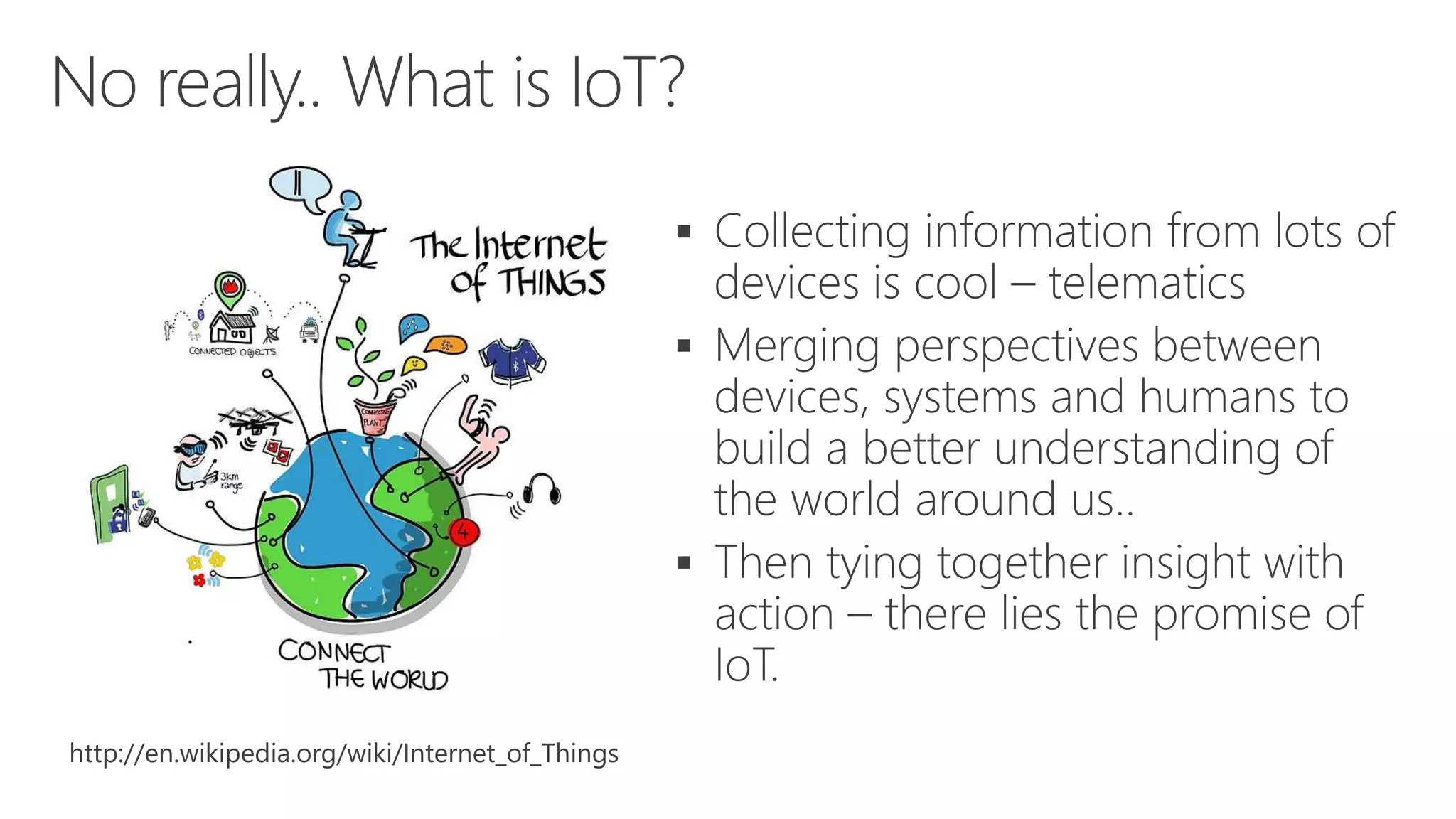
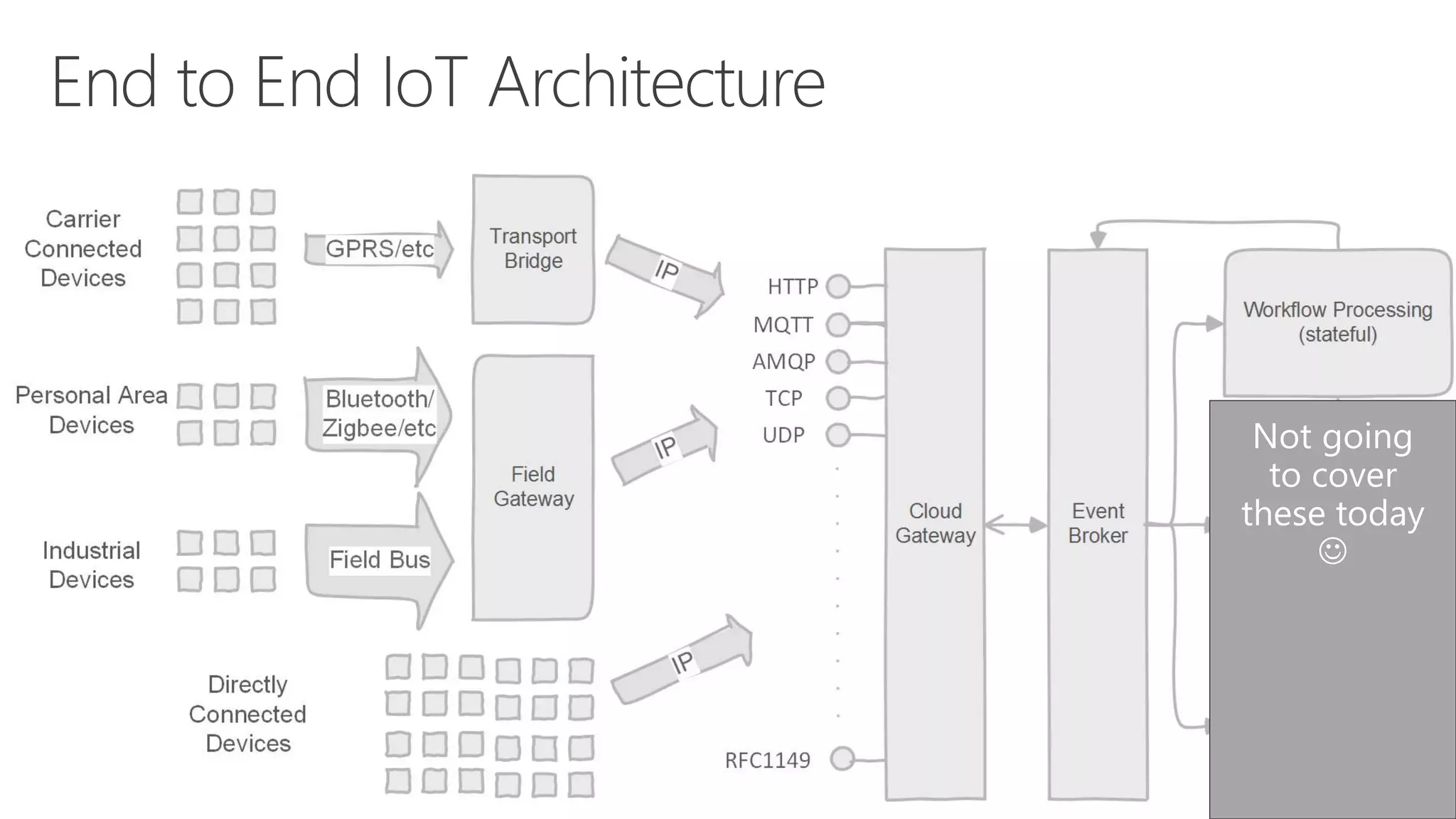
http://en.wikipedia.org/wiki/Internet_of_Things
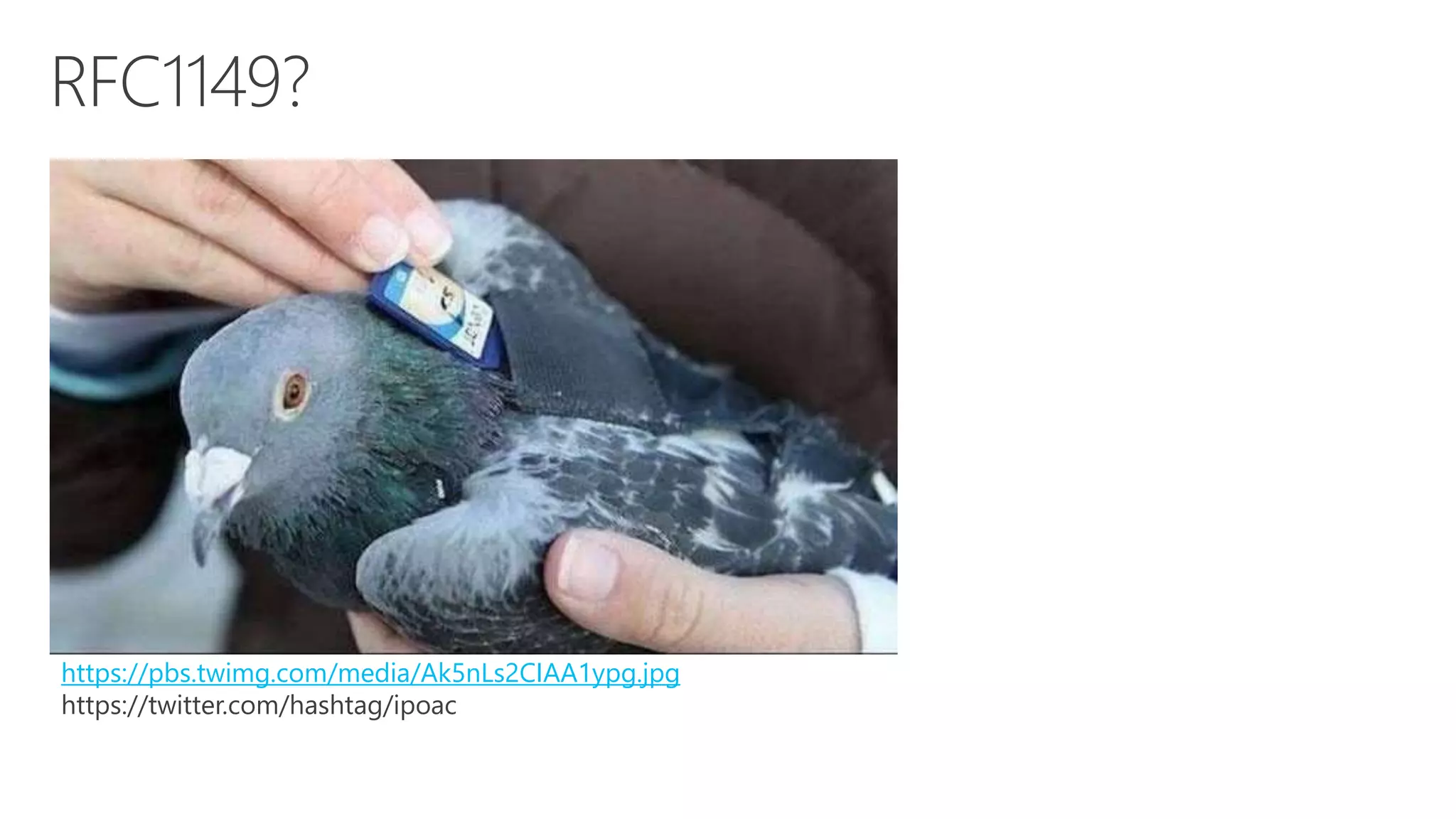
https://pbs.twimg.com/media/Ak5nLs2CIAA1ypg.jpg 
https://twitter.com/hashtag/ipoac
 
 
 
 

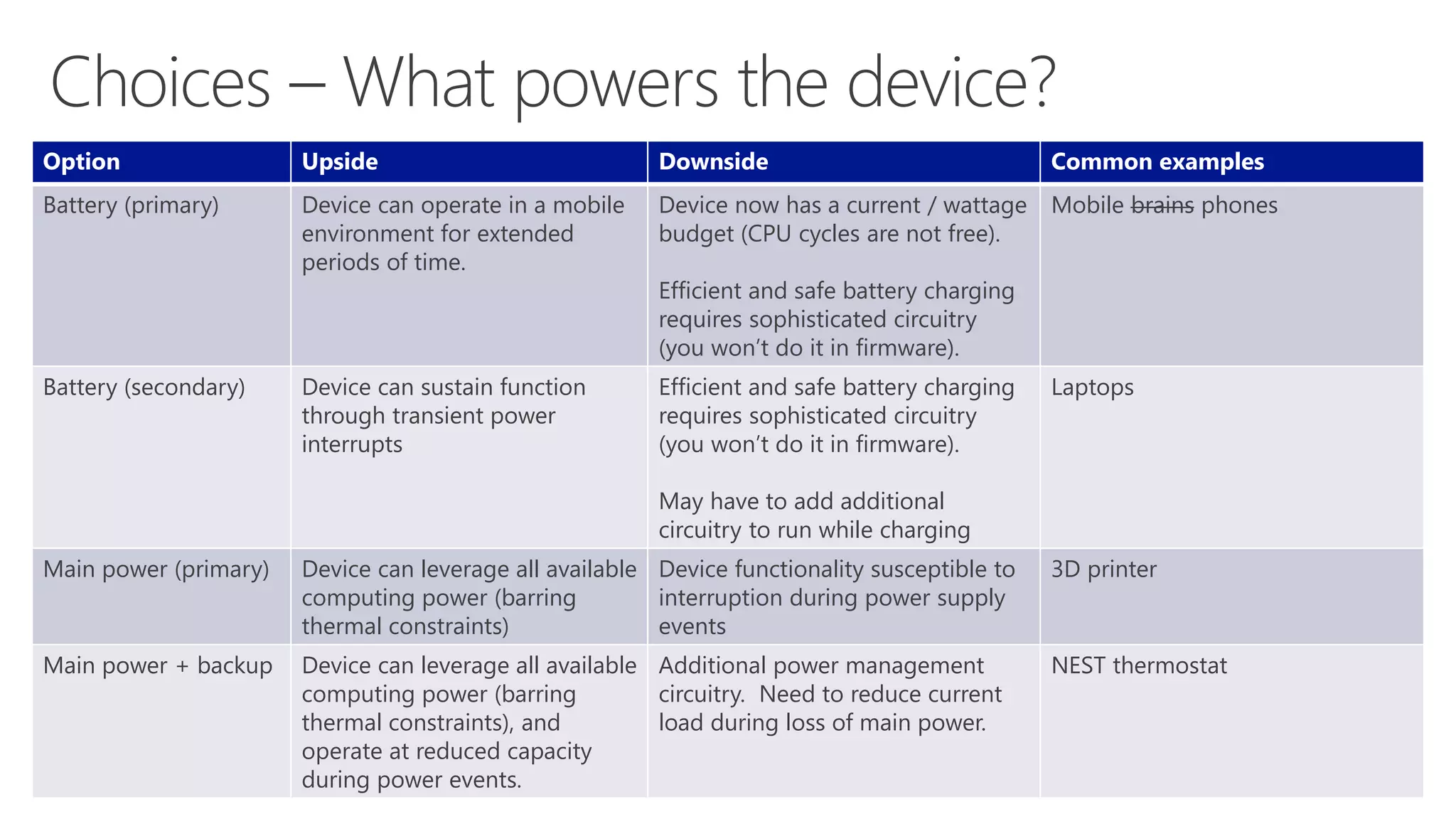
Option Upside Downside Common examples 
Battery (primary) Device can operate in a mobile 
environment for extended 
periods of time. 
Device now has a current / wattage 
budget (CPU cycles are not free). 
Efficient and safe battery charging 
requires sophisticated circuitry 
(you won’t do it in firmware). 
Mobile brains phones 
Battery (secondary) Device can sustain function 
through transient power 
interrupts 
Efficient and safe battery charging 
requires sophisticated circuitry 
(you won’t do it in firmware). 
May have to add additional 
circuitry to run while charging 
Laptops 
Main power (primary) Device can leverage all available 
computing power (barring 
thermal constraints) 
Device functionality susceptible to 
interruption during power supply 
events 
3D printer 
Main power + backup Device can leverage all available 
computing power (barring 
thermal constraints), and 
operate at reduced capacity 
during power events. 
Additional power management 
circuitry. Need to reduce current 
load during loss of main power. 
NEST thermostat
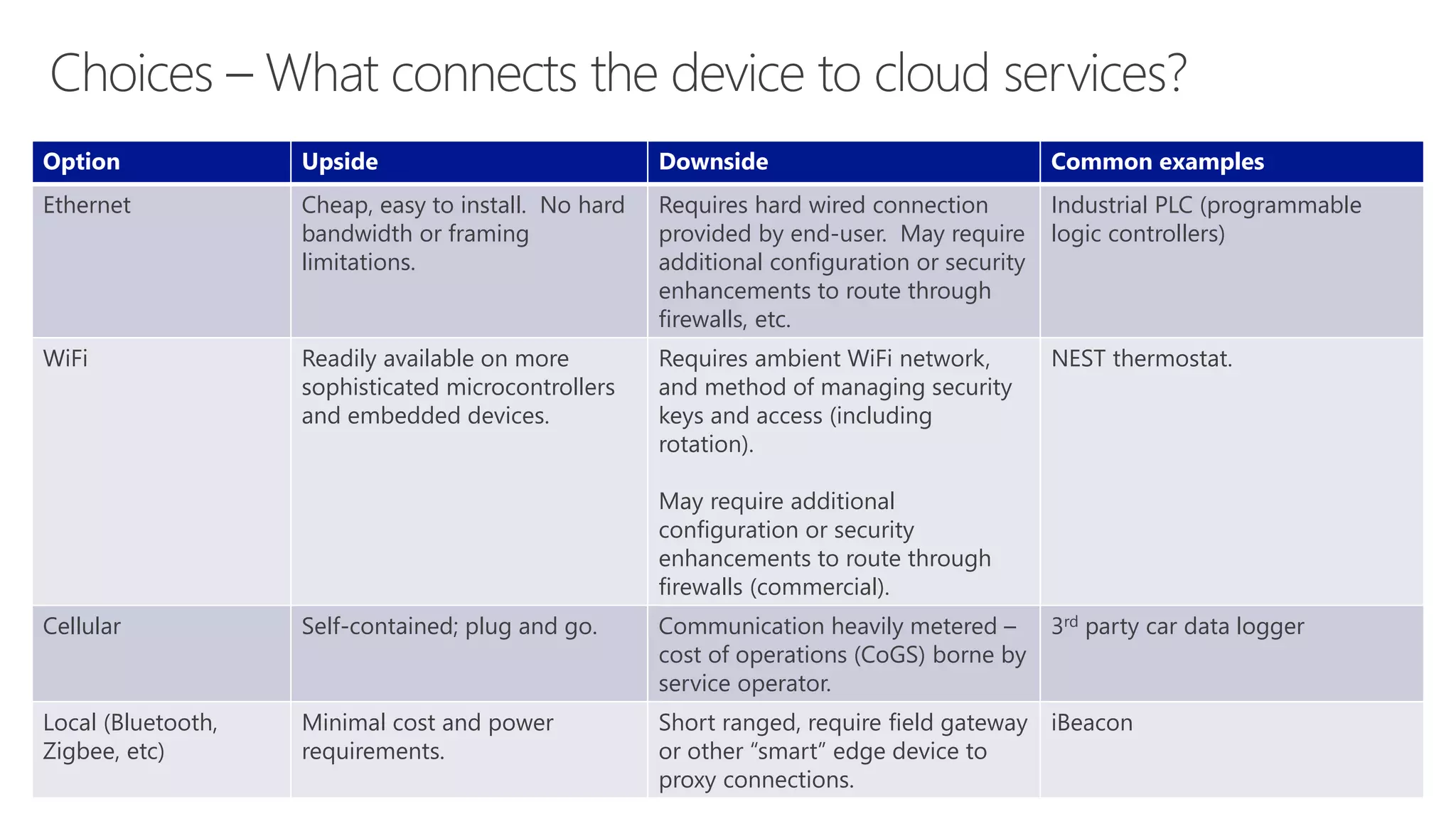
Option Upside Downside Common examples 
Ethernet Cheap, easy to install. No hard 
bandwidth or framing 
limitations. 
Requires hard wired connection 
provided by end-user. May require 
additional configuration or security 
enhancements to route through 
firewalls, etc. 
Industrial PLC (programmable 
logic controllers) 
WiFi Readily available on more 
sophisticated microcontrollers 
and embedded devices. 
Requires ambient WiFi network, 
and method of managing security 
keys and access (including 
rotation). 
May require additional 
configuration or security 
enhancements to route through 
firewalls (commercial). 
NEST thermostat. 
Cellular Self-contained; plug and go. Communication heavily metered – 
cost of operations (CoGS) borne by 
service operator. 
3rd party car data logger 
Local (Bluetooth, 
Zigbee, etc) 
Minimal cost and power 
requirements. 
Short ranged, require field gateway 
or other “smart” edge device to 
proxy connections. 
iBeacon
 
 
 

 
 
 
 
 
 
 
 
 
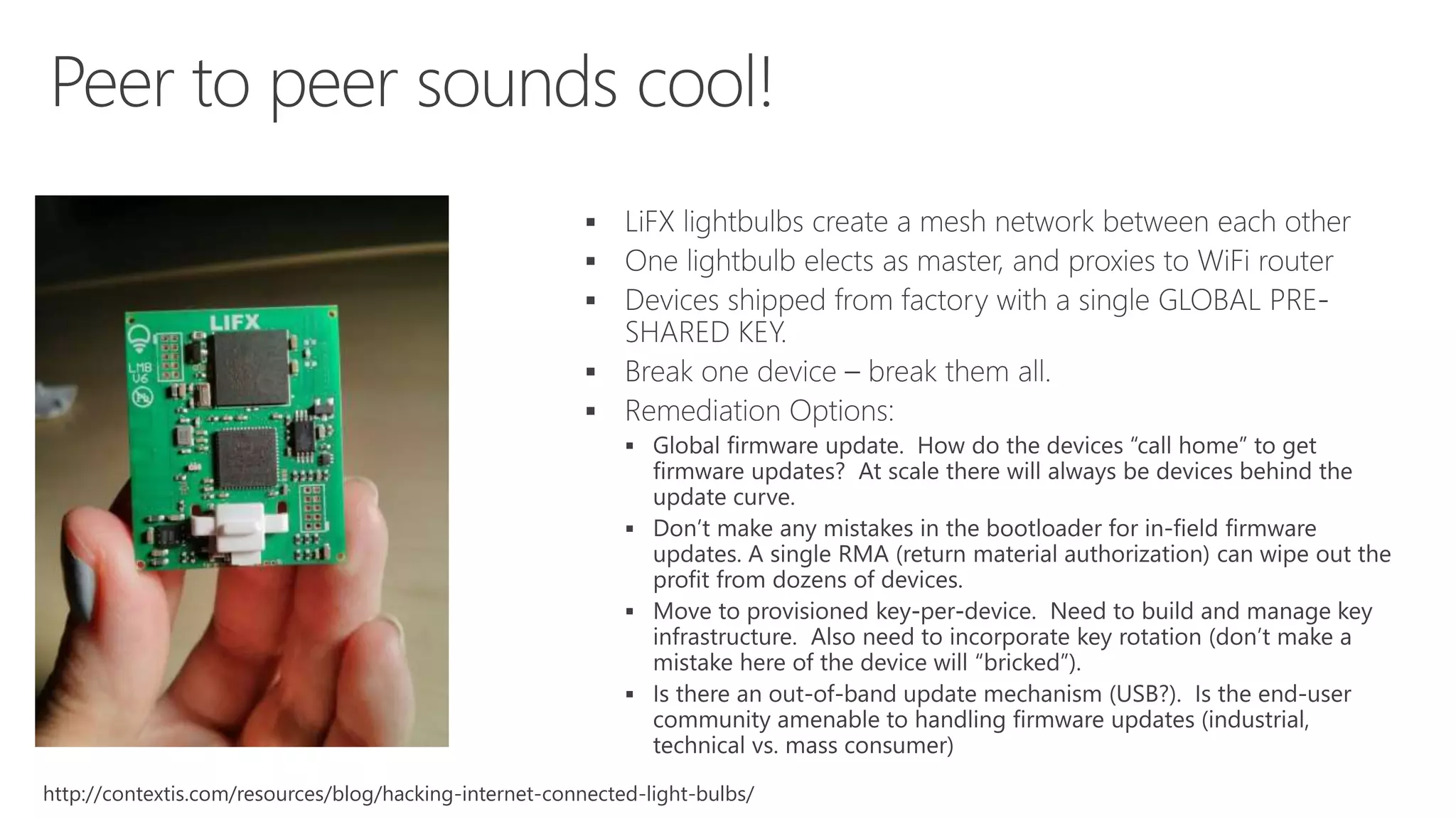
http://contextis.com/resources/blog/hacking-internet-connected-light-bulbs/
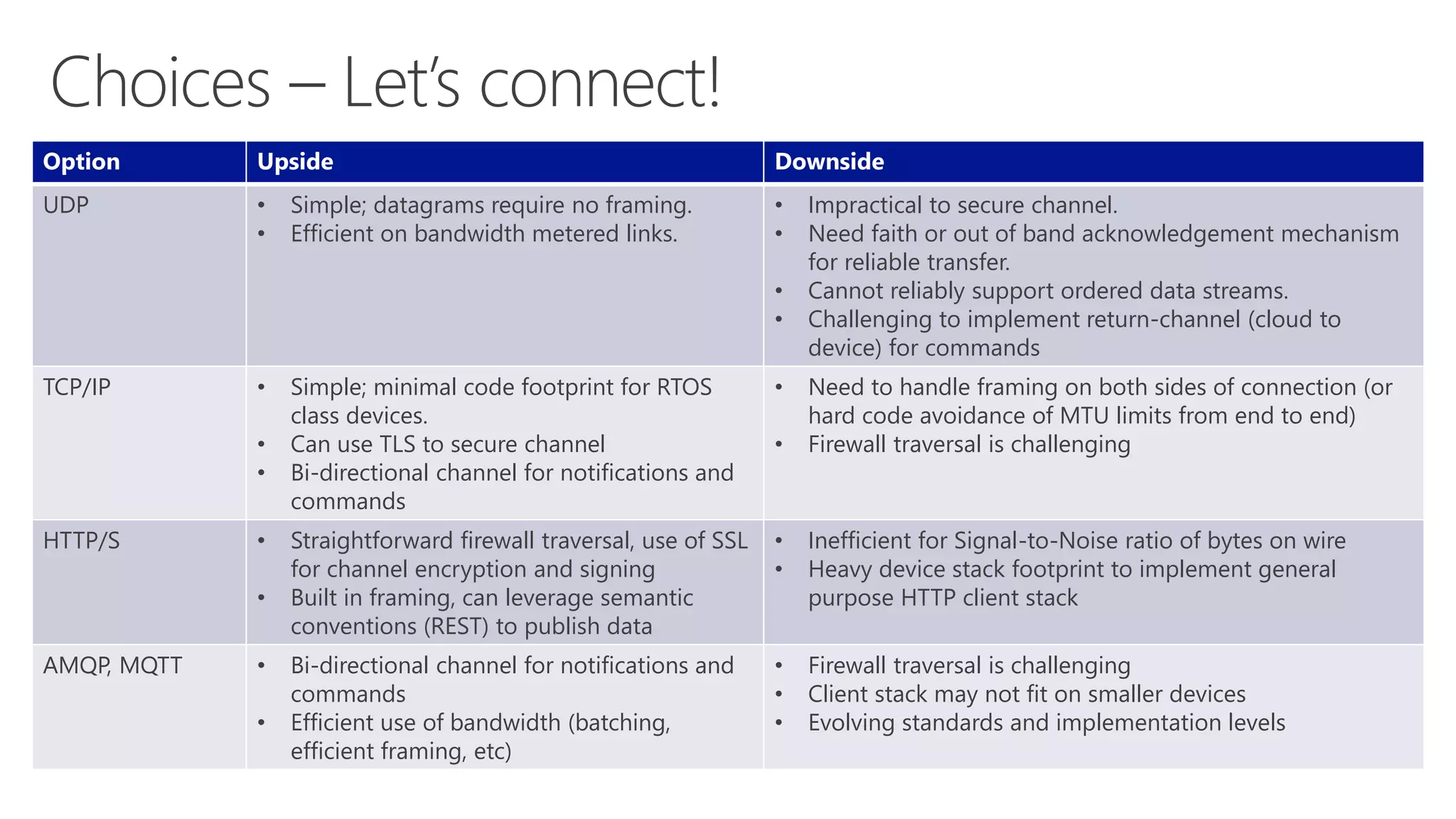
Option Upside Downside 
UDP • Simple; datagrams require no framing. 
• Efficient on bandwidth metered links. 
• Impractical to secure channel. 
• Need faith or out of band acknowledgement mechanism 
for reliable transfer. 
• Cannot reliably support ordered data streams. 
• Challenging to implement return-channel (cloud to 
device) for commands 
TCP/IP • Simple; minimal code footprint for RTOS 
class devices. 
• Can use TLS to secure channel 
• Bi-directional channel for notifications and 
commands 
• Need to handle framing on both sides of connection (or 
hard code avoidance of MTU limits from end to end) 
• Firewall traversal is challenging 
HTTP/S • Straightforward firewall traversal, use of SSL 
for channel encryption and signing 
• Built in framing, can leverage semantic 
conventions (REST) to publish data 
• Inefficient for Signal-to-Noise ratio of bytes on wire 
• Heavy device stack footprint to implement general 
purpose HTTP client stack 
AMQP, MQTT • Bi-directional channel for notifications and 
commands 
• Efficient use of bandwidth (batching, 
efficient framing, etc) 
• Firewall traversal is challenging 
• Client stack may not fit on smaller devices 
• Evolving standards and implementation levels
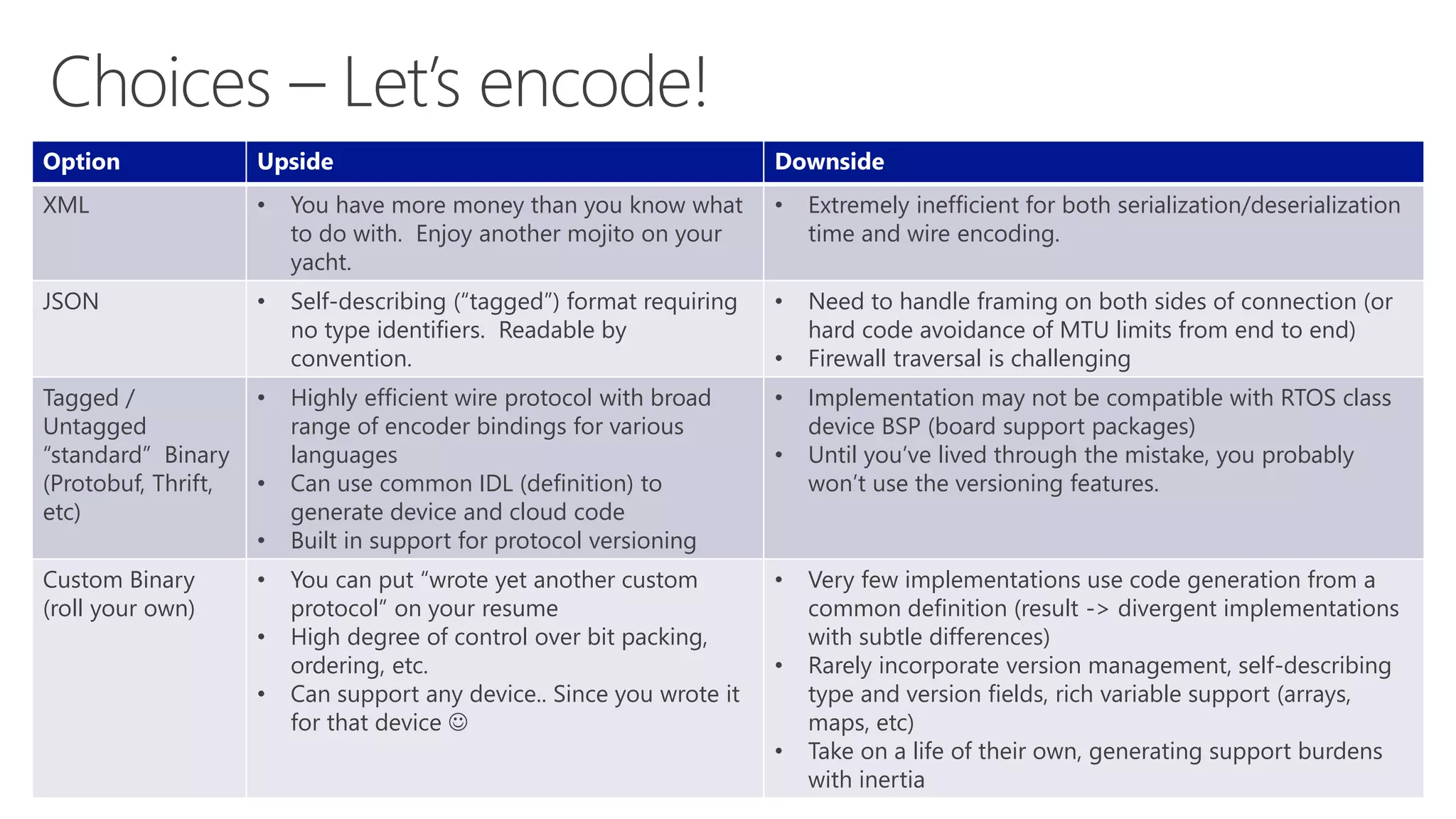
Option Upside Downside 
XML • You have more money than you know what 
to do with. Enjoy another mojito on your 
yacht. 
• Extremely inefficient for both serialization/deserialization 
time and wire encoding. 
JSON • Self-describing (“tagged”) format requiring 
no type identifiers. Readable by 
convention. 
• Need to handle framing on both sides of connection (or 
hard code avoidance of MTU limits from end to end) 
• Firewall traversal is challenging 
Tagged / 
Untagged 
“standard” Binary 
(Protobuf, Thrift, 
etc) 
• Highly efficient wire protocol with broad 
range of encoder bindings for various 
languages 
• Can use common IDL (definition) to 
generate device and cloud code 
• Built in support for protocol versioning 
• Implementation may not be compatible with RTOS class 
device BSP (board support packages) 
• Until you’ve lived through the mistake, you probably 
won’t use the versioning features. 
Custom Binary 
(roll your own) 
• You can put “wrote yet another custom 
protocol” on your resume 
• High degree of control over bit packing, 
ordering, etc. 
• Can support any device.. Since you wrote it 
for that device  
• Very few implementations use code generation from a 
common definition (result -> divergent implementations 
with subtle differences) 
• Rarely incorporate version management, self-describing 
type and version fields, rich variable support (arrays, 
maps, etc) 
• Take on a life of their own, generating support burdens 
with inertia
 
 
 
 
 
 
 
 

 
 
 
 
 

 
 
 
 
 
 
 

 
 
 
 

 

Microsoft Confidential. 
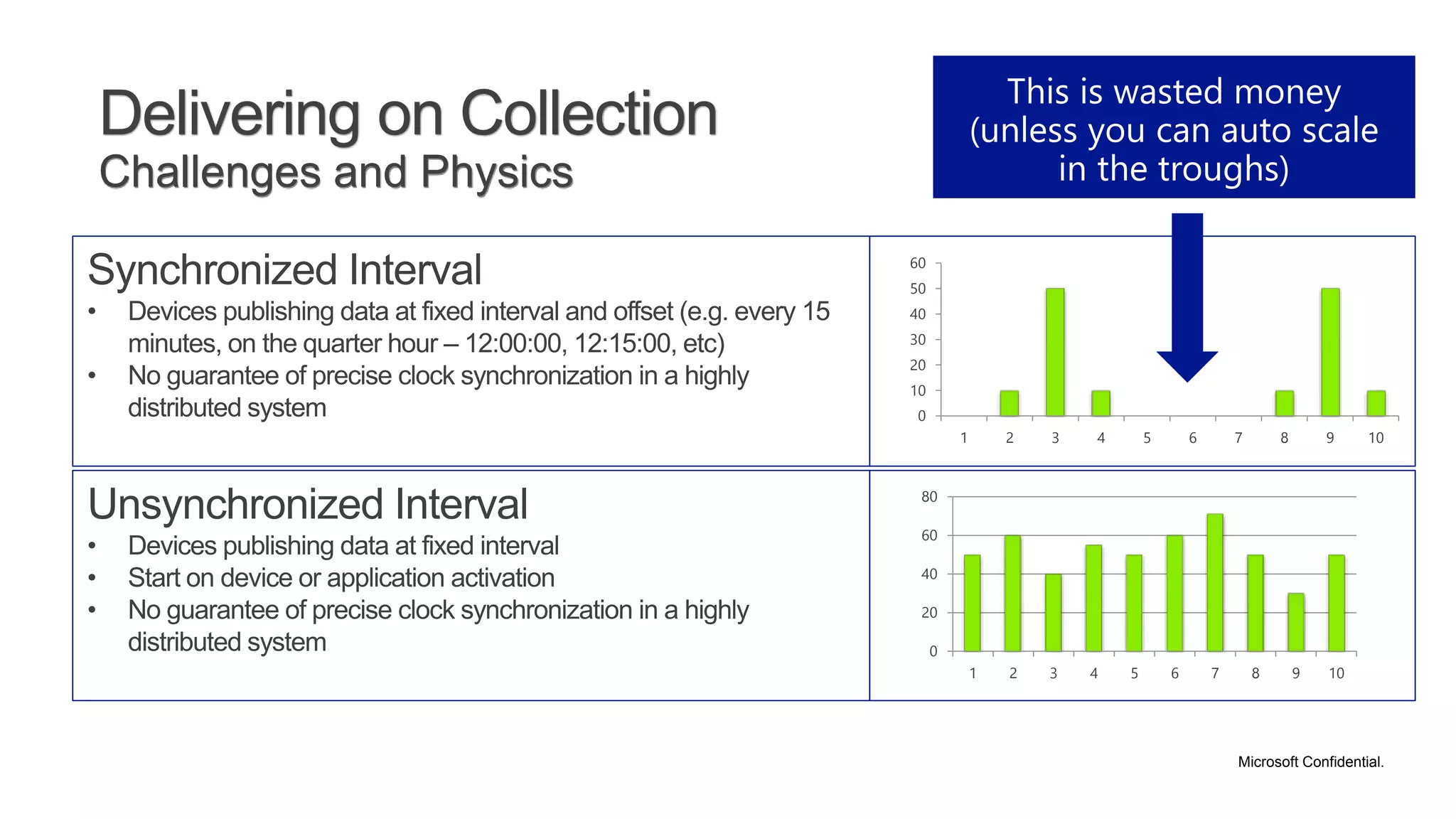
Delivering on Collection 
Challenges and Physics 
60 
50 
40 
30 
20 
10 
0 
1 2 3 4 5 6 7 8 9 10 
80 
60 
40 
20 
0 
1 2 3 4 5 6 7 8 9 10
 
 
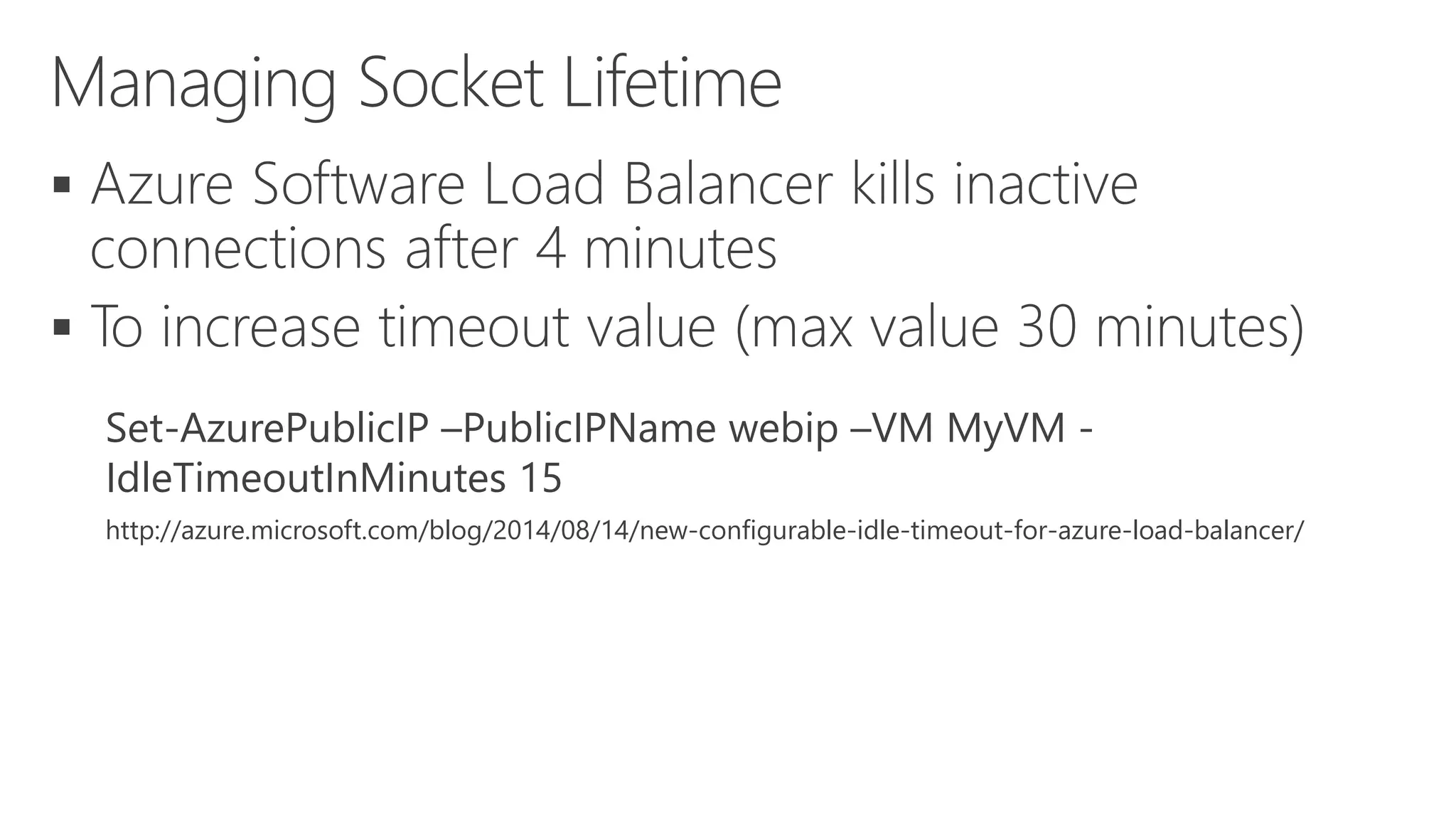
Set-AzurePublicIP –PublicIPName webip –VM MyVM - 
IdleTimeoutInMinutes 15 
http://azure.microsoft.com/blog/2014/08/14/new-configurable-idle-timeout-for-azure-load-balancer/
 

 
 
 

 
 
 
 
 
 
 
 http://azure.microsoft.com/en-us/ 
services/event-hubs/ 

 
 
 

 
 
 

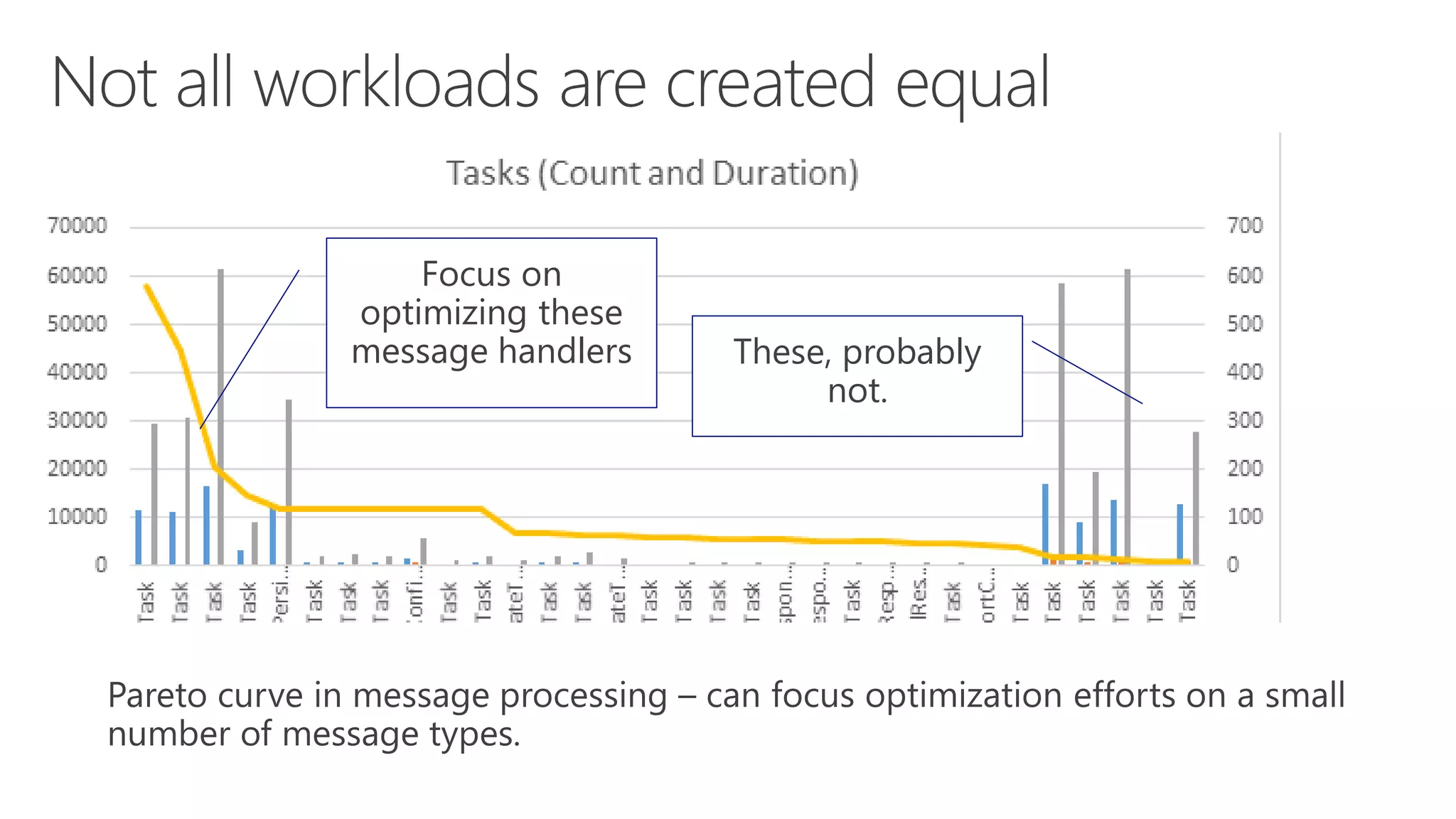
Focus on 
optimizing these 
message handlers These, probably 
not.
 
 
 
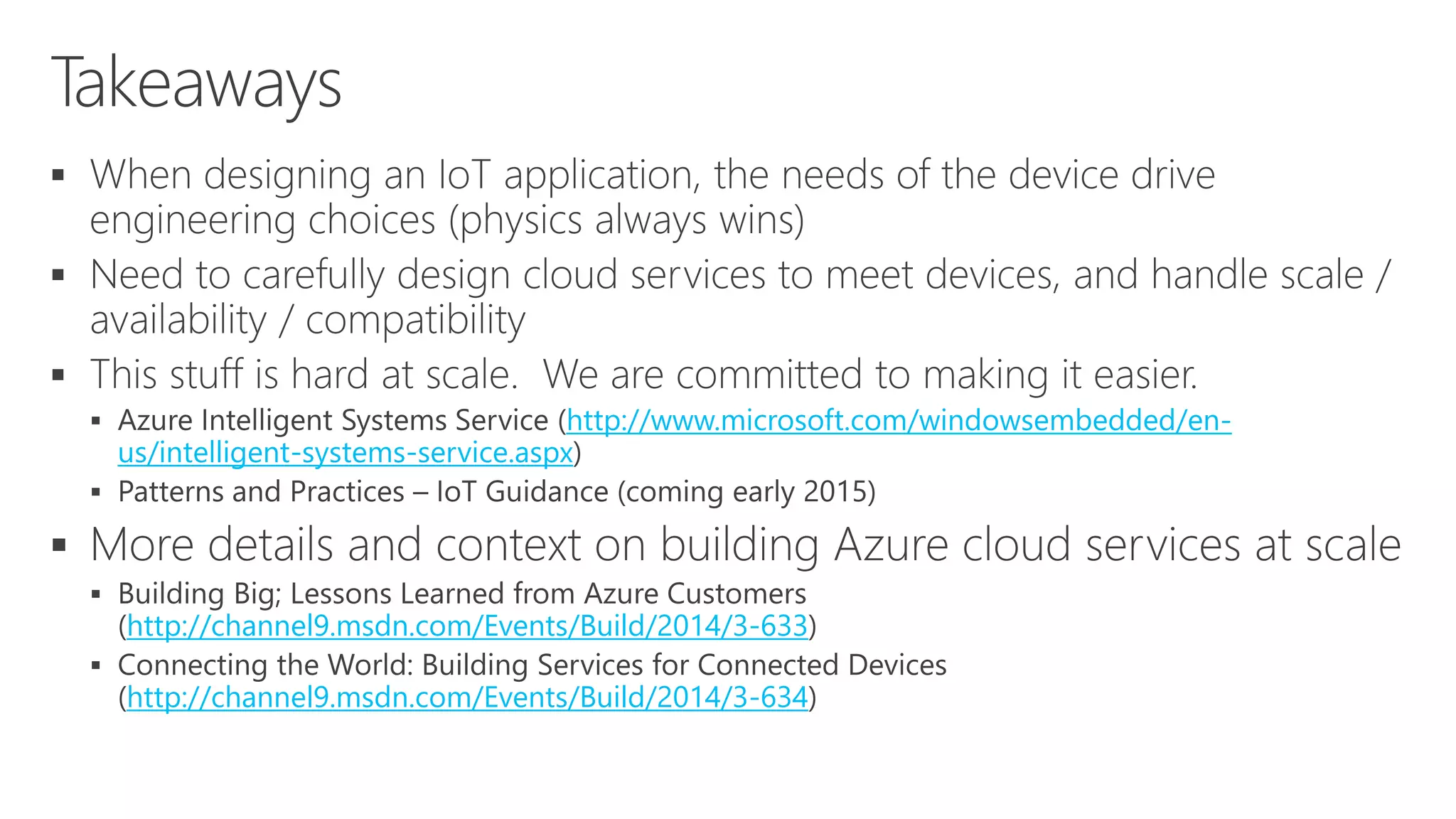
 http://www.microsoft.com/windowsembedded/en-us/ 
intelligent-systems-service.aspx 
 
 
 
http://channel9.msdn.com/Events/Build/2014/3-633 
 
http://channel9.msdn.com/Events/Build/2014/3-634
Connecting Stuff to Azure (IoT)

Connecting Stuff to Azure (IoT)

  • 4.
       http://en.wikipedia.org/wiki/Internet_of_Things
  • 6.
  • 7.
        
  • 10.
    Option Upside DownsideCommon examples Battery (primary) Device can operate in a mobile environment for extended periods of time. Device now has a current / wattage budget (CPU cycles are not free). Efficient and safe battery charging requires sophisticated circuitry (you won’t do it in firmware). Mobile brains phones Battery (secondary) Device can sustain function through transient power interrupts Efficient and safe battery charging requires sophisticated circuitry (you won’t do it in firmware). May have to add additional circuitry to run while charging Laptops Main power (primary) Device can leverage all available computing power (barring thermal constraints) Device functionality susceptible to interruption during power supply events 3D printer Main power + backup Device can leverage all available computing power (barring thermal constraints), and operate at reduced capacity during power events. Additional power management circuitry. Need to reduce current load during loss of main power. NEST thermostat
  • 11.
    Option Upside DownsideCommon examples Ethernet Cheap, easy to install. No hard bandwidth or framing limitations. Requires hard wired connection provided by end-user. May require additional configuration or security enhancements to route through firewalls, etc. Industrial PLC (programmable logic controllers) WiFi Readily available on more sophisticated microcontrollers and embedded devices. Requires ambient WiFi network, and method of managing security keys and access (including rotation). May require additional configuration or security enhancements to route through firewalls (commercial). NEST thermostat. Cellular Self-contained; plug and go. Communication heavily metered – cost of operations (CoGS) borne by service operator. 3rd party car data logger Local (Bluetooth, Zigbee, etc) Minimal cost and power requirements. Short ranged, require field gateway or other “smart” edge device to proxy connections. iBeacon
  • 12.
  • 14.
             http://contextis.com/resources/blog/hacking-internet-connected-light-bulbs/
  • 15.
    Option Upside Downside UDP • Simple; datagrams require no framing. • Efficient on bandwidth metered links. • Impractical to secure channel. • Need faith or out of band acknowledgement mechanism for reliable transfer. • Cannot reliably support ordered data streams. • Challenging to implement return-channel (cloud to device) for commands TCP/IP • Simple; minimal code footprint for RTOS class devices. • Can use TLS to secure channel • Bi-directional channel for notifications and commands • Need to handle framing on both sides of connection (or hard code avoidance of MTU limits from end to end) • Firewall traversal is challenging HTTP/S • Straightforward firewall traversal, use of SSL for channel encryption and signing • Built in framing, can leverage semantic conventions (REST) to publish data • Inefficient for Signal-to-Noise ratio of bytes on wire • Heavy device stack footprint to implement general purpose HTTP client stack AMQP, MQTT • Bi-directional channel for notifications and commands • Efficient use of bandwidth (batching, efficient framing, etc) • Firewall traversal is challenging • Client stack may not fit on smaller devices • Evolving standards and implementation levels
  • 16.
    Option Upside Downside XML • You have more money than you know what to do with. Enjoy another mojito on your yacht. • Extremely inefficient for both serialization/deserialization time and wire encoding. JSON • Self-describing (“tagged”) format requiring no type identifiers. Readable by convention. • Need to handle framing on both sides of connection (or hard code avoidance of MTU limits from end to end) • Firewall traversal is challenging Tagged / Untagged “standard” Binary (Protobuf, Thrift, etc) • Highly efficient wire protocol with broad range of encoder bindings for various languages • Can use common IDL (definition) to generate device and cloud code • Built in support for protocol versioning • Implementation may not be compatible with RTOS class device BSP (board support packages) • Until you’ve lived through the mistake, you probably won’t use the versioning features. Custom Binary (roll your own) • You can put “wrote yet another custom protocol” on your resume • High degree of control over bit packing, ordering, etc. • Can support any device.. Since you wrote it for that device  • Very few implementations use code generation from a common definition (result -> divergent implementations with subtle differences) • Rarely incorporate version management, self-describing type and version fields, rich variable support (arrays, maps, etc) • Take on a life of their own, generating support burdens with inertia
  • 18.
            
  • 19.
         
  • 21.
           
  • 22.
        
  • 23.
  • 24.
    Microsoft Confidential. Deliveringon Collection Challenges and Physics 60 50 40 30 20 10 0 1 2 3 4 5 6 7 8 9 10 80 60 40 20 0 1 2 3 4 5 6 7 8 9 10
  • 25.
      Set-AzurePublicIP–PublicIPName webip –VM MyVM - IdleTimeoutInMinutes 15 http://azure.microsoft.com/blog/2014/08/14/new-configurable-idle-timeout-for-azure-load-balancer/
  • 26.
  • 29.
  • 30.
            http://azure.microsoft.com/en-us/ services/event-hubs/ 
  • 31.
  • 32.
  • 33.
    Focus on optimizingthese message handlers These, probably not.
  • 35.
        http://www.microsoft.com/windowsembedded/en-us/ intelligent-systems-service.aspx    http://channel9.msdn.com/Events/Build/2014/3-633  http://channel9.msdn.com/Events/Build/2014/3-634